
Reviewed · BUKCHON HANOK VILLAGE
Royal Seoul Cooking Class in a 100-Year-Old Hanok
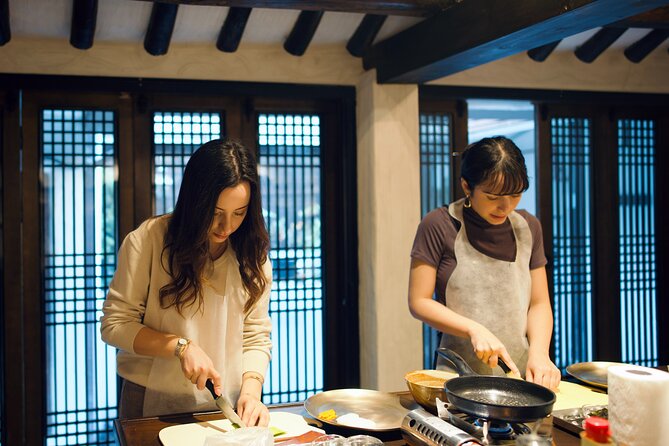
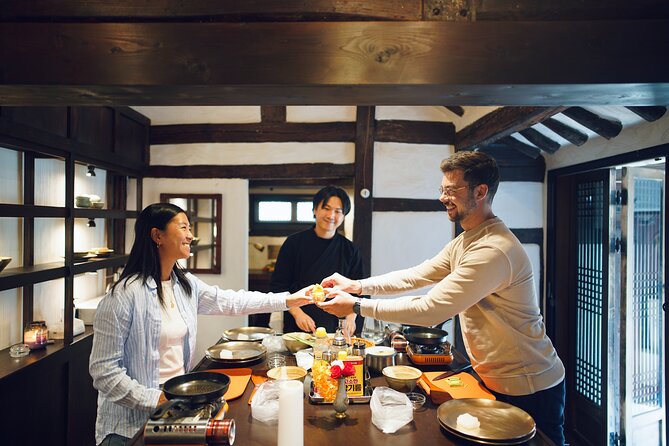
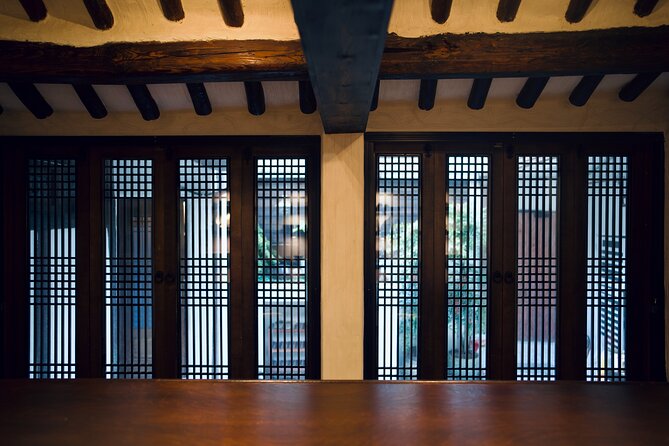
A 100-year-old hanok is the setting for this small Korean cooking class, and that setting does much of the work. You enter a real residential-style home in central Seoul, prepare several classic dishes with Chef Park, also known as Ricky, and eat them in a traditional dining room on handmade Bangjja bronze tableware.
I especially like the six-person maximum and the way the class connects food with Korean history and daily life. I also like that you do not just watch a chef cook: you prepare the dishes yourself, then sit down to eat them with makgeolli and traditional desserts. The main drawback is the price, $98.98 per person, which is a serious spend for a two-hour class, especially if you are mainly looking for a quick meal.
In This Review
- Key points at a glance
- A Korean cooking class with a sense of place
- What you actually cook: four Korean classics
- From preparation to a traditional Korean meal
- Why the small group matters
- Chef Park’s teaching style and cultural stories
- Understanding the Seoul location and listed stops
- Gyeongbokgung Palace
- Changdeokgung Palace
- Kwangjang Market
- Ikseon-dong Hanok Street
- Gwanghwamun Square
- Is $98.98 a fair price?
- Practical advice before you book
- Who will enjoy this most?
- Should you book Royal Seoul Cooking Class?
- FAQ
- Where does the Royal Seoul Cooking Class meet?
- How long does the cooking class last?
- How many people can join the class?
- What dishes do you prepare?
- Is food and drink included after cooking?
- Can I cancel for a full refund?
Key points at a glance
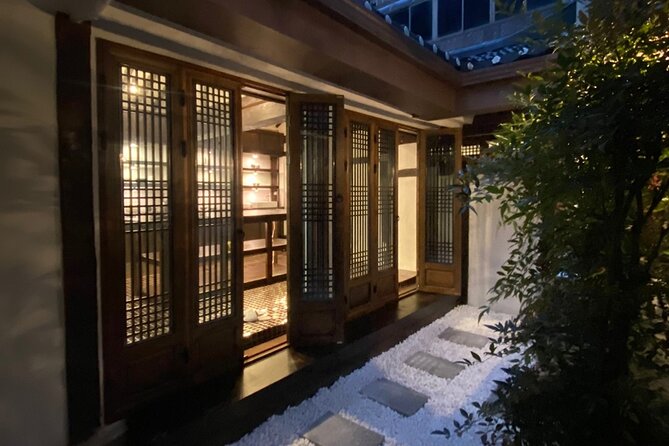
- A restored 100-year-old hanok: The class takes place in a traditional home rather than a standard commercial kitchen.
- Four substantial Korean dishes: You prepare LA galbi, fresh kimchi, haemul pajeon, and tangpyeongchae.
- Chef Park, or Ricky: He teaches cooking while explaining food customs, Korean history, and the stories behind each dish.
- Maximum of six people: The small group allows the instructor to help beginners and answer questions.
- A complete sit-down meal: Your cooking is served on Bangjja bronzeware, with makgeolli and Korean desserts.
- A useful central location: The meeting point is at 25 Samil-daero 32ga-gil in Jongno, near major sights and public transportation.
A Korean cooking class with a sense of place
Many cooking classes take place in bright teaching kitchens built for tourists. This one begins differently. You walk into an old hanok, with its traditional structure and calm dining space, and the class feels tied to Seoul rather than simply placed in it.
That matters because Korean food makes more sense when you see how it fits into the home. Shared dishes, careful preparation, side dishes, fermentation, grilled meat, and communal dining are easier to understand when you are sitting in a traditional Korean house.
The experience lasts about two hours and 15 minutes. That gives you enough time to cook several dishes, hear the background behind them, and eat without having to rush through the final meal. The class is capped at six people, although individual sessions may have fewer participants. A group of three, for example, can feel especially relaxed.
Chef Park, who is also called Ricky, leads the class. His role is more than showing you where to chop. He explains the food, talks about Korean culture and history, and keeps the pace light. Several experiences with him included restaurant suggestions and practical Seoul advice, which can be useful early in your stay.
More Bukchon and hanok village walks:
- Seoul: Gyeongbok Palace, Bukchon Village, and Gwangjang Tour
★ 4.9 · 2,321 reviews - Seoul City Sightseeing Tour Including Gyeongbokgung Palace, N Seoul Tower, and Namsangol Hanok Village
★ 5.0 · 1,423 reviews - Seoul: Gyeongbok Palace, Bukchon Village, and Gwangjang Tour
★ 5.0 · 1,044 reviews
What you actually cook: four Korean classics
The menu gives you a good cross-section of Korean cooking rather than four versions of the same flavor.
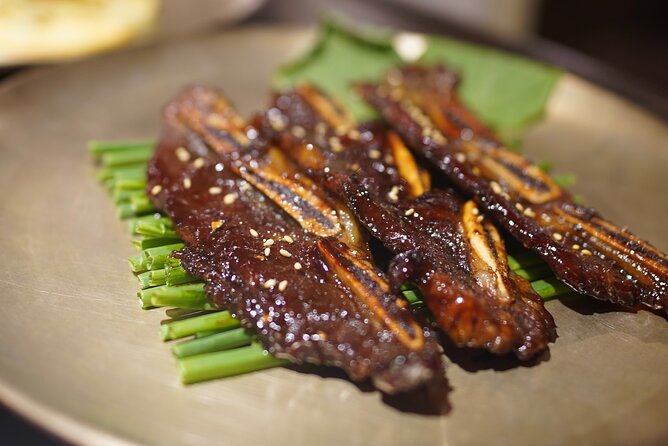
LA galbi is the meat dish. These are Korean-style marinated short ribs, commonly associated with a sweet and savory marinade and quick grilling. The name can be confusing because it refers to a cut popularized in Los Angeles, not a separate regional cuisine. In this class, it gives you a hands-on introduction to one of Korea’s best-known barbecue dishes.
Fresh kimchi offers a useful contrast to the fermented kimchi found at many Korean meals. You get to see how seasoning, texture, and vegetables come together before long fermentation changes the flavor. It is also one of the easier recipes to try again at home, since you do not need to wait for a long aging period to eat it.
Haemul pajeon is a savory seafood and scallion pancake. It shows a different side of Korean cooking, with a batter that must be handled carefully in the pan so the edges become crisp while the center stays tender. The dish is familiar enough to appeal to beginners, but the cooking technique still gives you something to learn.
Tangpyeongchae, also known as tapyeongchae in the tour description, is a delicate Korean mixed dish traditionally made with mung bean jelly, vegetables, and other ingredients. It is lighter than the galbi and pajeon, and it adds a cooler, more refined element to the meal.
The recipes are designed to be approachable. You do not need professional cooking skills, and the instructor prepares the class so the work is manageable. That does not mean you simply watch. You take part in preparing and cooking the dishes, with help when you need it.
From preparation to a traditional Korean meal
The best part of the class comes after the cooking. Instead of tasting one item and moving on, you sit down with the food you made and eat it as a proper meal.
The dining space is arranged in a traditional Korean style, and the Bangjja bronzeware adds weight and ceremony to the meal. Bangjja is handmade Korean bronze tableware, valued for its appearance and traditional use. It is a small detail, but it changes the mood. Food served on handmade metalware feels different from food placed on disposable plates in a classroom.
You also receive a glass of freshly brewed makgeolli, the lightly alcoholic rice drink associated with Korean rural and celebratory dining. Traditional Korean desserts complete the meal. The combination makes the price easier to understand, since you are paying for instruction, a full meal, drinks, tableware, and access to a private-style historic home.
Still, keep your expectations in check. This is not a palace banquet or a formal royal court recreation. The phrase royal cuisine points to the menu and the traditional presentation, while the atmosphere remains friendly and informal. You are there to cook, ask questions, make a few mistakes, and enjoy the result.
Why the small group matters
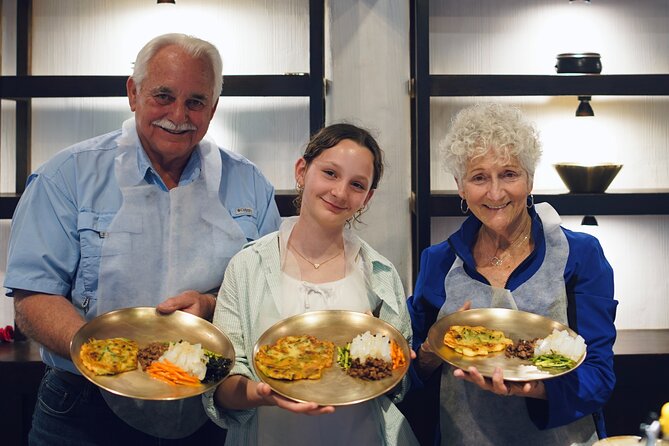
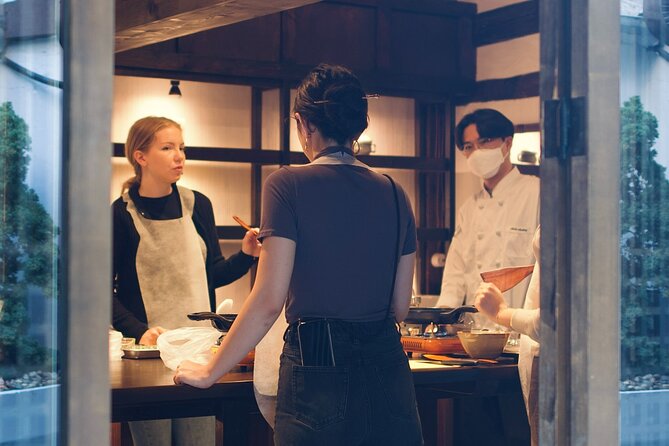
A six-person limit is one of the strongest features here. Cooking instruction becomes less useful when you are standing behind a crowd, unable to see the pan or ask for help. In this class, the instructor can pay attention to each person.
That is helpful if you are new to Korean cooking. You can ask about ingredients, timing, heat, seasoning, or how to repeat a recipe at home. Families also benefit from the format. One multigenerational group included children aged 11 and 13, and the instruction worked across different ages.
The class also suits solo visitors. You do not need to arrive with a partner or a group of friends. Cooking gives you an easy way to meet the other participants, and the small room makes conversation natural.
The pace is another plus. The advertised length is about two and a quarter hours, but the class is structured so the time includes cooking, conversation, dining, and cultural explanation. You are not pushed out as soon as the final dish reaches the table.
More Korean cooking classes:
- Local Home Korean Cooking Class & Market Adventure in Seoul
★ 5.0 · 1,024 reviews - Master Korean traditional cooking with a Kimchi chef
★ 5.0 · 385 reviews - Seoul: Korean Cooking Class at a Local Home and Market Tour
★ 5.0 · 348 reviews - Seoul: Korean Cooking at Seoul Cooking Club!
★ 5.0 · 311 reviews
Chef Park’s teaching style and cultural stories
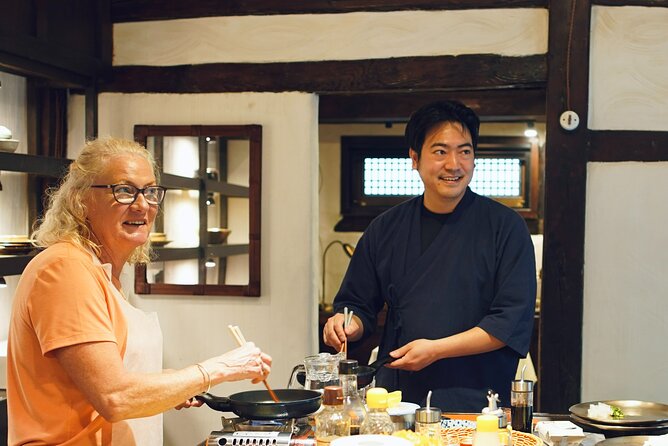
Chef Park’s teaching is a major part of the experience. He has an official culinary certificate and combines practical instruction with stories about Korean dishes and history.
You should expect more than a list of ingredients. The class explains why the dishes matter, how Korean food has changed, and how traditional food connects with modern life. One especially useful feature is the link between the food and Korea’s colonial history, which gives context without turning the class into a lecture.
His style also appears well suited to mixed groups. He is described as patient with slower cooks, funny without taking over the room, and willing to discuss subjects beyond the kitchen. That helps if you are nervous about cooking in front of strangers.
English-language instruction is available. A host with perfect English was specifically noted, and the class is intended for international visitors. Exact menu details or teaching emphasis can vary, so treat the listed dishes as the planned core rather than expecting every session to unfold word for word.
Understanding the Seoul location and listed stops
The meeting point is 25 Samil-daero 32ga-gil in Jongno District. This puts you in one of Seoul’s most useful sightseeing areas, with public transportation nearby and several major attractions within the wider neighborhood.
The listed stops are:
Gyeongbokgung Palace
Gyeongbokgung is Seoul’s best-known royal palace and an obvious companion to a class focused on royal Korean food. Its broad courtyards and formal buildings help you picture the courtly setting associated with the cuisine.
Do not assume the cooking class includes a palace tour. The experience begins and ends at the hanok meeting point, so use Gyeongbokgung as a nearby place to visit before or after, unless the operator gives you different instructions.
Changdeokgung Palace
Changdeokgung is another major Joseon palace and is known for a more intimate layout than Gyeongbokgung. It fits well with the class because Korean food traditions are closely tied to the royal court and the Joseon period.
Again, the available details do not provide a separate guided visit or admission arrangement. Plan it as part of your own Jongno sightseeing rather than counting on palace entry during the cooking session.
Kwangjang Market
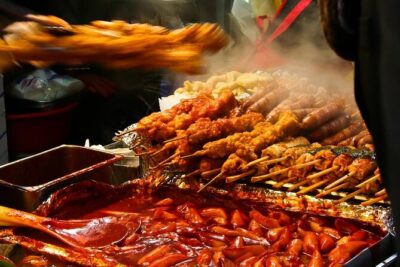
Kwangjang Market is one of Seoul’s classic food stops. It gives you a lively contrast to the calm hanok, with ready-to-eat Korean dishes and market snacks.
The market is useful before the class if you want to sample street food, but watch your appetite. The cooking class ends with a full meal, so arriving after a large market feast may make the final dining portion less enjoyable.
Ikseon-dong Hanok Street
Ikseon-dong is the closest match to the mood of the class. Its narrow lanes and hanok buildings now hold cafes, restaurants, and small shops. The area is particularly handy after the class, when you may want to continue walking without crossing the city.
Some of the cooking sessions take place in or near the Ikseon-dong hanok area. The old-house setting is a central part of the experience, but the surrounding district is more commercial than residential in places. Expect atmosphere and convenience, not a quiet village untouched by modern Seoul.
Gwanghwamun Square
Gwanghwamun Square is a broad civic space near the palaces and central Seoul. It works well as part of a day built around Korean history, government, and public life.
The key practical point is that these listed locations do not create a hop-on sightseeing route. The activity’s stated start and end point is the cooking-class meeting point, and the main event is the meal and instruction inside the hanok.
Is $98.98 a fair price?
At $98.98 per person, this is not a budget cooking lesson. You can certainly find cheaper food activities in Seoul, especially if you only want to eat pajeon or barbecue.
The value is in the package. You receive a small-group class, a certified instructor, several dishes, a full sit-down meal, makgeolli, desserts, traditional tableware, and time inside a 100-year-old hanok. The cultural explanation also gives the food more meaning than a standard restaurant meal.
I would consider the price reasonable if you want a central, polished experience and plan to make the recipes again at home. It is less compelling if you are watching every won, dislike group activities, or mainly want to see Seoul’s palaces and markets.
The experience also includes practical extras that add value. Recipe information can be sent after the class, and photographs may be provided afterward. Those details are useful because they help you remember the process instead of leaving with only a full stomach.
Practical advice before you book
The meeting point is near public transportation, but you should allow time to find the correct hanok. The address is on a smaller street, and one useful feature of the host’s communication is that directions and photos may be sent to help you locate the house.
Wear clothes you can cook in comfortably. The information does not specify a required dress code, but a kitchen class is better with sleeves and shoes that do not get in your way.
Tell the provider about physical needs before arrival. One participant received a stool to reduce pressure on painful legs, but that should not be treated as a guaranteed service or a formal accessibility policy.
The class accepts mobile tickets, and confirmation is sent when you book. Free cancellation is available if you cancel at least 24 hours before the local start time. Cancellations or changes made inside that window are not refunded or accepted.
Who will enjoy this most?
I would recommend this class to you if you want an activity with a real sense of place, not just another restaurant meal. It is particularly good for first-time visitors who want a gentle introduction to Korean food and culture without needing prior cooking experience.
Families can make good use of the format, especially with older children and teenagers. Couples and friends will enjoy the shared meal, while solo visitors get a built-in social activity without committing to a large group.
It is also a smart choice near the start of your Seoul visit. Chef Park may offer restaurant suggestions, and the class gives you a better grasp of dishes you will see throughout the rest of your trip.
You may want to skip it if you have a very tight schedule, want a purely hands-off demonstration, or cannot justify nearly $100 for a short activity. The listed palace, market, and square stops should also not be treated as included sightseeing unless the provider confirms that separately.
Should you book Royal Seoul Cooking Class?
Book it if the combination of traditional home setting, hands-on cooking, and cultural context appeals to you. The small group, clear instruction, generous menu, and relaxed meal make this more substantial than a quick recipe demonstration.
I would especially choose it for a first or second day in Seoul, when you can use the location for nearby sightseeing and the food advice for the rest of your stay. At $98.98, it is a splurge, but one that makes sense for a memorable Korean food experience rather than a simple meal.
FAQ
Where does the Royal Seoul Cooking Class meet?
The class begins at 25 Samil-daero 32ga-gil in Jongno District, Seoul, South Korea. The activity ends back at the same meeting point.
How long does the cooking class last?
The experience lasts approximately two hours and 15 minutes.
How many people can join the class?
The class has a maximum of six participants, allowing for close instruction and a small-group atmosphere.
What dishes do you prepare?
The planned dishes include LA galbi, fresh kimchi, haemul pajeon, and tangpyeongchae, also spelled tapyeongchae in the tour information.
Is food and drink included after cooking?
Yes. You eat the dishes you prepare on traditional Bangjja bronzeware, and the experience includes freshly brewed makgeolli and traditional Korean desserts.
Can I cancel for a full refund?
You can cancel for a full refund up to 24 hours before the experience’s local start time. Cancellations or changes made less than 24 hours before the start are not accepted or refunded.
More Workshops in Seoul
- Yongpyong Ski Resort from Seoul with Optional Lesson and Packages
★ 5.0 · 217 reviews - Korean Cooking Class with Grocery Shopping at Seoul Local Market
★ 5.0 · 107 reviews - Seoul : Taste of Korea, Authentic Home-Style Cooking Class
★ 5.0 · 64 reviews - K-pop Dance Class in Seoul (Incl. video shooting & editing)
★ 5.0 · 52 reviews
Just added around Seoul
- Incheon Airport Private Transfer between Seoul City★ 4.0 · 4 reviews
- Seoul’s Stars: Open Mic with Local & International Talent★ 4.8 · 4 reviews
- Samaksan Cable Car and Nami Island Day Escape with Railbike★ 4.0 · 4 reviews
- DMZ 2nd Tunnel and Cheorwon Peace Observatory with Admission★ 5.0 · 4 reviews
- Nami & Maple Road & Theatre des Lumieres Day Tour from Seoul★ 4.8 · 4 reviews
- Hire Photographer, Professional Photo Shoot – Seoul★ 5.0 · 4 reviews
- [KoreaByLocal] Authentic Seoul Night Walk and Chicken & Beer★ 5.0 · 4 reviews
- Play Gayageum in Hanbok Cultural Experience in Bukchon★ 5.0 · 4 reviews
Bukchon Hanok Village, compared.
Gyeongbok Palace, Bukchon Village, and Gwangjang Tour
Read our review →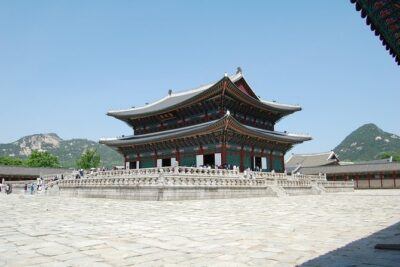
Seoul City Sightseeing Tour Including Gyeongbokgung Palace, N Seoul Tower, and Namsangol Hanok Village
Read our review →Gyeongbok Palace, Bukchon Village, and Gwangjang Tour
Read our review →
Gyeongbok Palace and Bukchon Hanok Walking Tour
Read our review →
Best Walking Tour to Gyeongbok Palace Bukchon Hanok Village
Read our review →Experience Korean Cooking in Modern Hanok Kitchen
Read our review →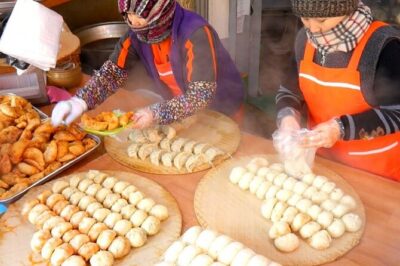
Afternoon Seoul: Hanok Vibes, Netflix Street Food & N Seoul Tower
Read our review →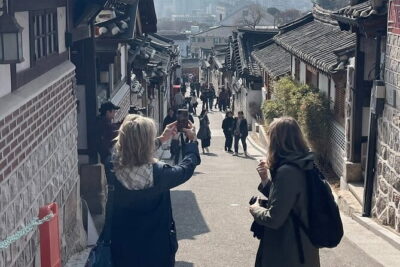
Tour Seoul’s oldest district with a storyteller from Bukchon
Read our review →Browse the lists this tour appears in