
Reviewed · COOKING CLASSES
Master Korean traditional cooking with a Kimchi chef
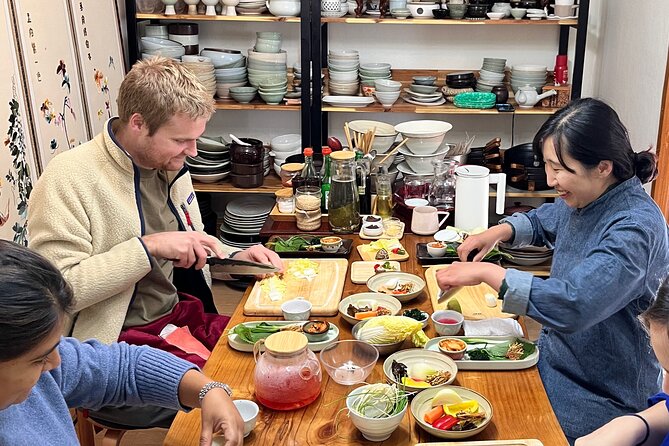
Korean food makes the most sense when you handle the ingredients yourself. This hands-on cooking class begins in Gyeongdong Market, where you shop for the day’s produce and seasonings, then continues in a Korean-style kitchen with a local chef. You cook a full meal, sit down to eat it, and return to the station by early afternoon.
I especially like the market walk and the small class size, advertised as limited to seven people. The market gives you a useful look at Korean food beyond restaurant menus, while the cooking session lets you prepare each dish instead of simply watching a demonstration. A possible drawback is the fixed menu schedule: choose the wrong day and you may miss the dish you most want to learn.
In This Review
- Key points to know before booking
- Why this Seoul cooking class works so well
- Gyeongdong Market: a useful start, not a quick photo stop
- Pick the day for the dish you want to cook
- From prepared ingredients to a complete Korean meal
- Eating what you made
- Group size, teaching style, and language
- Dietary needs and age limits
- Is $85 a fair price?
- Timing, meeting point, and cancellation
- Who should book this class?
- Should you book it?
- FAQ
- Where does the Korean cooking class meet?
- What time does the activity start?
- How long does the experience last?
- What dishes are made on each day?
- Are vegan and halal options available?
- Can I cancel for a full refund?
Key points to know before booking
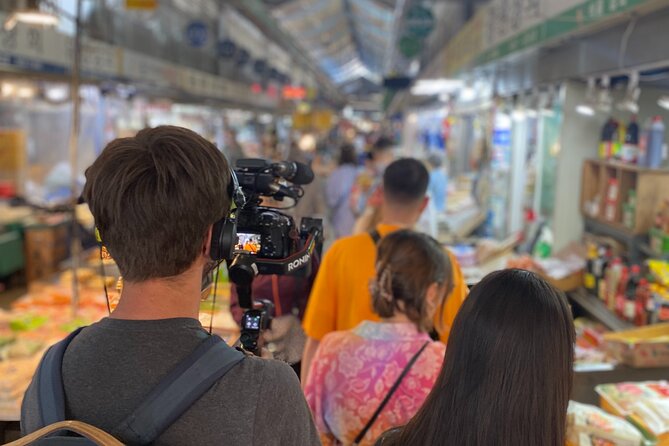
- Gyeongdong Market comes first: Shop for ingredients in Seoul’s large food and traditional medicine market before cooking.
- The class is genuinely hands-on: You prepare portions of the full menu, not just watch the chef work.
- Menus change by day: Thursday is kimchi day, Monday is samgyetang, and other days feature different Korean specialties.
- Chef Minseon may lead your session: She is praised for clear instruction, patience, communication, and a friendly manner.
- Your meal is included: You sit down to eat the dishes you make, with morning tea included on every session.
- The format suits curious eaters: Vegan and halal options are available, and beginners are welcome.
Why this Seoul cooking class works so well
I like cooking classes that connect food to the place where it is bought. This one does that in a practical way. You begin at Jegi-dong Station Exit 2 on Line 1, meet your guide shortly before 10am, and walk into Gyeongdong Market to gather what you will use in the kitchen.
That short walk matters. Korean cooking depends on ingredients that can look unfamiliar at first: fermented pastes, dried seafood, roots, greens, spices, mushrooms, and several kinds of kimchi. A market visit helps you see these foods in their everyday setting instead of meeting them only as neatly labeled items in a restaurant.
The market is also part of Seoul that many first-time visitors may not reach on their own. It combines food stalls with traditional medicine shops, and the scale can feel surprising. The route may include more than one local market area, depending on the day and guide. You should expect a real working market rather than a polished food hall.
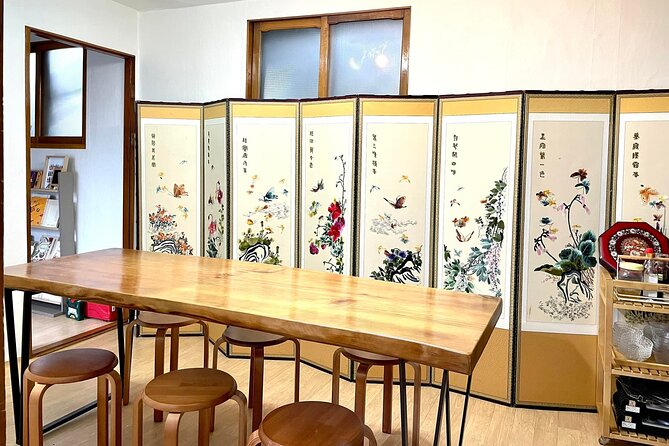
After shopping, you walk to a nearby Korean-style home or cooking studio. The exact setting can vary in how it feels, but the purpose is the same: move from market to kitchen, prepare the ingredients, and share the finished food at a table.
More Korean cooking classes:
- Local Home Korean Cooking Class & Market Adventure in Seoul
★ 5.0 · 1,024 reviews - Seoul: Korean Cooking Class at a Local Home and Market Tour
★ 5.0 · 348 reviews - Seoul: Korean Cooking at Seoul Cooking Club!
★ 5.0 · 311 reviews
Gyeongdong Market: a useful start, not a quick photo stop
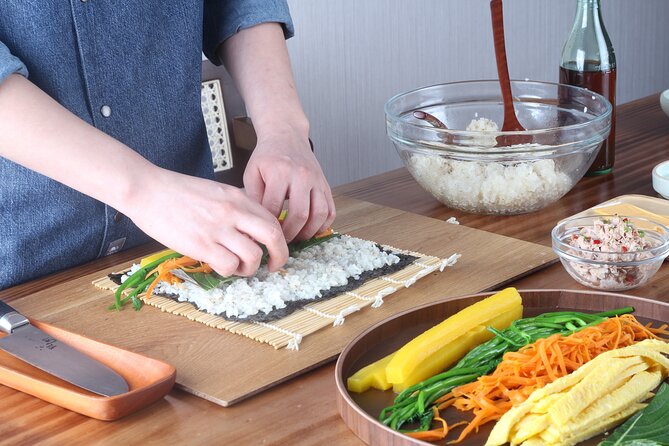
Gyeongdong Market is the only named stop, and it gives the experience much of its local character. It is known for food and traditional medicine, so the shopping route can introduce you to a wider range of Korean ingredients than a standard tourist market.
Your guide leads the way and explains what the group needs for the recipes. This is helpful because the class is not asking you to identify everything independently. You can focus on the sights, smells, textures, and explanations while the chef makes sure the right items are selected.
A few practical points will make this part easier:
- Meet at Jegi-dong Station Exit 2, not at the cooking venue.
- Arrive a little before 10am so the group can leave on time.
- Wear comfortable shoes because the experience includes walking through the market and neighborhood.
- Keep your group together. One person had trouble finding the meeting point, though Chef Minseon helped with directions and communication.
- Expect a market with local activity and unfamiliar products, not a quiet guided gallery.
The market walk is not a full sightseeing tour of Seoul. It is a food-focused introduction that prepares you for the cooking session. If you want a long cultural tour with many historic buildings, this is not the right format. If you want to understand what goes into Korean food, it is a smart use of the morning.
Pick the day for the dish you want to cook
The menu changes according to the day you book. This is one of the most important details to check before paying, since the experience title highlights kimchi but kimchi is specifically the Thursday menu.
Here is the weekly breakdown:
- Monday: Samgyetang, a whole chicken soup traditionally associated with ginseng and other warming ingredients.
- Tuesday and Saturday: Bulgogi, japchae, and doenjang jjigae.
- Thursday: Kimchi.
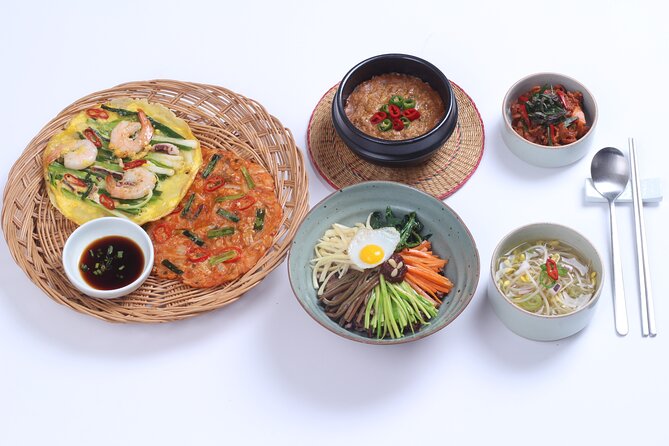
- Friday: Bibimbap.
- Sunday: A selection of Korean desserts.
The meal is composed of three different menu items, though some sessions may include extra preparation or a larger spread. Several class descriptions refer to cooking four dishes, and one participant had enough food to take some away. The exact amount can depend on the menu and the day.
Tuesday and Saturday offer the broadest savory introduction. Bulgogi shows you how Korean marinades work, japchae introduces glass noodles and vegetable preparation, and doenjang jjigae gives you a basic look at fermented soybean paste in soup.
Friday’s bibimbap class may be the easiest choice if you want a recognizable Korean dish that you can repeat at home. The class uses more traditional ingredients than you might find in a casual restaurant version, and the market visit gives those ingredients some context.
Thursday is the clear choice for anyone specifically interested in kimchi. Keep in mind that the provided details do not specify the exact type or quantity of kimchi made, so check the available date and menu before booking if fermentation technique is your main goal.
Sunday dessert sessions offer something different. They are useful if you prefer sweet food or have already taken a savory Korean class. Traditional Korean doughnuts may also be sampled during the market walk on some sessions, adding a small extra treat.
From prepared ingredients to a complete Korean meal
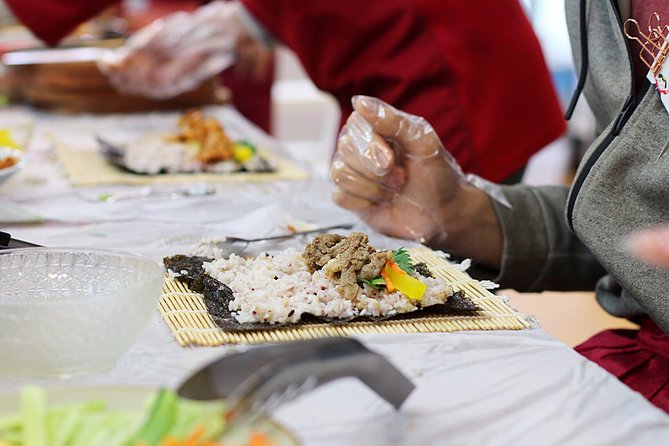
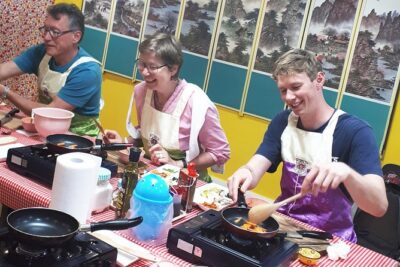
Once you reach the cooking space, the chef organizes the group and explains the recipes. This is a working class, not a demonstration where you watch from the edge of the room. Each person takes part in preparing small portions of the menu before everyone sits down to eat.
That format is particularly good for beginners. You get direct help with the steps that can be hard to judge from a recipe alone, such as seasoning, cutting, mixing, and timing. Chef Minseon is praised for being patient and clear, and the instructors make a point of keeping the class engaged.
The recipes are described as authentic but manageable. That balance is important. A class can be culturally interesting yet too complicated to repeat at home. Here, the emphasis is on dishes that you can try again after returning home, with a recipe book provided in at least some sessions.
You also learn about Korean flavor building rather than just individual dishes. Fermented soybean paste, kimchi, marinades, vegetables, noodles, and rice all play different roles. The market makes those lessons easier to remember because you have already seen the ingredients before using them.
The pace is generally well organized, but this is still a three-and-a-half-hour activity. Cooking several dishes takes time, and the schedule includes walking, shopping, preparation, eating, and the return to the station. Do not book it immediately before another fixed appointment across town.
A completely different kind of day, same trip:
- Best DMZ Tour Korea from Seoul (Red Suspension Bridge Optional)
★ 5.0 · 41,422 reviews - DMZ Tour: 3rd Tunnel, Option(Suspension Bridge, Boat) from Seoul
★ 5.0 · 21,373 reviews - DMZ tour south Korea from Seoul (NK experience hall, defector)
★ 5.0 · 20,599 reviews - DMZ Insider Tour: 3rd Tunnel, NK Defector Meet & Red Bridge
★ 4.9 · 15,214 reviews
Eating what you made
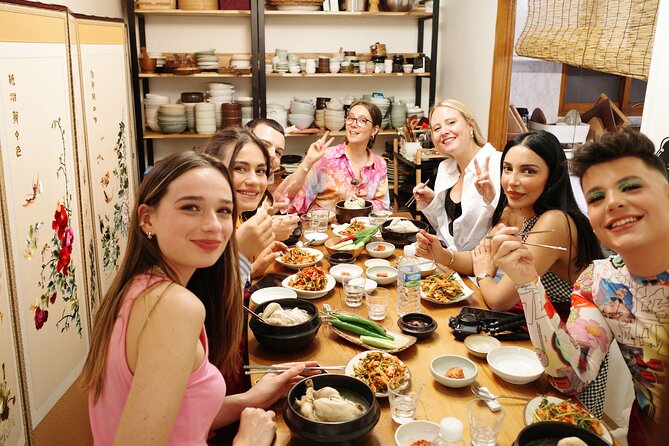
The best part of the class comes after the cooking is done. You sit down with your group and eat the meal you prepared. Lunch, dinner, or dessert is included depending on the selected menu and time, and morning tea is included in every class.
This shared meal gives the experience a social rhythm without making it feel like a formal restaurant visit. You can compare how each person approached the recipes, ask the chef questions, and enjoy the food while it is fresh.
Food quantity appears to be generous. One class participant had enough to take some food away, though you should not assume every session includes take-home portions. The main value is the meal itself plus the ability to recreate the recipes later.
The cooking space has been described as well organized and fully equipped. That matters when several people are working at once. A clean, prepared kitchen keeps the class moving and lets you spend more time cooking rather than waiting for equipment.
Group size, teaching style, and language
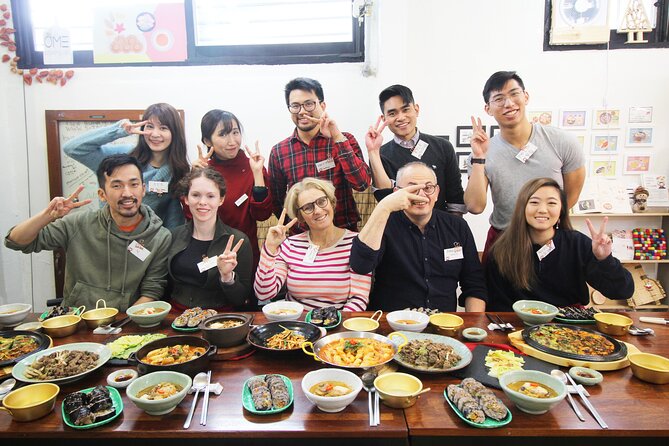
The experience is promoted as a small-group class limited to seven people, which is a strong advantage. A small group gives you more direct access to the chef and makes it easier to ask for help. It also makes the shared meal more relaxed.
The booking information says a maximum of 10 people per booking, so the practical group size may depend on how the reservation is arranged. The activity is also described as private, with only your group participating. Since these details appear together with the seven-person limit, confirm the final group arrangement when you book if a very small class is essential to you.
Chef Minseon is one of the named instructors associated with the experience. She has been praised for being especially helpful with directions, patient during instruction, and good at explaining traditional recipes. Other guides lead sessions as well, and the feedback about the teaching style is consistently warm and supportive.
English communication is available, and one class participant specifically noted that the instructor spoke very good English. Still, the experience is centered on cooking, so the most useful questions will be practical ones about ingredients, methods, and flavors.
Dietary needs and age limits
Vegan and halal options are available. Tell the operator about your dietary needs when booking, rather than waiting until the class begins. The class has been able to accommodate dietary restrictions, but advance notice gives the chef time to plan the menu properly.
Guests over 14 years old are charged the adult price. Up to one child per class may participate, but children under six are not accepted for safety reasons. This makes the class workable for some families, though it is not designed as a large children’s activity.
If you have mobility concerns, note that the experience includes a walk through the market and local streets. The provided details do not give a specific accessibility rating, so ask the operator directly if you need step-free access or other assistance.
Is $85 a fair price?
At $85 per person, this is not the cheapest meal you will eat in Seoul. It is also more than the price of a short cooking demonstration. The value comes from combining several services in one morning: a guided market visit, ingredient shopping, instruction from a local chef, use of a cooking kitchen, a full meal or dessert, and a small-group setting.
The price makes the most sense if you want to learn techniques you can use later. A restaurant meal gives you the finished dish. This class gives you the dish, the market context, and a recipe to take home.
It is also a good option for people who like food but are not confident cooks. The teaching is patient, the portions are manageable, and the recipes are meant to be repeatable. Experienced cooks may find the basic steps familiar, but the market explanations and Korean ingredients still add value.
The class is booked around 48 days in advance on average, which suggests that popular dates can fill early. Book ahead if you need a particular menu day, especially Thursday for kimchi or Friday for bibimbap.
Timing, meeting point, and cancellation
The experience starts at 10am and lasts about three hours and 30 minutes. It ends back at Jegi-dong Station, so you can continue sightseeing from the same area after lunch.
Subway station pickup and drop-off are not included. You are responsible for reaching Jegi-dong Station Exit 2, while the guide handles the walk from there to the market and cooking venue.
Mobile tickets are accepted. Confirmation is sent within 48 hours of booking, subject to availability. Free cancellation is available up to 24 hours before the local start time. Cancellations or changes made inside that window are not refunded or accepted.
The activity requires a minimum number of participants. If the operator cancels because that minimum is not reached, you can choose another date or experience, or receive a full refund.
Who should book this class?
I would choose this experience if you want a practical food activity with a strong local setting. It is especially well suited to:
- First-time visitors who want to understand Korean food beyond barbecue and fried chicken.
- Home cooks who want recipes they can try again.
- People who prefer doing rather than watching.
- Solo visitors or couples who enjoy meeting a small group.
- Students and longer-stay visitors who want a useful skill from Seoul.
- Anyone with vegan or halal dietary needs who gives advance notice.
- Fans of Korean food culture who want to see ingredients before they reach the plate.
I would think twice if you dislike walking, want to choose your own dishes, or need a fully flexible schedule. The menu is fixed by day, the meeting point is at a subway station rather than the venue, and the activity occupies most of the morning.
Should you book it?
Yes, if the weekly menu matches what you want to learn. The combination of Gyeongdong Market and a hands-on kitchen makes this more useful than a standard cooking demonstration, and the meal gives you an immediate reward for the work.
For the best fit, book Tuesday or Saturday for a three-dish savory introduction, Thursday for kimchi, Friday for bibimbap, Monday for samgyetang, or Sunday for Korean desserts. Arrive early at Jegi-dong Station, wear comfortable shoes, and share dietary requirements ahead of time. At $85, it is a considered purchase, but the market visit, instruction, meal, and take-home recipes make it good value for a food-focused morning in Seoul.
FAQ
Where does the Korean cooking class meet?
The class begins at Jegi-dong Station Exit 2 on Line 1, near the Seoul Oriental Medicine Market. It ends back at the same meeting point.
What time does the activity start?
The experience starts at 10am. You should meet the guide a little before the start time.
How long does the experience last?
The activity lasts approximately three hours and 30 minutes, including the market visit, cooking class, meal or dessert, and return to the station.
What dishes are made on each day?
Monday features samgyetang. Tuesday and Saturday feature bulgogi, japchae, and doenjang jjigae. Thursday is for kimchi, Friday is for bibimbap, and Sunday features Korean desserts.
Are vegan and halal options available?
Yes. Vegan and halal options are available, but you should provide this information when booking so the menu can be prepared appropriately.
Can I cancel for a full refund?
Yes, if you cancel at least 24 hours before the experience start time. Cancellations or changes made less than 24 hours in advance are not accepted for a refund.
Just added around Seoul
- Incheon Airport Private Transfer between Seoul City★ 4.0 · 4 reviews
- Seoul’s Stars: Open Mic with Local & International Talent★ 4.8 · 4 reviews
- Samaksan Cable Car and Nami Island Day Escape with Railbike★ 4.0 · 4 reviews
- DMZ 2nd Tunnel and Cheorwon Peace Observatory with Admission★ 5.0 · 4 reviews
- Nami & Maple Road & Theatre des Lumieres Day Tour from Seoul★ 4.8 · 4 reviews
- Hire Photographer, Professional Photo Shoot – Seoul★ 5.0 · 4 reviews
- [KoreaByLocal] Authentic Seoul Night Walk and Chicken & Beer★ 5.0 · 4 reviews
- Play Gayageum in Hanbok Cultural Experience in Bukchon★ 5.0 · 4 reviews
Cooking Classes, compared.
Local Home Korean Cooking Class & Market Adventure in Seoul
Read our review →
Korean Cooking Class at a Local Home and Market Tour
Read our review →
Cook 3 Authentic Korean Dishes with Local Market Tour
Read our review →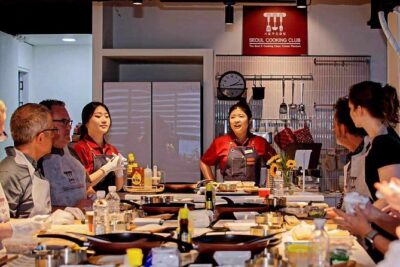
Experience Korean Cooking in Modern Hanok Kitchen
Read our review →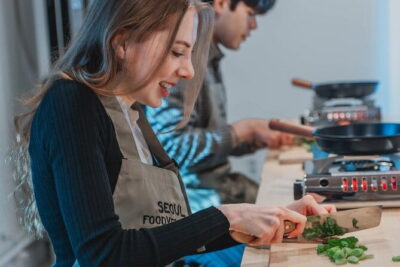
Korean Cooking Class with Grocery Shopping at Seoul Local Market
Read our review →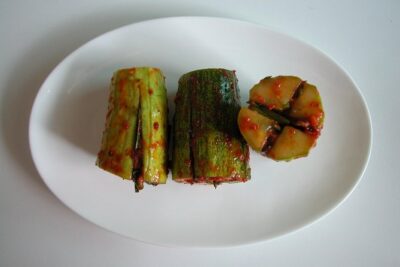
Korean Kimchi Making Day Experience with a Local Market Tour
Read our review →Browse the lists this tour appears in