
Reviewed · COOKING CLASSES
Korean Kimchi Making Day Experience with a Local Market Tour
Making four kinds of kimchi is the heart of this Seoul experience, but the Mangwon Market walk gives it useful context. Chef Jomin introduces the cabbage, radish, cucumber, seafood, and other ingredients before you handle them yourself. You also get time to taste Korean street food along the way.
I like the hands-on teaching and the practical souvenir: your kimchi goes home with you, along with recipes in a small cookbook. The main consideration is the quantity. You make a generous amount, so you need room in your luggage and a sensible plan for carrying fermented food home.
In This Review
- Key points at a glance
- Why this kimchi class works better than a simple cooking demo
- Meeting Jomin at Mangwon Station
- Mangwon Market: the best part for understanding ingredients
- Four types of kimchi in one small kitchen
- The meal after cooking
- Taking your kimchi home
- Price and value at $89
- Who should book this experience
- Practical details before you reserve
- Final call: is it worth booking?
- FAQ
- Where does the kimchi-making experience begin?
- Where does the activity finish?
- How long does the experience last?
- How many people are in the class?
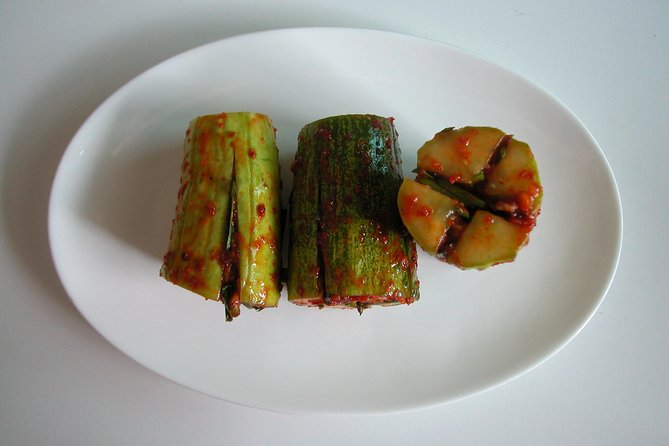
- What kinds of kimchi will I make?
- Can I take the kimchi home?
- Are vegetarian and vegan options available?
Key points at a glance
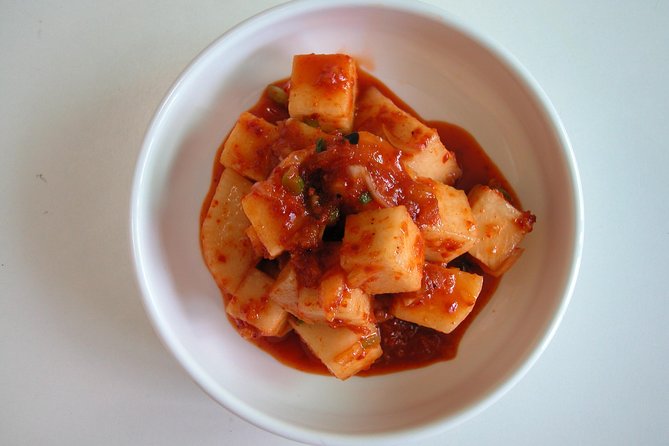
- Four kimchi recipes: Prepare cabbage, radish, cucumber, and another Korean-style kimchi rather than watching a single demonstration.
- Mangwon Market first: Learn how to identify ingredients and sample local snacks before cooking.
- Small-class feel: The experience is advertised for a maximum of four people, though additional booking information allows up to 11, so confirm the expected group size.
- Cook, eat, and pack: Sit down with your kimchi, boiled pork, fried tofu, and possibly makgeolli, then take the rest with you.
- Useful for home cooks: A recipe booklet and ingredient guidance make it easier to repeat the dishes after Seoul.
- Vegetarian and vegan options: These are available, but request the appropriate option when booking.
Why this kimchi class works better than a simple cooking demo
Kimchi is easy to buy in Seoul. It is also easy to eat at nearly every meal. The value of this class is learning what goes into it, how the ingredients look before preparation, and how the finished food fits into a Korean meal.
You begin at Mangwon Metro Station, Line 6, entrance 2. From there, Jomin leads you through Mangwon Market toward the cooking studio. This opening walk matters because the market is not just a route between the station and the kitchen. It is where you see the raw materials in their everyday setting.
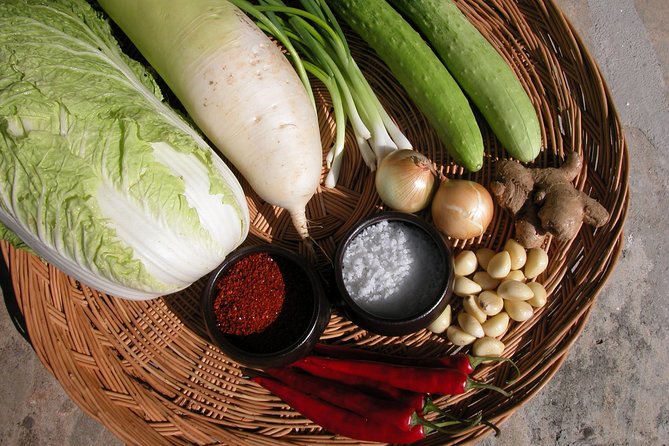
The class focuses on fresh Korean cabbage, radish, and cucumber. You learn how these ingredients are prepared and seasoned in four different kimchi styles. That variety gives you a better grasp of the method than making only the familiar napa cabbage version.
I especially like this format for someone who wants to cook at home. You are not simply handed a finished dish and told to remember the flavor. You work through the process, taste the results, and receive recipes to use later.
More Korean cooking classes:
- Local Home Korean Cooking Class & Market Adventure in Seoul
★ 5.0 · 1,024 reviews - Master Korean traditional cooking with a Kimchi chef
★ 5.0 · 385 reviews - Seoul: Korean Cooking Class at a Local Home and Market Tour
★ 5.0 · 348 reviews
Meeting Jomin at Mangwon Station
The meeting point is clear: entrance 2 of Mangwon Station. This is important in Seoul, where a station may have several exits that lead to very different streets. Build a little extra time into your plan so you are standing at the correct entrance when the class begins.
Jomin is identified as the chef and guide for the experience. Some written feedback refers to the host as Jun, so if the name on your confirmation differs slightly, check the meeting details rather than guessing. The provider is cookorean.
The tour ends back at the same meeting point. That makes the class easy to fit into a Seoul day, especially if you plan to continue exploring the Mangwon area afterward.
The total experience lasts about three and a half hours. That is long enough for a real market visit and a proper cooking session, but it does not take up an entire day. The schedule includes walking, tasting, preparation, cooking, and a meal, so wear something comfortable and avoid booking another tight appointment immediately afterward.
Mangwon Market: the best part for understanding ingredients
Mangwon Market gives you a look at a more ordinary side of Seoul food culture. The focus is on produce, Korean pantry items, seafood, and snacks rather than polished restaurant presentation.
Jomin points out ingredients used in the class and explains what to look for when buying them. This is practical information. Once you return home, you may not have access to the exact same market, but you will have a better idea of what Korean cabbage, radish, and other kimchi ingredients should look like.
You also get time to taste street food. The exact snacks are not fixed in the information provided, so you should treat this as a chance to sample what is available that day rather than expect a set tasting menu. The market portion is described as a stroll, not a long shopping excursion.
That distinction helps set expectations. This is not a dedicated food crawl with many stops and a full meal at every stall. It is an ingredient-focused market visit with some local bites along the way. If you enjoy seeing how food is sold before learning to prepare it, this is a strong part of the experience.
You may also see seafood and a wide variety of produce. The market gives the class a local setting that a hotel kitchen or tourist restaurant could not provide. It also helps you feel more confident returning on your own later.
Four types of kimchi in one small kitchen
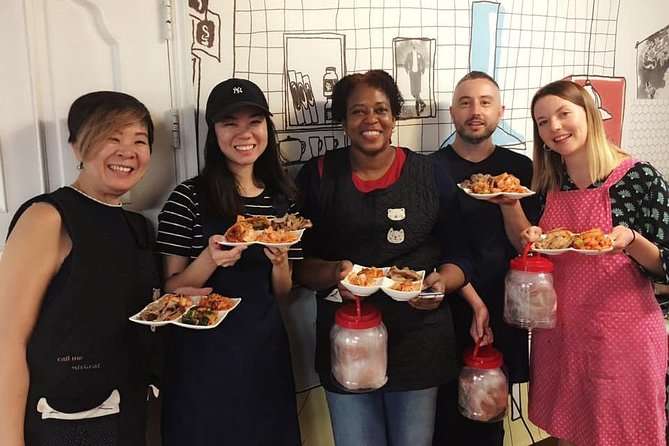
At the cooking studio, Jomin guides you through four types of kimchi. The ingredients specifically named are Korean cabbage, radish, and cucumber, giving you several textures and styles to compare.
The class is hands-on. You prepare the food instead of sitting through a demonstration. That makes the pace more useful for beginners because you can follow each stage directly and ask for help when needed.
The advertised maximum is four people, which should allow plenty of personal attention. However, the additional booking information gives a maximum of 11, and one piece of feedback describes a group of about 10. Group size may therefore depend on the date or booking arrangement. If close instruction is essential to you, confirm the expected class size before paying.
The teaching style is suited to people with little or no kimchi-making experience. The process is presented as manageable, and the instructor is described as patient, clear, and willing to guide participants through mistakes. You do not need to arrive as a skilled cook.
The four recipes also give you room to discover what you like. Some people prefer fresh cabbage kimchi, while others enjoy the sharper or crunchier character of radish and cucumber versions. Making several varieties in one session lets you compare them immediately.
A few more Seoul trips worth weighing up
- Seoul Street Food Market Tour
★ 5.0 · 1,226 reviews - Seoul: Night Market Food Tour with Local Guide
★ 4.9 · 943 reviews - Downtown Seoul Guided Food & Market Tour with 8+ Local Tastings
★ 5.0 · 580 reviews - Seoul Night Palace & Market Food Tour with Vehicle
★ 5.0 · 275 reviews
The meal after cooking
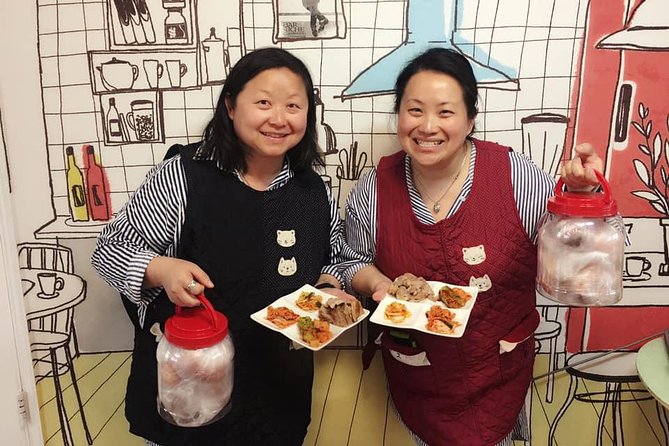
After the preparation, you sit down and eat some of the kimchi you have made. It is served with boiled pork and fried tofu, a combination that turns the lesson into a proper Korean-style meal.
This shared meal is more than a reward at the end. It shows how kimchi works alongside other foods. The sour, spicy, salty, and fresh flavors make more sense when eaten with plain tofu or rich pork rather than tasted alone from a container.
Some feedback also refers to makgeolli being served. Since the formal description names pork and tofu but does not guarantee makgeolli, treat the drink as a possibility rather than a promise.
The meal also gives you time to talk with the other people in the class. The social side is part of the appeal, particularly if you are traveling as a couple, with family, or alone and want a shared activity.
Vegetarian and vegan options are available. Ask for the suitable version when booking, since the standard meal includes pork. The supplied information does not explain every substitution, so anyone with strict dietary needs should confirm the details in advance.
Taking your kimchi home
You do not leave with only a memory and a recipe card. The kimchi you make is packed for you to take away, and the quantity can be substantial.
This is an excellent value if you enjoy cooking, but it creates a small travel problem. Fermented food needs careful packing, and one useful tip is to place the container in checked luggage rather than carry-on baggage. You should also leave room in your suitcase before attending.
The quantity is large enough that you may be eating kimchi for several more meals after the class. That is a benefit for some people and a burden for others. If you are leaving Seoul immediately or traveling with very limited luggage, think about how you will carry it.
The recipe or cookbook adds lasting value. You can buy Korean ingredients at home and repeat the method, adjusting the seasoning to suit your taste. The class does not just send you home with a prepared product. It gives you a way to make more.
Price and value at $89
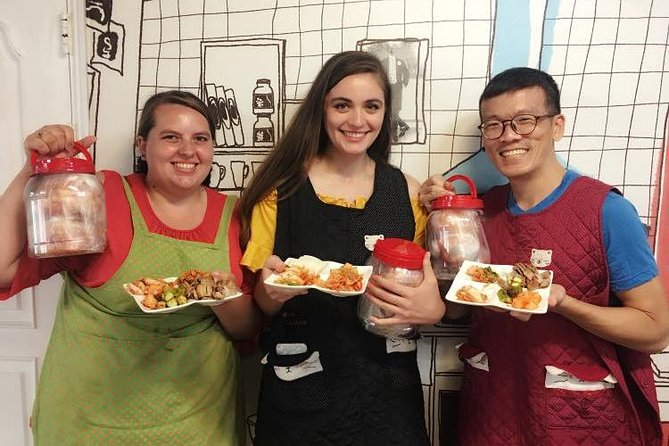
At $89 per person, this is not the cheapest food activity in Seoul. You are paying for about three and a half hours, a guided market visit, street-food tasting, chef instruction, four kimchi preparations, a sit-down meal, takeaway kimchi, and recipes.
The value improves if you would otherwise book a separate market tour and cooking class. Here, the market and kitchen support each other. You see the ingredients at the stalls, then use similar ingredients in the studio.
The takeaway portion also matters. You receive food you prepared yourself, not a small packaged sample. For a cooking enthusiast, that makes the price easier to justify.
The experience is less compelling if you only want to taste kimchi or take a quick class photograph. It requires active participation and a few hours of your day. You should also be comfortable with the practical challenge of transporting food afterward.
The perfect group size is likely small. The experience is advertised for up to four people, though the separate maximum of 11 means you should not assume a private or near-private lesson. The minimum number of participants is four, and the class can be rescheduled or canceled if that minimum is not met. If your Seoul schedule is tight, keep this possibility in mind.
Who should book this experience
I would recommend this class to:
- People who cook at home and want a repeatable Korean recipe
- Food lovers who want a market visit with a clear purpose
- Couples and families looking for a shared activity
- Visitors who want to see Mangwon beyond Seoul’s major sights
- Anyone curious about several kinds of kimchi, not only cabbage kimchi
- People who appreciate taking home something they made themselves
It is especially useful during a stay of several days. You can take the market knowledge and return later on your own, or use the rest of the day to explore the neighborhood around Mangwon Station.
Families should note that the class is hands-on and social. One 15-year-old participant was included in a positive family experience, so older children and teenagers may enjoy it. The provided details do not set a minimum age, so check before booking for younger children.
This may not suit you if you dislike fermented food, have strict luggage limits, or want a silent, highly formal lesson. It is also not the right pick if you want a broad survey of Korean cuisine. The class has one clear subject, kimchi, and stays with it.
Practical details before you reserve
The mobile ticket is convenient, and confirmation is sent when you book. The meeting point is near public transportation at Mangwon Station, Line 6, entrance 2.
The activity finishes where it starts. You can plan onward transportation from the station, but allow enough time for the class to run its full length.
Free cancellation is available up to 24 hours before the local start time for a full refund. Changes or cancellations made inside that 24-hour window are not accepted for a refund. If the minimum group is not reached and the provider cancels, you are offered another date or experience, or a full refund.
Because the class can be rescheduled for low enrollment, check your confirmation and messages before setting out. This matters most for a short Seoul visit.
Final call: is it worth booking?
Yes, if you want to understand Korean food through both the market and the kitchen. The strongest feature is the connection between the two: you see ingredients at Mangwon Market, learn what they are used for, then prepare four types of kimchi with Jomin.
The class offers real value for home cooks because you get instruction, recipes, a meal, and a generous amount of food to take away. Just confirm the likely group size, request a vegetarian or vegan option if needed, and leave suitcase space for the kimchi.
If you prefer a short tasting stop or have no interest in carrying food home, choose another Seoul activity. For everyone else, this is a practical, friendly way to spend three and a half hours and take a piece of Korean food culture back to your own kitchen.
FAQ
Where does the kimchi-making experience begin?
It begins at entrance 2 of Mangwon Metro Station in Seoul, on Line 6.
Where does the activity finish?
The activity ends back at the Mangwon Station meeting point.
How long does the experience last?
The experience lasts approximately 3 hours and 30 minutes.
How many people are in the class?
The experience highlights a maximum of four people, but the additional booking information lists a maximum of 11 participants. Confirm the expected group size for your chosen date.
What kinds of kimchi will I make?
You will learn to make four types of kimchi using ingredients such as Korean cabbage, radish, and cucumber.
Can I take the kimchi home?
Yes. You can take the kimchi you make with you, along with a recipe or cookbook. Leave room in your luggage, and consider packing the container in checked baggage.
Are vegetarian and vegan options available?
Yes. Vegetarian and vegan options are available. Request the appropriate option when booking.
More Shopping Tours in Seoul
- Seoul: Mt.Seorak, Nami Island & Korean Garden, No Shopping
★ 4.8 · 614 reviews - Private DMZ Tour (No Shopping): 3rd Tunnel & Suspension Bridge
★ 5.0 · 607 reviews - Cook 3 Authentic Korean Dishes with Local Market Tour
★ 5.0 · 231 reviews - Korean Palace and Market Tour in Seoul Including Insadong and Gyeongbokgung Palace
★ 4.0 · 174 reviews
Just added around Seoul
- Incheon Airport Private Transfer between Seoul City★ 4.0 · 4 reviews
- Seoul’s Stars: Open Mic with Local & International Talent★ 4.8 · 4 reviews
- Samaksan Cable Car and Nami Island Day Escape with Railbike★ 4.0 · 4 reviews
- DMZ 2nd Tunnel and Cheorwon Peace Observatory with Admission★ 5.0 · 4 reviews
- Nami & Maple Road & Theatre des Lumieres Day Tour from Seoul★ 4.8 · 4 reviews
- Hire Photographer, Professional Photo Shoot – Seoul★ 5.0 · 4 reviews
- [KoreaByLocal] Authentic Seoul Night Walk and Chicken & Beer★ 5.0 · 4 reviews
- Seoul Film Camera Club★ 5.0 · 4 reviews
Cooking Classes, compared.
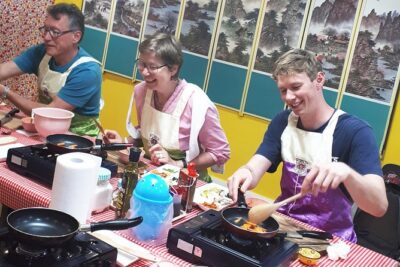
Local Home Korean Cooking Class & Market Adventure in Seoul
Read our review →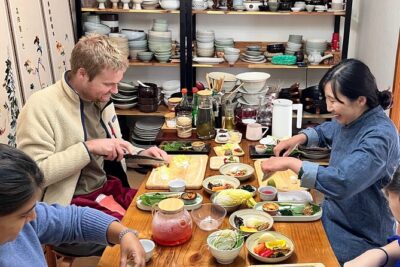
Master Korean traditional cooking with a Kimchi chef
Read our review →
Korean Cooking Class at a Local Home and Market Tour
Read our review →
Cook 3 Authentic Korean Dishes with Local Market Tour
Read our review →
Experience Korean Cooking in Modern Hanok Kitchen
Read our review →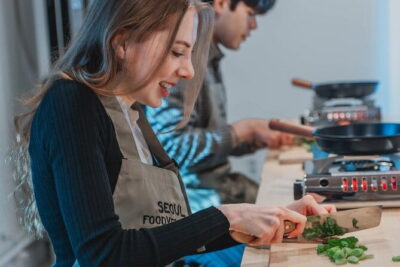
Korean Cooking Class with Grocery Shopping at Seoul Local Market
Read our review →Browse the lists this tour appears in