
Reviewed · BUKCHON HANOK VILLAGE
Experience Korean Cooking in Modern Hanok Kitchen
Korean food becomes much easier to understand when you make it yourself. At O’ngo Food Communications near Seoul’s Bukchon Hanok Village, you’ll work through beginner-friendly recipes in a clean, air-conditioned kitchen, then eat what you prepared for lunch. I especially like the hands-on format and the chance to ask questions of English-speaking chefs such as Ran and Yibben.
I also like that the class connects cooking with food culture, from choosing ingredients to understanding how they are used. The main caution is practical: the school can be hard to find, and one classroom is on the third floor without an elevator, so arrive early and allow extra time.
In This Review
- Key points before you book
- Cooking Korean food instead of just ordering it
- A modern kitchen near Bukchon Hanok Village
- What happens during the two-hour class
- The market walk and the Bukchon setting
- The chefs and the teaching style
- What you actually get for $87
- Timing, group size, and small practical details
- Who will enjoy this class most
- Should you book O’ngo Food Communications?
- FAQ
- Where does the Korean cooking class meet?
- What time does the class start?
- How long does the experience last?
- What is included in the price?
- Is hotel pickup included?
- What is the minimum age to participate?
- How many people can join the class?
- Will I receive confirmation after booking?
- Can I cancel for a refund?
Key points before you book
- Cook at your own workstation: You chop, mix, season, and cook instead of simply watching a demonstration.
- Choose from Korean classics: Classes may cover dishes such as japchae, bibimbap, chicken stew, kimchi, bulgogi, or kimchi pancakes, depending on the session.
- Learn in English: Professional chefs trained in Korea and abroad lead the class and explain each step.
- Eat your finished lunch: Your meal includes rice and one beverage, so you leave well fed rather than carrying home a small sample.
- Bukchon location: The school is at 137-11 Bukchon-ro, close to public transportation and the historic hanok neighborhood.
- Plan for the building: Some participants have found the address difficult to locate, and the third-floor room has no elevator.
Cooking Korean food instead of just ordering it
A Korean cooking class can easily become a staged demonstration where the chef does everything and you hold a spoon for the final photograph. This class takes a more useful approach. The chef demonstrates a recipe, then you return to your own work area and perform the steps yourself.
That means slicing, dicing, mixing, seasoning, and cooking are part of your two-hour session. Staff members move around the room to correct mistakes and help with timing. If you have little kitchen experience, that support matters. The beginner level is designed to keep the process manageable without reducing it to a passive show.
The recipes are also practical. You might learn japchae, a noodle dish with vegetables; bibimbap; chicken stew; kimchi and bulgogi; or another popular Korean combination chosen for your class. The exact menu varies, so check the available session when booking if one particular dish is your main reason for going.
I like the way this format gives you something useful to take home. Several dishes are simple enough to repeat in your own kitchen, and the class explains not only what to do but how to adjust seasoning. One participant with a food allergy received help altering the food, though you should still tell the provider about allergies before cooking begins.
More Bukchon and hanok village walks:
- Seoul: Gyeongbok Palace, Bukchon Village, and Gwangjang Tour
★ 4.9 · 2,321 reviews - Seoul City Sightseeing Tour Including Gyeongbokgung Palace, N Seoul Tower, and Namsangol Hanok Village
★ 5.0 · 1,423 reviews - Seoul: Gyeongbok Palace, Bukchon Village, and Gwangjang Tour
★ 5.0 · 1,044 reviews
A modern kitchen near Bukchon Hanok Village
The school is located at O’ngo Food Communications, 137-11 Bukchon-ro in Jongno District. This puts you near Bukchon Hanok Village, one of Seoul’s most appealing areas for a morning walk before or after class.
The kitchen itself is modern, fully air conditioned, and equipped with the tools and ingredients you need. That is a useful contrast to the traditional setting outside. You get the atmosphere of old Seoul nearby, but you cook with modern equipment at a clean workstation.
The address deserves attention. The class is close to public transportation, but the entrance can be tricky to spot. One participant reported that even a taxi driver needed GPS, and another staff member came looking for a late arrival who had become lost. I would not cut this close. Aim to reach the area at least 20 to 30 minutes early, even though the official instruction is to arrive 10 minutes before the 10:30 a.m. start.
If your route includes stairs, note that one reported classroom is on the third floor with no elevator. This is not a major problem for most people, but it is worth knowing before you arrive with heavy luggage or limited mobility.
What happens during the two-hour class
The class starts with basic safety instructions and an introduction to Korean flavors. The chef explains how to choose ingredients and how those ingredients fit into Korean cooking. This is where the class gains value beyond a recipe card. You begin to see why Korean food uses particular combinations of vegetables, sauces, noodles, meat, and fermented ingredients.
Next comes the cooking. The chef shows the group how to handle each step, then lets you repeat it at your own station. The staff keeps an eye on progress, offering help before a small error becomes a ruined dish. English is used throughout, and the instructors are described as patient and clear.
That matters for beginners. Korean cooking can involve unfamiliar ingredients and preparation methods, but the class is built around recipes that can be followed by someone with little or no cooking skill. You do not need to arrive as an experienced home cook.
The final part is lunch. You eat the dishes you made, along with rice and one beverage. This is more satisfying than sampling a bite from a chef’s pan because you can taste the result of your own choices. You may also be able to adjust the spice level or seasoning before sitting down.
The meal also gives the class a social finish. You can talk with the other participants and compare results. The maximum group size is 22, but class sizes can be much smaller. Some sessions have had only a few people, and one class was reduced to two participants after a larger booking canceled. A small group means more time with the instructor, though group size is not guaranteed.
The market walk and the Bukchon setting
The central listed activity is the cooking class, but some sessions have included a short walk through a local market before cooking. This is worth asking about when you book or arrive.
A market visit can add useful context. You see how ingredients are sold and get a local explanation of how people choose produce and other cooking supplies. It can also help you understand the difference between shopping in a Korean market and shopping in a large supermarket.
Do not book the class solely for an extensive market tour. The market portion has been described as brief by at least one participant who had already visited larger traditional markets in Seoul. Think of it as a short introduction rather than a full market excursion.
The Bukchon setting is still a strong point. You can pair the 10:30 a.m. class with a walk through the surrounding hanok streets, but be careful with timing. You need to be at the school before class, not wandering several blocks away when the clock approaches 10:30.
More Korean cooking classes:
- Local Home Korean Cooking Class & Market Adventure in Seoul
★ 5.0 · 1,024 reviews - Master Korean traditional cooking with a Kimchi chef
★ 5.0 · 385 reviews - Seoul: Korean Cooking Class at a Local Home and Market Tour
★ 5.0 · 348 reviews - Seoul: Korean Cooking at Seoul Cooking Club!
★ 5.0 · 311 reviews
The chefs and the teaching style
The instructors are professional English-speaking chefs trained in Korea and internationally. Names that have come up include Ran and Yibben. Ran has been described as patient, good at explaining each stage, and willing to watch the group closely. Yibben has also taught participants about Korean cooking in a clear, approachable way.
The strongest part of the teaching style is the balance between preparation and participation. Some less enjoyable prep work may be done ahead of time, helping the class stay within two hours, but you still handle the main cooking tasks yourself.
That balance is important if you are traveling with children or relatives who do not cook often. The minimum age for active participation is 11. Children younger than 11 may attend, but they cannot take part in the class. An 11-year-old participant was able to follow the instruction with patient help, so this can work well for a parent and older child.
The course also suits solo visitors. You will share the meal with the group, and the workstations make it easy to meet people without forcing conversation from the start. Couples and families can work together, but each person who wants to cook must meet the age requirement and have a paid place.
What you actually get for $87
At $87 per person, this is not the cheapest lunch in Seoul. You can eat very well in Korea for far less money, so the value does not come from the food alone.
Your fee covers the beginner class, ingredients, equipment, use of the air-conditioned kitchen, lunch, professional English-speaking chefs, and one beverage. You are also paying for instruction, preparation, a controlled setting, and the chance to repeat the recipes later.
I consider the price fair if you want an activity as well as a meal. The class takes about two hours and occupies a useful morning slot. You leave with more than a restaurant memory: you understand the steps behind dishes you may have already eaten across Seoul.
The value is stronger for people who enjoy cooking, want cultural context, or plan to make Korean food at home. It is weaker if you only want a quick introduction to Korean cuisine or if your main goal is a large market tour. In that case, a food walk or market visit may give you more of what you want for the same budget.
The class is also a good rainy-day plan. The indoor kitchen is air conditioned, all equipment is supplied, and you do not need to shop for ingredients before arriving. Just remember that the experience ends where it begins, with no hotel pickup or drop-off.
Timing, group size, and small practical details
The meeting time is 10:30 a.m., and you should arrive 10 minutes early at a minimum. Late arrival can mean missing part of the class, and you are responsible for missed participation if you arrive after the start.
The maximum group size is 22 people. That is large enough for a social class, but the actual number may be smaller. Saturday sessions require at least five participants, and minimum numbers can apply at other times as well. If the provider cannot reach the required number, the class may be canceled after confirmation, with an alternative date or full refund offered.
A mobile ticket is provided, which keeps the booking simple. Hotel transportation is not included, so use the meeting address rather than expecting a pickup at your accommodation.
You can cancel for a full refund up to 24 hours before the local start time. Changes or cancellations inside that 24-hour window are not accepted for a refund. This is a good booking to place early if your Seoul schedule is tight, but leave enough flexibility in your plans to reach Bukchon on time.
Who will enjoy this class most
I would choose this experience for:
- First-time visitors who want a clear introduction to Korean food
- People who prefer active lessons to restaurant meals
- Solo visitors who enjoy meeting a small group over lunch
- Couples looking for a shared Seoul activity
- Families with children aged 11 and older
- Home cooks who want recipes they can repeat
- Anyone curious about ingredients, seasoning, and Korean food customs
You may want something else if you dislike group activities, cannot manage stairs to a third-floor room, or need a fully guaranteed allergy-free kitchen. Staff have helped with food allergies, but the available information does not promise a separate preparation area or a specific level of accommodation.
The class is also not ideal if you expect a long cultural tour. The main event is cooking, with a meal at the end. A market walk may be available, but it should be treated as an extra rather than the heart of the experience.
Should you book O’ngo Food Communications?
I would book this class if you want to understand Korean cuisine by making it yourself. The personal workstation, clear English instruction, and meal at the end give the experience real substance, especially for beginners.
Book it as a hands-on food lesson in Bukchon, not as a full-day tour. Arrive early, confirm the menu and any market component, and remember that group size can change. At $87, the class makes the most sense when you value instruction and cultural context as much as lunch.
If you do, you should leave with a full stomach, a few Korean recipes, and a better idea of what is on your plate the next time you order japchae, bibimbap, kimchi, or bulgogi in Seoul.
FAQ
Where does the Korean cooking class meet?
It meets at O’ngo Food Communications, 137-11 Bukchon-ro, Jongno District, Seoul, South Korea.
What time does the class start?
The class starts at 10:30 a.m. You should arrive at least 10 minutes beforehand.
How long does the experience last?
The cooking class lasts approximately two hours.
What is included in the price?
The price includes the beginner cooking class, ingredients, equipment, use of the air-conditioned modern kitchen, lunch, one beverage, and instruction from professional English-speaking chefs.
Is hotel pickup included?
No. Hotel pickup and drop-off are not included. You must make your own way to the meeting point.
What is the minimum age to participate?
The minimum age for active participation is 11. Children younger than 11 may attend but may not participate in the class.
How many people can join the class?
The maximum group size is 22 people. Saturday classes require a minimum of five participants.
Will I receive confirmation after booking?
Yes. Confirmation is received at the time of booking, though the activity can be canceled if minimum numbers are not met.
Can I cancel for a refund?
Yes. You can cancel at least 24 hours before the local start time for a full refund. Cancellations or changes made less than 24 hours before the start time are not refunded.
Just added around Seoul
- Incheon Airport Private Transfer between Seoul City★ 4.0 · 4 reviews
- Seoul’s Stars: Open Mic with Local & International Talent★ 4.8 · 4 reviews
- Samaksan Cable Car and Nami Island Day Escape with Railbike★ 4.0 · 4 reviews
- DMZ 2nd Tunnel and Cheorwon Peace Observatory with Admission★ 5.0 · 4 reviews
- Nami & Maple Road & Theatre des Lumieres Day Tour from Seoul★ 4.8 · 4 reviews
- Hire Photographer, Professional Photo Shoot – Seoul★ 5.0 · 4 reviews
- [KoreaByLocal] Authentic Seoul Night Walk and Chicken & Beer★ 5.0 · 4 reviews
- Play Gayageum in Hanbok Cultural Experience in Bukchon★ 5.0 · 4 reviews
Bukchon Hanok Village, compared.
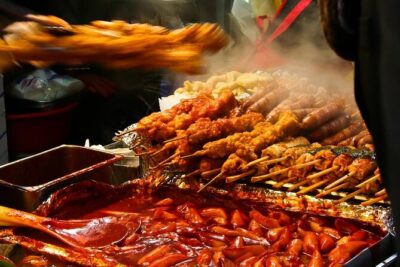
Gyeongbok Palace, Bukchon Village, and Gwangjang Tour
Read our review →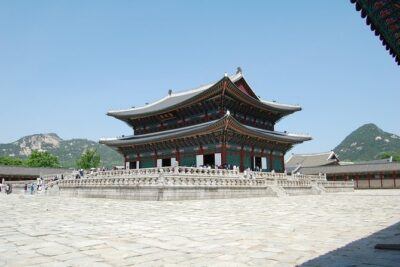
Seoul City Sightseeing Tour Including Gyeongbokgung Palace, N Seoul Tower, and Namsangol Hanok Village
Read our review →Gyeongbok Palace, Bukchon Village, and Gwangjang Tour
Read our review →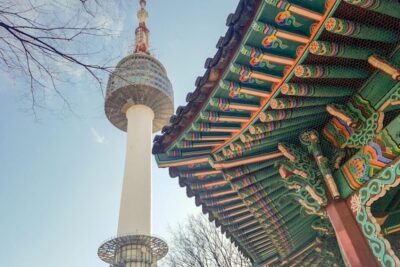
Gyeongbok Palace and Bukchon Hanok Walking Tour
Read our review →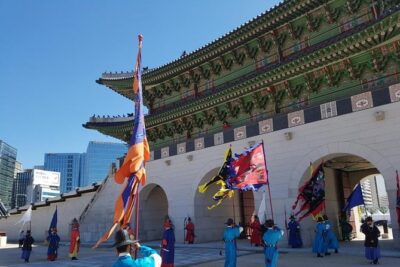
Best Walking Tour to Gyeongbok Palace Bukchon Hanok Village
Read our review →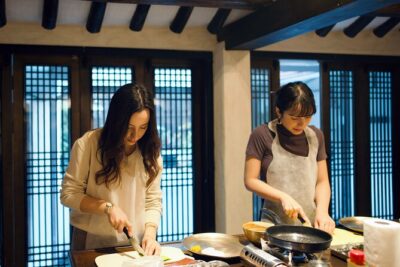
Royal Seoul Cooking Class in a 100-Year-Old Hanok
Read our review →
Afternoon Seoul: Hanok Vibes, Netflix Street Food & N Seoul Tower
Read our review →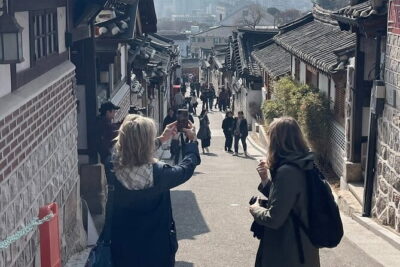
Tour Seoul’s oldest district with a storyteller from Bukchon
Read our review →Browse the lists this tour appears in