
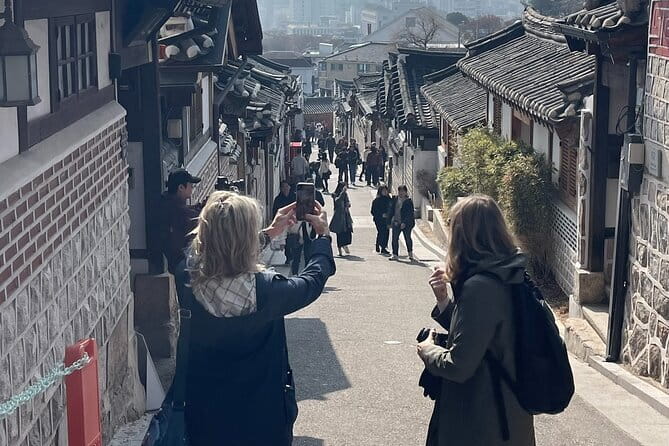
Reviewed · BUKCHON HANOK VILLAGE
Tour Seoul’s oldest district with a storyteller from Bukchon
Bukchon is more than a pretty collection of tiled roofs. For six centuries, this hillside district has sat close to Korea’s royal court, political power, business elite, schools, and cultural life. The best part of this walk is that guide Donghwan grew up here, so he connects the old lanes with the Seoul he knew as a child.
I like the personal viewpoint and the slow pace. You get stories about royal succession, feng shui, wells, schools, and changing neighborhoods instead of a quick march from photo stop to photo stop. I also like the route’s range, from Unhyeongung and Joseon history to filming sites and the hanok district people come to see today.
The main consideration is the walking itself. Bukchon has hills, narrow lanes, and uneven stretches, so you need moderate fitness. The storytelling is recommended for people aged 12 and older, and the tour may be canceled if fewer than two people book.
In This Review
- Key points to know before you book
- Why Bukchon makes a better walk with a local storyteller
- Starting at Unhyeongung and the story of a boy king
- Cafe Onion Anguk and three layers of architecture
- Hanok customs at the Traditional Culture Center
- The Seokjeong Boreum Well and stories beneath the street
- Choong Ang High School, from filming location to national history
- Samcheongdong, feng shui, and the struggle for power
- Bukchon Hanok Village and the man who reshaped it
- What the pace and private format mean for you
- What the strongest feedback tells you about the experience
- Should you book the Bukchon Storytelling Tour?
- FAQ
- How much does the Bukchon Storytelling Tour cost?
- How long does the tour last?
- Where does the tour start?
- What time does the tour start?
- Where does the tour end?
- Is this a private tour?
- Who guides the tour?
- Is the tour suitable for children?
- Does the price include a craft activity?
- Are admission fees included?
- Is hotel pickup available?
- How fit do I need to be?
- Can I cancel for a refund?
- Could the tour be canceled?
Key points to know before you book
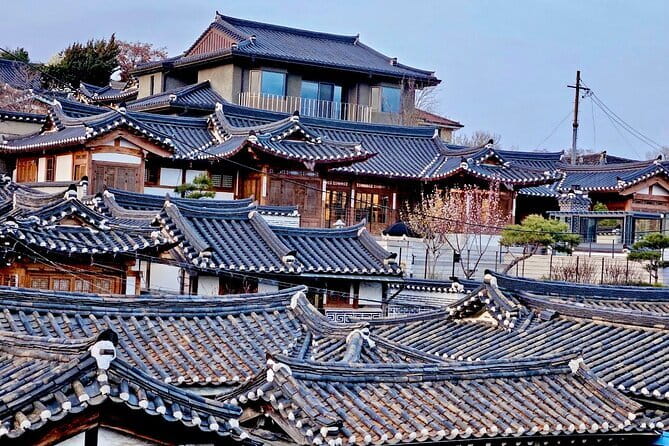
- A guide who grew up in Bukchon: Donghwan brings childhood memories and local knowledge to places that can look ordinary without context.
- Seven stops across old Seoul: The route links Unhyeongung, Cafe Onion Anguk, a traditional culture center, a historic well, Choong Ang High School, Samcheongdong, and Bukchon Hanok Village.
- History beyond palace walls: You hear about royal power, independence-era Korea, political families, business leaders, feng shui, and the growth of modern Seoul.
- A relaxed two to three hours: The listed stops are short, but the walk allows time for explanation and questions rather than a rushed checklist.
- A private activity for your group: Only your party participates, although the price is listed per person and group discounts may be available.
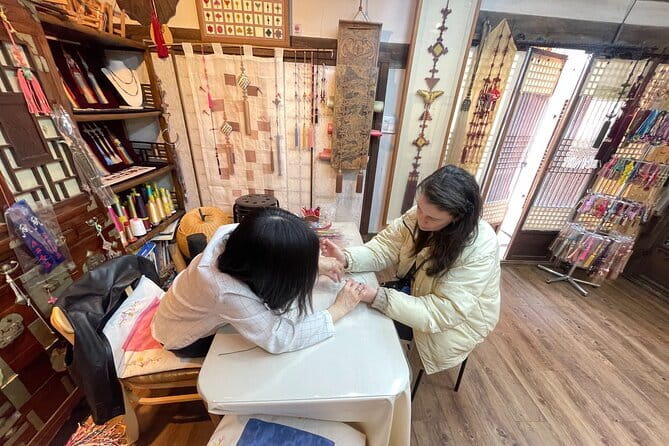
- Optional hands-on craft: The Plus Tour includes a traditional Korean handicraft activity, with hopae tag-making mentioned as a past part of the experience.
Why Bukchon makes a better walk with a local storyteller
Bukchon is easy to photograph and surprisingly easy to misunderstand. You see handsome hanok houses, stone walls, steep lanes, and busy cafés, but the buildings do not explain themselves. A guide can show you how the district’s location near the old royal center helped make it important, then connect that past to the neighborhood’s more recent changes.
Donghwan’s background gives the walk a useful angle. He was born and raised in Bukchon, later became a filmmaker, and teaches screenwriting at a university. That combination matters here because the tour is built around scenes, people, and turning points. You are not only told dates. You get the story of who lived here, who gained power here, and how the neighborhood changed over time.
The walk covers Korean history from the Joseon period, beginning in 1392, through the 1980s. That is a wide span for a few hours, so expect selected stories rather than a full history course. The strength is the connection between eras. Royal families, political figures, schools, landowners, and ordinary neighborhood life all appear along the same route.
The private format is another advantage. Since only your group takes part, you can ask about a building, a custom, or a part of Seoul you plan to visit next. Several responses from Donghwan also show that he gives practical city advice based on people’s interests, and he has helped participants confirm appointments during their stay.
More Bukchon and hanok village walks:
- Seoul: Gyeongbok Palace, Bukchon Village, and Gwangjang Tour
★ 4.9 · 2,321 reviews - Seoul City Sightseeing Tour Including Gyeongbokgung Palace, N Seoul Tower, and Namsangol Hanok Village
★ 5.0 · 1,423 reviews - Seoul: Gyeongbok Palace, Bukchon Village, and Gwangjang Tour
★ 5.0 · 1,044 reviews
Starting at Unhyeongung and the story of a boy king
Meet at 10:00 a.m. at Anguk Station Exit 4, in Unni-dong, Jongno District. The starting point is close to public transportation, and beginning here makes sense because Unhyeongung introduces the theme of power that runs through the entire walk.
Unhyeongung is tied to one of Joseon’s most striking successions. When a king died without a crown prince, an 11-year-old royal boy who had been born and raised here became the 26th king. His father then ruled the country for the next ten years.
That story gives you an immediate reminder that royal history was not always neat or predictable. It also helps explain why Bukchon became such an important place. The district was close to the court and home to people connected to the ruling structure.
The stop lasts about 20 minutes and admission is free. Do not expect an extended palace visit with a long list of rooms. The value is the narrative, especially if you are seeing major palaces elsewhere in Seoul and want to understand the people and power behind them.
Cafe Onion Anguk and three layers of architecture
The next stop is Cafe Onion Anguk, where you look at architecture from roughly 600, 100, and 50 years ago. The café itself is a popular modern stop, but here it works as a marker of change rather than simply a place to buy coffee.
In ten minutes, Donghwan explains how different periods can sit close together in the same part of Seoul. You may see the older forms of the city beside buildings shaped by more recent decades and the current café culture. The point is not that Bukchon froze in time. It is that old Seoul and new Seoul occupy the same streets.
Coffee and tea are not included, so treat the café as a visual stop unless you want to purchase something separately. The brief timing also means you should not expect a café break. If you want a drink, ask how that fits into the walking schedule.
This is one of the useful contrasts of the tour. Bukchon can feel like a historic village, but it is still part of central Seoul, with businesses, homes, schools, and daily routines. That tension becomes clearer here.
Hanok customs at the Traditional Culture Center
At the Bukchon Traditional Culture Center, the focus shifts to hanok homes associated with the yangban, the ruling class that generally lived in Seoul. The stop takes about ten minutes and admission is free.
A hanok is more than a photogenic roofline. Its layout, materials, courtyards, and relationship to the street reflect social position, climate, family life, and Korean building traditions. The center gives Donghwan a place to explain what you are looking at before you continue into the lanes.
This stop is especially helpful if you have never visited Korea before. Without some context, it is easy to treat the hanok neighborhood as a decorative backdrop. The discussion of the yangban places the houses within the old class system and shows why the district developed the way it did.
Keep in mind that the walk takes place in a living neighborhood. You are seeing homes and streets that are part of present-day Seoul, not a purpose-built open-air museum. That makes the visit more meaningful, but it also calls for quiet voices and respect for residents.
A completely different kind of day, same trip:
- Best DMZ Tour Korea from Seoul (Red Suspension Bridge Optional)
★ 5.0 · 41,422 reviews - DMZ Tour: 3rd Tunnel, Option(Suspension Bridge, Boat) from Seoul
★ 5.0 · 21,373 reviews - DMZ tour south Korea from Seoul (NK experience hall, defector)
★ 5.0 · 20,599 reviews - DMZ Insider Tour: 3rd Tunnel, NK Defector Meet & Red Bridge
★ 4.9 · 15,214 reviews
The Seokjeong Boreum Well and stories beneath the street
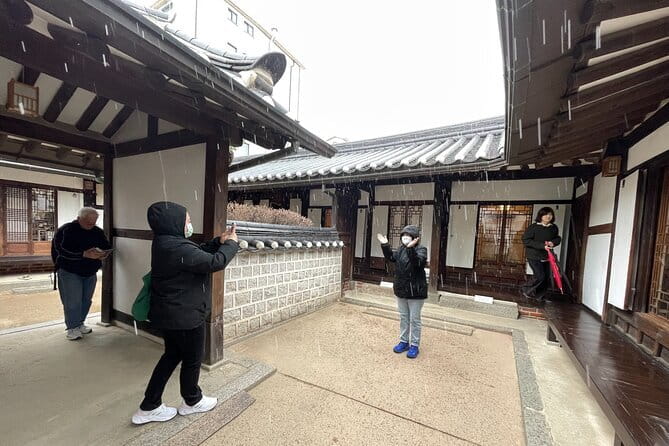
The Seokjeong Boreum Well is a short stop with an unusual subject. Rather than focusing on a palace or a famous building, Donghwan tells stories about wells, including the wells you may have heard about as a child and what later history has revealed about them.
The listing gives this stop about ten minutes, but its appeal is less about the physical structure than the way local stories survive. Wells often sit at the meeting point of daily life, rumor, belief, and historical fact. That makes this a good example of the tour’s method: look at a small feature, then use it to open a larger discussion.
You should not expect a major monument here. If you prefer grand sights, this may feel modest. If you like the details that help a neighborhood feel like a real place, it can be one of the more memorable stops.
Choong Ang High School, from filming location to national history
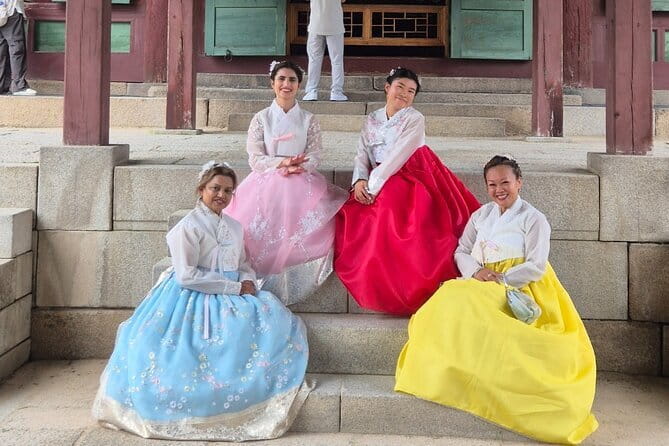
Choong Ang High School is known as a filming location for Winter Sonata, along with many other dramas and music videos. The tour does not stop there simply for a television photograph. Donghwan presents the school as a historic site that helped shape Korea.
This ten-minute visit broadens the story beyond royal families and hanok houses. Schools can reveal the ambitions, conflicts, and social changes of a country, and the guide explains the school’s lesser-known role in Korea’s past. The combination of popular culture and national history is useful because it shows how a familiar screen location can have a much older identity.
The school is still a school, so this is a viewpoint and storytelling stop, not a promise of an interior visit. You will likely get more from it if you are interested in how modern Korea developed, rather than only in drama locations.
Samcheongdong, feng shui, and the struggle for power
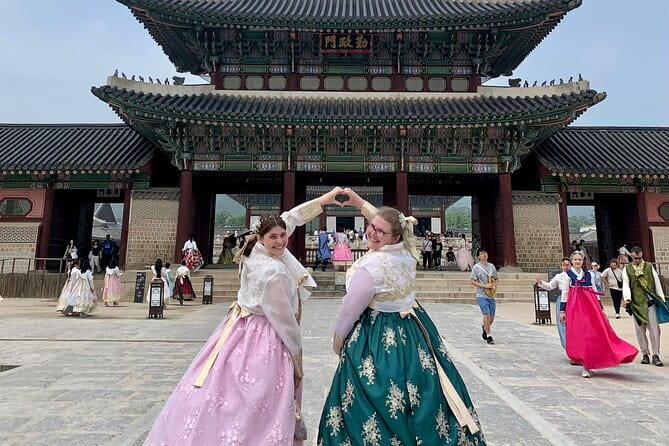
The walk then reaches Samcheongdong and the wider Bukchon area. Here the subject becomes the rise and fall of politicians and business tycoons who once held land in the district.
Bukchon was selected as a capital area according to principles of feng shui. The site was viewed as auspicious, and the tour examines how ideas about geography, power, prosperity, and danger shaped Korean political life. This is one of the tour’s more unusual themes, and it gives you a way to read Seoul beyond buildings and dates.
The story is not presented as a simple claim that feng shui explains everything. Instead, it helps show why certain places mattered to people seeking influence. You hear about figures who gained power, prospered, or lost everything, and how their connection to Bukchon fit into wider events.
This section also appears to be one of the longer storytelling portions, listed at about 20 minutes. It may be the point where the tour feels most like a historical conversation rather than a standard sightseeing walk. Ask questions here if you want to understand how traditional beliefs continue to shape attitudes toward place and success.
Samcheongdong also gives you a break from a single architectural period. Cafés, galleries, older structures, and residential lanes meet in this part of Seoul, though the route remains focused on history rather than shopping.
Bukchon Hanok Village and the man who reshaped it
The final listed stop is Bukchon Hanok Village, reached after the route has given you the political and social background to understand it. The closing story concerns the man who changed the face of Bukchon during the 1920s and 1930s.
That detail is important. Many people assume the hanok village is an untouched remnant of the Joseon period. The story of its reshaping shows something more complicated: neighborhoods change because of housing needs, land decisions, politics, and urban growth.
The stop lasts about 15 minutes, but the walk through the area is likely to be the visual high point. You get the lanes, traditional houses, views, and photo opportunities people associate with Bukchon, while the earlier stops help you see more than a pretty roof.
Bukchon is also a working residential district. Some lanes can be quiet, narrow, and steep, and the presence of homes means you should avoid blocking entrances or raising your voice. A guide from the neighborhood is particularly useful here because he can help you look closely without treating the area like a stage set.
The activity ends at a different location from the start. The exact ending point is not provided, so check the booking details before planning a tight connection afterward.
What the pace and private format mean for you
The tour lasts about two to three hours, with the listed stops adding up to roughly 95 minutes. The remaining time covers walking between them, transitions, questions, and the natural pauses that come with a neighborhood route.
That is a comfortable pace for many adults, but it is not a completely flat stroll. Bukchon sits on hills, and the narrow lanes can make walking more demanding than the short stop times suggest. Wear shoes you can use on slopes and stone or paved streets.
The activity is private, which makes it a good choice for families with older children, couples, or friends who prefer conversation over a large group. The recommendation for ages 12 and older is worth taking seriously. Younger children may find several of the historical explanations difficult to follow, and the hills can make the walk tiring.
The price is $39.20 per person. For a private two to three hour walk with a guide who grew up in the district, that is a fair price if you care about interpretation and personal stories. You are not paying for admission, since the listed stops are free. You are paying for the route, the connections between places, and the chance to ask questions directly.
The value is weaker if you only want quick photos of hanok roofs. You can see parts of Bukchon independently, but you will miss much of what gives the lanes meaning. Group discounts may improve the price for larger parties, so check the current booking terms.
A traditional Korean handicraft activity is available with the Plus Tour only. Hopae tag-making has been part of the hands-on offering, but confirm the exact Plus Tour details before booking if the craft is important to you. Coffee, tea, personal costs, insurance, and hotel pickup are not included.
What the strongest feedback tells you about the experience
The most consistent praise centers on Donghwan’s connection to Bukchon. His childhood experience lets him explain how the area changed over time, including the period before it became so well known for traditional houses and sightseeing.
The second strength is the storytelling. The tour turns place names, wells, schools, filming locations, and buildings into linked episodes. That approach suits you if you remember a city through people and stories rather than lists of dates.
The pace also receives strong approval. The walk is described as relaxed and unrushed, which matters in Bukchon. You need time to look up at roofs, notice the slope of the streets, and listen without being pushed to the next stop.
Practical help is another benefit. Donghwan has offered suggestions for other parts of Seoul and tailored advice to personal interests. He has also helped with a phone call to confirm an appointment, though such assistance should be viewed as a courtesy, not a promised service.
The tour is not perfect for every visitor. The historical material may feel dense if you want a light orientation walk. The hills and age recommendation limit its fit for small children, and the final location is different from the meeting point. The tour may also be canceled if fewer than two people join, so keep that condition in mind when arranging a tightly scheduled day.
Should you book the Bukchon Storytelling Tour?
Book it if you want to understand why Bukchon matters, not just photograph it. You will get the most from this walk if you enjoy local voices, political stories, traditional beliefs, architecture, and the small clues that reveal how a city changes.
It is a particularly good first or second Seoul activity for someone staying in a modern district such as Gangnam and wanting a clear contrast with older Seoul. It also suits repeat visitors who have already seen the major palaces and want a more personal view of Jongno.
Skip it if you need a flat route, a child-focused activity, or a tour built mainly around interiors and admission attractions. For everyone else, $39.20 is a reasonable cost for a private, story-led walk with a local guide and an optional craft upgrade. Leave room afterward to continue exploring central Seoul, since the tour ends away from its starting point.
FAQ
How much does the Bukchon Storytelling Tour cost?
The listed price is $39.20 per person. Group discounts are available.
How long does the tour last?
The walking tour lasts approximately two to three hours.
Where does the tour start?
It starts at Anguk Station Exit 4, in Unni-dong, Jongno District, Seoul.
What time does the tour start?
The stated start time is 10:00 a.m.
Where does the tour end?
The activity ends at a different location from the starting point. The provided details do not state the exact ending location.
Is this a private tour?
Yes. Only your group participates in the activity.
Who guides the tour?
The guide is Donghwan, also referred to as Dong. He was born and raised in Bukchon, is a filmmaker, and teaches university screenwriting.
Is the tour suitable for children?
The walk is strongly recommended for participants aged 12 and older. Children aged 12 and under may find the storytelling challenging.
Does the price include a craft activity?
A traditional Korean handicraft experience is available with the Plus Tour only. The standard tour does not list the craft as included.
Are admission fees included?
The listed itinerary stops have free admission, so there are no stated admission charges for those stops. Coffee, tea, insurance, hotel pickup, and personal expenses are not included.
Is hotel pickup available?
No. Hotel pickup service is not included.
How fit do I need to be?
Participants should have a moderate level of physical fitness. The route is a walking tour through Bukchon, where hills and narrow lanes may make the route tiring.
Can I cancel for a refund?
You can cancel up to 24 hours before the experience for a full refund.
Could the tour be canceled?
Yes. The activity may be canceled if fewer than two people join.
Just added around Seoul
- Incheon Airport Private Transfer between Seoul City★ 4.0 · 4 reviews
- Seoul’s Stars: Open Mic with Local & International Talent★ 4.8 · 4 reviews
- Samaksan Cable Car and Nami Island Day Escape with Railbike★ 4.0 · 4 reviews
- DMZ 2nd Tunnel and Cheorwon Peace Observatory with Admission★ 5.0 · 4 reviews
- Nami & Maple Road & Theatre des Lumieres Day Tour from Seoul★ 4.8 · 4 reviews
- Hire Photographer, Professional Photo Shoot – Seoul★ 5.0 · 4 reviews
- [KoreaByLocal] Authentic Seoul Night Walk and Chicken & Beer★ 5.0 · 4 reviews
- Play Gayageum in Hanbok Cultural Experience in Bukchon★ 5.0 · 4 reviews
Bukchon Hanok Village, compared.
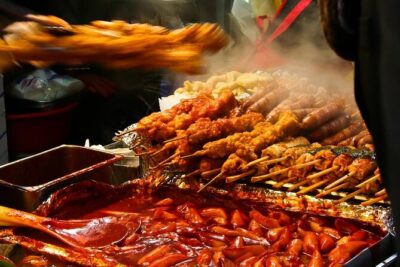
Gyeongbok Palace, Bukchon Village, and Gwangjang Tour
Read our review →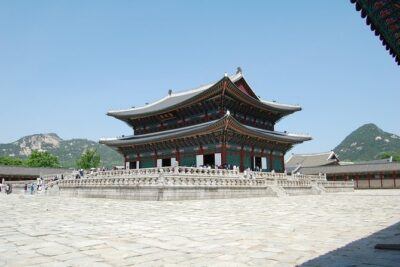
Seoul City Sightseeing Tour Including Gyeongbokgung Palace, N Seoul Tower, and Namsangol Hanok Village
Read our review →Gyeongbok Palace, Bukchon Village, and Gwangjang Tour
Read our review →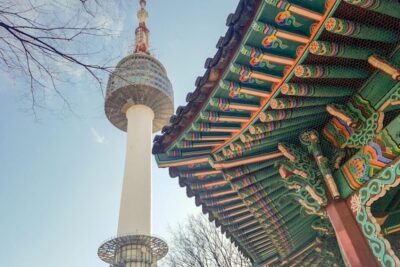
Gyeongbok Palace and Bukchon Hanok Walking Tour
Read our review →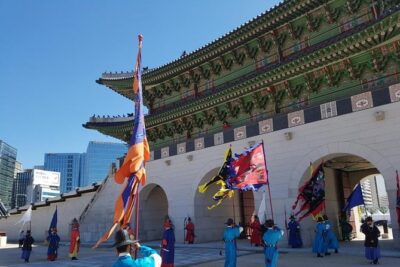
Best Walking Tour to Gyeongbok Palace Bukchon Hanok Village
Read our review →Experience Korean Cooking in Modern Hanok Kitchen
Read our review →
Royal Seoul Cooking Class in a 100-Year-Old Hanok
Read our review →
Afternoon Seoul: Hanok Vibes, Netflix Street Food & N Seoul Tower
Read our review →Browse the lists this tour appears in