
Reviewed · GYEONGBOKGUNG PALACE
Best Walking Tour to Gyeongbok Palace Bukchon Hanok Village
Gyeongbokgung Palace gives you Seoul’s grandest look at the Joseon era, while nearby Bukchon Hanok Village brings that past into ordinary streets, homes, and steep lanes. This three-hour walking tour connects both places with the stories that make the buildings meaningful.
I like the small group size, capped at eight, and I like that admission to the palace is included. Guides such as Jay Kim, Stella, Jack, Paul, and Joe have been praised for clear English, strong local knowledge, personal stories, and helpful food suggestions.
The main caution is guide consistency. Most feedback is strongly positive, but a few people found their guide low-energy or short on useful answers. You will also need comfortable shoes, steady footing, and enough energy for steps and uphill walking in Bukchon.
In This Review
- What makes this Seoul walking tour useful
- Starting with Seoul’s royal story
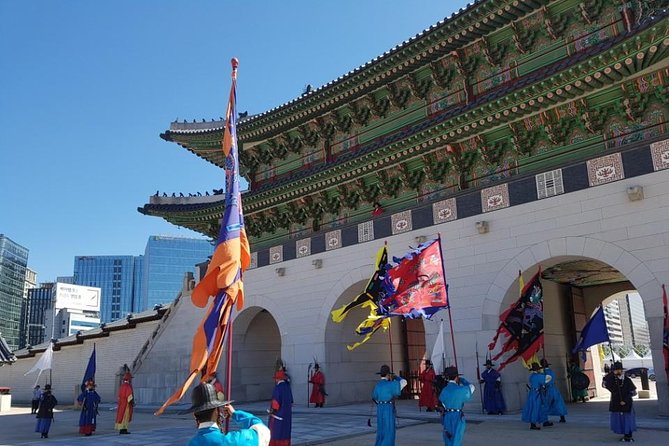
- Gyeongbokgung Palace and the changing guard
- The National Folk Museum adds ordinary life
- Walking toward Bukchon Hanok Village
- Ending near Insadong
- How much value do you get for $88?
- Timing, group size, and physical effort
- Which guide experience should you expect?
- Who should book this experience?
- Should you book the Gyeongbokgung and Bukchon walk?
- FAQ
- How long does the walking tour last?
- What sights are included?
- Is admission included?
- How large is the group?
- Where does the tour finish?
- Is the tour suitable for people with walking difficulty?
- What happens if bad weather cancels the tour?
What makes this Seoul walking tour useful
- The changing guard ceremony adds movement and color to a palace visit that could otherwise feel like a series of courtyards.
- A group of up to eight gives the guide room to answer questions and keep the pace personal.
- The National Folk Museum adds daily life and household culture to the story of kings and palace walls.
- Bukchon Hanok Village shows how traditional Korean homes fit into a living Seoul neighborhood.
- The tour ends near Insadong, a handy area for continuing with food, crafts, shops, and cafes.
- The route suits a first day in Seoul, giving you landmarks, historical context, and a useful sense of the city center.
Starting with Seoul’s royal story
The route begins at 24-1 Taepyeongno 2(i)-ga in Jung District and moves toward the central sights around Gwanghwamun. The meeting point is near public transportation, which helps if you are still learning Seoul’s large subway system.
The opening theme is the meeting of past and present. That matters here. Seoul is not a museum city, and the palace grounds are surrounded by government buildings, traffic, modern streets, and busy public life. A guide can help you understand why Gyeongbokgung is not simply an old complex dropped into a modern capital.
You will also pass the statue of King Sejong. He is one of Korea’s most important historical figures, and this stop helps connect royal rule with the development of the Korean language. One guide, Paul, was especially praised for explaining Korean language history outside the building linked with its creation.
That kind of context is where the tour earns its keep. You can walk through a palace alone and admire the roofs, colors, and open courtyards. With a good guide, you also begin to understand the people and decisions behind them.
More Gyeongbokgung visits:
- Seoul: Gyeongbok Palace, Bukchon Village, and Gwangjang Tour
★ 4.9 · 2,321 reviews - Best Seoul City Tour (Gyeongbokgung Palace,Insadong,Namsan Tower)
★ 5.0 · 1,647 reviews - Seoul City Sightseeing Tour Including Gyeongbokgung Palace, N Seoul Tower, and Namsangol Hanok Village
★ 5.0 · 1,423 reviews
Gyeongbokgung Palace and the changing guard
Gyeongbokgung Palace is the center of the experience. You spend about an hour here, with the admission fee covered.
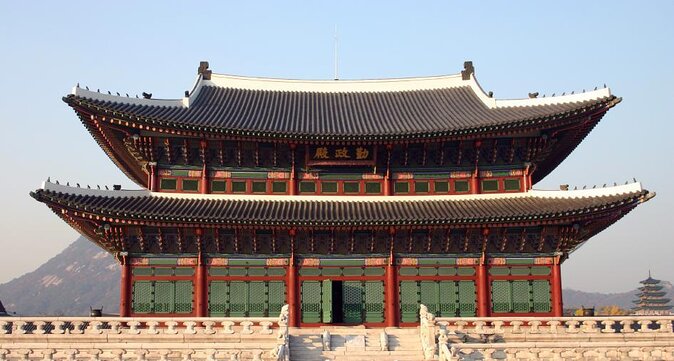
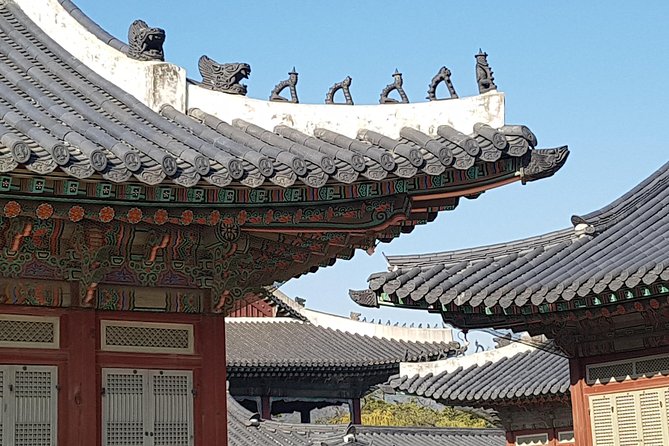
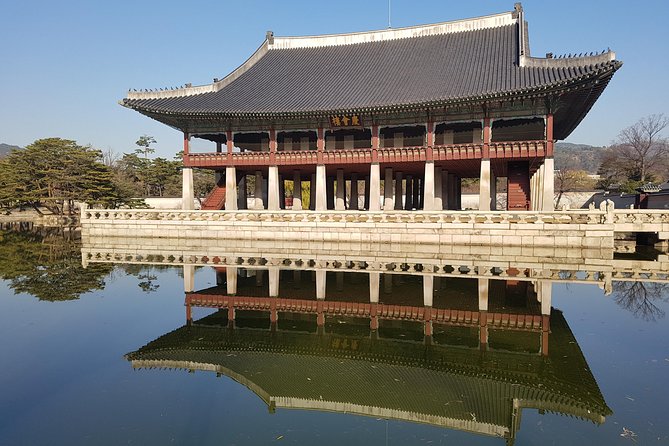
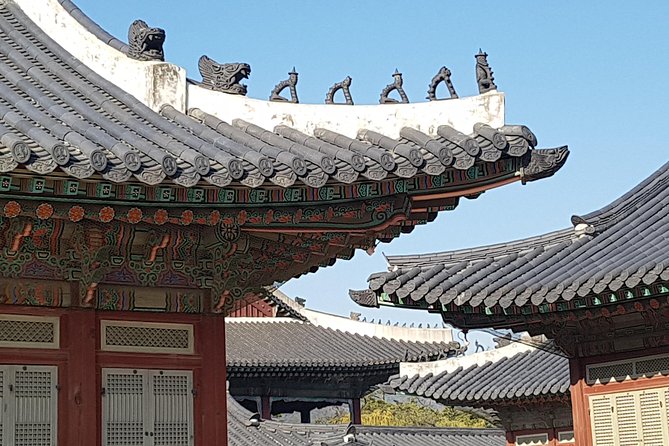
The palace offers the classic images many people hope to see in Seoul: broad ceremonial spaces, traditional construction, painted wooden details, tiled roofs, and carefully arranged buildings. The guide explains Joseon Dynasty history and points out how the architecture reflects royal life, rank, and function.
The planned timing includes the royal guard changing ceremony. This is a smart choice for a first visit because it gives the palace a live public event rather than only silent architecture. Uniforms, formal movements, and instruments make the royal setting easier to picture.
Do not expect an hour to cover every corner. Gyeongbokgung is large, and this tour has another major district to reach. The value lies in seeing the key areas while receiving a clear introduction, not in conducting a complete architectural survey.
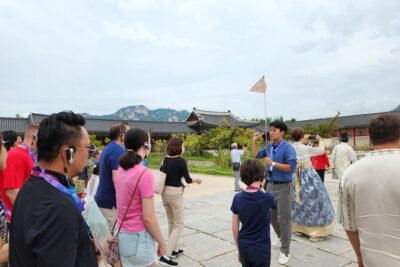
Guides named Jay Kim, Stella, Jack, and Joe received particularly strong praise for explaining how the palace connects to Korea’s wider story. Jay was described as friendly, responsive, and good at answering questions. Stella was praised for keeping the material interesting for a family with a child. Jack was noted for linking one site to another so the story did not feel like a string of unrelated facts.
That personal delivery is important. Palace history includes dates, rulers, political shifts, and painful episodes. A good guide turns those facts into a story you can follow. One family even appreciated the darker stories of royal punishments, while another guide used personal examples and photographs to answer questions.
The quality is not guaranteed at the same level every time. Paul received both strong praise for clear explanations and one negative account describing a monotone, unfocused presentation. Jack was also praised by several people but criticized in one account for relying too much on Google or YouTube when asked basic questions. I would treat the guide as a major part of the value, not a minor detail.
The National Folk Museum adds ordinary life
The National Folk Museum of Korea is part of the palace visit. Its collection includes more than 98,000 artifacts related to Korean history.
This stop changes the focus from royal ceremony to daily life. Instead of looking only at where kings lived and worked, you get a chance to consider how people outside the court lived, worked, and maintained traditions.
That balance makes the route more useful than a palace-only outing. The museum helps explain the customs and material culture behind the architecture. You might find the palace courtyards visually impressive, but the museum gives you more clues about the society that produced them.
The available time is still limited. Three hours must cover the palace, museum, village, walking connections, and final approach to Insadong. If you want a slow museum visit, long photo sessions, or detailed attention to every palace building, you may feel rushed.
Walking toward Bukchon Hanok Village
The route heads between Gyeongbokgung Palace and Changdeokgung Palace before reaching Bukchon Hanok Village. The transition is part of the experience. You are not simply being driven from one attraction to another, so you see how historic areas meet the modern city.
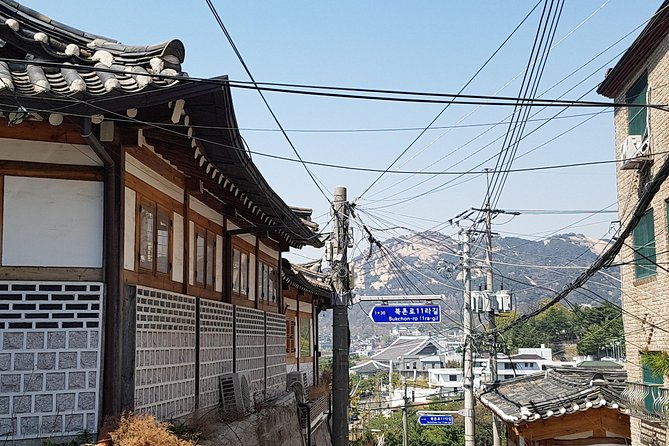
Bukchon is known for its hanok, or traditional Korean houses. The appeal is not one grand monument. It is the way traditional rooflines, courtyards, wooden details, and narrow streets form a neighborhood setting.
The stop lasts about 30 minutes. That is enough for an introduction and for seeing some of the village’s most recognizable streets, but not enough for an extended wander through every lane. The description of the stop as hidden looks suggests glimpses inside traditional houses or views into their design, but you should not expect a full home tour unless the guide specifically arranges one.
Bukchon is also the physically demanding part of the route. The village includes steps and uphill streets, and the tour is not recommended for anyone with difficulty walking on slopes or stairs. Wear shoes that can handle uneven city walking, and dress for the weather.
There is another practical point: Bukchon is a real neighborhood, not just a photo set. Keep your voice down near homes and follow the guide’s instructions about where to pause. The experience is better when you notice the contrast between preserved housing and modern Seoul without treating residents’ streets as a stage.
More Bukchon and hanok village walks:
- Seoul: Gyeongbok Palace, Bukchon Village, and Gwangjang Tour
★ 5.0 · 1,044 reviews - Seoul: Gyeongbok Palace and Bukchon Hanok Walking Tour
★ 4.8 · 157 reviews - Experience Korean Cooking in Modern Hanok Kitchen
★ 5.0 · 118 reviews - Royal Seoul Cooking Class in a 100-Year-Old Hanok
★ 5.0 · 81 reviews
Ending near Insadong
The tour finishes at 75-5 Insa-dong in Jongno District, near the Insadong area. This is a useful ending point because you are not left at an isolated attraction.
Insadong gives you a natural next step after the tour. You can continue walking, look for Korean crafts, or stop for a meal. Several guides have offered food advice, and one account described ending at a restaurant serving typical Korean dishes. Paul was also praised for suggesting street food, a seafood restaurant, and a shopping area when time allowed.
Those extras are not guaranteed parts of the itinerary, so do not book this as a food tour. Still, the ending gives your guide a chance to point you toward something suited to your interests.
I especially like this finish for first-time visitors. After three hours, you have seen a major palace and a traditional neighborhood, then arrive in an area where you can keep exploring without arranging another transfer.
How much value do you get for $88?
At $88 per person, this is not a budget walk. The price includes a professional guide and palace admission, but not food, transport to the starting point, or any additional purchases.
The value depends on what you want from the day. If you only need directions and photographs, you can visit the palace and Bukchon independently for less. If you want the history explained in clear English, the route organized for you, and a compact group where questions are possible, the price is easier to justify.
A private-feeling experience can also happen when bookings are light. Several people ended up as the only person or party on the tour, turning the scheduled group outing into a personal half-day-style experience, even though the official duration is about three hours. That is a pleasant bonus, not something to count on.
The strongest guides add value through more than memorized dates. Jay Kim connected Seoul’s landmarks with the country’s past and present. Stella brought warmth and pride to her explanations. Jack was praised for teaching history in a way that helped people with little prior knowledge follow along. Joe was noted for answering questions with both facts and personal stories.
The weaker experiences show the risk. A guide who simply walks from place to place, gives minimal explanation, or wanders off topic makes $88 feel high. Since guide quality affects the whole outing, I would book this for the human interpretation, not merely for admission tickets.
Timing, group size, and physical effort
The advertised duration is about three hours. That is enough for a focused introduction, but you should not plan another appointment immediately afterward. Ceremonies, questions, crowd movement, and walking pace can affect the rhythm.
The maximum group size is eight. That is small enough to hear the guide more easily than on a large bus tour, and it should make it simpler to stay together in palace courtyards and narrow village streets.
You should be ready for steady walking. The route includes palace grounds, museum areas, city streets, steps, and Bukchon’s uphill sections. Good walking shoes are essential. Comfortable clothing is also wise, especially because the tour takes place outdoors for much of its length.
The experience requires good weather. If poor weather causes cancellation, you are offered another date or a full refund. You can cancel for a full refund up to 24 hours before the start time, but changes or cancellations inside that window are not accepted.
Which guide experience should you expect?
The provider is Korealinx Corporation, and the guide may be Jay Kim, Stella, Jack, Paul, Joe, or another member of the team. The individual guide matters more here than on a simple transfer because the tour is built around explanation.
The best feedback centers on four traits:
- Clear English and easy answers
- Strong knowledge of palace architecture and Korean history
- Personal stories that connect the past with modern Seoul
- A warm, flexible manner with families and individual visitors
Several guides also helped with photographs, food ideas, or small route adjustments. One guide picked up the pace during rain and added a few places outside the planned route. Again, these touches depend on the person leading your group.
The balanced view is simple: the experience has a strong record, with a 4.8 rating from 138 reviews and 97 percent recommending it, but the occasional poor account shows that the result can vary. If you are especially demanding about scholarly detail or polished presentation, consider asking about the assigned guide when possible.
Who should book this experience?
I would recommend it to first-time visitors who want a clear introduction to Seoul’s royal past and traditional neighborhoods. It also suits families, couples, and solo visitors who prefer a small group rather than a large city bus.
It works well early in a Seoul stay. The route gives you basic historical bearings, shows major central sights, and ends in an area where you can continue on foot.
It is less suitable if you have walking difficulty, dislike hills, or want a leisurely museum visit. It is also not the right choice if your main goal is extensive palace photography or a long, quiet exploration of Bukchon.
Should you book the Gyeongbokgung and Bukchon walk?
Book it if you want history with your sightseeing, prefer a small group, and value a guide who can explain what you are seeing. The palace, guard ceremony, folk museum, Bukchon houses, and Insadong finish make good use of three hours.
I would book this with comfortable shoes and a flexible afternoon. The sites are excellent on their own, but the guide determines how much you learn. The high rating and repeated praise for Jay Kim, Stella, Jack, Paul, and Joe make it a solid choice, while the few low-energy accounts are a useful reminder to keep expectations realistic.
For a first look at Seoul, the route is well chosen and the $88 price can be fair. For independent explorers who already know Korean history, the same money may be better spent on a longer self-guided visit and a meal in Insadong.
FAQ
How long does the walking tour last?
The tour lasts approximately three hours.
What sights are included?
The route includes Gwanghwamun Gate, Gyeongbokgung Palace, the royal guard changing ceremony, the National Folk Museum of Korea, Bukchon Hanok Village, and the area between Gyeongbokgung Palace and Changdeokgung Palace.
Is admission included?
Yes. The palace admission fee is included, along with a professional guide.
How large is the group?
The tour has a maximum of eight participants.
Where does the tour finish?
It finishes near Insadong at 75-5 Insa-dong, Jongno District, Seoul.
Is the tour suitable for people with walking difficulty?
The tour requires moderate physical fitness and is not recommended for people who have difficulty walking on steps or uphill streets.
What happens if bad weather cancels the tour?
You will be offered a different date or a full refund if the experience is canceled because of poor weather.
More Walking Tours in Seoul
- Seoul moonlight walking tour with local historian
★ 5.0 · 940 reviews - Seoul: Nighttime Hidden Gems Walking Tour
★ 5.0 · 775 reviews - Seoul: Evening Dark History, Folklore & Ghost Story Walking Tour
★ 5.0 · 593 reviews - Seoul: Dark Side of the City and Ghost Stories Walking Tour
★ 4.8 · 484 reviews
More Palace Tours in Seoul
- Small-Group Royal Palace and Seoul City Tour (hotel pick-up)
★ 5.0 · 1,474 reviews - Seoul Highlights: Gyeongbok Palace, Insadong & N Seoul Tower
★ 4.7 · 726 reviews - Seoul: Hanbok Rental with Gyeongbokgung Palace Entry
★ 4.6 · 611 reviews - Seoul City Half Day Tour-Gyeongbok Palace Guard Changing Ceremony
★ 4.5 · 357 reviews
Just added around Seoul
- Incheon Airport Private Transfer between Seoul City★ 4.0 · 4 reviews
- Seoul’s Stars: Open Mic with Local & International Talent★ 4.8 · 4 reviews
- Samaksan Cable Car and Nami Island Day Escape with Railbike★ 4.0 · 4 reviews
- DMZ 2nd Tunnel and Cheorwon Peace Observatory with Admission★ 5.0 · 4 reviews
- Nami & Maple Road & Theatre des Lumieres Day Tour from Seoul★ 4.8 · 4 reviews
- Hire Photographer, Professional Photo Shoot – Seoul★ 5.0 · 4 reviews
- [KoreaByLocal] Authentic Seoul Night Walk and Chicken & Beer★ 5.0 · 4 reviews
- Seoul Film Camera Club★ 5.0 · 4 reviews
Gyeongbokgung Palace, compared.
Gyeongbok Palace, Bukchon Village, and Gwangjang Tour
Read our review →
Best Seoul City Tour (Gyeongbokgung Palace,Insadong,Namsan Tower)
Read our review →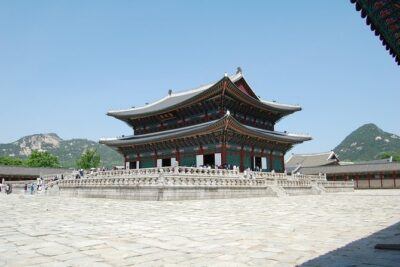
Seoul City Sightseeing Tour Including Gyeongbokgung Palace, N Seoul Tower, and Namsangol Hanok Village
Read our review →Gyeongbok Palace, Bukchon Village, and Gwangjang Tour
Read our review →
Seoul Highlights: Gyeongbok Palace, Insadong & N Seoul Tower
Read our review →
Seoul City Half Day Tour-Gyeongbok Palace Guard Changing Ceremony
Read our review →
Browse the lists this tour appears in