
Reviewed · PALACE TOURS
Small-Group Royal Palace and Seoul City Tour (hotel pick-up)
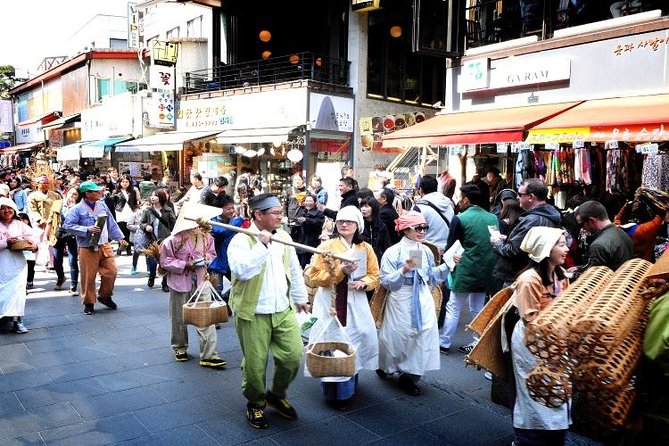
Gyeongbokgung’s royal guard ceremony, painted palace halls, and the narrow lanes of Insadong give this tour a strong first taste of Seoul. In one day, you move from Joseon court life to Buddhist practice, traditional crafts, modern politics, and street-market shopping.
I like the small maximum of 16 people, which gives guides room to answer questions and help with photos. I also like the practical hotel pickup, two palace admissions, and a driver-guide team, especially when Seoul traffic makes crossing the city slow.
The main catch is the long schedule. You will spend time in the vehicle, and the Korean ginseng stop feels more like a sales-oriented educational visit than a major sight. Lunch is now your responsibility, and palace closures change the route on Mondays and Tuesdays.
In This Review
- Key things to know before booking
- Why this tour works for a first day in Seoul
- Jogyesa Temple begins the cultural story
- Gwanghwamun and the royal guard ceremony
- Gyeongbokgung reveals the scale of Joseon power
- The National Folk Museum adds everyday detail
- The Blue House offers a modern political link
- The ginseng center is useful, but know what it is
- Insadong is the best place to pause for lunch
- Changdeokgung feels quieter and more personal
- Namdaemun closes the day with shopping and street life
- Transport, pace, and practical limits
- Who gets the most value from this $56.44 tour?
- Should you book it?
- FAQ
- How long does the Seoul palace and city tour last?
- Is hotel pickup included?
- Is lunch included?
- What happens if Changdeokgung is closed on Monday?
- What happens if Gyeongbokgung and the National Folk Museum are closed on Tuesday?
- Can the royal guard ceremony be canceled?
- What is included in the tour price?
Key things to know before booking
- Two royal palaces in one day: Visit Gyeongbokgung, the grand main palace of the Joseon dynasty, and Changdeokgung, a more intimate UNESCO-listed palace.
- A useful first-day route: Jogyesa Temple, the Blue House, Gwanghwamun, Insadong, and Namdaemun Market give you a broad look at Seoul.
- Guides make the difference: Young, BK, Sookee, Lua, Yeoni, and Joey are among the guides associated with especially strong experiences.
- Monday and Tuesday plans change: Changdeokgung closes Monday. Gyeongbokgung and the National Folk Museum close Tuesday.
- Lunch is not included: You get free time in Insadong to choose your own meal.
- Easy but active day: Hotel pickup and vehicle transport save effort, but expect walking around palace grounds and markets.
Why this tour works for a first day in Seoul
At $56.44 per person, this is priced as an efficient city introduction rather than a slow, specialist palace visit. You receive central Seoul hotel pickup, an English-speaking local guide, a driver-guide arrangement, bottled water, and the entrance fees for the included palaces and museum.
That package matters in Seoul. The sights are spread across Jongno, central Seoul, and the Namdaemun area. Public transport is excellent, but first-time visitors still need to understand palace entrances, ceremony times, and the best order for the stops. A vehicle removes some of that guesswork.
You should not expect eight hours of uninterrupted sightseeing. Traffic can eat into the day, and several stops are short. Still, the route covers enough ground to help you decide where to return on your own. Insadong, in particular, deserves more time if you like ceramics, tea, paper goods, antiques, and traditional souvenirs.
The small-group format is one of the better reasons to choose this tour over a large coach outing. The group can be as small as two people and never exceeds 16. That makes it easier to hear palace explanations, ask about Korean customs, and stay together in crowded areas.
Guides are central to the experience. Young is often praised for mixing history with humor and giving people time for photographs. BK is noted for adjusting his explanations to different ages and nationalities. Sookee has a lively way of explaining palace intrigue and Korean history, while Lua is particularly attentive to individual needs. Your guide is assigned by the operator, so treat these names as examples rather than a guarantee.
More palace visits:
- Seoul: Gyeongbok Palace, Bukchon Village, and Gwangjang Tour
★ 4.9 · 2,321 reviews - Best Seoul City Tour (Gyeongbokgung Palace,Insadong,Namsan Tower)
★ 5.0 · 1,647 reviews - Seoul City Sightseeing Tour Including Gyeongbokgung Palace, N Seoul Tower, and Namsangol Hanok Village
★ 5.0 · 1,423 reviews
Jogyesa Temple begins the cultural story
The first stop is Jogyesa Temple, a Zen Buddhist center tucked beside busy streets in the Jongno district. That contrast is the point. Seoul traffic and office buildings are close by, yet the temple grounds offer a quiet pause, with colorful decoration and large golden Buddha figures.
You get about 30 minutes here, enough for a look around and a few photographs. The stop works well early in the day because it introduces Korean religious life before the tour turns to royal politics and court architecture.
Do not expect a long meditation visit or an extensive temple program. This is an orientation stop. Your guide can explain why the temple matters, but the schedule leaves limited time for sitting quietly or studying every detail.
Gwanghwamun and the royal guard ceremony
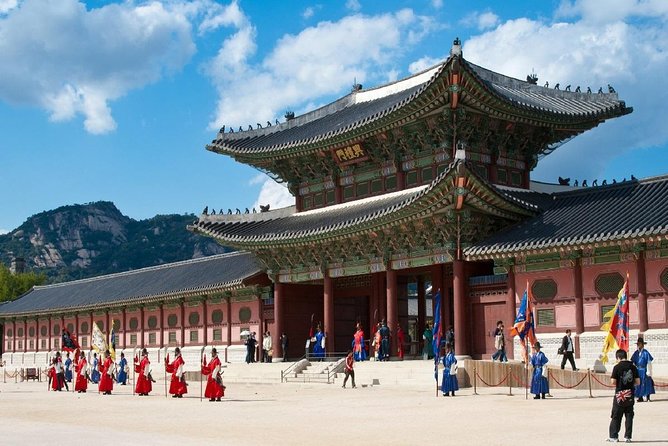
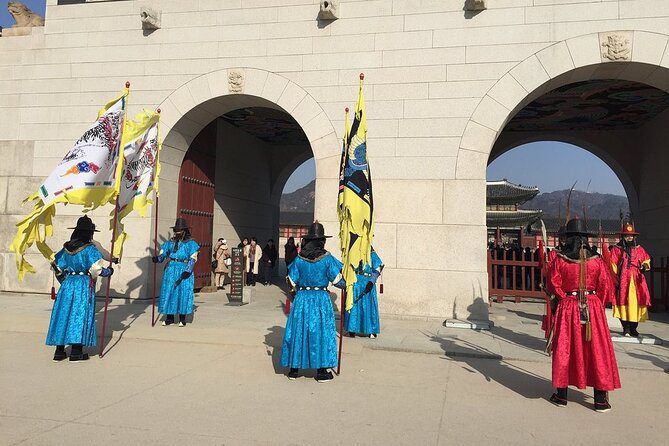
At Gwanghwamun Gate, keep your camera ready for the changing of the royal guards. The ceremony presents a carefully staged glimpse of Joseon-era military tradition, with uniforms, signals, and formal movement in front of the palace entrance.
The stop lasts about 20 minutes, so timing matters. The ceremony can be canceled because of bad weather. If it is canceled, the gate itself still gives you an impressive introduction to Gyeongbokgung, but you will miss one of the day’s most theatrical moments.
This is also a good place to listen closely to the guide’s explanation of Seoul’s old royal center. Gwanghwamun is not just a photo stop. It frames the transition from modern city streets into the grounds of Korea’s main Joseon palace.
Gyeongbokgung reveals the scale of Joseon power
Gyeongbokgung was the principal palace during the Joseon dynasty. Its broad courtyards, formal gates, painted wooden buildings, and mountain backdrop make it the most immediately impressive palace on this route.
You have about an hour inside the compound. That is enough to see the main areas with a guide, learn how the court functioned, and take photographs without racing from building to building. Guides such as Young and BK are particularly suited to this section because the palace becomes much easier to understand when you know which spaces served public ceremonies and which belonged to royal life.
The palace grounds are large, so wear shoes you can walk in. You will be outdoors for much of the visit, with limited shelter from sun, cold, or rain. In winter, dress more warmly than you think you need. One guide, Sookee, was noted for warning people ahead of a cold-weather visit, a useful habit for this open-air itinerary.
A few more Seoul trips worth weighing up
- Seoul: Dark Side of the City and Ghost Stories Walking Tour
★ 4.8 · 484 reviews - Seoul City Private Full-Day Tour Including Lunch
★ 5.0 · 469 reviews - Seoul City Half Day Tour-Gyeongbok Palace Guard Changing Ceremony
★ 4.5 · 357 reviews - Seoul: Guided City Wall Sunset Hike with Korean Dinner
★ 4.9 · 227 reviews
The National Folk Museum adds everyday detail
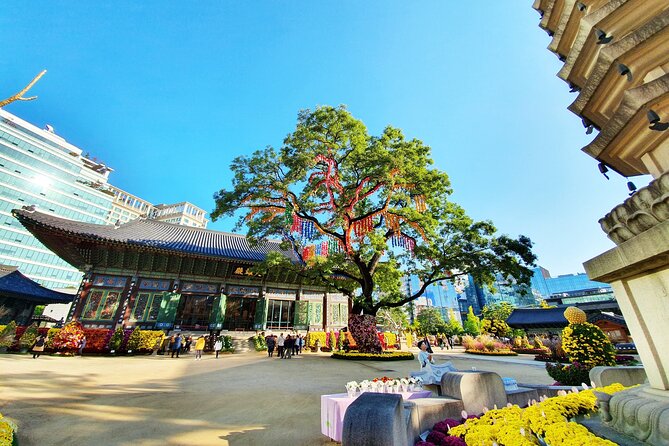
The National Folk Museum of Korea sits within the Gyeongbokgung compound and shifts the focus from kings and court buildings to ordinary life. Displays cover how people lived in Korea from earlier periods into the modern era, including household routines, social roles, and customs.
The planned visit is about 20 minutes. That is enough for a guided overview, but it can feel brief if museum displays are your main interest. One itinerary experience found this portion rushed, and that is a fair warning. You will get the outline, not a full museum visit.
I still think the stop earns its place. Palace architecture tells you how rulers presented authority. Folk displays help explain how families, workers, and communities lived beyond the palace walls. If you want more time inside the museum, ask your guide early in the day if the schedule allows any flexibility.
The Blue House offers a modern political link
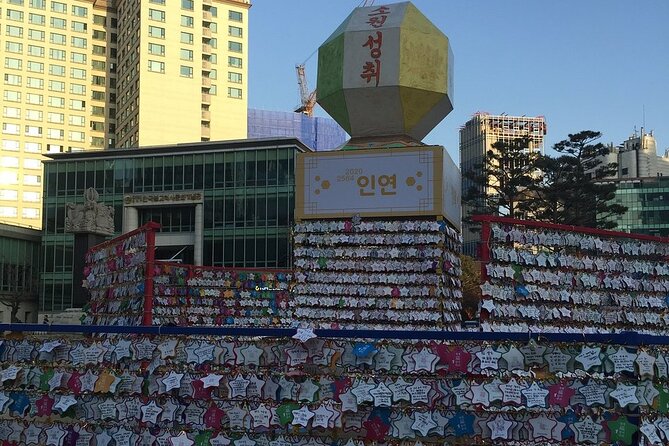
The Blue House, or Cheong Wa Dae, appears as an exterior viewing stop. It was built on former royal garden grounds using traditional Korean architectural forms and served as the official presidential residence until May 2022.
From outside, you can see the blue-roofed complex with Mount Bukak behind it. The stop connects the Joseon royal center with South Korea’s modern government, though it is not a full interior tour.
This part is best understood as a quick photo and context stop. If you are hoping to enter the buildings or spend a long time exploring the grounds, this tour does not promise that. Its value is in showing how Seoul’s political center has changed while remaining tied to the old palace district.
The ginseng center is useful, but know what it is
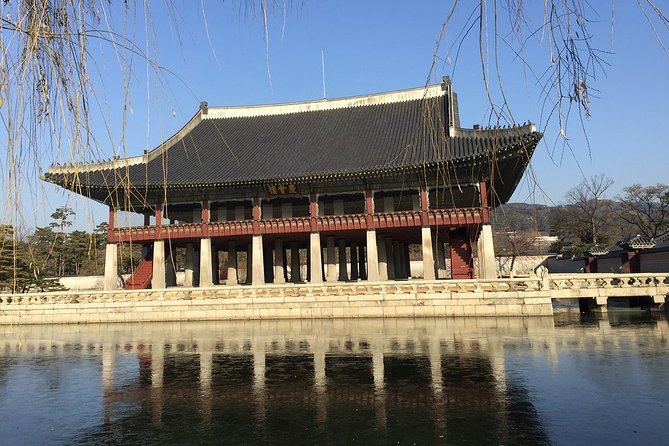
Before Insadong, the vehicle stops at the Cheongha Korea Ginseng Museum, described as a government-approved Korean ginseng center. You can taste ginseng tea, see related products, and hear an explanation of ginseng’s place in Korean culture.
The visit lasts about 30 minutes and admission is free. For some people, this is a pleasant chance to learn about a familiar Korean product before seeing it sold in shops. For others, it feels like a commercial stop that takes time away from the main sights.
My advice is simple: treat it as an educational shopping stop, not a museum equal to the palaces. You do not need to buy anything to get value from the explanation. If you are not interested in ginseng products, use the visit as a short break before the afternoon walking.
Insadong is the best place to pause for lunch
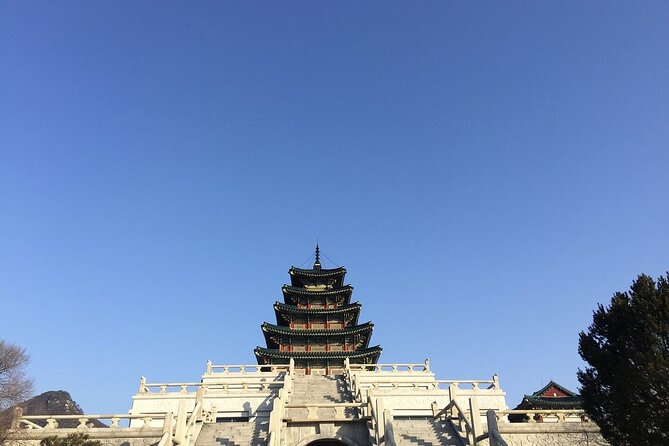
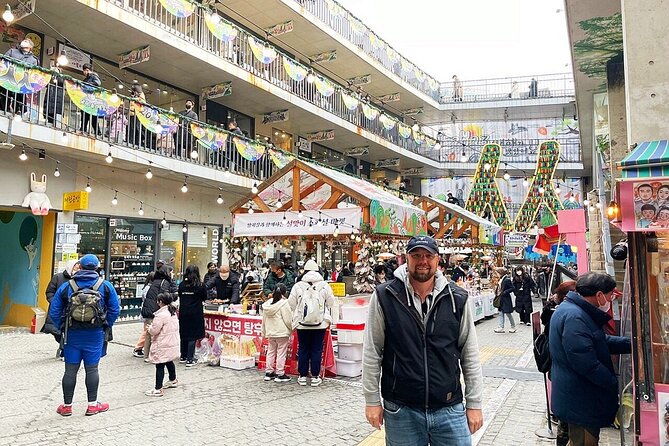
Insadong was associated with antique shops during the Joseon period and remains one of Seoul’s main areas for traditional culture. You will find shops selling crafts, tea-related goods, souvenirs, and Korean art objects, along with places where you can step into a traditional tea house.
The tour gives you about 1 hour and 20 minutes here. Since September 1, 2024, lunch is no longer included. You have free time to choose your own meal, which is actually an improvement for many people. You can select the food, price, and pace that suit you instead of being tied to one group menu.
The trade-off is that you must make your own choice in a limited window. If you want to shop as well as eat, plan ahead and do not spend the whole break searching for a restaurant. Some guides may offer an optional arranged lunch for people who prefer not to decide on their own, but this is not included in the stated tour price.
Insadong is also the place where you may feel the schedule most sharply. An hour and 20 minutes is useful for a meal and a quick walk, but not enough for serious browsing. If you like the neighborhood, return later independently.
Changdeokgung feels quieter and more personal
Changdeokgung was built in 1405 as the second royal villa after Gyeongbokgung. It later became the principal palace for several Joseon kings and is widely regarded as one of the best-preserved palace complexes in Seoul.
The one-hour visit gives the afternoon a different mood. Gyeongbokgung feels broad and formal. Changdeokgung is more closely shaped by its setting, with a less rigid sense of space and a stronger connection to the surrounding grounds.
This is also the UNESCO World Heritage site on the standard route. Its importance is not only age or royal association. The palace shows how Korean court buildings were arranged in relation to nature and terrain, rather than relying only on grand symmetry.
Changdeokgung closes on Mondays. On that day, the itinerary substitutes Bukchon Hanok Village. That is a worthwhile change, especially if traditional residential architecture interests you, but it is not the same experience as entering the palace.
On Tuesdays, Gyeongbokgung and the National Folk Museum are closed. The route then uses Changdeokgung, including its Secret Garden, and visits Bukchon Hanok Village in the afternoon. The Tuesday plan may appeal to you if the Secret Garden is a priority, but check the exact schedule before booking because the standard palace order will not apply.
Namdaemun closes the day with shopping and street life
The final stop is Namdaemun Gate, also called Sungnyemun or Soongryemun. Built in 1396 during King Taejo’s reign and reconstructed in 1447, it is recognized as one of Korea’s most important National Treasures.
You get about 30 minutes around the gate and traditional Namdaemun Market. This is a short taste rather than a full market expedition. The area can be crowded, and half an hour goes quickly if you want to browse stalls, compare prices, and take photographs.
I like ending here because the market shifts the day away from formal history. After temples, palaces, and museums, you see Seoul as a working commercial city. If you find something you want to buy, keep an eye on the time and your bags. The tour ends at City Hall or Myeongdong rather than returning you to your hotel.
Transport, pace, and practical limits
Pickup is offered from central Seoul hotels, with the meeting time adjusted according to location. The stated start time is 9:00 a.m., though your exact pickup arrangement may differ. Hotel drop-off is not included. You are dropped near City Hall or Myeongdong, both useful central locations for continuing your evening.
The vehicle is a major convenience. Several locations are close on a map but less simple when you are managing palace entrances, crowded roads, and unfamiliar transit connections. The drawback is traffic. You may spend a noticeable amount of the eight-hour day in transit, especially when Seoul roads are busy.
You need moderate physical fitness. Expect walking through palace compounds, standing during explanations and the guard ceremony, and browsing market streets. The route is not presented as accessible for every mobility level, so ask the operator directly if you have specific mobility needs.
Bring water, comfortable shoes, sun or rain protection, and clothing suited to the season. Bottled water is included. The guard ceremony may be canceled in poor weather, and outdoor palace visits are less pleasant if you arrive unprepared.
Free cancellation is available up to 24 hours before the start time. Changes or cancellations inside that window are not accepted for a refund.
Who gets the most value from this $56.44 tour?
I would choose this tour if you have one full day in Seoul and want an organized introduction to the city’s major historic sights. It is especially useful for first-time visitors, families with older children or young teens, and anyone who prefers explanations to navigating alone.
The price is fair because it combines transportation, a guide, and palace admissions. Paying separately for taxis or arranging several transit connections would take more effort, even though Seoul’s subway system is easy to use.
I would not choose it if you want deep museum time, a slow palace photography day, or a food-focused tour. The ginseng center may not interest everyone, lunch is now independent, and some stops are short. Independent visitors who already know Seoul may prefer spending a full morning at one palace and returning to Insadong or Namdaemun at their own pace.
Should you book it?
Book this tour if you want to cover a lot of Seoul in one day without managing every transfer yourself. The strongest reasons are the small group, central hotel pickup, two major palaces, and guides such as Young, BK, Sookee, and Lua, whose clear explanations and friendly style have been especially well received.
Before you commit, check the weekday route. Monday means Bukchon instead of Changdeokgung. Tuesday means Changdeokgung with the Secret Garden and Bukchon instead of Gyeongbokgung and the Folk Museum. If that substitution suits your interests, the tour offers excellent value. If one specific palace is essential, choose your date carefully.
FAQ
How long does the Seoul palace and city tour last?
The tour lasts approximately eight hours and starts at 9:00 a.m., with hotel pickup timing adjusted according to your central Seoul hotel location.
Is hotel pickup included?
Yes. Pickup is included from central Seoul hotels. Hotel drop-off is not included, and the tour ends at City Hall or Myeongdong.
Is lunch included?
No. Since September 1, 2024, lunch is not included. You have free time in Insadong to choose your own restaurant and meal.
What happens if Changdeokgung is closed on Monday?
On Mondays, Changdeokgung is closed, so the tour visits Bukchon Hanok Village instead.
What happens if Gyeongbokgung and the National Folk Museum are closed on Tuesday?
On Tuesdays, the tour visits Changdeokgung, including the Secret Garden, and goes to Bukchon Hanok Village in the afternoon.
Can the royal guard ceremony be canceled?
Yes. The changing ceremony at Gwanghwamun Gate may be canceled because of bad weather.
What is included in the tour price?
The price includes central Seoul hotel pickup, an English-speaking local guide, a driver-guide arrangement, bottled water, and entrance fees for the included attractions.
Just added around Seoul
- Incheon Airport Private Transfer between Seoul City★ 4.0 · 4 reviews
- Seoul’s Stars: Open Mic with Local & International Talent★ 4.8 · 4 reviews
- Samaksan Cable Car and Nami Island Day Escape with Railbike★ 4.0 · 4 reviews
- DMZ 2nd Tunnel and Cheorwon Peace Observatory with Admission★ 5.0 · 4 reviews
- Nami & Maple Road & Theatre des Lumieres Day Tour from Seoul★ 4.8 · 4 reviews
- Hire Photographer, Professional Photo Shoot – Seoul★ 5.0 · 4 reviews
- [KoreaByLocal] Authentic Seoul Night Walk and Chicken & Beer★ 5.0 · 4 reviews
- Play Gayageum in Hanbok Cultural Experience in Bukchon★ 5.0 · 4 reviews
Palace Tours, compared.
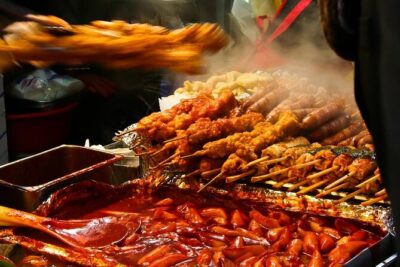
Gyeongbok Palace, Bukchon Village, and Gwangjang Tour
Read our review →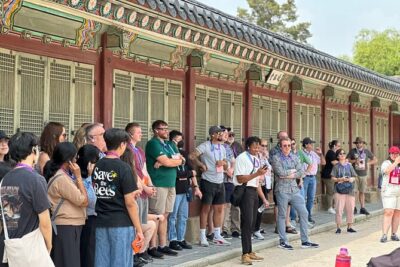
Best Seoul City Tour (Gyeongbokgung Palace,Insadong,Namsan Tower)
Read our review →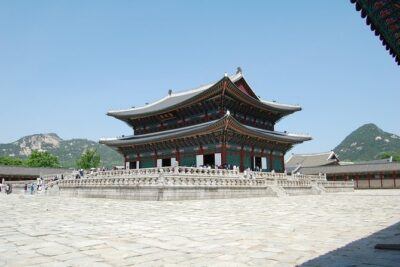
Seoul City Sightseeing Tour Including Gyeongbokgung Palace, N Seoul Tower, and Namsangol Hanok Village
Read our review →Gyeongbok Palace, Bukchon Village, and Gwangjang Tour
Read our review →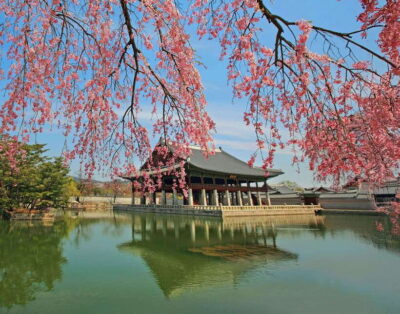
Seoul Highlights: Gyeongbok Palace, Insadong & N Seoul Tower
Read our review →
Seoul City Half Day Tour-Gyeongbok Palace Guard Changing Ceremony
Read our review →
Browse the lists this tour appears in