
Reviewed · GYEONGBOKGUNG PALACE
Seoul City Half Day Tour-Gyeongbok Palace Guard Changing Ceremony
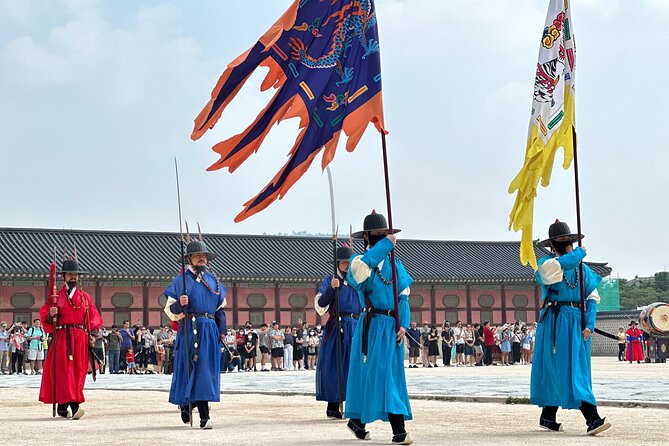
Gyeongbokgung Palace’s Changing of the Guard ceremony is the star here: colorful uniforms, drums, precise movements, and a front-row view if your guide positions the group well. You also get a useful first look at Seoul through Jogyesa Temple, the Blue House area, and the royal palace grounds.
I like the air-conditioned coach, which saves your feet and time in a spread-out city, and I like the guide-led context. Guides named Kelly, Emily, Sunny, Ray, Crystal, and Henry have been singled out for clear explanations, local stories, and help with questions. The catch is the final ginseng stop, which can feel more like a sales pitch than a museum visit.
In This Review
- Key points at a glance
- Gwanghwamun Gate and Seoul’s Royal Show
- Jogyesa Temple, a Quiet First Stop
- Cheongwadae Sarangchae and the Blue House Area
- Inside Gyeongbokgung Palace
- National Folk Museum Details and Route Changes
- The Ginseng Stop: Know What You Are Buying
- What the Coach Format Adds
- Guides Make the Biggest Difference
- Is $38 a Fair Price?
- Who Should Book This Morning Tour?
- Should You Book It?
- FAQ
- How long does the Seoul City Half Day Tour last?
- What sights are included?
- Is hotel pickup included?
- Where does the tour end?
- Is the Changing of the Guard ceremony included in the price?
- What happens on Tuesdays?
- Is lunch included?
- What languages are available?
- How large can the group be?
- Can I cancel for a full refund?
Key points at a glance
- The guard ceremony is the main event: Arrive at Gwanghwamun Gate with a guide who can help you find a good viewing position.
- Three hours cover several central sights: Jogyesa Temple, Cheongwadae Sarangchae, the Blue House area, and Gyeongbokgung Palace fit into one morning.
- Hotel pickup is offered: You ride between stops by coach rather than piecing together Seoul’s sights on your own.
- The tour suits a first morning in Seoul: It gives you useful bearings and leaves the afternoon free.
- Tuesday requires a different plan: Gyeongbokgung Palace and the National Folk Museum are closed, so replacement sights are used.
- The ginseng stop is the weak link: Expect shopping and a sales presentation, not only a museum visit.
Gwanghwamun Gate and Seoul’s Royal Show
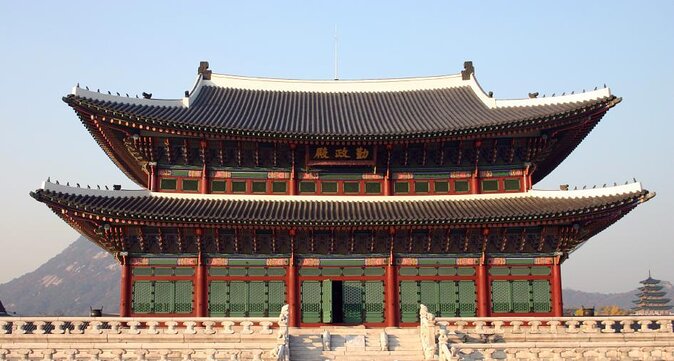
If you have never seen a Korean palace guard ceremony, this is a fine way to begin. At Gwanghwamun Gate, guards in traditional dress carry out a carefully timed change of duty. The bright clothing and formal movements make it easy to follow, even if you know little about the Joseon Dynasty.
The guide matters here. A good guide does more than point toward the gate. Ray has been praised for knowing where to stand for clear views and photographs, while another guide, Crystal, was noted for helping the group get a good look at the palace and ceremony. You should still expect crowds and a fixed schedule, but a guide can make the viewing much less confused.
The ceremony is included in the palace visit, and the palace itself receives about an hour. That is enough for a guided look at the main compound and key points around Gwanghwamun Gate. It is not enough for every courtyard, museum room, and corner of the grounds, so think of this as an introduction rather than a full palace day.
More Gyeongbokgung visits:
- Seoul: Gyeongbok Palace, Bukchon Village, and Gwangjang Tour
★ 4.9 · 2,321 reviews - Best Seoul City Tour (Gyeongbokgung Palace,Insadong,Namsan Tower)
★ 5.0 · 1,647 reviews - Seoul City Sightseeing Tour Including Gyeongbokgung Palace, N Seoul Tower, and Namsangol Hanok Village
★ 5.0 · 1,423 reviews
Jogyesa Temple, a Quiet First Stop
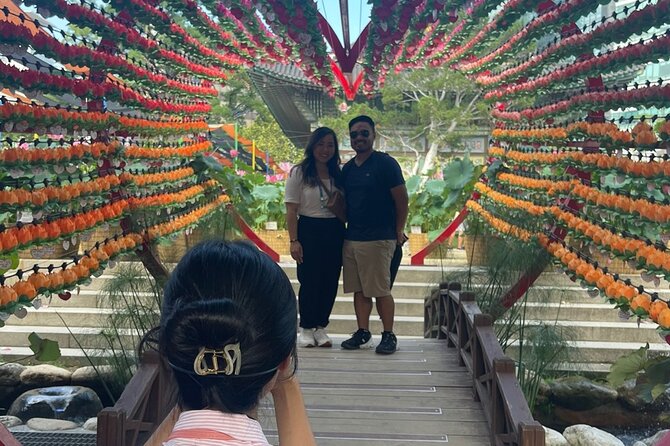
The morning begins at Jogyesa Temple, one of Korea’s important Buddhist temples in central Seoul. The contrast is immediate. You leave the coach, walk beneath the trees, and enter a calm temple setting with a seven-story pagoda and a main hall containing a significant Buddha statue.
The stop lasts about 40 minutes, with no admission charge. That gives you time to see the entryway, hear about the temple’s role in Korean Buddhism, and take photographs without turning the visit into a rushed photo stop.
I especially like this opening because it gives you a cultural counterpoint to the palace. Gyeongbokgung presents royal power and court life. Jogyesa offers a look at Korean Buddhist practice and temple design. If temples are not your interest, this may feel like time that could have been spent elsewhere. The tour gives the site real attention, rather than treating it as a quick drive-by.
Cheongwadae Sarangchae and the Blue House Area
After Jogyesa Temple, you return to the coach for Cheongwadae Sarangchae. This exhibition hall presents material about Korean presidents, cultural traditions, and UNESCO World Heritage Sites in Korea. The visit adds modern national history to the older religious and royal sites.
You also pass by Cheongwadae, known as the Blue House, the former Korean presidential home. It is often compared with the White House in Washington, but this stop is a pass-by rather than a full interior visit. Keep your expectations clear: you will see the presidential area from the route, while Sarangchae provides the exhibition experience.
This section can be useful if you are new to Seoul and want a quick framework for the country’s past and present. It is less satisfying if you prefer long, unhurried museum visits. The coach format keeps the morning moving, but it also limits your time at each place.
Inside Gyeongbokgung Palace
Gyeongbokgung was the primary royal residence during the Joseon Dynasty and was built in 1394. It is the largest of Seoul’s Five Grand Palaces, and its broad courtyards and formal gates make it an impressive setting for the ceremony.
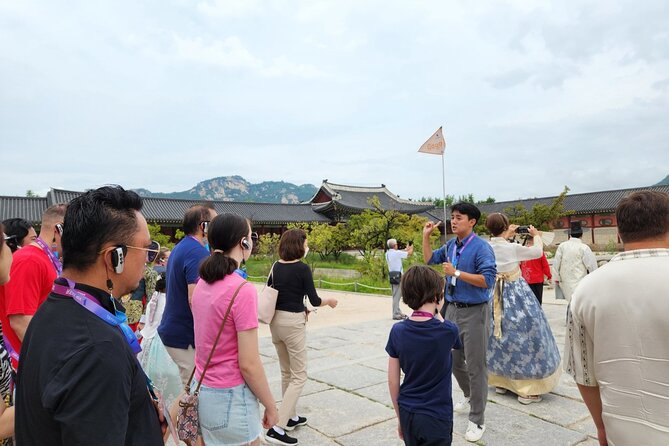
Your guide leads you through the palace compound and explains the purpose of the major spaces. One past itinerary description also refers to seeing the kings’ bedrooms, though the exact route can depend on the day and palace operations. Ask your guide questions as you go. Guides such as Emily and Henry have been praised for explaining the meaning behind the buildings instead of simply naming them.
The palace grounds are open and exposed in places. In summer, bring a hat and water. In winter, the cold can be sharp, especially during the outdoor ceremony. One visitor took the tour during heavy snow and still found it worthwhile, but the weather clearly affected comfort.
The palace visit includes admission, as does the National Folk Museum portion described for the regular route. You should wear comfortable shoes because the tour includes walking over palace grounds and temple paths, even though the coach reduces the distance between sites.
More palace visits:
- Small-Group Royal Palace and Seoul City Tour (hotel pick-up)
★ 5.0 · 1,474 reviews - Seoul: Gyeongbok Palace, Bukchon Village, and Gwangjang Tour
★ 5.0 · 1,044 reviews - Seoul Highlights: Gyeongbok Palace, Insadong & N Seoul Tower
★ 4.7 · 726 reviews - Seoul: Hanbok Rental with Gyeongbokgung Palace Entry
★ 4.6 · 611 reviews
National Folk Museum Details and Route Changes
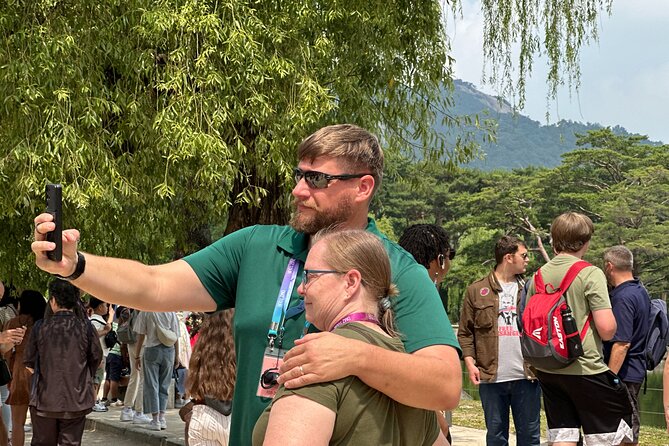
The supplied schedule gives the National Folk Museum about 30 minutes. It also describes the museum’s long institutional past, beginning as the Korean Imperial Museum in 1908 before later name and location changes.
In practice, the museum stop may be brief. You will get a taste of the displays and Korean cultural material, but you should not book this tour expecting a full museum visit. The palace is the stronger attraction, while the museum works as a short addition.
Tuesday is important. Gyeongbokgung Palace and the National Folk Museum are closed every Tuesday. The replacement plan includes another palace and Bukchon Hanok Village, with the details described in the tour information as either Deoksugung Palace or Changdeok Palace with Bukchon. Confirm the exact Tuesday route before booking if these sights matter to you.
Deoksugung is described as a traditional palace in a walled compound, with the Seoul Museum of Art also on its grounds. The alternate route may therefore change the feel of the morning. You will still see historic Seoul, but not the Gyeongbokgung guard ceremony in its usual setting.
The Ginseng Stop: Know What You Are Buying
The last stop is listed as a ginseng center or amethyst factory, and the detailed route identifies a ginseng museum and shopping visit lasting about 30 minutes. This is the part I would consider carefully before booking.
The stop includes a short explanation of Korean ginseng, followed by time in a shop. Several people found the sales pressure uncomfortable, describing the visit as a hard sell and saying it was not what they expected from a museum stop. Others bought products or enjoyed the shopping, so the experience depends partly on your interest and tolerance for sales presentations.
You do not need to treat this as a cultural highlight. Think of it as a commercial stop built into the morning. If you dislike organized shopping, this half hour will reduce the value of the tour. If you are curious about Korean ginseng or want to compare products with help on the spot, you may find it useful.
The important point is transparency. The ginseng visit is part of the advertised route, even though it is described in different ways. Do not assume you are getting 30 minutes in a conventional museum with no sales element.
What the Coach Format Adds
The air-conditioned coach is the practical reason to choose this tour over arranging the same sights on your own. Seoul is large, and the coach lets you move from central temple to exhibition hall to palace without navigating every transfer yourself.
Hotel pickup is offered in Seoul. The stated meeting point is City Hall Station, while some pickup arrangements use a nearby hotel or an agreed location. The end point is generally City Hall, with the supplied details also naming Myeongdong or Itaewon in different places. Confirm the exact pickup and drop-off instructions before the morning begins.
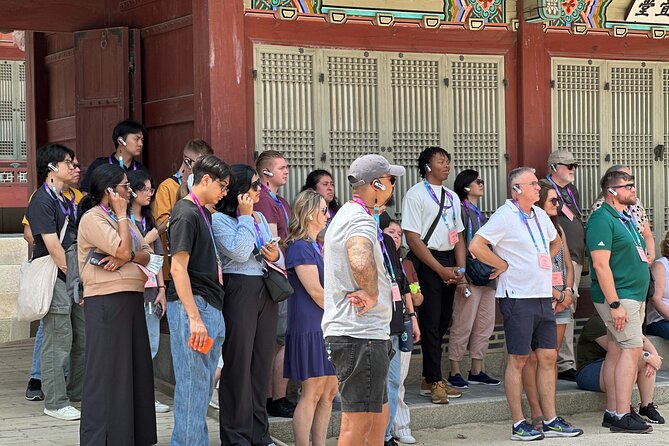
The group can contain up to 40 people. That is a sizable coach group, and it can make the palace walk less personal. The upside is a lower price and efficient transport. The downside is that you may need to stay alert for meeting times and keep close to the guide.
A few accounts describe unusually helpful pickup service, including a driver returning for someone who was lost near City Hall and a hotel pickup arranged outside a normal designated location. You should not assume every special request will be handled this way, but the operator does appear to have some flexibility when contacted in advance.
Guides Make the Biggest Difference
The tour is sold with English- or Chinese-speaking professional guides. The strongest part of the experience is likely to be the person leading your group.
Kelly is repeatedly described as friendly, clear, and strong on Korean history. Emily is noted for explaining the past well and communicating clearly. Sunny is described as cheerful and good at telling stories, while Ray is praised for answering questions and finding good photo positions.
Other named guides include Judy, Yuna, Hana, Lynn, Gabby, Nancy, Henry, Crystal, Alex, and K. Their styles will vary, and you cannot normally choose a particular guide when booking. Still, these accounts give you a useful picture of what a good morning looks like: clear explanations, help with questions, attention to the group, and practical advice for the rest of your Seoul visit.
Henry also received praise for assisting a participant whose wife had a disability. The tour is described as suitable for most people, but the combination of temple paths, palace grounds, and outdoor walking means you should raise mobility needs before booking.
Is $38 a Fair Price?
At $38 per person, the tour is priced as an efficient introduction rather than a slow, specialist tour. The cost includes hotel pickup, coach transport between sights, a professional guide, palace admission, museum admission where applicable, and taxes and handling fees.
That is a reasonable package if you have only one morning, are jet-lagged, or want someone else to handle the route. You also get a useful drop-off near central Seoul, leaving the afternoon open for Insadong, Myeongdong, Bukchon, or another area, depending on where you finish.
The value drops if you want long visits, independent wandering, or a shopping-free morning. You could spend more time at Gyeongbokgung and the National Folk Museum on your own, and public transport in Seoul is well established. The tour earns its price through convenience and guidance, not through depth at every stop.
With a 4.6 rating from 357 ratings and 92 percent recommendation shown in the supplied information, the overall satisfaction level is strong. The recurring weakness is not the temple, palace, or guides. It is the ginseng stop and the occasional concern about a large group.
Who Should Book This Morning Tour?
I would choose this tour for a first visit, especially if you want a quick orientation before exploring alone. It works well for couples, families, and small groups who value a coach, hotel pickup, and a guide who can explain what they are seeing.
It also suits anyone with limited time in Seoul. Three hours covers several major sights, and the afternoon remains free. The tour can be a pleasant first-day activity, with one person describing it as a good way to start while jet-lagged.
I would be more cautious if you have already visited Seoul’s palaces, dislike shopping stops, or want a detailed architectural study. The group size may feel impersonal, and the half hour at the ginseng center is difficult to avoid.
Plan for weather. The tour requires good weather, and poor conditions can lead to a different date or a full refund. Bring sun protection in summer and warm clothing in winter. For changes or cancellations, a full refund is available when you cancel at least 24 hours before the start time. Within 24 hours, changes are not accepted and the payment is not refunded.
Should You Book It?
Book it if you want a guided Seoul sampler with a strong palace finale. The guard ceremony, Gyeongbokgung grounds, Jogyesa Temple, and the Blue House area give you a useful mix of royal, religious, and modern Korea.
Skip it if the ginseng sales stop would sour your morning, or if you prefer to set your own pace. For most first-time visitors, $38 is fair for the transport and orientation, but the tour is best understood as a brisk introduction, not a complete study of Seoul.
FAQ
How long does the Seoul City Half Day Tour last?
The tour lasts approximately three hours and takes place in the morning.
What sights are included?
The regular route includes Jogyesa Temple, Cheongwadae Sarangchae, the Blue House area, Gyeongbokgung Palace, the Changing of the Guard ceremony, the National Folk Museum, and a ginseng shopping stop.
Is hotel pickup included?
Yes. Hotel pickup in Seoul is offered. The stated meeting point is also City Hall Station, so confirm the pickup arrangement when booking.
Where does the tour end?
The listed end point is Seoul City Hall. Other supplied details name City Hall, Myeongdong, or Itaewon, so you should confirm the exact drop-off location for your departure.
Is the Changing of the Guard ceremony included in the price?
Yes. Palace admission and the Changing of the Guard ceremony are included on the regular route.
What happens on Tuesdays?
Gyeongbokgung Palace and the National Folk Museum are closed every Tuesday. The tour uses replacement sights, described as Deoksugung Palace or Changdeok Palace and Bukchon Hanok Village in the supplied information.
Is lunch included?
No. Lunch is not included.
What languages are available?
The tour provides an English- or Chinese-speaking professional guide.
How large can the group be?
The activity can have a maximum of 40 participants.
Can I cancel for a full refund?
Yes, if you cancel at least 24 hours before the local start time. Cancellations or changes made within 24 hours are not refunded or accepted. If bad weather or an insufficient number of participants causes the operator to cancel, you are offered another date or a full refund.
Just added around Seoul
- Incheon Airport Private Transfer between Seoul City★ 4.0 · 4 reviews
- Seoul’s Stars: Open Mic with Local & International Talent★ 4.8 · 4 reviews
- Samaksan Cable Car and Nami Island Day Escape with Railbike★ 4.0 · 4 reviews
- DMZ 2nd Tunnel and Cheorwon Peace Observatory with Admission★ 5.0 · 4 reviews
- Nami & Maple Road & Theatre des Lumieres Day Tour from Seoul★ 4.8 · 4 reviews
- Hire Photographer, Professional Photo Shoot – Seoul★ 5.0 · 4 reviews
- [KoreaByLocal] Authentic Seoul Night Walk and Chicken & Beer★ 5.0 · 4 reviews
- Play Gayageum in Hanbok Cultural Experience in Bukchon★ 5.0 · 4 reviews
Gyeongbokgung Palace, compared.
Gyeongbok Palace, Bukchon Village, and Gwangjang Tour
Read our review →
Best Seoul City Tour (Gyeongbokgung Palace,Insadong,Namsan Tower)
Read our review →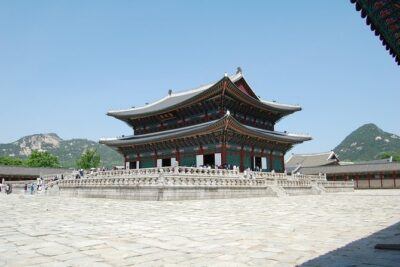
Seoul City Sightseeing Tour Including Gyeongbokgung Palace, N Seoul Tower, and Namsangol Hanok Village
Read our review →Gyeongbok Palace, Bukchon Village, and Gwangjang Tour
Read our review →
Seoul Highlights: Gyeongbok Palace, Insadong & N Seoul Tower
Read our review →
Hanbok Photoshoot and History Tour at Gyeongbokgung Palace
Read our review →Browse the lists this tour appears in