
Reviewed · COOKING CLASSES
Seoul: Korean Cooking at Seoul Cooking Club!
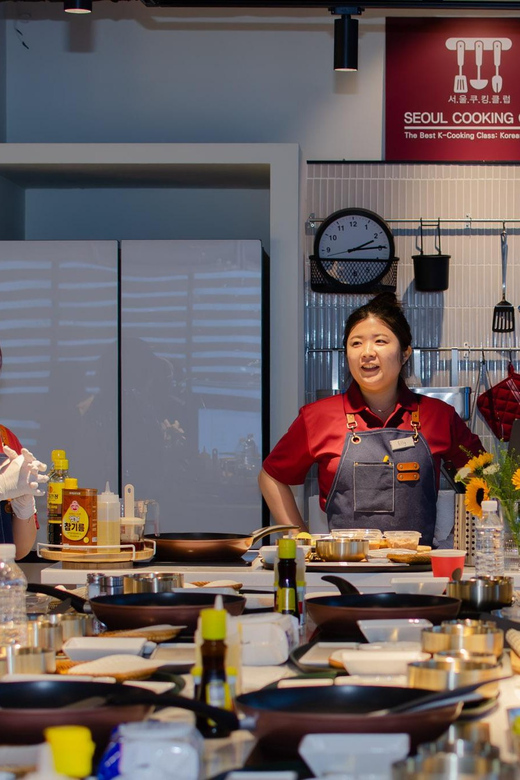
Korean food is best understood with your hands busy, and this 150-minute cooking class gives you a generous introduction to it. You prepare small jeon pancakes, japchae, bulgogi, Jeonju bibimbap, banchan, and dessert, then sit down to eat what you made. English-speaking chefs such as Sally, Olivia, Elly, and Grace explain not only the steps, but also the food’s origins.
I like the sheer range of dishes and the practical recipe book you take home. I also like the central location, just 15 metres from Jonggak Station and close to Insadong, Ikseondong, Gwangjang Market, and Gyeongbokgung Palace. The main consideration is price: at $109 per person, this costs more than a regular meal, though the large meal, instruction, drinks, and take-home materials help balance it.
In This Review
- Key points at a glance
- What you actually cook in 150 minutes
- Jeon, japchae, and bulgogi: why the menu works
- A meal that keeps going after the cooking
- Learning with Sally, Olivia, Elly, or Grace
- The recipe book and take-home value
- Location in central Jongno
- Choosing brunch, lunch, or early dinner
- Dietary needs and access
- Who will get the most from this class?
- Should you book Seoul Cooking Club?
- FAQ
- Where is Seoul Cooking Club located?
- How do I reach the cooking club by metro?
- How long does the cooking class last?
- What language is the class taught in?
- What dishes are included?
- How many Korean side dishes will I taste?
- Are drinks included?
- Is dessert included?
- Can I take leftovers home?
- Is the class suitable for children?
- Do I need to bring anything?
- Is hotel pickup included?
- Can the class accommodate dietary needs?
- Is the cooking class wheelchair accessible?
- Can I cancel my booking?
- Can I reserve without paying immediately?
Key points at a glance
- Seven or more Korean dishes in one class: Prepare jeon, japchae, bulgogi, bibimbap, side dishes, and a changing dessert.
- English instruction with food stories: Sally, Olivia, Elly, and Grace have all led sessions, explaining techniques, customs, and origins.
- A proper feast, not just a sample: You taste while cooking, then sit down for a three-course meal with around ten side-dish tastings.
- Recipe book and leftovers: Generous portions may leave you with food for later, plus recipes and a tote-style bag to take home.
- Easy Jongno access: Jonggak Station, Line 1, Exit 12, is only a short walk from the cooking studio.
- Best for adults and older teenagers: The class is not suitable for children under 16 and requires closed-toe shoes.
What you actually cook in 150 minutes
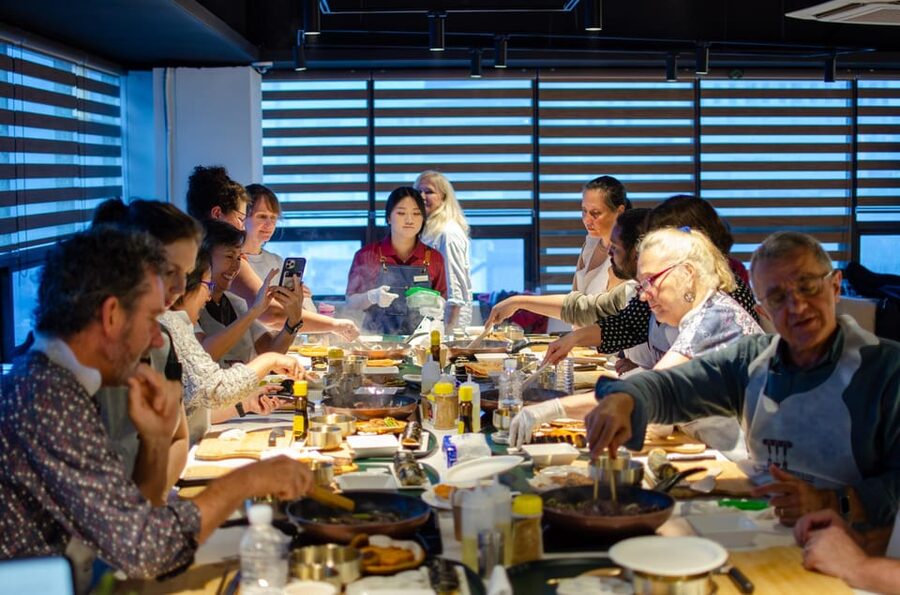
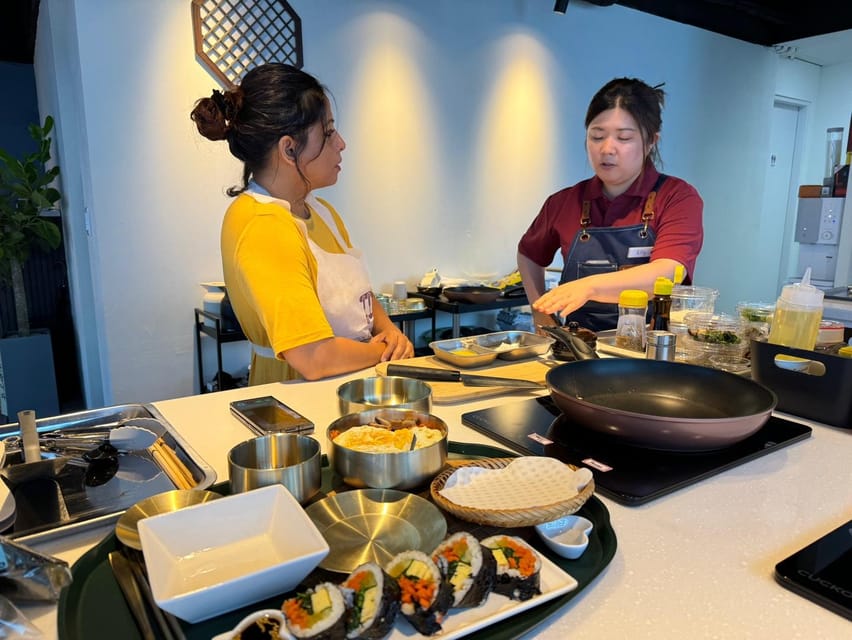
The class is built around a smart progression. You begin with small dishes, move into the main recipes, then finish with dessert and a sit-down meal. That order matters because Korean cooking is not one large pot of food. It is a collection of prepared elements that come together at the table.
The exact selection of jeon can vary. You may make three or four varieties from options such as donggrangttaeng, small pan-fried meatballs; pollack pancake; pajeon with seafood; beef pancake; tofu pancake; and sesame leaf pancake.
Jeon are a useful first lesson because they show how Korean food can turn simple ingredients into something crisp, savoury, and substantial. They are also hands-on without being too difficult, making them a good warm-up for people who do not cook much at home.
Next come the main dishes. Japchae combines stir-fried vegetables with chewy glass noodles, while bulgogi uses sliced beef seasoned with soy sauce before being cooked barbecue-style. Jeonju bibimbap brings together rice and a range of toppings in one of Korea’s most recognisable meals.
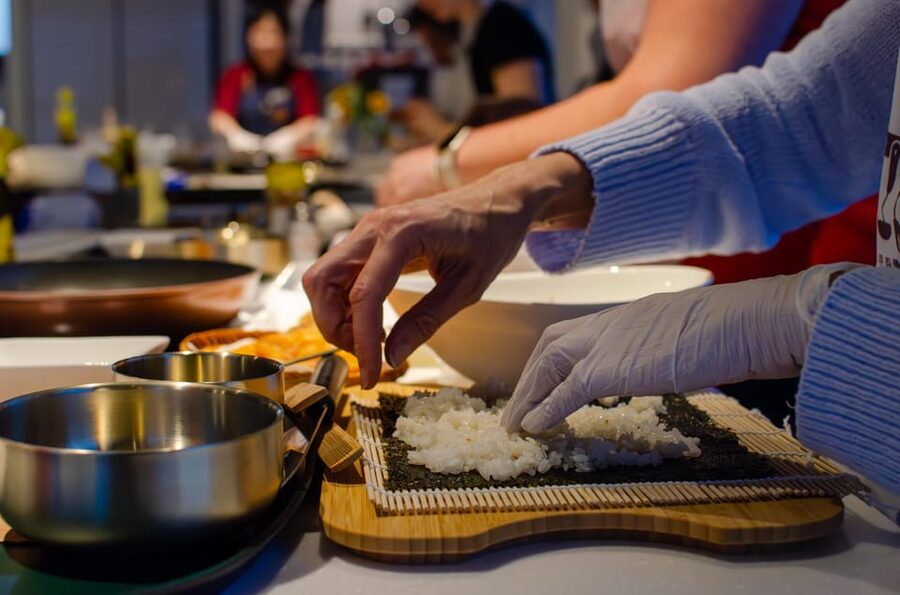
You do not simply watch a chef prepare these dishes. The class is collaborative, with ingredients and utensils set up at each station. Several sessions have included advance preparation, which keeps the class moving and makes seven dishes possible in the allotted time. The tradeoff is that you will not perform every single preparation from raw ingredients. This is a cooking lesson designed for enjoyment and useful skills, not a professional kitchen course.
More Korean cooking classes:
- Local Home Korean Cooking Class & Market Adventure in Seoul
★ 5.0 · 1,024 reviews - Master Korean traditional cooking with a Kimchi chef
★ 5.0 · 385 reviews - Seoul: Korean Cooking Class at a Local Home and Market Tour
★ 5.0 · 348 reviews
Jeon, japchae, and bulgogi: why the menu works
I like the menu because it covers several sides of Korean food in one sitting. Jeon gives you pan-fried comfort food, japchae teaches you how vegetables and noodles work together, and bulgogi introduces a familiar Korean marinade that you can use again at home.
Bibimbap provides the visual finale. You build a bowl from separate ingredients, learning how individual flavours can remain distinct while working together. This is also one of the easiest dishes to recreate after your trip, since the recipe can adapt to ingredients available in your home kitchen.
The banchan selection adds another layer. You may taste kimchi, radish kimchi, seasoned soybean sprouts, seasoned spinach, spicy cucumber, stir-fried anchovy, and Korean egg roll, among other side dishes. The total is roughly ten tastings, so this part feels more like a survey of Korean table culture than a single recipe.
That variety is one of the strongest reasons to choose this class. If you have eaten Korean food in restaurants but found the side dishes mysterious, this session gives you a clearer sense of how they fit into an ordinary meal. You learn that a Korean table is often built from many small portions rather than one main plate alone.
A meal that keeps going after the cooking
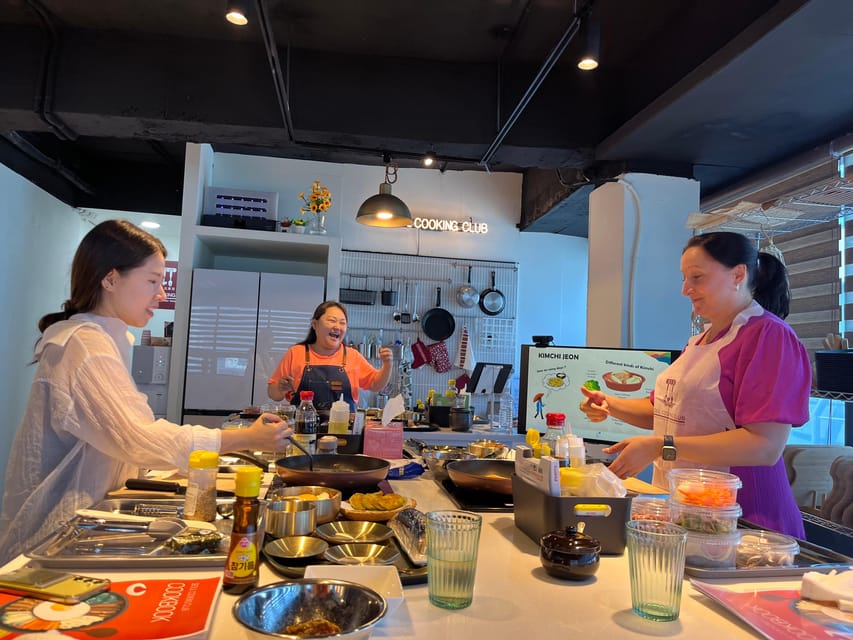
Come hungry. The food is served in generous amounts, and you taste along the way before sitting down to enjoy the finished meal. Some people have had enough left over for another meal, and takeaway containers may be provided when there is more food than you can finish.
This is useful, but plan your day around it. If you have another meal booked immediately after class, you may need to choose between eating at a relaxed pace and trying every dish. The class lasts two and a half hours, and the meal is a central part of the experience rather than a quick snack at the end.
The included drinks help round things out. You receive water, sikhye, a sweet rice drink, and Korean tea. Dessert changes from day to day, with bingsu sometimes offered as the sweet finish. Bingsu is a popular Korean shaved ice dessert, and it provides a cooler, lighter end after a table full of savoury dishes.
The welcome drink is included as well. Nothing is left to arrange separately, which keeps the focus on cooking and eating.
Learning with Sally, Olivia, Elly, or Grace
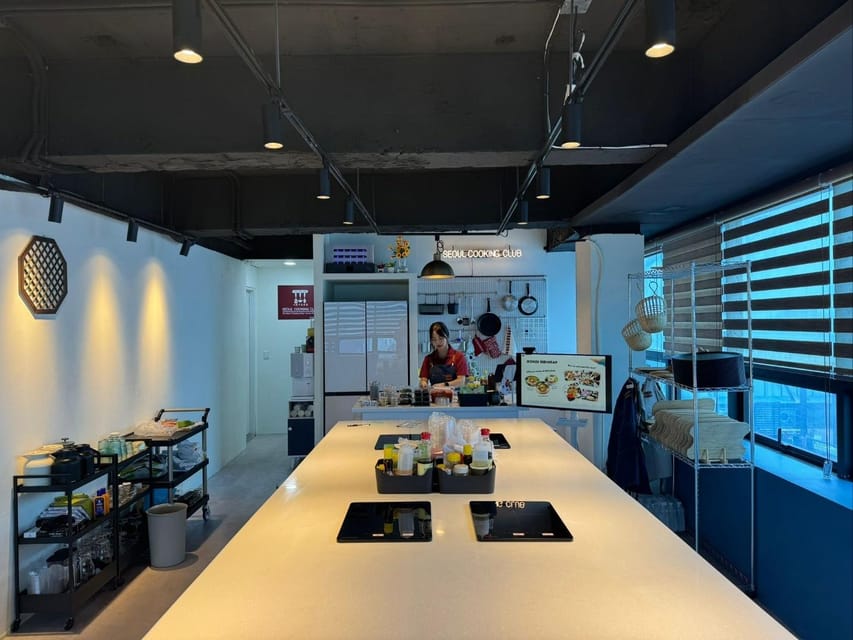
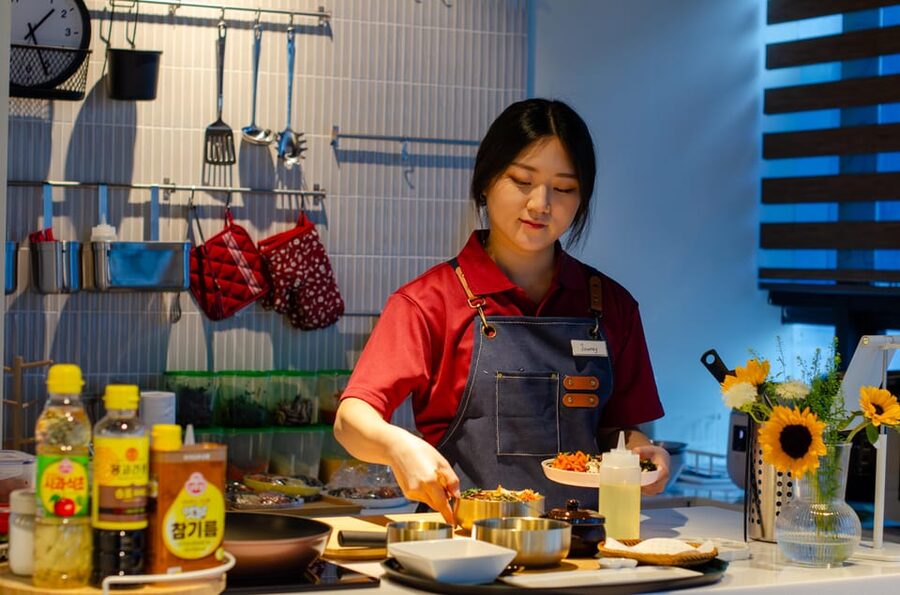
The chef leading your session depends on the day. Sally, Olivia, Elly, and Grace have all taught classes, and the teaching style described across the sessions is clear, patient, and friendly.
English is used throughout. The chefs explain each step, answer questions, and share stories about where dishes come from and how they relate to Korean customs. That cultural layer is important. You are not only learning how much seasoning to add, but also why certain foods appear together and what makes them part of Korean home cooking.
The class is set up for beginners. Instructions are broken into manageable steps, and the recipes are not presented as a test of kitchen skill. If you arrive with little cooking experience, you should still be able to take part. If you cook often, you can use the question time to ask about sauces, pickling, substitutions, or methods.
A small group can make the lesson feel more personal. One session had only a single participant, allowing plenty of questions, while other sessions included solo visitors, couples, families with teenage daughters, and groups of friends. Group size can change, so do not assume you will receive a private lesson. Still, the format gives you a chance to meet people while working toward the same meal.
Several classes have also had an assistant helping keep the stations tidy and moving used tools out of the way. That may sound minor, but it matters when you are making many dishes in a short time. You spend more energy cooking and less time managing the workspace.
A completely different kind of day, same trip:
- Best DMZ Tour Korea from Seoul (Red Suspension Bridge Optional)
★ 5.0 · 41,422 reviews - DMZ Tour: 3rd Tunnel, Option(Suspension Bridge, Boat) from Seoul
★ 5.0 · 21,373 reviews - DMZ tour south Korea from Seoul (NK experience hall, defector)
★ 5.0 · 20,599 reviews - DMZ Insider Tour: 3rd Tunnel, NK Defector Meet & Red Bridge
★ 4.9 · 15,214 reviews
The recipe book and take-home value
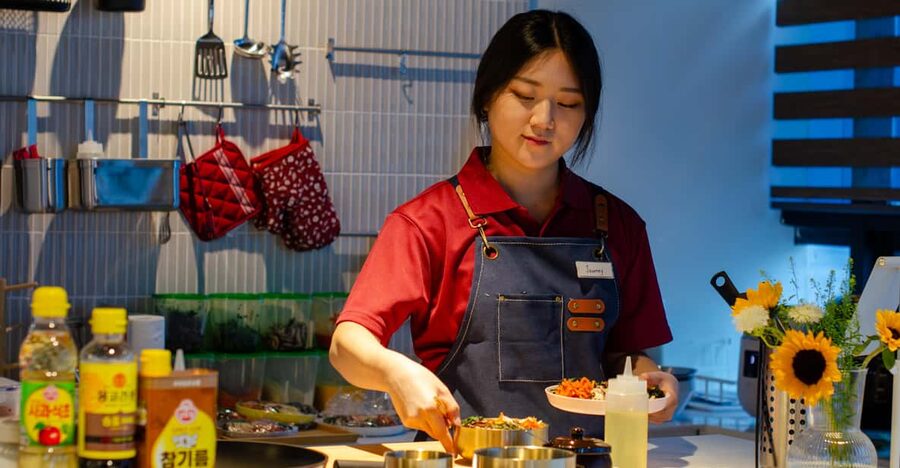
The recipe book is one of the best practical extras. It gives you a way to recreate the dishes once you return home, instead of leaving the class with only photographs and a full stomach.
A tote-style bag and takeaway containers have also been provided in sessions. The bag is useful for carrying the cookbook and leftovers. Takeaway arrangements may depend on how much food remains, but the portions are generous enough that you should come prepared to carry something if offered.
This is where the $109 price becomes easier to judge. You are paying for a full meal, several tastings, drinks, dessert, English instruction, a central Seoul location, and recipes you can use later. It is still a premium activity compared with simply ordering bulgogi or bibimbap, but it offers more lasting value than a standard restaurant visit.
The value is strongest if you enjoy cooking or want to bring Korean food skills home. If you mainly want to eat Korean food, the class may feel expensive. Seoul gives you plenty of cheaper meals, markets, and restaurants. Here, the point is participation and instruction.
Location in central Jongno
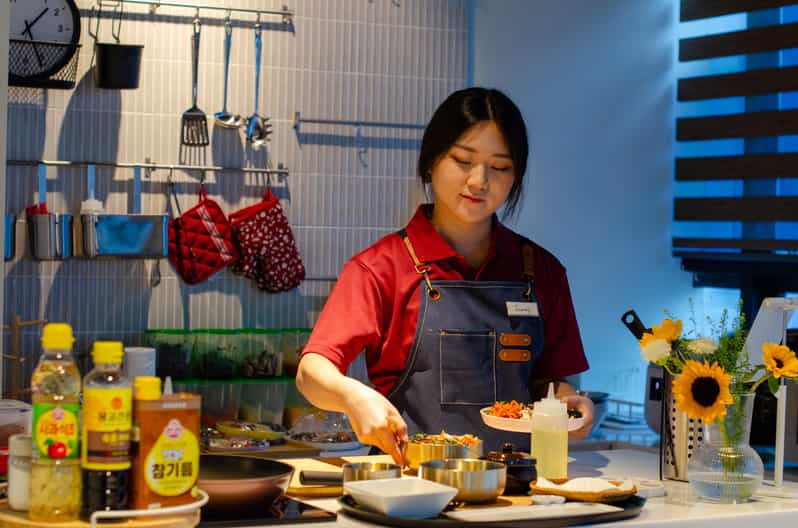
Getting there is unusually simple. Take Line 1 to Jonggak Station and use Exit 12. The cooking club is about 15 metres from the station exit.
Walk straight ahead, take the immediate first right around the corner of Pascucci, and look for the entrance beside the Good Game Zone with its orange facade. The class is on the seventh floor of the same building.
This location works well for a day of sightseeing. You are close to Insadong and Ikseondong, with Gwangjang Market and Myeongdong also nearby. Gyeongbokgung Palace is within about a ten-minute walk according to the provided directions, making the class easy to pair with palace visits, shopping, market food, or an evening in Jongno.
There is no hotel pickup or drop-off. You arrange your own way to the studio, but the nearby metro makes that a minor issue. Wear closed-toe shoes, as required, and arrive ready to work around cooking equipment.
Choosing brunch, lunch, or early dinner
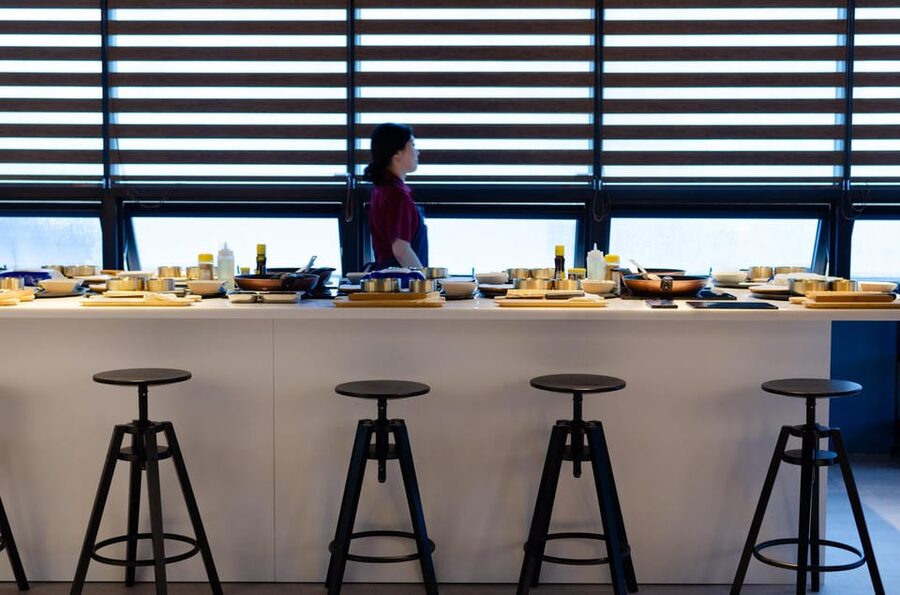
Three sessions run from Monday through Sunday, with options suited to brunch, lunch, or an early dinner. Check the available start times when booking, since the best choice depends on the rest of your Seoul plans.
A brunch session can work well before an afternoon at the palaces or Insadong. A lunch class may become your main midday meal, while the early dinner option gives you a social evening activity without committing to a late night.
I would avoid scheduling a tight appointment immediately afterward. You may need time to finish eating, pack leftovers, collect your recipe book, and leave the building. The generous food also makes it sensible to treat the cooking class as your main meal rather than squeezing it between two restaurant bookings.
Free cancellation is available up to 24 hours in advance for a full refund, and you can reserve now and pay later. Those terms are useful if your Seoul schedule is still shifting.
Dietary needs and access
The class is wheelchair accessible. The information provided does not give detailed accessibility measurements, so you should contact the provider directly if you need specific information about the lift, workstations, or kitchen layout.
Dietary requests may be possible. A gluten-free participant was accommodated successfully, and another family was able to include a daughter with coeliac disease in the cooking and meal. You should still state your needs when booking and confirm the arrangements in advance, especially for serious allergies or strict dietary restrictions.
The class is not suitable for children under 16. Older teenagers can enjoy it, especially if they already have an interest in food, but the age rule is clear.
Who will get the most from this class?
I would recommend it most strongly to:
- Solo visitors who want a social activity with a clear structure.
- Couples and friends who enjoy cooking together.
- First-time visitors who want an introduction to several Korean dishes at once.
- Food lovers who want to understand banchan, sauces, noodles, pancakes, and rice dishes.
- People who want recipes they can prepare after returning home.
It is also a good choice if you are nervous about Korean food vocabulary. The English-speaking chef guides you through the process, and the dishes are familiar enough to provide a clear starting point.
You may want to skip it if your budget is tight, you dislike group activities, or you prefer a restaurant meal with no cooking involved. The class can also be too much food for someone with a small appetite, though takeaway containers may solve part of that problem.
Should you book Seoul Cooking Club?
Book it if you want more than a meal. The combination of jeon, japchae, bulgogi, bibimbap, banchan, drinks, dessert, and a recipe book gives you a broad taste of Korean cooking in one well-planned session.
I especially like it for solo visitors and first-time Seoul visitors because the class is easy to reach, taught in English, and social without requiring you to arrive with a group. The biggest reason to pause is the $109 cost. If you see cooking as part of your sightseeing, the package offers fair value. If you only want to sample Korean food, spend that money across several local meals instead.
For an adult or older teenager who wants to cook, taste, learn the stories behind the dishes, and carry the experience home, this is a strong choice. Just leave room in your schedule, wear closed-toe shoes, and arrive hungry.
FAQ
Where is Seoul Cooking Club located?
It is in central Seoul, in Jongno, on the seventh floor of a building near Jonggak Station.
How do I reach the cooking club by metro?
Take Line 1 to Jonggak Station and leave through Exit 12. Walk straight, take the immediate first right around the corner of Pascucci, and look for the orange Good Game Zone facade.
How long does the cooking class last?
The class lasts 150 minutes, or two and a half hours.
What language is the class taught in?
The chef teaches the class in English.
What dishes are included?
The class includes three or four jeon starters, japchae, bulgogi, Jeonju bibimbap, Korean side dishes, dessert, and traditional Korean drinks.
How many Korean side dishes will I taste?
You can expect approximately ten side-dish tastings, including options such as kimchi, radish kimchi, seasoned soybean sprouts, seasoned spinach, spicy cucumber, stir-fried anchovy, and Korean egg roll.
Are drinks included?
Yes. Water, sikhye, and Korean tea are included, along with a welcome drink.
Is dessert included?
Yes. Dessert is included, and the options change daily. Bingsu may be served.
Can I take leftovers home?
Takeaway containers may be provided for leftover food. Portions can be generous, but you should not assume every session will have the same amount to take away.
Is the class suitable for children?
No. The activity is not suitable for children under 16.
Do I need to bring anything?
You should bring or wear closed-toe shoes.
Is hotel pickup included?
No. Hotel pickup and drop-off are not included. You make your own way to the central Seoul meeting point.
Can the class accommodate dietary needs?
Dietary accommodations may be possible. Gluten-free and coeliac-friendly arrangements have been made, but you should contact the provider in advance with your specific requirements.
Is the cooking class wheelchair accessible?
Yes, the activity is listed as wheelchair accessible.
Can I cancel my booking?
You can cancel up to 24 hours in advance for a full refund.
Can I reserve without paying immediately?
Yes. Reserve now and pay later options are available.
Just added around Seoul
- Incheon Airport Private Transfer between Seoul City★ 4.0 · 4 reviews
- Seoul’s Stars: Open Mic with Local & International Talent★ 4.8 · 4 reviews
- Samaksan Cable Car and Nami Island Day Escape with Railbike★ 4.0 · 4 reviews
- DMZ 2nd Tunnel and Cheorwon Peace Observatory with Admission★ 5.0 · 4 reviews
- Nami & Maple Road & Theatre des Lumieres Day Tour from Seoul★ 4.8 · 4 reviews
- Hire Photographer, Professional Photo Shoot – Seoul★ 5.0 · 4 reviews
- [KoreaByLocal] Authentic Seoul Night Walk and Chicken & Beer★ 5.0 · 4 reviews
- Seoul Film Camera Club★ 5.0 · 4 reviews
Cooking Classes, compared.
Local Home Korean Cooking Class & Market Adventure in Seoul
Read our review →
Master Korean traditional cooking with a Kimchi chef
Read our review →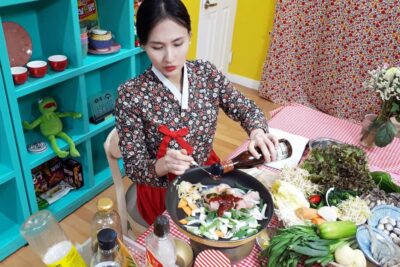
Korean Cooking Class at a Local Home and Market Tour
Read our review →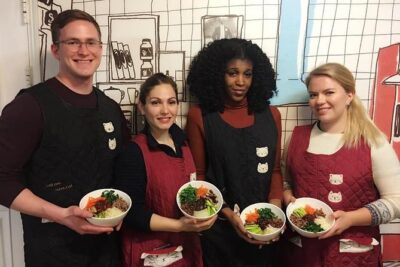
Cook 3 Authentic Korean Dishes with Local Market Tour
Read our review →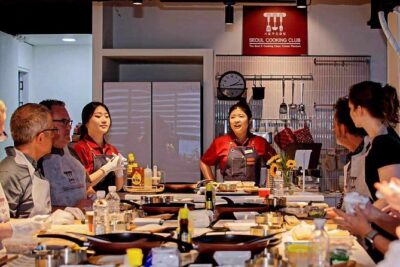
Experience Korean Cooking in Modern Hanok Kitchen
Read our review →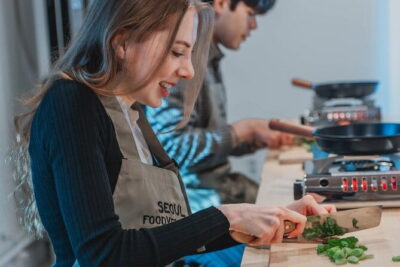
Korean Cooking Class with Grocery Shopping at Seoul Local Market
Read our review →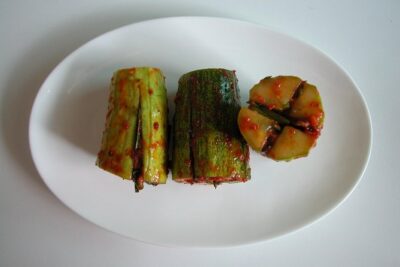
Korean Kimchi Making Day Experience with a Local Market Tour
Read our review →Browse the lists this tour appears in