
Reviewed · COOKING CLASSES
Cook 3 Authentic Korean Dishes with Local Market Tour
Mangwon Market is the star of this experience. You meet Jomin at Mangwon Station, walk through a real neighborhood food market, taste street snacks, and learn how everyday Korean ingredients become a three-course meal. Then you return to her studio and cook, rather than watch from the sidelines.
I like the maximum four-person class size, which gives you room to ask questions and get help at your own station. I also like the balance between market tour and cooking lesson: you see ingredients in their normal setting before handling them in the kitchen. The main consideration is that the menu changes, so you cannot count on making one particular dish.
In This Review
- Key points to know before booking
- Meeting Jomin at Mangwon Station
- Walking through Mangwon Market
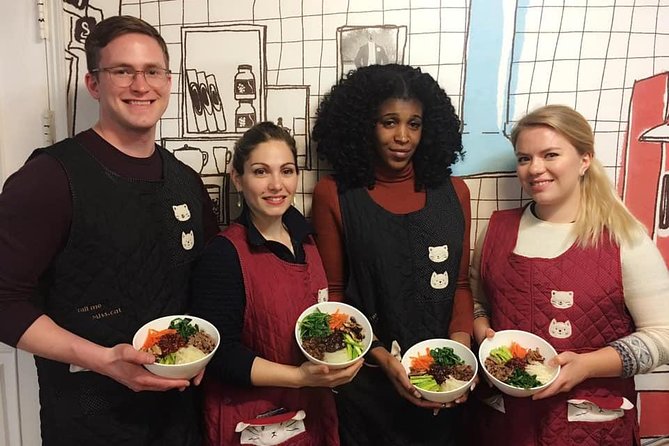
- Cooking three dishes at your own station
- What the meal may include
- Korean food culture beyond the recipes
- How Jomin teaches
- Is $79 good value?
- Lunch or dinner, and who should book
- Booking details worth knowing
- Should you book this Korean cooking class?
- FAQ
- Where does the Korean cooking class begin?
- How long does the experience last?
- Where does the activity end?
- How many people can join the cooking class?
- Which dishes will I cook?
- Is this a hands-on cooking class?
- Are vegetarian and vegan options available?
- Can I choose lunch or dinner?
- What is the cancellation policy?
Key points to know before booking
- Mangwon Market comes first: Meet at Exit 2 of Mangwon Metro Station and explore the market before cooking.
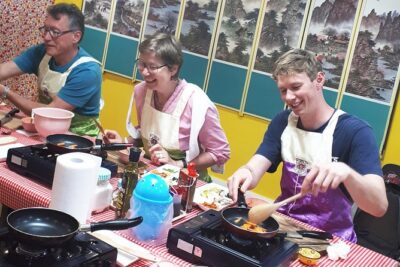
- You cook all three dishes: This is a hands-on class with your own table, cooker, tools, and ingredients.
- Jomin leads the class: Her instructions cover food preparation, cooking methods, and Korean food customs.
- The menu can vary: Possible dishes include soft tofu stew, bibimbap, bulgogi, kimchi stew, japchae, and stir-fried pork.
- Vegetarian and vegan options are available: Tell the provider about your needs when booking.
- You receive more than a meal: A professionally designed cookbook, photographs, and leftovers may be included as useful reminders of the class.
Meeting Jomin at Mangwon Station
The class begins at Entrance 2 of Mangwon Metro Station, on Seoul’s Line 6. This is a practical meeting point because you start close to Mangwon Market instead of spending the first part of the tour finding a restaurant or cooking studio.
Allow enough time to locate the correct station exit. The activity lasts about three and a half hours, and the market walk is part of that time. The class ends back at the meeting point, so you do not need to arrange a separate ride from the studio.
Jomin leads the experience and explains what you are seeing as you walk. Her teaching style is clear and hands-on, with help available as you chop, season, and cook. Several details make this more useful than a basic recipe lesson: you learn what ingredients are used for, how Korean meals are put together, and where certain foods fit into daily life.
The class is described as having a maximum of four people, an excellent size for practical instruction. One booking detail lists a maximum of 11 participants for the wider activity, so I would confirm the exact group arrangement if a very small class is essential to your decision.
More Korean cooking classes:
- Local Home Korean Cooking Class & Market Adventure in Seoul
★ 5.0 · 1,024 reviews - Master Korean traditional cooking with a Kimchi chef
★ 5.0 · 385 reviews - Seoul: Korean Cooking Class at a Local Home and Market Tour
★ 5.0 · 348 reviews
Walking through Mangwon Market
Mangwon Market gives the class its sense of place. Instead of starting with pre-measured ingredients in a kitchen, you see food as it is bought and sold in Seoul. Jomin points out ingredients used in the recipes and explains Korean staples such as kimchi, banchan, anchovies, prawns, soft tofu, and other fresh produce.
You also have time to taste street foods. That matters because Korean food culture is not limited to formal restaurant dishes. A market walk shows you the snacks, prepared foods, seafood, vegetables, and pantry items that local shoppers encounter in ordinary life.
The tour can also help you make better choices later in your trip. Jomin offers advice about what to eat in the market, and you may have time to buy something that catches your eye. The exact selection depends on what is open and available that day. One class took place during Chuseok, when some stalls were closed, but enough remained open to make the visit worthwhile.
This is not a long market history tour. It is a focused walk tied to the cooking lesson. If you want a full food crawl with many tastings, this may feel brief. If you want to understand the ingredients before using them, it is a smart use of the first part of the morning or evening.
Cooking three dishes at your own station
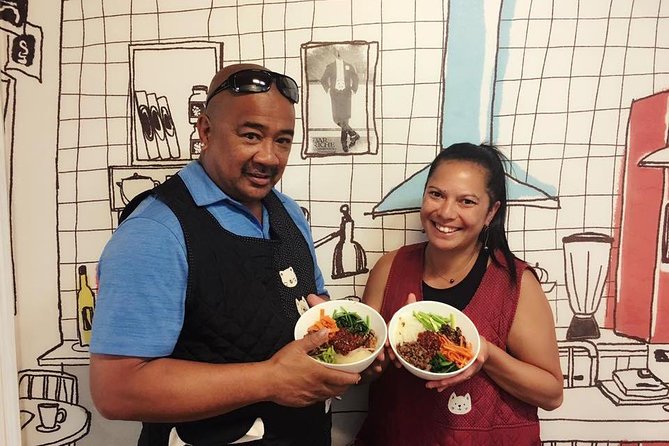
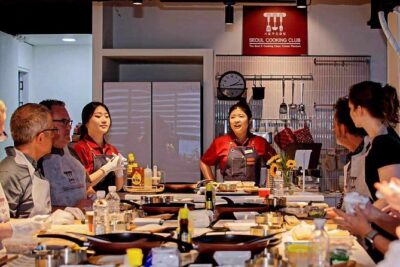
Back at the cooking studio, you receive a personal cooking table and cooker. The class is not a demonstration where you sit and watch Jomin prepare everything. You do the work yourself, with her guidance at each stage.
The studio is described as clean, organized, and spacious. Ingredients and tools are prepared for each station, so you can focus on technique instead of wondering where to find a cutting board or measuring spoon. The setup also works well for beginners because Jomin can correct problems while they are still small.
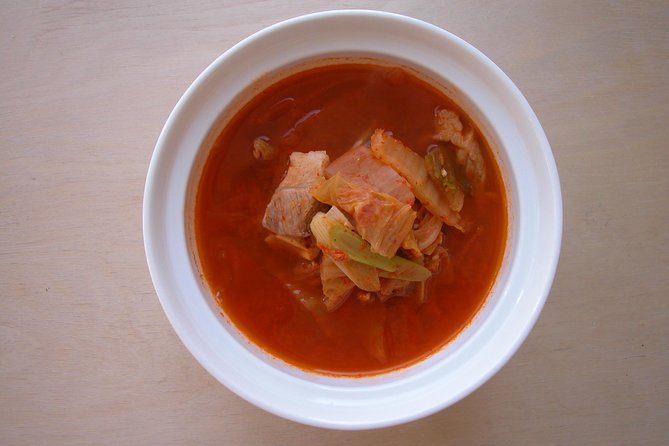
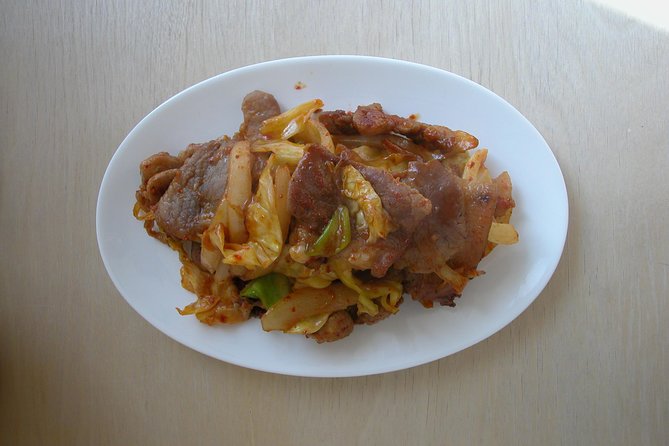
A typical menu may include sundubu jjigae, or soft tofu stew, bibimbap, and bulgogi. Other possible dishes include kimchi stew, japchae, and stir-fried pork. Because the menu varies, the class can offer a useful introduction to several cooking styles rather than repeating the same type of preparation.
You may prepare stock from scratch, make a bulgogi marinade, cut vegetables for bibimbap, cook on your individual burner, and work with seafood such as clams or prawns. The ingredients are not simply placed in front of you without explanation. Jomin discusses what each one does and guides you through the order of work.
The pacing has a pleasant rhythm. One dish can be cooking while you prepare the next, and finished food can be taken to the dining area. This lets you eat as you go instead of waiting until all three dishes are complete.
What the meal may include
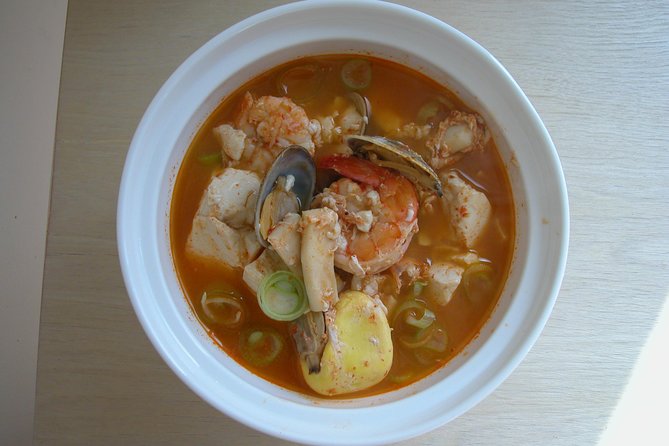
Soft tofu stew is a good example of what makes the class useful. It looks simple, but its flavor depends on stock, seasoning, and timing. In one version of the class, clams and soft tofu were purchased at the market and used for the stew. If you do not usually cook seafood, Jomin can explain how it fits into the dish, and dietary adjustments are possible.
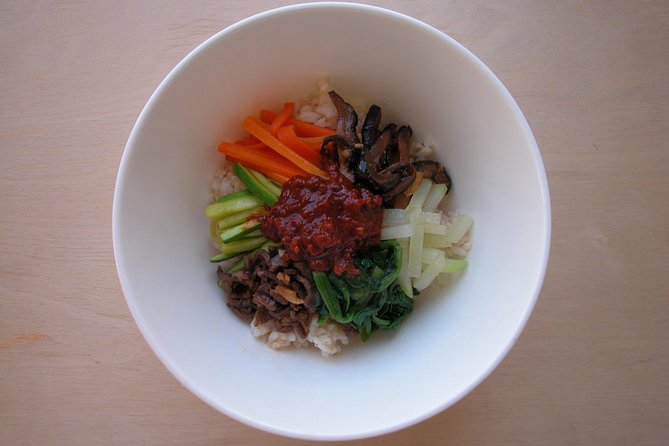
Bibimbap gives you practice with several small components. You cut and cook vegetables, prepare the rice bowl, and learn how the separate ingredients come together. The finished dish is familiar to many people from Korean restaurants, but making it yourself helps you understand the balance of rice, vegetables, meat, sauce, and texture.
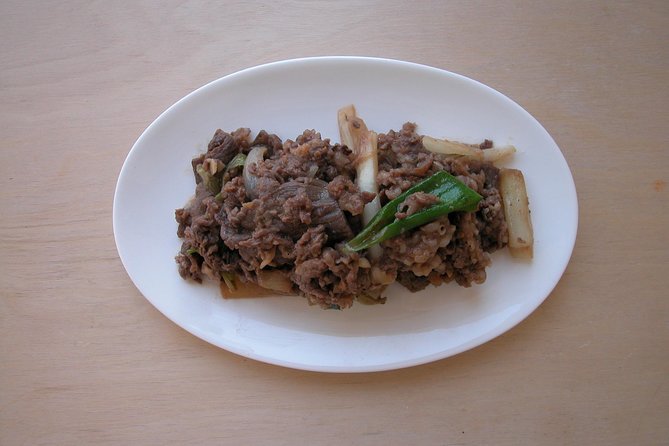
Bulgogi focuses on marinating and cooking thinly sliced beef. Making the marinade yourself is more useful than simply tasting a prepared version because you can repeat the process at home. Japchae, when offered, provides a different lesson in noodles, vegetables, and stir-frying.
The portions appear substantial enough to make a full meal. You eat what you prepare in a private dining area, and take-home containers are available for leftovers. That is worth noting if you book a lunch or dinner class and do not want to waste food.
A few more Seoul trips worth weighing up
- Seoul Street Food Market Tour
★ 5.0 · 1,226 reviews - Seoul: Night Market Food Tour with Local Guide
★ 4.9 · 943 reviews - Downtown Seoul Guided Food & Market Tour with 8+ Local Tastings
★ 5.0 · 580 reviews - Seoul Night Palace & Market Food Tour with Vehicle
★ 5.0 · 275 reviews
Korean food culture beyond the recipes
The class explains food customs as well as cooking steps. You learn about banchan, kimchi, common ingredients, and the way Korean meals are built around several shared elements. The market visit gives those ideas a practical setting.
Jomin also covers small but helpful details, such as the use of anchovies for stock and the preparation of prawns. Depending on the day’s menu, you may taste rice wine or receive an explanation of how particular products are used.
This cultural context is one of the strongest reasons to choose this activity over a cooking video or a standard restaurant meal. You leave with recipes, but also with a better sense of what to look for in Korean markets and on restaurant tables.
The lesson is suitable for complete beginners. You do not need advanced knife skills or prior Korean cooking experience. At the same time, the class is not only for people who rarely cook. Someone who already enjoys cooking can still pick up new stock methods, marinades, ingredient combinations, and serving ideas.
How Jomin teaches
Jomin’s teaching approach is patient but structured. Instructions are given step by step, and she stays involved as you prepare each dish. The class is relaxed in tone, but the kitchen still has rules and timing to keep the food on track.
That balance matters. A class that is too casual can leave beginners unsure of what to do next. A class that is too strict can make cooking feel like a test. Here, the available information suggests clear guidance with enough personal help to keep the process enjoyable.
Dietary restrictions can be accommodated, including vegetarian and vegan choices. You should raise those needs in advance rather than waiting until the class begins. Since the menu changes, early notice gives the provider a better chance to plan suitable ingredients.
The small format also helps couples, families, and friends work at their own pace. If you are cooking with a child or someone who is not confident in the kitchen, personal stations make it easier to share the work without crowding around one counter.
Is $79 good value?
At $79 per person, this is not the cheapest way to eat Korean food in Seoul. You can find a filling market meal for far less. The value comes from combining a guided market visit, three dishes, a cooking studio, instruction, cultural background, and a cookbook.
The class lasts about three and a half hours. That gives you more than a quick lesson and a single recipe. You also receive fresh ingredients, use cooking equipment, eat the meal you prepare, and may take leftovers home.
The cookbook improves the long-term value. It includes the dishes made in class and other Korean favorites recommended by Jomin, giving you a way to recreate the meal after returning home. Photographs and recipes can also help you remember the order of preparation.
I would consider the price fair for someone who wants an activity rather than only lunch or dinner. It is especially sensible if Korean cuisine is a major interest, if you prefer small-group instruction, or if you want a useful souvenir instead of another object in your suitcase.
The value is weaker if you are looking for a quick market snack, a formal chef’s demonstration, or a fixed menu. Since the class may be rescheduled or canceled if the minimum number of participants is not reached, keep a little flexibility in your Seoul schedule.
Lunch or dinner, and who should book
You can choose a lunch or dinner class. A lunch session works well near the start of a day in western Seoul, especially if you want to continue exploring afterward. A dinner session gives you a slower way to begin an evening and finish with a meal you cooked yourself.
I would book this for:
- First-time visitors who want an introduction to Korean ingredients
- Home cooks who want recipes they can repeat
- Couples, families, and friends who prefer a small class
- People who enjoy markets as much as formal attractions
- Vegetarians and vegans who want to ask for an adapted menu
- Anyone who wants a practical souvenir, not just a meal
I would think twice if you dislike cooking, have very limited time, or want to guarantee one specific dish. Although the instruction suits beginners, you still spend much of the experience chopping, mixing, cooking, and cleaning up rather than simply being served.
Booking details worth knowing
Mobile tickets are available, and confirmation is sent at the time of booking. The meeting point is Mangwon Station, Entrance 2, and the activity returns there at the end.
Free cancellation is available until 24 hours before the start time for a full refund. Cancellations or changes made within 24 hours are not accepted for a refund. The provider can also cancel or reschedule if the minimum number is not reached, in which case you are offered another date or experience, or a full refund.
Because the menu is not fixed, ask about the dishes planned for your date if you have a strong preference or a food restriction. Also confirm the group size if the four-person maximum is especially important to you.
Should you book this Korean cooking class?
I would book it if you want to understand Korean food from market stall to dining table. The combination of Mangwon Market, personal cooking stations, three dishes, cultural explanations, and a take-home cookbook gives the experience real substance.
The strongest part is the connection between the market and the kitchen. You see ingredients in context, then use them yourself. Jomin’s clear instruction and willingness to adjust dishes make the class approachable for beginners, while the cooking methods and recipes give more experienced cooks something useful to take home.
Choose another activity if you want a fixed menu, a large social food tour, or a short demonstration. For most people who enjoy eating and learning in equal measure, this is a well-priced and practical Seoul experience.
FAQ
Where does the Korean cooking class begin?
The class begins at Entrance 2 of Mangwon Metro Station on Line 6 in Seoul.
How long does the experience last?
The activity lasts approximately three hours and 30 minutes.
Where does the activity end?
The activity ends back at the meeting point near Mangwon Station.
How many people can join the cooking class?
The cooking class is described as having a maximum of four people. Additional booking information lists a maximum of 11 travelers for the wider activity, so confirm the exact arrangement if group size is important to you.
Which dishes will I cook?
The three-course menu may include soft tofu stew, bibimbap, bulgogi, kimchi stew, japchae, or stir-fried pork. The exact menu can vary.
Is this a hands-on cooking class?
Yes. You receive your own cooking table and cooker, and prepare the dishes yourself with Jomin’s instructions and personal assistance.
Are vegetarian and vegan options available?
Yes. Vegetarian and vegan options are available. Share your dietary needs when booking.
Can I choose lunch or dinner?
Yes. You can choose between a lunch class and a dinner class.
What is the cancellation policy?
You can cancel at least 24 hours before the experience start time for a full refund. Cancellations or changes made less than 24 hours before the start time are not accepted for a refund.
More Shopping Tours in Seoul
- Seoul: Mt.Seorak, Nami Island & Korean Garden, No Shopping
★ 4.8 · 614 reviews - Private DMZ Tour (No Shopping): 3rd Tunnel & Suspension Bridge
★ 5.0 · 607 reviews - Korean Palace and Market Tour in Seoul Including Insadong and Gyeongbokgung Palace
★ 4.0 · 174 reviews - Seoul: Nighttime Tour of Palace, Market, Naksan Park & More
★ 4.9 · 143 reviews
Just added around Seoul
- Incheon Airport Private Transfer between Seoul City★ 4.0 · 4 reviews
- Seoul’s Stars: Open Mic with Local & International Talent★ 4.8 · 4 reviews
- Samaksan Cable Car and Nami Island Day Escape with Railbike★ 4.0 · 4 reviews
- DMZ 2nd Tunnel and Cheorwon Peace Observatory with Admission★ 5.0 · 4 reviews
- Nami & Maple Road & Theatre des Lumieres Day Tour from Seoul★ 4.8 · 4 reviews
- Hire Photographer, Professional Photo Shoot – Seoul★ 5.0 · 4 reviews
- [KoreaByLocal] Authentic Seoul Night Walk and Chicken & Beer★ 5.0 · 4 reviews
- Play Gayageum in Hanbok Cultural Experience in Bukchon★ 5.0 · 4 reviews
Cooking Classes, compared.
Local Home Korean Cooking Class & Market Adventure in Seoul
Read our review →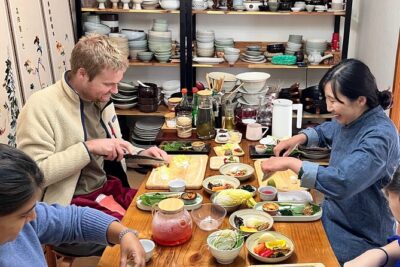
Master Korean traditional cooking with a Kimchi chef
Read our review →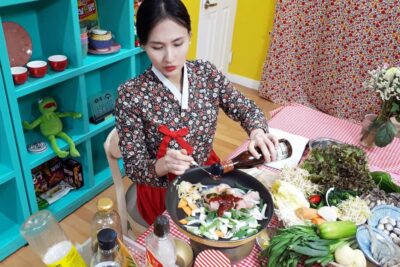
Korean Cooking Class at a Local Home and Market Tour
Read our review →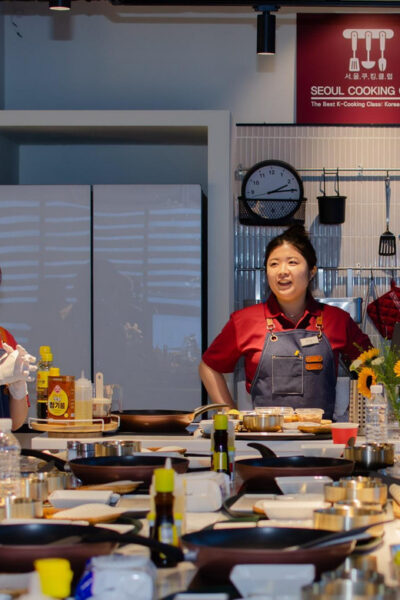
Experience Korean Cooking in Modern Hanok Kitchen
Read our review →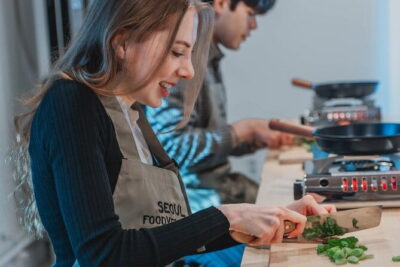
Korean Cooking Class with Grocery Shopping at Seoul Local Market
Read our review →
Korean Kimchi Making Day Experience with a Local Market Tour
Read our review →Browse the lists this tour appears in