
Reviewed · COOKING CLASSES
Korean Cooking at Seoul Cooking Club
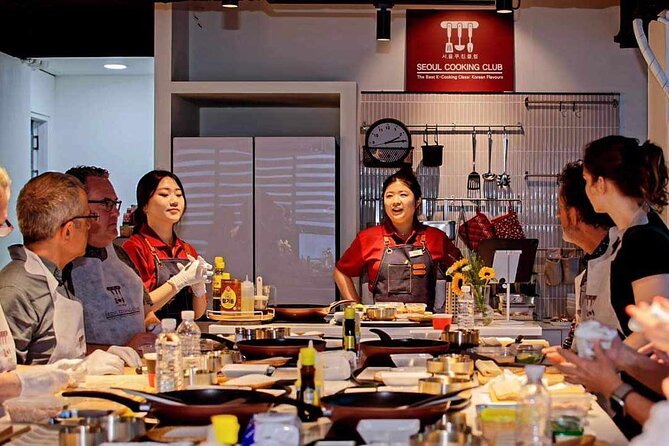
Seoul Cooking Club turns a cooking lesson into a generous Korean meal. In about two and a half hours, you may prepare bulgogi, bibimbap, gimbap, japchae, several jeon pancakes, and dessert, with the exact menu varying by session. The class is capped at 12 people, so the kitchen does not feel like a factory line.
I especially like the wide range of flavors, from savory pancakes and noodles to sweet dessert and traditional drinks such as sujeonggwa. I also like the practical touch of a cookbook to take home, plus the chance to pack up leftovers instead of watching good food go to waste.
The main consideration is that this suits beginners best. Much of the chopping and ingredient preparation is done before class, so cooks seeking advanced knife work or a full from-scratch kitchen lesson may find the hands-on part fairly simple.
In This Review
- Key points to know before booking
- A Korean cooking class with a full table at the end
- What happens at 71-6 Jongno 2(i)-ga
- The menu: bulgogi, bibimbap, gimbap, and more
- How hands-on is the cooking?
- The food is the real payoff
- Dietary needs and allergies
- Is $109 a fair price?
- Who will enjoy this class most?
- Practical advice for a smoother visit
- Should you book Seoul Cooking Club?
- FAQ
- How long does the Korean cooking class last?
- Where does the class meet?
- Where does the activity finish?
- How many people can join the class?
- Which dishes might I prepare?
- Can dietary requirements be accommodated?
- Is food included in the experience?
- What is the cancellation policy?
Key points to know before booking
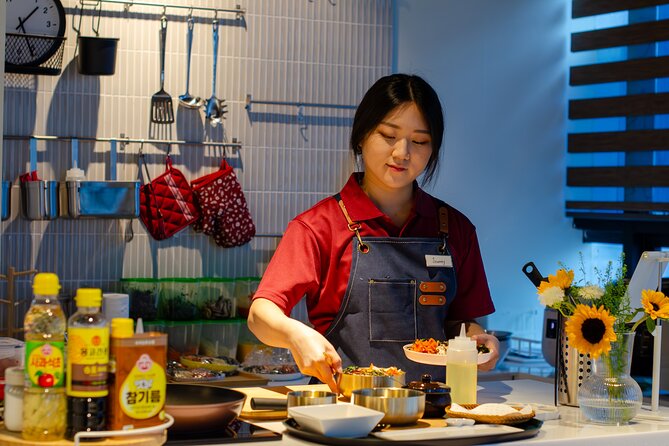
- Seven or more Korean dishes may be served: Menus can include bulgogi, bibimbap, gimbap, japchae, three kinds of jeon, and dessert.
- The class is built around tasting: You sample about 10 Korean flavors across appetizers, main courses, drinks, and sweets.
- Instructors make the recipes approachable: Olivia, Sally, Elly, Grace, and Ally are praised for clear demonstrations and friendly help.
- Dietary needs are part of the setup: Vegan, vegetarian, pescatarian, gluten-free, halal, and some allergy-friendly requests can be accommodated.
- Come hungry: Portions are large enough that many people have food left to take home.
- The location is convenient: The class begins and ends at 71-6 Jongno 2(i)-ga in Jongno District, near public transportation.
A Korean cooking class with a full table at the end
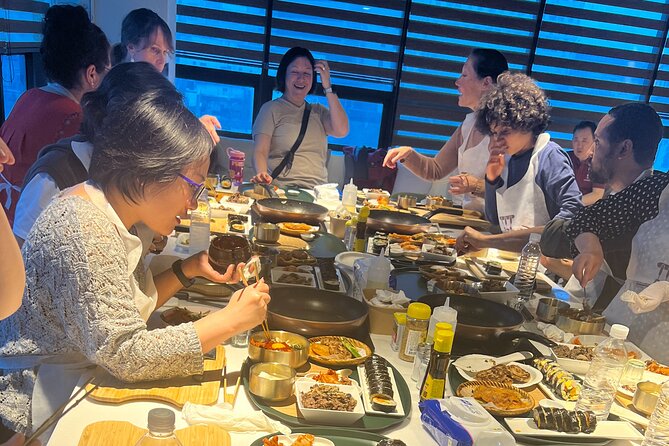
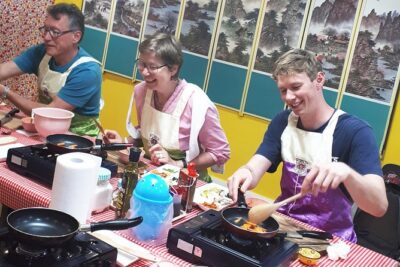
The best reason to book this class is simple: you do not just watch a chef prepare Korean food. You help assemble and cook a broad spread, then sit down to eat it.
The format is listed as brunch, lunch, or dinner, and lasts about 2 hours 30 minutes. It is designed as a three-course Korean meal, but the number of individual dishes can be much higher. Past menus have included seven dishes and dessert, while the experience promises about 10 Korean flavors.
That distinction matters. This is not a single-dish lesson focused only on kimchi or bulgogi. You get a useful introduction to the structure of Korean meals: rice, noodles, meat or vegetables, pancakes, sauces, side elements, and sweets.
I like this approach for a first visit to Seoul. After making several familiar foods, you will have a better sense of what you are ordering in restaurants and what you are seeing at markets. You also get a cultural lesson without sitting through a formal lecture.
More Korean cooking classes:
- Local Home Korean Cooking Class & Market Adventure in Seoul
★ 5.0 · 1,024 reviews - Master Korean traditional cooking with a Kimchi chef
★ 5.0 · 385 reviews - Seoul: Korean Cooking Class at a Local Home and Market Tour
★ 5.0 · 348 reviews
What happens at 71-6 Jongno 2(i)-ga
You meet at 71-6 Jongno 2(i)-ga, in Seoul’s Jongno District. The activity finishes at the same address, which keeps the logistics easy. The meeting point is near public transportation, and confirmation is provided when you book.
The class has a maximum of 12 people. That is a useful limit for a practical lesson. You are not guaranteed one-on-one attention every minute, but a small group gives the instructor room to demonstrate, answer questions, and check your work.
The teaching staff varies. Olivia is praised for patient, clear instruction. Sally is noted for her energy and friendly manner. Elly receives particular credit for explaining gimbap and Korean food culture in an easy-to-follow way. Grace is praised for explaining the foundations of Korean flavor, while Ally is remembered as a warm teacher and host.
The exact instructor is important if you have a strong preference, but the class appears to operate as a team rather than around one single personality. Staff may include a lead instructor and a helper, which is useful when several dishes are being prepared at once.
The menu: bulgogi, bibimbap, gimbap, and more
The menu is the heart of the experience, and it offers more variety than many short cooking classes.
Bulgogi gives you a familiar starting point: thinly sliced, seasoned Korean meat with a sweet and savory flavor. It is one of the dishes most closely associated with Korean food outside Korea, so learning how its seasoning works is useful.
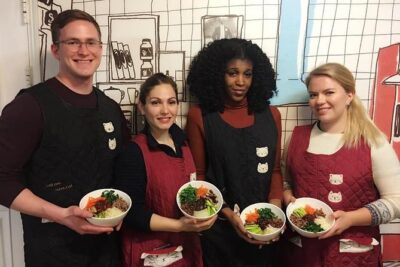
Bibimbap introduces the idea of combining rice with vegetables, sauce, and other toppings. It is a good dish for understanding balance. The ingredients may be simple, but the final bowl depends on how you combine texture, seasoning, and heat.
Gimbap is a particularly helpful lesson because rolling it neatly takes a little technique. Elly has been praised for breaking the process into clear steps and offering tips that make the dish easier to repeat at home.
Japchae adds glass noodles and a different texture to the table. It helps show how Korean cooking uses sauces and vegetables without making every dish taste the same.
The pancake section can include three types of jeon. These savory pancakes are useful because they show how a few basic ingredients can become a crisp, shareable dish. You may also encounter kimchi pancakes, depending on the class menu.
Dessert completes the meal. The supplied details do not specify one fixed dessert, so you should not book expecting a particular sweet. The point is the range, ending with a change of pace after all the savory food.
The class also includes about 10 Korean flavors across appetizers, main dishes, dessert, and drinks. Some sessions have included water, tea, and sujeonggwa, a sweet cinnamon-based Korean punch. The menu can change, so think of the class as a broad tasting and cooking session rather than a fixed recipe course.
How hands-on is the cooking?
This is a beginner-friendly class, and that is both its strength and its limitation.
The instructors demonstrate each step, then guide you through the work. Ingredients are prepared in advance, which keeps the class moving and makes it possible to complete many dishes in a short period. You are more likely to succeed and eat the results than to spend the whole session struggling with prep.
That setup is good for couples, families, solo visitors, and anyone who does not cook much. It also makes the class less tiring. You can prepare food, pause between stages, and sit down to enjoy the meal at the end.
If you are an experienced home cook, you may want more raw preparation, knife practice, or detailed work with sauces. One less enthusiastic assessment described the session as closer to assembling than cooking because much of the food was already prepared. That is a fair warning.
I would frame the class as a guided Korean food workshop, not professional culinary training. You will pick up useful methods, ingredient ideas, and flavor combinations. You will not leave with advanced restaurant technique.
A completely different kind of day, same trip:
- Best DMZ Tour Korea from Seoul (Red Suspension Bridge Optional)
★ 5.0 · 41,422 reviews - DMZ Tour: 3rd Tunnel, Option(Suspension Bridge, Boat) from Seoul
★ 5.0 · 21,373 reviews - DMZ tour south Korea from Seoul (NK experience hall, defector)
★ 5.0 · 20,599 reviews - DMZ Insider Tour: 3rd Tunnel, NK Defector Meet & Red Bridge
★ 4.9 · 15,214 reviews
The food is the real payoff
The portions are generous. Several people have reported leaving full, with enough food to take away for another meal. Families in particular may appreciate this, since the class can function as both an activity and a substantial lunch or dinner.
The shared meal also gives the class a social side. You prepare food with people from different places, then sit together and eat what the group has made. For a solo visitor, this can be an easy way to meet others without signing up for a large sightseeing group.
Food is served after the cooking stages, allowing you to enjoy the table rather than rushing from one recipe to the next. Some sessions include drinks such as tea and sujeonggwa. Alcohol is not listed as an included feature, so do not assume it will be provided.
The quality of the ingredients is described as local and carefully sourced. The important practical point is that the dishes are intended to taste like recognizable Korean food, not watered-down versions designed only for foreign palates.
Dietary needs and allergies
The class is presented as suitable for a wide range of diets. Vegan, vegetarian, pescatarian, gluten-free, and halal options are available. A peanut allergy and restrictions on beef and pork have also been accommodated successfully.
Still, you should provide your dietary information when booking and confirm it before the class begins. Korean cooking often uses sauces, broths, marinades, and shared ingredients, so clear communication matters.
For strict allergies, ask exactly how the class handles cross-contact. The available information confirms that accommodations can be made, but it does not promise a fully separate kitchen or guarantee that every ingredient is prepared independently.
This flexibility is a major reason the class works for mixed groups. One person can avoid meat while another enjoys bulgogi, and the instructor can adjust the dishes rather than leaving someone with only rice and vegetables.
Is $109 a fair price?
At $109 per person, this is not the cheapest way to eat Korean food in Seoul. You can find a restaurant meal for far less, and a market snack costs only a few dollars.
The value comes from the combination of food, instruction, cultural context, social time, and recipes to take home. You are not paying just for a meal. You are paying for a small-group activity that occupies half a day’s worth of sightseeing time and leaves you with skills you can use after returning home.
The number of dishes helps the calculation. If your session includes seven dishes, dessert, several flavors, drinks, and enough food for leftovers, the price compares more favorably with other organized food experiences. A cookbook and, in some sessions, a small tote bag add useful souvenirs rather than disposable trinkets.
I would consider the price worthwhile if you want a structured cultural activity and enjoy eating a large meal. It is less appealing if your main goal is advanced cooking instruction or if you are trying to keep daily costs low.
Who will enjoy this class most?
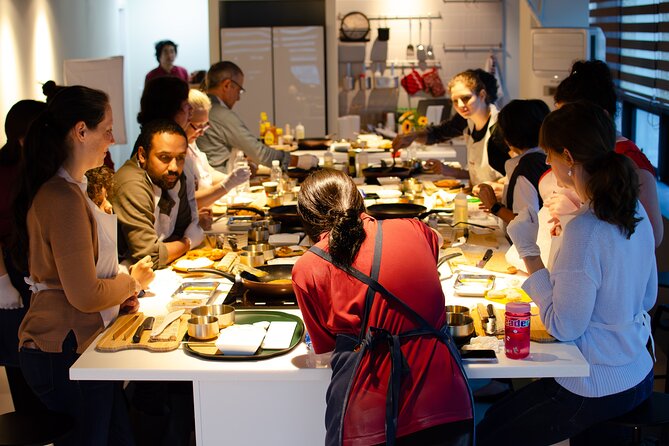
I would recommend Seoul Cooking Club to:
- First-time visitors who want a quick introduction to Korean food
- Beginners who prefer clear guidance and pre-prepared ingredients
- Families looking for an indoor activity with a meal included
- Solo visitors who want a relaxed way to meet people
- Couples who like food-based experiences
- People with vegetarian, vegan, halal, gluten-free, or similar dietary needs
- Home cooks who want recipes and ideas to recreate Korean dishes
It may not be the right choice for someone seeking a market-to-kitchen experience with extensive shopping, since the market shopping lesson is not central to every session. It is also not ideal for a cook who wants every ingredient chopped and every sauce made from scratch in front of them.
The experience is welcoming to people with different skill levels, but the teaching is aimed at making you comfortable, not testing your technique.
Practical advice for a smoother visit
Do not eat a large meal beforehand. The menu is substantial, and the portions can be surprisingly generous. Arrive ready to cook a little, taste often, and eat well.
Wear something comfortable and suitable for a kitchen. The supplied details do not specify a dress code or uniform, so practical clothing is the sensible choice.
Keep the class timing in mind. At 2 hours 30 minutes, it is long enough to feel substantial but short enough to fit into a busy Seoul itinerary. Since you return to the meeting point, you can plan another activity nearby without arranging a second pickup.
The mobile ticket makes entry simple. Free cancellation is available up to 24 hours before the start time for a full refund. Within 24 hours, cancellations and changes are not accepted, so check your Seoul schedule before committing.
Service animals are allowed. The activity is near public transportation, though the provided information does not specify the closest subway station or exact walking directions. Use the confirmed address when planning your route.
Should you book Seoul Cooking Club?
Book it if you want a friendly, food-filled introduction to Korean cuisine with a small group, clear teaching, dietary flexibility, and recipes to use at home. The broad menu is the main attraction. You get to understand how several Korean dishes fit together rather than learning one isolated recipe.
I would especially choose it near the start of a Seoul visit. The class can help you recognize dishes, ingredients, and flavors for the rest of your trip. It also works well on a rainy day or when you want a break from sightseeing.
Skip it if you want advanced culinary training, extensive market shopping, or a fully from-scratch kitchen lesson. For most beginners and food-focused visitors, though, the generous meal and practical guidance make the $109 cost reasonable.
FAQ
How long does the Korean cooking class last?
The experience lasts approximately 2 hours 30 minutes.
Where does the class meet?
The meeting point is 71-6 Jongno 2(i)-ga, Jongno District, Seoul, South Korea.
Where does the activity finish?
The class ends back at the meeting point.
How many people can join the class?
The maximum group size is 12 people.
Which dishes might I prepare?
Menus can include bulgogi, bibimbap, gimbap, japchae, several types of jeon, kimchi pancakes, and dessert. The exact selection can vary by session.
Can dietary requirements be accommodated?
Yes. Vegan, vegetarian, pescatarian, gluten-free, and halal options are available. Allergy requests, including peanuts and restrictions on beef or pork, can also be accommodated.
Is food included in the experience?
Yes. You prepare and eat the food made during the class, with a three-course meal and about 10 Korean flavors included.
What is the cancellation policy?
You can cancel at least 24 hours before the start time for a full refund. Cancellations or changes made within 24 hours are not accepted and are not refunded.
Just added around Seoul
- Incheon Airport Private Transfer between Seoul City★ 4.0 · 4 reviews
- Seoul’s Stars: Open Mic with Local & International Talent★ 4.8 · 4 reviews
- Samaksan Cable Car and Nami Island Day Escape with Railbike★ 4.0 · 4 reviews
- DMZ 2nd Tunnel and Cheorwon Peace Observatory with Admission★ 5.0 · 4 reviews
- Nami & Maple Road & Theatre des Lumieres Day Tour from Seoul★ 4.8 · 4 reviews
- Hire Photographer, Professional Photo Shoot – Seoul★ 5.0 · 4 reviews
- [KoreaByLocal] Authentic Seoul Night Walk and Chicken & Beer★ 5.0 · 4 reviews
- Play Gayageum in Hanbok Cultural Experience in Bukchon★ 5.0 · 4 reviews
Cooking Classes, compared.
Local Home Korean Cooking Class & Market Adventure in Seoul
Read our review →
Master Korean traditional cooking with a Kimchi chef
Read our review →
Korean Cooking Class at a Local Home and Market Tour
Read our review →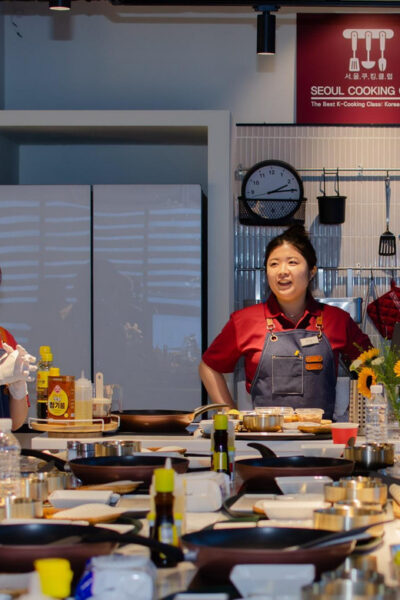
Cook 3 Authentic Korean Dishes with Local Market Tour
Read our review →Experience Korean Cooking in Modern Hanok Kitchen
Read our review →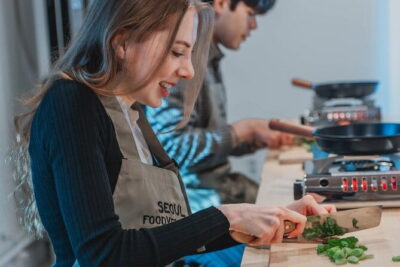
Korean Cooking Class with Grocery Shopping at Seoul Local Market
Read our review →
Korean Kimchi Making Day Experience with a Local Market Tour
Read our review →Browse the lists this tour appears in