
Reviewed · COOKING CLASSES
Seoul: Korean Cooking Class at a Local Home and Market Tour
The best part of this Seoul experience is the change of setting: you start among the stalls of Mangwon Market and finish in a local home, cooking a full Korean meal. It gives you more than a recipe demonstration. You learn how ingredients look, how locals shop, and how several dishes fit together at the table.
I especially like the market-to-kitchen format and the friendly, hands-on teaching. You also get a proper Hanjeongsik meal with more than 10 side dishes, rather than simply eating the food you prepare. The main consideration is practical: you must reach Mangwon Station yourself, and there is no elevator on the way up to the home.
In This Review
- Key points at a glance
- From Mangwon Station to the market stalls
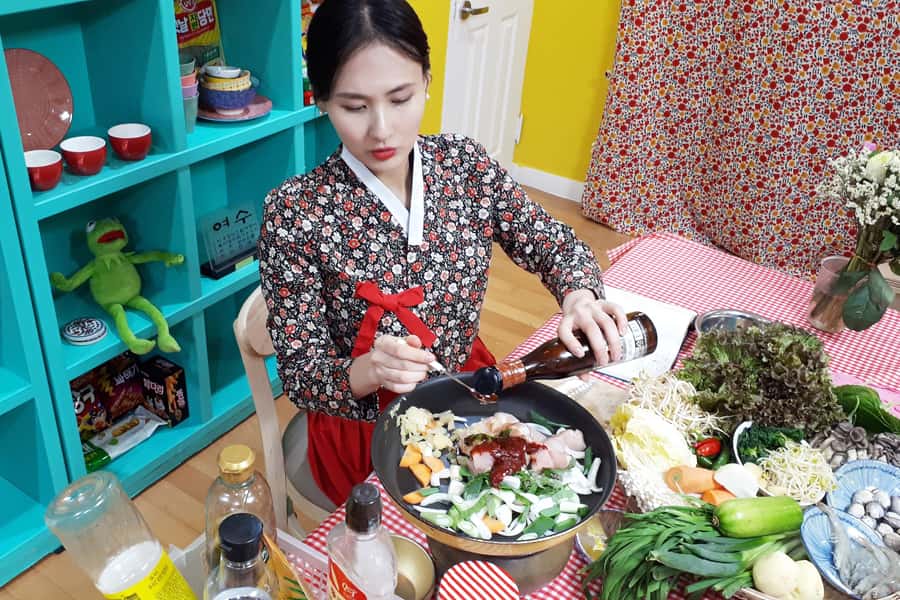
- Four Korean dishes, one working kitchen
- The Hanjeongsik meal is the real payoff
- A local home, a Tal mask, and an easygoing host
- Why the market visit improves the cooking class
- How much value do you get for $98?
- Who will enjoy this Seoul cooking class?
- Practical details to know before booking
- Should you book it?
- FAQ
- Where does the cooking class meet?
- How long does the activity last?
- Which dishes will I cook?
- Is the meal included?
- Is hotel pickup available?
- Is the venue accessible by elevator?
Key points at a glance
- Mangwon Market comes first: Shop for class ingredients, learn about Korean produce, and taste local street food in a less tourist-focused part of Seoul.
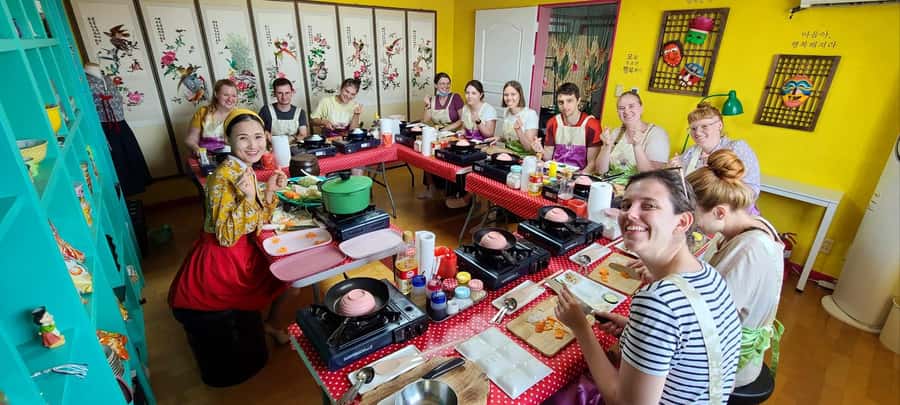
- Four dishes are prepared: You’ll make bibimbap, dakgalbi, haemul-pajeon, and doenjang-jjigae with guidance from an English-speaking Korean chef.
- The meal goes beyond your cooking: Your host adds a Hanjeongsik spread with more than 10 side dishes, rice, seasonal fruit, water, and rice wine.
- Small groups keep it personal: The class is limited to 10 participants, with cooking equipment and ingredients supplied.
- Culture is built into the lesson: Expect a few Korean phrases, explanations of food customs, and a chance to try an artful Tal mask.
- Plan your arrival carefully: Meet outside Mangwon Station at Exit 2, and remember that hotel pickup and drop-off are not offered.
From Mangwon Station to the market stalls
Your 3.5-hour class begins outside Mangwon Station, Exit 2. This is an important detail when planning your day. You are not collected from your hotel, so allow enough time to reach the meeting point and find your guide before the market walk starts.
The first portion takes you through a local market, identified in the experience as Mangwon Market and, in some descriptions, the nearby World Cup Market. The point is not simply to buy groceries. Your guide helps you notice the ingredients that shape Korean home cooking and explains what you are seeing as you move through the stalls.
This is where the class gains much of its value. A recipe card can tell you to use green onions, seafood, fermented soybean paste, or vegetables, but a market visit helps connect those ingredients to everyday Korean food. You may see unfamiliar produce, prepared foods, and snacks that you would otherwise pass without understanding.
You’ll also receive street-food samples. The exact samples can vary, but the experience is designed to give you a taste of market eating before you begin cooking. Come ready to walk, browse, and ask questions rather than treating this as a quick stop for a snack.
The market is described as popular but less touristy than Seoul’s best-known food areas. That makes the opening feel useful rather than staged. You get a look at ordinary shopping patterns and the food culture surrounding them, while your host points out items that are easy to miss when you are on your own.
More Korean cooking classes:
- Local Home Korean Cooking Class & Market Adventure in Seoul
★ 5.0 · 1,024 reviews - Master Korean traditional cooking with a Kimchi chef
★ 5.0 · 385 reviews - Seoul: Korean Cooking at Seoul Cooking Club!
★ 5.0 · 311 reviews
Four Korean dishes, one working kitchen
After the market, you head to the local home for the cooking class. There is a welcome tea or drink, and your host teaches a few Korean phrases before the cooking begins. This is a small touch, but it helps set the tone. You are not just following instructions in a foreign kitchen. You are learning a little of the language used around the meal.
The class covers four substantial dishes:
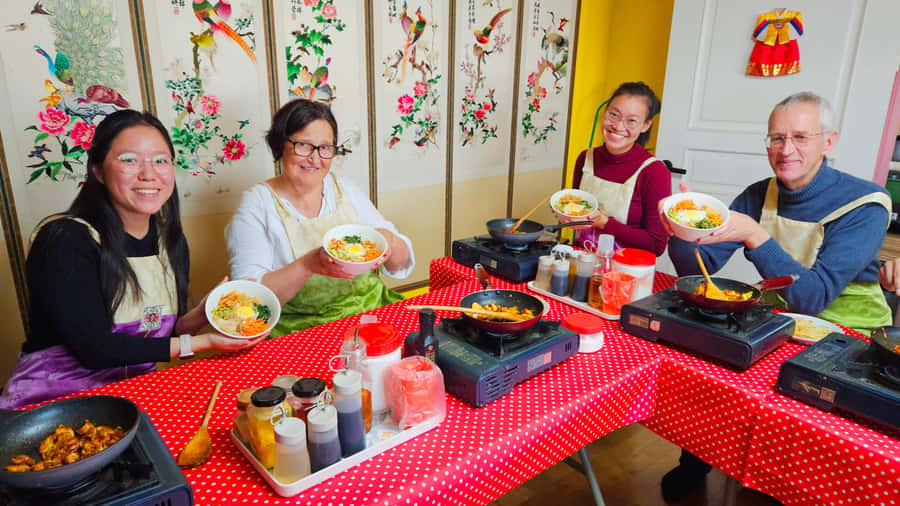
- Bibimbap: Mixed rice with meat and vegetables, assembled so that different textures and flavors come together in one bowl.
- Dakgalbi: Stir-fried chicken, a dish with a strong, savory Korean profile.
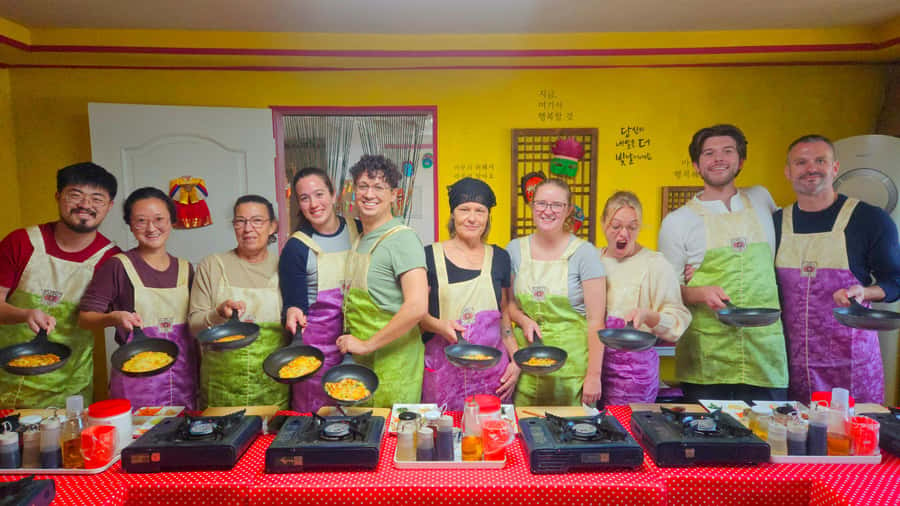
- Haemul-pajeon: A seafood and green onion pancake, including the enjoyable challenge of cooking and flipping the pancake.
- Doenjang-jjigae: A stew made with fermented soybean paste, an important Korean flavor base.
The range is well chosen. Bibimbap teaches you how rice, vegetables, and meat work together. Dakgalbi introduces a different cooking method and a more substantial main dish. Haemul-pajeon gives you something hands-on and slightly playful, while doenjang-jjigae shows how a fermented paste can form the backbone of a comforting soup.
You do not need advanced cooking skills. The teaching is intended for beginners, and the host guides you through each step. Participants have described the instructions as clear, with each person receiving a cooking space and preparing the dishes directly rather than only watching a chef work.
That matters if you want to repeat the meal at home. A demonstration can be entertaining, but it may leave you unsure about timing, texture, or technique. Here, you handle the ingredients and take part in the process. The recipes are provided afterward, including by WhatsApp in at least some sessions, so save them before leaving or make sure you know how they will be sent.
The Hanjeongsik meal is the real payoff
Once the cooking is finished, you sit down to eat. Your host provides a Hanjeongsik meal with more than 10 side dishes, along with rice, seasonal fruit, rice wine, and water. This is more than a chance to sample what you made. It introduces the Korean habit of serving a meal as a broad table of shared tastes.
Hanjeongsik is useful cultural context because Korean dining is not always built around one main plate. Side dishes add contrast, color, heat, freshness, and fermented flavors to the table. The food you cook becomes part of a larger meal rather than the entire event.
I like this arrangement because it gives you a fuller sense of Korean home dining. If you only make one or two dishes in a class, the meal can feel a bit spare. Here, the added side dishes make the final sitting more generous and help you understand why Korean meals often involve several small accompaniments.
Rice wine is included, but you can also simply focus on the food. The activity supplies water as well, and seasonal fruit finishes the meal on a lighter note. If you have allergies or dietary restrictions, contact the local host before booking or attending. Do not assume that the dishes can be changed at the last minute.
A local home, a Tal mask, and an easygoing host
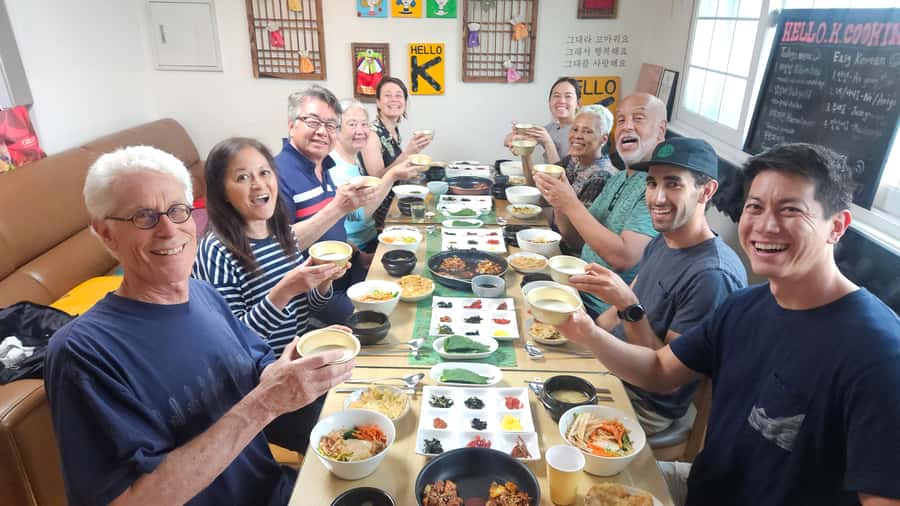
The home setting is a central part of the experience. You are welcomed into a personal space rather than a large cooking studio, which gives the class a more intimate feel. Hosts named Sarah, Sara, and Junghee are associated with the sessions described by participants, so your exact host may vary.
The most praised quality is the hosting. Sarah and Sara are described as energetic, warm, and strong English speakers, while Junghee is described as funny, welcoming, and attentive to the whole group. The useful takeaway is that this is a social class as much as a cooking lesson. Your host encourages conversation, includes the group, and keeps the mood relaxed.
That social element can make or break a small-group class. With a maximum of 10 people, you have a reasonable chance to ask questions and get help at your station. It is still a group activity, so you should expect shared conversation and a communal meal, not a private chef lesson unless your booking specifies a private arrangement.
You also get to try on a Tal mask, an artistic mask associated with Korean heritage festivals. It adds a short cultural note beyond food and gives the session a memorable visual element. Do not expect a full performance or a museum-style lecture. The mask is one of several small ways the host links cooking to Korean traditions.
A few more Seoul trips worth weighing up
- Seoul Street Food Market Tour
★ 5.0 · 1,226 reviews - Seoul: Night Market Food Tour with Local Guide
★ 4.9 · 943 reviews - Downtown Seoul Guided Food & Market Tour with 8+ Local Tastings
★ 5.0 · 580 reviews - Seoul Night Palace & Market Food Tour with Vehicle
★ 5.0 · 275 reviews
Why the market visit improves the cooking class
Many cooking classes begin with premeasured ingredients. That is convenient, but it can separate the recipe from daily life. Here, the market walk shows you where the ingredients come from before you use them.
You can ask about unfamiliar foods while standing in front of them. You may also learn which items are common in Korean kitchens and which are seasonal or special. Even if you never recreate every dish at home, this part helps you read menus and markets with more confidence during the rest of your Seoul stay.
The market also gives the class a sense of place. You are not simply attending an activity that could happen in any city. You are moving through a neighborhood market, tasting street food, and then carrying that food culture into a home kitchen.
Allow for a fair amount of walking and standing. The provided details do not give a distance or exact route, so comfortable shoes are sensible. The market experience is best for people who enjoy looking closely and listening to explanations, not for anyone seeking a quick meal with no scheduled activity around it.
How much value do you get for $98?
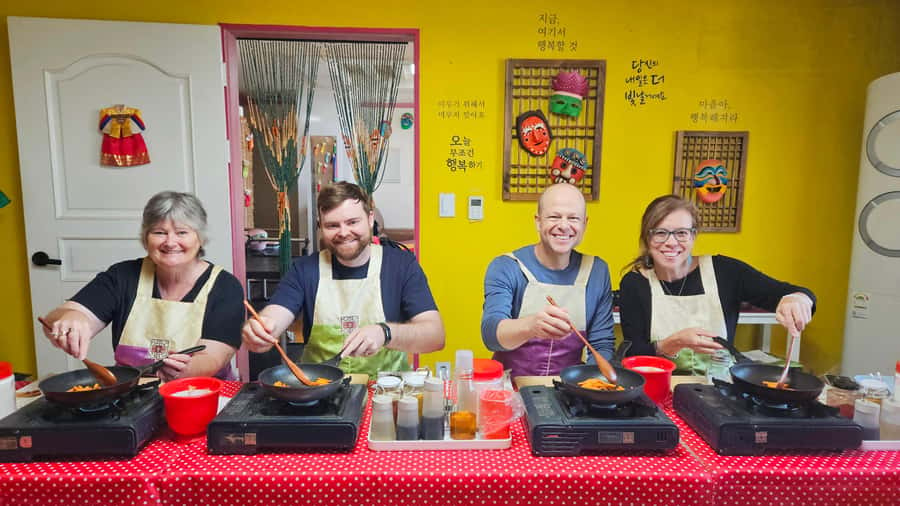
At $98 per person, this is not a budget lunch. Its value depends on how you use the 3.5 hours. You are paying for a market tour, street-food samples, an English and Korean cooking lesson, all ingredients and equipment, a welcome drink, four dishes, a Hanjeongsik spread, rice wine, recipes, and photo and video service.
The quantity of food is a major part of the calculation. You are not just paying to cook one signature dish and leave. The class includes four recipes, a large side-dish meal, fruit, and drinks. For someone who wants a full cultural activity and a substantial meal, the price is easier to justify.
The recipes add value after your trip. Bibimbap and haemul-pajeon are especially useful dishes to learn because they can help you make use of vegetables and ingredients at home. The class also teaches methods and flavor combinations, not just a single restaurant-style plate.
Still, you should be honest about your priorities. If you mainly want the cheapest way to eat Korean food, a market meal or local restaurant will cost less. If you dislike group activities, cannot manage stairs, or would rather spend your time sightseeing, this may not be the best use of $98.
Photo and video service is included, which is a pleasant extra for couples, families, and friends. The recipes are supplied, though one participant would have preferred a small printed cookbook as a keepsake. If a paper souvenir matters to you, bring a notebook or confirm how the recipes will be delivered.
Who will enjoy this Seoul cooking class?
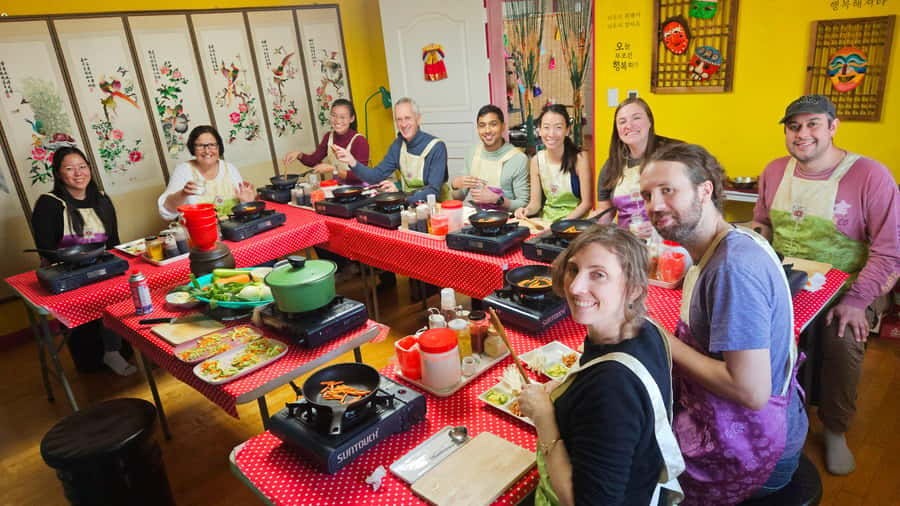
I would recommend this for first-time visitors who want food and culture in the same activity. The market gives you local context, while the home meal gives you time to talk with a Korean host and ask questions that may not come up on a standard sightseeing tour.
It also suits novice cooks. The host explains the process in detail, and the format lets you cook rather than stand at the back of a demonstration. You do not need to arrive with Korean cooking experience.
Families and small groups may enjoy the relaxed setting, provided everyone can manage the walk and the stairs. Couples and solo visitors can also fit in well because the class encourages group conversation. The limit of 10 participants keeps it from feeling like a large food tour.
This is less suitable if you need a fully accessible venue. There is no elevator to the local home, and the activity does not offer hotel transportation. Dietary restrictions and allergies also need advance discussion with the host.
Practical details to know before booking
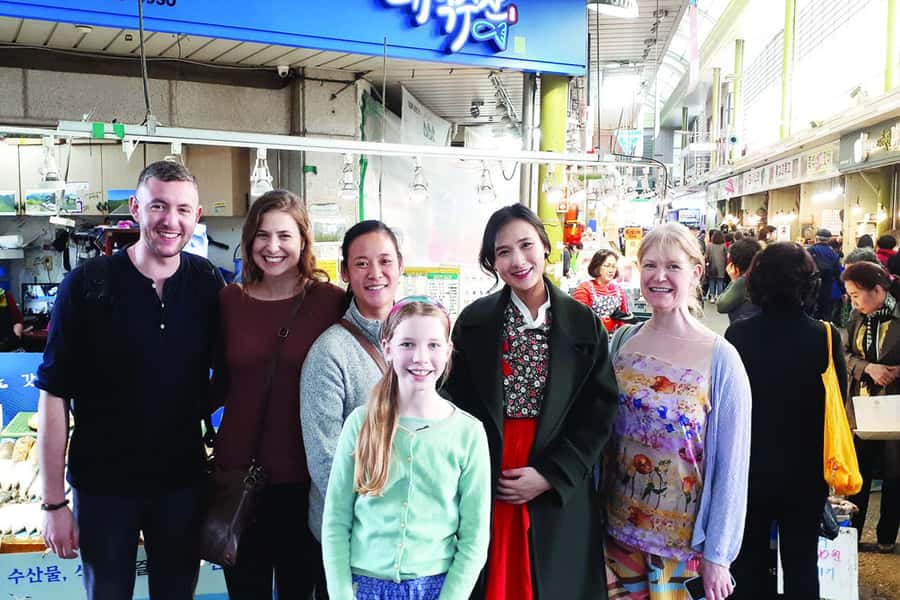
The activity lasts 3.5 hours, with starting times based on availability. Check the schedule against your other plans, since the market visit, cooking, and meal are designed as one continuous experience.
Your meeting point is outside Mangwon Station, Exit 2. The tour ends back at that meeting point, so you can continue exploring the area afterward or return by subway.
Instruction is available in English and Korean. Ingredients, cooking equipment, meals, side dishes, water, rice wine, a welcome tea, recipes, and photo and video service are included. Hotel pickup and drop-off are not included.
You can cancel up to 24 hours before the activity for a full refund, and the reserve-now, pay-later option helps if your Seoul schedule is still taking shape. The small-group cap is 10 people, but availability can change, so check the selected date and start time carefully.
Should you book it?
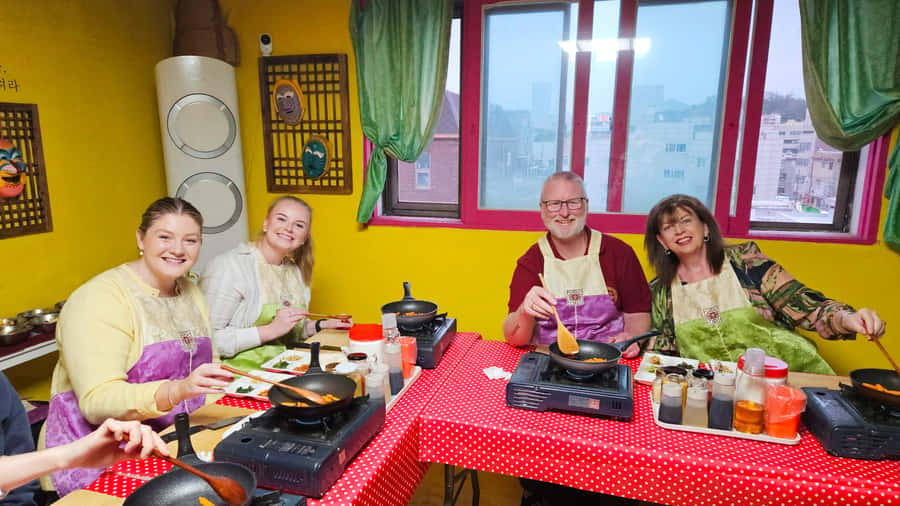
Book this class if you want to understand Korean food as well as eat it. The market visit, four-dish lesson, generous Hanjeongsik meal, and home setting make it a substantial half-day activity rather than a quick cooking demonstration.
I would especially choose it early in a Seoul visit. The market vocabulary, ingredients, and food customs can make later meals easier to navigate. Just plan your own route to Mangwon Station, prepare for stairs, and contact the host about allergies before you commit.
Skip it if you want a low-cost meal, a private class, or a fully accessible venue. For everyone else, the $98 price buys a practical lesson, a large meal, and a friendly look at Korean daily food culture.
FAQ
Where does the cooking class meet?
Meet your guide outside Mangwon Station at Exit 2. You are responsible for making your own way to the meeting point.
How long does the activity last?
The activity lasts 3.5 hours. Available starting times depend on the date you choose.
Which dishes will I cook?
You will prepare bibimbap, dakgalbi, haemul-pajeon, and doenjang-jjigae.
Is the meal included?
Yes. The activity includes the dishes you prepare, a Hanjeongsik meal with more than 10 side dishes, rice, seasonal fruit, rice wine, and water.
Is hotel pickup available?
No. Hotel pickup and drop-off are not included. The activity begins and ends at the Mangwon Station meeting point.
Is the venue accessible by elevator?
No. There is no elevator to reach the local home. Contact the local host in advance about dietary restrictions and allergies.
More Workshops in Seoul
- Yongpyong Ski Resort from Seoul with Optional Lesson and Packages
★ 5.0 · 217 reviews - Korean Cooking Class with Grocery Shopping at Seoul Local Market
★ 5.0 · 107 reviews - Royal Seoul Cooking Class in a 100-Year-Old Hanok
★ 5.0 · 81 reviews - Seoul : Taste of Korea, Authentic Home-Style Cooking Class
★ 5.0 · 64 reviews
More Shopping Tours in Seoul
- Seoul: Mt.Seorak, Nami Island & Korean Garden, No Shopping
★ 4.8 · 614 reviews - Private DMZ Tour (No Shopping): 3rd Tunnel & Suspension Bridge
★ 5.0 · 607 reviews - Cook 3 Authentic Korean Dishes with Local Market Tour
★ 5.0 · 231 reviews - Korean Palace and Market Tour in Seoul Including Insadong and Gyeongbokgung Palace
★ 4.0 · 174 reviews
Just added around Seoul
- Incheon Airport Private Transfer between Seoul City★ 4.0 · 4 reviews
- Samaksan Cable Car and Nami Island Day Escape with Railbike★ 4.0 · 4 reviews
- DMZ 2nd Tunnel and Cheorwon Peace Observatory with Admission★ 5.0 · 4 reviews
- Seoul’s Stars: Open Mic with Local & International Talent★ 4.8 · 4 reviews
- Nami & Maple Road & Theatre des Lumieres Day Tour from Seoul★ 4.8 · 4 reviews
- Hire Photographer, Professional Photo Shoot – Seoul★ 5.0 · 4 reviews
- [KoreaByLocal] Authentic Seoul Night Walk and Chicken & Beer★ 5.0 · 4 reviews
- Play Gayageum in Hanbok Cultural Experience in Bukchon★ 5.0 · 4 reviews
Cooking Classes, compared.
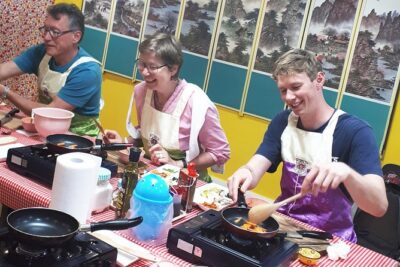
Local Home Korean Cooking Class & Market Adventure in Seoul
Read our review →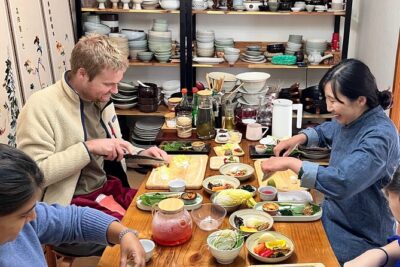
Master Korean traditional cooking with a Kimchi chef
Read our review →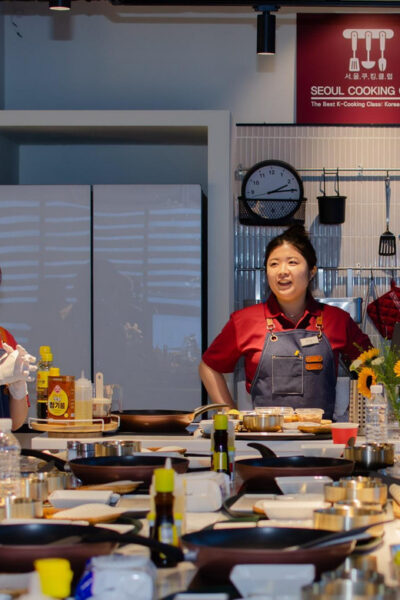
Cook 3 Authentic Korean Dishes with Local Market Tour
Read our review →
Experience Korean Cooking in Modern Hanok Kitchen
Read our review →
Korean Cooking Class with Grocery Shopping at Seoul Local Market
Read our review →
Korean Kimchi Making Day Experience with a Local Market Tour
Read our review →Browse the lists this tour appears in