
Reviewed · COOKING CLASSES
Traditional Korean 6-Dish Cooking Class + Hidden Alley Tour Seoul
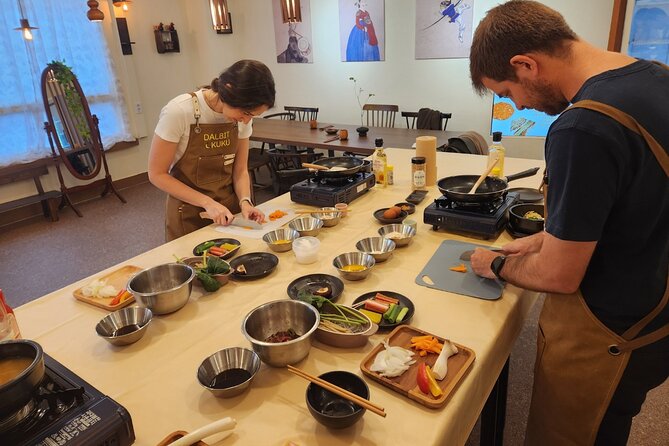
Seoul’s best food lesson here comes with a neighborhood walk. At chef Jiny’s Dalbitkuku studio, you cook six Korean dishes from prepared ingredients, eat the full meal at the table, then head into Euljiro’s back lanes for stories and small surprises. It is a smart way to connect Korean food with the city around it.
I like two things right away: the menu is substantial, and you take home a printed recipe plus photos of your cooking. I also like the personal pace. Jiny learns names, explains the meaning behind dishes, and guides beginners without making experienced cooks feel left out.
The main consideration is time and appetite. Three and a half hours is a serious block in your Seoul day, and six dishes make this much more than a light snack. The alley walk follows a full meal, so wear comfortable shoes and arrive hungry.
In This Review
- Key points at a glance
- Arriving at the second-floor kitchen near Euljiro
- Cooking six Korean classics, one step at a time
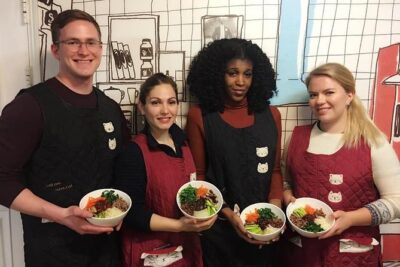
- Hot stone bibimbap
- Bulgogi
- Japchae
- Doenjang-jjigae
- Kimchi pancake
- Vegetable skewers
- Sitting down to eat like a Korean family
- Walking Euljiro’s lesser-known alleys after lunch
- Photos, recipes, a quiz, and a small personal touch
- What the $85 price includes
- Who will get the most from this experience
- Booking advice for your Seoul schedule
- Final verdict: should you book it?
- FAQ
- How long does the cooking class and alley tour last?
- Where does the experience begin?
- Where does the experience end?
- What dishes will I make?
- Is the meal included?
- Is the cooking class private?
- Who leads the class?
- Will I receive recipes after the class?
- Is transportation included?
- What is the cancellation policy?
Key points at a glance
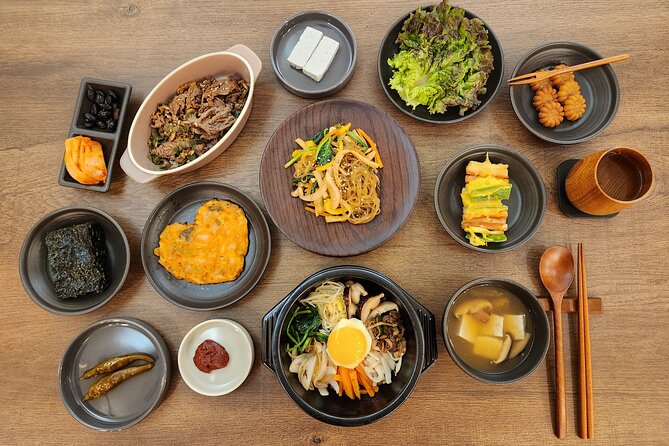
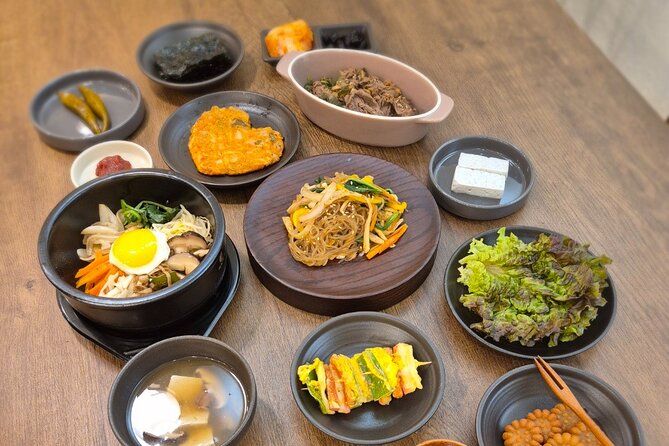
- Six dishes in one class: Prepare hot stone bibimbap, bulgogi, japchae, doenjang-jjigae, kimchi pancake, and vegetable skewers.
- Food culture comes first: Jiny explains Korean ingredients, dish traditions, and the color balance used in bibimbap.
- A meal, not just a demonstration: You cook the food yourself, then sit down together and eat it.
- Euljiro beyond the main streets: The final walk visits lesser-known alleys and local places that are easy to miss alone.
- Useful take-home materials: You receive recipes, photos, and a small souvenir, with a quiz to finish the experience.
- Private booking: Only your group participates, giving the class a more personal feel than a large shared workshop.
Arriving at the second-floor kitchen near Euljiro
The meeting point is 2F, 50-4 Chungmu-ro, Jung-gu, Seoul. The studio sits in one of Seoul’s quieter side alleys, rather than in a polished shopping district. That setting matters. You begin in a real neighborhood, where older streets and newer businesses sit close together.
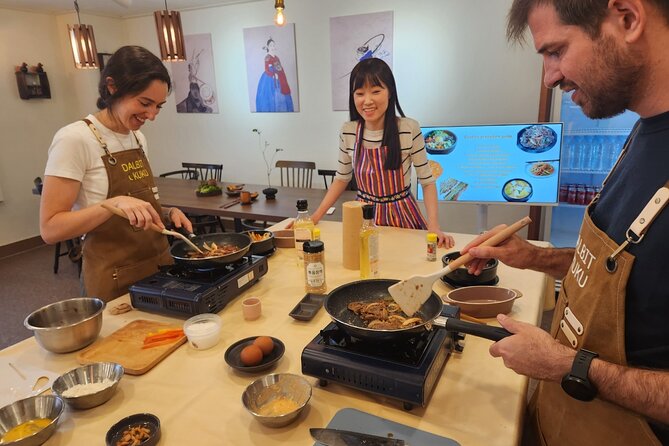
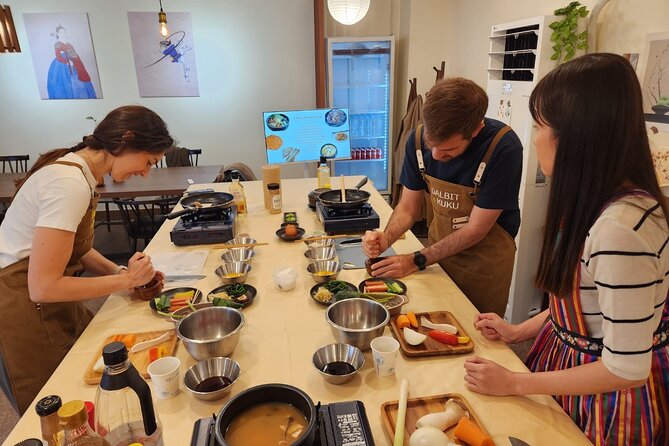
The room combines traditional Korean touches with a modern cooking setup. Each person has a station, an apron, and ingredients prepared before the class begins. Several people specifically appreciated the tidy arrangement and the fact that the cooking stations were large enough for comfortable participation.
Jiny welcomes you with traditional Korean tea and a small snack. This opening is not rushed. She introduces the plan and explains how Korean food often carries ideas about balance, family, season, and presentation.
You also hear about color harmony, especially in bibimbap. The point is not simply to make a colorful bowl for a photograph. Korean cooking often considers how different colors, textures, tastes, and ingredients work together. That short introduction gives the food more meaning before you begin chopping and mixing.
The class is listed as a private activity, so only your group takes part. That is useful for couples, families, and small groups with mixed cooking ability. Jiny can keep the pace clear and personal instead of trying to manage a crowded demonstration.
More Korean cooking classes:
- Local Home Korean Cooking Class & Market Adventure in Seoul
★ 5.0 · 1,024 reviews - Master Korean traditional cooking with a Kimchi chef
★ 5.0 · 385 reviews - Seoul: Korean Cooking Class at a Local Home and Market Tour
★ 5.0 · 348 reviews
Cooking six Korean classics, one step at a time
The main lesson covers six dishes. Ingredients are set out in advance, but you are not simply watching Jiny cook. You take part in preparing the full menu, with instructions broken into manageable steps.
Hot stone bibimbap
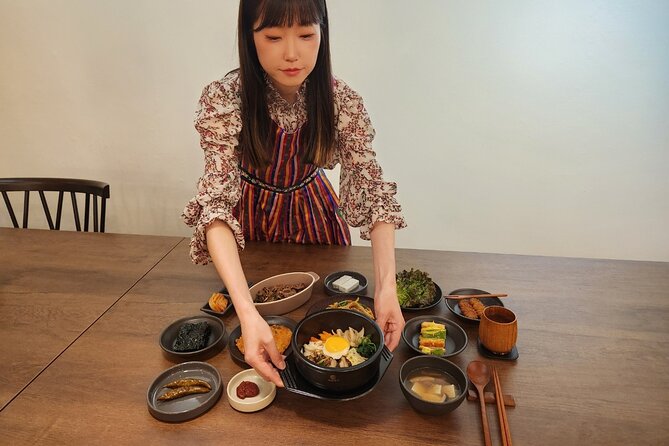
Bibimbap is one of the most recognizable Korean dishes, and the class uses a hot stone version. You learn how the ingredients are arranged and combined, with attention to the dish’s color balance.
The hot stone adds drama and texture. It helps create the crisp rice layer that makes this version different from a basic mixed rice bowl. Jiny’s explanation of the colors also gives you a useful way to think about Korean plating at home, where visual balance is part of the meal.
Bulgogi
Bulgogi brings a familiar sweet and savory flavor to the table. It is a good dish for learning how a few well-prepared ingredients can produce a satisfying result without complicated equipment.
The class is suitable for beginners because Jiny breaks the process down clearly. If you cook often, you may appreciate the chance to ask about seasoning, preparation, and how to recreate the dish at home. The supplied recipe means the lesson does not disappear when you leave Seoul.
A few more Seoul trips worth weighing up
- Yongpyong Ski Resort from Seoul with Optional Lesson and Packages
★ 5.0 · 217 reviews - Korean Cooking Class with Grocery Shopping at Seoul Local Market
★ 5.0 · 107 reviews - Royal Seoul Cooking Class in a 100-Year-Old Hanok
★ 5.0 · 81 reviews - Seoul : Taste of Korea, Authentic Home-Style Cooking Class
★ 5.0 · 64 reviews
Japchae
Japchae is made with chewy glass noodles and vegetables. It adds a different texture to the meal and gives you practice handling several ingredients without turning the process into a race.
This dish was a particular favorite for one participant, who planned to make it again at home. That is a useful clue about the menu: the recipes are not only for the class table. They are intended to be practical enough for you to repeat later.
Doenjang-jjigae
Doenjang-jjigae, a fermented soybean paste stew, gives the meal a warm, savory center. It also introduces an important Korean pantry flavor.
The class connects the dish to Korean food culture rather than treating it as just another recipe. You get a better sense of how stew fits into a Korean meal, alongside rice, noodles, meat, vegetables, and small side dishes.
Kimchi pancake
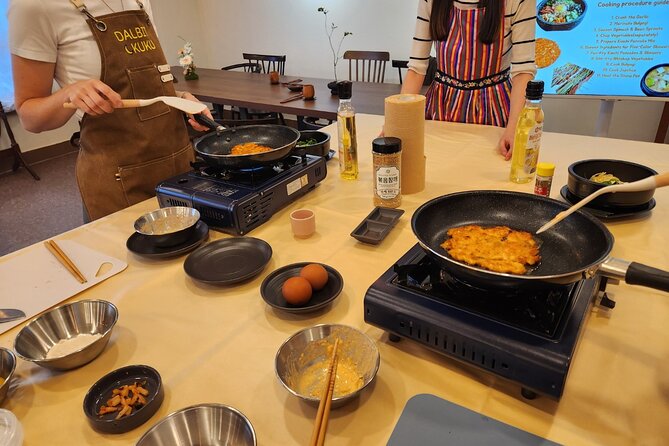
Kimchi pancake is a hands-on favorite because it is simple to recognize and satisfying to prepare. You work with batter and kimchi, then enjoy the contrast between the crisp outside and soft interior.
This is one of the more approachable recipes for a home kitchen. It also gives you a dish you can make in a smaller quantity than the full meal, useful when you want a Korean snack rather than a six-course spread.
Vegetable skewers
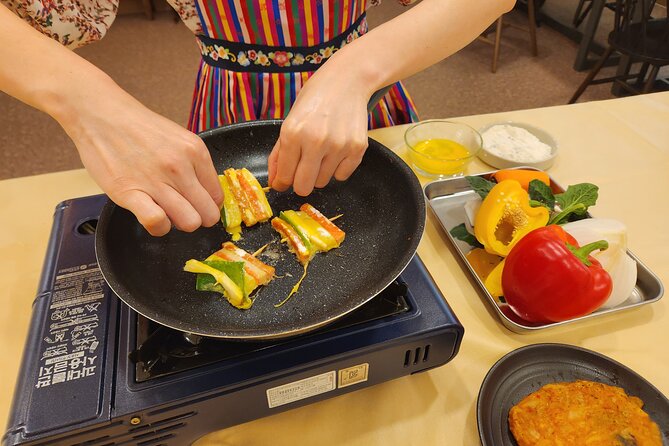
The vegetable skewers, also called sanjeok in some descriptions of the class, add color and variety. They also bring a more decorative element to the cooking session.
Making every dish yourself can feel ambitious within three and a half hours. The prepared ingredients help keep the schedule workable, but you should still expect an active session rather than a relaxed tasting. That is part of the value, but it may not suit someone who wants to sit back and be served.
Sitting down to eat like a Korean family
Once the cooking is finished, everyone gathers around the table and eats together. This shared meal is one of the strongest parts of the experience because you see the complete result of your work at once.
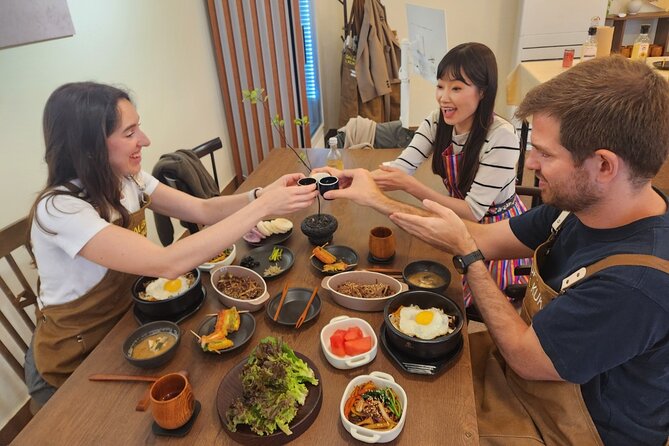
You are not tasting one small sample after another. The six dishes form a proper Korean-style meal, with contrasting textures and flavors. Several participants found the portions filling, so do not plan a large lunch immediately before the class.
The table also creates room for conversation. Jiny and her husband are described as warm and accommodating, and the atmosphere is designed to feel welcoming rather than formal. Jiny takes time to make sure everyone understands the steps, which matters when a group includes people with very different levels of confidence in the kitchen.
The meal is also where the cultural introduction becomes practical. Bibimbap’s color harmony, the role of stew, and the variety of dishes make more sense when everything is arranged together. You leave with more than a list of recipes. You have a clearer idea of how separate dishes become one Korean meal.
Drinks, beverages, snacks, and the meal are included. The wording lists both lunch and dinner refreshments, so the exact serving may depend on the scheduled session. In practical terms, expect food and drinks during the cooking experience, not a separate restaurant meal later in the day.
Walking Euljiro’s lesser-known alleys after lunch
After eating, Jiny leads you on a walk through Euljiro. This neighborhood is known for its older industrial character and changing city life, but the route focuses on small lanes and places that are easy to overlook.
The appeal is not a checklist of famous sights. Jiny points out local details and shares stories about how the district has changed. You might pass small businesses and corners that would look ordinary if you were walking alone. With a local guide, they become part of a larger story about Seoul’s older working neighborhoods and their new uses.
This portion is a good balance to the kitchen. The class shows you Korean culture through food, while the walk shows you the city through streets, buildings, and local routines. You also get a different view of Euljiro than you would from the main roads.
The walk is described as a mini tour, but allow time for it after the meal. One session ran longer than planned because the group was enjoying the class, and the combination of cooking and walking can stretch beyond the advertised three hours and thirty minutes. Do not book a tight appointment immediately afterward.
Comfortable footwear is sensible. The route uses alleys, and Seoul streets can be hard on your feet after a day of sightseeing. Private transport is not included, though the starting point is near public transportation.
Photos, recipes, a quiz, and a small personal touch
The class includes complimentary photos, a printed Korean recipe, and a special souvenir. Digital photos and recipes have also been sent after the experience in some cases, so you have a useful record of both the food and the day.
The photos are more than a marketing extra. Cooking classes involve flour, chopping, sizzling pans, and shared jokes, but you may not have time to document them yourself. Having pictures afterward lets you remember the process without stopping to hold up your phone.
The printed recipe is the most practical item. If you want to recreate the meal, keep in mind that ingredient availability may differ outside Korea. Still, the recipes give you a starting point and help turn the class into something you can use at home.
The experience ends with a quiz and a small surprise gift. That may sound minor, but it gives the afternoon a clear finish and reinforces the cultural points from the class. The personal touches also make this a good choice for a birthday or family activity.
What the $85 price includes
At $85 per person, this is not the cheapest way to eat Korean food in Seoul. You can order an excellent meal for much less. The price makes more sense when you count the full package: a private cooking class, six dishes, food and drinks, cultural instruction, a neighborhood walk, photos, recipes, and a souvenir.
The value is strongest if you want an activity you can take home. A restaurant gives you a finished meal. This experience gives you techniques, recipes, and a better understanding of what you are eating.
It is also useful for a first visit to Seoul. You get an introduction to Korean flavors before spending the rest of your trip choosing dishes from menus. If you are already an experienced Korean cook, the cultural stories and local walk may matter more to you than the basic techniques.
The price is less attractive if you dislike group-style cooking, have little interest in preparing food, or want a short activity. The class is hands-on and filling, and the full schedule takes half a day once you include arrival and the alley walk.
Who will get the most from this experience
I would choose this for:
- Couples who want a shared activity beyond sightseeing
- Families with children or adults who can follow kitchen instructions
- First-time visitors who want a clear introduction to Korean food
- Food-focused visitors who want recipes rather than only restaurant recommendations
- Small private groups celebrating a birthday or special occasion
- Curious walkers who like older neighborhoods and local stories
The class suits mixed ability levels. Beginners receive step-by-step help, while more experienced cooks can ask questions and take a closer look at technique.
It may not be the best fit if you have severe food restrictions, though the supplied details do not specify allergy substitutions or a vegetarian version. Ask the provider before booking if this affects your decision.
Service animals are allowed, and the meeting point is near public transportation. No private transportation is provided. The activity returns to the original meeting point, so you do not need to arrange a separate pickup.
Booking advice for your Seoul schedule
Confirmation is provided at booking, and free cancellation is available when you cancel at least 24 hours before the start time. Changes or cancellations within 24 hours are not accepted for a refund, so check your Seoul plans before committing.
I would schedule this on a day when you can take your time. The cooking class may run longer when the group is engaged, and the walk comes afterward. Leave breathing room for dinner, shopping, or another appointment.
Arrive ready to participate. You will wear an apron, work at a cooking station, and help prepare the dishes. Comfortable shoes will make the Euljiro portion easier, and an empty stomach will help you appreciate the meal.
Final verdict: should you book it?
Book this if you want food, instruction, and a local neighborhood walk in one private experience. Jiny’s strengths are clear: friendly teaching, simple explanations, cultural context, and real attention to each person at the station.
The six-dish menu makes the $85 price reasonable for someone who values learning and a full meal. The recipes, photos, and souvenir add lasting value, while the Euljiro walk keeps the experience from feeling like a cooking lesson sealed inside a studio.
Skip it if you only want a quick tasting, a restaurant meal, or a famous-sight tour. For everyone else, this is a warm, practical introduction to Korean food that gives you something useful to carry home.
FAQ
How long does the cooking class and alley tour last?
The experience lasts approximately 3 hours and 30 minutes.
Where does the experience begin?
It begins at 2F, 50-4 Chungmu-ro, Jung-gu, Seoul, South Korea.
Where does the experience end?
The activity ends back at the original meeting point.
What dishes will I make?
You will prepare hot stone bibimbap, bulgogi, japchae, doenjang-jjigae, kimchi pancake, and vegetable skewers.
Is the meal included?
Yes. The cooking experience includes the meal, drinks, beverages, and snacks.
Is the cooking class private?
Yes. Only your group participates in the activity.
Who leads the class?
Chef and host Jiny leads the cooking class and the Euljiro alley walk. Her name also appears as Jinny in some descriptions.
Will I receive recipes after the class?
A printed Korean recipe is included. Photos are also provided, and digital recipes and photos may be sent after the experience.
Is transportation included?
Private transportation is not included. The meeting point is near public transportation.
What is the cancellation policy?
You can cancel at least 24 hours before the start time for a full refund. Cancellations or changes made less than 24 hours before the start time are not accepted for a refund.
Just added around Seoul
- Incheon Airport Private Transfer between Seoul City★ 4.0 · 4 reviews
- Seoul’s Stars: Open Mic with Local & International Talent★ 4.8 · 4 reviews
- Samaksan Cable Car and Nami Island Day Escape with Railbike★ 4.0 · 4 reviews
- DMZ 2nd Tunnel and Cheorwon Peace Observatory with Admission★ 5.0 · 4 reviews
- Nami & Maple Road & Theatre des Lumieres Day Tour from Seoul★ 4.8 · 4 reviews
- Hire Photographer, Professional Photo Shoot – Seoul★ 5.0 · 4 reviews
- [KoreaByLocal] Authentic Seoul Night Walk and Chicken & Beer★ 5.0 · 4 reviews
- Play Gayageum in Hanbok Cultural Experience in Bukchon★ 5.0 · 4 reviews
Cooking Classes, compared.
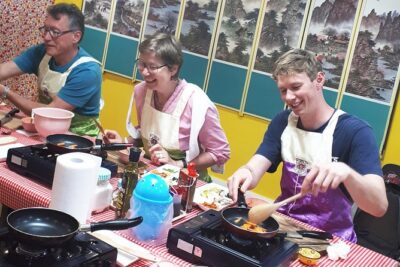
Local Home Korean Cooking Class & Market Adventure in Seoul
Read our review →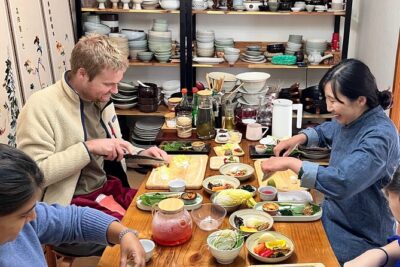
Master Korean traditional cooking with a Kimchi chef
Read our review →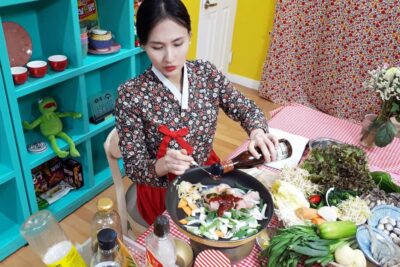
Korean Cooking Class at a Local Home and Market Tour
Read our review →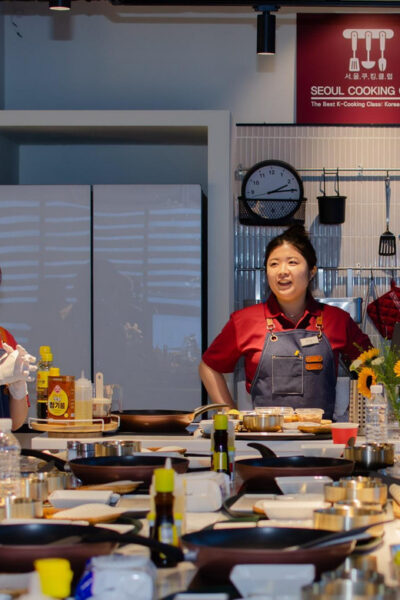
Cook 3 Authentic Korean Dishes with Local Market Tour
Read our review →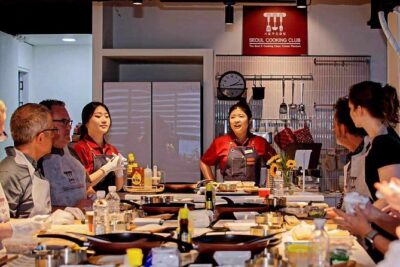
Experience Korean Cooking in Modern Hanok Kitchen
Read our review →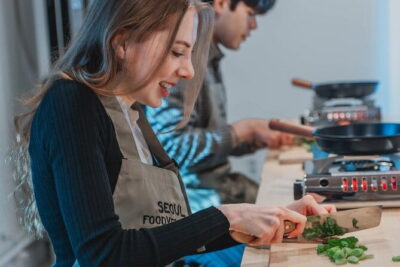
Korean Cooking Class with Grocery Shopping at Seoul Local Market
Read our review →Browse the lists this tour appears in