
Reviewed · COOKING CLASSES
K-food cooking Japchae Mandu Tteokbokki & Fishcake
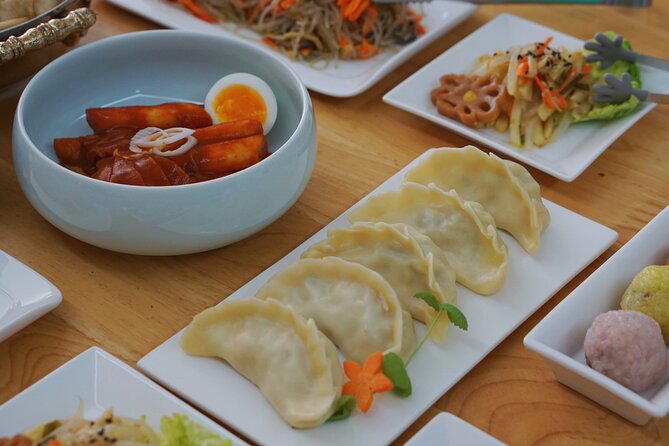
Seoul’s four-dish cooking class gives you a useful introduction to Korean food in one sitting. You prepare japchae, mandu, tteokbokki, and fishcake, then eat what you made with seasonal Korean sweets. It is a practical way to move beyond simply ordering food.
I like the small maximum of six people, which should leave room for personal help and questions. I also like the market visit afterward, since you can see the ingredients, snacks, seasonings, and kimchi refrigerators that give Korean home cooking its everyday context.
The main consideration is the price: $81 per person is not cheap for a two-hour activity. It makes the most sense if you value hands-on instruction, a prepared meal, and help choosing Korean food products afterward. The market visit is also unavailable on the second and fourth Sunday of each month.
In This Review
- Key points at a glance
- Four Korean dishes, one compact lesson
- What the 5:30 pm start means
- A calm, personal teaching style
- Building a Korean table
- Why the market visit adds real value
- Tax refunds and buying ingredients
- Is $81 a fair price?
- Who will enjoy this class most?
- Booking, cancellation, and practical details
- Should you book K-food cooking in Seoul?
- FAQ
- Where does the cooking class meet?
- What time does the experience start?
- How long does the experience last?
- Which Korean foods will I prepare?
- Are ingredients and cooking equipment included?
- Are desserts included?
- Is the market tour available every time?
- What is the cancellation policy?
Key points at a glance
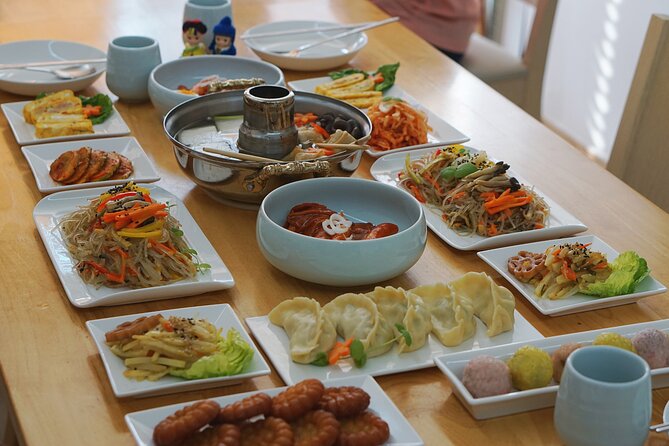
- Four Korean dishes in one class: Prepare japchae, mandu, tteokbokki, and fishcake rather than focusing on just one recipe.
- Jenny may lead the class: A previous booking describes Jenny as a calm, friendly instructor who worked one-on-one with a solo participant.
- Small group size: The class accepts no more than six people, a useful limit for a hands-on lesson.
- Seasonal sweets included: Try treats such as yakgwa, wind rice cake, and sesame rice cake, with the exact selection changing by season.
- Four-floor market visit: Spend about 30 minutes across the street looking at groceries, snacks, seasonings, and Korean kimchi refrigerators.
- Useful for shopping: With your passport, purchases over 30,000 won including VAT may qualify for an immediate tax refund.
Four Korean dishes, one compact lesson
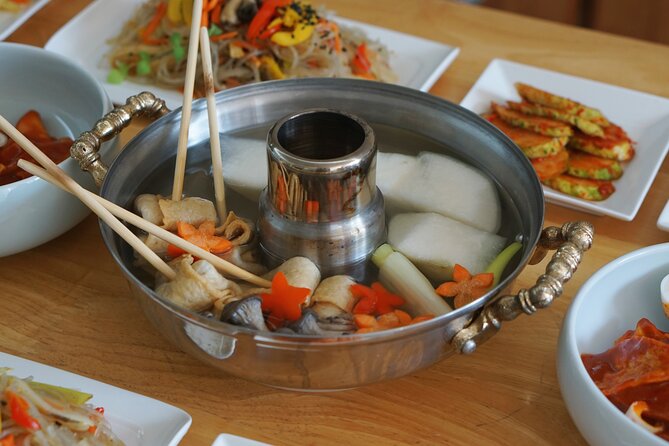
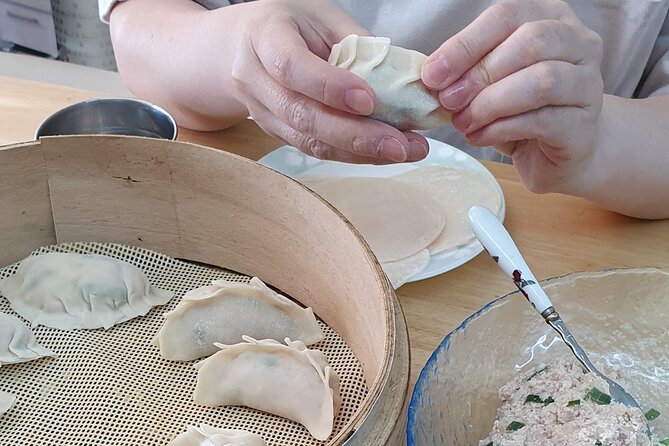
The appeal here is simple: you get to make four foods that appear often on Korean menus and at Korean tables. In about two hours, you work through japchae, mandu, tteokbokki, and fishcake, then arrange the finished dishes for a meal and photographs.
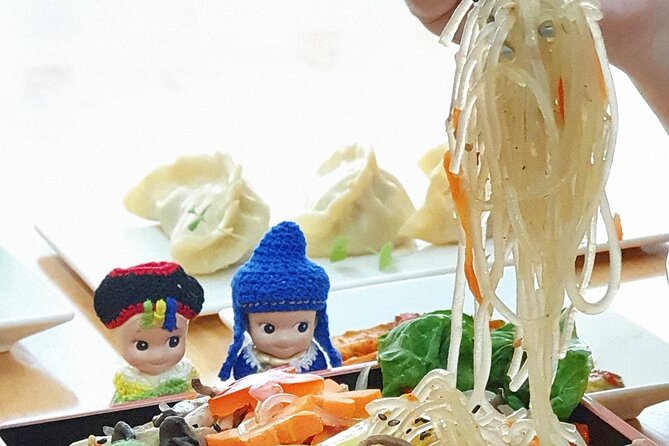
That range matters. Japchae introduces the sweet potato glass noodles and the mixed, savory style of Korean noodle dishes. Mandu gives you a dumpling to prepare. Tteokbokki brings chewy rice cakes and a familiar spicy-sweet sauce, while fishcake adds another common street-food flavor.
The class is designed for participation, not just watching a demonstration. Materials, tools, and packaging are included, so you do not need to arrive with cooking equipment or bring containers for leftovers.
I would still keep expectations sensible. The class is approximately two hours, so this is an efficient introduction rather than a long culinary course. You will learn the basic preparation of several dishes, but the format is unlikely to cover every regional variation or advanced technique.
More Korean cooking classes:
- Local Home Korean Cooking Class & Market Adventure in Seoul
★ 5.0 · 1,024 reviews - Master Korean traditional cooking with a Kimchi chef
★ 5.0 · 385 reviews - Seoul: Korean Cooking Class at a Local Home and Market Tour
★ 5.0 · 348 reviews
What the 5:30 pm start means
The meeting time is 5:30 pm, at 199 Baekbeom-ro in Mapo-gu, Seoul. The activity begins and ends at the same meeting point, and the location is near public transportation.
An evening start works well if you want to use the daytime for Seoul sightseeing. You can spend the afternoon elsewhere, then arrive for cooking and dinner without having to plan a separate restaurant meal afterward.
You should allow enough time to find the studio and arrive ready to begin. The supplied details do not identify a specific subway exit or walking route, so check the meeting point carefully before leaving. A mobile ticket is provided, which keeps the booking simple, but your phone should be charged and easy to access.
The class is intended for children aged 10 and older. Children under 10 may attend when accompanied by a guardian. Since the group limit is six people, booking early is sensible if you need a particular date.
A calm, personal teaching style
The small group limit is one of the strongest features of this experience. Six people is still enough for a social meal, but it is small enough that an instructor can watch what you are doing and offer help.
The teaching style appears to be relaxed and well organized. One booking describes arriving to find everything prepared and ready to use, with a calm teacher and a straightforward meal to make. That preparation matters in a short class. You spend your time cooking rather than waiting for ingredients or equipment.
Jenny is specifically named in one account. A solo participant had the instructor’s full attention and came away confident about making all four dishes at home. You should not assume Jenny will lead every session, but the detail gives you a useful sense of the personal scale of the class.
The class also offers a bit of Korean food background. As you taste the seasonal sweets, the instructor explains what they are and discusses their history. That small cultural layer helps turn a recipe lesson into something more connected to daily life in Korea.
Building a Korean table
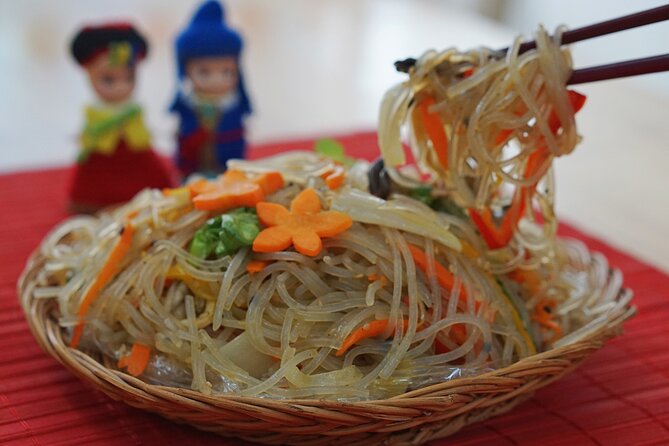
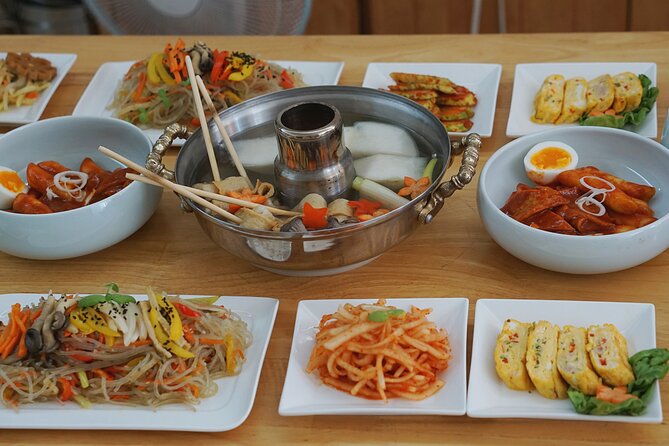
Once the cooking is finished, you arrange the food nicely before eating. This is more than a quick plate-and-go moment. You have time to photograph the completed table, which will suit you if you like documenting food or want a clear visual reminder of what you learned.
The meal includes the dishes you prepare together. Seasonal Korean desserts are also provided, with examples including yakgwa, wind rice cake, and sesame rice cake. The exact sweets change according to the season, so you should treat the examples as possibilities rather than a fixed menu.
This part of the experience has two useful benefits. First, you can taste the finished food while the instructions are still fresh. Second, you can judge which dishes you would actually make at home. A recipe may look appealing on paper, but tasting the balance of noodles, dumplings, rice cakes, and fishcake helps you decide what belongs in your own kitchen.
Alcohol is not included. If you want a drink with the meal, the supplied information does not say that alcohol is provided, so plan on the included food and dessert only.
A few more Seoul trips worth weighing up
- Seoul Street Food Market Tour
★ 5.0 · 1,226 reviews - Seoul: Night Market Food Tour with Local Guide
★ 4.9 · 943 reviews - Downtown Seoul Guided Food & Market Tour with 8+ Local Tastings
★ 5.0 · 580 reviews - Small-Group Night Food Tour in Seoul with Korean BBQ
★ 5.0 · 304 reviews
Why the market visit adds real value
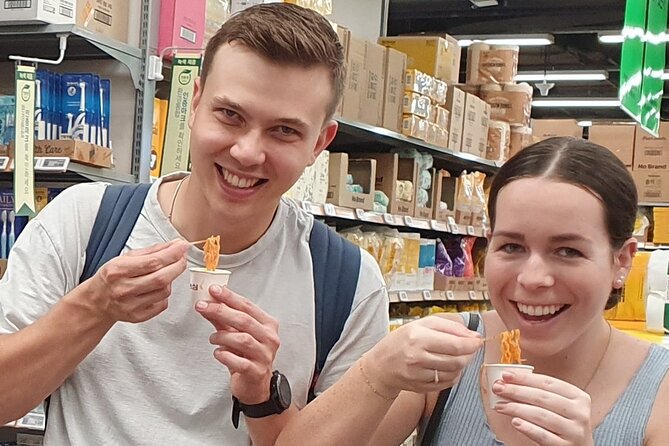
After eating, you cross the street for a roughly 30-minute tour of a large indoor supermarket. This is a useful follow-up because the instructor can point out the ingredients used in the class and show you products you may have noticed in Korean recipes.
The market covers four floors. You can look at groceries, snacks, and a wide selection of seasonings, as well as the large kimchi refrigerators commonly used in Korean homes. The refrigerator detail is especially interesting because it connects the food you have just prepared with the way many households store kimchi.
This is not just extra shopping time. If you have ever returned from Korea with a packet of noodles or sauce and then wondered how to use it, the market tour can help you make better choices. The instructor can assist as you compare Korean snacks and seasonings, rather than leaving you to decode unfamiliar labels on your own.
The market also offers a glimpse of ordinary food shopping. A cooking studio can show you the prepared version of Korean food, while the supermarket shows the packaged ingredients and household products behind it. In only 30 minutes, you get both sides of that experience.
There is one firm scheduling limitation. The supermarket is closed on the second and fourth Sunday of every month, and the market tour is not held on those days. The cooking activity still needs to be checked for the date you choose, but you should not book a Sunday session expecting the full cooking-plus-market program without confirming the calendar.
Tax refunds and buying ingredients
If you bring your passport, you can receive an immediate tax refund for purchases over 30,000 won including VAT, after seeing the purchase process for the ingredients used in the class. This makes the market stop more useful for anyone planning to buy Korean food products.
The threshold is important. A small snack purchase may not qualify, while a larger selection of sauces, noodles, seasonings, or packaged foods might. The instructor can help you understand the purchase process and choose items, but you should still check the final total and refund conditions at the market.
Do not treat the tax refund as a reason to spend more than you need. The real value is the guidance. If you already know you want to bring home Korean cooking supplies, the market visit can save you guesswork.
Is $81 a fair price?
At $81 per person, this costs more than a simple meal or a short market walk. You are paying for several parts at once: instruction, ingredients, tools, the prepared meal, seasonal dessert, packaging, photography time, and the market tour.
The price looks strongest for someone who wants an organized food activity with a small group. You do not need to source ingredients, find recipes, or choose a restaurant afterward. You also get a meal and a chance to buy products with assistance.
The value is less convincing if your main goal is simply to eat tteokbokki or japchae cheaply. Seoul has many places to try these foods for far less than $81. This experience earns its price through participation and context, not portion size alone.
I would also compare it with the value of your evening. If you have limited time in Seoul and want an activity that combines dinner, cultural explanation, and shopping, the format is efficient. If you prefer a long, specialized cooking course, the two-hour schedule may feel brief.
Who will enjoy this class most?
I would recommend this experience to people who want a manageable introduction to Korean cooking. It suits solo participants particularly well because the small group can allow close attention, as Jenny’s one-on-one session shows.
It is also a good fit for families with children aged 10 and older, assuming the children enjoy hands-on food preparation. Younger children may attend with a guardian, but the supplied information does not describe special activities for them.
Food-focused couples and small groups should enjoy the format too. You cook together, sit down for a shared meal, take photos, and then shop for ingredients. That gives the evening a clear rhythm without requiring extra planning.
You may want to choose another activity if you have strict dietary needs, dislike spicy food, or want a class focused on one dish in great depth. The supplied details do not explain ingredient substitutions or allergy procedures, so ask the provider before booking if that matters to you.
Booking, cancellation, and practical details
Confirmation normally arrives at booking. If you book within two days of the activity, confirmation may arrive within 48 hours and depends on availability.
The experience offers free cancellation if you cancel at least 24 hours before the 5:30 pm start time. Cancellations made within 24 hours are not refunded, and changes during that period are not accepted. The times use Seoul local time, so keep that in mind if you are booking from another country.
The activity requires a minimum number of participants. If the provider cancels because that minimum is not reached, you will be offered another date or experience, or receive a full refund.
The location is near public transportation, but the meeting and ending point is the same studio address. You receive a mobile ticket, and all cooking tools, ingredients, and packaging are included.
Should you book K-food cooking in Seoul?
Book it if you want to make four Korean foods, eat a meal you helped prepare, and shop for ingredients with guidance afterward. The small group limit, ready-to-use materials, seasonal desserts, and four-floor market visit give the evening more substance than a basic cooking demonstration.
I would especially choose it if you have an interest in recreating Korean food at home. The market tour can show you what to buy, while the class gives you a starting set of dishes. The experience is also a sensible choice for a solo participant who values personal instruction.
Skip it if $81 feels too high for a two-hour activity, or if you mainly want to sample Korean food rather than cook it. Also check the date carefully if your visit falls on the second or fourth Sunday, since the supermarket portion will not operate then.
FAQ
Where does the cooking class meet?
The meeting point is 199 Baekbeom-ro, Mapo-gu, Seoul, South Korea. The activity ends back at the same meeting point.
What time does the experience start?
The class starts at 5:30 pm.
How long does the experience last?
The activity lasts approximately two hours.
Which Korean foods will I prepare?
You will prepare japchae, mandu, tteokbokki, and fishcake.
Are ingredients and cooking equipment included?
Yes. All materials, tools, and packaging are included.
Are desserts included?
Yes. Seasonal Korean desserts are provided. Possible examples include yakgwa, wind rice cake, and sesame rice cake, but the selection changes by season.
Is the market tour available every time?
No. The market is closed on the second and fourth Sunday of each month, so the market tour is not held on those days.
What is the cancellation policy?
You can cancel at least 24 hours before the start time for a full refund. Cancellations or changes made within 24 hours are not accepted for a refund.
More Food in Seoul
- Seoul Night Palace & Market Food Tour with Vehicle
★ 5.0 · 275 reviews - Seoul Fun Food Tour: 12 different food tastings
★ 5.0 · 266 reviews - The Award-Winning PRIVATE Food Tour of Seoul: The 10 Tastings
★ 4.5 · 128 reviews - Afternoon E-bike tour and “Happy Hour” food and drinks
★ 5.0 · 46 reviews
Just added around Seoul
- Incheon Airport Private Transfer between Seoul City★ 4.0 · 4 reviews
- Seoul’s Stars: Open Mic with Local & International Talent★ 4.8 · 4 reviews
- Samaksan Cable Car and Nami Island Day Escape with Railbike★ 4.0 · 4 reviews
- DMZ 2nd Tunnel and Cheorwon Peace Observatory with Admission★ 5.0 · 4 reviews
- [KoreaByLocal] Authentic Seoul Night Walk and Chicken & Beer★ 5.0 · 4 reviews
- Nami & Maple Road & Theatre des Lumieres Day Tour from Seoul★ 4.8 · 4 reviews
- Hire Photographer, Professional Photo Shoot – Seoul★ 5.0 · 4 reviews
- Play Gayageum in Hanbok Cultural Experience in Bukchon★ 5.0 · 4 reviews
Cooking Classes, compared.
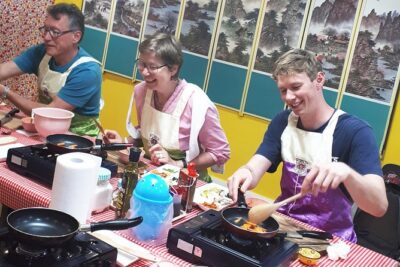
Local Home Korean Cooking Class & Market Adventure in Seoul
Read our review →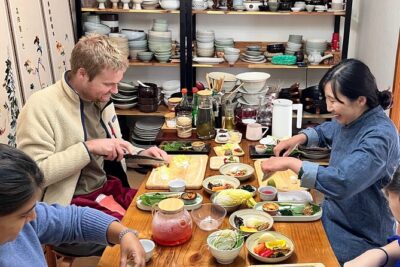
Master Korean traditional cooking with a Kimchi chef
Read our review →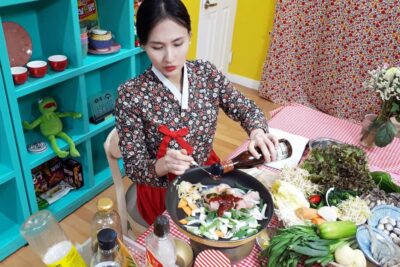
Korean Cooking Class at a Local Home and Market Tour
Read our review →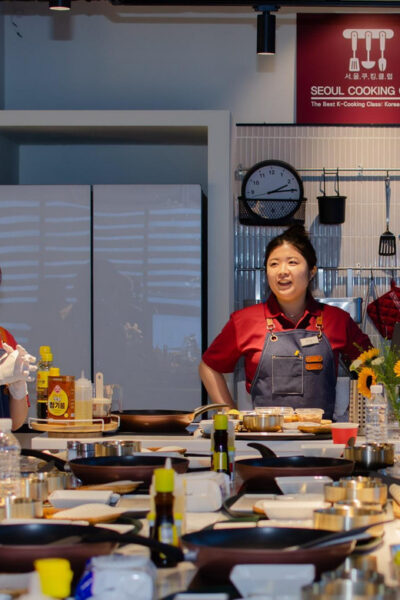
Cook 3 Authentic Korean Dishes with Local Market Tour
Read our review →
Experience Korean Cooking in Modern Hanok Kitchen
Read our review →
Korean Cooking Class with Grocery Shopping at Seoul Local Market
Read our review →Browse the lists this tour appears in