
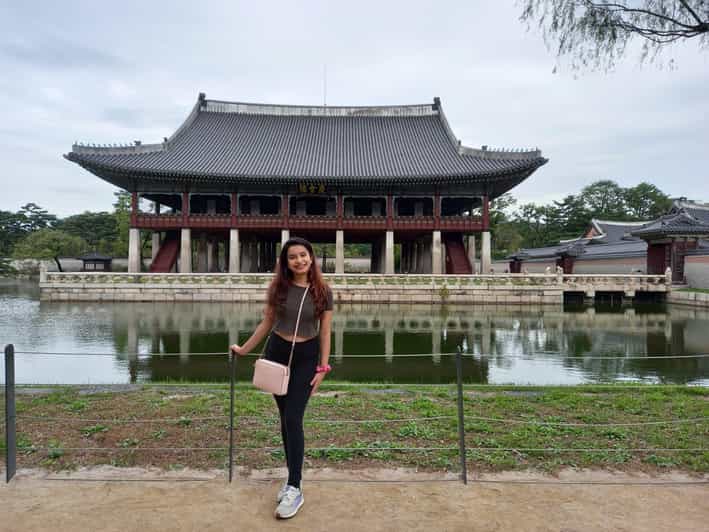
Reviewed · GYEONGBOKGUNG PALACE
Layover tour to Gyeongbokgung-Folk Museum-Bukchon-Insadong
Gyeongbokgung Palace gives this layover tour its purpose: it is not just a quick photo stop, but a guided introduction to the ideas behind Korea’s traditional architecture. From Incheon Airport, you travel into Seoul, then spend time at the palace, the National Folk Museum, Bukchon Hanok Village, Insadong, and Jogyesa Temple before ending at Seoul Station.
I like two things right away. First, the guide explains Confucianism and Joseon culture, so the palace buildings mean more than attractive roofs and courtyards. Second, the route handles the awkward airport logistics for you, including the AREX train and the return trip to Incheon. The main caution is time: six hours goes quickly, and a delayed flight or a long wait for trains can shrink your sightseeing.
In This Review
- Key points at a glance
- Why Gyeongbokgung is the right place to start
- What the Folk Museum adds after the palace
- Bukchon Hanok Village and the old city above Seoul
- Insadong, Jogyesa, and a final taste of central Seoul
- How the Incheon Airport connection works
- The value of $254 for one private group
- What Paul Koo brings to the day
- The pace, walking, and possible drawbacks
- Who should book this layover tour
- Should you book the Gyeongbokgung layover tour?
- FAQ
- Where does the tour start?
- Where does the tour end?
- How long does the tour last?
- What places are included?
- Is transportation included?
- Are meals included?
Key points at a glance
- A palace-centered introduction to Korea: Spend about two hours at Gyeongbokgung, the first and largest Joseon palace.
- A useful airport connection: Meet at Incheon Airport and finish at Seoul Station, ready to take the train back to the airport.
- Four distinct Seoul experiences: See royal architecture, ordinary life at the Folk Museum, traditional homes in Bukchon, and modern city culture in Insadong.
- A guide with a clear teaching focus: Paul Koo explains Confucian ideas and the historical meaning behind Korean buildings.
- Private and flexible: The tour is for a private group, with the meeting time chosen after booking.
- Good value for a solo stopover: At $254 per group of up to one person, the price is high for one visitor, but it includes guiding, transport, and Gyeongbokgung admission.
Why Gyeongbokgung is the right place to start
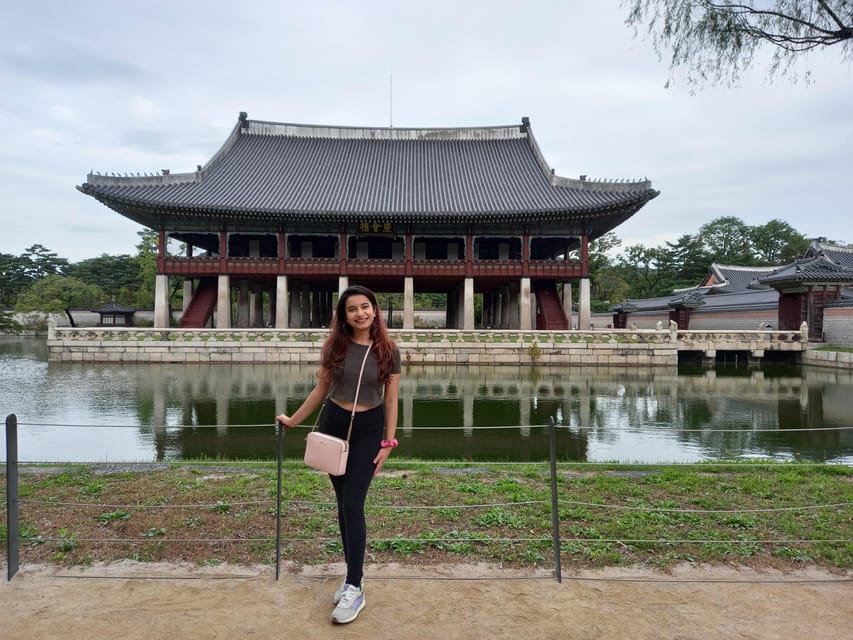
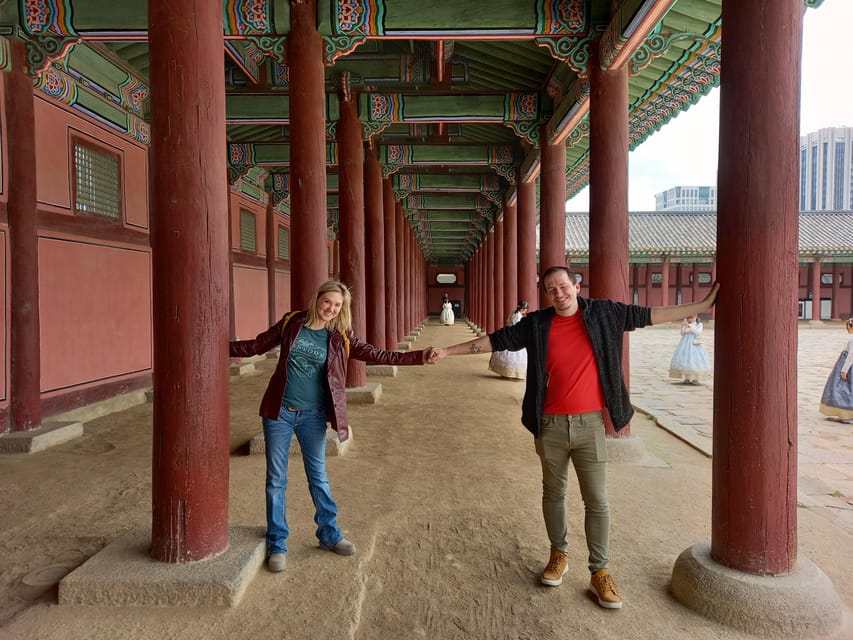
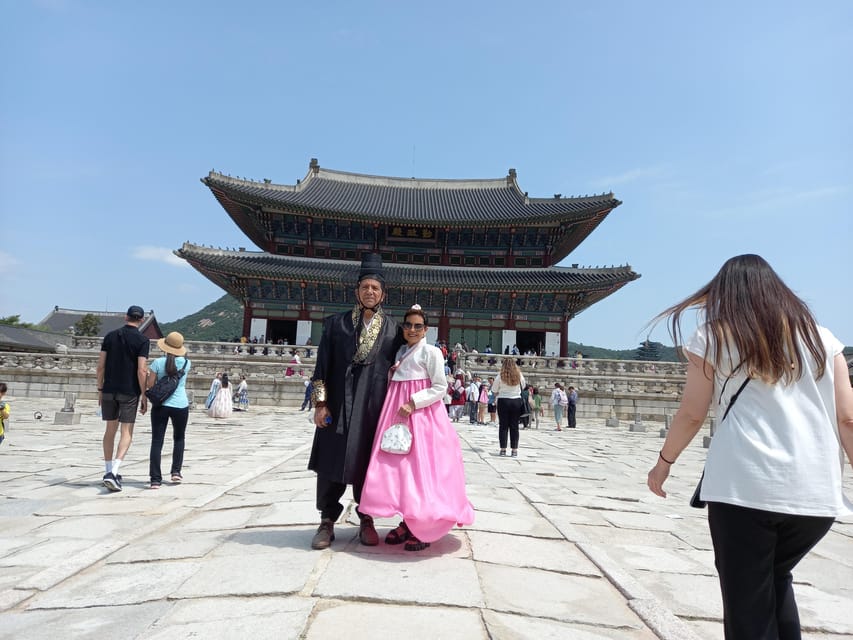
Gyeongbokgung was built in 1395 as the main palace of the Joseon Dynasty. It is the largest of Seoul’s palaces and the only one built on flat ground according to traditional palace planning. Those details matter because the palace was designed to express order, authority, and the Confucian ideals that shaped Joseon government and society.
I find a palace visit much more rewarding when someone explains what I am looking at. Without context, you see painted beams, tiled roofs, stone courtyards, and grand gates. With a guide, you can begin to read the arrangement of the buildings and understand why the palace represents such an important part of Korean identity.
You spend about two hours here, the longest guided stop of the day. That gives you time to move beyond the entrance area and take in the scale of the complex. The tour description calls Gyeongbokgung the essence and highlight of Korean palace architecture, and that is a sensible choice for a visitor with only a few hours in Seoul.
The palace is also a practical first stop. It gives you the strongest architectural setting before the tour shifts to everyday life, residential streets, shops, and Buddhist practice. You get a clear sequence rather than a collection of unrelated sights.
More Gyeongbokgung visits:
- Seoul: Gyeongbok Palace, Bukchon Village, and Gwangjang Tour
★ 4.9 · 2,321 reviews - Best Seoul City Tour (Gyeongbokgung Palace,Insadong,Namsan Tower)
★ 5.0 · 1,647 reviews - Seoul City Sightseeing Tour Including Gyeongbokgung Palace, N Seoul Tower, and Namsangol Hanok Village
★ 5.0 · 1,423 reviews
What the Folk Museum adds after the palace
The National Folk Museum of Korea follows Gyeongbokgung with a 30-minute guided visit. Its focus is not royal life. Instead, it shows how ordinary people lived, worked, marked the seasons, and passed through the stages of life during the Joseon period.
The displays cover ceremonies and major events, along with the human cycle of birth, growing up, marriage, aging, illness, treatment, and death. This helps balance the palace experience. Gyeongbokgung shows the official face of Joseon, while the Folk Museum turns your attention to family life and community customs.
Half an hour is enough for an introduction, but not enough for every display. If museums are your main interest, you may wish the stop were longer. On a layover, though, the short visit makes sense. You receive the basic background without spending the whole day indoors.
I especially like the pairing of these two places. The palace shows the ideals of the ruling class. The Folk Museum shows how those ideas and customs reached everyday people. That contrast gives you a better start in Korea than simply moving from one handsome building to another.
Bukchon Hanok Village and the old city above Seoul
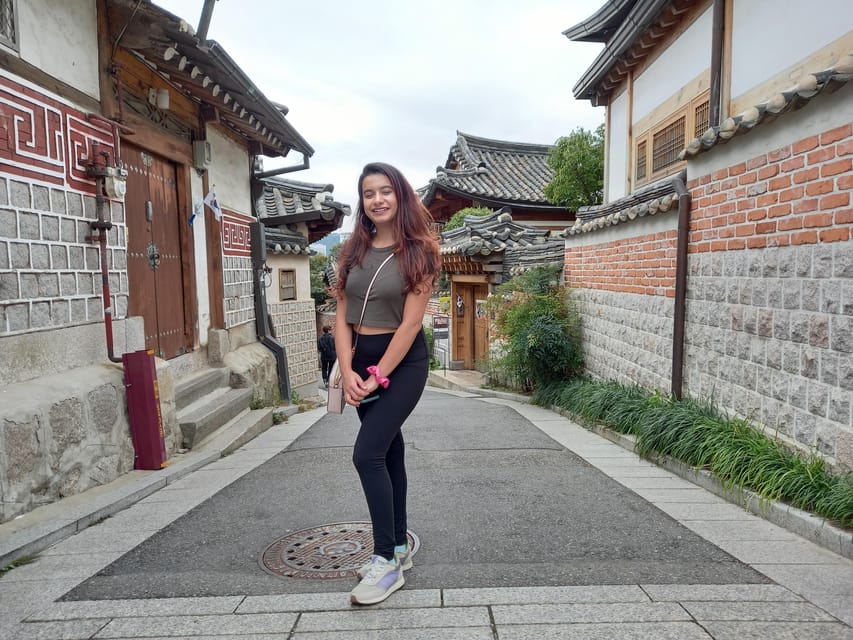
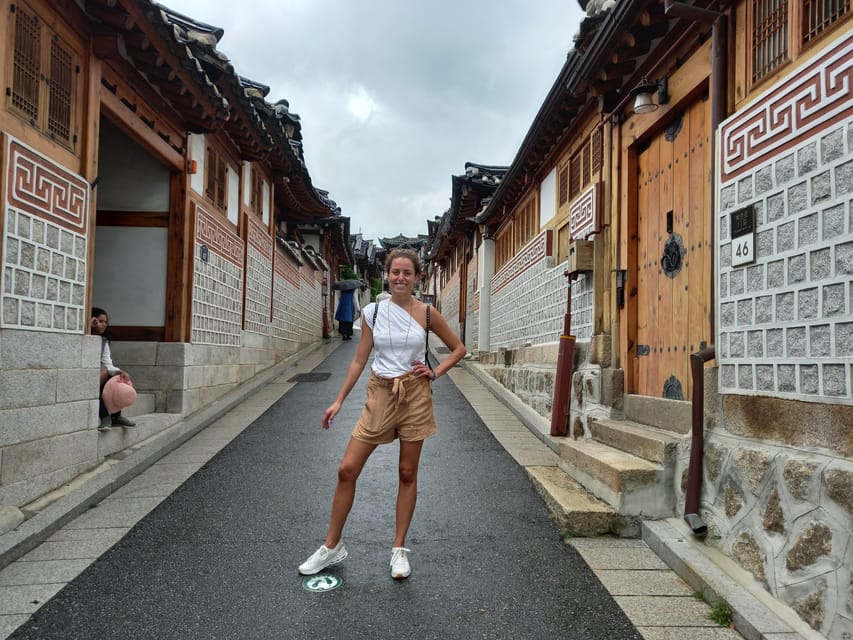
Bukchon Hanok Village is scheduled for about 40 minutes. It is known for a large cluster of roughly 1,000 hanoks, traditional Korean houses, in a part of central Seoul where older residential architecture meets the modern city.
The special view here comes from that contrast. Traditional tiled roofs and narrow streets appear alongside Seoul’s high-rise buildings and, from some viewpoints, N Seoul Tower. You are not looking at an isolated historic site. You are seeing old and new Seoul occupying the same city.
The short stop is best treated as a guided walk rather than a full neighborhood visit. Bukchon is a residential area, so a guide is useful for directing you to appropriate streets and viewpoints while keeping the visit respectful. The supplied information does not promise a long independent wander, and the schedule does not leave much room for one.
You should also expect some walking on this part of the route. The tour does not give an accessibility breakdown, so anyone concerned about hills, uneven surfaces, or the pace of a neighborhood walk should ask before booking. The itinerary is compact, and there is little spare time if you need frequent pauses.
Insadong, Jogyesa, and a final taste of central Seoul
The itinerary gives Insadong about one hour. This is your chance to shift from palaces and traditional homes to a central Seoul street associated with Korean culture, shops, and food. The guide may also help you sample authentic street food, although food and drinks are not included in the price.
Insadong works well near the end because it gives you a less formal view of Korean culture. At Gyeongbokgung, you study royal design. In Bukchon, you see traditional homes. In Insadong, you encounter the way traditional culture is presented and enjoyed in the city today.
Jogyesa Buddhist Temple is located in the Insadong area and is described as the headquarters of the Korean Buddhist organization. The temple is relatively small compared with Gyeongbokgung, but its importance is not based on size. A stop here adds a religious perspective to a day otherwise focused heavily on Confucian Joseon culture.
The temple was built in 1926, and its location near the palace and Insadong makes it an efficient addition to the route. You get a short look at Korean Buddhist life without sending the tour far out of its way. Since the supplied schedule lists one hour for Insadong, the exact division between the street and temple depends on the guide and the day’s pace.
More Bukchon and hanok village walks:
- Seoul: Gyeongbok Palace, Bukchon Village, and Gwangjang Tour
★ 5.0 · 1,044 reviews - Seoul: Gyeongbok Palace and Bukchon Hanok Walking Tour
★ 4.8 · 157 reviews - Best Walking Tour to Gyeongbok Palace Bukchon Hanok Village
★ 5.0 · 138 reviews - Experience Korean Cooking in Modern Hanok Kitchen
★ 5.0 · 118 reviews
How the Incheon Airport connection works
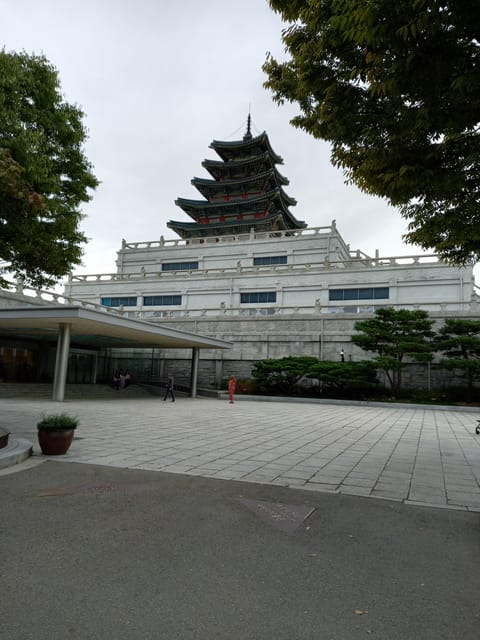
The tour starts at Incheon International Airport. After meeting your English-speaking guide, you go to Seoul Station by AREX, the airport railroad. The guide helps arrange the return train ticket so you can continue to Incheon after the tour ends.
The return plan is one of the tour’s strongest practical features. You are not dropped somewhere in central Seoul and left to work out the airport connection while watching the clock. Instead, the guide escorts you to Seoul Station at the end, and the activity finishes at the airport railroad station there.
The express train normally runs about once an hour and uses assigned seats. In busy periods, tickets can sell out, so advance planning matters. If the wait for an express train is more than 20 minutes, the group may use the normal train instead. The normal service takes about one hour to Seoul, roughly 20 minutes longer than the express option.
The planned transport time is about 1.5 hours in the itinerary, with another 30-minute public transport segment listed later. Those figures show why the schedule needs to stay organized. A seven o’clock airport meeting is expected to finish around one o’clock at Seoul Station, though you should allow extra caution if your flight arrival, immigration, or baggage collection could take longer than expected.
The tour information describes the transport as included from Incheon Airport through the sightseeing route and back to Seoul Station for the airport train. It also says the return train to Incheon is arranged as part of the plan. Confirm the exact ticket details and meeting instructions after booking, especially if your arrival time changes.
The value of $254 for one private group
The advertised price is $254 per group of up to one person. In practical terms, this is a premium solo layover tour rather than a cheap airport excursion. You are paying for a private guide, six hours of attention, transport, and admission to Gyeongbokgung.
For a solo visitor, the cost may feel steep if you only want to see one palace and take a few pictures. Public transport in Seoul is far cheaper, and an independent visit could cover some of the same ground for less money. The difference is that you would need to plan the airport transfer, choose the right train, navigate Seoul Station, understand the palace layout, and keep an eye on your return time.
The price makes more sense if you value a private guide and a fixed airport-to-airport plan. It also becomes more attractive for anyone who wants cultural explanation rather than a quick checklist of sights. The guide fee covers six hours, not simply a transfer with a short stop.
Admission to Gyeongbokgung is included. Food and drinks are not, and neither is insurance. If you want to try street food in Insadong, budget separately and make sure the timing works with your flight.
What Paul Koo brings to the day
The experience provider is Paul Koo. The strongest part of his approach is the focus on explanation, especially the role of Confucianism in Joseon culture and architecture.
Paul is also described as a Seoul local who has studied the area’s culture and history for more than 10 years. That background matters most at Gyeongbokgung, where the tour aims to explain the spirit of the period rather than simply point out attractive buildings.
Past visitors specifically praised his ability to make transportation feel easy for people new to Korea. He has also helped with photographs and shared the finished pictures afterward at no extra charge. That is a pleasant extra, but I would treat it as a benefit of the guide’s personal style rather than a formal service guaranteed in every booking.
The feedback about Paul is consistently strong, with particular praise for his clear explanations, considerate manner, and skill at finding good photo spots. If Paul is the guide assigned to your booking, you can expect the day to be built around interpretation as much as sightseeing.
The pace, walking, and possible drawbacks
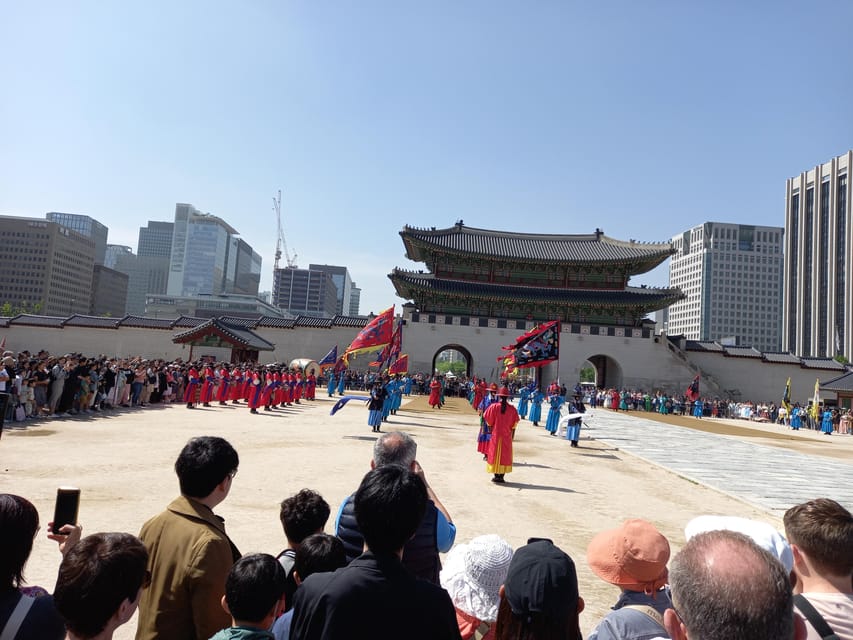
This is a full half-day, not a relaxed city stroll. The listed schedule gives two hours to Gyeongbokgung, 30 minutes to the Folk Museum, 40 minutes to Bukchon, one hour to Insadong, and 30 minutes for public transport. Add the airport rail journey and the day has little slack.
I like the efficient order, but you need to be realistic about what it can deliver. You will see several important places, yet you will not have an unhurried exploration of each one. Bukchon in particular could easily take longer if you want to wander every side street, while the Folk Museum deserves more time for anyone who enjoys exhibits.
The tour suits visitors who prefer guidance and structure. It is less suitable if you want to shop at length in Insadong, sit down for a long Korean meal, or explore Seoul without a fixed end point.
The private format does give you some room to communicate your interests. You choose the meeting time after booking, and the guide can explain the day’s plan. Still, the airport departure controls the experience, so do not book a close connection without allowing time for possible delays.
Who should book this layover tour
I would consider this tour for a first visit to Seoul during a long Incheon layover, especially if you want one strong cultural introduction rather than a shopping trip. It is also a good match if you are nervous about navigating a large airport, finding AREX, or returning to the correct station.
Families and small private groups may appreciate having one guide for the entire route, though the listed price is specifically for a group of up to one person, so confirm the cost for more people. The English-language format works best for visitors who want spoken explanation throughout the day.
I would choose it for someone interested in architecture, religion, and the ideas that shaped Korean society. I would not choose it for a visitor whose priority is food, nightlife, modern design, or a long palace photography session.
You can cancel up to 24 hours in advance for a full refund, and the reserve-now, pay-later option keeps the booking flexible. The provider asks for an advance reservation and guide confirmation, so do not assume the tour is ready to go without that confirmation.
Should you book the Gyeongbokgung layover tour?
Book it if you have a substantial Incheon layover, want a private English-speaking guide, and value a carefully managed return to the airport. The day gives you a useful progression: Joseon royal power at Gyeongbokgung, ordinary life at the Folk Museum, traditional homes in Bukchon, Buddhist practice at Jogyesa, and present-day culture around Insadong.
The main reason to choose it is the interpretation. Paul Koo’s focus on Confucianism and architectural meaning can turn a fast sightseeing run into a more thoughtful introduction to Korea. The main reason to hesitate is the price and pace. At $254 for one person, this is a convenience-and-guidance purchase, not a budget tour.
For a first-time visitor with limited time, I think the structure is sensible. Just protect your schedule, confirm the meeting details, and remember that you are finishing at Seoul Station, not returning directly to your airport gate.
FAQ
Where does the tour start?
The tour starts at Incheon International Airport. You choose the meeting time after booking, and the English-speaking guide meets you at the airport.
Where does the tour end?
The tour ends at Seoul Station’s airport railroad station. The guide escorts you there so you can take the train back to Incheon Airport.
How long does the tour last?
The sightseeing experience lasts six hours. A meeting at 7 a.m. is expected to finish around 1 p.m. at Seoul Station.
What places are included?
The route includes Gyeongbokgung Palace, the National Folk Museum of Korea, Bukchon Hanok Village, Insadong, and Jogyesa Buddhist Temple.
Is transportation included?
Transportation from Incheon Airport to Seoul, between the tour stops, and to Seoul Station for the return airport connection is included. The tour may use the AREX express train or the normal train, depending on availability and waiting time.
Are meals included?
No. Food and drinks are not included. You may have an opportunity to try street food in Insadong, but you pay for it separately.
More Layover Tours in Seoul
- Flexible Private Guided Tour in Seoul (Optional Incheon Layover)
★ 5.0 · 323 reviews - Private Airport Transfer * Incheon Airport <-> Seoul (1-5 people)
★ 5.0 · 235 reviews - Private Airport Transfer: Incheon Airport to Seoul City (1-5 pax)
★ 5.0 · 92 reviews - Private Layover Tour from Incheon Airport to Seoul
★ 5.0 · 78 reviews
More Insadong Tours in Seoul
- Seoul Highlights: Gyeongbok Palace, Insadong & N Seoul Tower
★ 4.7 · 726 reviews - Korean Palace and Market Tour in Seoul Including Insadong and Gyeongbokgung Palace
★ 4.0 · 174 reviews - Carve Your Personal Korean Stone Seal with Jeongju in Insadong
★ 5.0 · 134 reviews - Write a Meaningful Korean Calligraphy Scroll in Insadong
★ 5.0 · 36 reviews
Just added around Seoul
- Incheon Airport Private Transfer between Seoul City★ 4.0 · 4 reviews
- Seoul’s Stars: Open Mic with Local & International Talent★ 4.8 · 4 reviews
- Samaksan Cable Car and Nami Island Day Escape with Railbike★ 4.0 · 4 reviews
- DMZ 2nd Tunnel and Cheorwon Peace Observatory with Admission★ 5.0 · 4 reviews
- Nami & Maple Road & Theatre des Lumieres Day Tour from Seoul★ 4.8 · 4 reviews
- Hire Photographer, Professional Photo Shoot – Seoul★ 5.0 · 4 reviews
- [KoreaByLocal] Authentic Seoul Night Walk and Chicken & Beer★ 5.0 · 4 reviews
- Seoul Film Camera Club★ 5.0 · 4 reviews
Gyeongbokgung Palace, compared.
Gyeongbok Palace, Bukchon Village, and Gwangjang Tour
Read our review →
Best Seoul City Tour (Gyeongbokgung Palace,Insadong,Namsan Tower)
Read our review →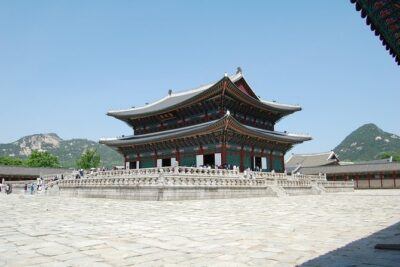
Seoul City Sightseeing Tour Including Gyeongbokgung Palace, N Seoul Tower, and Namsangol Hanok Village
Read our review →Gyeongbok Palace, Bukchon Village, and Gwangjang Tour
Read our review →
Seoul Highlights: Gyeongbok Palace, Insadong & N Seoul Tower
Read our review →
Seoul City Half Day Tour-Gyeongbok Palace Guard Changing Ceremony
Read our review →
Browse the lists this tour appears in