
Reviewed · PALACE TOURS
Deoksugung & Jeongdong-gil: A Walk in Korea’s Rich Heritage
Seoul’s past comes into focus on this walk through Deoksugung and Jeongdong-gil, where palace walls, former missionary buildings, imperial sites, and modern public spaces sit close together. You get a useful introduction to Korea’s late 19th and early 20th centuries without spending a full day inside museums.
I like the route’s mix of traditional Korean and Western-style landmarks, and I like that an English-speaking local guide puts the buildings into a human story. The coffee and restroom stop at Jeongdong Theater is also a smart touch. The main consideration is pace: six stops in about three hours means some visits will be brief, and the experience depends on good weather.
In This Review
- Key points at a glance
- Why this Seoul walk works as an introduction
- Deoksugung Palace and the royal city center
- Gyeonghuigung and the changing royal story
- Appenzeller Noble Memorial Museum and Methodist education
- Jeongdong Theater, coffee, and a practical pause
- Jungmyeongjeon Hall and a painful imperial turning point
- Gwanghwamun Square and modern Seoul
- What the guide adds to the walk
- Is $48 a fair price?
- Timing, weather, and who should book
- Should you book Deoksugung and Jeongdong-gil?
- FAQ
- Where does the tour start?
- What time does the tour begin?
- Where does the tour end?
- How long does the experience last?
- What is included in the price?
- Are admission tickets included?
- Are food and drinks included?
- How many people can join the tour?
- Can I cancel for a full refund?
Key points at a glance
- A 9:30 a.m. start at Deoksugung Palace gives you an early look at one of central Seoul’s most important royal sites.
- Jungmyeongjeon Hall connects palace life with Korea’s imperial crisis, including the 1905 Eulsa Treaty.
- The Appenzeller Noble Memorial Museum explains Methodist education and the roots of a school that later became Pai Chai University.
- Jeongdong Theater provides a planned break for coffee, another drink, and the restroom.
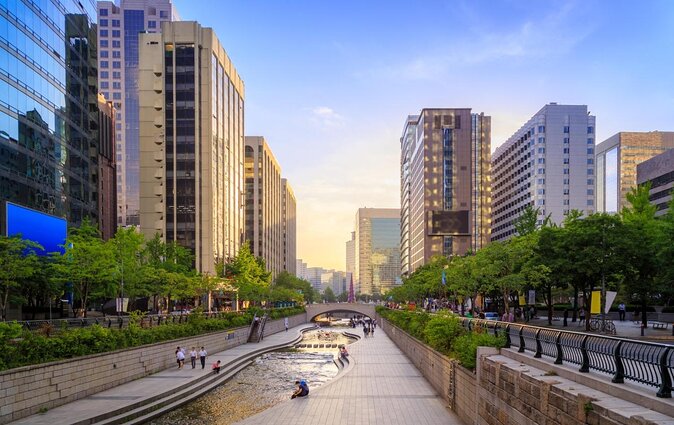
- Gwanghwamun Square and Cheonggyecheon show modern Seoul after the older palace and diplomatic districts.
- A maximum of 15 people keeps the group smaller than a large coach tour, while the $48 price covers the professional English guide.
Why this Seoul walk works as an introduction
Many first visits to Seoul begin with the Joseon court, grand gates, and tiled palace roofs. This tour gives you that familiar starting point, then shifts the story toward the period when Korea faced foreign pressure, political upheaval, Christian missions, and rapid change.
That shift is the route’s real strength. You are not looking at isolated monuments. You are moving through a small part of central Seoul where royal power, education, religion, diplomacy, and modern civic life overlap.
I especially like this approach for a first or second day in the city. A guide can give you names and dates, but the better service is helping you understand why the streets look the way they do. Here, traditional palace grounds are followed by Western-influenced buildings and public squares. The contrast gives you a working picture of Seoul rather than a collection of postcard views.
The tour lasts about three hours and includes six stops. The listed stop times add up to roughly 110 minutes, leaving the rest for walking and explanation. That means you should expect an overview, not a slow architectural study. If you want long photo sessions at every site, the schedule may feel brisk.
More palace visits:
- Seoul: Gyeongbok Palace, Bukchon Village, and Gwangjang Tour
★ 4.9 · 2,321 reviews - Best Seoul City Tour (Gyeongbokgung Palace,Insadong,Namsan Tower)
★ 5.0 · 1,647 reviews - Small-Group Royal Palace and Seoul City Tour (hotel pick-up)
★ 5.0 · 1,474 reviews
Deoksugung Palace and the royal city center
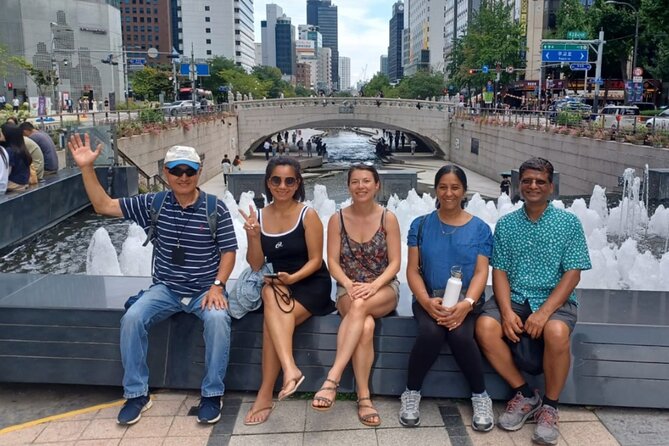
The walk begins at Deoksugung Palace, also known as Gyeongun-gung. It sits at 99 Sejong-daero in central Seoul, making it easy to reach by public transportation.
Deoksugung is a useful place to start because it reflects both the Joseon Dynasty and Korea’s later imperial period. The palace served as a royal residence, and its location beside modern Seoul gives you an immediate sense of the city’s unusual mix. Palace walls and contemporary streets are close neighbors here.
The planned visit is about 20 minutes, with admission listed as free. That is enough time for a guide to orient you, point out the site’s importance, and establish the main story of the day. It is not enough for every courtyard and building, so you should treat this as an introduction.
I would pay close attention to the guide’s explanation of how Deoksugung relates to Emperor Gojong and the Korean Empire. That context makes later stops, especially Jungmyeongjeon Hall, easier to understand.
Gyeonghuigung and the changing royal story
The next palace is Gyeonghuigung, also called Gyeonghui Palace, in Jongno-gu. It was built in 1623 during the Joseon Dynasty as a royal residence.
The visit is scheduled for about 20 minutes, again with free admission. Compared with Deoksugung, this stop adds a different piece to the royal story. It helps you see that Seoul’s palace district was not centered on one single compound. Several royal residences served different roles as the city developed.
For you, the value is less about checking off another palace and more about comparison. A guide can explain how the two sites fit into the wider Joseon court system and how later changes affected them.
The short stop is also a limitation. You will not have much time to wander at your own speed. Keep your camera ready, but give priority to the explanation. The route is designed to connect the sites, not to provide an extended palace visit.
Appenzeller Noble Memorial Museum and Methodist education
The Appenzeller Noble Memorial Museum shifts the subject from royal power to education and Christian mission work. It occupies the former home of Baekjae Hakdang, a missionary school that later expanded into a university. That institution is now known as Pai Chai University in Daejeon.
The museum visit lasts about 10 minutes and admission is free. This is the shortest stop, so you should expect a compact explanation rather than a long museum tour.
Its importance comes from what it reveals about Korea’s changing society. The route is not only about kings and palaces. It also looks at the schools, religious groups, and international influences that helped reshape Korea during the late 19th and early 20th centuries.
I like this stop because it gives the walk a social dimension. You see how education became part of the encounter between Korea and Western institutions. If mission history is not a major interest for you, the guide’s explanation may still help connect the building to the larger changes happening around it.
A few more Seoul trips worth weighing up
- Seoul: Evening Dark History, Folklore & Ghost Story Walking Tour
★ 5.0 · 593 reviews - Hanbok Photoshoot and History Tour at Gyeongbokgung Palace
★ 5.0 · 276 reviews - From Seoul: Dae Jang Geum Park Historic K-Drama Set Tour
★ 4.9 · 143 reviews - Seoul: City Highlights and Historical Experience No Shopping
★ 5.0 · 74 reviews
Jeongdong Theater, coffee, and a practical pause
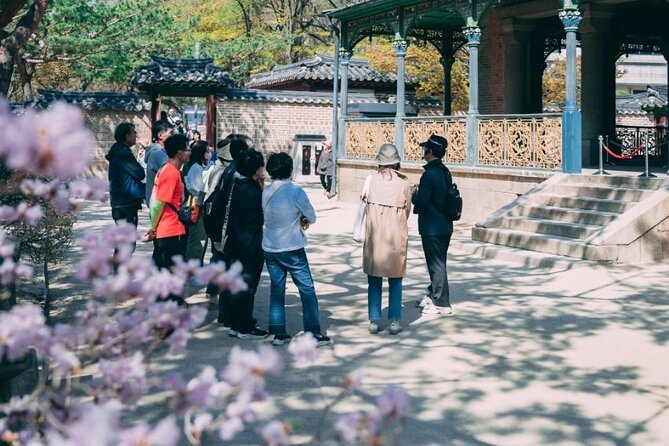
At Jeongdong Theater, the tour pauses for about 25 minutes. The theater presents concerts, plays, and musicals that incorporate elements of traditional Korean culture.
This is also the planned break for coffee or another drink and for using the restroom. Since the walking route includes several historic sites, this pause matters. You can reset, get something to drink, and avoid reaching the final stops tired and distracted.
The break is not listed as an included meal or drink, so budget for your own purchase. Lunch is also not included. With a 9:30 a.m. start and a finish around midday, you may want to plan lunch after the tour rather than expect the walk to provide it.
The theater itself adds another useful contrast. You are still in a historic district, but the venue presents Korean culture through modern performance. That supports the tour’s wider theme: Seoul does not separate old and new as neatly as a museum display might.
Jungmyeongjeon Hall and a painful imperial turning point
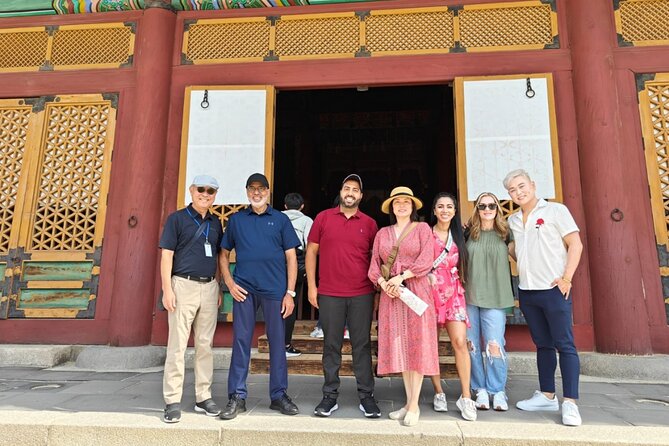
Jungmyeongjeon Hall is one of the most important stops on the route. Built in 1899 as the imperial library of the Korean Empire, it later became the temporary residence of Emperor Gojong after Deoksugung Palace caught fire in 1904.
The scheduled visit lasts about 15 minutes. That is brief, but the building carries a heavy political story. It was also the site of the infamous Eulsa Treaty, an event tied to Japan’s forced control over Korea’s foreign affairs.
This is where the tour’s earlier stops begin to connect. Deoksugung introduces royal and imperial power. The missionary museum shows foreign influence in education. Jungmyeongjeon brings those pressures into a sharper political frame.
I would listen closely here, even if you are less interested in palace architecture. The value is historical context. A short explanation at this building can help you understand why the Korean Empire period remains such a serious subject in Seoul.
The practical drawback is the limited time. Fifteen minutes will not allow a long, quiet visit. If you want to study the hall in detail, you may need to return on your own.
Gwanghwamun Square and modern Seoul
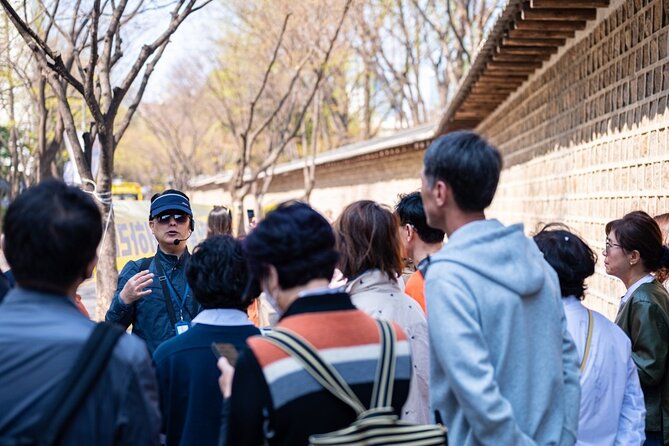
The final major stop is Gwanghwamun Square, a large public space in central Seoul completed in 2009. It includes a fountain, a statue of King Sejong the Great, and other public features.
The square gives the route a clear ending point in modern civic Seoul. After the palace grounds, old school building, theater, and imperial hall, you arrive at a broad urban space used by both locals and tourists.
The statue of King Sejong links the square to Korea’s earlier royal period, while the square itself belongs to the modern city. That combination makes it a good place for the guide to pull the whole route together.
The visit is planned for about 20 minutes. You will have time to take in the scale of the square and hear about its role in central Seoul, but not necessarily enough time to explore every feature.
The tour ends near Cheonggyecheon Stream in Jongno District. This gives you a useful launching point for the rest of your day. You can continue around the central city area, find lunch, or follow the stream independently.
What the guide adds to the walk
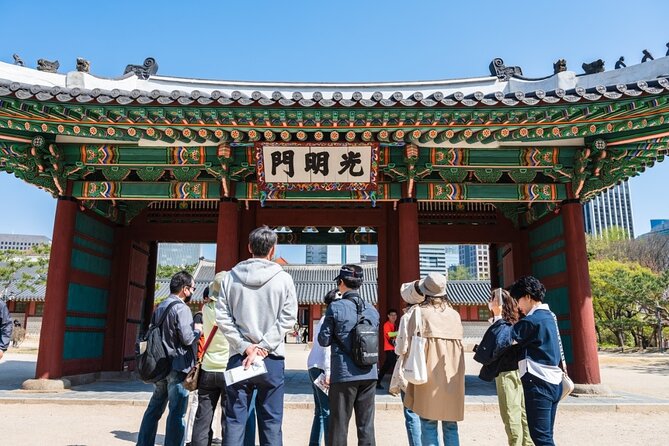
The experience includes a professional English-speaking guide, and Sam is identified as one of the guides. A guide matters on this route because several sites are easy to view without understanding their connection.
At Deoksugung, the guide can frame the royal and imperial story. At the Appenzeller museum, the guide can explain why a former missionary school matters. At Jungmyeongjeon Hall, the guide can place the Eulsa Treaty in its historical setting. Those links are difficult to get from a quick photograph and a plaque.
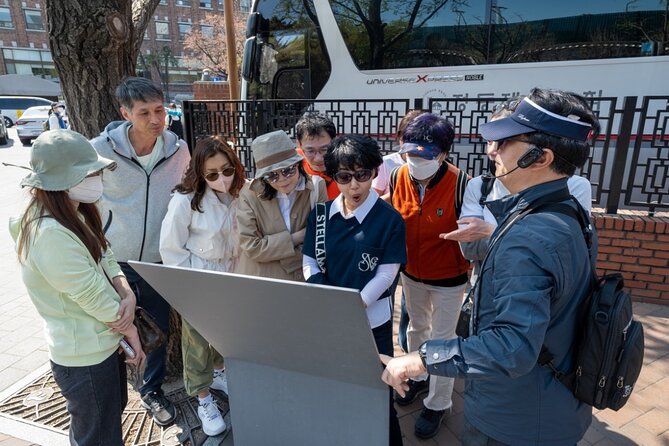
A small group also helps. The maximum is 15 people, which is large enough for a social walk but smaller than a mass tour. You should still stay close to the guide, especially when moving between stops in central Seoul.
One published experience describes Sam as a fun and informative guide who gave the group a good sense of Seoul’s history. That matches what this route needs: clear storytelling, steady timing, and the ability to connect buildings that belong to different parts of Korea’s past.
Is $48 a fair price?
At $48 per person, this is not a bargain if you judge the tour only by admission fees. Every listed stop has free admission, and you pay separately for drinks, lunch, and personal purchases.
The price is mainly for the guide’s time and the organized route. You are paying for roughly three hours of explanation, movement between six sites, and a planned break. If the history is new to you, that can be worthwhile. Without a guide, you could visit some of these locations but miss the political and social links between them.
The value is strongest for first-time visitors, people with limited time in Seoul, and anyone who prefers learning through a walk rather than sitting in a museum. It is less compelling for independent history experts who already know the sites and can create their own route.
A maximum group of 15 improves the value compared with a very large group. Still, the total price should be weighed against your interests. If you mainly want palace interiors or extensive photography, spend the money on a longer self-guided visit instead.
Timing, weather, and who should book
The 9:30 a.m. start gives you a full day afterward. That is useful in Seoul, where you can add another neighborhood, museum, market, or meal after reaching Cheonggyecheon.
This is a walking experience, so wear comfortable shoes and expect to spend most of the morning moving between historic locations. The provided details say most people can participate, but no special accessibility information is given. If you have mobility concerns, ask the provider before booking.
Weather matters. The experience requires good weather, and poor conditions can lead to a different date or a full refund. You can cancel for a full refund up to 24 hours before the start time. Cancellations or changes made inside that 24-hour window are not refunded or accepted.
The tour requires a minimum number of participants. If that minimum is not met, the provider offers another date or experience, or a full refund. Confirmation is sent within 48 hours of booking, subject to availability.
Should you book Deoksugung and Jeongdong-gil?
I would book this walk if you want a compact historical orientation to central Seoul and prefer a guide to explain the links between royal Korea, foreign influence, the Korean Empire, and the modern city.
The strongest parts are the route’s range, the stop at Jungmyeongjeon Hall, the small maximum group size, and the practical theater break. Sam may be your guide, and the experience is designed to be informative without taking your entire day.
I would skip it if you want deep visits to each palace, a food-focused outing, or a completely flexible morning. Six stops in three hours creates a useful overview, but it also means short visits and a steady pace. For the right reader, that is the point: you get the story, the setting, and a clear sense of where to explore next.
FAQ
Where does the tour start?
The tour starts at Deoksugung Palace, at 99 Sejong-daero in Jung District, Seoul.
What time does the tour begin?
The scheduled start time is 9:30 a.m.
Where does the tour end?
The tour ends at Cheonggyecheon Stream in Jongno District, Seoul.
How long does the experience last?
The walk lasts approximately three hours.
What is included in the price?
A professional English-speaking tour guide is included.
Are admission tickets included?
Admission is listed as free for all six stops, including Deoksugung, Gyeonghuigung, the Appenzeller Noble Memorial Museum, Jeongdong Theater, Jungmyeongjeon Hall, and Gwanghwamun Square.
Are food and drinks included?
No. Lunch and other personal consumption are not included. The tour pauses at Jeongdong Theater so you can buy coffee or another drink and use the restroom.
How many people can join the tour?
The experience has a maximum of 15 travelers.
Can I cancel for a full refund?
Yes. You can cancel at least 24 hours before the experience start time for a full refund. Cancellations or changes made less than 24 hours before the start time are not accepted or refunded.
More Walking Tours in Seoul
- Seoul moonlight walking tour with local historian
★ 5.0 · 940 reviews - Seoul: Nighttime Hidden Gems Walking Tour
★ 5.0 · 775 reviews - Seoul: Dark Side of the City and Ghost Stories Walking Tour
★ 4.8 · 484 reviews - Gangnam Walking Tour on Youth and Society in Seoul Korea
★ 5.0 · 401 reviews
Just added around Seoul
- Incheon Airport Private Transfer between Seoul City★ 4.0 · 4 reviews
- Seoul’s Stars: Open Mic with Local & International Talent★ 4.8 · 4 reviews
- Samaksan Cable Car and Nami Island Day Escape with Railbike★ 4.0 · 4 reviews
- DMZ 2nd Tunnel and Cheorwon Peace Observatory with Admission★ 5.0 · 4 reviews
- Nami & Maple Road & Theatre des Lumieres Day Tour from Seoul★ 4.8 · 4 reviews
- Hire Photographer, Professional Photo Shoot – Seoul★ 5.0 · 4 reviews
- [KoreaByLocal] Authentic Seoul Night Walk and Chicken & Beer★ 5.0 · 4 reviews
- Seoul Film Camera Club★ 5.0 · 4 reviews
Palace Tours, compared.
Gyeongbok Palace, Bukchon Village, and Gwangjang Tour
Read our review →
Best Seoul City Tour (Gyeongbokgung Palace,Insadong,Namsan Tower)
Read our review →
Small-Group Royal Palace and Seoul City Tour (hotel pick-up)
Read our review →
Seoul City Sightseeing Tour Including Gyeongbokgung Palace, N Seoul Tower, and Namsangol Hanok Village
Read our review →Gyeongbok Palace, Bukchon Village, and Gwangjang Tour
Read our review →
Seoul Highlights: Gyeongbok Palace, Insadong & N Seoul Tower
Read our review →
Seoul City Half Day Tour-Gyeongbok Palace Guard Changing Ceremony
Read our review →Browse the lists this tour appears in