
Reviewed · WALKING TOURS
Gangnam Walking Tour on Youth and Society in Seoul Korea
Gangnam is more than glossy towers, designer shops, and K-pop associations. This 2.5-hour walk uses ordinary streets to explain the pressures behind South Korea’s economic success, from expensive housing and punishing school schedules to beauty standards, dating, and low birth rates. It is a serious tour, but the guides keep it personal and approachable.
I like the local point of view and the way June and Jessica connect broad social issues to real places. I also like the small maximum of 15 people, which gives you room to ask questions rather than simply trail behind a flag. The drawback is clear: this is mainly a conversation and observation walk, not a sightseeing tour packed with famous buildings or hands-on activities.
In This Review
- Key points to know before booking
- Why this Gangnam walk feels different
- Starting at Gangnam Station
- Love hotels and changing dating culture
- Gangnam Daeseong Cram School and the education race
- Sinsa-dong and Korea’s beauty standards
- Walking toward the Han River
- What the guides add
- How much walking should you expect?
- Is $31.98 a fair price?
- Who should book this experience?
- Booking and cancellation details
- Should you book the Gangnam Youth and Society Walking Tour?
- FAQ
- How long does the Gangnam Youth and Society Walking Tour last?
- What time does the tour start?
- Where does the tour begin?
- Where does the tour finish?
- Is transportation included in the price?
- How large is the tour group?
- Which guides lead the tour?
- What subjects are discussed?
- Can I cancel for a full refund?
Key points to know before booking
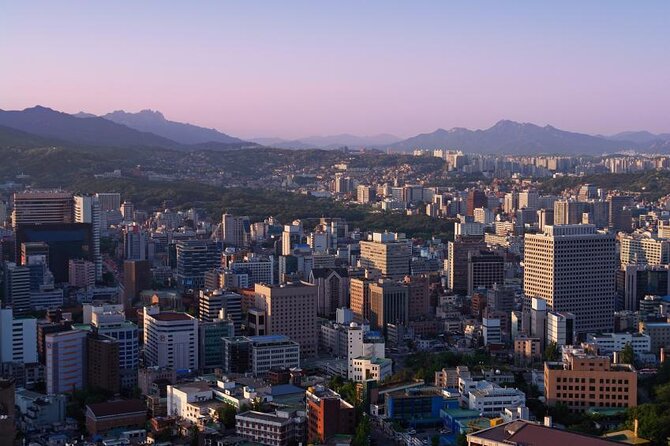
- Gangnam becomes a classroom: Streets around the subway station help explain housing costs, development, and wealth.
- Sensitive subjects are part of the route: Expect frank discussion of plastic surgery, lookism, love motels, dating, suicide, education, and birth rates.
- June and Jessica lead engaging versions of the tour: Your assigned guide may differ, but both names appear frequently in the tour experience.
- One subway ride costs extra: Budget 1,800 won for the included route transfer.
- The walk ends near the Han River: The closest station is Apgujeong Station Exit 4.
- Small group, serious subject matter: Up to 15 people can join, making questions easier but discussion more personal.
Why this Gangnam walk feels different

Many Seoul tours show you palaces, food markets, shopping streets, or the polished side of modern Korea. This one asks you to look at the social cost of that success. You walk through places that may seem unremarkable at first, then hear why they matter.
That approach is the main reason to book. A cram school is not just another building. A cosmetic clinic is not merely part of a shopping street. A love-hotel district is not simply an odd urban detail. With the guide’s explanation, each setting becomes a doorway into the way young Koreans study, work, date, marry, raise children, and judge themselves.
I particularly like that the tour does not depend on museum displays or staged encounters. You see the city as it operates in everyday life. The guide supplies the context, and you can ask about the parts that puzzle you.
The tone is not light all the time. Topics include suicide and social pressure, so this may not suit someone looking for a cheerful morning outing. For many people, though, that honesty is exactly the value.
More nights out in Hongdae and Gangnam:
- Seoul: Gangnam Tour on Youth and Society in South Korea
★ 4.9 · 466 reviews - Seoul: Itaewon Premium Pub Crawl with VIP Bottle Service
★ 5.0 · 101 reviews - Korean Home Style Cooking Class in Gangnam Seoul
★ 5.0 · 40 reviews
Starting at Gangnam Station
The tour begins at 10:30 am near Gangnam Station, at 820-10 Yeoksam-dong in Gangnam District. Gangnam Station is one of Seoul’s best-known meeting points, but the tour quickly moves beyond the usual image of nightlife, shopping, and office towers.
The opening discussion focuses on housing and the development of modern Korea. Gangnam is presented as one of the country’s wealthiest and most developed areas, making it a useful place to discuss how Seoul grew and why housing has become such a difficult issue.
You should expect about 15 minutes at this first stop. It is less about checking off a sight and more about getting the framework for the rest of the walk. The guide links physical development with economic achievement, then considers who benefits from that success and who feels shut out by it.
This is also a good moment to ask questions. The tour works best when you treat it as a guided conversation rather than a lecture. June is especially praised for adding historical context about Seoul’s rapid development over the past seven decades.
Love hotels and changing dating culture
The second stop is Hotel Seattle, in a district associated with love hotels. You spend about 10 minutes here discussing relationships and love culture in Korea.
For a visitor, the most useful part is the explanation of what these hotels represent in a society where privacy, family expectations, housing costs, and dating do not always fit neatly together. The point is not to gawk at the buildings. It is to consider how young adults manage relationships in a dense, expensive city.
The guide may also connect this stop with marriage and birth rates. That link gives the tour a wider purpose. Personal choices are shaped by social expectations and economic conditions, not just by romance.
This section can feel blunt, but the setting gives the subject a practical anchor. You are not discussing dating in the abstract. You are standing in a part of Seoul where private relationships have a visible place in the city.
Gangnam Daeseong Cram School and the education race
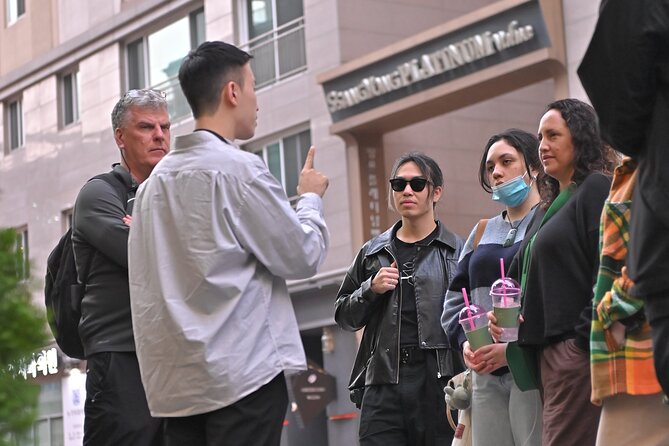
At Gangnam Daeseong Cram School, the tour turns to education. This is one of the better stops for understanding the pressure placed on young people. You spend around 20 minutes discussing private institutes, school competition, and the role of supplemental education.
The building itself may not look like a traditional attraction. That is part of the lesson. An ordinary-looking academy can represent long hours, family spending, academic expectations, and the belief that educational success shapes a child’s entire future.
The discussion also touches on declining birth rates. The connection is important. If raising one child requires major financial and emotional investment, some couples may decide that having children is too difficult. Education pressure is not just a school issue. It affects family planning, work, housing, and the shape of Korean society.
If you want colorful photo stops every few minutes, this part may disappoint. If you want to understand why academic competition carries so much weight, it is one of the tour’s most useful sections.
A few more Seoul trips worth weighing up
- Seoul moonlight walking tour with local historian
★ 5.0 · 940 reviews - Seoul: Nighttime Hidden Gems Walking Tour
★ 5.0 · 775 reviews - Seoul: Evening Dark History, Folklore & Ghost Story Walking Tour
★ 5.0 · 593 reviews - Seoul: Dark Side of the City and Ghost Stories Walking Tour
★ 4.8 · 484 reviews
Sinsa-dong and Korea’s beauty standards
The walk continues to Sinsa-dong, described as Seoul’s leading area for plastic surgery. You spend about 20 minutes looking at beauty culture and the social pressure connected to appearance.
This topic is handled as more than a simple observation about cosmetic procedures. The guide discusses lookism, the idea that appearance can affect how a person is judged or treated. You may hear how beauty standards connect with work, dating, confidence, family expectations, and the public image of success.
For visitors who know Korea mainly through television, music, or K-dramas, this stop adds needed context. The polished faces and carefully managed images seen in popular culture do not appear by accident. They reflect wider ideas about presentation and social value.
The subject can be uncomfortable, and that is worth knowing before you book. The tour is not designed to flatter Korea or present an advertisement for its beauty industry. It asks you to consider both personal choice and social pressure.
Walking toward the Han River
The final major stop is Hangang Park Playground, near the Han River. The discussion here turns to development and suicide, two subjects that need a respectful tone.
The river represents Seoul’s dramatic transformation and the city’s use of public space, but it also provides a setting for discussing mental-health pressure and suicide. The contrast is deliberate. A pleasant public place can carry painful associations, and modern prosperity does not remove personal struggle.
This portion may be the most emotionally demanding part of the morning. The guide’s role matters greatly here. June and Jessica are both described as clear, engaging, and willing to discuss difficult issues directly, while keeping the conversation connected to wider Korean society.
The walk finishes near Apgujeong Station Exit 4. Although the itinerary lists the Han River area as the final stop, the closest subway access is at Apgujeong Station. You will use the subway once during the tour, and the 1,800-won fare is not included.
What the guides add
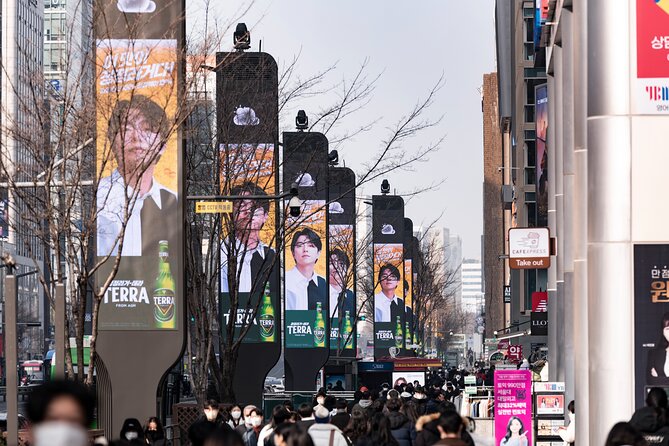
The tour depends heavily on the person leading it. June is praised for historical context, clear English, and a strong grasp of subjects ranging from education and marriage to lookism and birth rates. Jessica is described as friendly, patient, relatable, and good at adjusting her approach to the group.
You should not assume which guide you will receive, but both bring the kind of personal explanation this format needs. The strongest part of the experience is not simply the route. It is the guide’s ability to connect a street corner or business district with the lives of young people in Seoul.
Several parts of the tour benefit from an open question-and-answer style. Ask how a social custom affects daily life, or how a policy connects with what you see around you. With a maximum of 15 people, there should be more space for that than on a large bus tour.
The guide’s perspective is still one person’s interpretation. That does not make it unhelpful, but you should treat the tour as an informed introduction rather than the final word on every Korean social issue.
How much walking should you expect?

The experience lasts about two hours and 30 minutes and takes place largely on foot. One participant specifically found the amount of walking demanding for older adults, so senior visitors should take that warning seriously.
The route includes several stops, but much of the experience involves walking along ordinary Gangnam streets and listening. You may also spend time seated at a cafe or at discussion points, depending on how the guide shapes the tour. Do not book it expecting constant sightseeing or a short stroll between major attractions.
Wear comfortable shoes and bring water. The tour requires good weather, and rain can affect the route, although the guide may adjust the walk while keeping the main subjects intact. Since the start time is 10:30 am, you can pair it with lunch or continue exploring around Apgujeong afterward.
The mobile ticket is convenient, and the tour is near public transportation. Most people can participate, but the walking and serious content are the two main considerations.
Is $31.98 a fair price?
At $31.98 per person, this is not a bargain if you measure value by entrance tickets or the number of famous sights visited. There are no admission fees for the stops, and you pay the subway fare separately.
The value comes from interpretation. You are paying for two and a half hours of guided discussion about subjects that are difficult to understand from a standard sightseeing route. Housing, private education, beauty culture, dating, and suicide are connected here in a way that can give the rest of your Seoul visit more meaning.
I would compare it with the cost of a conventional city tour. If you want palace interiors, landmark photos, or food tastings, spend your money elsewhere. If you want a local explanation of why modern Seoul feels so competitive and carefully managed, the price is reasonable.
The small group also helps. A maximum of 15 people is not private-tour size, but it is small enough for questions and a more focused pace.
Who should book this experience?
I would recommend it to first-time visitors who want more than the polished public image of Seoul. It is especially useful if you are curious about youth culture, education, relationships, social expectations, or the gap between economic success and personal well-being.
It also suits people who enjoy walking through normal neighborhoods and asking questions. K-drama fans may find the discussion useful because it places familiar images of Korean life in a wider social setting.
I would be cautious about booking it for young children. The subjects are mature, and the discussion of suicide and social pressure may not be suitable for every family. Visitors who dislike serious topics, or who want a purely scenic tour, should choose another activity.
Older adults can participate, but plan for a substantial amount of walking. A good pair of shoes matters more here than a camera.
Booking and cancellation details
The tour includes gratuities, but not the 1,800-won subway fare. Confirmation is provided at booking, and the group can have up to 15 people.
Free cancellation is available until 24 hours before the 10:30 am start time. Changes or cancellations made within 24 hours are not refunded. Poor weather or an insufficient number of participants can cause cancellation, in which case you are offered another date or a full refund.
Should you book the Gangnam Youth and Society Walking Tour?
Book it if you want to understand the pressures behind Seoul’s polished surface. The route is ordinary by design, and the discussion is the attraction. June and Jessica bring personal explanation, historical context, and a willingness to address subjects many standard tours avoid.
Skip it if your priority is architecture, shopping, food, or famous sights. You will spend much of the morning walking through streets and listening, with limited visual spectacle.
For the right visitor, this is a useful way to read the city more clearly. It may leave you thinking less about Gangnam as a symbol of wealth and more about the young people trying to build a life within it.
FAQ
How long does the Gangnam Youth and Society Walking Tour last?
The tour lasts approximately two hours and 30 minutes.
What time does the tour start?
The tour starts at 10:30 am.
Where does the tour begin?
It begins at 820-10 Yeoksam-dong in Gangnam District, Seoul, South Korea.
Where does the tour finish?
The walk finishes near the Han River, with Apgujeong Station Exit 4 listed as the closest subway station.
Is transportation included in the price?
The tour uses the subway once, but the 1,800-won transportation fare is not included.
How large is the tour group?
The maximum group size is 15 people.
Which guides lead the tour?
Guides named in the tour information include June and Jessica. The guide assigned to your date may vary.
What subjects are discussed?
The tour covers housing, Korean development, love hotels and dating culture, private education, birth rates, plastic surgery, beauty standards, youth pressure, and suicide.
Can I cancel for a full refund?
Yes. You can cancel at least 24 hours before the start time for a full refund. Cancellations or changes made less than 24 hours before the tour are not refunded. If poor weather or an insufficient number of participants causes cancellation, you are offered another date or a full refund.
Just added around Seoul
- Incheon Airport Private Transfer between Seoul City★ 4.0 · 4 reviews
- Seoul’s Stars: Open Mic with Local & International Talent★ 4.8 · 4 reviews
- Samaksan Cable Car and Nami Island Day Escape with Railbike★ 4.0 · 4 reviews
- DMZ 2nd Tunnel and Cheorwon Peace Observatory with Admission★ 5.0 · 4 reviews
- Nami & Maple Road & Theatre des Lumieres Day Tour from Seoul★ 4.8 · 4 reviews
- Hire Photographer, Professional Photo Shoot – Seoul★ 5.0 · 4 reviews
- [KoreaByLocal] Authentic Seoul Night Walk and Chicken & Beer★ 5.0 · 4 reviews
- Play Gayageum in Hanbok Cultural Experience in Bukchon★ 5.0 · 4 reviews
Walking Tours, compared.
Seoul moonlight walking tour with local historian
Read our review →
Evening Dark History, Folklore & Ghost Story Walking Tour
Read our review →
Dark Side of the City and Ghost Stories Walking Tour
Read our review →
Gyeongbok Palace and Bukchon Hanok Walking Tour
Read our review →
Best Walking Tour to Gyeongbok Palace Bukchon Hanok Village
Read our review →
Highlights & Hidden Gems With Locals: Best of Seoul Private Walking Tour
Read our review →
Street photoshoot and Seoul Hidden gem History Walking Tour
Read our review →Browse the lists this tour appears in