
Reviewed · GYEONGBOKGUNG PALACE
Korean Palace and Temple Tour in Seoul: Gyeongbokgung Palace and Jogyesa Temple
Seoul’s royal past and living Buddhist tradition come together neatly on this 3.5-hour morning tour. You’ll walk through Gyeongbokgung Palace, visit the National Folk Museum, pause at Jogyesa Temple, and pass the Blue House before finishing near Seoul City Hall.
I like the hotel pickup and air-conditioned vehicle, especially if you want an easy start without figuring out Seoul’s transit system. I also like the guides’ role in bringing the sites to life. Guides named AJ, Katie, Chloe, Grace, Lizzy, and Jun have been praised for clear explanations, humor, patience, and practical help with photos.
The main catch is the ginseng-center visit, which takes about 30 minutes and can feel like a hard sales pitch. The tour also moves quickly, so it is best for a first look at Seoul’s major cultural sights, not for a slow, detailed study of the palace.
In This Review
- Key points to know before booking
- Why this half-day route works in Seoul
- Passing the Blue House on the way downtown
- Gyeongbokgung Palace: the morning’s main event
- The National Folk Museum and everyday Korean life
- Jogyesa Temple: a living part of Seoul
- The ginseng center: the important caveat
- Ending near Seoul City Hall
- Guides make the difference
- What the $40 price includes
- Pace, group size, and practical preparation
- Who should book this Seoul tour?
- Should you book it?
- FAQ
- How long does the Korean Palace and Temple Tour last?
- What time does the tour start?
- Does the tour offer hotel pickup?
- Is hotel drop-off included?
- Which palace does the tour visit?
- Is admission to Gyeongbokgung Palace included?
- Does the tour visit a museum?
- Which temple does the tour visit?
- Is a shopping stop included?
- How large can the group be?
- Is much walking involved?
- Can I cancel for a full refund?
Key points to know before booking
- Gyeongbokgung Palace gets the main share of your time, with about one hour inside the royal compound.
- The National Folk Museum sits within the palace grounds, making it an efficient stop for learning about everyday Korean life.
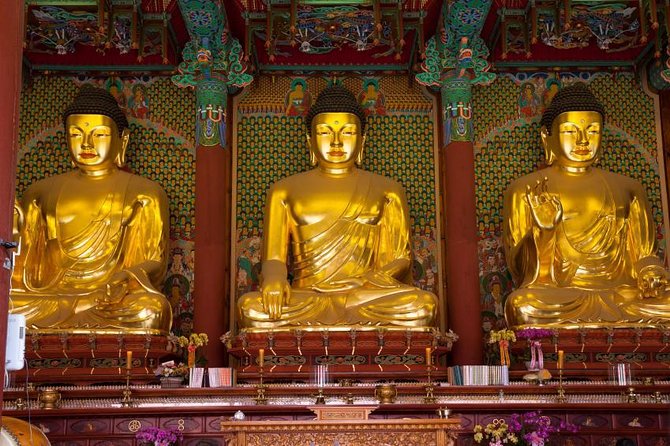
- Jogyesa Temple offers a living religious setting, not just another historic building to photograph.
- The tour includes hotel pickup but not hotel drop-off, with the advertised end near City Hall.
- A ginseng shopping center is part of the route, and some visitors found the sales presentation uncomfortable.
- Groups can include up to 20 people, and moderate walking is involved.
Why this half-day route works in Seoul
Seoul can feel enormous when you first arrive. Its modern shopping districts, royal compounds, temples, government buildings, and old residential areas are spread across a large city. This tour gives you a simple cultural framework in one morning: royal Korea at Gyeongbokgung, domestic life at the Folk Museum, and present-day Buddhism at Jogyesa.
That combination is the tour’s real strength. You are not seeing three versions of the same attraction. Instead, each stop answers a different question. How did the royal family live? How did ordinary Koreans work and celebrate? What role does Buddhism still play in the capital?
The tour begins around 8:30 am with pickup at your Seoul hotel. You travel in an air-conditioned vehicle, which saves time and gives your feet a break between stops. A local guide accompanies the group and explains the sites in English.
This arrangement is convenient, but convenience comes with a tradeoff. You are following a fixed schedule, and the vehicle must keep moving. If you prefer lingering in palace courtyards, reading every museum label, or photographing temple details at your own pace, you may find the morning too compressed.
More Gyeongbokgung visits:
- Seoul: Gyeongbok Palace, Bukchon Village, and Gwangjang Tour
★ 4.9 · 2,321 reviews - Best Seoul City Tour (Gyeongbokgung Palace,Insadong,Namsan Tower)
★ 5.0 · 1,647 reviews - Seoul City Sightseeing Tour Including Gyeongbokgung Palace, N Seoul Tower, and Namsangol Hanok Village
★ 5.0 · 1,423 reviews
Passing the Blue House on the way downtown
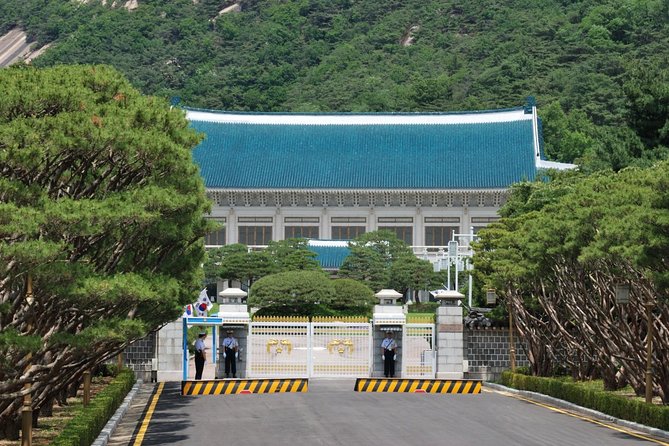
One of the first sights is the Blue House, or Cheongwadae, formerly the executive office and residence of South Korea’s president. The stop is described as a pass-by rather than a full visit, so treat it as a useful landmark and a bit of context rather than a major attraction on the schedule.
This short moment helps place the tour in modern Seoul. Gyeongbokgung represents the Joseon royal court, while the Blue House points to the country’s present government. You will not spend time touring the building, but your guide can use it to connect old political power with the modern state.
Because it is viewed from the vehicle, keep your expectations modest. The value is in the explanation and the route, not in a long photo stop.
Gyeongbokgung Palace: the morning’s main event
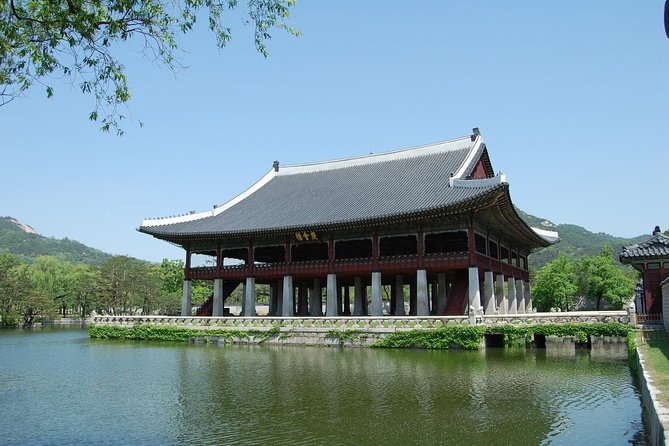
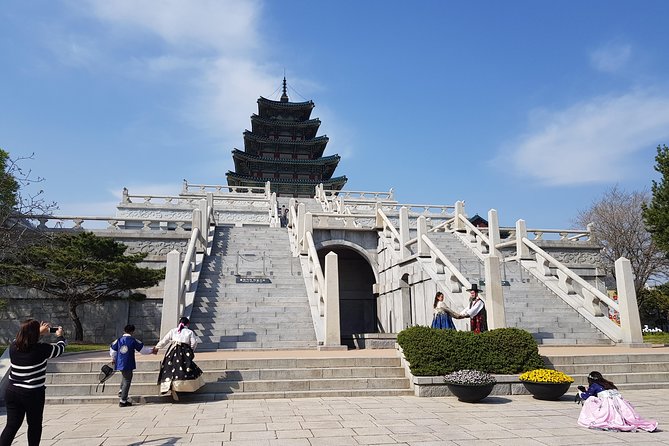
Gyeongbokgung was the primary residence of the Joseon royal family and is the largest of Seoul’s Five Grand Palaces. It is also the centerpiece of the excursion, with about one hour allotted and admission included.
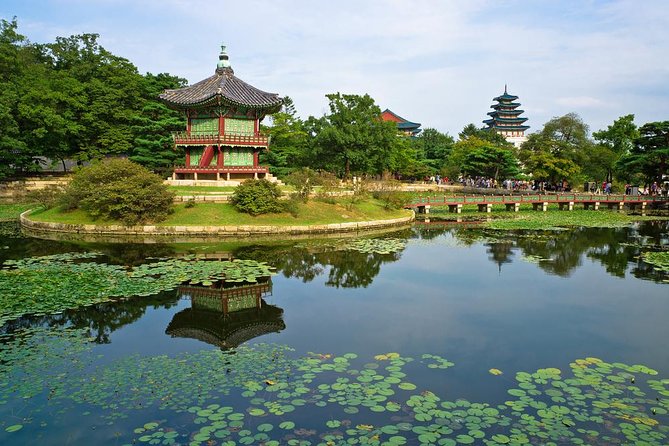
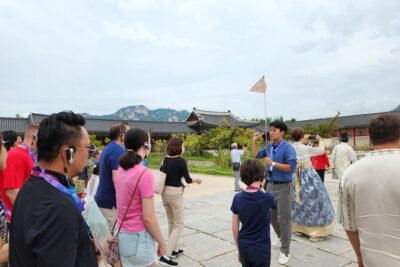
You enter the palace compound on foot and follow your guide through the royal setting. The grounds contain broad courtyards, formal buildings, gates, gardens, and architectural details that are easier to understand with historical context. Without a guide, you can certainly walk through and take pictures, but it is harder to grasp how the palace functioned as a center of government, ceremony, and royal life.
The guide’s storytelling matters most here. AJ, Katie, Grace, Chloe, and other guides have been praised for making royal life easier to picture, explaining details guests might otherwise pass without noticing, and keeping the group together. Your assigned guide may be someone else, but the strongest reports consistently highlight engaging explanations rather than simply pointing out buildings.
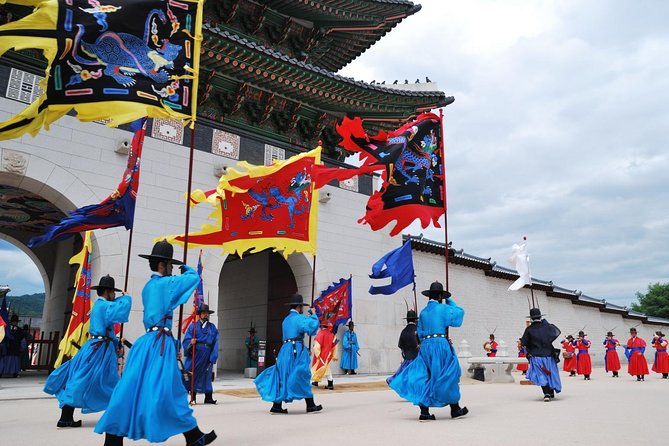
The timing can work in your favor if the group reaches the front gate in time for the changing of the guard. One account describes the guide beginning at the back of the palace and working toward the front so the group could see the ceremony. That approach gives you a better chance of catching a scheduled highlight, though the exact order may change.
The palace hour is not long. You will get an introduction and a useful walk through the compound, but you should not expect every corner, garden, or interior space. If Gyeongbokgung is your main reason for visiting Seoul, plan a separate return visit so you can explore more slowly.
Wear comfortable shoes. The tour involves a moderate amount of walking, and palace courtyards can require extended time on foot. The pace is manageable for most people, but the schedule leaves little room for wandering away from the group.
The National Folk Museum and everyday Korean life
The National Folk Museum of Korea is located inside the Gyeongbokgung compound, so visiting it does not require another long transfer. About 20 minutes are allotted here, with admission included.
This stop changes the focus from royal ceremony to ordinary life. The museum presents customs and daily routines from ancient times through the period of rapid modernization. Your guide leads you through the displays and explains how Korean people lived, worked, marked important occasions, and maintained traditions.
Twenty minutes is enough for an introduction, not a full museum visit. You may see selected displays with your guide, but you will not have time to study every exhibit. That is still useful because the museum adds social context to the palace. The royal court can otherwise make old Korea seem like a world belonging only to kings and officials.
I would pay close attention to the guide here. This is the section where a good explanation can make a short visit worthwhile. Without context, museum objects can blur together. With a clear guide, they become clues to family life, work, customs, and change.
If you want a long museum session, you will need to return independently. The tour’s purpose is to give you a foundation before moving on.
More palace visits:
- Small-Group Royal Palace and Seoul City Tour (hotel pick-up)
★ 5.0 · 1,474 reviews - Seoul: Gyeongbok Palace, Bukchon Village, and Gwangjang Tour
★ 5.0 · 1,044 reviews - Seoul Highlights: Gyeongbok Palace, Insadong & N Seoul Tower
★ 4.7 · 726 reviews - Seoul: Hanbok Rental with Gyeongbokgung Palace Entry
★ 4.6 · 611 reviews
Jogyesa Temple: a living part of Seoul
Jogyesa Temple is the leading temple for Zen Buddhism in Korea and provides the tour’s most direct look at an active religious tradition. The visit lasts about 20 minutes, so again, this is an introduction rather than an extended temple study.
The temple is valuable because it is not presented only as an old monument. It remains connected to worship and Buddhist practice. Depending on the timing, you might see people praying or a service taking place. One especially memorable account describes arriving while a prayer leader was present and people were participating.
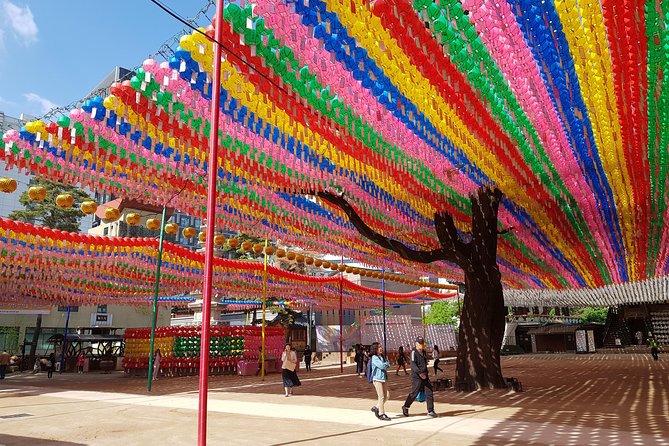
That possibility gives Jogyesa a different feel from Gyeongbokgung. The palace asks you to imagine the Joseon court. The temple lets you observe a tradition that continues in modern Seoul. Floral offerings can also make the temple grounds especially colorful.
Your guide explains Buddhism’s role during the Joseon Dynasty and gives you a way to read the setting respectfully. This matters because a brief temple visit can otherwise become a quick photograph with little understanding.
The schedule is tight here, and the order may vary. One person found that visiting the temple first left too little time for the palace and made the rest of the morning feel rushed. The operator may adjust the sequence to manage opening times, ceremonies, or the changing of the guard, but you should understand that the published route is not always followed in the same order.
The ginseng center: the important caveat
The tour includes a 30-minute stop at a ginseng center. It is described as a shopping visit, and this is the part most likely to affect your decision.
You may learn something about Korean ginseng and see products associated with it. But the stop is also commercial. Several people found the sales presentation too forceful, and one described the hour spent reaching the center as a poor use of limited sightseeing time. Another felt the visit was interesting but not worthwhile because it felt like a sales pitch throughout.
This is not a minor footnote. Thirty minutes is a substantial portion of a 3.5-hour tour. It reduces the amount of time available at the palace, museum, and temple, even if the overall route remains useful.
If you are comfortable sitting through a retail presentation and simply declining to buy, the stop may not trouble you. If you strongly dislike shopping detours, choose a tour that does not include one. I would not book this excursion expecting a pure sightseeing morning. The ginseng-center visit is part of the package.
Ending near Seoul City Hall
After the shopping stop, the vehicle takes you toward Seoul City Hall. Hotel drop-off is not included, so you should plan to continue your day from the City Hall area rather than expecting a ride back to your accommodation.
This ending can work well. You are left in a central part of Seoul with access to other city sights, though the tour details do not specify additional visits or onward transport. The important point is to keep your afternoon flexible and know that you will be making your own way after the final stop.
The itinerary lists Seoul City Hall for about 30 minutes, but the practical purpose appears to be the transfer and final drop-off after the ginseng-center visit. Do not expect a dedicated guided City Hall tour unless your guide says otherwise.
Guides make the difference
The strongest element of this experience is the guide. Names associated with particularly positive tours include AJ, Katie, Chloe, Grace, Lizzy, Jun, Charles, Eden, Rebecca, David, Sadie, and Yeoni. Guide assignments can change, so no particular person is guaranteed, but the repeated strengths are clear: history explained in plain English, a warm manner, help with photographs, and careful attention to the group.
AJ was praised for making royal life understandable at Gyeongbokgung and giving meaning to Jogyesa’s quiet beauty. Katie was noted for punctuality, organization, good energy, photo help, and suggestions for places to see after the tour. Rebecca kept the mood pleasant even in heavy rain, while Lizzy was described as kind, funny, and well informed.
The less positive experiences usually involve the schedule or the depth of explanation rather than the guide’s attitude. One person felt the tour offered little more information than visiting independently. That is a fair warning: a group tour is only as useful as the commentary you receive on the day.
If you value historical storytelling, stay close enough to hear the guide and ask questions when the group pauses. If you mainly want admission and transportation, you may find the price harder to justify.
What the $40 price includes
At $40 per person, the tour offers hotel pickup, a local guide, air-conditioned transportation, and admission fees. Food and drinks are not included, and there is no hotel drop-off.
The value depends on how you use the service. Admission to the major cultural sites is included, and you avoid the work of planning transport between Gyeongbokgung, Jogyesa Temple, the museum, and the final drop-off. For a first morning in Seoul, that can be worth paying for, especially if you want background information instead of simply entering the sites alone.
The price is less attractive if you dislike fixed routes or can easily use Seoul’s public transport. One critical experience felt the independent option would have been much cheaper and nearly as informative. That criticism is most persuasive for confident independent visitors who already know where they want to go.
The tour can also save time, although the ginseng stop takes some of that time back. You are paying for structure, a guide, hotel pickup, and site admission, not just entry to the palace.
Pace, group size, and practical preparation
The maximum group size is 20 people. That is large enough for the guide to need careful head counts, but small enough to remain workable if everyone stays together. Several accounts praised guides for managing the group, helping with photos, and making sure nobody was left behind.
Expect moderate walking and a fast morning. Comfortable walking shoes are a sensible choice. Bring water if you like, since food and drinks are not included, and keep your belongings manageable while moving through the palace and temple areas.
Hotel pickup is offered in the morning, with the stated start time at 8:30 am. Confirmation is provided at booking, and a mobile ticket is available. The tour is suitable for most people, but the combination of walking and a tight schedule may not suit anyone who needs frequent, long breaks.
Free cancellation is available up to 24 hours before the start time for a full refund. Cancellations or changes made less than 24 hours before the experience are not accepted for a refund.
Who should book this Seoul tour?
I would recommend it to a first-time visitor who wants a guided introduction to Seoul’s royal, folk, and Buddhist traditions in one morning. It is especially useful if hotel pickup matters, your time is limited, or you prefer having an English-speaking guide explain what you are seeing.
It also works well as part of a broader history plan. Pairing it with a visit to the War Memorial of Korea and a DMZ tour would give you a wider sense of Korea’s royal past, modern division, and national identity.
I would hesitate if you have already visited Gyeongbokgung, dislike shopping stops, or want a slow palace morning. The 30-minute ginseng-center visit is the clear weakness, and the compact schedule means you get a taste of each site rather than a full visit.
Should you book it?
Book this tour if you want efficient cultural orientation, hotel pickup, included admissions, and a guide who can connect palace buildings, folk traditions, and Buddhism. The strongest guides make the short format feel worthwhile.
Skip it if the ginseng-center stop would spoil your morning or if you are happy using public transport and reading about the sites independently. At $40, the tour offers fair value for convenience and commentary, but it is not the best choice for deep exploration. Think of it as a well-organized first chapter of Seoul, with one commercial detour you should accept before booking.
FAQ
How long does the Korean Palace and Temple Tour last?
The tour lasts approximately 3 hours and 30 minutes.
What time does the tour start?
The stated start time is 8:30 am.
Does the tour offer hotel pickup?
Yes. Morning pickup from your Seoul hotel is included.
Is hotel drop-off included?
No. Hotel drop-off is not included. The tour ends after transport toward Seoul City Hall.
Which palace does the tour visit?
It visits Gyeongbokgung Palace, the largest of Seoul’s Five Grand Palaces and the primary residence of the Joseon royal family.
Is admission to Gyeongbokgung Palace included?
Yes. Admission fees are included in the tour.
Does the tour visit a museum?
Yes. It visits the National Folk Museum of Korea inside the Gyeongbokgung compound. About 20 minutes are scheduled there.
Which temple does the tour visit?
It visits Jogyesa Temple, a leading temple for Zen Buddhism in Korea. About 20 minutes are scheduled for the visit.
Is a shopping stop included?
Yes. The route includes a 30-minute visit to a ginseng center. Food and drinks are not included.
How large can the group be?
The maximum group size is 20 travelers.
Is much walking involved?
Yes. A moderate amount of walking is involved, so comfortable walking shoes are recommended.
Can I cancel for a full refund?
Yes, if you cancel at least 24 hours before the experience start time. Cancellations or changes made less than 24 hours beforehand are not accepted for a refund.
More Temple Tours in Seoul
- Seoul: Mt Seorak + Naksansa Temple or Nami Island Group Tour
★ 4.7 · 422 reviews - Best Things to Do – Half Day Seoul Trip (Seoul Palace & Temple)
★ 5.0 · 190 reviews - Mount Seorak and Naksansa Temple One Day Tour from Seoul
★ 4.5 · 167 reviews - Day Tour of Suwon Hwaseong Fortress Starfield Waujeongsa Temple
★ 5.0 · 61 reviews
Just added around Seoul
- Incheon Airport Private Transfer between Seoul City★ 4.0 · 4 reviews
- Seoul’s Stars: Open Mic with Local & International Talent★ 4.8 · 4 reviews
- Samaksan Cable Car and Nami Island Day Escape with Railbike★ 4.0 · 4 reviews
- DMZ 2nd Tunnel and Cheorwon Peace Observatory with Admission★ 5.0 · 4 reviews
- Nami & Maple Road & Theatre des Lumieres Day Tour from Seoul★ 4.8 · 4 reviews
- Hire Photographer, Professional Photo Shoot – Seoul★ 5.0 · 4 reviews
- [KoreaByLocal] Authentic Seoul Night Walk and Chicken & Beer★ 5.0 · 4 reviews
- Play Gayageum in Hanbok Cultural Experience in Bukchon★ 5.0 · 4 reviews
Gyeongbokgung Palace, compared.
Gyeongbok Palace, Bukchon Village, and Gwangjang Tour
Read our review →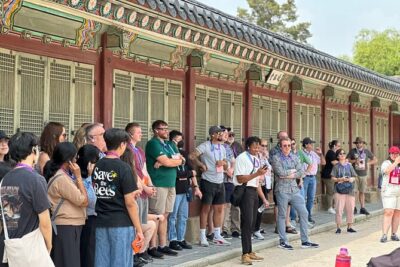
Best Seoul City Tour (Gyeongbokgung Palace,Insadong,Namsan Tower)
Read our review →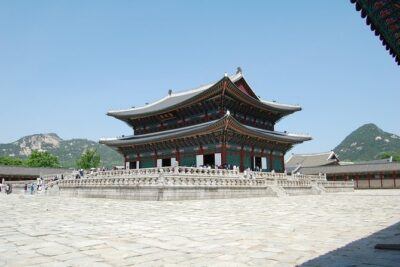
Seoul City Sightseeing Tour Including Gyeongbokgung Palace, N Seoul Tower, and Namsangol Hanok Village
Read our review →Gyeongbok Palace, Bukchon Village, and Gwangjang Tour
Read our review →
Seoul Highlights: Gyeongbok Palace, Insadong & N Seoul Tower
Read our review →
Seoul City Half Day Tour-Gyeongbok Palace Guard Changing Ceremony
Read our review →
Browse the lists this tour appears in