
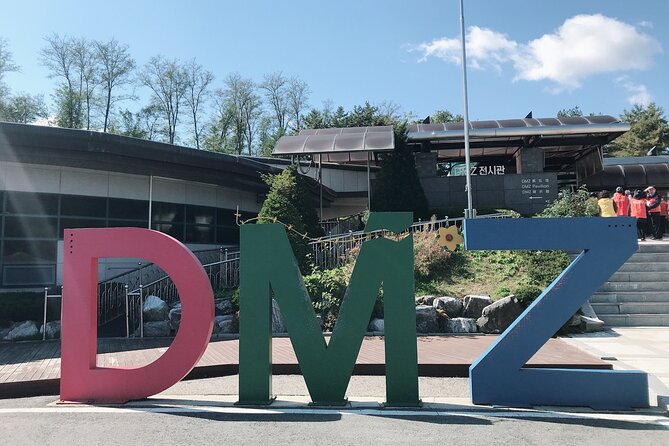
Reviewed · DMZ & JSA TOURS
Half-Day South Korea DMZ Small-Group Tour from Seoul
The most striking part of this half-day outing is the chance to stand close to one of the world’s most heavily guarded borders. From Dora Observatory, you may look across at North Korea, while the 3rd Tunnel gives you a physical sense of how close the conflict once came to Seoul.
I like the mix of history and firsthand sights, especially the Freedom Bridge and the walk through the tunnel. I also like the small-group format, English commentary, and hotel-free transport from central Seoul. The main caution is that DMZ access and views can change with weather and current political conditions, and the original passport rule is absolute.
In This Review
- Key points
- Why the DMZ makes such a strong half-day trip
- Imjingak Pyeonghoa-Nuri Park and the meaning of separation
- Freedom Bridge, a simple structure with a powerful story
- Walking through the 3rd Tunnel near Seoul
- Dora Observatory and views toward North Korea
- The ginseng museum and duty-free shop
- What the $500 group price really means
- Why the guide can make or break the day
- Timing, documents, and practical planning
- Who should book this DMZ tour
- Should you book it?
- FAQ
- How long does the DMZ tour last?
- Where does the tour start?
- Is an original passport required?
- What places are visited?
- Is lunch included?
- How many people can join?
- What happens if bad weather cancels the tour?
Key points
- Original passport required: You cannot enter the DMZ with a photocopy or passport photo.
- A compact six-and-a-half-hour route: The schedule covers Imjingak, Freedom Bridge, the 3rd Tunnel, Dora Observatory, and two shopping-oriented stops.
- North Korea from Dora Observatory: You may see Gaeseong, Songaksan, and other locations across the border.
- A physically active tunnel visit: The 3rd Tunnel is about 2 meters wide and 2 meters high, so expect a close, sloping walk.
- Small-group transport: The tour allows up to 10 people, while the listed price is $500 per group of up to four.
- Guide quality matters: Henry Park is praised for clear explanations, polite service, careful driving, time management, and useful Seoul food advice.
Why the DMZ makes such a strong half-day trip
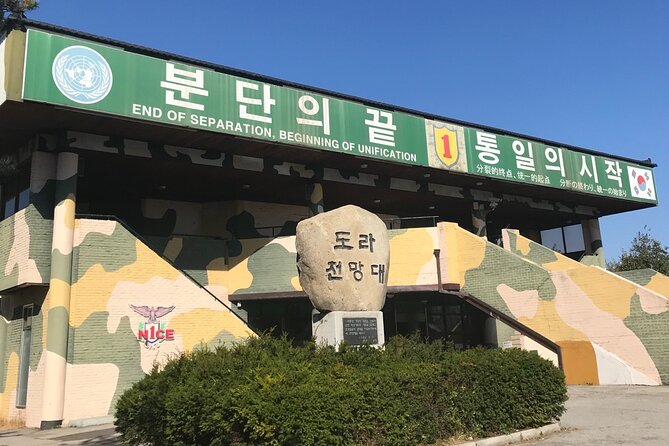
The Korean Demilitarized Zone is not a normal sightseeing stop. It is a place shaped by an unfinished war, a divided peninsula, and the hope of reunification. You are not simply looking at a border on a map. You are visiting memorials, a former return route, a military tunnel, and an observation point facing North Korea.
That gives this tour more weight than a standard city excursion. You spend much of the day moving through quiet places, but the quiet is part of the experience. At Imjingak, monuments and memorials reflect the human cost of separation. At the 3rd Tunnel, the story becomes practical and underground. At Dora Observatory, the division becomes visible across the countryside.
I like that the tour does not try to turn the DMZ into a theme park. The stops are brief, and the schedule is controlled, but each one adds a different piece to the story. You get enough time to understand the setting without giving up an entire day in Seoul.
The experience begins at 8:00 am in Seoul and lasts about 6 hours and 30 minutes. Transport and an English-speaking guide are included, so you do not need to work out the route to the border on your own.
More ways to reach the DMZ:
- Best DMZ Tour Korea from Seoul (Red Suspension Bridge Optional)
★ 5.0 · 41,422 reviews - DMZ Tour: 3rd Tunnel, Option(Suspension Bridge, Boat) from Seoul
★ 5.0 · 21,373 reviews - DMZ tour south Korea from Seoul (NK experience hall, defector)
★ 5.0 · 20,599 reviews
Imjingak Pyeonghoa-Nuri Park and the meaning of separation
Your first major stop is Imjingak Pyeonghoa-Nuri Park, about 7 kilometers from the Military Demarcation Line. The park was created in 1972 with the hope that reunification might one day be possible.
You can expect statues, monuments, and memorials connected with the Korean War. This is a good opening stop because it gives the rest of the day an emotional and historical frame. Before you look toward North Korea or enter a tunnel, you see how the division has affected families and national memory.
The scheduled visit lasts about 45 minutes, with admission included. That is enough time to walk around and listen to your guide, though it is not a long, quiet museum visit. I would pay attention to the explanations here, since the monuments may mean little if you rush past them without context.
The park is also a useful reminder that the DMZ is not only about military hardware. It is connected to ordinary people who were separated from homes, relatives, and familiar places. That human side is easy to miss if you focus only on photographs and lookout points.
Freedom Bridge, a simple structure with a powerful story
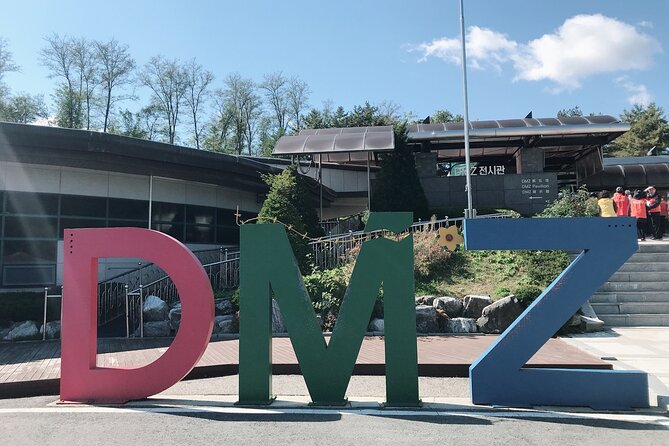
The next stop is Freedom Bridge in Paju. The bridge itself is not remarkable for its design. It was built for temporary use, and its importance comes from what happened there, not from its architecture.
South Koreans returned through the bridge, giving it its name. That detail makes the stop worthwhile. You are looking at a modest crossing that became part of the story of repatriation and separation.
The scheduled time is about 20 minutes, and admission is free. That short visit makes sense. You will not need a long stop to understand the bridge, but you will want your guide to explain its role before you move on.
I like this kind of stop because it resists the usual sightseeing formula. There is no grand building to admire. Instead, the value comes from the connection between a plain structure and a major moment in Korean history.
Walking through the 3rd Tunnel near Seoul
The 3rd Tunnel is likely to be the most physical part of the day. South Korean forces discovered it in 1978. The tunnel measures about 1,635 meters long, 2 meters wide, and 2 meters high, and it is about 52 kilometers from Seoul.
The dimensions tell you what to expect better than any photograph. This is a confined passage, not a broad underground attraction. You will walk through a space roughly 2 meters high and 2 meters wide, so taller people may find it uncomfortable. The scheduled visit is 45 minutes.
The tunnel was believed to have been intended for a large military movement. The provided information estimates that about 30,000 soldiers could have passed through it. That figure helps explain why the tunnel matters: it was not a minor engineering project, but part of a serious military plan.
I like the tunnel because it turns an abstract political conflict into something you can feel in your shoulders and footsteps. The border is no longer a distant line. It becomes a narrow passage cut through rock.
You should also know that the tunnel is not simply a walk with no background. Your English-speaking guide can explain how it was found and why it matters. Listen carefully before entering, since the physical experience is much more meaningful once you understand its purpose.
Wear sensible shoes and be ready for a walk rather than a passive viewing stop. The information does not specify the exact surface or slope, so I would not assume the route will feel effortless. The important point is that the tunnel is compact, enclosed, and more demanding than the other stops.
A few more Seoul trips worth weighing up
- Half-Day DMZ Tour Led by a Retired Military Officer from Seoul
★ 5.0 · 1,774 reviews - Seoul: Half-Day DMZ Tour Led by a Retired Military Officer
★ 4.9 · 1,399 reviews - Korean Folk Village Half-day Guided Tour from Seoul
★ 5.0 · 13 reviews
Dora Observatory and views toward North Korea
Dora Observatory is close to the 3rd Tunnel and offers the most direct view toward North Korea. It first opened to the public in 1987, and from the viewing area you may see places including Gaeseong, Songaksan, and the Kim Il-Sung statue.
This is the moment most people imagine when they book a DMZ tour. You are looking across the border toward North Korean territory, not just reading about it. The view can make the division feel surprisingly close, even though access and visibility depend on current conditions.
The stop lasts about 45 minutes, and admission is included. That gives you time to listen, look carefully, and understand what you are seeing. Do not expect a normal city panorama. The appeal is not famous architecture or a dramatic skyline. It is the unusual fact that you are viewing a neighboring country from a controlled border area.
Current political conditions can affect what you are able to see and which parts of the DMZ are open. One experience associated with this tour notes that not everything expected was available because of the political situation. That is not a flaw in the guide or transport, but it is an important reality of visiting a working military border.
This is why I would book the tour for the overall story, not only for one perfect photograph. Dora Observatory can be the visual highlight, but conditions may limit the view or change the access plan.
The ginseng museum and duty-free shop
The final part of the route returns to more commercial stops. You visit a ginseng museum for about 30 minutes, where you can learn about ginseng’s history, different types, and claimed positive effects.
This stop may appeal to you if you are interested in Korean products or want to understand why ginseng has such an important place in Korean culture. It is less essential to the DMZ story, so I would treat it as an add-on rather than a central reason to book.
The schedule also includes a duty-free shop with the chance to buy luxury fashion boutiques. That can be useful if shopping is part of your Seoul plans, but it does make the ending feel less focused. After the memorials, bridge, tunnel, and observatory, a retail stop is a noticeable change of tone.
Lunch is not included. The supplied schedule does not promise a meal stop, so plan accordingly and do not assume food is part of the $500 price. Personal expenses are also excluded.
What the $500 group price really means
The listed price is $500 per group of up to four people. Split four ways, that works out to $125 per person. For a couple, the effective cost is $250 each, which is much harder to justify than the four-person rate.
All transport, entrance fees, taxes, and English guide service are included. That matters at the DMZ because access is controlled, the route is outside Seoul, and the day involves several separate stops. You are paying for a planned border visit rather than piecing together transport and admissions yourself.
The group size is listed as a maximum of 10 people, while the price is set for up to four. Confirm the final group arrangement when your booking is confirmed, especially if you are comparing this with a private tour. A smaller group can make it easier to hear the guide and ask questions, but the price offers its clearest value when four people share it.
The tour is often booked about six days ahead, but DMZ entrance tickets are limited and sold on a first-come, first-served basis. Booking about one month ahead is suggested. Last-minute bookings may be possible, but the schedule can be random. If the DMZ is a priority, do not leave it until the final day of your Seoul stay.
Why the guide can make or break the day
An English-speaking guide is included, but the quality of the commentary matters greatly here. The sites are not self-explanatory. A bridge, memorial, or distant view needs context, and the tunnel needs a clear explanation of its military purpose.
Henry Park is the guide most closely associated with the praise attached to this experience. He is described as friendly, professional, organized, and willing to answer questions. Specific strengths include careful driving, good time management, broad Korean cultural and food advice, and a relaxed manner.
That last point is useful beyond the DMZ. Some people who spent more than one day with Henry also valued his help around Seoul, including recommendations for food and visits to places such as Gyeongbokgung, Bukchon, and Insadong. You should not assume every departure will have Henry, but if he is assigned to your booking, you can expect a guide who does more than simply point out landmarks.
The best use of your guide is to ask direct questions. Ask about the Korean War, the tunnel’s discovery, what you can see from Dora Observatory, and how current conditions affect the route. This is a serious subject, but a good guide can keep the day clear, personal, and easy to follow.
Timing, documents, and practical planning
The meeting point is in Seoul, with the listed end point at Seoul City Hall, 110 Sejong-daero in Jung District. City Hall is served by subway Line 1. The listed start time is 8:00 am.
Your original passport is mandatory for DMZ entry. A copy, photograph, or scan will not be accepted. This is the single most important practical rule, and forgetting it could prevent you from joining the border portion of the tour.
Confirmation is sent within 48 hours of booking, subject to availability. Since entrance tickets are limited, do not treat a payment attempt as proof that the visit is fully secured until confirmation arrives.
The tour requires good weather. If poor weather causes cancellation, you are offered another date or a full refund. In contrast, the experience itself is non-refundable and cannot be changed for personal reasons, so choose your date carefully.
Most people can participate, but the 3rd Tunnel deserves special attention. Its narrow dimensions and 45-minute visit mean that you should be comfortable with an enclosed walk. The supplied information does not give a specific accessibility rating, so contact the operator before booking if stairs, slopes, or confined spaces are a concern.
Who should book this DMZ tour
I would recommend this outing if you want the DMZ explained rather than simply photographed. It suits first-time visitors to Seoul who want a focused half-day trip, history-minded people, and anyone curious about the human effect of Korea’s division.
It is also a practical choice if you value door-to-door transport and an English-speaking guide. The route is structured, the major stops are covered, and you return to Seoul rather than giving up a full day.
I would hesitate if your only goal is a guaranteed view into North Korea. Political conditions can change the route, and visibility is not promised. I would also think twice if you dislike confined spaces, shopping stops, or paying a high group price when fewer than four people are sharing it.
Should you book it?
Book this tour if the 3rd Tunnel, Freedom Bridge, and Dora Observatory all interest you. The real value is the combination: memorials explain the past, the tunnel shows the military threat, and the observatory gives you a direct view toward the divided north.
The $500 price is reasonable for four people because transport, taxes, fees, and guide service are included. It is less attractive for one or two people, so compare the cost with other DMZ options before paying.
Bring your original passport, reserve well ahead, and keep your expectations flexible. If you do that, this is a useful, sobering, and efficient way to understand one of Korea’s defining places.
FAQ
How long does the DMZ tour last?
The experience lasts approximately 6 hours and 30 minutes.
Where does the tour start?
The listed start point is in Seoul at 8:00 am. The end point is Seoul City Hall at 110 Sejong-daero in Jung District, near City Hall Station on Subway Line 1.
Is an original passport required?
Yes. You must bring your original passport to enter the DMZ. A copy or photograph of your passport is not accepted.
What places are visited?
The route includes Imjingak Pyeonghoa-Nuri Park, Freedom Bridge, the 3rd Tunnel, Dora Observatory, a ginseng museum, and a duty-free shop.
Is lunch included?
No. Lunch is not included in the tour price.
How many people can join?
The tour has a maximum of 10 travelers. The listed price is $500 per group for up to four people.
What happens if bad weather cancels the tour?
If poor weather causes cancellation, you will be offered a different date or a full refund.
Just added around Seoul
- Incheon Airport Private Transfer between Seoul City★ 4.0 · 4 reviews
- Seoul’s Stars: Open Mic with Local & International Talent★ 4.8 · 4 reviews
- Samaksan Cable Car and Nami Island Day Escape with Railbike★ 4.0 · 4 reviews
- DMZ 2nd Tunnel and Cheorwon Peace Observatory with Admission★ 5.0 · 4 reviews
- Nami & Maple Road & Theatre des Lumieres Day Tour from Seoul★ 4.8 · 4 reviews
- Hire Photographer, Professional Photo Shoot – Seoul★ 5.0 · 4 reviews
- [KoreaByLocal] Authentic Seoul Night Walk and Chicken & Beer★ 5.0 · 4 reviews
- Play Gayageum in Hanbok Cultural Experience in Bukchon★ 5.0 · 4 reviews
DMZ & JSA Tours, compared.
Best DMZ Tour Korea from Seoul (Red Suspension Bridge Optional)
Read our review →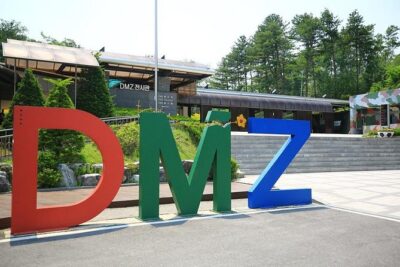
DMZ Tour: 3rd Tunnel, Option(Suspension Bridge, Boat) from Seoul
Read our review →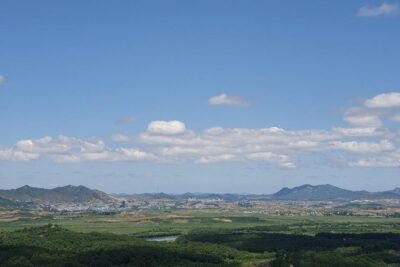
DMZ tour south Korea from Seoul (NK experience hall, defector)
Read our review →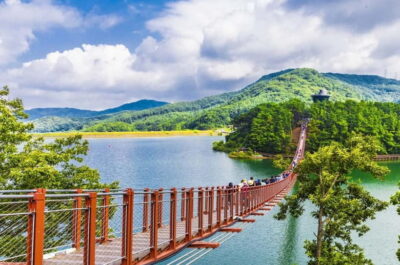
DMZ Insider Tour: 3rd Tunnel, NK Defector Meet & Red Bridge
Read our review →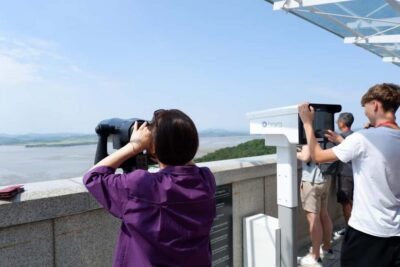
Thrilling Korean DMZ 3rd Tunnel Tour from Seoul + Red Bridge Rush
Read our review →
DMZ Past and Present: Korean Demilitarized Zone Tour from Seoul
Read our review →
Ultimate Korea DMZ Tour from Seoul (Gondola & Suspension Bridge)
Read our review →Browse the lists this tour appears in