
Reviewed · WALKING TOURS
(Closed) Korea’s White House Walking Tour Blue House
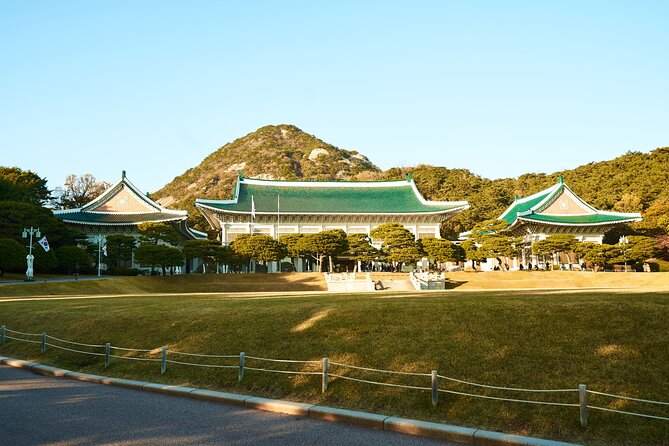
Korea’s Blue House, or Cheong Wa Dae, was once one of Seoul’s most restricted addresses. For more than 70 years, the presidential home and office were closed to ordinary people. This small-group walk offered a rare look at the rooms, courtyards, reception halls, and press center tied to modern Korean government. The experience is now listed as closed, so this review is useful as a record of what the tour covered and what to look for if access returns.
I like the nine-person limit, which gave the guide room to answer questions rather than herd a crowd. I also like the range of buildings: this was not only a look at the blue-roofed main office, but also a presidential residence, a foreign dignitary hall, traditional pavilions, and the former press center. The main drawback was the $199 price for about two and a half hours, especially since admission itself was included but listed as free. The value depended heavily on your interest in Korean politics and on the quality of the guide.
In This Review
- Key points to know
- Why the Blue House mattered
- Meeting at Gyeongbokgung Station at 10:00 am
- Yeongbingwan, where foreign leaders were welcomed
- The main Blue House and its blue roof
- The former presidential office
- The presidential residence and family quarters
- Chimnyugak and the quieter traditional side
- Sangchunjae and traditional meetings
- Chunchugwan, the former press center
- Jungho’s role in the experience
- Is $199 good value?
- Who should choose this walk?
- Final verdict: book only if access returns
- FAQ
- Is this Blue House walking tour still available?
- Where did the tour begin?
- What time did the tour start?
- How long did the experience last?
- How many people could join?
- Who guided the tour?
- What buildings were included?
- Was transportation included?
- What was the cancellation policy?
Key points to know
- The Blue House was once off-limits: It served as the presidential residence and office for more than seven decades.
- Jungho was the main guide: His clear English, storytelling, and personal attention were repeatedly praised.
- The group was capped at nine people: That is a useful size for questions and close explanation.
- The route covered seven important locations: You saw official reception spaces, presidential offices, private living quarters, traditional buildings, and the press center.
- The tour began at Gyeongbokgung Station: It started at 10:00 am and ended back at the meeting point.
- Access is no longer available through this experience: The tour was marketed before public access ended in June, so check current Blue House arrangements before planning around it.
Why the Blue House mattered
The Blue House was more than a photogenic compound with a famous roof. It was the working center of South Korea’s presidency and the private home of the president and family. That mix of public power and domestic life gave the tour its unusual character.
For decades, access was limited to presidents’ invited guests. World leaders, Olympic medalists, K-pop performers such as BTS, and senior business figures from companies including Samsung and LG were among the few people allowed inside. For you, that old restriction explains why the visit felt more meaningful than a standard government-building stop.
The Blue House also offered a compact way to connect architecture with politics. Each building had a different job. One welcomed foreign leaders. Another housed presidential work. A separate residence protected family privacy. The press center connected the presidency with the public.
The tour did not ask you to study Korean politics in advance. A strong guide could explain what happened in each room and why the setting mattered. That was where the experience earned its price, or failed to.
A few more Seoul trips worth weighing up
- Seoul moonlight walking tour with local historian
★ 5.0 · 940 reviews - Seoul: Nighttime Hidden Gems Walking Tour
★ 5.0 · 775 reviews - Seoul: Evening Dark History, Folklore & Ghost Story Walking Tour
★ 5.0 · 593 reviews
Meeting at Gyeongbokgung Station at 10:00 am
The tour started at Gyeongbokgung Station in Seoul at 10:00 am. Hotel pickup and drop-off were not included, so you needed to reach the station on your own and return there at the end.
That arrangement worked well for anyone already visiting the palace area, but it added a small planning task. You should allow enough time to find the exact meeting place and arrive before the start. The provider sent clear meeting instructions, and Jungho was also praised for helping one participant find the metro station after the walk.
The full activity lasted about two hours and 30 minutes. The listed stops add up to roughly 85 minutes, leaving the rest for walking, transitions, introductions, and questions. That is important when setting expectations. This was not two and a half hours inside one grand building. It was a guided walk across a larger compound.
The group limit of nine was one of the strongest practical features. You could hear the guide more easily, ask about details, and keep the pace personal. Families, couples, and solo visitors who prefer a small group would likely find this more comfortable than a large city tour.
Yeongbingwan, where foreign leaders were welcomed
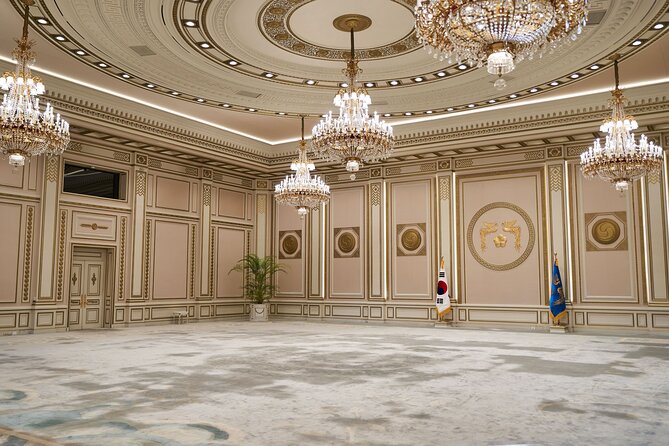
The first major stop was Cheong Wa Dae Yeongbingwan, the reception building for important foreign visitors. Presidents used it for dinners, meetings, and formal events with leaders from other countries.
This is a useful opening because it sets the tone. You began with the Blue House as a place of diplomacy, not merely as a former home. The building’s modern design also introduced the way Korean architectural ideas were blended with a formal government setting.
The stop lasted about 10 minutes. That is enough for a clear explanation and a look around, but not enough for a slow architectural study. You should expect interpretation rather than a long interior visit. The value came from understanding who was welcomed here and what sort of national events took place inside.
If you enjoy political history, this building gave the tour a strong start. If you mainly wanted elaborate rooms and extended photo time, the brief stop might feel quick.
The main Blue House and its blue roof
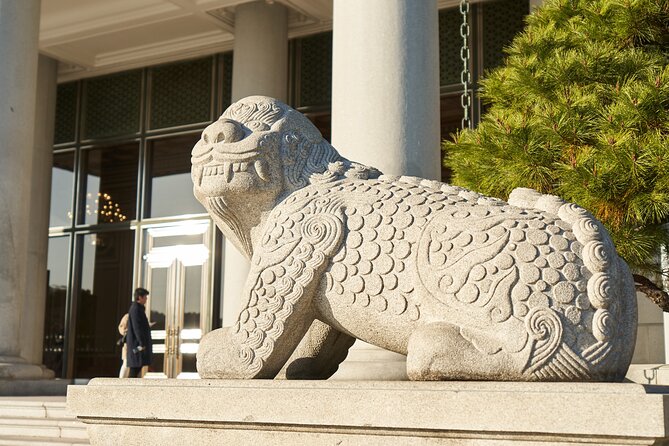
The central Blue House building was the presidential workplace. Important meetings took place here, and major decisions were made inside. Its blue roof became a familiar symbol of the Korean government.
You spent about 20 minutes at this stop. That was enough time to understand the building’s role and hear how the presidency functioned from this site. The building’s appearance also helped explain why the name Blue House became so closely tied to the office itself.
The architecture mixed modern government design with Korean elements. A guide could point out those connections in a way that a self-guided visit might not. Without that context, you would mainly see a distinctive roof and an impressive official building. With the explanation, the roof became part of Korea’s political image.
This was likely the most important photo stop, but you should not assume that the entire presidential complex could be explored at your own pace. The visit followed a set route and schedule.
A completely different kind of day, same trip:
- Best DMZ Tour Korea from Seoul (Red Suspension Bridge Optional)
★ 5.0 · 41,422 reviews - DMZ Tour: 3rd Tunnel, Option(Suspension Bridge, Boat) from Seoul
★ 5.0 · 21,373 reviews - DMZ tour south Korea from Seoul (NK experience hall, defector)
★ 5.0 · 20,599 reviews - DMZ Insider Tour: 3rd Tunnel, NK Defector Meet & Red Bridge
★ 4.9 · 15,214 reviews
The former presidential office
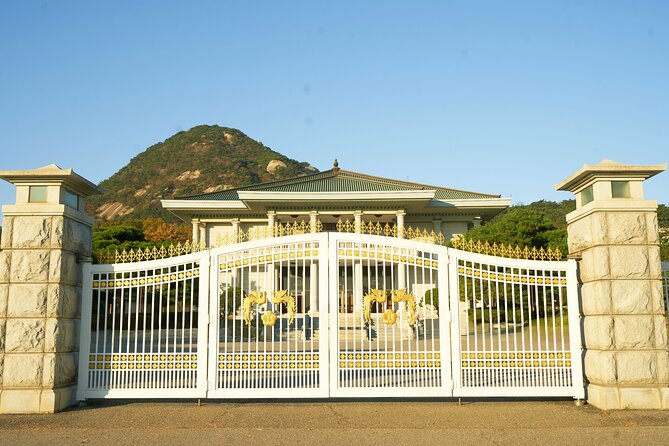
Another 20-minute stop marked the location of the older main presidential office, before the current Blue House building was constructed. Korean presidents worked there and held important meetings connected with the country’s modern development.
This location added time depth to the visit. Instead of seeing one building and treating it as the whole story, you could follow changes in the presidential workplace. The Blue House was not created all at once. Its buildings reflected different periods and different needs.
I like this part for readers who want more than a quick landmark photograph. The former office site helped connect the physical compound with the changing shape of Korean government. It also gave the guide a natural point for discussing key events in modern Korean history.
The drawback was that the old office was described as a former site, not a complete building experience. You were learning what had been there and why it mattered. If you prefer preserved rooms with furnishings, this stop may be less visually striking than the reception hall or residence.
The presidential residence and family quarters
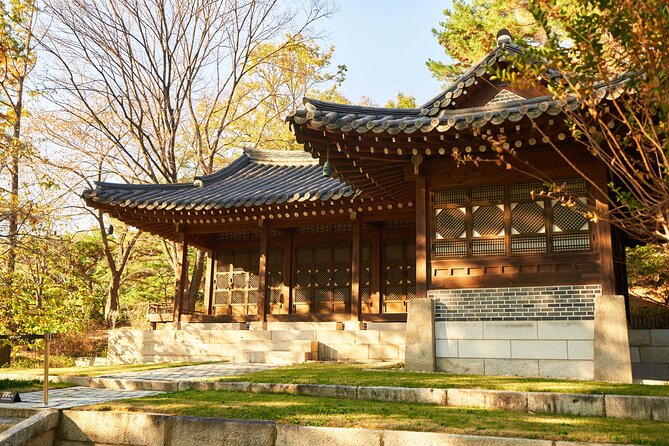
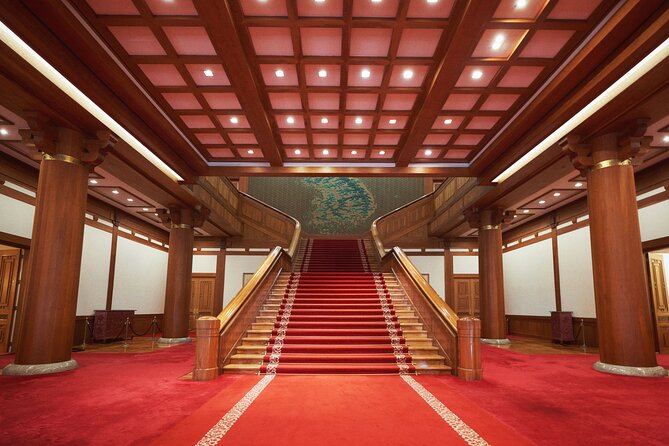
The presidential home was separate from the office. The arrangement gave the president and family a private place away from official meetings and public duties. The residence was described as quiet, tree-lined, and domestic in purpose.
The stop lasted about 10 minutes. That short visit offered an important contrast with the formal buildings earlier in the walk. The Blue House was not only a place for diplomacy, decisions, and press announcements. It was also where a family lived.
You could expect discussion of bedrooms, living areas, and the separation between public work and private life. That distinction is easy to overlook when a presidential compound is treated only as a political symbol.
The limited time was reasonable because the residence was one part of a larger route. Still, people especially interested in presidential homes should know that this was not a long house tour. The guide’s explanation carried much of the value.
Chimnyugak and the quieter traditional side
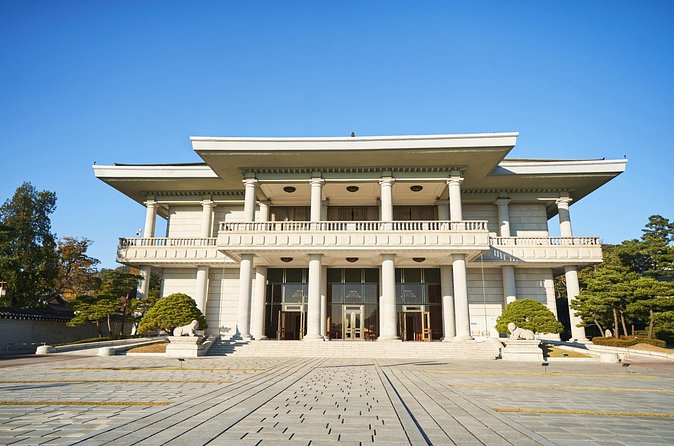
Chimnyugak House was a small traditional pavilion surrounded by trees. The guide used the stop for a short break and an explanation of its architecture and past use.
After the formal scale of government halls and offices, this quieter building changed the mood. It showed that the Blue House grounds were not uniform. Traditional Korean structures sat alongside modern official buildings, giving the compound a calmer and more domestic character.
The stop lasted about 10 minutes. You could pause, take in the setting, and listen without the pressure of a major political site. The information provided does not promise a long interior visit, so you should think of Chimnyugak as a short architectural and historical pause.
This was also a useful reminder that the Blue House was designed as a compound, not a single attraction. The walk between buildings mattered. You saw how official spaces, living quarters, and traditional pavilions shared one protected area.
Sangchunjae and traditional meetings
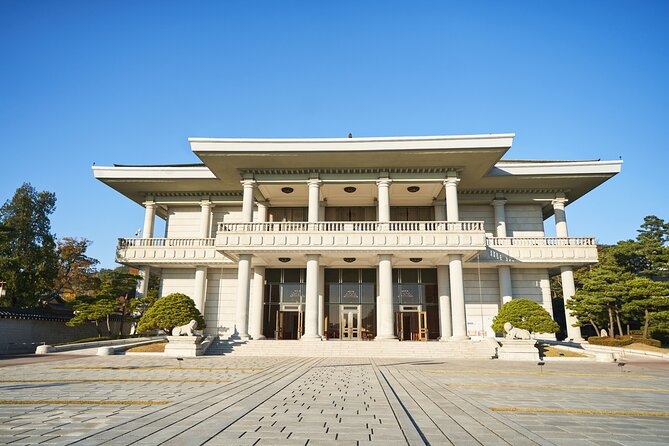
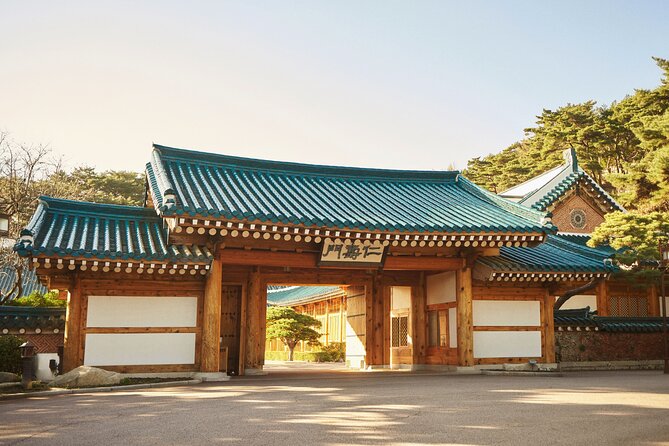
Sangchunjae was described as one of the most attractive traditional buildings on the grounds. It was used for special visitors and quiet meetings. The tour spent about 10 minutes here.
The wooden structure offered another view of Korean design within a presidential setting. Rather than treating tradition as a museum display, the Blue House used this type of building for real official purposes. That made the stop more than a decorative photo opportunity.
I would pay attention here to the guide’s explanation of function. The key point was not simply that the building looked traditional. It was that Korean architectural forms were used to shape formal meetings and national hospitality.
As with Chimnyugak, the visit was short. You had time to walk around the building and hear its story, but not to linger for an hour. The route worked best when you appreciated each stop as one piece of a larger picture.
Chunchugwan, the former press center
The final listed stop was Chunchugwan, the former press center. This was where reporters from Korea and abroad gathered for official announcements and presidential briefings.
The stop lasted about five minutes, making it the shortest part of the walk. Even so, it completed the story neatly. You moved from foreign diplomacy and presidential work to the press room where those decisions were presented to the public.
For anyone interested in how governments communicate, Chunchugwan was an important stop. It showed that the Blue House was not sealed off from the country. The press center was the point where official statements moved beyond the compound.
Five minutes is a tight window, so do not expect a full media-history lesson. The guide needed to keep the group moving, and the site functioned mainly as a final piece of context.
Jungho’s role in the experience
Jungho was the licensed English-speaking guide named in the experience details. His strengths were clear English, conversational skill, historical explanation, and personal attention.
He also used questions and conversation rather than simply reciting dates. One participant described answering quiz questions during the walk, which suggests that the tour could feel interactive instead of formal and stiff. Another received clear directions before the tour and help finding the metro afterward.
That kind of service matters at a site where the buildings alone cannot explain everything. You need someone to connect architecture, political change, private life, and public ceremony. Jungho’s strong command of English was especially useful for visitors who wanted to ask about Korea’s history rather than just take photographs.
Of course, a $199 tour places a lot of weight on the guide. If you only want access to the grounds, a paid small-group tour may not make sense. If the Blue House is a major reason for your Seoul visit, the guide’s interpretation was the central product.
Is $199 good value?
The price was $199 per person for about two and a half hours. Admission was included, but the itinerary listed the ticket cost as free. That means you were mainly paying for reserved access, the small group, and Jungho’s guiding.
At first glance, that is expensive for a short walking tour. The tour made more sense for someone who valued a rare opening of a formerly restricted presidential compound. It also suited a visitor who wanted clear English explanations and did not want to work out the political meaning of each building alone.
I would not recommend paying that amount simply because the Blue House is a famous photo stop. The route contained several brief visits, and the walk did not offer hotel transport, meals, or another major Seoul attraction. You needed a strong interest in the site to justify the cost.
The small group improved the equation. Nine people is far more manageable than a busload, and the guide had time to respond to individual questions. The 100 percent satisfaction refund promise was also part of the sales terms, though the standard cancellation rule required cancellation at least 24 hours before the start for a full refund.
Who should choose this walk?
This experience was best for you if you had already seen Seoul’s main palaces and wanted a different look at the city. It also suited anyone interested in Korean presidents, diplomacy, public communication, or the way traditional design was used in official settings.
Families could benefit from the guide’s conversational approach, especially if children enjoyed questions and quizzes. Solo visitors and couples would likely appreciate the small group and the chance to ask for clarification.
You might skip it if your Seoul schedule was tight, your budget was limited, or you mainly wanted free sightseeing. The tour lasted longer than the listed time at individual stops because of walking, but it still covered the compound in a fairly brisk sequence.
The most important point now is its status. This particular experience is marked closed. Do not build your itinerary around booking it. If Blue House access becomes available again, check the current entry rules and compare the official visit with any guided option before paying a premium.
Final verdict: book only if access returns
When it operated, this was a focused and unusual way to see Korea’s former presidential center. The best parts were the nine-person group, the broad mix of buildings, and Jungho’s ability to explain the setting in clear English. The tour offered more meaning than a quick walk past the famous blue roof.
The $199 price was hard to defend for casual sightseers, especially with no hotel transport and a total visit of about two and a half hours. It was easier to justify for a history-minded visitor who valued rare access and personal explanation.
Today, the practical answer is simple: you cannot book this closed experience as described. If a similar Blue House tour returns, I would consider it if you care about Korean political history and want a small group. If you only want an attractive Seoul landmark, save the money and choose a less costly way to see the area.
FAQ
Is this Blue House walking tour still available?
No. The experience is listed as closed. The tour information describes access before public entry ended in June.
Where did the tour begin?
It began at Gyeongbokgung Station in Seoul.
What time did the tour start?
The scheduled start time was 10:00 am.
How long did the experience last?
The tour lasted approximately two hours and 30 minutes.
How many people could join?
The group was limited to a maximum of nine people.
Who guided the tour?
The tour included an English-speaking licensed guide. Jungho was the named guide associated with the experience.
What buildings were included?
The route covered Yeongbingwan, the main Blue House, the former presidential office site, the presidential residence, Chimnyugak House, Sangchunjae, and Chunchugwan.
Was transportation included?
No. Hotel pickup and drop-off were not included. You needed to reach the meeting point at Gyeongbokgung Station yourself.
What was the cancellation policy?
You could cancel at least 24 hours before the start time for a full refund. Cancellations or changes made less than 24 hours before the start were not accepted for a refund.
Just added around Seoul
- Incheon Airport Private Transfer between Seoul City★ 4.0 · 4 reviews
- Seoul’s Stars: Open Mic with Local & International Talent★ 4.8 · 4 reviews
- Samaksan Cable Car and Nami Island Day Escape with Railbike★ 4.0 · 4 reviews
- DMZ 2nd Tunnel and Cheorwon Peace Observatory with Admission★ 5.0 · 4 reviews
- Nami & Maple Road & Theatre des Lumieres Day Tour from Seoul★ 4.8 · 4 reviews
- Hire Photographer, Professional Photo Shoot – Seoul★ 5.0 · 4 reviews
- [KoreaByLocal] Authentic Seoul Night Walk and Chicken & Beer★ 5.0 · 4 reviews
- Play Gayageum in Hanbok Cultural Experience in Bukchon★ 5.0 · 4 reviews
Walking Tours, compared.
Seoul moonlight walking tour with local historian
Read our review →
Evening Dark History, Folklore & Ghost Story Walking Tour
Read our review →
Dark Side of the City and Ghost Stories Walking Tour
Read our review →
Gangnam Walking Tour on Youth and Society in Seoul Korea
Read our review →
Gyeongbok Palace and Bukchon Hanok Walking Tour
Read our review →
Best Walking Tour to Gyeongbok Palace Bukchon Hanok Village
Read our review →
Highlights & Hidden Gems With Locals: Best of Seoul Private Walking Tour
Read our review →Browse the lists this tour appears in