
Reviewed · PALACE TOURS
(Small Group) Palace & Seoul Old Town Highlights
Seoul’s past comes into focus quickly on this three-hour walking tour. You move from tea houses and Buddhist courtyards to royal gates, palace halls, and the steep lanes of Bukchon Hanok Village, with guide Lee tying the pieces together.
I like the small maximum of 10 people, which makes it easier to ask questions and keep pace with the guide. I also like that the palace ticket is included, and that Lee mixes Joseon history with modern Korean life, quizzes, and traditional games.
The main consideration is speed. Five major stops in three hours means some places receive only a short visit, and Bukchon is more of an introduction than a full neighborhood exploration. Wear comfortable shoes, and check the forecast before booking.
In This Review
- Key points to know before booking
- Why this route works for a first look at Seoul
- Starting at Anguk Station and Insadong
- A quiet pause at Jogyesa Temple
- Reading Korea’s story at Gwanghwamun Square
- Spending 90 minutes inside Gyeongbokgung Palace
- Finishing among the hanok lanes of Bukchon
- Lee’s teaching style and the small-group format
- Is $60.27 a fair price?
- Who should book this Seoul walk?
- Practical details before you go
- Should you book Palace and Seoul Old Town Highlights?
- FAQ
- How long is the Palace and Seoul Old Town Highlights tour?
- Where does the tour begin?
- Where does the tour end?
- What attractions are included in the route?
- Is the Gyeongbokgung Palace admission included?
- What happens if the weather is poor?
Key points to know before booking
- Anguk Station is the launch point: Meet outside Exit 6, then walk into Insadong and Seoul’s old center.
- Five central sights in three hours: The route covers Insadong, Jogyesa Temple, Gwanghwamun Square, Gyeongbokgung Palace, and Bukchon Hanok Village.
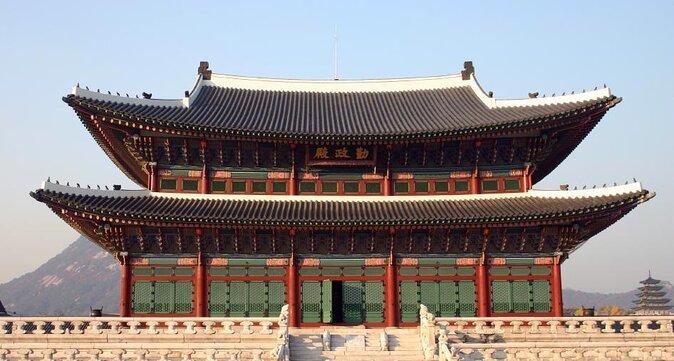
- Gyeongbokgung gets the most time: Plan on about 90 minutes inside Seoul’s main Joseon royal palace.
- The group is capped at 10 people: This is small enough for conversation without the cost of a private tour.
- Guide Lee adds playful teaching tools: Quizzes and Korean traditional games make the history easier to remember.
- The price is $60.27 per person: That includes admission to Gyeongbokgung and a guide for the full walk.
Why this route works for a first look at Seoul
This tour is built for orientation. Rather than spending three hours in one palace or one museum, you get a quick sweep of several places that define central Seoul. That helps you understand where you may want to return later, especially around Insadong, Gwanghwamun, and Bukchon.
The route also shows the contrast that makes Seoul so interesting. Traditional shops and tea houses sit near broad civic avenues. A Buddhist temple provides quiet in the middle of the city. Behind the palace, old residential lanes rise toward tiled roofs, while modern Seoul remains close by.
I would choose this walk near the start of a Seoul visit. Afterward, you will know the names and locations of several major areas, making later independent exploring less confusing. The meeting point at Anguk Station is useful, too, since the tour begins in one of the city’s old central districts rather than at a distant hotel pickup point.
The group size matters here. With no more than 10 people, you should have a reasonable chance to hear commentary and ask Lee about Korea’s past or present. Some departures may be smaller. One reported departure became a private experience, but you should book this expecting a small group rather than counting on having Lee to yourself.
More palace visits:
- Seoul: Gyeongbok Palace, Bukchon Village, and Gwangjang Tour
★ 4.9 · 2,321 reviews - Best Seoul City Tour (Gyeongbokgung Palace,Insadong,Namsan Tower)
★ 5.0 · 1,647 reviews - Small-Group Royal Palace and Seoul City Tour (hotel pick-up)
★ 5.0 · 1,474 reviews
Starting at Anguk Station and Insadong
Meet outside Anguk Subway Station at Exit 6. The first walk leads toward Insadong, an area known for traditional goods, restaurants, and tea houses. This opening section lasts about 10 minutes and has no admission charge.
Insadong works well as a first stop because it gives you an immediate sense of Seoul’s connection to older Korean crafts and customs. You are not simply walking toward the palace. You are beginning among shops and places associated with traditional goods and tea culture.
The stop is brief, so do not expect time for serious shopping or a long tea break. Think of it as a quick orientation to the district. If Insadong catches your interest, it is an easy place to revisit after the tour, when you can browse at your own pace.
Anguk is also a practical meeting point for this itinerary. You start near the old city center and remain among the main sights for the rest of the walk. Since the activity ends back at the meeting point, remember that your return is to Anguk Station rather than to Gyeongbokgung or Bukchon.
A quiet pause at Jogyesa Temple
From Insadong, the route continues to Jogyesa Temple for about 30 minutes. This is the head temple of the Jogye Order of Korean Buddhism, and the temple was founded in 1910.
The value of this stop is its change of mood. Seoul’s central streets can feel busy and crowded, but Jogyesa offers a calmer setting without requiring a long trip outside the city center. Lee can explain the temple’s role in Korean Buddhism and place it beside the royal and civic sites that follow.
Thirty minutes is enough for a useful introduction, though not an extended religious or architectural study. You should be respectful while inside the temple grounds, particularly if worship is taking place. The activity information does not promise a ceremony or special access, so expect an exterior and general cultural visit rather than a formal temple program.
For me, this is an important part of the route because it keeps the tour from becoming only a palace walk. You see a different part of Korea’s cultural life before moving toward the grand public spaces near Gyeongbokgung.
Reading Korea’s story at Gwanghwamun Square
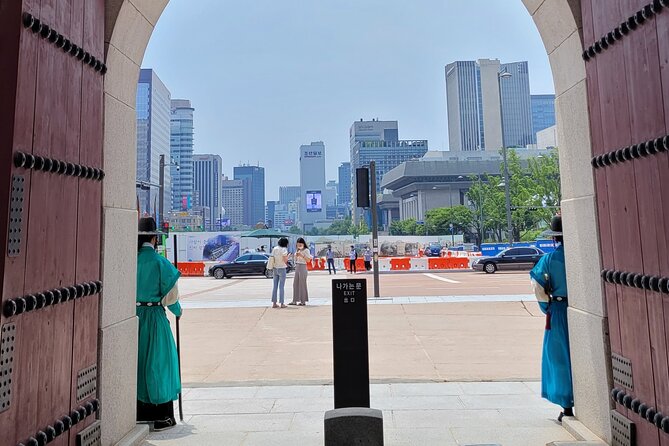
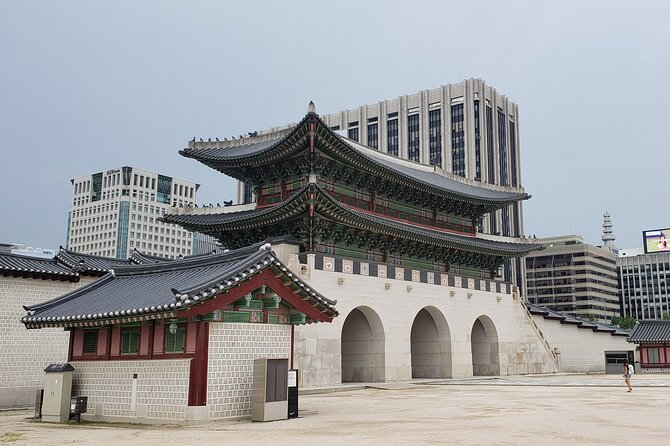
The next stop is Gwanghwamun Square, a central public plaza in front of Gyeongbokgung Palace. The visit lasts about 20 minutes and is free.
The square highlights Korean history and culture through statues of King Sejong the Great and Admiral Yi Sun-sin. These figures give Lee a clear way to explain important parts of Korea’s past before you enter the palace itself.
This stop is also about setting. The square places royal Seoul, modern public life, and the palace entrance in one view. You begin to see how the old capital fits into today’s city instead of treating historic buildings as isolated monuments.
The tradeoff is time. Twenty minutes allows for orientation and photographs, but not a long stroll through the whole plaza. If you want to study the statues or return for a slower look, make a note of the area. The tour’s purpose here is to prepare you for the palace, not to cover every corner of the square.
A completely different kind of day, same trip:
- Best DMZ Tour Korea from Seoul (Red Suspension Bridge Optional)
★ 5.0 · 41,422 reviews - DMZ Tour: 3rd Tunnel, Option(Suspension Bridge, Boat) from Seoul
★ 5.0 · 21,373 reviews - DMZ tour south Korea from Seoul (NK experience hall, defector)
★ 5.0 · 20,599 reviews - DMZ Insider Tour: 3rd Tunnel, NK Defector Meet & Red Bridge
★ 4.9 · 15,214 reviews
Spending 90 minutes inside Gyeongbokgung Palace
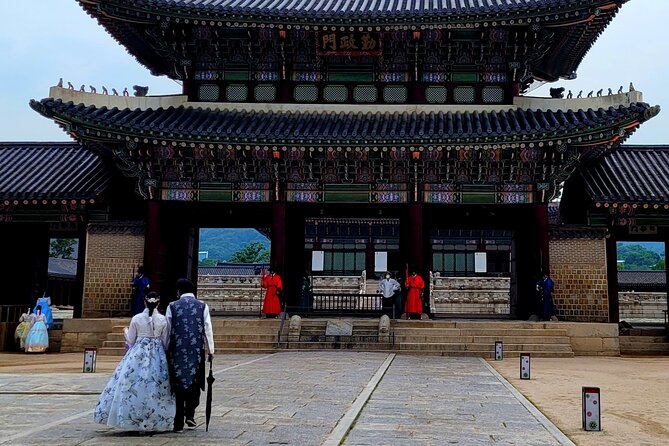
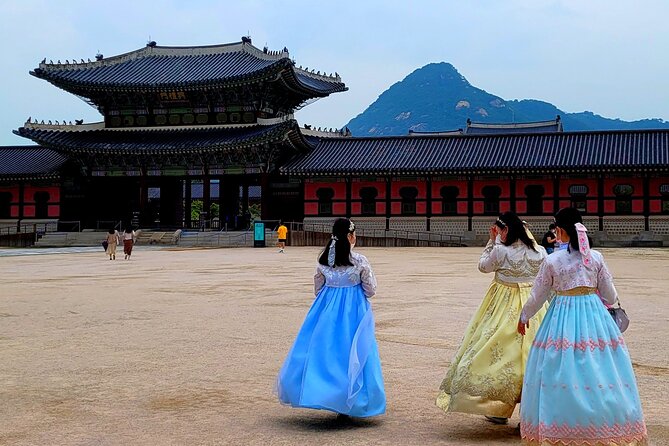
Gyeongbokgung receives the longest visit, about one and a half hours, and admission is included in the $60.27 price. Built in 1395, it was the main royal palace of the Joseon Dynasty.
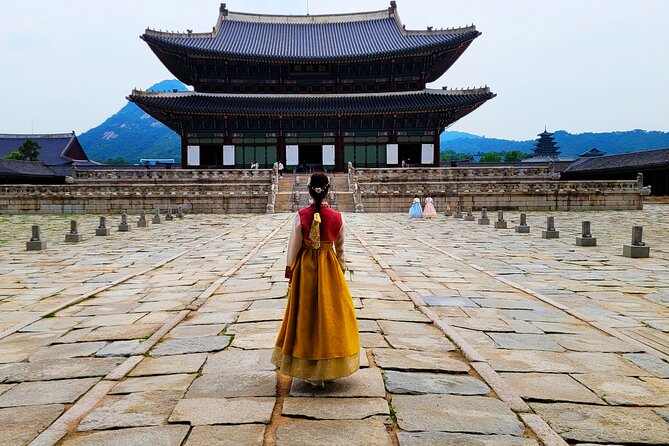
This is the core of the experience. The palace represents the authority, beauty, and design ideas of traditional Korea, with mountains behind it and the modern city in front. That setting helps you understand why the site matters. It is not just a collection of old buildings. It was the center of royal power and still provides the clearest introduction to Joseon-era Seoul on this route.
A guide adds value here because palace grounds can be difficult to read on your own. Rooflines, courtyards, gates, and ceremonial spaces may look impressive without explaining how they fit together. Lee’s approach includes historical facts as well as modern Korean context, so the visit is meant to connect the palace to the country you see today.
Ninety minutes is a sensible amount of time for a first visit. It gives you enough space for a guided overview without using the entire half-day. Still, the palace is large, and this will not cover every building or corner. If you want a slower architectural study, a second visit would be worthwhile.
The palace portion is also where comfortable shoes matter most. This is a walking tour, not a coach trip, and the route has several outdoor stops before and after the palace. Weather can affect the experience, since the activity requires good conditions and may be canceled if poor weather makes the walk impractical.
Finishing among the hanok lanes of Bukchon
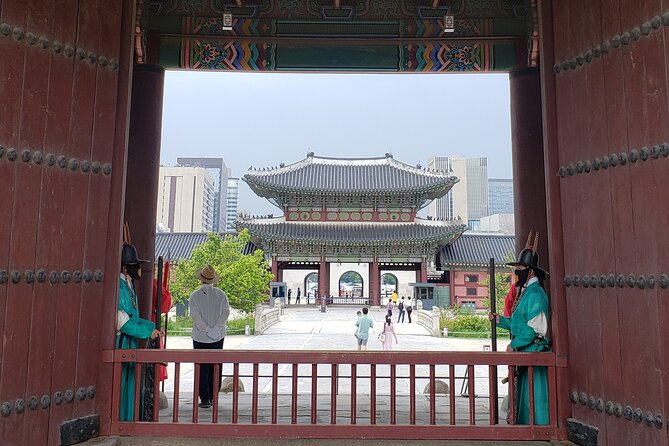
The final listed stop is Bukchon Hanok Village, visited for about 30 minutes. Bukchon is a historic residential neighborhood between two royal palaces, known for traditional Korean houses called hanok.
This is a fitting finish because it shifts the focus from royal buildings to everyday residential architecture. The winding alleys and rooftops show how people lived during the Joseon period, giving you a more human scale after the formal spaces of Gyeongbokgung.
Half an hour is enough to see the character of the area and get an introduction to the lanes. It is not enough for a full neighborhood walk, extended photography session, or careful visit to every street. Bukchon is also a residential area, so keep voices low and respect private homes when you return on your own.
The route’s final section may feel short if Bukchon is high on your wish list. That is not a flaw so much as a matter of expectations. This tour samples Bukchon as part of a wider Seoul overview. If you want to explore its alleys at length, plan separate time after learning where it is.
Lee’s teaching style and the small-group format
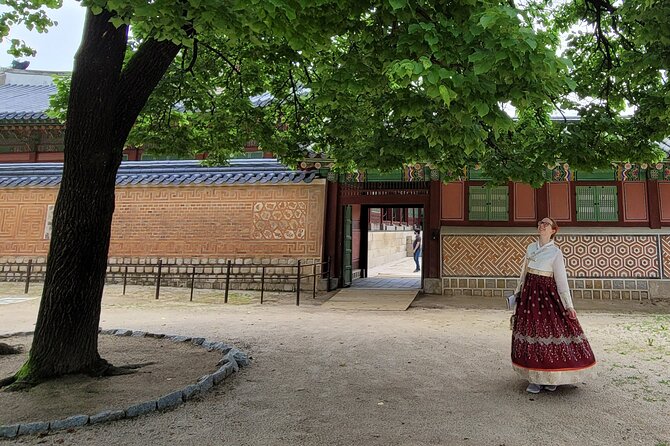
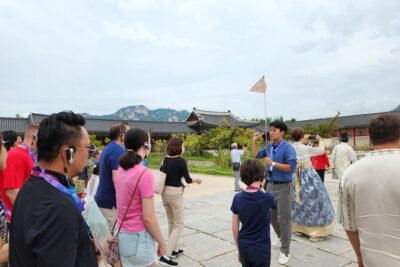
The guide can make or break a history walk, and Lee appears to bring a personal, flexible style to this one. She balances historical explanation with facts about current Korean culture, which helps prevent the Joseon material from becoming a string of dates and royal names.
Lee also uses mini quizzes and Korean traditional games during breaks. That is a small detail, but it changes the rhythm of the walk. You are not listening to a nonstop lecture, and younger visitors or anyone who finds palace history hard to retain may appreciate the change.
Her manner is described as patient and caring, especially when answering questions. That is useful on a first visit, when you may want practical help about Seoul as much as formal history. You can ask about what you are seeing and also use the time to get a better sense of the city.
The 10-person limit supports this style. A large group can make questions awkward and commentary hard to hear. Here, the format is better suited to conversation. It does not guarantee a private tour, but it gives the activity a more personal feel than a large scheduled walk.
Is $60.27 a fair price?
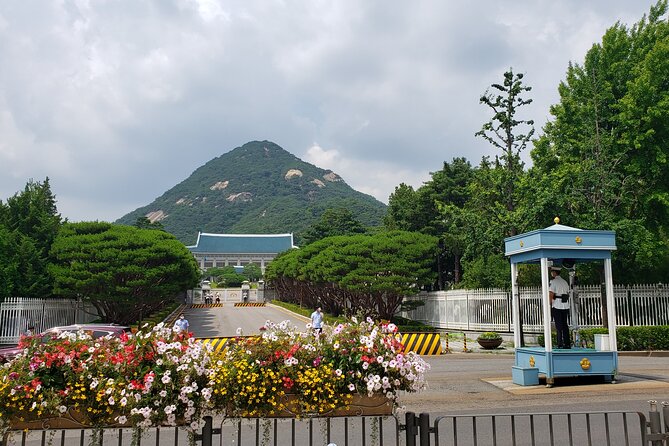
At $60.27 per person, this is not the cheapest way to see Gyeongbokgung. You can visit many Seoul sights independently for less than the cost of a guided activity. The question is what you want your money to do.
The fee includes the Gyeongbokgung ticket and about three hours of guided walking through five important areas. You are paying for structure, historical explanation, local cultural context, and the chance to ask questions without planning the route yourself.
The value is strongest if you have limited time in Seoul or are visiting for the first time. You can cover a lot of ground in one morning or afternoon, then return later to the places that interest you most. It is also a reasonable choice if you prefer a small group but do not want to pay private-tour prices.
Independent explorers may find the price less appealing. The route is easy to divide across separate visits, and the shorter stops mean you will still need your own time if you want detailed exploration. I would compare this tour with the cost of a palace ticket, transport, and the value you place on having Lee explain the sites.
The activity is booked, on average, 34 days ahead, so it is sensible to reserve early if your Seoul dates are fixed. Confirmation arrives at booking, and a mobile ticket is provided.
Who should book this Seoul walk?
I would recommend it to first-time visitors who want a clear introduction to old Seoul without spending a full day on one attraction. It also suits couples, families, and small groups who enjoy asking questions and learning through conversation.
History fans will appreciate the focus on the Joseon period, Gyeongbokgung, and Bukchon. People interested in present-day Korea should also find value in the way Lee connects older sites with modern culture.
This may not be the best choice if you want long stretches of free time, extensive shopping in Insadong, or a detailed visit to every part of Bukchon. It is also less suitable if you dislike walking or if hot, rainy, or otherwise poor weather would make outdoor sightseeing uncomfortable.
Most people can participate, and service animals are allowed. The activity is near public transportation, but the supplied details do not give a total walking distance, so you should be ready for a substantial amount of time on foot.
Practical details before you go
The tour begins outside Anguk Station Exit 6 in Seoul and ends back at the same meeting point. Admission to Gyeongbokgung is included, while personal expenses are not.
Free cancellation is available up to 24 hours before the start time for a full refund. Changes or cancellations made less than 24 hours before the start time are not accepted for a refund, and cut-off times follow local Seoul time.
Good weather is required. If conditions force a cancellation, you will be offered another date or a full refund. The tour also requires a minimum number of participants, so a cancellation for that reason brings the choice of another date or experience, or a full refund.
Should you book Palace and Seoul Old Town Highlights?
Book this tour if you want a well-organized first look at Seoul’s historic center, especially with a small group and a guide who adds quizzes, games, and modern cultural context. The included palace ticket and five-stop route make the $60.27 price reasonable for a time-limited visit.
Skip it if you prefer to explore slowly and independently. The route offers a useful introduction, not an exhaustive study, and the short visits to Insadong, Gwanghwamun Square, and Bukchon leave plenty to see later. For most first-time visitors with only a few days in Seoul, I would choose it early in the trip, then use the rest of the visit to return to the places that sparked your interest.
FAQ
How long is the Palace and Seoul Old Town Highlights tour?
The experience lasts approximately three hours.
Where does the tour begin?
It begins outside Anguk Subway Station at Exit 6 in Seoul.
Where does the tour end?
The activity ends back at the meeting point near Anguk Station.
What attractions are included in the route?
The route includes Insadong, Jogyesa Temple, Gwanghwamun Square, Gyeongbokgung Palace, and Bukchon Hanok Village.
Is the Gyeongbokgung Palace admission included?
Yes. The Gyeongbokgung ticket is included in the tour price.
What happens if the weather is poor?
The experience requires good weather. If it is canceled because of poor weather, you will be offered a different date or a full refund.
Just added around Seoul
- Incheon Airport Private Transfer between Seoul City★ 4.0 · 4 reviews
- Seoul’s Stars: Open Mic with Local & International Talent★ 4.8 · 4 reviews
- Samaksan Cable Car and Nami Island Day Escape with Railbike★ 4.0 · 4 reviews
- DMZ 2nd Tunnel and Cheorwon Peace Observatory with Admission★ 5.0 · 4 reviews
- Nami & Maple Road & Theatre des Lumieres Day Tour from Seoul★ 4.8 · 4 reviews
- Hire Photographer, Professional Photo Shoot – Seoul★ 5.0 · 4 reviews
- [KoreaByLocal] Authentic Seoul Night Walk and Chicken & Beer★ 5.0 · 4 reviews
- Play Gayageum in Hanbok Cultural Experience in Bukchon★ 5.0 · 4 reviews
Palace Tours, compared.
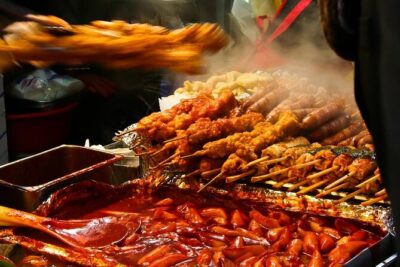
Gyeongbok Palace, Bukchon Village, and Gwangjang Tour
Read our review →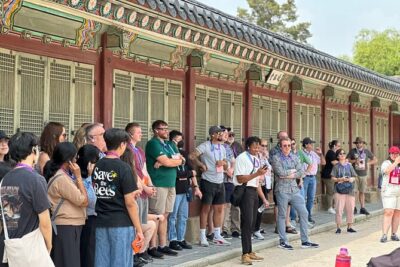
Best Seoul City Tour (Gyeongbokgung Palace,Insadong,Namsan Tower)
Read our review →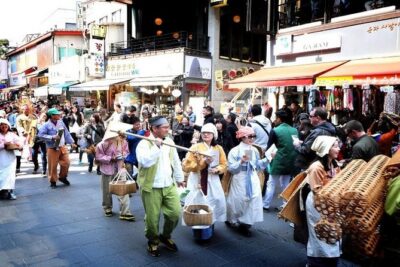
Small-Group Royal Palace and Seoul City Tour (hotel pick-up)
Read our review →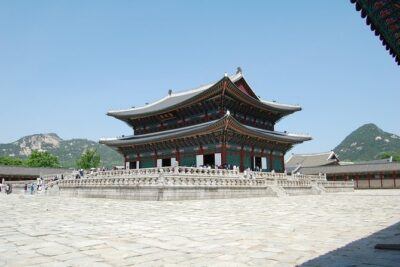
Seoul City Sightseeing Tour Including Gyeongbokgung Palace, N Seoul Tower, and Namsangol Hanok Village
Read our review →Gyeongbok Palace, Bukchon Village, and Gwangjang Tour
Read our review →
Seoul Highlights: Gyeongbok Palace, Insadong & N Seoul Tower
Read our review →
Seoul City Half Day Tour-Gyeongbok Palace Guard Changing Ceremony
Read our review →Browse the lists this tour appears in