
Reviewed · DMZ & JSA TOURS
[Small Group] Aegibong and DMZ Closest Views of North Korea
North Korea is usually a distant shape across a river or valley. At Aegibong Peace Ecopark, you get one of the closest public views from South Korea, with North Korean villages and farmland visible across the border. Earlier, the tour takes you through the 3rd Infiltration Tunnel and to Dora Observatory, so the day combines direct views with the story behind the division.
I like the careful historical thread, from Imjingak’s memorials to the armistice exhibits and tunnel. I also like the guides’ clear, personal style. Eunice, Sophia, Jung, and Mimi have each been praised for making complicated events easier to follow. The main consideration is stamina: the tunnel visit involves a fairly demanding walk, and the day lasts about eight to nine hours.
In This Review
- Key points to know before booking
- Why Aegibong changes the usual DMZ visit
- Imjingak begins the story with memorials and relics
- Crossing the Unification Bridge into a restricted area
- The DMZ Theater and Exhibition Hall adds needed context
- Walking the 3rd Infiltration Tunnel
- Dora Observatory offers the wider DMZ view
- Aegibong Peace Ecopark brings the border close
- What the $120 price really covers
- Transport, meeting points, and the long day
- Who will get the most from this DMZ tour
- Should you book it?
- FAQ
- How long does the Aegibong and DMZ tour last?
- Where does the tour start and end?
- Do I need to bring my passport?
- Is lunch included?
- How physically demanding is the tour?
- What is included in the $120 price?
- Can I cancel for a refund?
Key points to know before booking
![[Small Group] Aegibong and DMZ Closest Views of North Korea - Key points to know before booking](https://9.lovingseoul.com/wp-content/uploads/small-group-aegibong-and-dmz-closest-views-of-north-korea-1.jpg)
- Aegibong gives you unusually close views of North Korea: Look across at villages, farmland, and mountains from the Jogang Observatory area.
- The 3rd Infiltration Tunnel is the most physical stop: Plan for a descent and return climb, and bring a reasonable level of fitness.
- The day begins at Imjingak Pyeonghwa Nuri Park: Monuments, memorials, and Korean War relics provide context before you enter the restricted zone.
- Dora Observatory adds a wider military-border view: You may see Panmunjeom, Daeseong-dong village, mountains, and fields inside the DMZ.
- English-speaking guides shape the experience: Eunice, Sophia, Jung, and Mimi are praised for clear explanations, warmth, and useful historical stories.
- The $120 price includes transport and admissions: Lunch, drinks, and personal spending are extra, while the listed drop-off is in Myeongdong.
Why Aegibong changes the usual DMZ visit
![[Small Group] Aegibong and DMZ Closest Views of North Korea - Why Aegibong changes the usual DMZ visit](https://9.lovingseoul.com/wp-content/uploads/small-group-aegibong-and-dmz-closest-views-of-north-korea-2.jpg)
Many DMZ outings focus on guarded checkpoints and distant binocular views. This one adds Aegibong Peace Ecopark, which is the reason I would compare it carefully with a standard DMZ bus trip.
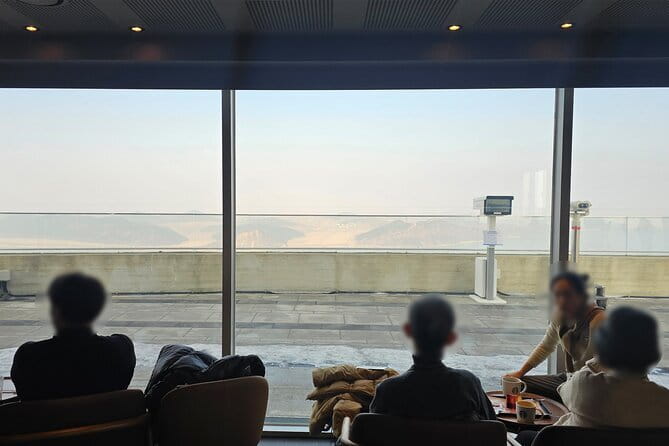
From the park’s Jogang Observatory, you can look toward North Korean villages and cultivated fields at close range. The view is not just a symbolic line on a map. You can see the neighboring country as lived-in farmland and settlements, which gives the political story a more human scale.
That does not mean the view is guaranteed to be perfectly clear. Weather matters, and the tour can be canceled in poor conditions. Still, the park gives you a different kind of border experience: quieter, more visual, and less focused only on military hardware.
Aegibong also has walking paths, exhibits, and peaceful outdoor areas. You should not expect an amusement park or a long independent hike. The visit is structured, with about an hour for the park and another hour listed around the Starbucks Aegibong Peace Ecopark stop and Jogang Observatory. The value comes from the combination of scenery and explanation.
More ways to reach the DMZ:
- Best DMZ Tour Korea from Seoul (Red Suspension Bridge Optional)
★ 5.0 · 41,422 reviews - DMZ Tour: 3rd Tunnel, Option(Suspension Bridge, Boat) from Seoul
★ 5.0 · 21,373 reviews - DMZ tour south Korea from Seoul (NK experience hall, defector)
★ 5.0 · 20,599 reviews
Imjingak begins the story with memorials and relics
The first major stop is Imjingak Pyeonghwa Nuri Park, a large unification and security complex in Paju. The site includes Imjingak Pavilion, the North Korea Center, Unification Park, and several memorial areas connected with the Korean War and the division of Korea.
You can expect roughly two hours here, including admission. That is a useful amount of time because Imjingak is more than a quick photo stop. Its monuments and relics introduce the emotional side of the conflict before the tour moves into the controlled border area.
Pyeonghwa Nuri Park also hosts events and has open grounds. The name means peace, and the setting links remembrance with the hope of reunification. I like beginning here because it prevents the DMZ from becoming only a collection of dramatic viewpoints. You first get a sense of what the division has meant to families and to the country.
The tour then proceeds toward the Unification Bridge. An ID check is required before entering the restricted area, so bring your passport. This is not an optional extra or a document to leave at the hotel. Access rules apply because you are entering a security-controlled zone.
Crossing the Unification Bridge into a restricted area
![[Small Group] Aegibong and DMZ Closest Views of North Korea - Crossing the Unification Bridge into a restricted area](https://9.lovingseoul.com/wp-content/uploads/small-group-aegibong-and-dmz-closest-views-of-north-korea-4.jpg)
The bridge crossing is a clear change in mood. Seoul’s busy streets are far behind, and the tour moves into an area where movement is controlled and identification matters.
Your English-speaking guide should explain what you are seeing as the day continues. The guide names vary by departure, but the strongest praise has gone to Eunice, Sophia, Jung, and Mimi. Eunice is described as warm and clear, while Sophia is noted for good timing and for explaining the sights before larger bus groups arrive. Jung is praised for giving a stronger understanding of the historical setting.
A group tour cannot control every delay at a checkpoint or viewpoint. Even so, good timing matters here. A guide who keeps the group moving can make the experience feel less crowded and leave you with more time to look rather than wait.
The tour has a maximum of 40 people. The word small in the title should therefore be read sensibly. It may be more intimate than a very large coach outing, but you should not assume a private guide for just your party. One review calls the experience a private tour, yet the stated maximum is 40, so check the group arrangement if a truly private visit is important to you.
The DMZ Theater and Exhibition Hall adds needed context
![[Small Group] Aegibong and DMZ Closest Views of North Korea - The DMZ Theater and Exhibition Hall adds needed context](https://9.lovingseoul.com/wp-content/uploads/small-group-aegibong-and-dmz-closest-views-of-north-korea-5.jpg)
The DMZ Theater and Exhibition Hall covers the Korean War, the armistice agreements, and efforts aimed at peace. This part of the visit is important because the tunnel and lookout points can otherwise feel like isolated attractions.
The exhibits help explain why the border exists, how the armistice shaped the area, and why the DMZ remains politically sensitive. You will get more from the later stops if you listen closely here. The guide-led explanations are especially useful for visitors who know the DMZ mainly from photographs or headlines.
The subject can be heavy, but the tour is not presented as a simple good-side and bad-side story. One of the useful features is the attempt to explain both sides of Korea and the events that led to the present division. Eunice was particularly praised for explaining the situation from both perspectives.
You should allow yourself time to ask questions when the guide offers it. The day covers a lot, and the historical details can come quickly. A good guide helps separate the Korean War, the armistice, infiltration efforts, and reunification hopes instead of blending them into one broad story.
A completely different kind of day, same trip:
- DMZ Insider Tour: 3rd Tunnel, NK Defector Meet & Red Bridge
★ 4.9 · 15,214 reviews - Seoul: DMZ Tour with Optional Suspension Bridge
★ 4.8 · 5,277 reviews - Signature DMZ Tour: Exclusive Defector Talk & Suspension Bridge
★ 5.0 · 4,459 reviews - Thrilling Korean DMZ 3rd Tunnel Tour from Seoul + Red Bridge Rush
★ 5.0 · 3,097 reviews
Walking the 3rd Infiltration Tunnel
![[Small Group] Aegibong and DMZ Closest Views of North Korea - Walking the 3rd Infiltration Tunnel](https://9.lovingseoul.com/wp-content/uploads/small-group-aegibong-and-dmz-closest-views-of-north-korea-6.jpg)
The 3rd Infiltration Tunnel is the tour’s most physical and dramatic stop. North Korea built it as a route for invading South Korea, and South Korea discovered it in 1978. Of the four tunnels found so far, it is the closest to Seoul, at about 52 kilometers.
The visit lasts about an hour and 30 minutes, including admission. You descend underground and follow part of the passageway before returning. The tunnel is a Cold War-era structure, not a polished museum attraction, and that is exactly why it feels memorable.
You should take the fitness warning seriously. The tour requires a moderate level of physical fitness, and the tunnel is the stop most likely to test your legs. Wear comfortable shoes, take your time, and do not treat the descent as a casual stroll. The return route matters just as much as going down.
Photography rules and movement restrictions may apply in parts of the DMZ experience, so follow the guide’s instructions. The tunnel’s value is not only the novelty of walking through a passage built for military purposes. It gives you a physical sense of how close the threat once came to Seoul and why the border remains heavily controlled.
Several guides have been praised for making this stop easy to understand. Sophia is noted for explaining things clearly, and one assessment singled out the tunnel as a highlight. If you enjoy places where history is tied to a real structure, this is likely to be the strongest part of the morning.
Dora Observatory offers the wider DMZ view
![[Small Group] Aegibong and DMZ Closest Views of North Korea - Dora Observatory offers the wider DMZ view](https://9.lovingseoul.com/wp-content/uploads/small-group-aegibong-and-dmz-closest-views-of-north-korea-7.jpg)
After the tunnel, the tour continues to Dora Observatory for about an hour. This is the closest DMZ observatory to Panmunjeom, and it gives you a broad view that includes the Panmunjeom area, Daeseong-dong village within the DMZ, mountains, and farmland.
The view can feel stark. You are looking at an area where ordinary agricultural activity exists beside military restrictions. The contrast is part of the point. From a distance, the land may appear calm and open, but the history and security arrangements make it anything but ordinary.
Bring patience. Your view depends on weather and visibility, and the border is not a place where you can simply wander wherever you like. The guide will help identify what you are seeing, which matters because fields and villages can look similar through an observation telescope.
Dora Observatory and Aegibong serve different purposes. Dora provides a broad DMZ view with major reference points such as Panmunjeom and Daeseong-dong. Aegibong offers a closer look toward North Korean villages and farmland. Having both stops makes the day more varied than visiting only one lookout.
Aegibong Peace Ecopark brings the border close
![[Small Group] Aegibong and DMZ Closest Views of North Korea - Aegibong Peace Ecopark brings the border close](https://9.lovingseoul.com/wp-content/uploads/small-group-aegibong-and-dmz-closest-views-of-north-korea-8.jpg)
The final major visit is Aegibong Peace Ecopark in Gimpo. The park combines nature, walking routes, exhibits, and border views. It symbolizes hope for peace, but the real draw is practical: you can see North Korea from unusually close range.
The park’s setting is calmer than the tunnel and checkpoint areas. You have time to walk, look across the border, and consider the ordinary details visible on the other side. Villages and farmlands may tell you more than a dramatic military display because they show how daily life continues beside the division.
The listed visit to Aegibong Peace Ecopark lasts about an hour. A further hour is associated with the Starbucks Aegibong Peace Ecopark stop, where the Jogang Observatory provides the close-up view. Coffee and tea are not included, so budget separately if you plan to buy a drink.
The park is also the practical end point of the sightseeing portion. The tour is expected to finish at Aegibong around 3 p.m., with arrival in Myeongdong estimated around 4 p.m. That timing gives you an evening in Seoul, though traffic can affect any road journey.
What the $120 price really covers
![[Small Group] Aegibong and DMZ Closest Views of North Korea - What the $120 price really covers](https://9.lovingseoul.com/wp-content/uploads/small-group-aegibong-and-dmz-closest-views-of-north-korea-9.jpg)
At $120 per person, this is not the cheapest way to see the DMZ. The price includes an air-conditioned vehicle, private transportation as described, admissions listed for the stops, and an English guide. You are paying for a full day of transport, controlled-area access, and interpretation rather than simply a ride to one viewpoint.
The value is strongest if you want the tunnel, Dora Observatory, Imjingak, and Aegibong in one day. Booking each part separately would be less convenient, and public transport would not give you the same guided movement through the restricted sites.
Lunch is not included. Coffee, tea, and personal expenses are also extra. I would plan for food before the day or ask the operator how the schedule handles lunch, since the supplied timing does not list a dedicated lunch stop.
The tour is booked about eight days ahead on average. That is a useful planning clue, particularly if you are visiting Seoul for a short stay and want a certain date. The experience requires a minimum number of people, so cancellation can happen if that number is not reached.
Free cancellation is available up to 24 hours before the start time for a full refund. Changes made inside that 24-hour window are not accepted, and poor weather can also lead to a new date or a full refund.
Transport, meeting points, and the long day
The stated start point is Imjingak Pyeonghwa Nuri Park, at 148-40 Imjingak-ro, Munsan-eup, Paju-si. Pickup is offered in the tour description, but the listed meeting point is at Imjingak rather than a central Seoul address, so confirm exactly where you will be collected before booking.
The listed end point is Myeongdong in central Seoul. The day is expected to finish at Aegibong around 3 p.m., followed by an estimated 4 p.m. arrival in Myeongdong. This arrangement matters because the tour is not simply a central Seoul pickup and return with every transfer hidden from you.
You will spend much of the day in an air-conditioned vehicle between border sites. The schedule covers several places, so it is efficient rather than slow. That suits you if you want to see a lot in one day. It may feel rushed if you prefer long, unplanned stops.
The maximum group size is 40. The tour is described as small group, but the actual experience can depend on the number booked on your date. If you want the guide’s full attention, ask about the expected group size before paying.
Who will get the most from this DMZ tour
I would choose this experience if you want both history and direct views. The tunnel gives you a physical connection to the conflict, Imjingak provides memorial context, Dora Observatory explains the DMZ’s geography, and Aegibong shows North Korea at close range.
It also suits first-time visitors to Seoul who want one organized day rather than several complicated border-area transfers. The guides are a major part of the value. Names and assignments can vary, but Eunice, Sophia, Jung, and Mimi have been praised for clear explanations, friendly manners, and interesting stories.
You should think twice if you dislike structured sightseeing or have difficulty with steep walking. The tour has a fixed route, identity checks, controlled access, and a full schedule. The 3rd Tunnel requires the most effort, and the border authorities determine how the day flows.
Families with older children may find the subject meaningful, but the moderate fitness requirement still matters. Anyone booking should bring a passport, wear comfortable shoes, and allow for weather to affect visibility or operation.
Should you book it?
Book this tour if Aegibong’s close views of North Korea are a priority and you want them paired with the 3rd Infiltration Tunnel and Dora Observatory. At $120, it offers solid value for admissions, transport, and a full day of English explanation, especially if you are visiting Seoul for only a few days.
Choose another format if you want a genuinely private group, a relaxed pace, or a central Seoul start with no uncertainty about transfers. For most visitors who want a serious, well-explained look at the DMZ, this is a strong choice. Just bring your passport, prepare for the tunnel walk, and keep your expectations realistic about weather and group size.
FAQ
How long does the Aegibong and DMZ tour last?
The experience lasts approximately eight to nine hours. The sightseeing portion is expected to end at Aegibong Peace Ecopark around 3 p.m., with an estimated arrival in Myeongdong around 4 p.m.
Where does the tour start and end?
The stated start point is Imjingak Pyeonghwa Nuri Park in Paju. Drop-off is provided in Myeongdong, Seoul.
Do I need to bring my passport?
Yes. You must bring your passport for the ID check before entering the restricted area across the Unification Bridge.
Is lunch included?
No. Lunch, coffee and tea, and personal expenses are not included in the price.
How physically demanding is the tour?
A moderate level of physical fitness is recommended. The 3rd Infiltration Tunnel includes a descent and return walk, making it the most physically demanding part of the day.
What is included in the $120 price?
The price includes an air-conditioned vehicle, private transportation as described, listed admission fees, and an English-speaking guide.
Can I cancel for a refund?
You can cancel at least 24 hours before the start time for a full refund. Poor weather or failure to meet the minimum number of participants may also lead to a different date or a full refund.
Just added around Seoul
- Incheon Airport Private Transfer between Seoul City★ 4.0 · 4 reviews
- Seoul’s Stars: Open Mic with Local & International Talent★ 4.8 · 4 reviews
- Samaksan Cable Car and Nami Island Day Escape with Railbike★ 4.0 · 4 reviews
- DMZ 2nd Tunnel and Cheorwon Peace Observatory with Admission★ 5.0 · 4 reviews
- Nami & Maple Road & Theatre des Lumieres Day Tour from Seoul★ 4.8 · 4 reviews
- Hire Photographer, Professional Photo Shoot – Seoul★ 5.0 · 4 reviews
- [KoreaByLocal] Authentic Seoul Night Walk and Chicken & Beer★ 5.0 · 4 reviews
- Play Gayageum in Hanbok Cultural Experience in Bukchon★ 5.0 · 4 reviews
DMZ & JSA Tours, compared.
Best DMZ Tour Korea from Seoul (Red Suspension Bridge Optional)
Read our review →
DMZ Tour: 3rd Tunnel, Option(Suspension Bridge, Boat) from Seoul
Read our review →
DMZ tour south Korea from Seoul (NK experience hall, defector)
Read our review →
DMZ Insider Tour: 3rd Tunnel, NK Defector Meet & Red Bridge
Read our review →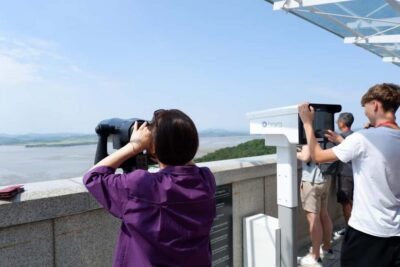
Thrilling Korean DMZ 3rd Tunnel Tour from Seoul + Red Bridge Rush
Read our review →
DMZ Past and Present: Korean Demilitarized Zone Tour from Seoul
Read our review →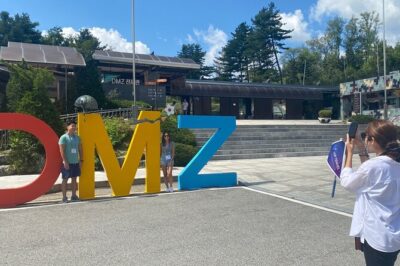
Ultimate Korea DMZ Tour from Seoul (Gondola & Suspension Bridge)
Read our review →Browse the lists this tour appears in