
Reviewed · DMZ & JSA TOURS
Signature DMZ Tour: Exclusive Defector Talk & Suspension Bridge
The most powerful part of this tour is not the photo stop or the border viewpoint. It is the North Korean defector talk, which puts a human voice to the headlines about division, escape, and life north of the border. You also visit the Third Tunnel and Dora Observatory, two places that make the Korean conflict feel much less abstract.
I like the mix of personal testimony and military history, and I like having round-trip transport from central Seoul in an air-conditioned vehicle. The main catch is that this is a tightly controlled, highly scheduled day. The DMZ can close without warning, the tunnel is a hard walk, and the optional suspension bridge has caused some logistical confusion when weather or group numbers interfere.
In This Review
- Key points to know before booking
- Why the defector talk gives this DMZ tour its meaning
- Meeting in Seoul and the ride to the border
- Imjingak and Freedom Bridge: a memorial beside a theme park
- Entering the DMZ under military rules
- The Third Tunnel is the day’s toughest stop
- Dora Observatory gives you the clearest view north
- The optional Gamaksan suspension bridge
- The final stop and the value of the $27 price
- Who will get the most from this day trip
- Should you book this DMZ tour?
- FAQ
- What time and where does the tour start?
- How long does the DMZ tour last?
- Is transportation included?
- Is a North Korean defector talk included?
- Do I need my passport?
- Is the Third Tunnel difficult to walk?
- Can I take photographs inside the tunnel or at Dora Observatory?
- Is the Gamaksan suspension bridge included?
Key points to know before booking
- North Korean defector talk: Hear directly from a person who left North Korea and ask questions during the journey.
- Third Tunnel walk: The route is steep, narrow, and physically demanding, especially on the return uphill section.
- Dora Observatory: Look toward North Korea, including Gaeseong and the area known as Propaganda Village.
- Passport required: Bring your original, valid passport. A copy is not accepted.
- Optional Gamaksan Bridge: The 220-meter suspension bridge depends on a minimum group size and suitable weather.
- Military-controlled schedule: Sites can close suddenly, and the operator may substitute another itinerary without offering a refund.
Why the defector talk gives this DMZ tour its meaning
Many DMZ excursions follow nearly the same basic route. The area is controlled by the military, so independent wandering is not possible, and the main stops are fairly standardized. What gives this tour a more personal edge is the included interview with a North Korean defector.
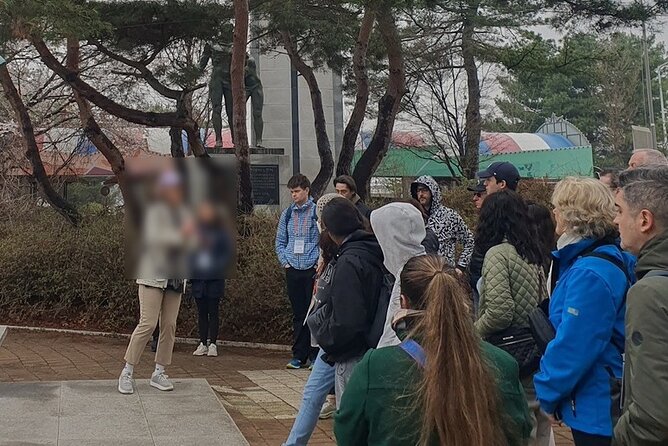
The talk usually takes place during the bus journey. That is a smart use of travel time, since the drive from Seoul toward the border takes about an hour. The conversation covers life in North Korea, the decision to leave, and the escape experience. Names of speakers can vary, with Ms. Cho and Ms. Lee mentioned among the people who have taken part.
I would treat this as a serious conversation, not a stage performance. The best moments come from the questions you bring with you. You can ask about daily life, family separation, the border, or the adjustment to South Korea. The personal account adds weight to the military structures and viewing platforms you see later.
The English guide also matters. Guides such as Han Solo, Jackie, SP Hong, Molly, JJ, and SP have been praised for clear explanations, humor, and strong command of Korean War history. Guide assignments change, so you cannot book a particular person with certainty. Still, the experience depends heavily on who is leading the day, especially when the group is large and the schedule is tight.
More ways to reach the DMZ:
- Best DMZ Tour Korea from Seoul (Red Suspension Bridge Optional)
★ 5.0 · 41,422 reviews - DMZ Tour: 3rd Tunnel, Option(Suspension Bridge, Boat) from Seoul
★ 5.0 · 21,373 reviews - DMZ tour south Korea from Seoul (NK experience hall, defector)
★ 5.0 · 20,599 reviews
Meeting in Seoul and the ride to the border
The tour begins at 7:30 am near 92 Sejong-daero in Jung District, close to the central Seoul and Myeongdong area. Arrive early. The departure is not flexible, and the terms say there are no changes or refunds if you miss the bus, even for a reason beyond your control.
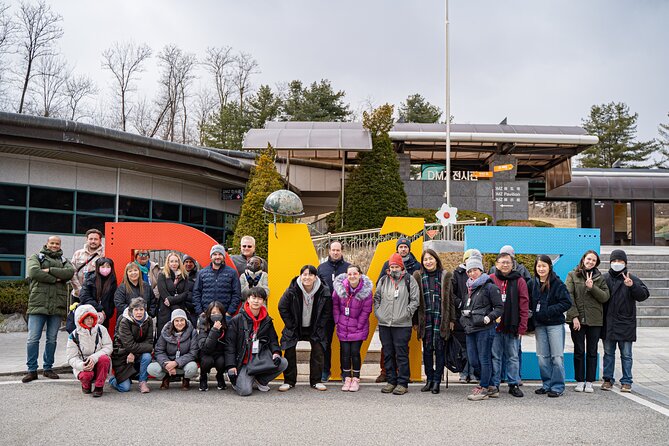
The vehicle is air-conditioned, but this is a coach tour rather than a private outing. The stated maximum is 90 people, so the day can feel busy. A coach of roughly 40 seats has been used for some departures. That matters because every stop involves gathering the group, checking the time, and sometimes transferring between buses.
The road out of Seoul gives your guide time to explain the Korean War, the armistice, and the continuing division of the peninsula. A good guide can turn a long ride into useful preparation. Jackie, often called the Story Teller, and Han Solo have been especially well received for making the historical material lively rather than dry.
The schedule can shift because of traffic, military drills, weather, or official events. Build your day around the tour instead of planning a tight dinner reservation or an important evening activity immediately afterward. The advertised duration is seven to nine hours, with a return around the afternoon, but the exact finish can change.
Imjingak and Freedom Bridge: a memorial beside a theme park
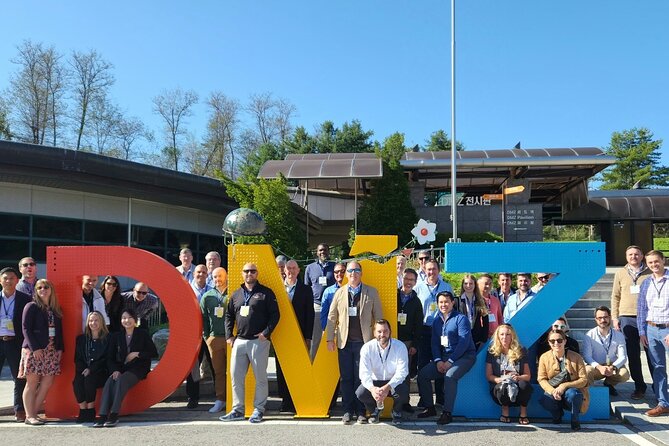
Imjingak Pyeonghwa-Nuri Park is often the first substantial stop. It is an unusual place, part memorial, part public park, and part tourist facility. Rides and open spaces sit close to barbed wire and military restrictions, which can feel jarring at first.
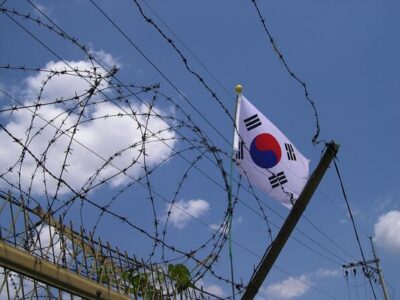
That contrast is worth noticing. The park expresses hope for Korean reunification, yet the fences and controlled access make clear that the division is not simply a historical idea. It remains a physical boundary in everyday life.
You may see the Freedom Bridge, associated with the return of about 13,000 prisoners of war to freedom after the Korean War. The bridge is a simple structure, but its meaning is large. It links a present-day viewing area to the prisoners who crossed toward South Korea in 1953.
The stop lasts about an hour and is included in the price. You will not have unlimited time to explore every corner, so listen for the guide’s explanation and keep an eye on the meeting time. The park’s rides are not the reason to choose this tour, but the memorials and border setting provide a useful opening lesson.
Entering the DMZ under military rules
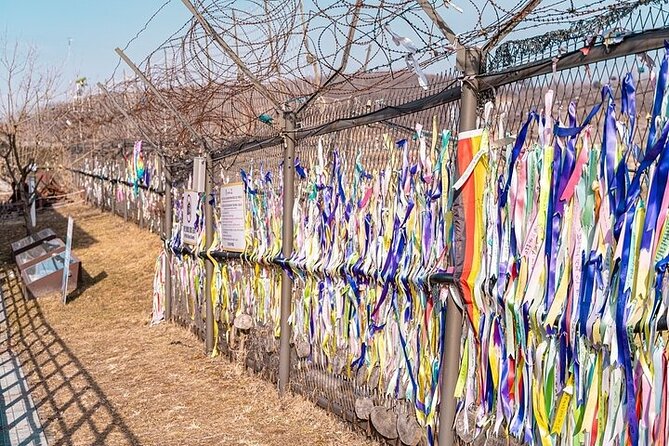
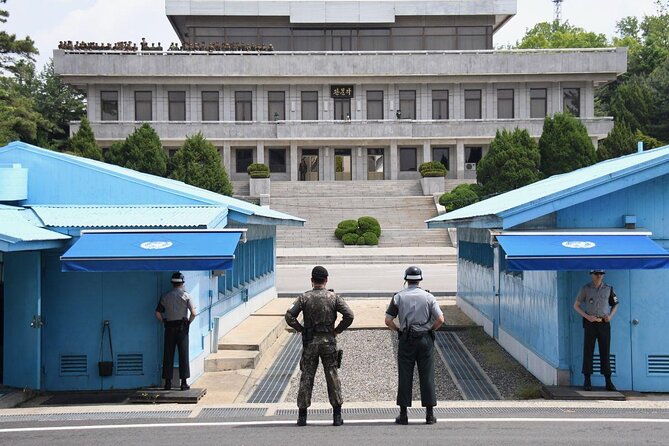
The DMZ is a military demarcation zone separating North and South Korea. Despite its name, it is not a normal public park. Access is controlled, schedules can change, and officials can close sections without advance notice.
That uncertainty is part of the bargain. The tour operator says that an unannounced military exercise or official event may lead to a substitute route, such as Tomorrow’s Whistle, Bunker Beat 131, Odusan Unification Tower, or the War Memorial of Korea. If the DMZ closes suddenly, an alternative tour may be offered without a refund.
This is not a flaw unique to this operator. No commercial tour can overrule military authorities. Still, you should understand that paying for a DMZ tour does not guarantee every listed site will be open on your date.
The guide’s role becomes particularly useful here. A strong guide explains why you are waiting, what you can photograph, and how the border rules affect the route. Keep your passport easy to reach, follow instructions, and do not wander away from the group.
More suspension bridge walks:
- Seoul: DMZ Tour with Optional Suspension Bridge
★ 4.8 · 5,277 reviews - Ultimate Korea DMZ Tour from Seoul (Gondola & Suspension Bridge)
★ 5.0 · 2,396 reviews - DMZ; NK Defector, 3rd Tunnel, Suspension Bridge,Hotel pickup
★ 4.9 · 2,055 reviews - DMZ Tour from Seoul – Optional Suspension Bridge Experience
★ 5.0 · 1,918 reviews
The Third Tunnel is the day’s toughest stop
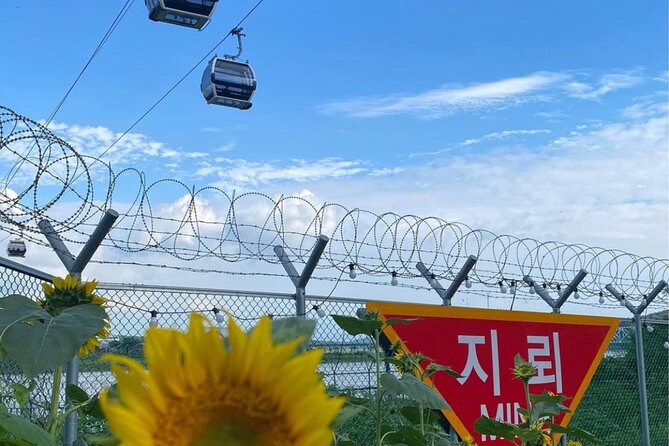
For many people, the Third Infiltration Tunnel is the most memorable site. South Korean authorities discovered the tunnel in 1978, and it extends roughly 435 meters into South Korean territory. It is believed to have been built for military purposes by North Korea.
The visit begins with an explanation or documentary, followed by the walk into the tunnel. The route is steep, cramped, and tiring. The return trip uphill is the part that catches people off guard. Comfortable shoes are required, and the activity is not recommended for anyone with a heart condition or another serious medical issue.
Do not expect a leisurely underground stroll. The tunnel is narrow enough to make some people uncomfortable, and you may need to bend or watch your head. At the end of the accessible route, the physical effort makes the tunnel’s purpose easier to grasp. It was not designed for sightseeing.
Photography is not permitted inside. That may disappoint you, but it is understandable in a military area. The restriction also encourages you to pay attention to the structure and the guide’s explanation instead of viewing the stop only through a phone screen.
A monorail may sometimes assist with the tunnel route, but it is not guaranteed to operate. If it is out of service, expect to walk the full incline. Give yourself extra time and do not wear sandals, smooth-soled shoes, or anything you would not choose for a steep underground path.
Dora Observatory gives you the clearest view north
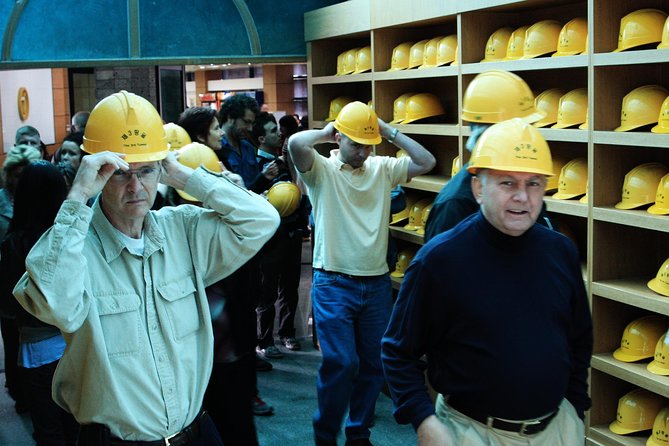
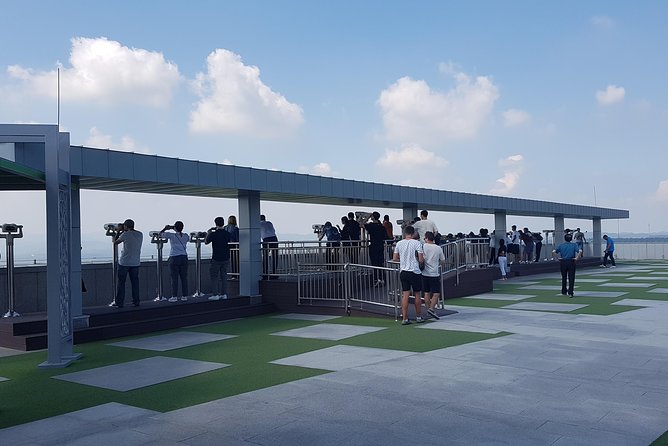
At Dora Observatory, you look across the border toward North Korea. On a clear day, the view can include Gaeseong City, the former Gaeseong Industrial Complex, and the settlement often called Propaganda Village.
The name reflects the long-running dispute over the village’s purpose and presentation. From the South Korean side, it is viewed as a carefully managed border settlement. Your guide can explain the competing political messages better than a sign or a quick photograph.
Photography restrictions apply here too. You may not be allowed to photograph the view from the observation deck, even though it looks like an ordinary scenic overlook. The rule can feel strange until you remember that you are standing in a military-controlled zone, not at a regular city viewpoint.
The observatory is a valuable stop because it gives you physical perspective. Maps and news reports flatten the peninsula into two colors. Looking across the distance, you can see how close the two countries are, yet how difficult the border remains to cross.
Lunch is not included. Food options may be limited around the observatory, and one common arrangement is a quick cafe meal such as a hot dog or ham sandwich. Bring money and keep your expectations modest. The setting can be far more memorable than the meal, since you may be eating while looking toward one of the world’s most restricted states.
The optional Gamaksan suspension bridge
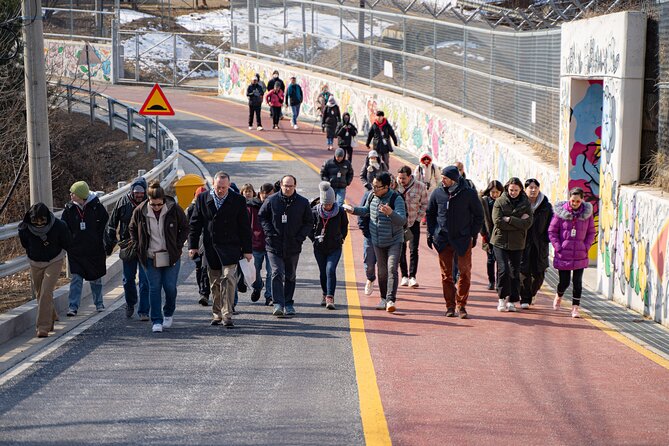
The Gamaksan Chulleong Bridge option adds a scenic stop after the main DMZ sights. At 220 meters, it was once Korea’s longest suspension bridge and crosses above Silmari Valley. The stop lasts about an hour when included.
This is a very different experience from the tunnel and observatory. The bridge gives you open air, a bit of movement, and views over the valley. It can be a pleasant change after a day focused on military history and political tension.
There are two important cautions. First, the bridge requires a minimum number of participants. If that number is not reached, the operator may ask you to revise or cancel the option. Second, bad weather can close it. A bridge visit that cannot proceed may still result in a long detour or a revised schedule.
Some departures have involved separate buses or guides for the bridge portion. That can create confusion, especially if the guide switches languages or the bridge group must work around the main bus schedule. Confirm exactly what the add-on includes and ask where your group will reunite before leaving the main coach.
If the bridge is your main reason for booking, do not treat it as guaranteed. The DMZ itself takes priority, and military or weather conditions can change the plan.
The final stop and the value of the $27 price
At $27 per person, this tour is inexpensive for a full-day outing that includes transport, an English guide with a DMZ license, admission fees, and the defector talk. You avoid arranging separate transport to the border, and you get historical context at each stop.
The value is strongest if you want the standard DMZ experience without paying for a private vehicle. The tour covers the main sights and gives you a personal account that many basic excursions do not include.
The tradeoff is control. You do not set the pace, choose your lunch spot, or decide how long to linger at the observatory. A large group can also make the day feel rushed. Keep your passport, water, and personal items with you, and stay close when the guide gives a return time.
The listed route includes a pass through Imjingak and a return to central Seoul, sometimes around Myeongdong or another convenient city point. Some departures have included an unannounced shopping stop at a jewelry or jade shop near the end of the day. If you do not want to browse, ask whether you can leave the bus at that location or how long the stop will last.
That shopping detour has bothered some people because it may come after a request for feedback and was not always clearly explained at the start. It is a small part of the day, but transparency matters. Ask about extra stops before departure.
Who will get the most from this day trip
I would recommend this tour to you if you want a straightforward introduction to the Korean conflict, prefer organized transport, and value personal testimony as much as military sites. The defector talk gives the outing emotional depth, while the tunnel and observatory provide the physical evidence.
It suits adults and older children who can manage a long day and a demanding walk. Children must be accompanied by an adult. Most people can participate, but the Third Tunnel requires stamina, and serious medical conditions deserve careful consideration.
This is less suitable if you want a quiet, small-group outing or a flexible schedule. It is also a poor match if your only goal is the suspension bridge, since that option can be canceled or altered. The tour is best understood as a DMZ history day with a possible scenic add-on.
Free cancellation is available up to 24 hours before the start time. Cancellations or changes inside that window are not accepted, and late arrival means losing the departure without a refund.
Should you book this DMZ tour?
Book it if the North Korean defector conversation interests you and you want the main DMZ sights at a low price. Guides such as Han Solo, Jackie, SP Hong, and Molly have helped make the long day informative and good-humored, though the assigned guide will vary.
Go in with realistic expectations. The border is not open for casual exploration, photographs may be restricted, lunch is not included, the tunnel is hard, and the military can change the route at any moment. If you accept those limits, this tour offers a memorable and useful look at a divided peninsula, with the human story doing much of the heavy lifting.
FAQ
What time and where does the tour start?
The tour starts at 7:30 am at 92 Sejong-daero in Jung District, Seoul, near the central Myeongdong area.
How long does the DMZ tour last?
The listed duration is approximately seven to nine hours. Traffic, weather, military schedules, and site conditions can change the finishing time.
Is transportation included?
Yes. Round-trip transportation is provided in an air-conditioned vehicle, and the tour ends back at the meeting point.
Is a North Korean defector talk included?
Yes. An interview or talk with a North Korean defector is included, often during the journey by bus. The speaker can vary, with Ms. Cho and Ms. Lee among the people who may participate.
Do I need my passport?
Yes. You must bring your current, valid original passport on the day of the tour. A photocopy is not accepted.
Is the Third Tunnel difficult to walk?
Yes. The tunnel has a steep, narrow route, and the return walk can be strenuous. Comfortable shoes are required, and the stop is not recommended for people with heart conditions or other serious medical issues.
Can I take photographs inside the tunnel or at Dora Observatory?
Photography is not permitted in the Third Tunnel. Photography may also be restricted from the observation deck at Dora Observatory because both locations are in a military-controlled area.
Is the Gamaksan suspension bridge included?
The suspension bridge is an optional part of the tour. It requires a minimum number of participants and may be changed or canceled because of weather or other conditions.
Just added around Seoul
- Incheon Airport Private Transfer between Seoul City★ 4.0 · 4 reviews
- Seoul’s Stars: Open Mic with Local & International Talent★ 4.8 · 4 reviews
- Samaksan Cable Car and Nami Island Day Escape with Railbike★ 4.0 · 4 reviews
- DMZ 2nd Tunnel and Cheorwon Peace Observatory with Admission★ 5.0 · 4 reviews
- Nami & Maple Road & Theatre des Lumieres Day Tour from Seoul★ 4.8 · 4 reviews
- Hire Photographer, Professional Photo Shoot – Seoul★ 5.0 · 4 reviews
- [KoreaByLocal] Authentic Seoul Night Walk and Chicken & Beer★ 5.0 · 4 reviews
- Seoul Film Camera Club★ 5.0 · 4 reviews
DMZ & JSA Tours, compared.
Best DMZ Tour Korea from Seoul (Red Suspension Bridge Optional)
Read our review →
DMZ Tour: 3rd Tunnel, Option(Suspension Bridge, Boat) from Seoul
Read our review →
DMZ tour south Korea from Seoul (NK experience hall, defector)
Read our review →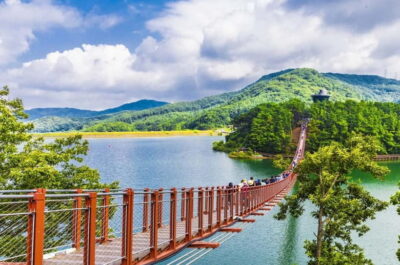
DMZ Insider Tour: 3rd Tunnel, NK Defector Meet & Red Bridge
Read our review →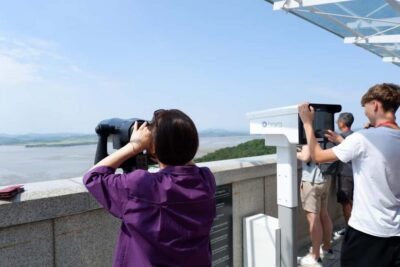
Thrilling Korean DMZ 3rd Tunnel Tour from Seoul + Red Bridge Rush
Read our review →
DMZ Past and Present: Korean Demilitarized Zone Tour from Seoul
Read our review →
Ultimate Korea DMZ Tour from Seoul (Gondola & Suspension Bridge)
Read our review →Browse the lists this tour appears in