
Reviewed · PALACE TOURS
Seoul Palace Morning Tour
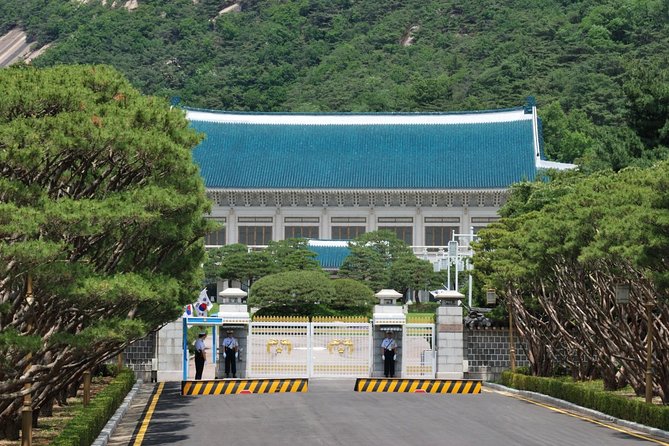
Gyeongbok Palace is the heart of this morning tour, but the changing of the guard at Gwanghwamun Gate gives the outing its most memorable finish. You also see Jogyesa Buddhist Temple and pass the Blue House, making this a useful first look at Seoul’s royal, religious, and political landmarks.
I like the hotel pickup and included entrance fees, which keep a short morning simple. I also like the efficient route: Jogyesa, the palace grounds, the Folk Museum, and City Hall all fit into about three hours.
The main caution is the required stop at a ginseng shopping center. Some guides make it brief, but several guests felt it took too much time from the actual sights. This is a group tour, with as many as 30 people, so the pace and guide quality can affect your experience.
In This Review
- Key points at a glance
- A compact introduction to Seoul’s royal center
- Jogyesa Temple and its 500-year-old trees
- Passing the Blue House from the vehicle
- Gyeongbok Palace and the Joseon royal court
- The National Folk Museum adds daily life
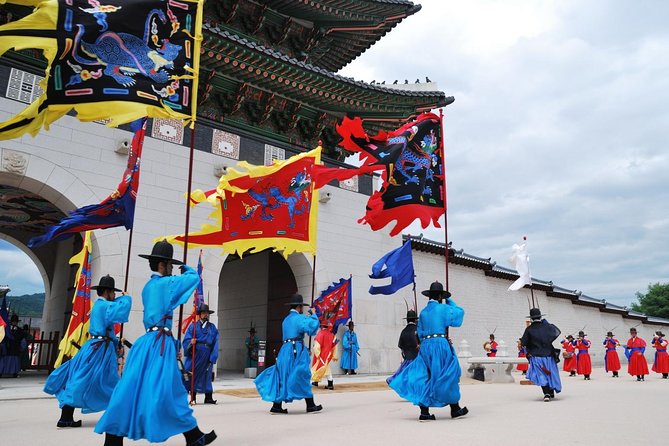
- Gwanghwamun Gate and the royal guard ceremony
- The ginseng center changes the tone
- Hotel pickup, group size, and the City Hall finish
- How the $40 price works for you
- Who should book this morning tour?
- Should you book the Seoul Palace Morning Tour?
- FAQ
- How long is the Seoul Palace Morning Tour?
- What time does the tour start?
- Is hotel pickup included?
- Where does the tour end?
- Is transportation included?
- What admission fees are included?
- Does the tour include the Blue House?
- Does the tour include lunch?
- How many people can join the tour?
- Is there a shopping stop?
- Can I cancel for a full refund?
Key points at a glance
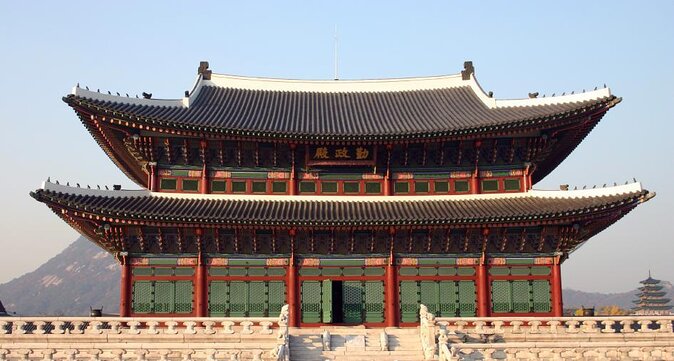
- Gyeongbok Palace highlights: See the throne hall, royal offices, king and queen’s quarters, and banquet pavilion.
- A clear morning route: Visit Jogyesa Temple, pass the Blue House, explore the palace, and finish at Gwanghwamun Gate.
- Royal ceremony included: The changing of the guard is often the tour’s most striking moment.
- Easy transport: Morning hotel pickup, a driver-guide, and an air-conditioned vehicle are included.
- City Hall drop-off: The tour ends in central Seoul, close to other sights and useful for continuing your day.
- Shopping stop to consider: A ginseng center is part of the itinerary and may not suit shoppers who want more time at the palace.
A compact introduction to Seoul’s royal center
This Seoul Palace Morning Tour is built for you if you want a guided introduction rather than a full day spent studying one palace. The experience begins at 9:00 a.m. and runs for roughly three hours, giving you a quick look at several important places before returning you to central Seoul.
The route covers more than royal buildings. At Jogyesa, you see one of Seoul’s best-known Buddhist temples. At Gyeongbok Palace, you get the main Joseon Dynasty story. At Gwanghwamun, you watch a formal royal guard ceremony. That mix helps you place Seoul’s old traditions beside its modern city life.
At $40 per person, the price is reasonable if you value door-to-door pickup, transport, a guide, and admission. It is less attractive if you already know Seoul well or prefer to explore palace grounds at your own speed. The tour is designed for orientation and convenience, not for long, quiet visits in every building.
More palace visits:
- Seoul: Gyeongbok Palace, Bukchon Village, and Gwangjang Tour
★ 4.9 · 2,321 reviews - Best Seoul City Tour (Gyeongbokgung Palace,Insadong,Namsan Tower)
★ 5.0 · 1,647 reviews - Small-Group Royal Palace and Seoul City Tour (hotel pick-up)
★ 5.0 · 1,474 reviews
Jogyesa Temple and its 500-year-old trees
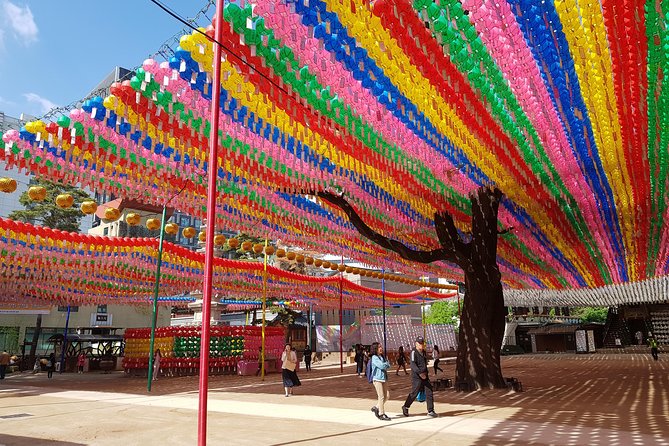
The first stop is Jogyesa Buddhist Temple, described as a center of Zen Buddhism in Korea. It is a practical opening to the morning because it introduces a living religious site before the tour moves on to royal Seoul.
Look first at the old locust trees and the baeksong tree near Daeungjeon, the main hall. The trees are said to be about 500 years old, and the baeksong tree has Natural Monument status. That detail gives the temple grounds a sense of time that is easy to miss if you only pause for a quick photograph.
Daeungjeon was built in 1938 and is painted in Korea’s colorful traditional decorative style. Inside is a statue of Seokgamoni. In front of the hall, a seven-story stone pagoda contains Jinsinsari, adding another point for the guide to explain.
Your experience here will depend on how much time the group has and how clearly the guide presents the details. The tour description promises explanation of the temple and its features, but one poor experience involved a guide speaking too quickly and leaving little time to look. If you want to study the painted hall or take photographs, stay close to the guide and ask for a moment before the group moves on.
Passing the Blue House from the vehicle
After Jogyesa, the vehicle passes the Blue House on the way to Gyeongbok Palace. The Blue House is identified as the president’s residence in the tour information, though you do not stop directly in front of it because it is a security area.
This is a brief drive-by, not a sightseeing visit. You should treat it as a quick glimpse and a bit of modern political context rather than a major stop. The advantage is that it adds another important Seoul landmark without requiring a separate detour. The drawback is simple: you will not have time to get out, walk around, or take the kind of close photographs possible at the palace.
The air-conditioned vehicle matters here. Seoul mornings can involve a fair amount of walking, and a short ride between sites gives you a break before the largest stop of the tour.
Gyeongbok Palace and the Joseon royal court
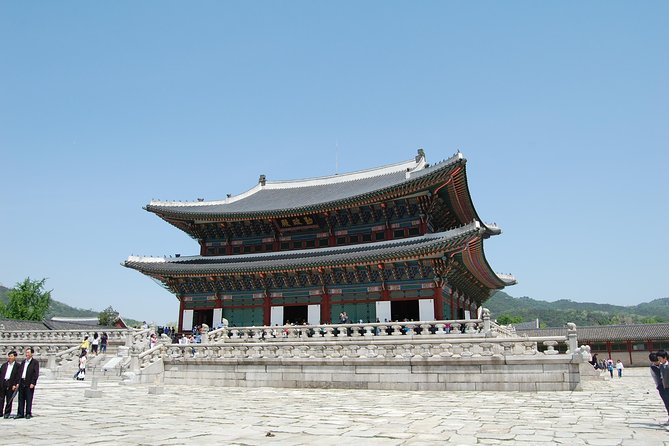
Gyeongbok Palace is the main event. Built as the chief palace of the Joseon Dynasty, it is the site most first-time visitors want to understand. The grounds include many buildings, so a guide is useful for separating the king’s public duties from the private life of the royal family.
The planned route includes these key structures:
- Geunjeongjeon: The main throne hall, used for major state occasions.
- Sajeongjeon: The king’s office, where daily government work took place.
- Gangnyeongjeon: The king’s living quarters.
- Gyotaejeon: The queen’s living quarters.
- Gyeonghoeru: The banquet pavilion used for formal gatherings, including events for foreign envoys.
This lineup gives you a good basic framework. You see the palace as a working court, not just a collection of attractive roofs and painted beams. The contrast between the throne hall, office, private rooms, and banquet space helps you picture how the Joseon court functioned over its roughly five-century reign.
The trade-off is time. With the entire morning lasting about three hours, you are getting selected highlights rather than a slow examination of every courtyard. A fast group may move from building to building before you have finished taking in the details. One especially negative experience described the pace as too quick and the explanations as limited. That is a fair concern for anyone who enjoys independent museum visits.
Still, the palace portion can work well for a first visit. A pleasant, efficient guide can point out what matters, explain why each building was used, and keep you from wandering through a large complex without a plan. Chloe was singled out for sharing stories, helping with photographs, and offering a restaurant recommendation for after the tour. That kind of practical help can make a short visit feel more personal.
A few more Seoul trips worth weighing up
- Mt. Seorak+Nami Island+Garden of Morning Calm Day Trip from Seoul
★ 5.0 · 959 reviews - Seoul: Nami Island and Garden of Morning Calm opt Railbike
★ 4.6 · 907 reviews - Day Trip to Nami Island with Rail bike and The Garden of Morning Calm
★ 4.5 · 459 reviews - Trip to Nami Island with Petite France & Italian Village, Garden of Morning Calm
★ 4.5 · 373 reviews
The National Folk Museum adds daily life
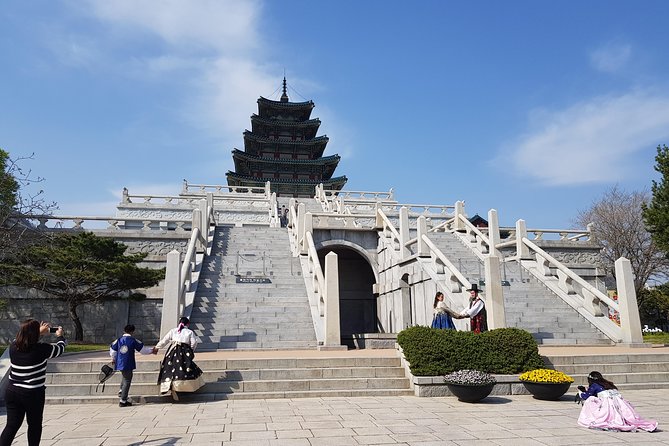
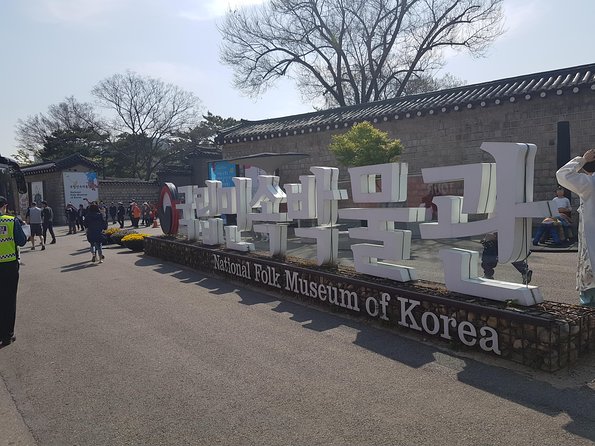
The Korean National Folk Museum is part of the Gyeongbok Palace visit. Its focus is daily life and traditional Korean culture, so it broadens the morning beyond kings, queens, and formal ceremonies.
That change of focus is valuable. Palace buildings show how the ruling class lived and governed, while a folk museum can help you think about ordinary routines and customs. The museum is presented as an educational and cultural stop, giving you a way to connect court life with wider Korean traditions.
Again, time may be limited. The tour does not promise a long museum session, and the palace itself has several major buildings to cover. If the museum is especially important to you, ask the guide how long the group will spend there. You may need to return on your own for a more careful visit.
Gwanghwamun Gate and the royal guard ceremony
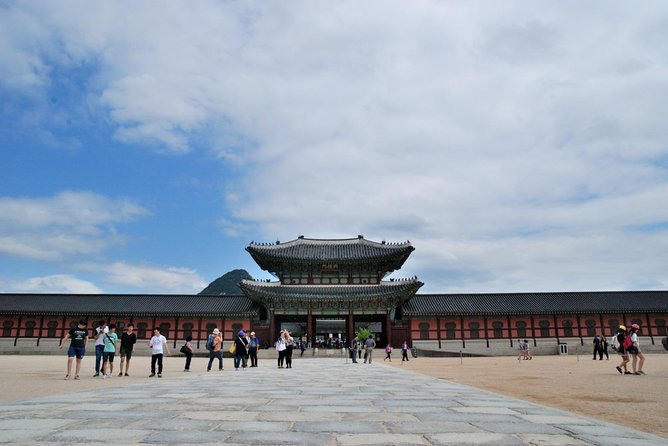
The tour returns to Gwanghwamun Gate, the south gate of Gyeongbok Palace, for the changing of the guard ceremony. This is the most visual part of the outing, with formal uniforms, movement, and a strong sense of royal pageantry.
For many people, this ceremony is the best reason to choose a guided morning route. You do not have to work out the palace layout or arrive at the right place by yourself. The guide brings the group to the gate and provides context for what you are seeing.
The ceremony also gives the morning a clear ending. Instead of simply leaving after another building, you finish with an event that links the palace to its former military and ceremonial role. Bring your camera, but keep an eye on the group because the tour continues afterward.
Ceremony times can be important when planning any palace visit. The supplied schedule says the tour will include the changing ceremony, but exact public performance times can vary. If this is your top priority, confirm the morning timing close to your travel date.
The ginseng center changes the tone
After the historic sights, the tour makes a stop at a ginseng center. This is the part you should consider carefully before booking. Some people may enjoy learning about or buying Korean ginseng products. If shopping is not part of your plan, the stop can feel like an interruption after the palace and guard ceremony.
The length of this visit appears to be the key issue. One person felt the group spent longer at the ginseng store than at the places of real interest. Another called it a tourist trap. Those are strong warnings for anyone who wants every minute devoted to temples and royal buildings.
The tour does include only one shopping center, so this is not an all-day shopping program. Even so, ask how long the stop normally lasts before you commit to the outing. A short retail visit may be manageable. A longer sales presentation could make the $40 price feel less worthwhile.
Hotel pickup, group size, and the City Hall finish
Pickup is offered in the morning, and the start time is listed as 9:00 a.m. The vehicle is air-conditioned, and both a driver-guide and professional guide are included. This setup is helpful in Seoul, where getting to several central sites by taxi or public transport can take planning.
Pickup details deserve care. One booking problem involved a guest who expected hotel pickup but did not receive the communication they wanted. Another person was picked up at a station close to a guesthouse and found the transport convenient. Contact the operator clearly with your hotel details and confirm the pickup point and time before the morning of the tour.
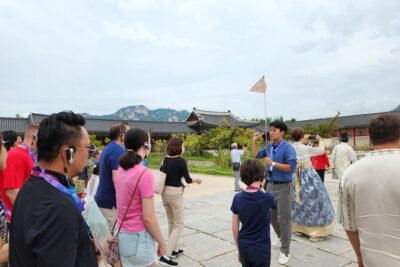
This is a group experience with a maximum of 30 people. That is not an intimate private tour. You should expect to keep to the guide’s schedule, wait for other members, and accept that some explanations may be delivered to a crowd. The group format helps keep the price at $40, but it limits flexibility.
The tour does not return you to your hotel. It ends at City Hall in central Seoul after the ginseng stop. That is actually useful if you want to continue sightseeing. City Hall is close to other central attractions, and you can make your own lunch or afternoon plans from there. Lunch is not included.
How the $40 price works for you
The price includes the guide, driver, air-conditioned transport, hotel pickup, and entrance fees. If you would otherwise pay separately for taxis, palace admission, and a guide, the package offers solid value for a short introduction.
The strongest value comes from convenience. You can begin at your hotel, move between sites without arranging transport, and finish in the center of the city. Families and first-time visitors may appreciate that structure, especially when they want cultural context without committing to a full-day tour.
The weaker value appears if the group moves too fast or the ginseng stop takes too long. You are paying partly for a set route, so independent visitors who enjoy lingering may get more from buying palace admission and exploring alone. The tour also includes no lunch and no hotel drop-off, though the central City Hall ending makes the second omission less serious.
Free cancellation is available when you cancel at least 24 hours before the 9:00 a.m. start time. Changes or cancellations inside that window are not accepted for a refund, so keep the local cutoff in mind.
Who should book this morning tour?
I would choose this tour for a first Seoul visit, a short stay, or a spare morning before an afternoon departure. It gives you a useful base: Buddhist practice at Jogyesa, royal government at Gyeongbok Palace, traditional daily life at the Folk Museum, and ceremonial Seoul at Gwanghwamun.
It also suits families and anyone who prefers transport and explanations arranged in advance. The three-hour length is manageable, and the route covers the city’s best-known royal sight without consuming an entire day.
I would hesitate if you dislike shopping stops, need a slow pace, or want a private guide. In that case, the ginseng center and group size may frustrate you. If you book, confirm pickup details, ask about the shopping stop, and stay near the guide so you do not miss explanations or get hurried past the buildings you most want to see.
Should you book the Seoul Palace Morning Tour?
Book it if you want a convenient, affordable introduction to Seoul’s central historic sights and you are comfortable with a group schedule. The palace buildings, Jogyesa Temple, and guard ceremony make a worthwhile morning, and the City Hall drop-off leaves your afternoon open.
Skip it if the ginseng stop is a deal breaker or you prefer to explore Gyeongbok Palace at leisure. The tour can be very good with a clear, engaging guide such as Chloe, but the reported range of experiences shows that guide style and time control matter. Go in expecting an efficient overview, not an unhurried palace study.
FAQ
How long is the Seoul Palace Morning Tour?
The tour lasts approximately three hours.
What time does the tour start?
The listed start time is 9:00 a.m.
Is hotel pickup included?
Yes. Morning hotel pickup is included, but you should provide and confirm your hotel details in advance.
Where does the tour end?
The tour ends at City Hall in Seoul. Hotel drop-off is not included.
Is transportation included?
Yes. The tour includes an air-conditioned vehicle, a driver-guide, and a professional guide.
What admission fees are included?
All entrance fees for the included attractions are covered. The itinerary includes Jogyesa Buddhist Temple, Gyeongbok Palace, and the Korean National Folk Museum.
Does the tour include the Blue House?
The vehicle passes the Blue House on the way to Gyeongbok Palace. The group cannot stop in front of it because it is a security area.
Does the tour include lunch?
No. Lunch is not included.
How many people can join the tour?
The maximum group size is 30 travelers.
Is there a shopping stop?
Yes. One stop at a ginseng center is included. The amount of time spent there can affect how much time you have at the main sights.
Can I cancel for a full refund?
Yes, if you cancel at least 24 hours before the experience start time. Cancellations or changes made less than 24 hours before the start are not accepted for a refund.
Just added around Seoul
- Incheon Airport Private Transfer between Seoul City★ 4.0 · 4 reviews
- Seoul’s Stars: Open Mic with Local & International Talent★ 4.8 · 4 reviews
- Samaksan Cable Car and Nami Island Day Escape with Railbike★ 4.0 · 4 reviews
- DMZ 2nd Tunnel and Cheorwon Peace Observatory with Admission★ 5.0 · 4 reviews
- Nami & Maple Road & Theatre des Lumieres Day Tour from Seoul★ 4.8 · 4 reviews
- Hire Photographer, Professional Photo Shoot – Seoul★ 5.0 · 4 reviews
- [KoreaByLocal] Authentic Seoul Night Walk and Chicken & Beer★ 5.0 · 4 reviews
- Play Gayageum in Hanbok Cultural Experience in Bukchon★ 5.0 · 4 reviews
Palace Tours, compared.
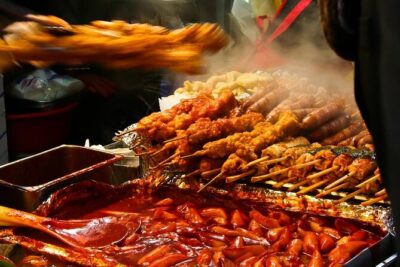
Gyeongbok Palace, Bukchon Village, and Gwangjang Tour
Read our review →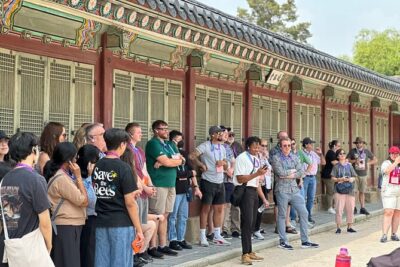
Best Seoul City Tour (Gyeongbokgung Palace,Insadong,Namsan Tower)
Read our review →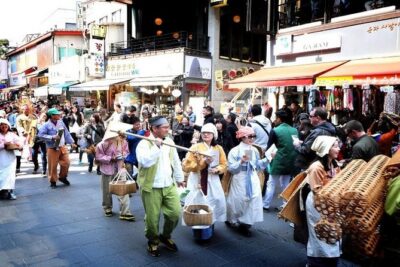
Small-Group Royal Palace and Seoul City Tour (hotel pick-up)
Read our review →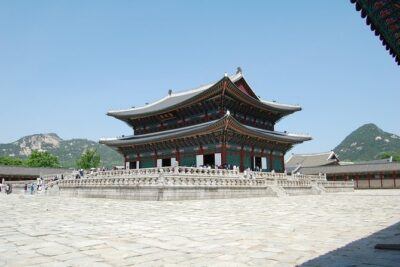
Seoul City Sightseeing Tour Including Gyeongbokgung Palace, N Seoul Tower, and Namsangol Hanok Village
Read our review →Gyeongbok Palace, Bukchon Village, and Gwangjang Tour
Read our review →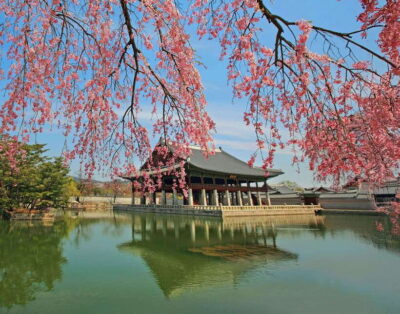
Seoul Highlights: Gyeongbok Palace, Insadong & N Seoul Tower
Read our review →
Seoul City Half Day Tour-Gyeongbok Palace Guard Changing Ceremony
Read our review →Browse the lists this tour appears in