
Reviewed · GYEONGBOKGUNG PALACE
Seoul: Gyeongbokgung Palace Half day Tour
Gyeongbokgung Palace makes more sense when someone explains what you are looking at. This two-hour English tour moves from the great Gwanghwamun Gate through royal halls and private chambers, connecting palace buildings to the kings, queens, and customs of Joseon.
I like the clear route and the chance to ask questions as you go. I also like that admission is included, so the $35 price pays for more than a quick walk past painted roofs. The main caution is timing: the group will not wait for late arrivals, and the tour may be canceled if fewer than four people book.
In This Review
- Key points at a glance
- Why Gyeongbokgung Palace deserves a guided visit
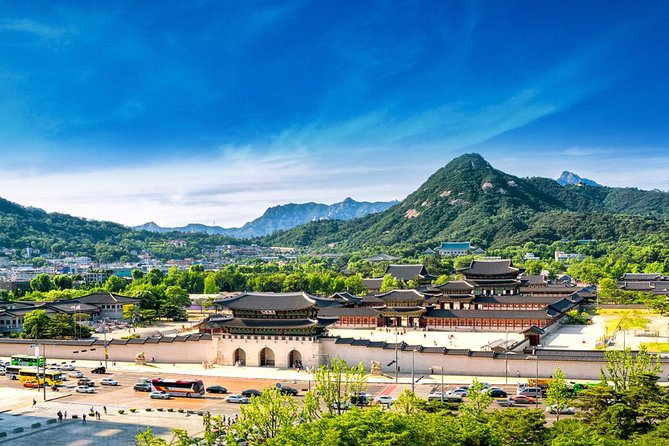
- Starting at Gwanghwamun Gate
- Geunjeongjeon, the palace throne hall
- Sajeongjeon and the working king
- Gangnyeongjeon and Gyotaejeon, the private quarters
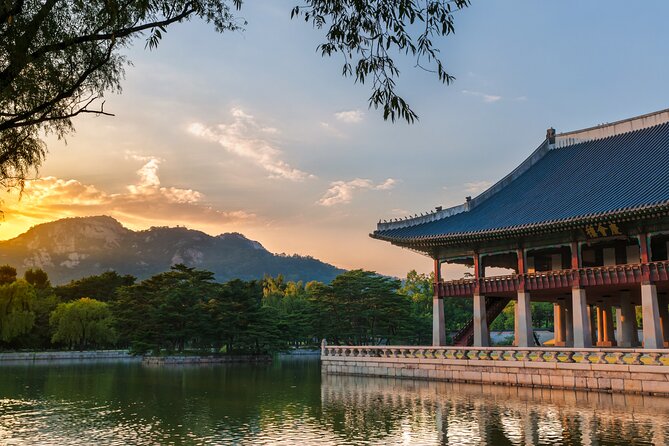
- Gyeonghoeru Pavilion, the final major stop
- The small details that make the palace memorable
- Is $35 a fair price?
- Timing, communication, and simple planning
- Who will get the most from this tour?
- Should you book the Gyeongbokgung Palace tour?
- FAQ
- How long does the Gyeongbokgung Palace tour last?
- What is included in the price?
- Where does the tour begin?
- Where does the tour end?
- Is the tour offered on Tuesdays?
- How many people can join the tour?
- What happens if I need to cancel?
Key points at a glance
- Hear Joseon stories in English: The guide explains the palace’s construction in 1394, its royal buildings, and famous kings in a way that gives the site context.
- Follow a useful six-stop route: You visit Gwanghwamun Gate, Geunjeongjeon, Sajeongjeon, Gangnyeongjeon, Gyotaejeon, and Gyeonghoeru Pavilion.
- Look for the animal statues: Small architectural details become part of the tour, not background decoration.
- Admission is included: The $35 fee covers entry and a guided visit lasting about two hours.
- Meet near the National Palace Museum: The stated starting point is 12 Hyoja-ro, with the tour ending at 7-25 Tongui-dong.
- Plan around Tuesday closure: Gyeongbokgung Palace is closed on Tuesdays, and this operator offers a Deoksugung night tour instead.
Why Gyeongbokgung Palace deserves a guided visit
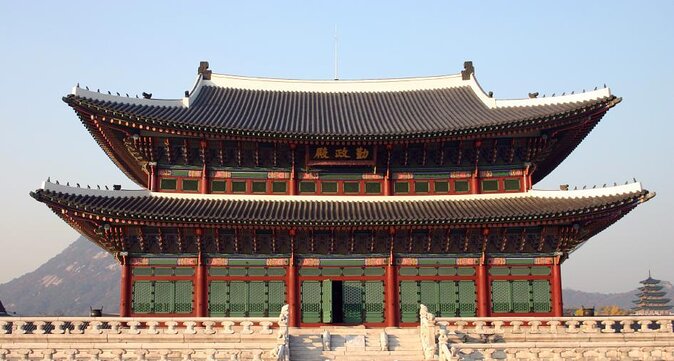
Gyeongbokgung is the oldest and most important of Seoul’s five palaces, and it is one of the city’s defining sights. Built in 1394, it introduces you to Joseon, the last dynasty described in this tour, through gates, ceremonial halls, offices, bedrooms, and a pavilion used for events.
You can walk through the palace on your own, but the buildings are easier to read with help. A throne hall may look impressive on its own, yet a guide can explain how it fits into royal life. A decorative animal may seem like a small detail, but the tour makes those figures part of the story.
I like this approach because it keeps the visit grounded in things you can see. You are not simply given a long lecture about dates. You are shown where the king worked, where the royal family slept, and how the palace was arranged.
The palace was badly damaged during the Japanese Colonial Period, and ongoing restoration has helped preserve its value. That gives the site another layer. You are seeing both an important royal center and a place shaped by loss, repair, and continued care.
More Gyeongbokgung visits:
- Seoul: Gyeongbok Palace, Bukchon Village, and Gwangjang Tour
★ 4.9 · 2,321 reviews - Best Seoul City Tour (Gyeongbokgung Palace,Insadong,Namsan Tower)
★ 5.0 · 1,647 reviews - Seoul City Sightseeing Tour Including Gyeongbokgung Palace, N Seoul Tower, and Namsangol Hanok Village
★ 5.0 · 1,423 reviews
Starting at Gwanghwamun Gate
The tour begins near the National Palace Museum of Korea at 12 Hyoja-ro in Jongno District. From there, the route takes you to Gwanghwamun Gate, the south gate of Gyeongbokgung Palace.
This is the right place to begin because a palace gate is not just an entrance. It establishes the scale and importance of the complex before you move into the halls used for government and royal life. Your guide sets up the story of Gyeongbokgung from this first stop, including its construction in 1394.
Pay close attention at the start. The meeting instructions are sent by email or WhatsApp, and the exact meetup details matter. The supplied directions name the National Palace Museum as the starting point, while the listed end point is 7-25 Tongui-dong. I would save the message and check the address before leaving your hotel.
One person had trouble finding the meeting point, and guide Gabriela went out of her way to locate them. That is a useful sign of attentive service, but it should not encourage you to arrive casually. Joining after the tour has started is not allowed, since the rest of the group cannot be held back.
Geunjeongjeon, the palace throne hall
The next major stop is Geunjeongjeon, the main throne hall. This is where the palace’s public and ceremonial side becomes clear.
Your guide explains the role of the hall and the people connected with it. The value here is not only the view of the building. It is the link between architecture and authority. You begin to understand why the palace was built with distinct spaces for formal duties, work, and private life.
The tour focuses on architectural beauty, so this is a good place to ask questions. If you want to know how a hall differed from a king’s office, or why certain decorative animals appear around the palace, ask directly. The guide is specifically available for questions, and the small group size can make that easier when attendance is below the maximum of 20 people.
Do not expect an entire day of palace detail. The visit lasts about two hours, so the route gives you a focused introduction rather than an exhaustive examination of every structure. I see that as a strength for many people visiting Seoul on a tight schedule, though serious palace fans may want more time afterward.
Sajeongjeon and the working king
From the ceremonial throne hall, the tour continues to Sajeongjeon, the king’s office space. This stop helps balance the grand public image of the palace with the ordinary business of ruling.
The building’s role gives the guide a chance to discuss famous kings of Joseon and the work carried out inside the palace. You get a better sense that royal life involved administration as well as ceremony. That shift from public hall to working space makes the route feel planned rather than like a string of disconnected buildings.
I like this part of the visit because it answers a basic question many palace walks leave hanging: what happened after the king sat in the throne hall? Here, the palace becomes a place of decisions, meetings, and daily government.
The English explanation is especially useful at this point. If you read only the signs, you may recognize names and dates without seeing how the rooms relate to one another. A guide can make those connections while you are standing in the spaces themselves.
More palace visits:
- Small-Group Royal Palace and Seoul City Tour (hotel pick-up)
★ 5.0 · 1,474 reviews - Seoul: Gyeongbok Palace, Bukchon Village, and Gwangjang Tour
★ 5.0 · 1,044 reviews - Seoul Highlights: Gyeongbok Palace, Insadong & N Seoul Tower
★ 4.7 · 726 reviews - Seoul: Hanbok Rental with Gyeongbokgung Palace Entry
★ 4.6 · 611 reviews
Gangnyeongjeon and Gyotaejeon, the private quarters
The route then moves into the royal sleeping quarters, Gangnyeongjeon for the king and Gyotaejeon for the queen. These stops shift the mood from official government to private royal life.
The distinction between the king’s and queen’s quarters gives you a clearer picture of how the palace was organized. You are not looking at one enormous residence. You are following a pattern of separate spaces, each with its own purpose and place in court life.
The guide uses these buildings to tell stories about the royal family and the people who lived within the palace system. The supplied tour description promises explanations of famous kings, palace design, and the animals placed throughout the grounds, so you should expect interpretation that moves between people, buildings, and details.
There is a practical benefit to seeing these quarters with a guide. Palace architecture can repeat itself, especially when you are moving through several halls in a short period. Knowing the function of each building helps you remember the visit after the rooflines begin to blend together.
Gyeonghoeru Pavilion, the final major stop
The route finishes at Gyeonghoeru Pavilion, described as an event hall. This gives the tour a fitting final stop because it shifts attention toward gatherings and formal occasions.
The pavilion adds variety after the gates, throne hall, office, and sleeping quarters. Your guide can tie together the different parts of palace life: entry and ceremony, government work, private rooms, and events.
I would save any final questions for this part of the tour if they relate to the full palace layout. By now, you have seen enough of the route to ask how the buildings worked together. You can also return later to any area that caught your eye, provided you have time and the palace remains open.
The tour ends at 7-25 Tongui-dong. Since the total duration is about two hours, you should have a clear next step for the rest of your day, but the exact amount of free time afterward depends on the guide’s pace and the group.
The small details that make the palace memorable
The most unusual promise of this tour is its attention to animal statues placed throughout Gyeongbokgung. These figures are easy to pass without a second thought, especially when you are focused on the large halls and painted architecture.
A guide can point out where to look and explain why the animals matter. That changes the way you walk through the palace. Instead of photographing only the biggest buildings, you start scanning roofs, stonework, entrances, and other parts of the complex for smaller clues.
This is also where an English explanation has practical value. You can ask about a statue as soon as you see it rather than trying to remember the detail until later. The tour is designed for questions, so it suits you if you prefer a conversation to a one-way speech.
The guide’s storytelling is another strong point. Gabriela is specifically named in the available experience details, and one participant found her kind and helpful, including when the meeting point was confused. That does not guarantee the same guide on every date, but it does show the kind of personal assistance you may receive.
Is $35 a fair price?
At $35 per person, the tour is priced as a modest guided introduction rather than a luxury private experience. Admission is included, the visit lasts about two hours, and the central benefit is the English explanation that turns palace buildings into a connected story.
The value depends on how you normally sightsee. If you are happy reading signs and exploring alone, you may prefer to pay only for entry and use your own time. If you want the palace’s history, architecture, and symbols explained as you walk, the extra cost is reasonable.
The tour is not private by default. It can have up to 20 people, though the actual group may be smaller. A private tour estimate must be requested by email, so do not assume that the $35 price buys one-on-one attention.
The minimum group requirement matters more than the maximum. If fewer than four people book, the tour can be canceled, with notice sent by WhatsApp. Keep your schedule flexible enough to accept another date, another experience, or a refund if that happens.
Timing, communication, and simple planning
Book with an active phone number or messaging account that works in South Korea. The operator asks for your name and a contact number, or a service such as WeChat or Line that is available in Korea. An incorrect or unavailable number can leave you without the necessary meetup information, and the operator does not accept responsibility for absence in that situation.
I would arrive early at the National Palace Museum meeting area. The tour does not allow late joining, and even a short delay can mean missing the group entirely. Keep your mobile ticket and the confirmation message easy to open on your phone.
Gyeongbokgung is closed on Tuesdays. If Tuesday is your only open day, the operator offers a Deoksugung night tour instead, but that is a different experience and should not be treated as the same palace visit.
The activity requires good weather. If poor weather causes cancellation, you are offered another date or a full refund. The same basic choice applies if the minimum number of participants is not reached.
Free cancellation is available up to 24 hours before the start time. After that point, late cancellations and schedule changes are not accepted. These rules are straightforward, but you should check the local start time before making changes.
Pets are not allowed, and there is no stated place to leave them. Recording or filming the tour is also not permitted. Most people can participate, and the activity is near public transportation.
Who will get the most from this tour?
I would choose this tour if you want a short, guided introduction to Joseon palace life rather than a full-day historical program. Two hours is long enough to cover the key buildings without taking over your entire Seoul itinerary.
It suits first-time visitors who want a clear route and families or couples who prefer to ask questions as they go. It also works well if English explanations matter to you and you do not want to depend on translated signs.
The tour may be less suitable if you need a private guide, want to photograph or film throughout the visit, or prefer to wander at your own pace. The group may include as many as 20 people, late arrivals cannot join, and the route is fixed around six named stops.
I would also think twice if your schedule cannot absorb a possible cancellation caused by poor weather or low attendance. The conditions are clearly stated, but they can matter if you have only one free morning in Seoul.
Should you book the Gyeongbokgung Palace tour?
Book it if you want the palace to make sense, not just look attractive in photographs. The strongest reasons are the English explanations, the focus on royal buildings and Joseon stories, and the extra attention to animal statues that you might otherwise miss.
The $35 price is sensible for a two-hour guided visit with admission included. Guide Gabriela’s personal help with a misplaced meeting point is encouraging, though the guide assigned to your date may differ.
Skip it if you prefer complete independence, need a private tour at the listed price, or cannot arrive early and stay flexible about weather and minimum attendance. For most visitors who want context without spending half a day indoors, this is a focused way to meet Seoul’s most important palace.
FAQ
How long does the Gyeongbokgung Palace tour last?
The tour lasts approximately two hours.
What is included in the price?
Admission to Gyeongbokgung Palace is included in the $35 per-person price.
Where does the tour begin?
The stated starting point is the National Palace Museum of Korea at 12 Hyoja-ro, Jongno District, Seoul.
Where does the tour end?
The listed ending point is 7-25 Tongui-dong, Jongno District, Seoul.
Is the tour offered on Tuesdays?
No. Gyeongbokgung Palace is closed on Tuesdays. The operator says you can book a Deoksugung night tour instead.
How many people can join the tour?
The activity accepts a maximum of 20 people. It requires at least four participants to operate.
What happens if I need to cancel?
You can cancel up to 24 hours before the experience start time for a full refund. Cancellations or schedule changes made less than 24 hours before the start time are not accepted.
Just added around Seoul
- Incheon Airport Private Transfer between Seoul City★ 4.0 · 4 reviews
- Seoul’s Stars: Open Mic with Local & International Talent★ 4.8 · 4 reviews
- Samaksan Cable Car and Nami Island Day Escape with Railbike★ 4.0 · 4 reviews
- DMZ 2nd Tunnel and Cheorwon Peace Observatory with Admission★ 5.0 · 4 reviews
- Nami & Maple Road & Theatre des Lumieres Day Tour from Seoul★ 4.8 · 4 reviews
- Hire Photographer, Professional Photo Shoot – Seoul★ 5.0 · 4 reviews
- [KoreaByLocal] Authentic Seoul Night Walk and Chicken & Beer★ 5.0 · 4 reviews
- Play Gayageum in Hanbok Cultural Experience in Bukchon★ 5.0 · 4 reviews
Gyeongbokgung Palace, compared.
Gyeongbok Palace, Bukchon Village, and Gwangjang Tour
Read our review →
Best Seoul City Tour (Gyeongbokgung Palace,Insadong,Namsan Tower)
Read our review →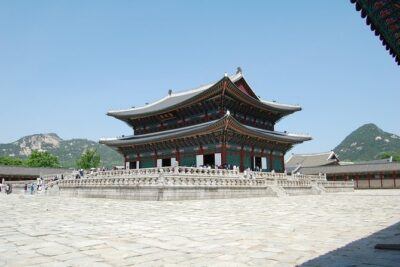
Seoul City Sightseeing Tour Including Gyeongbokgung Palace, N Seoul Tower, and Namsangol Hanok Village
Read our review →Gyeongbok Palace, Bukchon Village, and Gwangjang Tour
Read our review →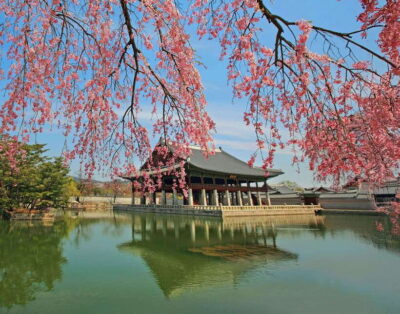
Seoul Highlights: Gyeongbok Palace, Insadong & N Seoul Tower
Read our review →
Seoul City Half Day Tour-Gyeongbok Palace Guard Changing Ceremony
Read our review →
Browse the lists this tour appears in