
Reviewed · DMZ & JSA TOURS
Seoul DMZ Tour with 3rd Tunnel and Red Suspension Bridge
The most striking part of this day is the 3rd Tunnel, a narrow passage built for a North Korean military incursion and found by South Korea in 1978. You walk into the hillside wearing a safety helmet, stooping beneath the low ceiling before climbing back toward daylight. It is an unusual, physical way to understand how close the Korean conflict remains to Seoul.
I like two things especially. First, the tour does not stop at the tunnel and a distant border fence. It adds Imjingak’s memorial sites, Dora Observatory, and the 150-meter Gamaksan suspension bridge, where the 1951 Battle of Solma-ri took place. Second, the guides give the day a human voice. Winnie, Thomas, Kenny, Grace, Leo, Chloe, Stella, and others are praised for clear English, warmth, humor, and thoughtful explanations.
The catch is simple: this is not an easy sightseeing ride. The tunnel includes a long downhill and uphill walk, and the bridge requires a steep climb with many steps. You also need your passport, and a formal lunch is not included, so bring water and snacks.
In This Review
- Key points to know before you book
- Why this DMZ tour feels different
- Leaving Myeongdong for the border
- Imjingak and Pyeonghoa-Nuri Park: history before the border
- Mangbaedan and the pain of separated families
- Walking into the 3rd Tunnel
- Dora Observatory and the view toward North Korea
- Gamaksan Chulleong Bridge and the Battle of Solma-ri
- Food, timing, and what to pack
- The guides make a real difference
- Who should book this day trip?
- Should you book the Seoul DMZ tour?
- FAQ
- How long does the Seoul DMZ tour last?
- Where does the tour start?
- Where does the tour end?
- Is a passport required?
- Does the tour include the Joint Security Area?
- Is lunch included?
- How difficult is the 3rd Tunnel?
- What should I wear?
- Can the tour be canceled?
Key points to know before you book
- The 3rd Tunnel is physically demanding: Expect a steep walk, a low ceiling, safety helmets, and several minutes of stooping.
- Dora Observatory depends on weather: On a clear day, you may see Gaeseong, Songaksan, a Kim Il-sung statue, and a North Korean cooperative farm.
- Gamaksan Bridge adds a different kind of history: The red suspension bridge crosses a scenic mountain setting linked to British troops who fought in 1951.
- The day begins later than many DMZ tours: Departure is around 9 a.m., with an estimated return near 6 p.m.
- There is no scheduled meal: Imjingak offers time for a restroom stop and snacks, but you should pack food and drinks.
- Military rules can change plans: The DMZ may close or cancel without notice, and a current passport is required.
Why this DMZ tour feels different
Many day trips from Seoul focus on one border viewpoint. This outing gives you several ways to understand the divided Korean Peninsula: memorials for separated families, military remains underground, a view toward North Korea, and a battlefield reached by a mountain bridge.
That mix matters. At Imjingak, the division feels personal. In the tunnel, it feels strategic and physical. At Dora Observatory, it becomes a question of distance and visibility. At Gamaksan, the story shifts to the international troops who fought in the Korean War.
For about $45 per person, the price is strong for an eight-hour trip that includes an air-conditioned vehicle, admission fees, and a professional guide. You are paying for transport into a controlled military area as well as interpretation at several stops. The day is not luxurious, but it covers a lot for the money.
The group can be large, with a stated maximum of 500 people. That number is a capacity limit rather than a promise that every departure reaches it, but you should not expect a private tour. The quality of your day will depend partly on how well your guide handles timing and group movement. The most praised guides include Winnie, Thomas, Kenny, Grace, Leo, Chloe, Stella, and Mama Winnie, with particular appreciation for their humor, English, patience, and clear explanations.
More ways to reach the DMZ:
- Best DMZ Tour Korea from Seoul (Red Suspension Bridge Optional)
★ 5.0 · 41,422 reviews - DMZ Tour: 3rd Tunnel, Option(Suspension Bridge, Boat) from Seoul
★ 5.0 · 21,373 reviews - DMZ tour south Korea from Seoul (NK experience hall, defector)
★ 5.0 · 20,599 reviews
Leaving Myeongdong for the border
You meet at or near Myeongdong Subway Station in central Seoul. Hotel pickup and drop-off are not included, so allow time to reach the assigned meeting point. The tour uses an air-conditioned vehicle, and the ride toward the border becomes an important part of the experience because the guide explains the Korean War and the division of the peninsula along the way.
The later 9 a.m. start is a useful feature. Some DMZ trips begin around 6:30 a.m., which can be hard after a late arrival in Seoul. A 9 a.m. departure still creates a full day, but it gives you a more reasonable morning.
Traffic can affect the pickup schedule. One reported problem involved a delay of about 10 minutes, likely due to busy Seoul roads. I would not plan a tight afternoon reservation after this tour. The stated duration is about eight hours, and the return is expected near Myeongdong, but the final drop-off point can vary.
Imjingak and Pyeonghoa-Nuri Park: history before the border
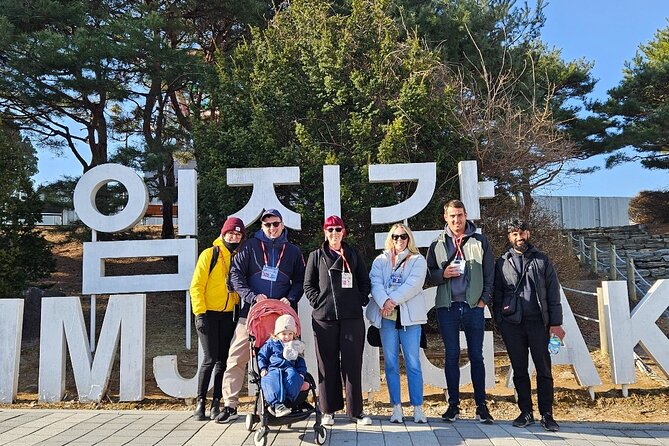
The first main stop is Imjingak Pyeonghoa-Nuri Park, about seven kilometers from the Military Demarcation Line. Imjingak was built in 1972 with the hope that reunification might one day be possible. The area includes the three-story Imjingak building, monuments, Unification Park, and the North Korea Center.
This is a good opening stop because it gives you time to get your bearings. The listed visit lasts about 30 minutes, and it can also serve as a chance to use the restroom and buy breakfast or snacks. You are not simply rushing from Seoul to a military checkpoint. You begin with the civilian and emotional side of the border.
The park’s meaning is more important than its architecture. It is tied to families separated by the Korean War and to the continuing hope of reunification. You may find the stop less visually dramatic than the later tunnel or observatory, but it gives the rest of the day a necessary human context.
The tour also includes Dokgae Bridge, a wartime bridge that was blown up during the Korean War and later rebuilt. That detail helps you see the border area as a place shaped by destroyed roads, rail lines, and crossings, not just a modern political boundary.
Mangbaedan and the pain of separated families
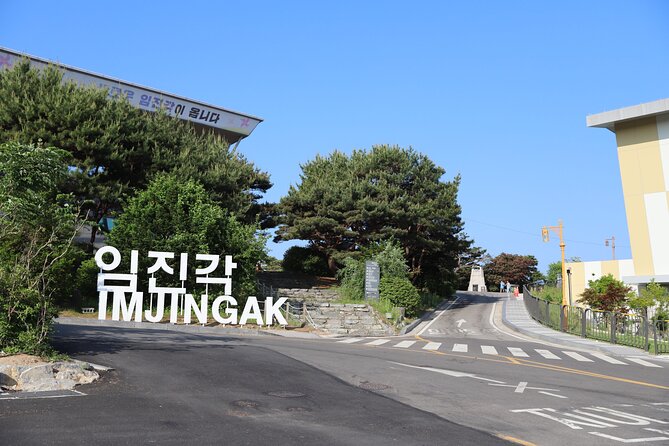
Mangbaedan is a short stop, listed at about 15 minutes. It is a place where people with family roots in North Korea visit on New Year’s Day. They come to honor relatives they cannot visit across the border.
You will not spend hours here, but the stop can be quietly powerful. It puts a face on a conflict often explained through maps, military terms, and dates. The Korean War did not simply create two governments. It split families, and that separation continues across generations.
I would pay attention to the guide’s explanation here rather than treating Mangbaedan as a quick photo stop. The site may not offer the excitement of the bridge or the tunnel, but it is one of the places that makes the day more than a military-themed excursion.
More suspension bridge walks:
- Seoul: DMZ Tour with Optional Suspension Bridge
★ 4.8 · 5,277 reviews - Signature DMZ Tour: Exclusive Defector Talk & Suspension Bridge
★ 5.0 · 4,459 reviews - Ultimate Korea DMZ Tour from Seoul (Gondola & Suspension Bridge)
★ 5.0 · 2,396 reviews - DMZ; NK Defector, 3rd Tunnel, Suspension Bridge,Hotel pickup
★ 4.9 · 2,055 reviews
Walking into the 3rd Tunnel
The 3rd Tunnel is the tour’s most demanding and memorable stop. South Korea discovered it in 1978, and the tunnel measures about 1,635 meters long, two meters wide, and two meters high. It lies roughly 52 kilometers from Seoul.
The walk begins with a long descent. Practical details from the experience suggest around 800 meters down to the lower section, followed by about 180 meters of relatively level walking. The ceiling becomes low enough that a person around 176 centimeters tall may repeatedly tap a helmet while stooping. You wear a safety hat, but that does not make the passage roomy.
The return walk is the hard part. You must climb back up the same steep route, and several people have described it as strenuous. The tunnel is cool, with one account putting the temperature at about 11 degrees Celsius, so it can feel refreshing at first. After the uphill walk, the physical effort becomes clear.
This stop requires a moderate level of fitness. Wear sturdy walking shoes, not flip-flops, slippers, or heels. If you have knee, balance, back, or mobility concerns, think carefully before booking. The tour description itself warns that a moderate fitness level is needed, and the tunnel is not suitable for treating the day as a relaxed bus outing.
Why make the effort? The tunnel lets you experience the scale of the threat in a way a museum display cannot. Its narrow dimensions, length, and low roof make the military purpose feel real. You do not need to be a history specialist to understand the basic point: a passage cut through rock could have moved large numbers of troops toward South Korea.
The visit is listed at about 40 minutes, though the exact pace will depend on the group. Keep your belongings light. A small bag is easier to manage than a large backpack in a narrow passage.
Dora Observatory and the view toward North Korea
At Dora Observatory, you look across the border toward North Korea. On a clear day, the view may include Gaeseong, Songaksan, a Kim Il-sung statue, and the Geumamgol cooperative farm. The stop lasts about 30 minutes.
Weather is the deciding factor. Haze can soften or block the view, while clear conditions may let you pick out distant buildings and working areas. This is not a guaranteed close-up look at North Korea, and the experience can feel more like studying a broad panorama than seeing daily life in detail.
Still, the observatory gives you something the tunnel cannot: a sense of geography. You can see that the border is not an abstract line on a map. It is a real region with hills, fields, settlements, and restricted movement on both sides.
Bring patience and listen to the guide’s directions about where to look. The guides are often the key to making the view useful. Grace, for example, is praised for using photos and videos on the bus, while Thomas, Kenny, Winnie, and others are noted for explaining the political and historical background in an approachable way.
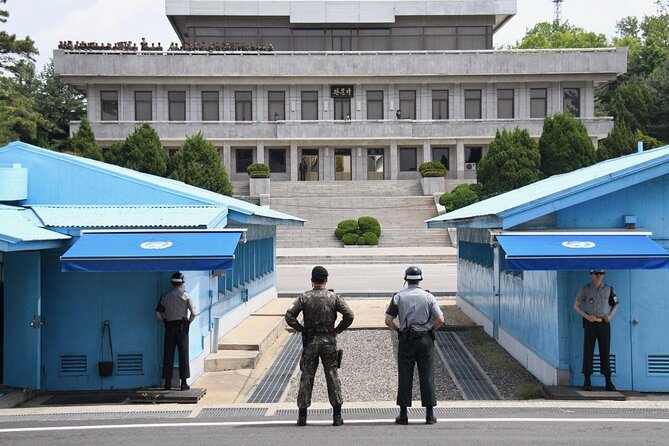
The tour does not include the Joint Security Area, or JSA. That is important if you have a specific image of stepping into the blue conference buildings at Panmunjom. This experience offers the 3rd Tunnel and Dora Observatory instead, along with the mountain bridge.
Gamaksan Chulleong Bridge and the Battle of Solma-ri
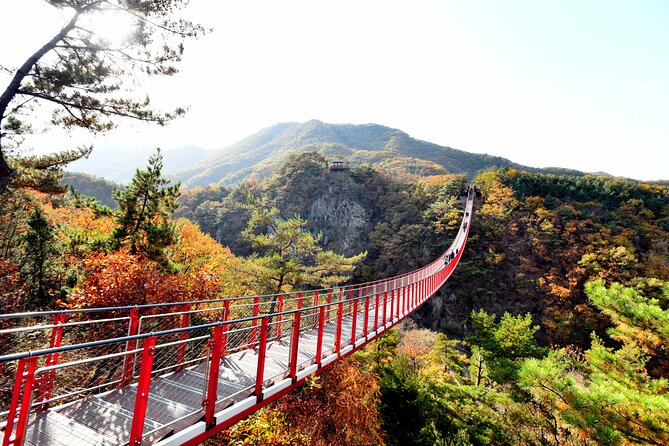
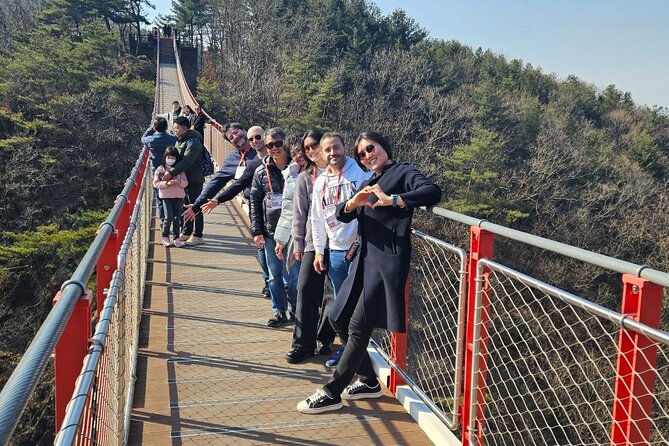
The final major stop takes you to Gamaksan Chulleong Bridge in Solma-ri. The red suspension bridge measures about 150 meters long and 1.5 meters wide. It sits in the area of the Battle of Solma-ri, also called the Battle of Gloster Hill, fought in 1951.
The bridge brings a welcome change after the enclosed tunnel. You are outside, surrounded by mountain scenery, and the crossing itself adds a little excitement. The red structure makes for strong photos, but the location carries a serious meaning. British troops fought and died here while defending against North Korean forces during the Korean War.
Reaching the bridge is not effortless. The road-to-bridge route includes a steep climb, and one account estimates roughly 400 steps. The visit is listed at about one hour, giving you time to walk up, cross, take pictures, and hear about the battle.
The bridge is particularly good for connecting the Korean War to the wider international story. The conflict was not fought only by Koreans. British forces were part of the United Nations effort, and the memorial setting reminds you of the cost paid by foreign soldiers as well as Korean civilians and troops.
If your legs are already tired from the tunnel, pace yourself here. The climb may feel harder than the bridge crossing itself. Comfortable shoes and water are not optional extras on this particular day.
Food, timing, and what to pack
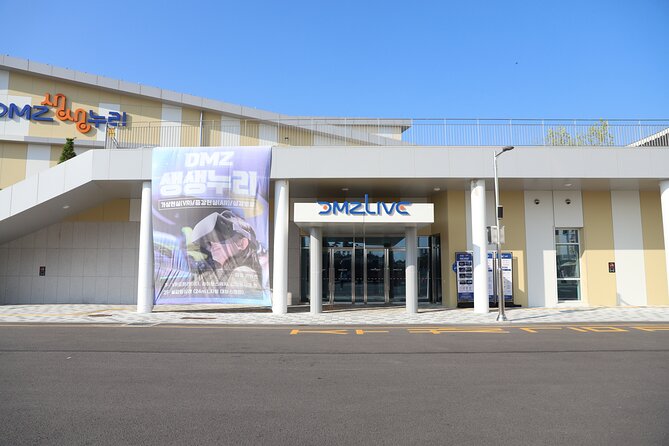
There is no formal lunch break included. You may have chances to buy snacks, coffee, or local treats near the border, and one account specifically mentions soy bean ice cream. Do not rely on finding a full meal at a convenient time. Pack a sandwich, fruit, energy bars, and a refillable drink if possible.
The full day can involve many thousands of steps. One particularly demanding account recorded about 22,700 steps, with much of the walking on slopes and stairs. That will not be everyone’s total, but it gives you a useful picture of the physical load.
I would bring:
- A current passport
- Water and snacks
- Comfortable walking shoes with good grip
- Light layers for the cooler tunnel
- A phone or camera
- A small bag that will not be awkward in the tunnel
A mobile ticket is provided, and confirmation arrives at booking. The DMZ is operated by the military, so the itinerary can be canceled without prior notice. A minimum number of participants is also required. If the operator cancels for that reason, you are offered another date or experience, or a full refund.
Free cancellation is available up to 24 hours before the start time. Changes or cancellations inside that 24-hour window are not accepted for a refund.
The guides make a real difference
The strongest part of the human side of this tour is the guide service. Names frequently associated with especially strong days include Mama Winnie, Thomas, Kenny, Grace, Leo, Chloe, and Stella.
You should expect the guide to explain the war, the DMZ, and each site during the bus ride and at the stops. The best guides add stories, photos, videos, humor, and practical help with timing. Winnie is noted for patience and help with individual and group photos. Thomas is praised for making difficult history lively. Kenny is known for a friendly, entertaining approach, while Grace is praised for clear English and a positive manner.
Your exact guide will not necessarily be one of these people, so do not book solely around a name. The broader pattern is encouraging: the guide role is central to the experience, not an afterthought. A border visit without context can become a series of viewpoints and military signs. Good interpretation turns it into a day you can understand.
Who should book this day trip?
I would recommend this tour if you want a broad introduction to the DMZ and prefer a guided day rather than arranging several difficult connections yourself. It suits solo visitors, couples, families with teenagers, and anyone interested in the Korean War, modern politics, and the human cost of division.
It is also a good choice if you want a later start than the very early DMZ departures. The nine o’clock meeting time makes it easier to fit into a short Seoul visit.
I would hesitate if you want a gentle sightseeing day, dislike enclosed spaces, or struggle with steep steps. The tunnel and bridge are not minor add-ons. Together, they make up much of the day’s physical challenge.
At $45, the value is very good if you use the included transport and guide service. You get five distinct stops, transport from central Seoul, entrance fees for the tunnel and observatory, and a full day of explanation. The tradeoff is comfort: no meal, possible traffic delays, a potentially large group, and a strenuous route.
Should you book the Seoul DMZ tour?
Book it if you want to understand the DMZ through more than a distant photo. Imjingak and Mangbaedan add personal meaning, the 3rd Tunnel gives you a physical sense of wartime planning, Dora Observatory provides the border view, and Gamaksan Bridge connects the story to the British soldiers who fought in 1951.
Skip it if you need an easy day or specifically want the JSA. For most reasonably fit visitors, though, this is a well-priced and substantial way to see one of Korea’s most important places. Bring your passport, eat beforehand, pack snacks, and wear shoes made for hills.
FAQ
How long does the Seoul DMZ tour last?
The tour lasts approximately eight hours. The planned schedule begins around 9 a.m. and may return near 6 p.m.
Where does the tour start?
The meeting point is in the Myeongdong area of Seoul, near Myeongdong Subway Station. Hotel pickup is not included.
Where does the tour end?
The stated end point is in Myeongdong, Seoul. The exact return point may vary, so confirm the drop-off instructions for your booking.
Is a passport required?
Yes. You must bring a current valid passport on the day of travel.
Does the tour include the Joint Security Area?
No. A visit to the Joint Security Area, or JSA, is not included.
Is lunch included?
No. Meals and beverages are not included, and there is no official lunch break. Bring snacks and drinks. You may have opportunities to buy food or coffee during the day.
How difficult is the 3rd Tunnel?
The tunnel requires a steep descent and climb, walking in a narrow passage, and several minutes of stooping under a low ceiling. A moderate level of physical fitness is recommended.
What should I wear?
Wear comfortable walking shoes. Flip-flops, slippers, and high-heeled shoes are strongly discouraged because the route includes steep paths and many steps.
Can the tour be canceled?
Yes. The DMZ is operated by the military and the tour can be canceled without prior notice. If the minimum number of participants is not met, you will be offered another date or experience, or a full refund.
Just added around Seoul
- Incheon Airport Private Transfer between Seoul City★ 4.0 · 4 reviews
- Seoul’s Stars: Open Mic with Local & International Talent★ 4.8 · 4 reviews
- Samaksan Cable Car and Nami Island Day Escape with Railbike★ 4.0 · 4 reviews
- DMZ 2nd Tunnel and Cheorwon Peace Observatory with Admission★ 5.0 · 4 reviews
- Nami & Maple Road & Theatre des Lumieres Day Tour from Seoul★ 4.8 · 4 reviews
- Hire Photographer, Professional Photo Shoot – Seoul★ 5.0 · 4 reviews
- [KoreaByLocal] Authentic Seoul Night Walk and Chicken & Beer★ 5.0 · 4 reviews
- Seoul Film Camera Club★ 5.0 · 4 reviews
DMZ & JSA Tours, compared.
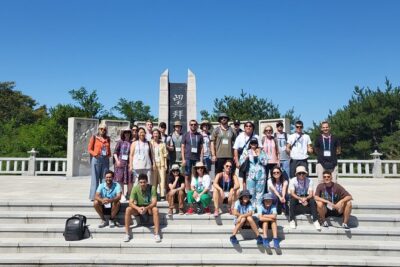
Best DMZ Tour Korea from Seoul (Red Suspension Bridge Optional)
Read our review →
DMZ Tour: 3rd Tunnel, Option(Suspension Bridge, Boat) from Seoul
Read our review →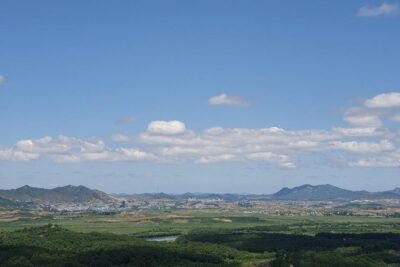
DMZ tour south Korea from Seoul (NK experience hall, defector)
Read our review →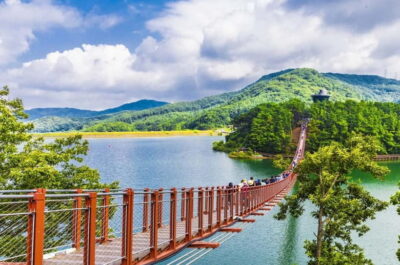
DMZ Insider Tour: 3rd Tunnel, NK Defector Meet & Red Bridge
Read our review →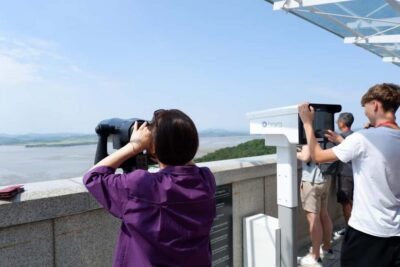
Thrilling Korean DMZ 3rd Tunnel Tour from Seoul + Red Bridge Rush
Read our review →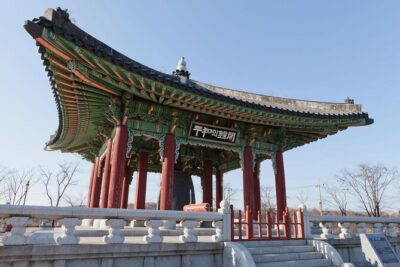
DMZ Past and Present: Korean Demilitarized Zone Tour from Seoul
Read our review →
Ultimate Korea DMZ Tour from Seoul (Gondola & Suspension Bridge)
Read our review →Browse the lists this tour appears in