
Reviewed · PALACE TOURS
Seoul: Deoksugung Palace Night Tour
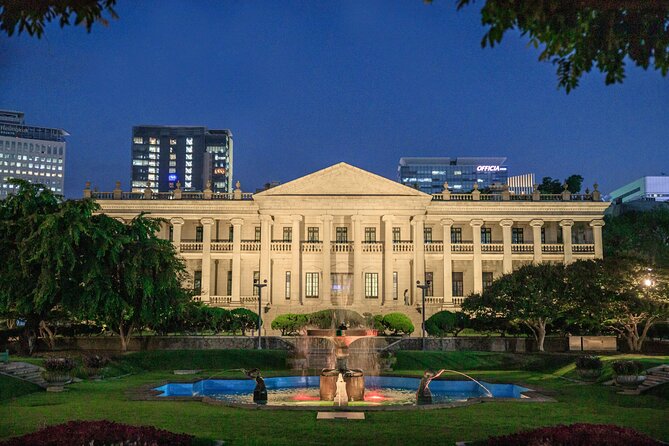
Deoksugung Palace takes on a different character after sunset. Its courtyards grow quiet, the stone walls catch the evening light, and the mix of Korean palace buildings and Western architecture becomes easier to appreciate. This is not just a stroll past pretty gates. It is a compact lesson in the final years of the Joseon dynasty and the short-lived Korean Empire.
I like the small-group feel, with a maximum of 20 people and the chance for direct questions. I also like the setting: City Hall and Gwanghwamun are close by, so you can fit the tour into an evening without a long ride across Seoul. The main consideration is timing. Deoksugung closes on Mondays, the tour requires at least four participants, and late arrivals cannot join after the walk begins.
In This Review
- Key points to know before booking
- Why Deoksugung works especially well at night
- Meeting at City Hall Station
- Junghwajeon, the throne hall
- Seokjojeon and the Western side of the palace
- Seokeodang and King Gojong’s connection
- Hamnyeongjeon, the king’s bed-chamber
- Jeonggwanheon and the end of the walk
- The stone wall walk beside Deoksugung
- What the $35 price gets you
- Group size, guide quality, and languages
- Timing, weather, and booking cautions
- Who should book the Deoksugung night tour
- Should you book it?
- FAQ
- Where does the Deoksugung Palace night tour begin?
- What time does the tour start?
- How long does the tour last?
- Where does the tour finish?
- Which languages are available?
- Is Deoksugung Palace open on Mondays?
- What happens if fewer than four people book?
- Can I cancel for a full refund?
Key points to know before booking
- Night lighting changes the palace: Dusk and evening light bring out details that are easy to miss during a daytime visit.
- The tour explains Korea’s transition: You hear about the Korean Empire, the end of Joseon rule, modernization, and the pressure of Japanese invasion.
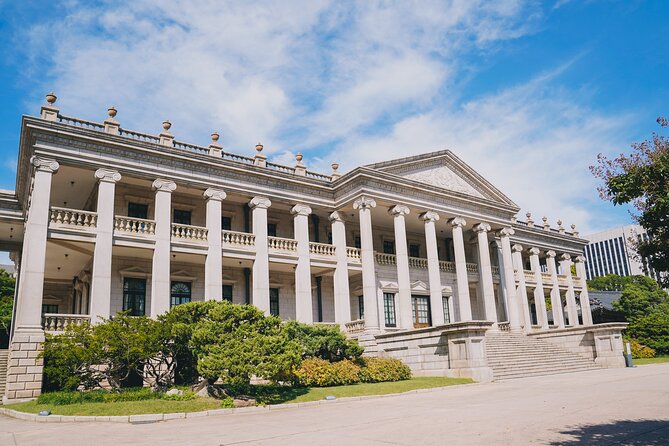
- Traditional and Western buildings share one palace: Deoksugung is unusual among Seoul’s royal sites for this combination.
- The guide matters here: Alan Han and Mr. Lee are specifically noted for clear history lessons and strong storytelling.
- The meeting point is central: Start near Exit 1 of City Hall Station, served by subway Lines 1 and 2.
- Plan around the minimum group size: If fewer than four people book, the activity can be canceled.
Why Deoksugung works especially well at night
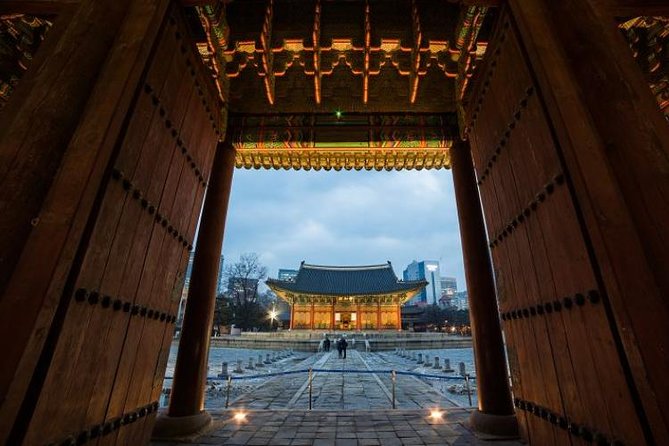
Seoul has several major royal palaces, but Deoksugung tells a different story. It became important during the final chapter of royal rule, when Korea was trying to modernize while facing intense pressure from abroad. The palace served as the main royal residence instead of Gyeongbokgung for a period, giving it a political importance that is easy to overlook if you only come for photographs.
The evening setting helps. You see the palace after the working day has begun to fade, when the surrounding city feels less intrusive. The contrast between old palace walls and modern Seoul is part of the appeal. You are near City Hall, yet inside the grounds the pace becomes slower and more reflective.
I would choose this tour if you want context rather than a quick photo stop. The buildings are not treated as isolated objects. Your guide connects them to King Gojong, the Korean Empire, and Korea’s first serious push toward modernization in centuries.
The tour lasts about two hours. That is long enough to cover the important buildings without turning the evening into a full lecture. It is also short enough to pair with dinner or another activity in central Seoul.
More palace visits:
- Seoul: Gyeongbok Palace, Bukchon Village, and Gwangjang Tour
★ 4.9 · 2,321 reviews - Best Seoul City Tour (Gyeongbokgung Palace,Insadong,Namsan Tower)
★ 5.0 · 1,647 reviews - Small-Group Royal Palace and Seoul City Tour (hotel pick-up)
★ 5.0 · 1,474 reviews
Meeting at City Hall Station
The listed meeting place is in front of Exit 1 of City Hall Station, serving subway Lines 1 and 2. The start time is listed as 6:30 p.m., while the meeting instructions mention 6:20 p.m. I would treat 6:20 as the safer arrival time and confirm the final details in the email or WhatsApp message sent before the tour.
That small time difference matters because joining after the tour begins is not allowed. The group cannot pause its route for a late arrival, so allow extra time if you are coming by subway, walking from Gwanghwamun, or finding the correct station exit.
This central meeting point is one of the tour’s practical strengths. You do not need to organize a separate taxi to a distant neighborhood. You can reach the palace from the city center, then continue on foot or by subway after the tour ends.
The tour finishes at Jeonggwanheon, inside the palace grounds. The final location is given as Jeonggwanheon, 99 Sejong-daero. Since the start and end points are not exactly the same, keep that in mind when planning your next stop.
Junghwajeon, the throne hall
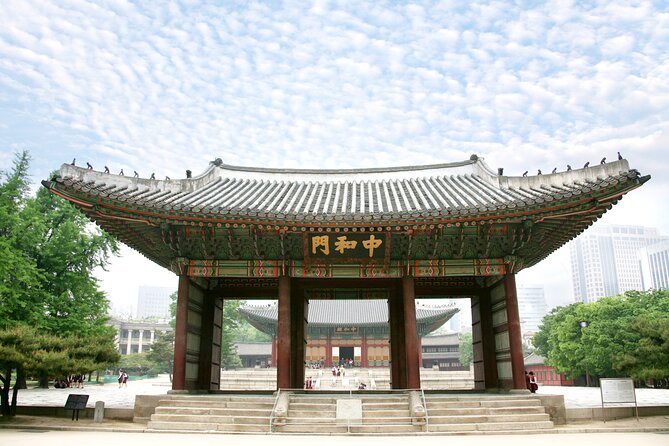
The first major stop is Junghwajeon, the main throne hall. This is where the formal side of palace life comes into focus. Your guide explains how the hall functioned and places it within the political changes that were taking place around it.
A self-guided visit can show you the roofline, courtyard, and painted details. It is less likely to explain why Deoksugung mattered so much during the Korean Empire. That added context is the main reason to choose a guided evening visit instead of simply walking through the palace with a map.
Junghwajeon also gives you an early look at the palace’s scale. Deoksugung is not simply a smaller copy of Gyeongbokgung. Its importance comes from the events connected to it and from the way older Korean forms sit beside newer architectural ideas.
If you are mainly interested in palace photography, you will have time to admire the building. If you want detailed architectural analysis, the amount of information may depend on the guide and the group’s questions. The advertised languages are English and Chinese.
Seokjojeon and the Western side of the palace
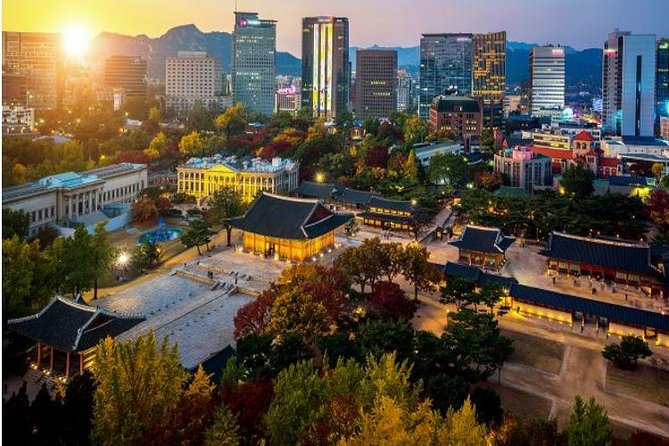
Seokjojeon is the tour’s clearest example of Western-style architecture within Deoksugung. Its presence helps explain why this palace feels different from Seoul’s other royal compounds.
The building is especially valuable when you see it as part of Korea’s modernization effort, rather than as an odd foreign object placed beside traditional halls. Your guide connects its design to the ambitions and tensions of the Korean Empire. That makes the building easier to understand and gives the evening route a useful change of pace.
I like this part of the walk because it prevents the tour from becoming a standard palace circuit. You are not looking only at tiled roofs, wooden halls, and courtyards. You are seeing a royal site caught between older customs and new political realities.
The supplied information does not specify the interior access or how long the group remains at Seokjojeon. Plan on an exterior explanation unless your guide confirms otherwise. The value here is the comparison between buildings and the story attached to them.
A few more Seoul trips worth weighing up
- Seoul: Night Market Food Tour with Local Guide
★ 4.9 · 943 reviews - Seoul: Evening Dark History, Folklore & Ghost Story Walking Tour
★ 5.0 · 593 reviews - Small-Group Night Food Tour in Seoul with Korean BBQ
★ 5.0 · 304 reviews - Seoul Night Palace & Market Food Tour with Vehicle
★ 5.0 · 275 reviews
Seokeodang and King Gojong’s connection
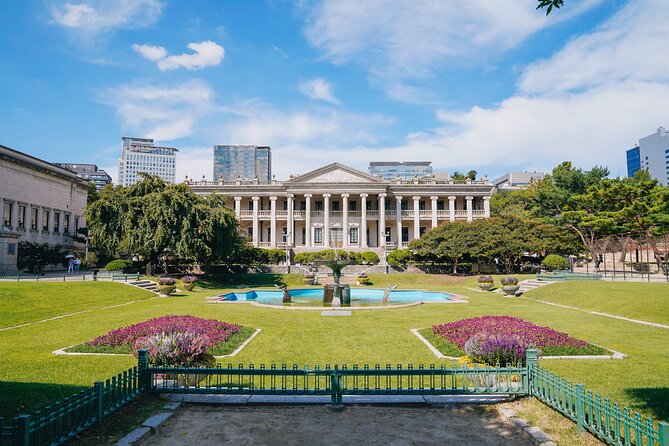
Seokeodang is described as the building most beloved by King Gojong. That detail gives the tour a more personal turn. Instead of hearing only about institutions and battles, you get a sense of the king’s relationship with one particular place.
A good guide can use a building like this to make a complicated period easier to follow. King Gojong ruled during a time of major change, and Deoksugung was tied closely to the pressures surrounding the Korean Empire. The stop helps connect the broad political story with the daily life of the royal household.
The building also adds variety to the route. After the formal scale of Junghwajeon and the Western appearance of Seokjojeon, Seokeodang brings you back to a more traditional part of the palace. I would pay attention to how your guide compares the buildings, since the contrasts are central to understanding Deoksugung.
Hamnyeongjeon, the king’s bed-chamber
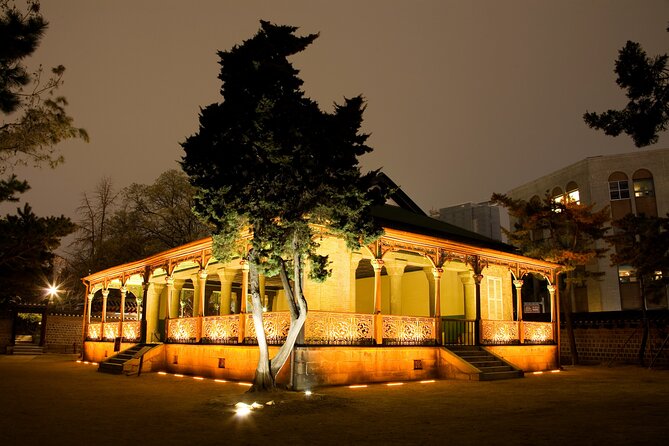
Hamnyeongjeon was the king’s bed-chamber. It is a quieter stop, but it can be one of the most useful for understanding the palace as a place where people lived, not only where ceremonies took place.
The guide explains the building’s role within the royal compound and links it to King Gojong and the final period of royal authority. The story of Korea’s modernization can feel distant when discussed only through political events. A private royal space makes that period more human.
Night is a good time for this kind of stop. The palace is less exposed to the distractions of daytime city traffic, and the walk has a calmer mood. Still, you should not expect a theatrical performance or staged reenactment. This is a spoken history and architecture tour led on foot.
The advertised duration is approximate, so the pace may change with the group’s questions. If you enjoy asking detailed questions, this is a good setting for it. The tour specifically invites questions for the palace guide.
Jeonggwanheon and the end of the walk
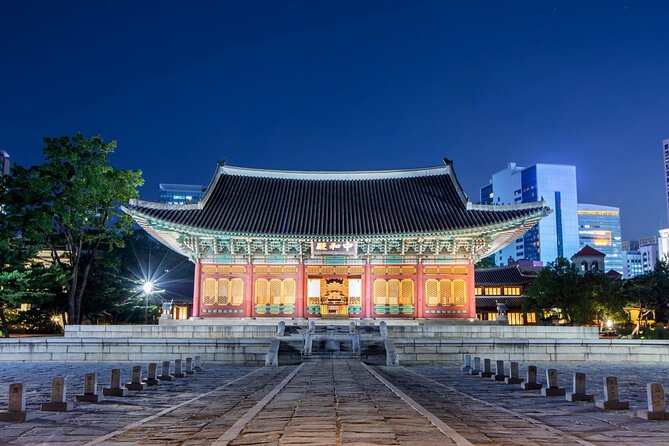
The tour ends at Jeonggwanheon, also spelled Jungkwanhun in the route description. It is identified as a cafeteria, and it gives the walk a final connection to the palace’s later Western influence and social spaces.
Ending inside the grounds is convenient, but it also means you should check your route out before booking dinner or a timed reservation. The meeting point is near City Hall Station, while the finish is at Jeonggwanheon. You may need to walk back toward the station or arrange your next stop from the palace exit.
This final stop rounds out the main theme of Deoksugung: old and new forms sharing the same royal setting. By this point, the palace should make more sense as a place shaped by political uncertainty, modernization, and foreign pressure.
The stone wall walk beside Deoksugung
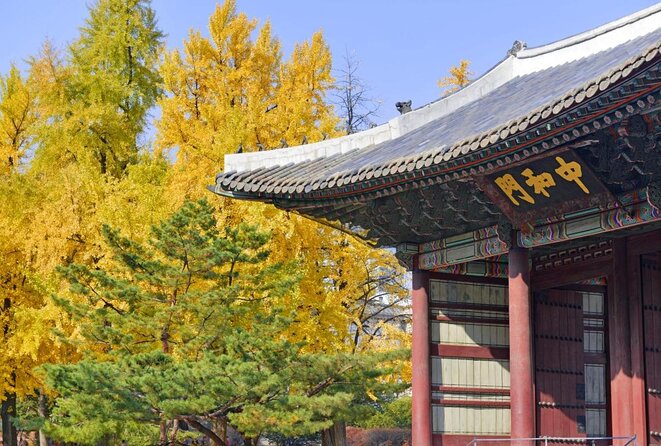
Do not leave the area without noticing the stone wall beside Deoksugung. It is famous for its beauty and gives you a fine closing view of the palace district.
The wall is not listed as a separate stop with a set explanation, so treat it as an extra detail around the tour rather than a guaranteed extended walk. Still, its location makes it easy to appreciate before or after the palace visit.
I would arrive early enough to see the area around City Hall in daylight, then watch the setting change as the evening begins. That lets you enjoy both the urban surroundings and the palace’s quieter nighttime mood without adding another booking.
What the $35 price gets you
At $35 per person, this is priced as a focused guided experience rather than a simple admission visit. The listed admission ticket is free, so the main value is the guide’s interpretation, route planning, and chance to ask questions.
That distinction is important. If you are happy reading signs and following a palace map, you may prefer to visit independently. If you want help connecting Junghwajeon, Seokjojeon, Seokeodang, and Hamnyeongjeon to the final years of royal Korea, the fee is easier to justify.
The value improves for anyone interested in architecture. Deoksugung’s mix of traditional Korean and Western-style buildings gives the guide more to explain than a standard sequence of royal halls. The evening light also changes the visual experience without requiring a longer visit.
The price is less attractive if you want a broad survey of all Seoul palaces. This tour covers one palace in about two hours. It does not replace a full day of palace sightseeing, and the available information does not suggest that it includes other sites.
Group size, guide quality, and languages
The group can include up to 20 people, but the activity requires at least four participants. That creates two practical points. A group of four to eight may feel quite personal, while a full group of 20 can make questions and quiet viewing a little harder.
The guide is central to the experience. Alan Han is specifically associated with a strong explanation of the end of the Joseon dynasty and the architecture of Deoksugung. Another guide, Mr. Lee, is described as punctual, well prepared in history, and an excellent storyteller.
Those details matter because this is not a tour built around a long list of attractions. Much of what you gain comes from how the guide explains the buildings and answers questions. The tour offers explanations in English and Chinese, so choose it if one of those languages works for you.
The guides are professional palace guides, but you should not expect to record or film the tour. Recording and filming are not allowed. Pets are also not permitted, and there is no special place to leave them.
Timing, weather, and booking cautions
The tour is scheduled for the evening, with a listed start time of 6:30 p.m. The exact light level will vary by season, so the mood may range from dusk to full darkness. The experience is designed around the palace’s nighttime atmosphere, not a daytime entry followed by a late finish.
Deoksugung is closed on Mondays. On that day, the operator offers a Gyeongbokgung Palace tour instead, but you should confirm that alternative before relying on it for your plans.
The activity requires good weather. If poor weather causes cancellation, you are offered another date or a full refund. The same applies if the minimum number of four participants is not reached.
For a normal cancellation, you can receive a full refund if you cancel at least 24 hours before the local start time. Changes or cancellations inside that 24-hour window are not accepted for a refund.
Leave a working Korean contact number, WhatsApp number, or another available messenger contact such as WeChat or Line. The operator uses email or WhatsApp to send meeting details and cancellation notices. An incorrect or unavailable number can create a serious problem, especially if the group does not reach the minimum.
Who should book the Deoksugung night tour
I would recommend this tour to you if you enjoy history, architecture, and small details that are easy to miss alone. It suits first-time visitors who want a clear introduction to Deoksugung, as well as repeat visitors who have already seen the better-known palace sites.
It is particularly useful for people interested in King Gojong, the Korean Empire, and Korea’s difficult move toward modernization. The Western-style buildings give the tour a subject that goes beyond standard royal-palace sightseeing.
Families and older visitors can also manage the two-hour length if they are comfortable walking through palace grounds. The information says most people can participate, but it does not provide specific mobility details, so ask the operator if you need support beyond ordinary walking.
I would skip it if you dislike fixed meeting times, cannot risk a weather-related change, or prefer to explore without a guide. You should also avoid booking until your schedule is firm, since late arrival is not accepted and changes inside 24 hours are not allowed.
Should you book it?
Book this Deoksugung night tour if you want the palace explained, not just photographed. For $35, you are paying mainly for the guide’s storytelling and for a carefully focused look at Korea’s final royal era, with the bonus of seeing traditional and Western buildings together after dark.
The strongest reason to go is the combination of place and subject. Deoksugung is central, easy to reach, and visually appealing, but its real value comes from the political story tied to it. Confirm the meeting time, leave a working contact number, and make sure at least four people are likely to join. If those details fit your plans, this is a smart two-hour addition to a Seoul evening.
FAQ
Where does the Deoksugung Palace night tour begin?
The tour begins in front of Exit 1 of City Hall Station, served by subway Lines 1 and 2. The meeting location is in Jung District, Seoul.
What time does the tour start?
The listed start time is 6:30 p.m. The meeting instructions mention 6:20 p.m., so arrive early and confirm the final meeting details by email or WhatsApp.
How long does the tour last?
The tour lasts about two hours.
Where does the tour finish?
The tour finishes at Jeonggwanheon, listed at 99 Sejong-daero in Jung District, Seoul.
Which languages are available?
The tour provides explanations in English and Chinese.
Is Deoksugung Palace open on Mondays?
No. Deoksugung Palace is closed on Mondays. The operator says you can book a Gyeongbokgung Palace tour instead.
What happens if fewer than four people book?
The tour can be canceled if fewer than four people participate. You will be offered another date or experience, or a full refund.
Can I cancel for a full refund?
Yes. You can cancel at least 24 hours before the local start time for a full refund. Cancellations or changes made less than 24 hours before the start time are not accepted for a refund.
Just added around Seoul
- Incheon Airport Private Transfer between Seoul City★ 4.0 · 4 reviews
- Seoul’s Stars: Open Mic with Local & International Talent★ 4.8 · 4 reviews
- Samaksan Cable Car and Nami Island Day Escape with Railbike★ 4.0 · 4 reviews
- DMZ 2nd Tunnel and Cheorwon Peace Observatory with Admission★ 5.0 · 4 reviews
- Nami & Maple Road & Theatre des Lumieres Day Tour from Seoul★ 4.8 · 4 reviews
- Hire Photographer, Professional Photo Shoot – Seoul★ 5.0 · 4 reviews
- [KoreaByLocal] Authentic Seoul Night Walk and Chicken & Beer★ 5.0 · 4 reviews
- Seoul Film Camera Club★ 5.0 · 4 reviews
Palace Tours, compared.
Gyeongbok Palace, Bukchon Village, and Gwangjang Tour
Read our review →
Best Seoul City Tour (Gyeongbokgung Palace,Insadong,Namsan Tower)
Read our review →
Small-Group Royal Palace and Seoul City Tour (hotel pick-up)
Read our review →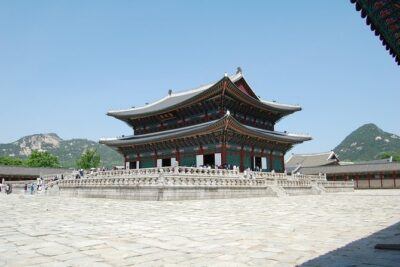
Seoul City Sightseeing Tour Including Gyeongbokgung Palace, N Seoul Tower, and Namsangol Hanok Village
Read our review →Gyeongbok Palace, Bukchon Village, and Gwangjang Tour
Read our review →
Seoul Highlights: Gyeongbok Palace, Insadong & N Seoul Tower
Read our review →
Seoul City Half Day Tour-Gyeongbok Palace Guard Changing Ceremony
Read our review →Browse the lists this tour appears in