
Reviewed · GYEONGBOKGUNG PALACE
Korean Heritage Tour: Palaces and Villages of Seoul Including Gyeongbokgung Palace
Seoul’s past comes into focus quickly on this full-day outing, from the painted gates of Gyeongbokgung Palace to the working demonstrations at Korean Folk Village. You also see Jogyesa Temple, the National Folk Museum, and the former Blue House area without having to piece the route together by subway or taxi.
I like the efficient mix of royal architecture and everyday traditions, and I like that lunch and round-trip hotel transport are included. The main caution is the ginseng sales stop, which can feel unrelated to Korean heritage and may take time away from the sights.
In This Review
- Key points to know before booking
- What this Seoul heritage day actually covers
- Gyeongbokgung Palace: the essential first stop
- The National Folk Museum and the story behind daily life
- Jogyesa Temple: a brief look at Seoul’s Buddhist center
- Korean lunch and the ginseng center
- Korean Folk Village: crafts and a recreated traditional setting
- How the guides and group size affect the day
- Is $140 a fair price for this full day?
- Who will get the most from this itinerary?
- Should you book the Korean Heritage Tour?
- FAQ
- How long does the Korean Heritage Tour last?
- What time does the tour start?
- Is hotel transportation included?
- What happens if I book for a Tuesday?
- Is lunch included?
- How much walking is involved?
- How many people can join the tour?
Key points to know before booking
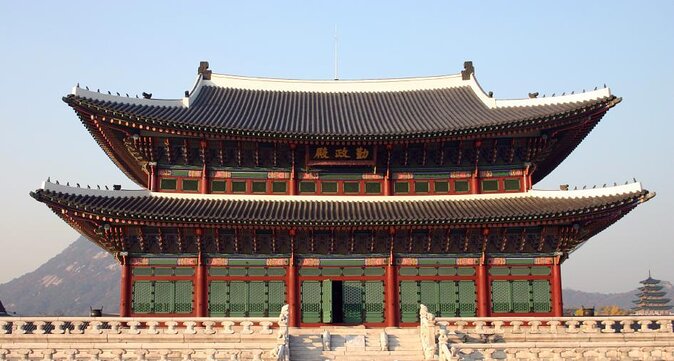
- Gyeongbokgung sets the tone: Walk through the largest of Seoul’s Five Grand Palaces, with about an hour for the guided visit.
- The afternoon changes pace: Korean Folk Village offers pottery, weaving, embroidery, and traditional craft demonstrations in a recreated historic setting.
- Lunch is part of the experience: A traditional Korean meal is included, and dietary needs should be shared when booking.
- Expect a shopping stop: The ginseng center lasts about 30 minutes and is the tour’s most disputed feature.
- Tuesday has a different palace: Gyeongbokgung closes that day, so the route switches to Deoksugung Palace and the Seoul Museum of History.
- The group stays small: The tour requires at least four people and accepts no more than 10, though morning and afternoon guiding may be split.
What this Seoul heritage day actually covers
This is an ambitious introduction to old Seoul. Over roughly 8 hours and 30 minutes, you move between royal grounds, museum displays, a Buddhist temple, a Korean restaurant, a ginseng center, and Korean Folk Village.
That range is the reason to consider it. You get an organized look at court life, religious practice, domestic customs, and traditional crafts in one day. The tradeoff is pace. Several stops are short, and the route can feel more like a survey than a slow, reflective visit.
Pickup begins around 8:30 in the morning from your Seoul hotel. You travel by air-conditioned coach, which is useful in a city where summer heat, winter cold, and long road crossings can wear you down. Hotel transport also makes this a practical choice for a first full day, especially if you want a guide to handle the route.
The tour requires a minimum of four people and has a maximum of 10. That is a much more manageable size than a large sightseeing bus, but the exact feel can depend on the departure. Some outings use one guide for the morning and another for the afternoon.
English ability and presentation style can also vary. Guides named Sunny, Winnie, Dora, David, and Michelle have been singled out for clear explanations, humor, and care with the group. On other departures, the first guide has been hard to hear or too brief. If you need detailed historical commentary, stay near the guide and speak up when the group moves on.
More Gyeongbokgung visits:
- Seoul: Gyeongbok Palace, Bukchon Village, and Gwangjang Tour
★ 4.9 · 2,321 reviews - Best Seoul City Tour (Gyeongbokgung Palace,Insadong,Namsan Tower)
★ 5.0 · 1,647 reviews - Seoul City Sightseeing Tour Including Gyeongbokgung Palace, N Seoul Tower, and Namsangol Hanok Village
★ 5.0 · 1,423 reviews
Gyeongbokgung Palace: the essential first stop
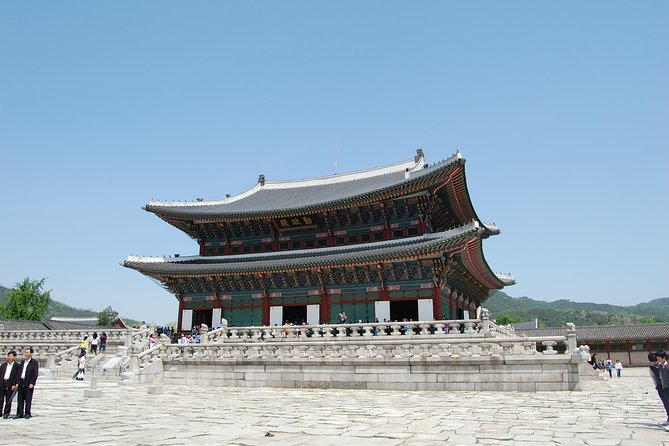
Gyeongbokgung Palace was built in 1395 as the first royal palace of the Joseon Dynasty. It is also the largest of Seoul’s Five Grand Palaces, so even a one-hour visit gives you a strong sense of its scale.
The palace is a sequence of gates, courtyards, pavilions, and royal halls. The painted details and broad stone spaces make this one of the best places in Seoul to see Korean royal architecture in person. Your guide supplies the basic story while you walk, which helps the buildings make more sense than they would on a quick solo pass.
Much of the palace was destroyed during the Japanese occupation, and a long restoration effort has brought many structures back toward their earlier form. That detail matters. What you see is not an untouched royal compound, but a carefully rebuilt and preserved part of Seoul’s past.
If the timing works, you may see the changing of the guard. It is one of the most memorable sights on the route, so keep your attention on the schedule rather than lingering too long at the first gate. One departure arrived in time for the ceremony, and that made a clear difference to the morning.
The weakness here is the limited time. An hour is enough for an introduction, but not enough for a leisurely look at every courtyard or building. If Gyeongbokgung is your main reason for booking, you may want to return independently for a longer visit.
Wear comfortable shoes. The palace visit is on foot, and the tour description warns that a moderate amount of walking is involved. There is no need for hiking gear, but smooth footwear will make the day easier.
The National Folk Museum and the story behind daily life
The National Folk Museum of Korea is on the palace grounds and receives about 20 minutes in this schedule. Its displays use artifacts, replicas, and models to explain Korean life from ancient times through the 20th century.
This stop gives useful context to the buildings you have just seen. Gyeongbokgung shows how the royal court looked, while the museum helps explain how ordinary people lived, worked, and marked important moments.
Twenty minutes is brief. You will get an outline rather than a full museum visit, and anyone interested in social history may wish for more time. Still, its location beside the palace makes it a sensible pairing, and even a short visit helps connect architecture with daily customs.
Jogyesa Temple: a brief look at Seoul’s Buddhist center
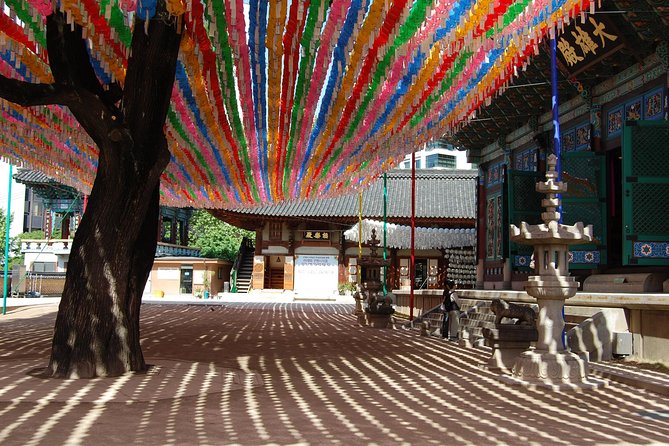
Jogyesa Temple is the chief temple of the Jogye Order of Korean Buddhism. The route includes the trees at the entrance and the main hall, Daeungjeon, where an enlightened Buddha is depicted.
The stop is very short, listed at about two minutes. Think of it as a quick orientation rather than a full temple visit. You will see a religious site that still functions as part of Seoul’s city life, but you should not expect quiet time for extended observation or personal prayer.
That brevity is one of the tour’s pacing problems. The palace and folk village receive enough time to feel substantial, while Jogyesa can feel like a photo stop. If Buddhist sites are a priority for you, this itinerary will not provide the depth of a temple-focused walk.
More palace visits:
- Small-Group Royal Palace and Seoul City Tour (hotel pick-up)
★ 5.0 · 1,474 reviews - Seoul: Gyeongbok Palace, Bukchon Village, and Gwangjang Tour
★ 5.0 · 1,044 reviews - Seoul Highlights: Gyeongbok Palace, Insadong & N Seoul Tower
★ 4.7 · 726 reviews - Seoul: Hanbok Rental with Gyeongbokgung Palace Entry
★ 4.6 · 611 reviews
Korean lunch and the ginseng center
Around midday, the coach takes you to a traditional Korean restaurant for lunch. The meal is included, which improves the value of the $140 price and removes the need to find food during a tightly scheduled day.
Lunch also adds a welcome sensory break after the morning’s walking. The restaurant setting is intended to feel traditional, and the food has been a strong part of the day for many people. Tell the operator about specific dietary requirements when you book, rather than waiting until you sit down.
Before lunch, the route includes a stop at a Korean ginseng center for about 30 minutes. You learn about ginseng and have the chance to buy products to take home. Ginseng is an important Korean industry, so the stop is not entirely random, but it is clearly commercial.
This is the part I would weigh most carefully. Some departures have included a longer sales presentation, and some people felt pressure to purchase. Others found it informative or enjoyed buying souvenirs. You do not need to buy anything to take part in the tour, and you should treat this as shopping time rather than a major heritage sight.
A few accounts also describe an amethyst or red pine presentation on certain outings. That is not listed as a standard stop in the supplied route, so it may reflect a departure variation. If avoiding retail stops matters to you, ask the operator before booking how the day is currently run.
Korean Folk Village: crafts and a recreated traditional setting
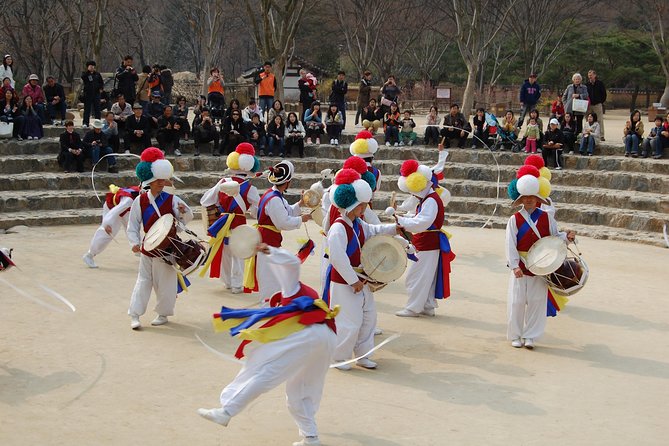
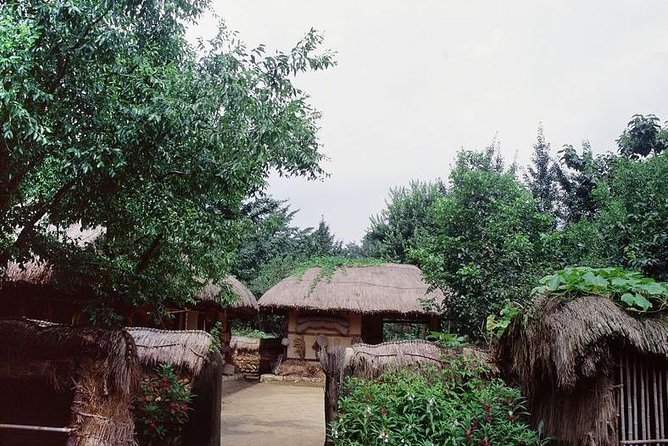
The afternoon is spent at Korean Folk Village, with about 1 hour and 20 minutes to walk around. It is presented as a living museum of traditional Korean life and folk culture, with demonstrations that can include pottery making, basket weaving, winnow making, musical instruments, embroidery, and objects made from bamboo, wood, and brass.
This is where the tour becomes more hands-on in feel. At the palace, you study royal buildings. At the village, you watch traditional skills and see how folk customs are presented to the public. It gives you a wider picture of Korean culture beyond court architecture.
The setting is a recreated village rather than an untouched historic neighborhood. That distinction is important. If you expect original homes in their original locations, you may find the experience more staged than anticipated. If you approach it as an outdoor cultural museum with demonstrations, it can be a useful and enjoyable afternoon.
The village is also where the small-group format can help. You have room to ask questions and move at a reasonable pace, although the available time still limits how much you can see. Some departures have felt more relaxed in the afternoon, particularly when only a few people continued on for the full-day portion.
The contrast between the two halves is worth noting. The morning focuses on central Seoul’s royal and religious landmarks. The village sits outside that core and gives you a broader look at traditional customs, but the drive and the recreated setting may not appeal to everyone.
How the guides and group size affect the day
The guide can make or break this experience. Strong guides have provided clear English explanations, useful cultural background, and practical help at each stop. Sunny and Winnie have been praised for their English and for explaining Korean customs, while Dora, David, and Michelle have also received warm marks for energy and attention.
The less successful departures had softer speech, limited commentary, or a rushed walking pace. One morning group was described as moving too quickly, with people hurrying after the guide. That is a real concern at a palace, where you want time to look up, take photographs, and absorb the setting.
The maximum of 10 people is a genuine advantage. You are not lost in a crowd, and the guide can sometimes adjust the route. One small departure even customized the afternoon when only one person had chosen the full-day option.
Do keep in mind that the experience may operate as two connected tours. You could have one guide for the palace and central Seoul section, then another for Korean Folk Village. That can mean a fresh voice and a better fit for the second half, but it can also make the day feel less unified.
Is $140 a fair price for this full day?
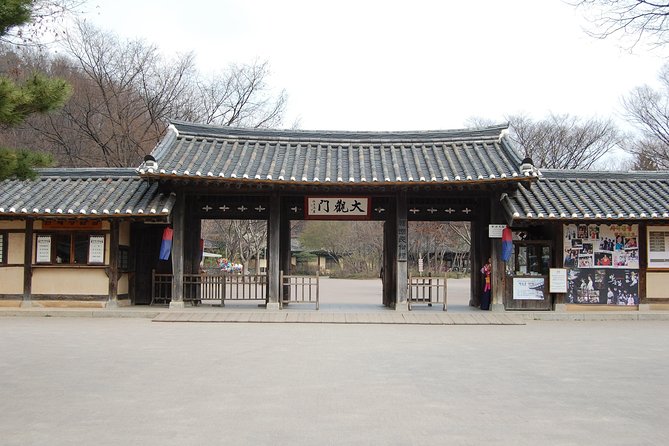
At $140 per person, the tour is not the cheapest way to see Seoul’s historic center. You are paying for hotel pickup and drop-off, an air-conditioned vehicle, a professional guide, palace and folk village admission, and lunch.
The value improves if you want to visit both Gyeongbokgung and Korean Folk Village in one day. Organizing those locations independently would require more planning and transport, and the included meal saves both time and another expense.
The value weakens if you want long visits at each site or dislike shopping presentations. The National Folk Museum receives only about 20 minutes, Jogyesa about two minutes, and the ginseng center occupies half an hour. You are paying for convenience and range, not maximum time inside every attraction.
For a first day in Seoul, I think the price can make sense if you prefer a guided overview. For an experienced Seoul visitor, or anyone who likes to move slowly and choose each sight independently, the same money may be better spent on separate palace and museum visits.
The average booking lead time is about 38 days. That suggests planning ahead is sensible, especially if you have a fixed hotel pickup date. Free cancellation is available up to 24 hours before the start time, but changes or cancellations inside that window are not refunded.
Who will get the most from this itinerary?
I would recommend it to you if you want a broad introduction to Korean history and culture in one organized day. It suits first-time visitors, people with limited time in Seoul, and anyone who values transport and a guide more than a flexible schedule.
It is also a good match for people who enjoy walking, architecture, museum displays, traditional food, and craft demonstrations. Most people can participate, provided they are comfortable with a moderate amount of walking.
I would hesitate if your main goal is a slow palace visit. Gyeongbokgung is the star of the morning, but one hour moves quickly, and the museum and Jogyesa stops are short.
I would also hesitate if you dislike commercial stops. The ginseng center is built into the route, and there may be other retail presentations on some departures. Ask about the current schedule before paying if that would sour the day for you.
Should you book the Korean Heritage Tour?
Book this tour if you want Seoul’s royal past, traditional crafts, lunch, and hotel transport handled in one day. The combination is useful, the small group is appealing, and a strong guide can make the history easy to follow.
Skip it if you want an entirely noncommercial heritage experience or several hours at Gyeongbokgung alone. The best reason to book is the wide cultural sweep. The main reason not to book is the rushed morning and the time given to ginseng sales.
If you do reserve it, choose a day other than Tuesday for Gyeongbokgung, wear comfortable shoes, share dietary needs in advance, and confirm whether the current departure includes any extra shopping stop.
FAQ
How long does the Korean Heritage Tour last?
The tour lasts approximately 8 hours and 30 minutes, including hotel pickup, sightseeing, lunch, the ginseng center, Korean Folk Village, and return transport.
What time does the tour start?
The stated start time is 8:30 am, with pickup from your Seoul hotel.
Is hotel transportation included?
Yes. Hotel pickup and drop-off are included, along with an air-conditioned vehicle.
What happens if I book for a Tuesday?
Gyeongbokgung Palace is closed on Tuesdays. The tour visits Deoksugung Palace instead and also includes the Seoul Museum of History.
Is lunch included?
Yes. A Korean lunch at a local traditional restaurant is included. You should provide any specific dietary requirements when booking.
How much walking is involved?
A moderate amount of walking is involved, especially at Gyeongbokgung Palace and Korean Folk Village. Comfortable walking shoes are recommended.
How many people can join the tour?
The tour requires a minimum of four people and has a maximum of 10 participants.
More Historical Tours in Seoul
- Seoul: Evening Dark History, Folklore & Ghost Story Walking Tour
★ 5.0 · 593 reviews - Hanbok Photoshoot and History Tour at Gyeongbokgung Palace
★ 5.0 · 276 reviews - From Seoul: Dae Jang Geum Park Historic K-Drama Set Tour
★ 4.9 · 143 reviews - Seoul: City Highlights and Historical Experience No Shopping
★ 5.0 · 74 reviews
Just added around Seoul
- Incheon Airport Private Transfer between Seoul City★ 4.0 · 4 reviews
- Seoul’s Stars: Open Mic with Local & International Talent★ 4.8 · 4 reviews
- Samaksan Cable Car and Nami Island Day Escape with Railbike★ 4.0 · 4 reviews
- DMZ 2nd Tunnel and Cheorwon Peace Observatory with Admission★ 5.0 · 4 reviews
- Nami & Maple Road & Theatre des Lumieres Day Tour from Seoul★ 4.8 · 4 reviews
- Hire Photographer, Professional Photo Shoot – Seoul★ 5.0 · 4 reviews
- [KoreaByLocal] Authentic Seoul Night Walk and Chicken & Beer★ 5.0 · 4 reviews
- Play Gayageum in Hanbok Cultural Experience in Bukchon★ 5.0 · 4 reviews
Gyeongbokgung Palace, compared.
Gyeongbok Palace, Bukchon Village, and Gwangjang Tour
Read our review →
Best Seoul City Tour (Gyeongbokgung Palace,Insadong,Namsan Tower)
Read our review →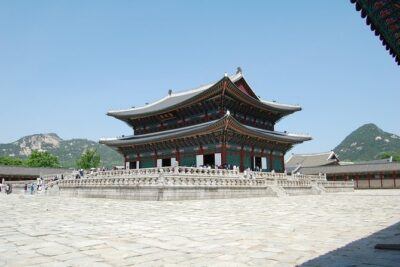
Seoul City Sightseeing Tour Including Gyeongbokgung Palace, N Seoul Tower, and Namsangol Hanok Village
Read our review →Gyeongbok Palace, Bukchon Village, and Gwangjang Tour
Read our review →
Seoul Highlights: Gyeongbok Palace, Insadong & N Seoul Tower
Read our review →
Seoul City Half Day Tour-Gyeongbok Palace Guard Changing Ceremony
Read our review →
Browse the lists this tour appears in