
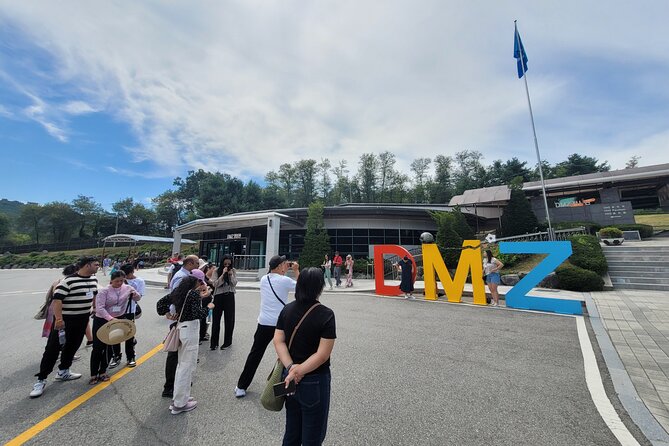
Reviewed · DMZ & JSA TOURS
Insightful DMZ Tour by Expert opt. Suspension Bridge with Pickup
The most striking part of this DMZ tour from Seoul is the change in mood. You begin among memorials, food stalls, and family parks at Imjingak, then pass into a tightly controlled military area where a passport is required and normal sightseeing rules no longer apply. The Third Tunnel gives the day a physical edge: you walk down into a passage built for a possible North Korean attack, then climb back out.
I like two things especially. First, the guides, including Joo-Ee, Vincent, Jones, Jung, and Jake, are praised for clear English, strong organization, and useful historical context. Second, the tour supplies monoculars or binoculars, so Dora Observatory is more than a distant glimpse. The main caution is simple: this is a strenuous day, not a gentle bus excursion. The tunnel requires steep walking, and the optional suspension bridge adds another uphill climb.
In This Review
- Key points to know before booking
- Why the DMZ feels different from ordinary Seoul sightseeing
- Imjingak Peace Park puts the conflict in human terms
- The Third Tunnel is the day’s hardest stop
- Dora Observatory gives you a controlled view of North Korea
- Freedom Bridge and Tongilchon show daily life beside a military zone
- Gamaksan Suspension Bridge adds scenery and more climbing
- The Seoul drop-offs can turn the return trip into an evening plan
- How good is the $53 value?
- What to bring and how to prepare
- Who should book this DMZ experience?
- Should you book it?
- FAQ
- How long does the DMZ tour take?
- Is hotel pickup included?
- Do I need to bring my passport?
- How difficult is the Third Tunnel?
- Are binoculars provided?
- What happens if bad weather cancels the tour?
Key points to know before booking
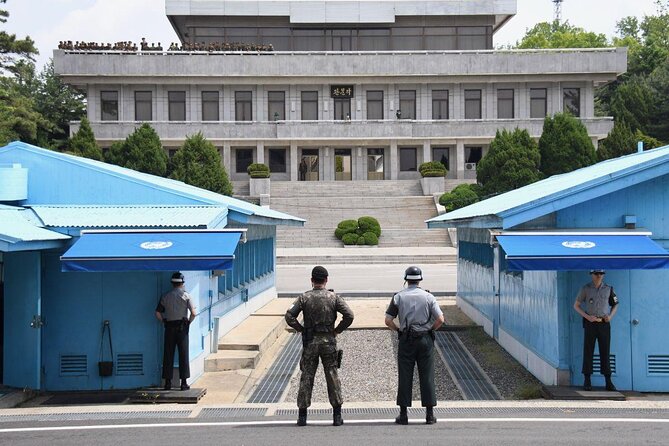
- Walk through the Third Tunnel: Expect a long ramp, a low ceiling, and a climb back to the surface.
- Look across the border: Free binocular or monocular rental helps you examine North Korea from Dora Observatory.
- Hear the human story: Mangbaedan and the Bridge of Freedom connect military history with families separated by war.
- Add Gamaksan Bridge: The suspension bridge brings forest scenery and Korean War history, but it also requires extra effort.
- Ride from Seoul: Pickup is offered, with drop-offs at Hongdae, Myeongdong, Gwangjang Market, and Dongdaemun.
- Bring your passport: You need a current valid passport on the day of the tour, and military access rules can change.
Why the DMZ feels different from ordinary Seoul sightseeing
The Demilitarized Zone is not a normal open tourist district. Access is controlled, certain areas allow photography only under specific rules, and the itinerary can depend on military operations and weather. That is why taking a guide matters here. You are not simply hiring transport to a viewpoint. Your guide handles the route, tickets, timing, and explanations while you follow the required procedures.
The tour usually lasts about 6 to 10 hours, depending on traffic, access conditions, and whether you choose the bridge. Early starts are common. One small group began around 6:30 a.m. and returned to Seoul at about 3 p.m., which gives you a useful sense of the day’s rhythm.
The advertised maximum is 40 people, though group size can be much smaller. Some departures have had around 12, 17, or even five people. A smaller group makes it easier to hear the guide and get a good position at the observation points, but you should not book this experience expecting a guaranteed private tour.
More ways to reach the DMZ:
- Best DMZ Tour Korea from Seoul (Red Suspension Bridge Optional)
★ 5.0 · 41,422 reviews - DMZ Tour: 3rd Tunnel, Option(Suspension Bridge, Boat) from Seoul
★ 5.0 · 21,373 reviews - DMZ tour south Korea from Seoul (NK experience hall, defector)
★ 5.0 · 20,599 reviews
Imjingak Peace Park puts the conflict in human terms
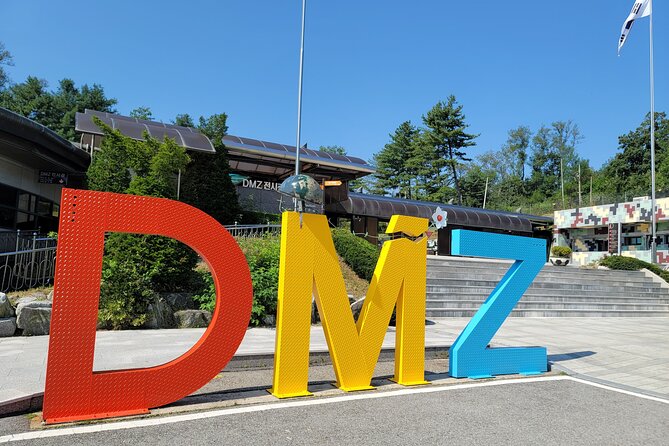
The first major stop is Imjingak Tourist Information Center and the surrounding peace park. This is where the group handles the tickets needed for the controlled DMZ portion of the day. It also gives you time to look around before boarding the government-run coach toward the restricted sites.
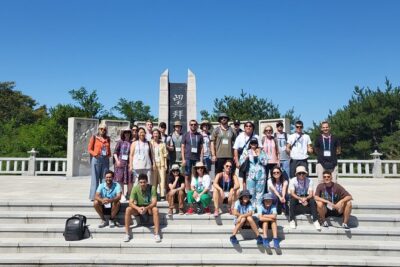
Imjingak is more than a waiting area. You can see a locomotive damaged and derailed during the Korean War, the Bridge of Freedom, and the Bridge of No Return, associated with prisoner exchanges. From higher parts of the park, you may also get broad views toward the border area.
I find Mangbaedan particularly important. Families separated by the Korean War have used this site to remember relatives and hometowns in the North. That detail keeps the DMZ from becoming a collection of military curiosities. The division is not only about fences, weapons, and political speeches. It is also about people who still feel tied to places they cannot freely visit.
Your guide explains the memorials and the park before the group proceeds. This is one reason the experience works better with a strong English-speaking guide. Guides such as Joo-Ee, Vincent, and Jung have been praised for adding background, showing visual material, and answering questions in a way that connects the sites.
The Third Tunnel is the day’s hardest stop
The Third Tunnel is the most physical part of the standard DMZ visit. North Korea dug this infiltration tunnel after the Korean War, and South Korea later discovered it. You can walk inside a portion of it, which makes the military story far more immediate than seeing a tunnel entrance behind glass.
The route descends on a long, sloping path. Once inside, the ceiling becomes low, around five feet in places. You may need to stoop or walk bent over, especially toward the end of the accessible section. Then comes the return trip, which is uphill all the way.
Comfortable walking shoes are essential. Take your time, and do not treat the group schedule as a race. Several guides remind people not to push past their limits, and that is good advice. The tour requires moderate physical fitness, but the tunnel may still be difficult for older visitors or anyone with trouble on inclines.
There is no need to feel embarrassed about turning back. The tunnel is worthwhile even if you do not walk every inch. The important point is that you get a direct sense of the effort involved in creating and securing these underground passages.
Photography restrictions can apply around military facilities. One person found it frustrating not to take pictures in certain areas, so bring your attention as well as your camera. This is one of those places where the explanation and the setting matter more than collecting photographs.
Dora Observatory gives you a controlled view of North Korea
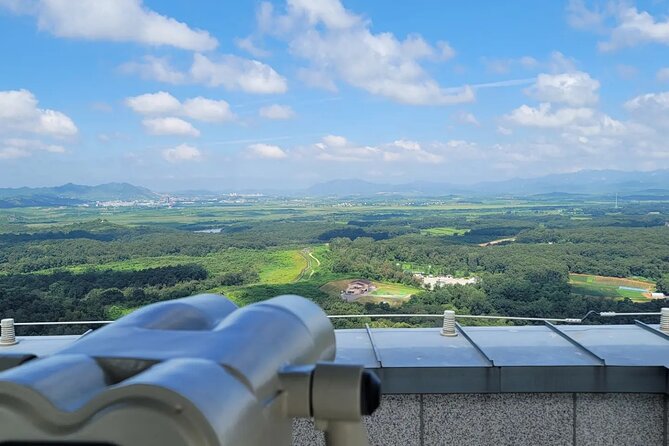
At Dora Observatory, you look across the DMZ toward North Korea. On a clear day, the view can include Gaeseong, one of North Korea’s major cities, as well as fields, roads, and distant activity. The supplied binoculars or monoculars are a real advantage. They help you make sense of what would otherwise be a hazy, far-off view.
Do not expect a dramatic cinematic scene every time. Weather, haze, and military rules can affect what you see. On rainy or cloudy days, the view may be limited, and the suspension bridge can be canceled in poor conditions. Still, the observatory gives the political story a physical shape. You are looking at a neighboring country that is close enough to see but not open for ordinary movement.
A good guide makes a difference here. Vincent has been praised for carrying binoculars up the hill and keeping the schedule clear. Joo-Ee has been praised for helping people find the best viewing spots and explaining what they are looking at. Those practical touches matter because the observatory visit is relatively short, around 30 minutes.
More suspension bridge walks:
- Seoul: DMZ Tour with Optional Suspension Bridge
★ 4.8 · 5,277 reviews - Signature DMZ Tour: Exclusive Defector Talk & Suspension Bridge
★ 5.0 · 4,459 reviews - Ultimate Korea DMZ Tour from Seoul (Gondola & Suspension Bridge)
★ 5.0 · 2,396 reviews - DMZ; NK Defector, 3rd Tunnel, Suspension Bridge,Hotel pickup
★ 4.9 · 2,055 reviews
Freedom Bridge and Tongilchon show daily life beside a military zone
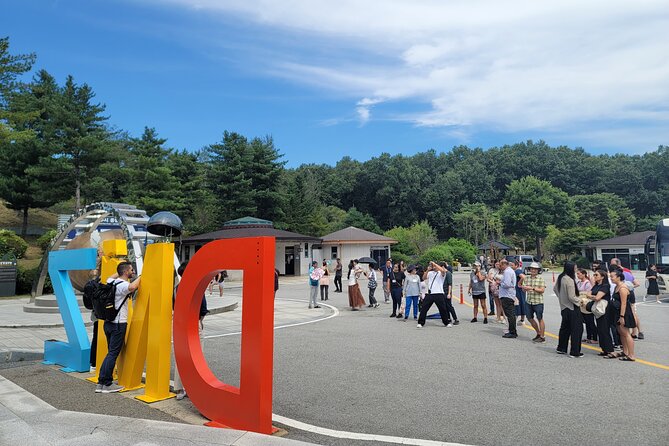
The Bridge of Freedom sits at Imjingak Peace Park and is linked to the return of prisoners after the war. The stop itself is brief, but the guide’s explanation gives it weight. You are seeing a place connected to reunion and separation, not just an old bridge.
Later, the group may stop at Tongilchon-gil, a village within the Civilian Control Zone. Residents live in this area, and the stop functions partly as a rest break and partly as a chance to browse souvenirs or local products. It is a modest stop, not a major attraction, but it gives the day a glimpse of civilian life alongside military restrictions.
The timing can feel stop-and-go. You may spend time waiting for a government-operated coach or moving between controlled areas. That is part of the reality of visiting a security zone. If you prefer a tour that runs with the smooth precision of a museum circuit, this may test your patience. If you want to understand how unusual the border area is, the restrictions are part of the lesson.
Gamaksan Suspension Bridge adds scenery and more climbing
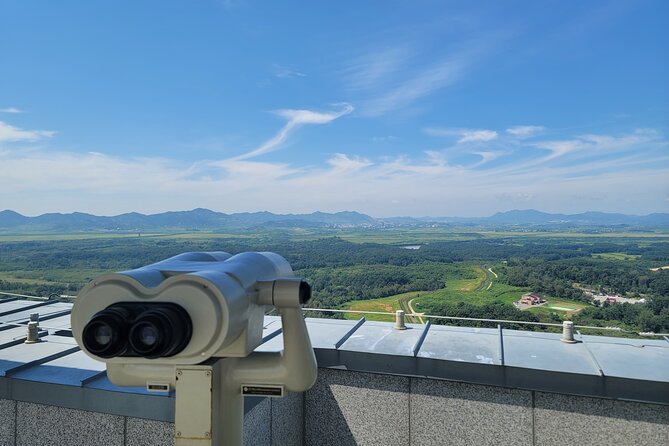
The optional Gamaksan Chulleong Bridge changes the character of the trip. The bridge crosses a forested area on Mount Gamaksan, a site connected with fierce Korean War fighting. It offers a scenic break after the heavier material at the DMZ.
The catch is the approach. You need to climb to reach the bridge, and the path can feel strenuous after the Third Tunnel. Several people found the views worth the effort, while others compared the climb to needing mountain-goat legs. That is a fair warning for anyone with limited mobility or low stamina.
I would choose the bridge option if you want a fuller day and enjoy walking outdoors. I would skip it if the tunnel already sounds like a challenge, especially in wet weather. Rain can reduce the pleasure of the walk, and the bridge may not operate in poor conditions. One important point to confirm before booking is how weather-related changes are handled. The experience offers an alternate date or full refund if the entire tour is canceled for poor weather, but an individual attraction may not always produce a separate refund.
The Seoul drop-offs can turn the return trip into an evening plan
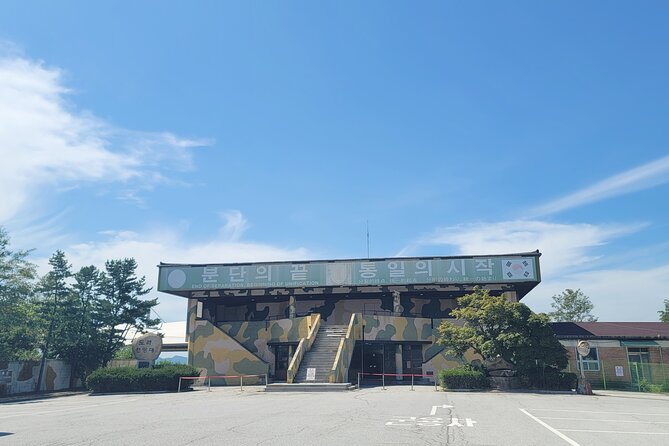
Hotel pickup is available, but hotel drop-off is not included. Pickup details are sent through the tour messages, so check those carefully the night before and be ready at the stated time.
At the end of the day, the vehicle can drop you at several useful Seoul locations: Hongdae, Myeongdong, Gwangjang Market, or Dongdaemun. This is more helpful than being returned to one fixed point. You can choose an area that matches your evening plans.
Gwangjang Market is a particularly good finish if you want food. It is known for more than 120 street food choices and has appeared in a Netflix food series. Myeongdong suits shopping and street snacks. Hongdae offers shops, karaoke rooms, clubs, food, and street performances. Dongdaemun puts you near the market, the old gate, and the city wall, while DDP is an easy landmark for further exploring.
The food element is not a full included meal, so budget for personal expenses. Bring something from a convenience store if you dislike starting the day hungry. There are breaks during the outing, but the schedule is long and the return can come late in the afternoon.
How good is the $53 value?
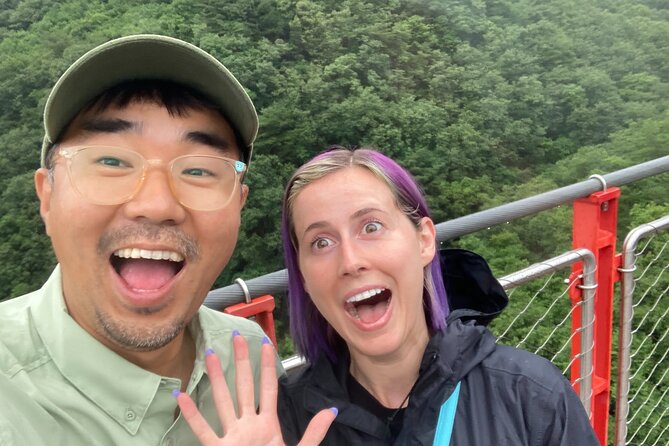
At about $53 per person, this tour is a strong value if you want the major DMZ sights without renting a car or sorting out restricted-area transport yourself. The price includes an experienced guide, the DMZ entrance fee, an air-conditioned vehicle, and use of binoculars or a monocular. Pickup is optional, and the listed Seoul drop-offs add useful flexibility.
The value is less about luxury and more about access. A private car cannot simply take you wherever it wants near the border. You need current identification, controlled tickets, and sometimes a government-run coach. The guide reduces that burden.
You should not read the price as a promise of a quiet, private experience. The group can reach 40 people, and some parts of the day involve waiting, fixed military schedules, and short visits. Still, the combination of transport, admission, guide service, and several major sites makes the cost reasonable for a first visit.
The guides are the strongest part of the package. Joo-Ee, Vincent, Jones, Jake, Jung, and Yujin have each been singled out for clear explanations, warmth, organization, humor, and help with timing. Guide assignments can change, so you cannot necessarily request a particular person, but the repeated strength of the guide team is encouraging.
What to bring and how to prepare
Bring your current valid passport. This is required, not optional, and access to the DMZ depends on security procedures.
Wear comfortable shoes with good support. The tunnel has a long descent and ascent, and the suspension bridge option adds a steep walk. Light rain protection is sensible, since weather can affect both comfort and the available stops.
A few practical tips:
- Keep water and a small snack with you.
- Listen closely to meeting times. The group must stay on schedule.
- Follow all photography instructions around military sites.
- Ask your guide what can be seen through the binoculars rather than guessing at distant shapes.
- Tell the guide if an incline is too much for you.
- Check the pickup message before bed, especially if you are using hotel pickup.
Free cancellation is available up to 24 hours before the start time. Changes or cancellations inside that window are not accepted for a refund. The tour can also be canceled if the minimum number is not met or if poor weather makes it impossible, with an alternate date or full refund offered in those cases.
Who should book this DMZ experience?
I would recommend it to first-time visitors who want the history explained rather than simply photographed. It suits people interested in the Korean War, divided families, current relations with North Korea, and the practical reality of visiting a military control zone.
It is also a good fit for solo visitors. The organized transport, clear meeting points, and guide support remove much of the uncertainty of going alone. Families and older visitors can enjoy it too, but only if everyone understands the physical demands.
I would hesitate to recommend it to anyone seeking a relaxed half-day outing. The full experience can run 6 to 10 hours, the start may be early, and the tunnel is not easy. If you have mobility concerns, the optional bridge is best treated as a choice, not an obligation.
Should you book it?
Book this tour if you want a serious, well-explained look at the DMZ with transport from Seoul and a chance to walk into the Third Tunnel. The binoculars, flexible city drop-offs, and strong guide support improve the experience, while the optional Gamaksan Bridge gives you a scenic finish.
Skip it if you dislike early starts, controlled schedules, long walks, or uncertain weather. For everyone else, the $53 price buys an unusually direct encounter with Korea’s divided past and present, plus enough practical help to make a complicated border visit manageable.
FAQ
How long does the DMZ tour take?
The experience lasts approximately 6 to 10 hours. The exact length can depend on traffic, military access, weather, waiting time, and whether you choose the suspension bridge.
Is hotel pickup included?
Hotel pickup is offered as an option. Pickup time details are sent through the tour messages. Hotel drop-off is not included, but drop-offs are available at Hongdae, Myeongdong, Gwangjang Market, and Dongdaemun.
Do I need to bring my passport?
Yes. A current valid passport is required on the day of the tour because you are entering a controlled military area.
How difficult is the Third Tunnel?
The tunnel requires a long walk down and back up a sloping route. Parts of the tunnel are about five feet high, so you may need to squat or walk bent over. A moderate level of physical fitness is recommended.
Are binoculars provided?
Yes. Free rental of a monocular or binoculars is included, allowing you to view North Korea from Dora Observatory.
What happens if bad weather cancels the tour?
If poor weather causes the experience to be canceled, you will be offered a different date or a full refund. Weather can also affect individual stops, including the suspension bridge.
Just added around Seoul
- Incheon Airport Private Transfer between Seoul City★ 4.0 · 4 reviews
- Seoul’s Stars: Open Mic with Local & International Talent★ 4.8 · 4 reviews
- Samaksan Cable Car and Nami Island Day Escape with Railbike★ 4.0 · 4 reviews
- DMZ 2nd Tunnel and Cheorwon Peace Observatory with Admission★ 5.0 · 4 reviews
- Nami & Maple Road & Theatre des Lumieres Day Tour from Seoul★ 4.8 · 4 reviews
- Hire Photographer, Professional Photo Shoot – Seoul★ 5.0 · 4 reviews
- [KoreaByLocal] Authentic Seoul Night Walk and Chicken & Beer★ 5.0 · 4 reviews
- Seoul Film Camera Club★ 5.0 · 4 reviews
DMZ & JSA Tours, compared.
Best DMZ Tour Korea from Seoul (Red Suspension Bridge Optional)
Read our review →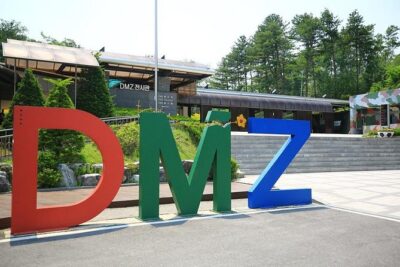
DMZ Tour: 3rd Tunnel, Option(Suspension Bridge, Boat) from Seoul
Read our review →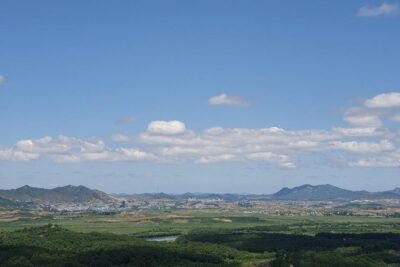
DMZ tour south Korea from Seoul (NK experience hall, defector)
Read our review →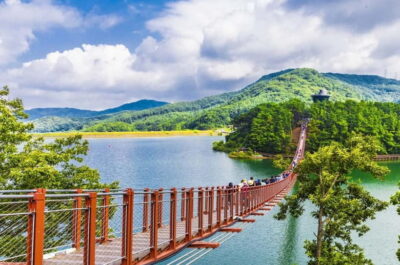
DMZ Insider Tour: 3rd Tunnel, NK Defector Meet & Red Bridge
Read our review →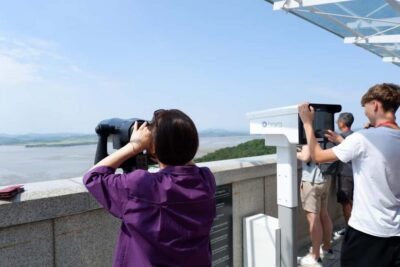
Thrilling Korean DMZ 3rd Tunnel Tour from Seoul + Red Bridge Rush
Read our review →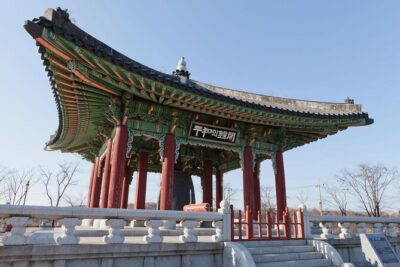
DMZ Past and Present: Korean Demilitarized Zone Tour from Seoul
Read our review →
Ultimate Korea DMZ Tour from Seoul (Gondola & Suspension Bridge)
Read our review →Browse the lists this tour appears in