
Reviewed · MUSEUMS
Gyeongju UNESCO Sites Tour by KTX train; The Museum Without walls
Gyeongju is Korea’s museum without walls, and this tour gives you a fast way to reach its best-known Silla sites from Seoul. In one long day, you move from royal tombs and an ancient observatory to a Buddhist temple, a mountain grotto, and a palace pond lit by reflections.
I like the private format, which lets your guide adjust the pace and explain details without a large group slowing things down. I also like the careful train support: an escort takes you from your Seoul hotel to the station, helps you board, and a local guide such as Jay, John, or Dylan meets you in Gyeongju. The drawback is simple: this is a very long day, with roughly two hours each way on the KTX and several outdoor stops, so rain or fatigue can affect the experience.
In This Review
- Key points to know before booking
- Why Gyeongju is worth the long ride from Seoul
- Cheonmachong Tomb and Gyeongju’s royal burial grounds
- Gyeongju National Museum, the day’s historical anchor
- Cheomseongdae, an observatory from Queen Seonduk’s reign
- Donggung Palace and Wolji Pond after dark in Silla’s imagination
- Bulguksa Temple and Silla stone craftsmanship
- Seokguram Grotto, Buddhist art above the coast
- What the private setup actually changes
- Is $470 per person a fair price?
- The real tradeoff: six historic stops in eight to nine hours
- Who should book this Gyeongju day trip?
- FAQ
- What is included in the Gyeongju tour from Seoul?
- Is hotel drop-off in Seoul included?
- What time does the tour start?
- How long does the experience last?
- Is this a private tour?
- Can I cancel for a full refund?
Key points to know before booking
- Gyeongju in one day: Cover six major Silla-era sights without arranging separate trains, taxis, and entrance tickets.
- Private from start to finish: Your group has its own vehicle and English-speaking guide in Gyeongju.
- KTX makes the distance practical: The high-speed train cuts the trip from Seoul to a manageable day excursion.
- A strong history mix: See royal burial mounds, museum treasures, palace gardens, Buddhist art, and a famous temple.
- Outdoor exposure matters: Cheonmachong, Cheomseongdae, Bulguksa, and Seokguram require time outside, so weather can shape your day.
- Not a cheap day trip: At $470 per person, the value rests in private transfers, round-trip KTX fare, admissions, and saved planning time.
Why Gyeongju is worth the long ride from Seoul
Seoul gives you palaces, markets, and modern city life. Gyeongju gives you the remains of the Silla kingdom, which ruled much of the Korean Peninsula for centuries and made this area its capital. The historic sights are spread across the city rather than packed into one fenced compound.
That spread is the reason a guided day trip helps. You do not simply walk from one monument to the next. You cross between burial grounds, a museum, a former palace site, a temple, and a mountain hermitage. A private vehicle turns a difficult do-it-yourself day into a fairly tidy route.
The tour begins around 7:00 am, with pickup in Seoul areas. You travel to the station by private vehicle, then take an economic-class KTX train south. A past arrangement included Andrew driving the group to the station, waiting until boarding, and walking the group to the train. That kind of handoff matters when you are unfamiliar with Korea’s railway system and want to spend your energy on the sights rather than platform signs.
The train ride takes about two hours according to the tour experience described, leaving you a full sightseeing day in Gyeongju. The return trip brings you back to Seoul, but hotel drop-off is not included. Plan for the day to end at the station or another agreed point in Seoul rather than at your hotel.
Other Seoul trips people book alongside this one:
- Best DMZ Tour Korea from Seoul (Red Suspension Bridge Optional)
★ 5.0 · 41,422 reviews - DMZ Tour: 3rd Tunnel, Option(Suspension Bridge, Boat) from Seoul
★ 5.0 · 21,373 reviews - DMZ tour south Korea from Seoul (NK experience hall, defector)
★ 5.0 · 20,599 reviews
Cheonmachong Tomb and Gyeongju’s royal burial grounds
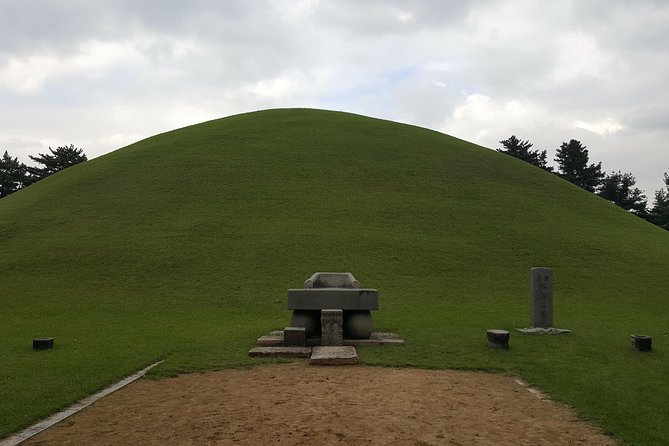
The first stop, Cheonmachong Tomb, introduces Gyeongju in a direct and memorable way. Instead of beginning with a museum label or a reconstructed building, you see large earthen mounds rising from the ground. More than 20 large and small tombs from the Silla period fill the surrounding area, and many are thought to belong to kings or court officials.
Cheonmachong is especially useful because you can enter an excavated tomb. That gives you a clearer idea of how these mounds were built and why they are more than pleasant grassy hills. The tombs preserve the scale and ceremony of Silla burial customs, while the nearby mounds show how widespread the royal cemetery was.
Allow about an hour here. You will be outdoors, walking over generally open ground, and the experience depends on weather. In rain, the grass and paths can become less pleasant, and there is little shelter compared with a museum.
A guide adds real value at this stop. Without context, a mound can look like a mound. With an explanation of the people buried here, the construction method, and the objects found inside, the site becomes a window into court life and funeral ritual.
Gyeongju National Museum, the day’s historical anchor
The Gyeongju National Museum may be the strongest stop for making sense of everything else. Its main archaeological hall brings together objects from the Silla kingdom, including ceremonial items and other finds connected to the ancient capital.
I like placing the museum early in the sightseeing sequence, because it gives you a framework for the tombs, temple, and palace grounds. You see the objects in the museum, then visit the places where that culture took shape. The displays can also provide a welcome indoor break after the open burial grounds.
You have about an hour here, and admission is included at no extra charge. That is enough time for a guided introduction and a focused look at the main displays, but not enough for a slow museum study. If you enjoy Korean archaeology, you may wish you had more time.
The museum is also where the tour feels most useful for a first visit. Your guide can point out the importance of Silla ceremonial objects and explain how the pieces connect to Gyeongju’s royal past. Several guides have been praised for telling stories and making the city’s history easier to follow. English ability can vary by guide, and one past participant found an accent difficult to understand, so this is worth keeping in mind if clear spoken English is especially important to you.
Cheomseongdae, an observatory from Queen Seonduk’s reign
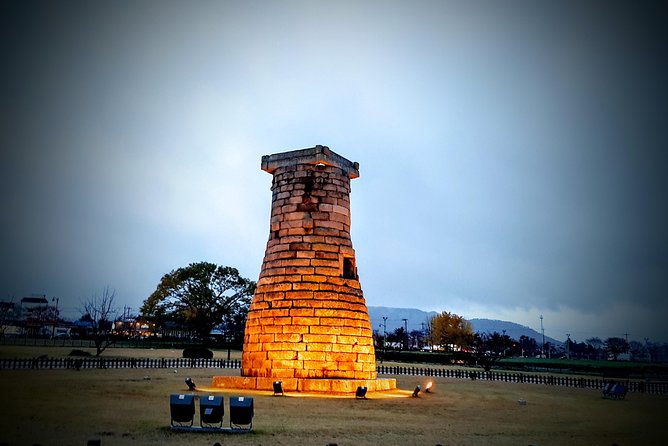
Cheomseongdae means Star Gazing Tower. Built in 634 during the reign of Queen Seonduk, it is described as the oldest existing observatory in the Far East. The stone tower has 27 levels arranged in a rounded form, making it one of Gyeongju’s most recognizable outdoor monuments.
The stop is brief in physical scale, though the tour allows about an hour in the area. You look at the tower, hear about its place in Silla science, and take in the surrounding historic zone. It is not a large building that you enter, so the guide’s explanation is central to the visit.
This stop works best as part of the wider route. On its own, Cheomseongdae might take only a short time to appreciate. Paired with the tombs and museum, it helps show that Silla was not only a kingdom of royal ceremony and Buddhist faith. It also had court science and astronomical interests.
Because the observatory is outside, bring protection from sun or rain. The tour moves through several open sites, and weather can affect your comfort long before the day reaches Bulguksa.
A few more Seoul trips worth weighing up
- Seoul: War Memorial of Korea Private Guided Museum Tour
★ 4.9 · 29 reviews - DMZ Tour + The War Memorial of Korea Museum
★ 5.0 · 28 reviews - Color Pool Museum
★ 4.0 · 22 reviews - SEOUL: Gugak – Korean Traditional Music Museum&Concert Tour
★ 4.7 · 17 reviews
Donggung Palace and Wolji Pond after dark in Silla’s imagination
Donggung Palace and Wolji Pond, formerly called Anapji Pond, was created in 674 after the unification of the Korean Peninsula. The palace grounds included artificial hills, trees, flowers, birds, and animals, creating a carefully planned royal setting.
The pond is one of Gyeongju’s most graceful stops. It is less about a single surviving building and more about understanding how the Silla court designed pleasure grounds and ceremonial spaces. The water and garden setting offer a change of mood after the museum and tombs.
You have around an hour here. Some of the appeal comes from viewing the site from different angles, so a guide can help you notice the layout rather than simply glance at the pond and move on. The tour includes admission.
The name can cause confusion because many people still know it as Anapji Pond. If you are searching for information before the trip, use both names. The site is outdoors, and its beauty can be reduced by heavy rain, but it remains one of the easier places to enjoy at a slower pace.
Bulguksa Temple and Silla stone craftsmanship
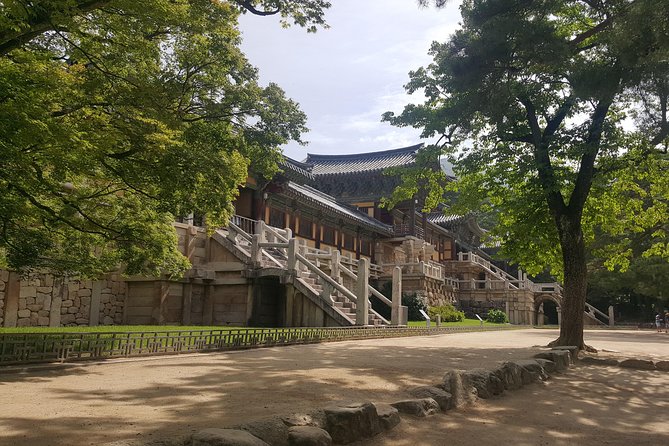
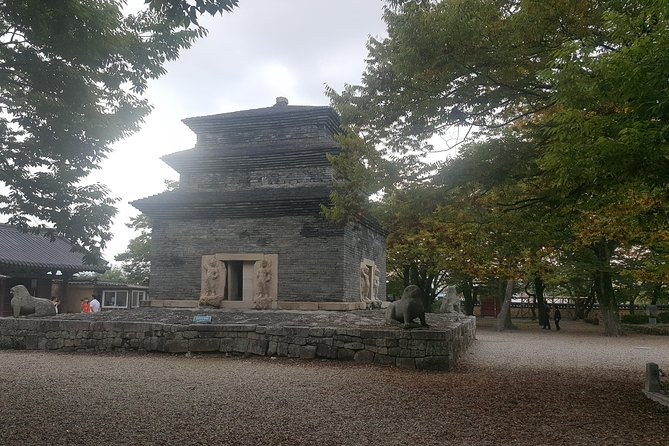
Bulguksa is Korea’s best-known Buddhist temple and one of the most important stops on this route. It is home to Silla-era relics, with the stone pagodas Dabotap and Seokgatap among the most visible features.
The temple is valuable because it brings together religion, architecture, and skilled stonework. You are not just looking at a scenic place of worship. You are seeing how Silla builders expressed Buddhist beliefs through stairs, courtyards, gates, pagodas, and carefully balanced forms.
The tour sets aside about an hour, and entrance is included. That is enough for an introduction and a look at the main areas, though a temple this important can reward more time. Since Bulguksa sits away from central Gyeongju, having a private vehicle is a practical advantage. You avoid working out a separate transfer between the city sights and the temple.
This stop involves walking and some time outside. Comfortable shoes will help, especially since the day already includes several historic grounds. The temple is also a place where a guide’s explanation can prevent the visit from becoming a quick sequence of photographs.
Seokguram Grotto, Buddhist art above the coast
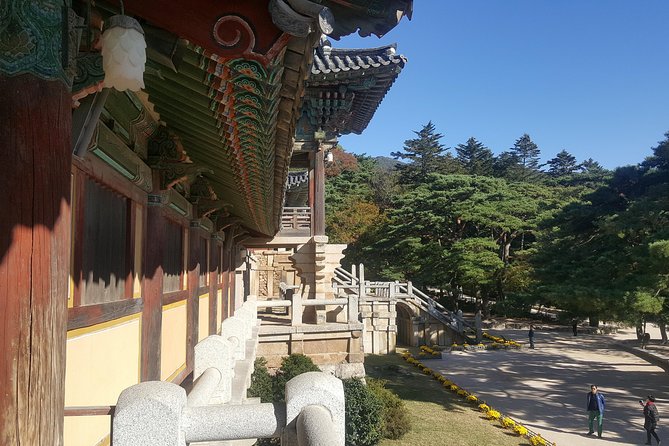
Seokguram Grotto is a hermitage connected with the Bulguksa temple complex. It sits about 750 meters above sea level and overlooks the East Sea. Inside, you find Buddhist sculptures regarded among the finest in the world.
The setting adds to the experience. After the low burial mounds and city sites, the route climbs to a mountain location with a broad outlook. The grotto itself is the focus, but the surrounding height and view help explain why this place feels separate from ordinary temple grounds.
You have about an hour here, with admission included. Seokguram is not simply another building on a sightseeing checklist. It is a place for looking closely at the central Buddhist sculpture and considering the care that went into creating a sacred site in the mountains.
The visit is also one of the day’s practical challenges. It comes late, after many hours of walking and riding, and the weather may be cooler or wetter at elevation. If you are tired by this point, the stop can feel demanding. If you care about Buddhist art, it may be the most important part of the entire day.
What the private setup actually changes
This is a private activity, so only your group participates. That gives you more control than a standard coach tour. You can ask questions freely, spend a little longer at a key site, or move on when a stop has given you what you need.
The private car is used for Seoul hotel pickup and the Gyeongju sightseeing route. Round-trip KTX fare is included in economic class, as are admission fees at the ticketed sites. The package also includes a local English-speaking guide.
The station support is one of the most useful details. The Seoul escort may take you to the subway or station, help you find the correct platform, and walk you to your seats. In Gyeongju, your local guide meets you after the train ride. Guides named in past departures include Jay, John, and Dylan. Dylan was described as personable and able to share many stories about Silla history, while John also helped make the day more enjoyable by choosing a small local restaurant for lunch.
Meals are not included. That gives you flexibility, but it also means you should ask your guide about lunch timing and budget. One past lunch involved generous portions, so you may want to avoid ordering more than you need if the group is short on time.
Is $470 per person a fair price?
At $470 per person, this is a premium day trip. It costs much more than taking a public train and visiting a few central Gyeongju sights on your own. The price makes more sense when you count the KTX tickets, private Seoul transfer, private vehicle in Gyeongju, guide, entrance fees, and the amount of planning removed from your day.
The key question is how much you value time and ease. You could spend several days in Gyeongju for a lower daily cost, or arrange the route independently if you are comfortable with Korean transport and taxis. This tour is aimed at people who have limited time in Seoul and want to add Gyeongju without changing hotels.
The value is strongest for couples, families, or small groups who would otherwise pay separately for transport and guidance. Group discounts are available, though the exact price change is not provided here. Ask about the discount before booking if you are bringing several people.
The package does not include meals or hotel drop-off in Seoul. Those are small omissions compared with the main transport costs, but they matter when you plan the final hours of the day.
The real tradeoff: six historic stops in eight to nine hours
The advertised duration is about eight to nine hours, but the early pickup and train ride make this feel like a full-day commitment. You are fitting six stops into one route, with about an hour assigned to each major place.
That structure is efficient, not leisurely. You will see a lot, but you will not have unlimited time to linger at the museum, photograph every corner of Bulguksa, or sit quietly by Wolji Pond. The tour suits you if your goal is a strong first look at Gyeongju. It suits you less if you prefer slow museum visits or long meals.
Rain is another serious consideration. Much of the day is outside, and one past participant found that heavy rain greatly reduced the enjoyment because so many sights were open-air. Check the forecast and bring suitable clothing. The tour can still operate in poor weather, but the experience will not be the same.
The 91 percent recommendation rate and 4.6 rating suggest a generally strong experience, but the small review count means you should treat those figures as useful signals rather than a guarantee. The clearest strengths are organization, station assistance, private transport, and guides who bring the Silla story to life.
Who should book this Gyeongju day trip?
Book it if you have only a few days in Seoul and want to see Korea beyond the capital without managing a complicated independent trip. It is especially suitable if you want ancient sites, Buddhist art, archaeology, and royal history in one day.
It is also a good choice for first-time visitors who worry about train connections or getting between Gyeongju’s spread-out sights. The guide and private car handle the difficult parts, while the KTX makes the long distance tolerable.
Think twice if you dislike early starts, long transport days, or outdoor sightseeing in uncertain weather. A separate stay in Gyeongju would give you more breathing room. At this price, you should choose the tour for convenience and concentrated coverage, not for a relaxed pace.
FAQ
What is included in the Gyeongju tour from Seoul?
The tour includes admission fees to the tourist sites, a local English-speaking guide, round-trip private vehicle transfer service, economic-class round-trip KTX fare, and hotel pickup in Seoul areas.
Is hotel drop-off in Seoul included?
No. Hotel pickup is included, but hotel drop-off service in Seoul is not included.
What time does the tour start?
The stated start time is 7:00 am.
How long does the experience last?
The tour lasts approximately eight to nine hours.
Is this a private tour?
Yes. Only your group participates in the private activity.
Can I cancel for a full refund?
Yes, if you cancel at least 24 hours before the experience start time. Cancellations or changes made less than 24 hours before the start time are not refundable.
Just added around Seoul
- Incheon Airport Private Transfer between Seoul City★ 4.0 · 4 reviews
- Seoul’s Stars: Open Mic with Local & International Talent★ 4.8 · 4 reviews
- Samaksan Cable Car and Nami Island Day Escape with Railbike★ 4.0 · 4 reviews
- DMZ 2nd Tunnel and Cheorwon Peace Observatory with Admission★ 5.0 · 4 reviews
- Nami & Maple Road & Theatre des Lumieres Day Tour from Seoul★ 4.8 · 4 reviews
- Hire Photographer, Professional Photo Shoot – Seoul★ 5.0 · 4 reviews
- [KoreaByLocal] Authentic Seoul Night Walk and Chicken & Beer★ 5.0 · 4 reviews
- Play Gayageum in Hanbok Cultural Experience in Bukchon★ 5.0 · 4 reviews
Museums, compared.

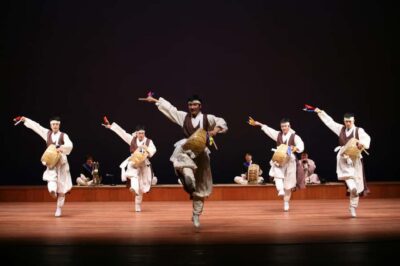
Gugak – Korean Traditional Music Museum&Concert Tour
Read our review →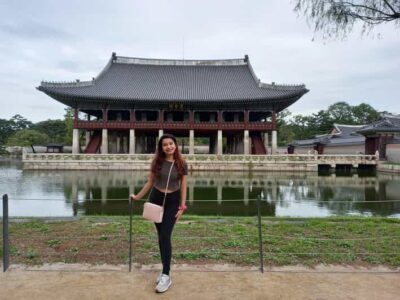
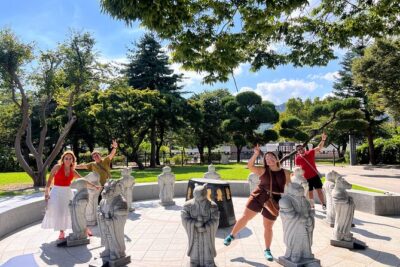
Time Travel in Seoul: Gyeongbokgung Palace, Folk Museum & Bukchon
Read our review →
National Art Gallery Tour and Taste of Korean Cuisine in Seoul
Read our review →Browse the lists this tour appears in