Reviewed · TOURS
Gwanghwamun Tour l 120 minutes to Understand Local Korean Society
Gwanghwamun is more than a grand square with palace views. It is the place where Joseon history, modern politics, and everyday Korean life meet. In two hours, guide June connects royal power, the Korean War, rapid economic growth, relations with North Korea, and customs such as age hierarchy and coffee culture.
I like the route for two clear reasons: it visits places you might otherwise pass without understanding, and June explains difficult subjects in plain, often light-hearted language. The small group, capped at 20 people, also leaves room for questions. The main drawback is that this is a talk-heavy walking tour, with a few uphill sections, so it suits curious minds more than visitors seeking a relaxed sightseeing stroll.
In This Review
- Key points to know before you book
- Why this short Seoul walk explains more than the usual sights
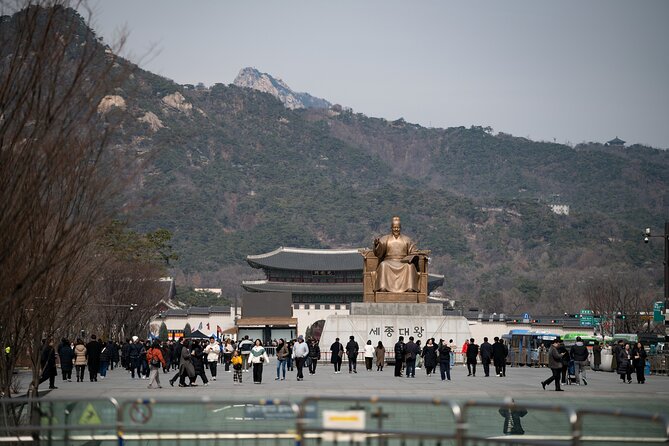
- Gwanghwamun Square and 600 years of central Seoul
- The U.S. Embassy and the foreign influence behind modern Korea
- Samcheongdong-gil and the cost of rapid development
- Bukchon Hanok Village and the argument over preservation
- The University of North Korean Studies and Korea’s divided identity
- The everyday customs behind the big historical themes
- What the $14.10 price really buys you
- Who will get the most from this experience
- Ending at the Blue House
- Should you book the Gwanghwamun Tour?
- FAQ
- Where does the Gwanghwamun Tour start?
- What time does the tour begin?
- How long does the tour last?
- Where does the tour finish?
- Is the walking route difficult?
- How many people can join the tour?
Key points to know before you book
- A history-focused walk through central Seoul: Begin at Gwanghwamun Square, the city’s main civic center for more than 600 years.
- June links past and present: Expect discussion of Joseon values, postwar capitalism, politics, and modern social customs.
- Five distinct stops: The route covers the U.S. Embassy, Samcheongdong, Bukchon Hanok Village, and the University of North Korean Studies.
- A short, manageable format: The walk lasts about two hours and ends at the Blue House, making it easy to fit into a busy Seoul day.
- Strong value at $14.10: You pay for interpretation rather than entry tickets, but all listed stops are free to enter.
- Easy overall, with some uphill walking: Comfortable shoes are sensible, especially around Bukchon.
Why this short Seoul walk explains more than the usual sights
Many first visits to Seoul give you the royal palace, a market, a shopping street, and perhaps a K-pop connection. Those places are worthwhile, but they do not always explain how Korean society works. This tour takes a different route. It uses familiar landmarks to answer bigger questions about hierarchy, national identity, foreign influence, work, development, and the divided peninsula.
The result is less about collecting photos and more about learning how to read the city. A government building, a traditional house, or a café street begins to carry extra meaning. I especially like that the tour does not treat Korean culture as a list of quaint customs. June connects social habits to historical forces, including Confucian ideas from the Joseon period and the rapid economic changes that followed the Korean War.
The price is $14.10 per person, and the tour runs for roughly 120 minutes. Since there are no admission charges at the stops, the value rests almost entirely on June’s explanations and the route he has put together. For a visitor who wants context, that is a fair price. If you prefer to explore silently and at your own pace, you may find the same landmarks more enjoyable alone.
The tour starts at 10:30 a.m. at Gwanghwamun Square and ends in front of the Blue House, also called Cheong Wa Dae. That morning timing works well: you can use the afternoon for a palace, museum, meal, or neighborhood visit. The route is near public transportation, and confirmation is provided when you book.
Other Seoul trips people book alongside this one:
- Best DMZ Tour Korea from Seoul (Red Suspension Bridge Optional)
★ 5.0 · 41,422 reviews - DMZ Tour: 3rd Tunnel, Option(Suspension Bridge, Boat) from Seoul
★ 5.0 · 21,373 reviews - DMZ tour south Korea from Seoul (NK experience hall, defector)
★ 5.0 · 20,599 reviews
Gwanghwamun Square and 600 years of central Seoul
The first stop is Gwanghwamun Square, a broad civic space in the heart of Seoul. It has been central to the city for more than 600 years, so it provides the right opening for a history-based walk.
Here, June sets up the basic story of the Joseon kingdom and its influence on Korean society. The point is not only to identify old rulers or events. You begin to see why ideas about social rank, education, family duty, and public behavior still matter in present-day Korea.
This is also the place to ask questions early. If you are curious about Korea’s main social concerns, how people view national division, or why certain customs remain important, Gwanghwamun gives those subjects a physical setting. The square helps show how old political centers continue to shape the modern capital.
There is no admission ticket, but that does not mean the stop is lightweight. The value comes from the explanation. Without a guide, you might see a large public square and move on. With June’s framework, it becomes a way to understand the city’s long political life.
The U.S. Embassy and the foreign influence behind modern Korea
The next stop is outside the U.S. Embassy and Consulate in the Republic of Korea. You do not visit the building as an attraction. Instead, you use its location to discuss the role of the United States in Korea, from the country’s establishment to the present.
This part should appeal to anyone interested in modern politics. Korea’s relationship with America is not a simple story of friendship or opposition. It is tied to security, postwar development, national identity, and differing opinions within Korean society. June’s approach is to explain how Koreans think about that relationship rather than giving you a one-sided political speech.
I find this stop useful because it broadens the tour beyond palace history. Seoul is an old city, but it is also a modern capital shaped by international power. The embassy helps you consider how outside forces affected the country’s direction and how those relationships are viewed today.
The stop lasts about 15 minutes. That is enough time for a focused explanation, though not enough for a full political history of the peninsula. Think of it as one important piece in the larger picture.
Samcheongdong-gil and the cost of rapid development
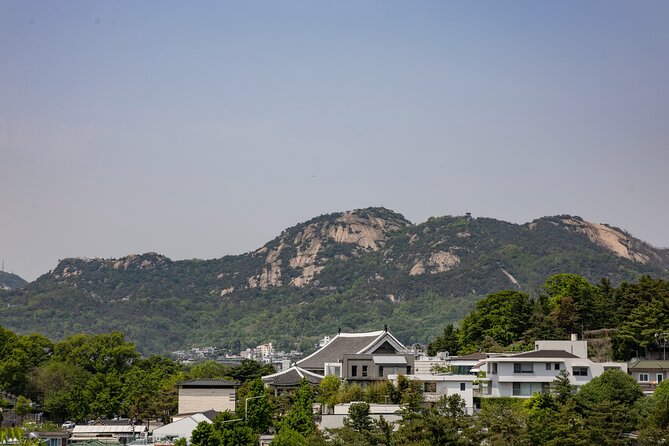
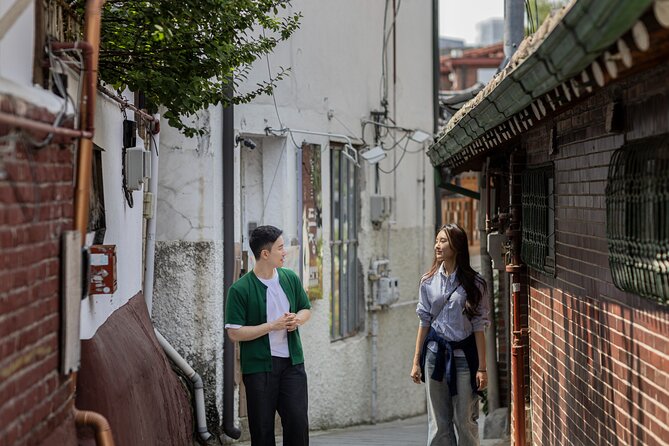
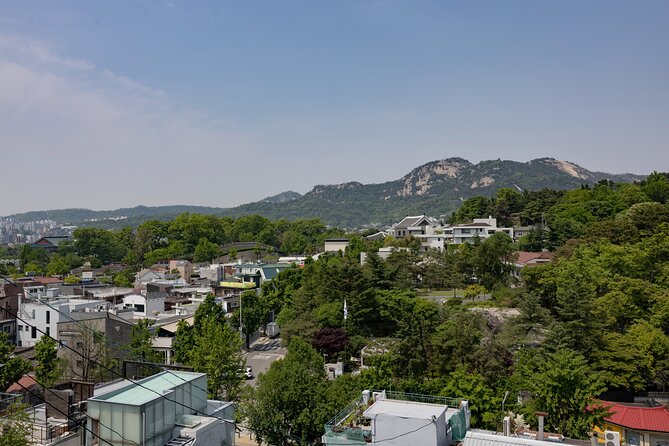
From there, the walk continues along Samcheongdong-gil Road, known for its retro-style shops and restaurants. The street offers a visual shift from monumental public space to a more local commercial setting.
June uses the area to talk about modern development and its side effects, along with Korean working culture. This is one of the more useful parts of the route because development is easy to admire when you are looking at attractive shops and renovated streets. It is harder to notice who benefits, what changes, and what may be lost.
The stop gives you a way to think about Seoul’s speed. The city has changed dramatically in a relatively short period, and that change affects housing, work, neighborhoods, and the balance between old and new. Samcheongdong makes those questions visible without requiring a classroom.
You may also appreciate the contrast between the street’s pleasant appearance and the more serious subject matter. This is not simply a photo stop. It asks you to look at a popular neighborhood as part of a living city, not as a preserved set piece.
The scheduled time is about 15 minutes. You will have a glimpse rather than a long shopping break, so do not plan on browsing every store or stopping for a full meal during the tour.
A completely different kind of day, same trip:
- DMZ Insider Tour: 3rd Tunnel, NK Defector Meet & Red Bridge
★ 4.9 · 15,214 reviews - Seoul: DMZ Tour with Optional Suspension Bridge
★ 4.8 · 5,277 reviews - Signature DMZ Tour: Exclusive Defector Talk & Suspension Bridge
★ 5.0 · 4,459 reviews - Thrilling Korean DMZ 3rd Tunnel Tour from Seoul + Red Bridge Rush
★ 5.0 · 3,097 reviews
Bukchon Hanok Village and the argument over preservation
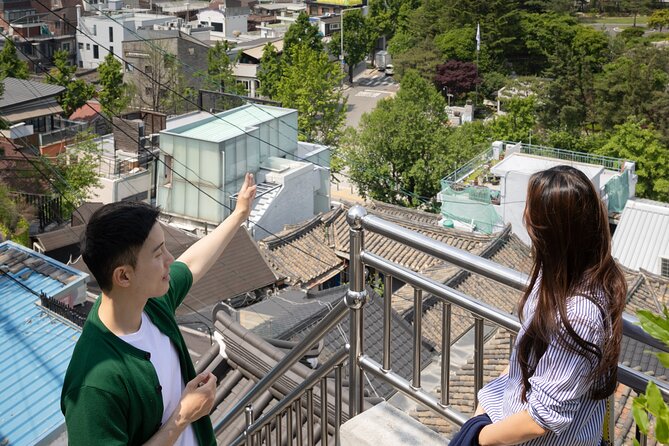
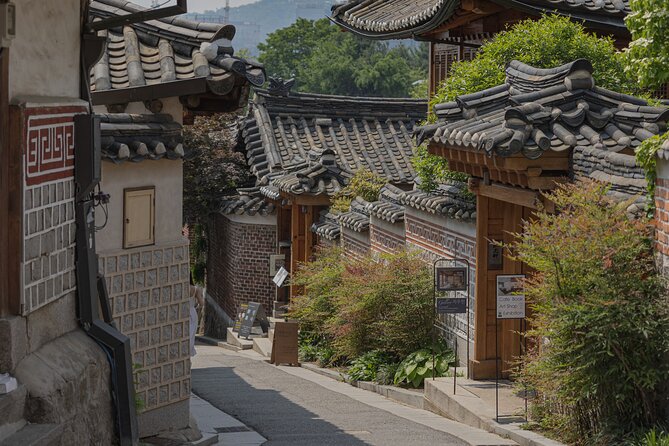
Bukchon Hanok Village is the longest stop, at about 25 minutes. Its traditional hanok houses and narrow lanes are among Seoul’s best-known sights, but the important question here is not just how old or attractive the homes look.
June discusses the tension between development and preservation. That issue matters because Bukchon is both a residential neighborhood and a major sightseeing area. The traditional buildings are valuable, yet the area must also function as a real place where people live. A visit becomes more respectful when you understand that difference.
The stop also shows how history can become part of modern urban pressure. Preserving old houses is not always simple or cost-free, and turning a residential district into a sightseeing destination can create problems of its own. June’s focus on those tensions gives you a more careful way to view the lanes.
Bukchon includes some uphill walking, although the tour is described as easy overall. Wear shoes that can handle slopes and uneven walking. If you have limited mobility, the route’s hills are the main physical point to consider before booking.
Because Bukchon is a residential area, listen closely to local etiquette during the visit. The tour description does not promise a long free period for photographs, and the schedule keeps moving, so your time here is structured rather than leisurely.
The University of North Korean Studies and Korea’s divided identity
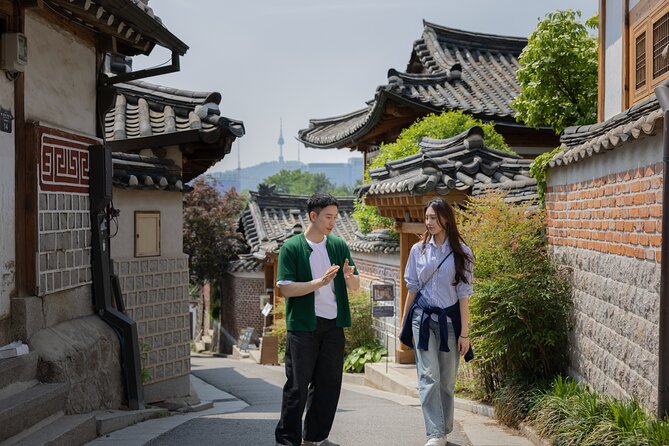
The final major stop is the University of North Korean Studies, described as the only college specializing solely in North Korea. The tour uses the university as a starting point for discussing South Korea’s relationship with North Korea and the different ways people think about the division.
This is a valuable inclusion. Many sightseeing walks stop at royal sites and traditional lanes, leaving the peninsula’s current political reality in the background. Here, the subject is brought into the route directly. You get a chance to consider how the North affects South Korean attitudes, public discussion, and national identity.
Do not expect a formal university lecture or a visit to an extensive museum collection. The listed timing is about 20 minutes, so this is a guided explanation connected to the setting. It is enough to add political context, especially if you have already seen the Demilitarized Zone or plan to visit it later.
The subject can be sensitive, but June’s style is presented as clear, respectful, and open to questions. The walk also covers opinions about Japan and America, allowing you to place relations with North Korea within a wider regional story.
The everyday customs behind the big historical themes
One of the tour’s strongest features is its move from national history into ordinary life. June connects historical ideas to Korean age hierarchy, coffee culture, Korean spa culture, and the values people place on daily relationships.
These details matter because a short visit can leave you noticing customs without knowing why they exist. Age hierarchy, for example, affects how people relate to one another and how language is used. A café is not just a convenient place to rest. It can also be part of the way modern Korean social life and work culture have developed.
The tour does not try to cover every part of Korean culture. That would be impossible in two hours. Instead, it gives you a set of useful reference points. Later, when you encounter a social custom, a café-filled street, or a conversation about national identity, you have more background for understanding it.
June’s delivery is another reason the format works. His explanations are structured, fluent, and sometimes funny, which helps keep political and historical material from becoming dry. You can ask questions throughout, and the small group should make conversation easier than on a large bus tour.
What the $14.10 price really buys you
At $14.10, this is an inexpensive way to add meaning to several major Seoul sights. You are not paying for palace entry, transport, food, or a special attraction. You are paying for two hours of guiding, interpretation, and a route that connects places many people see separately.
That distinction is important. If you only want photographs, the price may not seem necessary. Gwanghwamun Square, Samcheongdong, Bukchon, and the Blue House can be visited without a paid guide. But if you want to understand the forces behind the scenery, the cost is modest.
The tour also saves you research time. You could read about Joseon society, postwar Korea, North Korean relations, urban development, and Korean social customs before your trip. This experience puts those subjects in order and attaches them to real locations.
The maximum group size is 20 people. That is not a private walk, but it is small enough to feel more personal than a large coach excursion. The short duration is another advantage. You get a concentrated introduction without giving up an entire day.
Who will get the most from this experience
I would choose this tour early in a Seoul visit if I wanted a better framework for the rest of my time in Korea. The route gives you historical and social context that can improve later visits to palaces, neighborhoods, museums, and political sites.
It is especially well suited to:
- First-time visitors who want more than a checklist of sights
- People interested in history, politics, and modern society
- Solo visitors who want a structured walk and chances to meet others
- Couples or small groups who enjoy asking questions
- Visitors who want a short morning activity with a central finish
- Anyone curious about how Confucian traditions and postwar capitalism shaped modern Korea
The tour may not suit you if you dislike discussions of politics or prefer long, unstructured stops. It also may not be ideal if uphill walking is difficult. The route is generally easy, but Bukchon and other sections include slopes.
The experience requires good weather and a minimum number of participants. If poor weather or low enrollment cancels the walk, you are offered another date or experience, or a full refund. You can cancel for a full refund up to 24 hours before the start time. Last-minute changes are not accepted.
Ending at the Blue House
The tour ends in front of the Blue House, the former presidential residence at 1 Cheongwadae-ro. This is a practical finish because you are left in a part of central Seoul with more sightseeing options nearby.
The ending also fits the tour’s theme. You begin with the long political story of Gwanghwamun and finish near a modern seat of national power. Along the way, you have moved through foreign influence, urban development, traditional housing, and North Korean relations.
June may also be able to offer personal suggestions based on your interests after the walk. That makes the final stop useful for planning the rest of your day, though the tour itself remains focused on the scheduled route.
Should you book the Gwanghwamun Tour?
Book it if you want Seoul explained rather than simply displayed. The strongest reason to choose this walk is June’s ability to connect places with ideas: Joseon values with social hierarchy, postwar history with modern work culture, and national politics with everyday attitudes.
At $14.10, the tour is good value for an intellectually curious visitor. The two-hour length keeps it focused, the route includes several distinct parts of central Seoul, and the group size is limited to 20. Just bring comfortable shoes, expect a few hills, and understand that the emphasis is on conversation and context rather than extended free time.
If you want a gentle photo walk or a food-focused outing, choose something else. If you want a clear introduction to the history, politics, and social habits that shape South Korea today, this is a smart morning start.
FAQ
Where does the Gwanghwamun Tour start?
The tour starts at Gwanghwamun Square, 172 Sejong-daero, Jongno District, Seoul.
What time does the tour begin?
The scheduled start time is 10:30 a.m.
How long does the tour last?
The experience lasts approximately two hours, or 120 minutes.
Where does the tour finish?
The walk ends in front of the Blue House, also known as Cheong Wa Dae, at 1 Cheongwadae-ro in Jongno District.
Is the walking route difficult?
The tour is described as an easy walk, but a few sections include uphill walking. Comfortable shoes are recommended.
How many people can join the tour?
The activity has a maximum of 20 participants.
Just added around Seoul
- Incheon Airport Private Transfer between Seoul City★ 4.0 · 4 reviews
- DMZ 2nd Tunnel and Cheorwon Peace Observatory with Admission★ 5.0 · 4 reviews
- Seoul’s Stars: Open Mic with Local & International Talent★ 4.8 · 4 reviews
- Samaksan Cable Car and Nami Island Day Escape with Railbike★ 4.0 · 4 reviews
- Nami & Maple Road & Theatre des Lumieres Day Tour from Seoul★ 4.8 · 4 reviews
- Hire Photographer, Professional Photo Shoot – Seoul★ 5.0 · 4 reviews
- [KoreaByLocal] Authentic Seoul Night Walk and Chicken & Beer★ 5.0 · 4 reviews
- Play Gayageum in Hanbok Cultural Experience in Bukchon★ 5.0 · 4 reviews
Tours, compared.
Best DMZ Tour Korea from Seoul (Red Suspension Bridge Optional)
Read our review →
DMZ Tour: 3rd Tunnel, Option(Suspension Bridge, Boat) from Seoul
Read our review →
DMZ tour south Korea from Seoul (NK experience hall, defector)
Read our review →
DMZ Insider Tour: 3rd Tunnel, NK Defector Meet & Red Bridge
Read our review →
Thrilling Korean DMZ 3rd Tunnel Tour from Seoul + Red Bridge Rush
Read our review →
DMZ Past and Present: Korean Demilitarized Zone Tour from Seoul
Read our review →