
Reviewed · HONGDAE & GANGNAM NIGHTLIFE
Traditional Korean Bookbinding Experience in Seoul, Hongdae
The best part of this Seoul workshop is that you do not simply buy a Korean souvenir. You make a useful keepsake using Hanji paper, silk, thread, and a binding method connected to the Joseon period. The finished notebook is small enough to pack easily, yet personal enough to feel far more meaningful than a shop-bought trinket.
I like the wide choice of 22 traditional silk patterns, and I like that the class explains why Hanji matters before you start crafting. The main thing to consider is the fixed starting time and age rule: the class begins at 10:30 a.m., and only people aged 17 or older may book.
In This Review
- Key Points Before You Book
- Why This Two-Hour Class Feels Different
- Arriving at Danchoodan in Mapo
- Choosing Silk Before You Bind
- Understanding Hanji Before the Craft Work
- Binding Your Own Korean Notebook
- Selecting Thread and a Norigae Ornament
- Packing the Notebook for the Trip Home
- What the $49 Price Really Buys
- Who Will Enjoy This Seoul Experience
- A Balanced Take on the Finished Souvenir
- Should You Book This Danchoodan Class?
- FAQ
- How long does the Korean bookbinding class last?
- What time does the class begin?
- Where does the activity meet?
- Where does the activity end?
- Is transportation included?
- What materials are included?
- Can I choose the notebook cover?
- What age do I need to be to book?
- Can I cancel for a full refund?
Key Points Before You Book
- Hanji with a long paper tradition: Learn about Korean handmade paper linked to the Annals of the Joseon Dynasty.
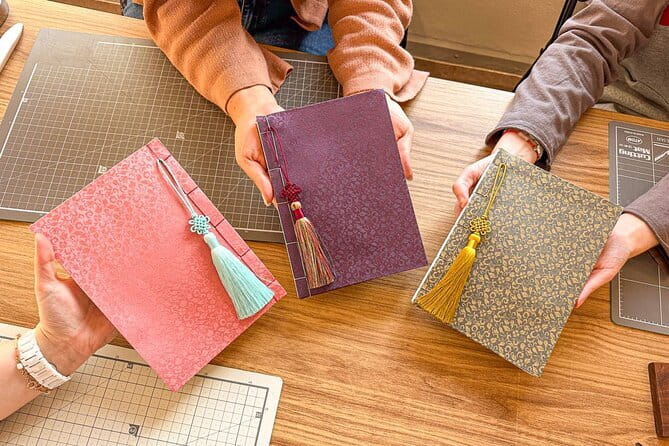
- Twenty-two silk covers: Choose a patterned Korean silk cover before binding your notebook.
- Hands-on Joseon-style binding: You make the book yourself with supplied tools and materials.
- Norigae finishing touch: Add a Korean traditional ornament and knot to the completed notebook.
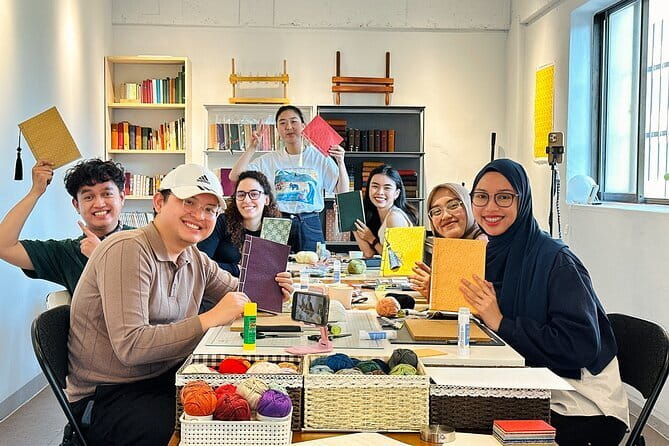
- Small class setting: The studio accepts a maximum of 12 people, which allows for personal help.
- A practical Seoul souvenir: Your notebook is packed so you can take it home right away.
Why This Two-Hour Class Feels Different
Seoul gives you no shortage of shopping opportunities, but buying a Korean notebook and making one are two different things. This class gives you a short lesson in Korean paper culture, followed by a craft project that you can hold, use, and explain when you get home.
The materials carry much of the meaning. Hanji is traditional Korean paper, and it was used for important writing, including the Annals of the Joseon Dynasty. Joseon royal family members, Confucian scholars, and intellectuals used it for diaries and notes. That context makes the paper more than a decorative surface.
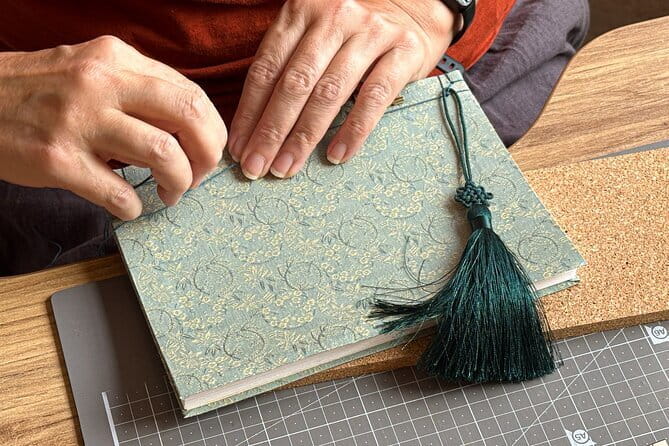
The class also uses silk woven with Korean traditional patterns for the cover. You choose the design yourself, then select the thread color and a Norigae ornament. Because these choices shape the final look, your notebook should feel like your own project rather than a standard item produced for every participant.
The activity takes about two hours. That is long enough for a careful craft session without taking over your whole day in Seoul. You can schedule it before lunch, then continue exploring Mapo or other parts of the city afterward.
More nights out in Hongdae and Gangnam:
- Seoul: Gangnam Tour on Youth and Society in South Korea
★ 4.9 · 466 reviews - Gangnam Walking Tour on Youth and Society in Seoul Korea
★ 5.0 · 401 reviews - Seoul: Itaewon Premium Pub Crawl with VIP Bottle Service
★ 5.0 · 101 reviews
Arriving at Danchoodan in Mapo
The meeting point is Danchoodan, at 100 Daeheung-ro, third floor, in Daeheung-dong, Mapo-gu, Seoul. The experience is described as being in the Hongdae area, but the provided meeting address is in Daeheung-dong, so check your map route carefully before leaving.
The studio is near public transportation, making it practical to reach without a private vehicle. The activity does not include an air-conditioned vehicle, but that should not matter for this type of studio-based class. You make your own way there and return to the same meeting point at the end.
The start time is 10:30 a.m. Arrive with enough time to find the building and reach the third floor. Since the class begins at a set time, a late arrival could cut into the explanation and hands-on work. Confirmation is normally sent when you book, though a reservation made within one day of the activity may require extra time for confirmation.
Only the people included in the reservation may enter the studio. That rule matters if you are thinking of bringing a friend who has not booked or someone who wants to watch.
Choosing Silk Before You Bind
The first creative decision is the cover. You choose from 22 silk options, each featuring a Korean traditional pattern. This is one of the most enjoyable parts of the class because it gives you a clear sense of ownership from the beginning.
The variety also makes this a good activity for two people who want different styles. One person can choose a bright thread and decorative cover, while another can select something more restrained. The class does not leave the cover design entirely to the instructor or hand you a finished kit with no choices.
Silk has a practical place in the project as well as a decorative one. The traditional saying shared in the class is that silk lasts 500 years, while Hanji lasts 1,000 years. That claim is presented as an old saying, not as a guarantee for your notebook, but it helps explain the value placed on these materials.
Take a moment with the cover choice. Once the binding begins, the silk becomes part of the structure of the book, not merely a loose decoration. If you are making the notebook as a present, think about the recipient’s favorite colors or the kind of design that would suit them.
Understanding Hanji Before the Craft Work

Before you begin binding, the teacher introduces Hanji and explains why Korean handmade paper is special. This short lesson gives the activity cultural context without turning it into a long museum lecture.
Hanji is tied to written records, study, and personal notes in Korean history. The reference to the Annals of the Joseon Dynasty gives you a clear example of its importance. The royal court and educated figures used Hanji for diaries and writing, so the notebook you make connects a small modern craft project with an older Korean habit of recording daily life and ideas.
That explanation is useful because it changes how you view the materials. You are not just folding paper into a souvenir. You are learning why the paper was valued, then using it in a traditional book form.
The exact amount of historical detail may depend on the class pace and the questions asked by the group. The supplied information identifies a licensed guide and a kind, patient teacher, but does not provide a guide’s name. You should expect instruction and cultural explanation, though not a full historical tour of Seoul.
A completely different kind of day, same trip:
- Best DMZ Tour Korea from Seoul (Red Suspension Bridge Optional)
★ 5.0 · 41,422 reviews - DMZ Tour: 3rd Tunnel, Option(Suspension Bridge, Boat) from Seoul
★ 5.0 · 21,373 reviews - DMZ tour south Korea from Seoul (NK experience hall, defector)
★ 5.0 · 20,599 reviews - DMZ Insider Tour: 3rd Tunnel, NK Defector Meet & Red Bridge
★ 4.9 · 15,214 reviews
Binding Your Own Korean Notebook
After choosing the silk and learning about Hanji, you begin making the notebook. The class supplies the binding tools and materials, so you do not need to bring special equipment.
The teacher shows you how to combine the silk and Hanji using Korean traditional binding. This is the main hands-on portion, and it rewards care more than speed. You should expect to follow a sequence of steps rather than simply decorate a preassembled book.
That makes the class a good fit if you enjoy paper crafts, sewing, bookmaking, or detailed handwork. It may be less appealing if you want a fast activity with little concentration. The finished notebook is described as a scrapbook for a Korean journey, so you can use it later for notes, sketches, ticket stubs, or photographs.
The maximum group size is 12 people. That is small enough for the instructor to help when a step feels confusing, while still giving the activity a social feel. The class has also been praised for a relaxed pace, laughter, and patient assistance. Those details matter because traditional binding can look simple until you try to keep the paper, cover, and thread aligned.
You do not need to be an expert crafter. Most participants can take part, and the tools and materials are included. Still, expect to pay attention to the instructions and handle the paper with care. A little patience should produce a much better result than rushing to finish.
Selecting Thread and a Norigae Ornament
Once the basic notebook is taking shape, you choose a thread color from the available selection. The thread is both functional and visual, so this is another chance to make the book your own.
The final decoration is a Norigae, a traditional Korean knot ornament. You select one and attach it to the notebook as the finishing touch. The Norigae gives the finished book a distinctly Korean detail and makes it look ready to give as a present.
This last step also creates a nice contrast with the binding work. The book begins as paper, silk, and thread, then gains a small decorative object with cultural meaning. You leave with something that looks finished rather than like a craft project still waiting for one final step.
The class does not say that you will learn every form of traditional Korean knotwork. Think of the Norigae as an applied decoration for your notebook, not a separate multi-hour knot-making course. That keeps the experience manageable within two hours.
Packing the Notebook for the Trip Home
At the end, your creation is packed in a gift-ready package. This is a practical benefit, especially if you are still moving between hotels or taking a flight soon after the class.
A handmade paper item also makes a thoughtful souvenir because it is light and easy to store. The notebook should fit into your luggage without the bulk of pottery, framed art, or clothing. You can give it away, keep it for travel notes, or use it as a scrapbook for your time in Korea.
The personal element is the strongest reason to choose this activity over ordinary shopping. You select the silk, thread, and Norigae, then take part in the binding. The result records both Korean craft traditions and your own choices.
Handle the finished book sensibly during the rest of your trip. Hanji is known for durability, but a handmade notebook still deserves protection from spills and heavy objects in your bag.
What the $49 Price Really Buys

At $49 per person, this is not the cheapest souvenir activity in Seoul. The price makes more sense when you separate the purchase into its parts: a two-hour guided class, all tools and materials, instruction about Hanji, your silk-covered notebook, a Norigae decoration, and gift-ready packaging.
You are also paying for the chance to make the item rather than simply purchase it. If you already plan to buy a Korean notebook, the extra value comes from the process and the cultural background. If you do not care for crafts, the price may feel high for a small finished object.
The group limit of 12 helps support the cost. A small class gives you a better chance to ask for help than a large demonstration would. The teacher has been described as patient and helpful, which is especially useful for anyone who enjoys crafts but lacks bookbinding experience.
There is no transportation included, and you must reach the studio yourself. That keeps the experience focused and avoids paying for a vehicle you do not need. Plan your route separately and treat the class as a compact Mapo activity.
Who Will Enjoy This Seoul Experience
I would recommend this class to adults who like making things with their hands and want a souvenir with a clear Korean connection. It also suits book lovers, stationery fans, scrapbook makers, and anyone who prefers a quiet cultural activity to another palace visit or shopping stop.
It can work well for couples, friends, or solo participants. The design choices give each person room to create a different notebook, while the small group setting provides some company during the work.
The activity is restricted to people aged 17 and older. Families with younger children should choose another craft option. Service animals are allowed, and the studio is near public transportation. The information provided says most people can participate, but it does not give detailed accessibility measurements or describe every studio feature, so contact Danchoodan if you have specific mobility needs.
You should also book this with enough time in your schedule. The class lasts about two hours and ends where it begins, but the fixed 10:30 a.m. start means you cannot treat it as a drop-in activity.
A Balanced Take on the Finished Souvenir
The finished notebook is the main reward, but your satisfaction will depend on what you want from a Seoul activity. If you want a polished luxury item with no effort, simply buying a notebook may suit you better.
If you want to understand a traditional material and take part in the making, this class offers more. The project is useful, portable, and connected to Korean writing culture. The silk cover, colored thread, and Norigae knot also give it a decorative finish that feels special enough for a gift.
The teacher’s patient approach is important here. A craft class can become frustrating if instructions move too quickly, but the activity is described as nicely paced and easy to follow with help. You should still expect to concentrate, especially during the binding stage.
The cultural explanation is another strong point. You will not leave knowing everything about Joseon book production, but you will understand why Hanji is respected and how paper, silk, and traditional decoration work together in a Korean craft setting.
Should You Book This Danchoodan Class?
Book it if you want a two-hour Seoul activity that combines cultural context with a real handmade souvenir. The strongest reasons are the choice of 22 silk covers, the Hanji lesson, the traditional binding method, and the Norigae finishing detail.
Skip it if you dislike careful handwork, need a flexible start time, or are traveling with anyone under 17. Also remember that the address is in Daeheung-dong, Mapo-gu, so confirm the route even if you are staying near the area commonly associated with Hongdae.
For most adults who enjoy paper, design, and Korean history, $49 is a fair price for the materials, instruction, and finished notebook. You leave with more than a souvenir. You leave with a small record of your time in Seoul that you helped make from the first silk choice to the final knot.
FAQ
How long does the Korean bookbinding class last?
The activity lasts approximately two hours.
What time does the class begin?
The class begins at 10:30 a.m.
Where does the activity meet?
It meets at Danchoodan, 100 Daeheung-ro, third floor, Daeheung-dong, Mapo-gu, Seoul, South Korea.
Where does the activity end?
The class ends back at the same meeting point.
Is transportation included?
No. The experience does not include an air-conditioned vehicle. The studio is near public transportation.
What materials are included?
Binding tools and materials are included. You also receive the materials needed to make and decorate the notebook.
Can I choose the notebook cover?
Yes. You can choose from 22 silk covers featuring Korean traditional patterns.
What age do I need to be to book?
Reservations are available only to people aged 17 or older.
Can I cancel for a full refund?
Yes, if you cancel at least 24 hours before the local start time. Cancellations made less than 24 hours before the activity are not refunded, and changes within that period are not accepted.
Just added around Seoul
- Incheon Airport Private Transfer between Seoul City★ 4.0 · 4 reviews
- Seoul’s Stars: Open Mic with Local & International Talent★ 4.8 · 4 reviews
- Samaksan Cable Car and Nami Island Day Escape with Railbike★ 4.0 · 4 reviews
- DMZ 2nd Tunnel and Cheorwon Peace Observatory with Admission★ 5.0 · 4 reviews
- Nami & Maple Road & Theatre des Lumieres Day Tour from Seoul★ 4.8 · 4 reviews
- Hire Photographer, Professional Photo Shoot – Seoul★ 5.0 · 4 reviews
- [KoreaByLocal] Authentic Seoul Night Walk and Chicken & Beer★ 5.0 · 4 reviews
- Play Gayageum in Hanbok Cultural Experience in Bukchon★ 5.0 · 4 reviews
Hongdae & Gangnam Nightlife, compared.
Gangnam Tour on Youth and Society in South Korea
Read our review →
Gangnam Walking Tour on Youth and Society in Seoul Korea
Read our review →Itaewon Premium Pub Crawl with VIP Bottle Service
Read our review →
Korean Home Style Cooking Class in Gangnam Seoul
Read our review →
Seoul Food n Night view with Local Korean BBQ dinner Hongdae st.
Read our review →

4-Hour Gangnam Walking Tour With Customized Itinerary
Read our review →
(Private tour) Seoul highlights; Gangnam and beyond Tour
Read our review →Browse the lists this tour appears in