
Reviewed · HISTORICAL TOURS
Seoul History Walking Tour
Seoul’s story comes into focus on this walk, where a city bell, a restored stream, royal statues, old diplomatic buildings, and modern protest sites all fit into one afternoon. You move from the Joseon Dynasty to Japanese rule, war, dictatorship, and democracy without being shut inside a museum all day.
I like the small group of no more than eight, which gives you a fair chance to ask questions. I also like the route’s unusual mix of royal history and recent politics, plus the Korean snacks and printed memento included in the price.
The main drawback is pace. Fifteen stops in three and a half hours means some places receive only 5 or 10 minutes, and this is a history-heavy walk rather than a relaxed sightseeing stroll.
In This Review
- Key points to know before booking
- Why this Seoul history walk works
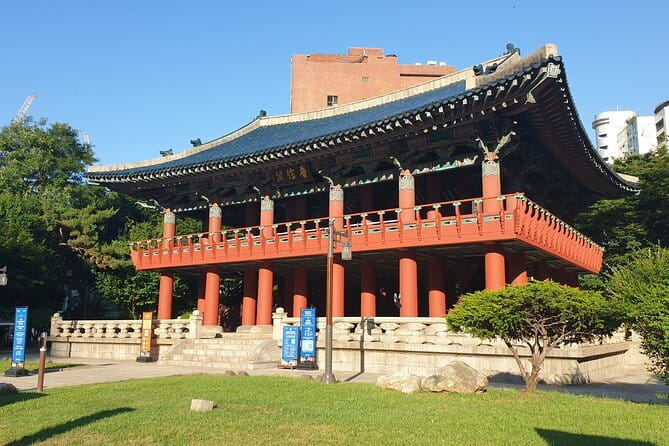
- Bosingak begins the story with a city bell
- Cheonggyecheon Stream shows three different Seouls
- City Hall and Seoul Plaza connect design with public life
- Deoksugung’s stone wall carries a famous superstition
- Jungmyeongjeon Hall explains the loss of independence
- The Former Russian Legation reveals a royal escape
- Two statues introduce Korea’s great king and admiral
- Gwanghwamun Square turns history toward democracy
- A rooftop view at the National Museum of Korean Contemporary History
- The Japanese Embassy and the long protest nearby
- Jogyesa Temple ends the afternoon quietly
- Group size, guide style, and what to bring
- Who should book this tour
- Should you book the Seoul History Walking Tour?
- FAQ
- How long does the Seoul History Walking Tour last?
- What time does the tour start?
- Where does the tour begin?
- Where does the tour end?
- How many people can join the tour?
- Is bottled water included?
- Are snacks included?
- Can I cancel for a full refund?
Key points to know before booking
- A 630-year story in one walk: The route connects Joseon kings, Japanese occupation, war, dictatorship, and modern democracy.
- A genuinely small group: The tour is limited to eight people, a useful advantage for questions and clear explanations.
- The route is mostly free public sites: You see streets, plazas, statues, a stream, temples, and historic buildings without a long list of admission fees.
- Start at 2:30 pm: The afternoon timing leaves your morning free, but you should be ready to walk for about three and a half hours.
- Guide Eric may be available: An Australian guide named Eric is associated with especially strong praise for clear, engaging explanations.
- Ends near the starting point: The walk finishes at Jogyesa Temple, up the street from Bosingak, with directions from the guide.
Why this Seoul history walk works
This is not a tour built around one grand palace. Instead, it treats central Seoul as the exhibit. A bell pavilion explains old city routines. A stream reveals how Seoul changed over time. Statues introduce two major Joseon figures, while a plaza and an embassy help explain the country’s modern political life.
That approach suits me because Seoul can feel very new at first glance. Glass towers, traffic, cafés, and broad roads can hide the older story beneath them. This route helps you read the city as you walk through it.
The central theme is change. You will hear about the Joseon Dynasty, Korea’s last royal dynasty, then move into the pressure exerted by Imperial Japan, the struggle for independence, and the later fight for democracy. The guide also connects King Sejong and Admiral Yi Sun-sin to the modern nation, rather than treating them as names on statues.
At $26.60 per person, the tour offers good value if you want context more than admission-ticket attractions. Nearly every stop is free, so you are paying mainly for the guide’s time, route planning, interpretation, snacks, and small group format. That is a sensible trade for a first afternoon in Seoul, especially if you prefer explanations to simply taking photographs.
A few more Seoul trips worth weighing up
- Seoul: Evening Dark History, Folklore & Ghost Story Walking Tour
★ 5.0 · 593 reviews - Hanbok Photoshoot and History Tour at Gyeongbokgung Palace
★ 5.0 · 276 reviews - From Seoul: Dae Jang Geum Park Historic K-Drama Set Tour
★ 4.9 · 143 reviews
Bosingak begins the story with a city bell
The walk starts at Bosingak Bell Pavilion, at 54 Jong-ro in Jongno District, at 2:30 pm. The opening question is memorable: why did the city bell ring 28 times at night and 33 times in the morning?
That question gives the tour a good start because it turns a fixed monument into a clue about how Joseon Seoul was organized. You will spend about 15 minutes here, enough to set the period and explain why this site mattered to the old capital.
The meeting point is near public transportation, but you should still allow time to find the pavilion. The tour begins on time, and a city-center meeting point can be easy to miss if you are rushing through a busy street.
Cheonggyecheon Stream shows three different Seouls
The longest stop is Cheonggyecheon Stream, where the group spends about 40 minutes. That extra time makes sense. The stream is not just a pleasant urban waterway. It provides a way to discuss Seoul during the Joseon Dynasty, the Korean War, and the present day.
The guide asks what the stream provided in each period. That framing helps you see the same place through different needs and political choices. Its meaning changed as Seoul grew, suffered war, and became a modern capital.
This is also one of the better spots for the guide’s storytelling. You are not simply told dates. You are asked to think about what ordinary city life required at different points in Korean history.
Wear comfortable shoes. The route is a walking tour, and the stream stop is long enough that the group will spend real time on foot rather than making a quick photo stop.
City Hall and Seoul Plaza connect design with public life

Seoul City Hall receives only about five minutes, but the stop gives you a look at its architectural character, inside and out. The short timing means this is an explanation point, not a full building visit.
You then spend 10 minutes at Seoul Plaza. Here the focus shifts from architecture to citizens and public life. The plaza reflects the feelings of modern Seoul residents, and it also helps prepare you for the later discussion of protests and democracy.
I like this change of subject. The route does not treat history as something locked in the past. Seoul’s public spaces still carry political meaning, and the tour makes that part of the story visible.
A completely different kind of day, same trip:
- Best DMZ Tour Korea from Seoul (Red Suspension Bridge Optional)
★ 5.0 · 41,422 reviews - DMZ Tour: 3rd Tunnel, Option(Suspension Bridge, Boat) from Seoul
★ 5.0 · 21,373 reviews - DMZ tour south Korea from Seoul (NK experience hall, defector)
★ 5.0 · 20,599 reviews - DMZ Insider Tour: 3rd Tunnel, NK Defector Meet & Red Bridge
★ 4.9 · 15,214 reviews
Deoksugung’s stone wall carries a famous superstition
At Jeongdong Observatory, you have about 10 minutes to look toward the palace and city. The view is useful because it gives you a sense of how historic and modern Seoul sit beside one another.
The next stop, Deoksugung Doldam-gil, lasts another 10 minutes. The stone wall path comes with a well-known Korean belief: if a married couple walks beside it, divorce will soon follow.
The story adds a touch of humor to a serious route. It also reminds you that city history is not made only of kings and treaties. Folklore, family life, and popular sayings are part of the way people understand a place.
Do not expect a long palace visit here. The stop is about the wall road and its story, not an extended tour through Deoksugung’s grounds.
Jungmyeongjeon Hall explains the loss of independence
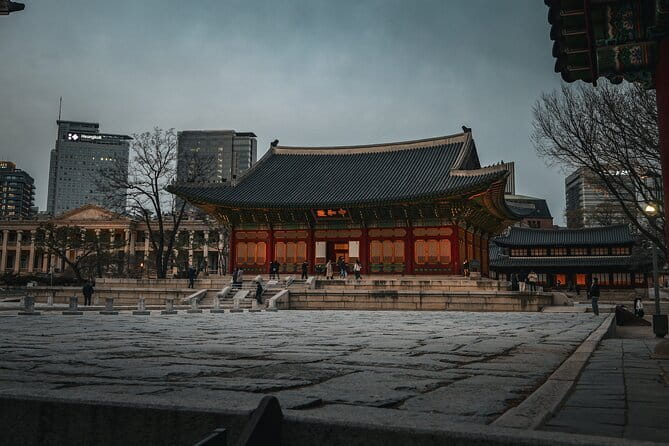
At Jungmyeongjeon Hall, the guide spends about 10 minutes explaining how Imperial Japan forced Korea to surrender its independence. This is one of the tour’s harder historical turns.
The short visit is valuable because it gives a physical setting to a national crisis. Instead of hearing only about political pressure in the abstract, you stand at a site connected to Korea’s loss of sovereignty.
The route then moves to the Ewha Museum for another 10-minute stop. The subject changes to education and women’s roles. You learn how Korea’s first school for girls helped challenge older assumptions about what women should do in society.
Together, these two stops broaden the tour. Korea’s story is not only about foreign control and royal decisions. It also includes social change and the gradual opening of educational opportunities for women.
The Former Russian Legation reveals a royal escape
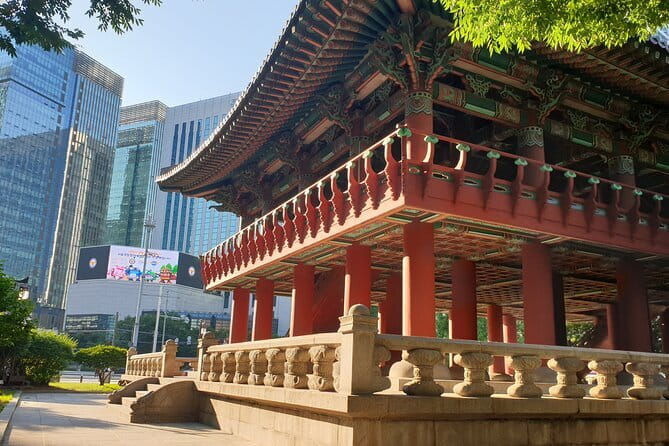
The Former Russian Legation gets 20 minutes, making it one of the more substantial building stops. The question here is dramatic: why did Korea’s penultimate monarch leave his palace in the middle of the night and remain at this location for a year?
That episode shows how exposed the Korean royal court had become. A foreign diplomatic building became a place of refuge during a period when Korea faced intense pressure from outside powers.
You will get more from this stop if you pay attention to the relationship between location and power. The building is not presented as an isolated old structure. It is part of the story of a monarchy trying to survive among competing foreign interests.
Two statues introduce Korea’s great king and admiral
The Statue of Admiral Yi Sun-sin receives about 10 minutes. The tour asks how this general saved Korea and changed world history. That is a large claim, but the guide uses it to explain why Yi remains such a powerful national figure.
The statue is an efficient way to introduce military history without spending the whole afternoon on battles. You learn why Yi’s leadership mattered and how his role fits into Korea’s survival during a dangerous period.
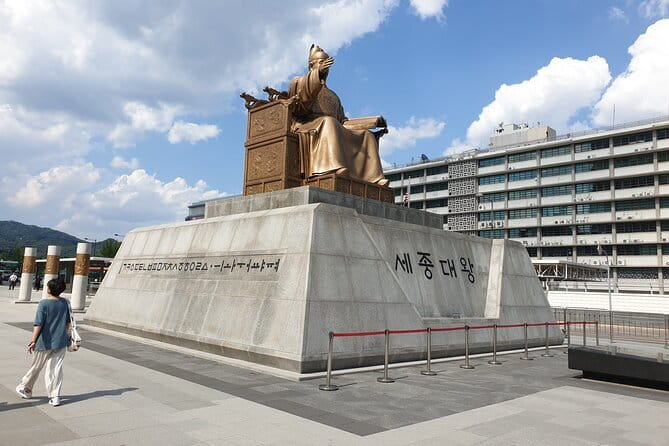
Next comes the Statue of Sejong the Great, also for about 10 minutes. Sejong is presented as the greatest king of the Joseon Dynasty. His importance gives the group a chance to discuss leadership, learning, and the forces that shaped Korean identity.
These two statues work well together. Yi represents defense and military skill. Sejong represents royal leadership and cultural achievement. Their placement in central Seoul also shows how the modern city keeps national memory in public view.
Gwanghwamun Square turns history toward democracy
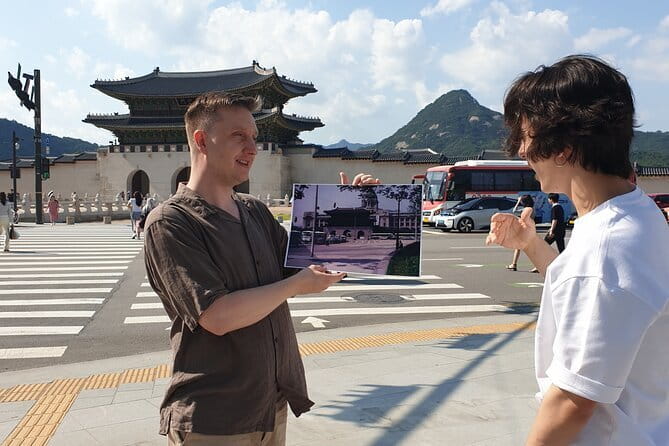
Gwanghwamun Square is the longest stop after Cheonggyecheon, at about 25 minutes. The key question is direct: how many protests does it take to change a democracy?
This is where the tour’s modern political thread becomes clearest. Earlier stops explain royal authority, foreign domination, and social change. Here, the discussion turns to South Korea’s struggle against dictatorship and the efforts of citizens to shape their government.
The square is more than a broad open space. It represents how public gathering places can become centers of pressure and political expression. You are encouraged to connect the physical space with the people who used it.
This stop may be the most rewarding part of the walk for anyone who wants more than palace history. It gives you a clearer sense of how South Korea became a modern democracy, and why public protest remains part of the national story.
A rooftop view at the National Museum of Korean Contemporary History
The National Museum of Korean Contemporary History receives about 15 minutes, with attention to how much of Seoul’s history you can see from the rooftop.
That view adds a useful pause after the discussion at Gwanghwamun Square. From above, you can take in parts of the city while thinking about the layers already covered: royal Seoul, occupied Seoul, war-era Seoul, and the capital of a modern nation.
The stop is not described as a full museum visit, so you should not book this walk expecting extended indoor exhibits. The value here is the combination of a high viewpoint and a modern-history discussion.
The Japanese Embassy and the long protest nearby
The next 10-minute stop is the Embassy of Japan. The question is why this site has been connected to the world’s longest-running protest.
This is a serious and sensitive part of the route. It ties the earlier discussion of Japanese rule to an ongoing public issue. The guide can help you understand how historical memory remains active in present-day Korea.
The short stop means the explanation must be focused. If this subject matters greatly to you, use the walk as a starting point and ask questions while the group is there.
Jogyesa Temple ends the afternoon quietly
The final stop is Jogyesa Temple, where the tour ends. The focus is on the ringing of bells and the way those sounds connect people with the universe.
After the political and royal subjects earlier in the afternoon, the temple offers a calmer closing note. It also brings the tour back to a long-standing spiritual tradition, giving the day a wider frame than politics alone.
The route ends directly up the street from Bosingak, so you are not finishing in a completely unfamiliar part of Seoul. The guide will assist with directions, which is useful if you want to continue sightseeing, find food, or return to your lodging.
Group size, guide style, and what to bring
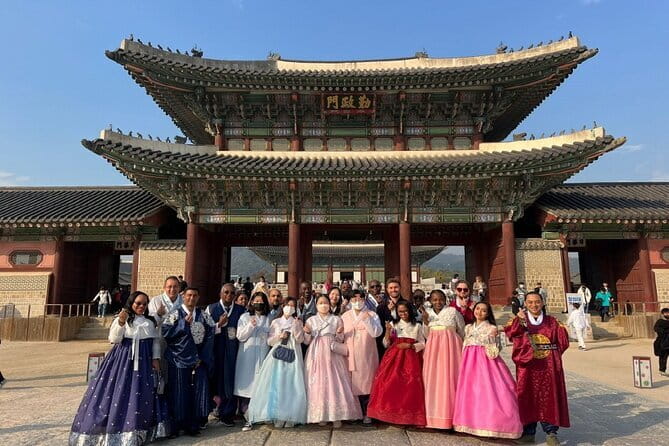
The group maximum of eight is one of the strongest practical features. A small group makes it easier to hear on city streets and gives you room to ask about subjects such as King Sejong, Admiral Yi, Japanese rule, or democracy.
The tour uses an Australian guide. Eric is the guide name connected with especially strong praise for the experience, and his ability to answer questions is worth noting. If you can request a guide, ask whether Eric is leading on your chosen date.
The walk lasts approximately three hours and 30 minutes. Since the route includes 15 stops, expect steady movement and short explanations at several locations. Comfortable shoes are a must, and you should carry water because bottled water is not included.
Traditional Korean snacks are included, along with an informative memento. Those extras are modest, but they add value and give you something useful to keep reviewing after the walk.
Most people can participate, and service animals are allowed. The tour is near public transportation and uses a mobile ticket, so you do not need a printed voucher.
Who should book this tour
I would choose this tour early in a Seoul visit if I wanted a framework for the city. It gives you names, dates, places, and political context that can make later palace visits and museum stops easier to understand.
It suits you best if you:
- Prefer history and explanation to shopping or food stops.
- Want to connect Joseon history with modern South Korea.
- Like asking questions in a small group.
- Are interested in democracy, protest, and national memory.
- Have one afternoon available for a focused city walk.
It may not suit you if you want long visits inside buildings, lots of free time for photographs, or a slow route with only a few stops. The tour covers a lot, and the guide has to keep moving to finish near the planned end point.
At $26.60, I consider it a fair buy for the small group and the breadth of material. You are not paying for costly entrances. You are paying for someone to connect places that you might otherwise see as unrelated city sights.
Should you book the Seoul History Walking Tour?
Book it if you want Seoul explained as a living city, not just a collection of palaces and modern towers. The mix of Bosingak, Cheonggyecheon, royal statues, the Former Russian Legation, Gwanghwamun Square, the Japanese Embassy, and Jogyesa Temple gives the afternoon a clear arc.
I would be especially keen to book if Eric is guiding, or if you enjoy tours where questions are welcome. Skip it if your priority is an unhurried palace interior visit or a food-focused walk. For most first-time visitors who want a practical introduction to Korea’s long road from royal capital to democracy, this is a strong value.
Free cancellation is available up to 24 hours before the 2:30 pm start time. Changes or cancellations inside that window are not accepted, so keep the local cut-off time in mind.
FAQ
How long does the Seoul History Walking Tour last?
The tour lasts approximately three hours and 30 minutes.
What time does the tour start?
The tour starts at 2:30 pm.
Where does the tour begin?
The meeting point is Bosingak Bell Pavilion at 54 Jong-ro in Seoul’s Jongno District.
Where does the tour end?
The walk ends at Jogyesa Temple, directly up the street from the starting area. The guide will assist with directions.
How many people can join the tour?
The group has a maximum of eight people.
Is bottled water included?
No. Bottled water is not included, so you should bring your own.
Are snacks included?
Yes. Traditional Korean snacks and an informative memento are included.
Can I cancel for a full refund?
Yes. You can cancel up to 24 hours before the experience start time for a full refund. Cancellations or changes made less than 24 hours before the start are not accepted.
Just added around Seoul
- Incheon Airport Private Transfer between Seoul City★ 4.0 · 4 reviews
- Seoul’s Stars: Open Mic with Local & International Talent★ 4.8 · 4 reviews
- Samaksan Cable Car and Nami Island Day Escape with Railbike★ 4.0 · 4 reviews
- DMZ 2nd Tunnel and Cheorwon Peace Observatory with Admission★ 5.0 · 4 reviews
- Nami & Maple Road & Theatre des Lumieres Day Tour from Seoul★ 4.8 · 4 reviews
- Hire Photographer, Professional Photo Shoot – Seoul★ 5.0 · 4 reviews
- [KoreaByLocal] Authentic Seoul Night Walk and Chicken & Beer★ 5.0 · 4 reviews
- Play Gayageum in Hanbok Cultural Experience in Bukchon★ 5.0 · 4 reviews
Historical Tours, compared.
Evening Dark History, Folklore & Ghost Story Walking Tour
Read our review →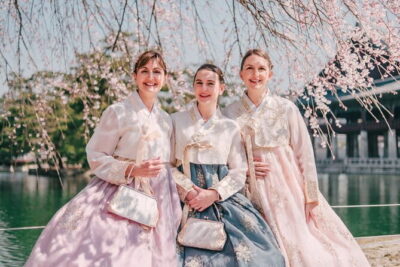
Hanbok Photoshoot and History Tour at Gyeongbokgung Palace
Read our review →
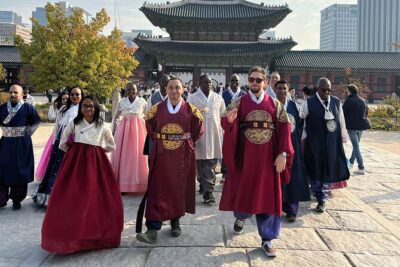
City Highlights and Historical Experience No Shopping
Read our review →
Street photoshoot and Seoul Hidden gem History Walking Tour
Read our review →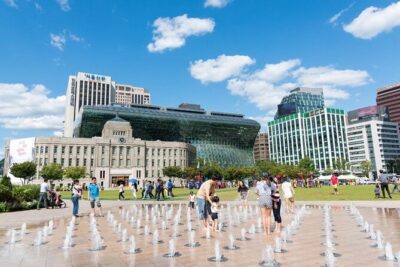
Namhansanseong UNESCO Historical Sites and Korean Folk Village-Private Tour
Read our review →Browse the lists this tour appears in