
Reviewed · HISTORICAL TOURS
Korean History & Heritage Tour
Seoul’s old heart is best understood as a chain of contrasts: a royal palace, a working neighborhood, a Buddhist temple, a restored stream, and a food market. This private tour links them in one day, with the Changing of the Guard at Gyeongbokgung as an early highlight and Kwangjang Market as a flavorful finish.
I like the personal format, since your guide can explain daily life under the Joseon Dynasty instead of simply pointing at buildings. I also like the air-conditioned vehicle and free pickup anywhere in Seoul, especially when you are covering seven stops across a large city.
The main catch is the pace. You get roughly 20 to 45 minutes at each stop, so this is a useful first look rather than a slow, museum-by-museum study. Palace admission is also extra, lunch is not included, and the quality of the day depends heavily on your assigned guide.
In This Review
- Key points to know before booking
- A smart way to see Seoul’s old northern districts
- Gyeongbokgung Palace and the royal morning
- The National Folk Museum and the shape of a Korean life
- Bukchon Hanok Village, a living neighborhood
- Insadong and the old arts quarter
- Jogyesa Temple and Korea’s Buddhist tradition
- Cheonggyecheon Stream and a changed city
- Kwangjang Market, where the day gets tasty
- The private vehicle and guide make the difference
- Who will get the most from this seven-hour route
- Should you book the Korean History and Heritage Tour?
- FAQ
- How long does the tour last?
- What time does the tour begin?
- Is hotel pickup included?
- Can I be picked up outside Seoul?
- How many people can join the private tour?
- Is transportation included?
- Is lunch included?
- Are admission tickets included?
- Is the tour suitable for most people?
- What is the cancellation policy?
Key points to know before booking
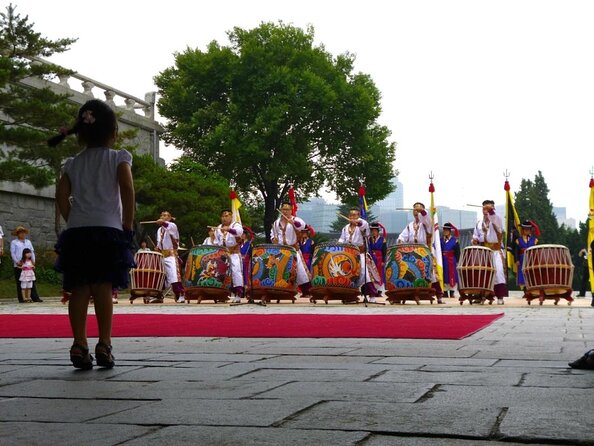
- The Changing of the Guard starts your history lesson: Gyeongbokgung gives you royal architecture, ceremony, and a look at how the king’s court was arranged.
- Seven stops create a broad Seoul portrait: You move from museum and palace to village, temple, stream, and market in about seven hours.
- The private format keeps the day flexible: Only your group of up to six participates, so questions and walking speed are easier to manage.
- Kwangjang Market supplies the best food break: Lunch is not included, but the market is a natural place to buy Korean comfort food from street stalls.
- The vehicle matters on a packed route: Air conditioning and hotel pickup reduce the work of crossing Seoul between neighborhoods.
- Guide quality deserves attention: Michael and Judy received especially warm praise for friendly, personal help, while one report raised a serious concern about a guide turning a car tour into mostly walking.
A smart way to see Seoul’s old northern districts
This tour focuses on Gangbuk, the part of Seoul north of the Han River that contains many of the city’s best-known traditional sights. You are not getting a general city tour with a quick photo stop at one palace. Instead, the day follows a clear cultural arc: royal power, ordinary family life, old crafts, Buddhism, urban renewal, and food.
That makes the route useful on a first visit. Seoul can feel enormous, and the sights are spread across busy streets and separate neighborhoods. Here, you start at 9:00 a.m., ride between key areas, and finish with a market where you can see how older traditions remain part of everyday life.
The price is $475 per group of up to six, not per person. For six people, that works out to about $79 each before any extra admission or food. For two people, it is much less of a bargain, but you are paying for a private guide, a dedicated vehicle, and hotel transportation rather than joining a large group.
The route is approximately seven hours. That is long enough to create a proper day out, but the individual stops are short. I would book it for context and convenience, not for extended time inside every site.
A few more Seoul trips worth weighing up
- Seoul: Evening Dark History, Folklore & Ghost Story Walking Tour
★ 5.0 · 593 reviews - Hanbok Photoshoot and History Tour at Gyeongbokgung Palace
★ 5.0 · 276 reviews - From Seoul: Dae Jang Geum Park Historic K-Drama Set Tour
★ 4.9 · 143 reviews
Gyeongbokgung Palace and the royal morning
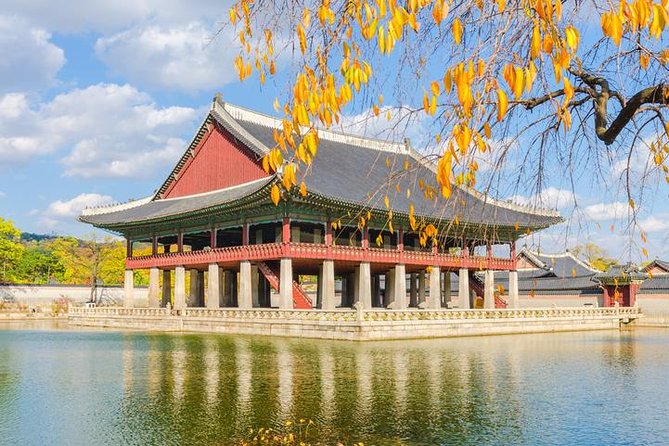
Gyeongbokgung Palace is the strongest opening stop. It was the main royal palace of the Joseon Dynasty, and the visit begins with the Changing of the Guard ceremony. The ceremony gives the morning a visual hook, while the walk into the palace grounds adds the architectural and political setting behind it.
You have about 45 minutes here. That should allow a focused look at palace courtyards and buildings, along with an explanation of how the king and court lived. It is not enough for every corner of the grounds, so keep your expectations in check. If you are passionate about palace architecture, you may wish you had more time.
Admission is not included. That is a small but important detail when comparing the total cost. The rest of the listed stops are free, so the palace is the main entrance expense named for the itinerary.
A private guide can make this stop much more useful than a quick independent walk. The buildings can look repetitive at first, but their placement, scale, and connection to royal life matter. Ask your guide to explain which spaces served public duties and which related to private life, since that is the difference between seeing attractive roofs and understanding a royal compound.
The National Folk Museum and the shape of a Korean life
The National Folk Museum of Korea receives about 30 minutes. The theme here is broad and human: birth, adulthood, death, and the afterlife. That gives you a chance to move away from kings and officials and think about how ordinary Korean life was organized.
Admission is free. The short visit works best as a guided introduction, since a museum covering an entire life cycle can feel dense if you try to take in every display. I would listen for the customs and objects your guide considers most important rather than attempting to see everything.
This is one of the more useful stops for visitors who want social context. A palace tells you about power. A folk museum helps explain family life, ceremonies, beliefs, and the passage from one stage of life to another.
The museum is beside the palace area, so this part of the morning should not require a long transfer. That helps balance the later sections, when you move through several different parts of central Seoul.
Bukchon Hanok Village, a living neighborhood
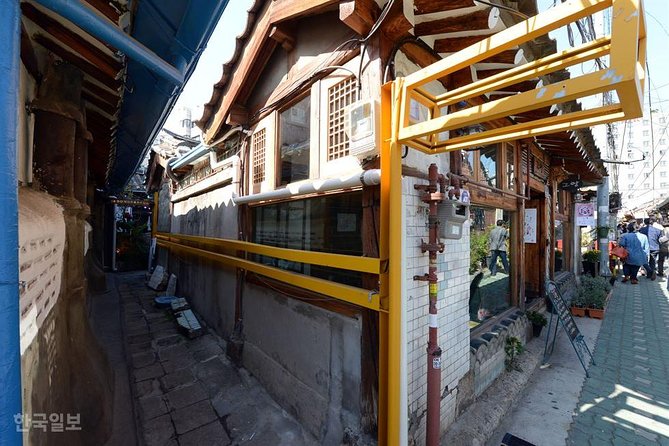
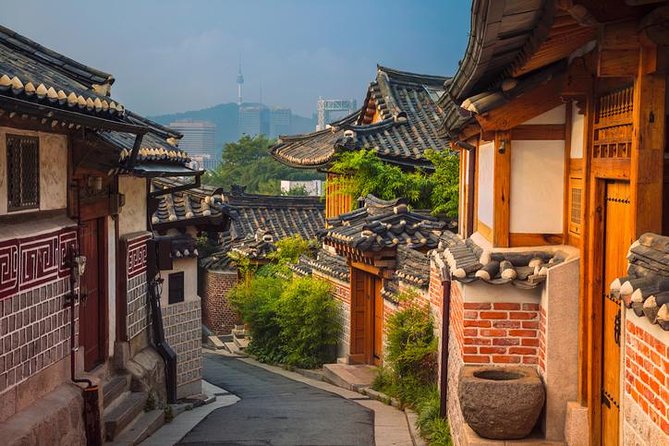
Bukchon Hanok Village offers a different kind of heritage. Instead of a preserved palace or museum display, you see traditional Korean houses in a neighborhood where people still live. The tour allows around 40 minutes.
That distinction matters. A hanok is a traditional Korean house, and Bukchon gives you a sense of how old architecture fits into a modern city. At the same time, it is a residential area, not a stage set built only for sightseeing. Keep your voice down, follow local signs, and treat doorways and private property as private.
The streets can involve walking and slopes, although the supplied details do not specify the exact walking distance or difficulty. Wear shoes you can comfortably use for a short urban walk. The vehicle is helpful for transfers, but it does not remove the need to walk at the stops.
This is also a place where a private guide adds practical value. Your guide can point out architectural features and explain how the neighborhood relates to the older city without forcing your group to follow a large party. Still, 40 minutes is a sample, not a full exploration of Bukchon.
A completely different kind of day, same trip:
- Best DMZ Tour Korea from Seoul (Red Suspension Bridge Optional)
★ 5.0 · 41,422 reviews - DMZ Tour: 3rd Tunnel, Option(Suspension Bridge, Boat) from Seoul
★ 5.0 · 21,373 reviews - DMZ tour south Korea from Seoul (NK experience hall, defector)
★ 5.0 · 20,599 reviews - DMZ Insider Tour: 3rd Tunnel, NK Defector Meet & Red Bridge
★ 4.9 · 15,214 reviews
Insadong and the old arts quarter
Insadong receives about 45 minutes. The tour frames it as the former guild area connected to royal commissions for artists and designers. Today, it is known for antiques, art, and Korean souvenirs.
I like this stop because it connects craft to commerce. You can look for a keepsake with some sense of place rather than buying the same generic item found throughout the city. The time is long enough for a walk and perhaps a purchase, though serious browsing will take longer.
Be aware that the stop is not built around a formal workshop or a guaranteed shopping discount. It is a walk through an arts and antique district. Prices and quality will vary, so take your time before buying anything significant.
The sequence also makes sense. After seeing royal buildings and folk objects, you walk through a district shaped by the arts. It gives the day a more ordinary, street-level feeling before the religious and market stops that follow.
Jogyesa Temple and Korea’s Buddhist tradition
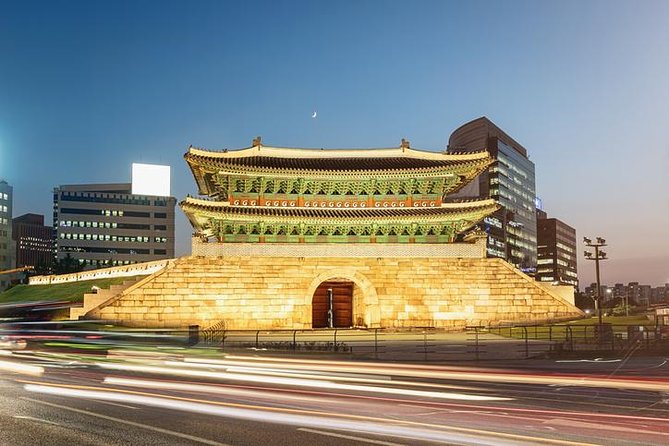
Jogyesa Temple is a short 20-minute visit. The temple represents Buddhism, which once served as Korea’s national religion. It is a compact stop, but it adds an important layer to the day’s story.
Do not expect a long meditation session or an extensive temple complex visit in this time. You will see the site, hear about its religious role, and continue. If you want extended quiet time, a longer independent visit would suit you better.
As with any active place of worship, dress and behavior should be respectful. The supplied information does not set a dress code, so the practical rule is simple: avoid treating the temple like a photo prop, and follow your guide’s directions.
Jogyesa works well after Insadong because the two stops are close in spirit and setting. One shows the city’s arts and commercial traditions. The other shows a continuing religious practice within central Seoul.
Cheonggyecheon Stream and a changed city
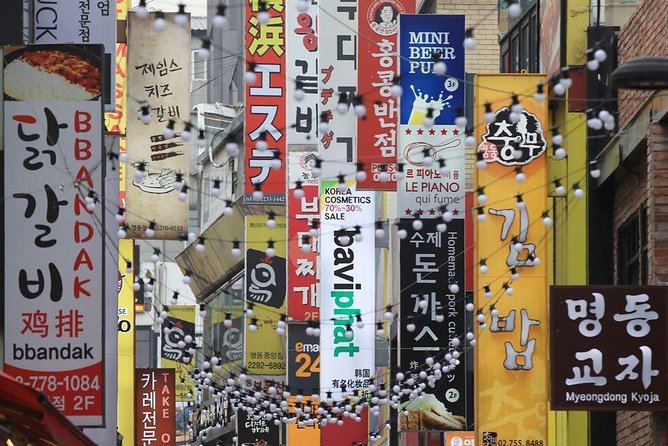
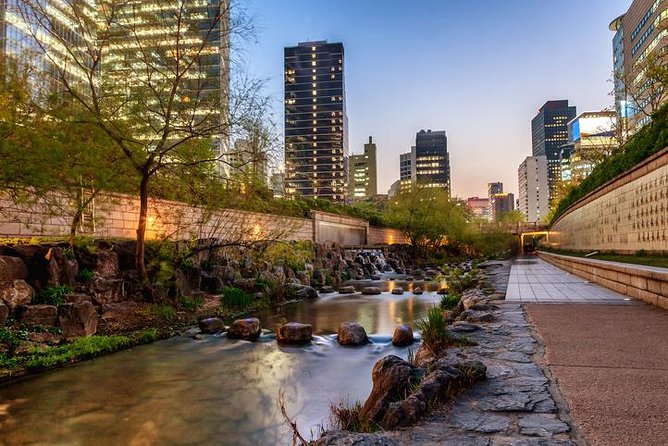
The Cheonggyecheon Stream stop lasts about 30 minutes. You walk beside the water while your guide explains the stories behind it. This is the day’s clearest look at modern Seoul’s effort to bring a waterway and public walking space into the city center.
The stop gives your legs a different rhythm after palace courtyards, village lanes, and temple grounds. It is not an old monument in the same sense as Gyeongbokgung, but it helps explain how Seoul has changed while still making room for public spaces tied to its past.
The details supplied do not promise a particular performance, viewpoint, or special event here. Think of it as a guided urban walk. Weather will affect how pleasant it feels, since you are outside and exposed to the conditions.
Thirty minutes is enough for a pleasant section of the stream and a short explanation. It is not enough to walk the entire waterway. If you enjoy city planning or modern Seoul, ask questions here, since the stream’s story may be one of the more revealing parts of the route.
Kwangjang Market, where the day gets tasty
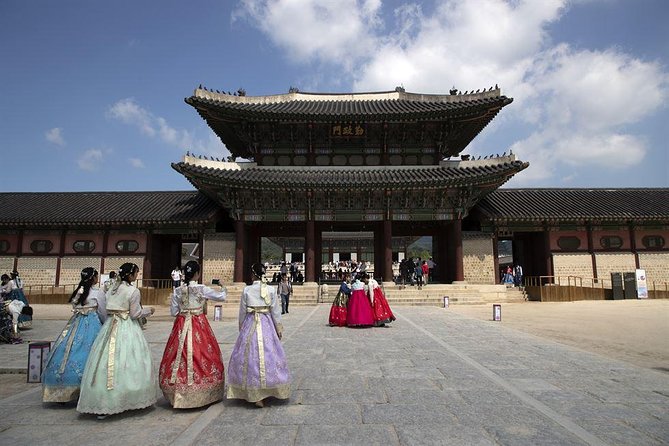
Kwangjang Market is the final stop, with about 30 minutes to walk through a market that began by selling linens for special occasions and later became known for Korean comfort food stalls. This is where the tour shifts from formal heritage to living food culture.
Lunch is not included, but that is not necessarily a problem. You can choose what appeals to you rather than accept a fixed meal. Thirty minutes gives you time to look around and buy a snack or small meal, though a full market feast may feel rushed.
If food is a major reason you want this tour, plan your expectations carefully. The market is a stop, not a dedicated food tour. Your guide may help you understand what you are seeing, and the experience can be more personal if your guide shares favorite places. One particularly positive account described guide Michael taking a couple to his favorite restaurant for ginseng black chicken, though that meal was not part of the standard inclusions and should not be treated as guaranteed.
Kwangjang is a strong ending because it shows heritage as something people eat, sell, and enjoy now. You leave the formal world of kings and temples with a clearer sense of daily Seoul.
The private vehicle and guide make the difference
The tour includes an air-conditioned vehicle, hotel pickup, and hotel drop-off anywhere in Seoul. That is useful on a seven-hour route with many stops. You do not need to arrange separate taxis between Gyeongbokgung, Bukchon, Insadong, Jogyesa, the stream, and the market.
Your group can include up to six people, and no other group joins you. I see the private format as the main reason to consider the price. You can ask for explanations suited to your interests, pause briefly for questions, and avoid waiting for strangers.
Still, the vehicle service needs to match the promise. One very negative account described a guide identified as YT Kim parking far from a stop and turning what was expected to be a car tour into a largely walking experience. That is a serious warning, even though it appears inconsistent with the otherwise positive picture of the service.
I would confirm the vehicle arrangement with the provider before the morning begins. Ask where the vehicle will meet you after each stop and how much walking is expected. Guide assignments can vary, and the positive experiences tied to Michael and Judy do not guarantee that either person will lead your tour.
The guide is central to the day. Judy was described as patient, friendly, and helpful on foot, with a comfortable car ride. Michael was praised for explaining Korean life and culture and for adding a personal food recommendation. Those details suggest the best version of this tour is conversational rather than rushed.
Who will get the most from this seven-hour route
I would choose this tour if you want a first-day orientation to traditional Seoul and prefer to let someone else handle the driving. It suits couples, families, and small groups who value a private setting and want several different types of sights in one day.
It also works well if you enjoy connections between places. You can see how royal life, family customs, traditional homes, religious practice, public space, and food fit into one broad story.
I would hesitate if you want long visits at each stop. Forty-five minutes at the palace, 30 minutes at the museum, 40 minutes in Bukchon, and 20 minutes at the temple add up to a series of introductions. A palace specialist, serious shopper, or dedicated food lover may prefer separate half-day visits.
The price is strongest for a group of four to six. Two people will pay the same $475 group rate, so compare it with the cost of arranging transportation and guides separately. A pickup outside Seoul but within Gyeonggi Province adds $50.
The tour starts at 9:00 a.m. Confirmation arrives at booking, and the activity is near public transportation. Most people can participate, and service animals are allowed. Free cancellation is available until 24 hours before the local start time, but changes or cancellations inside that window are not refunded.
Should you book the Korean History and Heritage Tour?
Book it if you want a convenient, private sweep through Seoul’s traditional districts, especially if you are traveling with enough people to share the $475 cost. The route is varied, the vehicle saves time, and the mix of palace, museum, village, temple, stream, and market gives you useful context quickly.
Skip it if you want a slow palace visit, a serious food crawl, or complete control over every minute. Before booking, confirm the guide, vehicle use, pickup details, and palace admission cost. With a strong guide such as Michael or Judy, this can be an engaging and personal day. With unclear transportation arrangements, the same itinerary could feel rushed and overly dependent on walking.
FAQ
How long does the tour last?
The tour lasts approximately seven hours.
What time does the tour begin?
The scheduled start time is 9:00 a.m.
Is hotel pickup included?
Yes. Free hotel pickup and drop-off are provided from anywhere in Seoul.
Can I be picked up outside Seoul?
Pickup outside Seoul but within Gyeonggi Province is available for an additional $50 surcharge.
How many people can join the private tour?
The private tour accommodates your group of up to six people. Only your group participates.
Is transportation included?
An air-conditioned vehicle is included.
Is lunch included?
No. Lunch is not included, and the stop at Kwangjang Market gives you an opportunity to purchase food.
Are admission tickets included?
Admission to the National Folk Museum of Korea and the other listed free stops is included at no cost. Admission to Gyeongbokgung Palace is not included.
Is the tour suitable for most people?
Yes. Most travelers can participate, and the tour is near public transportation. Service animals are allowed.
What is the cancellation policy?
You can cancel up to 24 hours before the local start time for a full refund. Cancellations or changes made less than 24 hours before the start are not accepted or refunded.
Just added around Seoul
- Incheon Airport Private Transfer between Seoul City★ 4.0 · 4 reviews
- DMZ 2nd Tunnel and Cheorwon Peace Observatory with Admission★ 5.0 · 4 reviews
- Seoul’s Stars: Open Mic with Local & International Talent★ 4.8 · 4 reviews
- Samaksan Cable Car and Nami Island Day Escape with Railbike★ 4.0 · 4 reviews
- Nami & Maple Road & Theatre des Lumieres Day Tour from Seoul★ 4.8 · 4 reviews
- Hire Photographer, Professional Photo Shoot – Seoul★ 5.0 · 4 reviews
- [KoreaByLocal] Authentic Seoul Night Walk and Chicken & Beer★ 5.0 · 4 reviews
- Play Gayageum in Hanbok Cultural Experience in Bukchon★ 5.0 · 4 reviews
Historical Tours, compared.
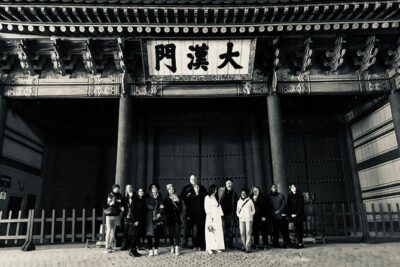
Evening Dark History, Folklore & Ghost Story Walking Tour
Read our review →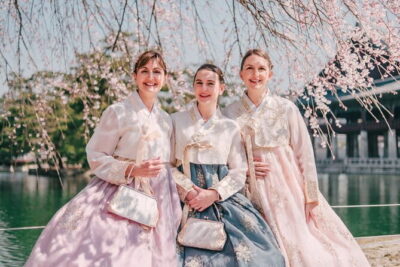
Hanbok Photoshoot and History Tour at Gyeongbokgung Palace
Read our review →
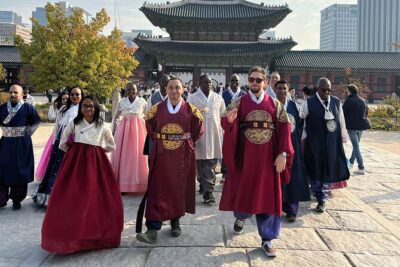
City Highlights and Historical Experience No Shopping
Read our review →
Street photoshoot and Seoul Hidden gem History Walking Tour
Read our review →
Namhansanseong UNESCO Historical Sites and Korean Folk Village-Private Tour
Read our review →
Suwon Hwaseong & Waujeongsa & Starfield Heritage Tour
Read our review →Browse the lists this tour appears in