
Reviewed · HISTORICAL TOURS
Discover Seoul: Local Life and History
Seoul’s old center comes into focus on this walk from Seoul City Hall to Bukchon Hanok Village, where broad civic avenues give way to palace gates, tiled roofs, tea houses, and narrow lanes. You get a quick but useful look at how royal Joseon Seoul and modern South Korea share the same city.
I like the clear historical route, and I like the practical local advice about Korean food, beer and chicken, tea houses, galleries, and places to stop after the tour. The main drawback is its pace: three and a half hours is enough for an introduction, not a detailed visit inside every major site.
In This Review
- Key points at a glance
- Why this route makes sense in Seoul
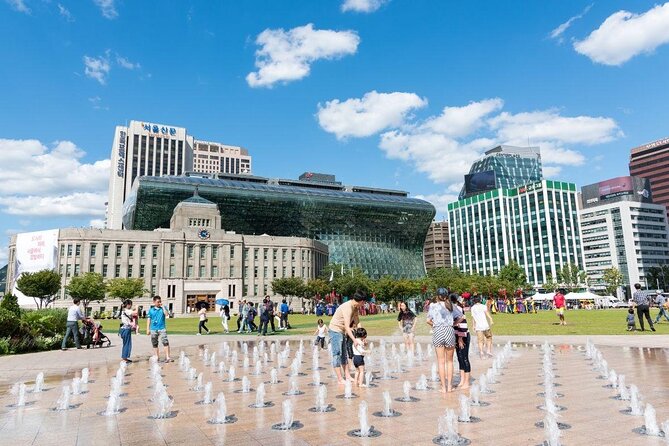
- Starting at Seoul City Hall and Seoul Plaza
- Gwanghwamun Avenue and the stories behind the statues
- Gyeongbokgung Palace in a short introduction
- Insadong’s tea houses, crafts, and old lanes
- Bukchon Hanok Village and the final climb
- The guides and the human side of the walk
- What $96.75 represents
- Group size, pace, and practical comfort
- Who will get the most from this Seoul walk
- Should you book Discover Seoul: Local Life and History?
- FAQ
- Where does the tour start?
- Where does the tour finish?
- How long does the experience last?
- How many people can join the tour?
- Is admission to the stops included?
- Can I cancel for a full refund?
Key points at a glance
- A useful old-and-new route: Seoul Plaza and Gwanghwamun lead into Gyeongbokgung, Insadong, and Bukchon.
- Strong guide element: Moises and Gemma are praised for clear English, historical explanation, and local food suggestions.
- Mostly a walking orientation: The stops are short, so comfortable shoes and reasonable stamina matter.
- Traditional Seoul without a long palace tour: You see the setting and learn the story, but the palace visit is brief.
- A tea-house stop adds local texture: The route includes traditional tea houses, craft shops, galleries, and hanok lanes.
- Good for the start of a Seoul stay: The food and neighborhood advice can help you plan the rest of your visit.
Why this route makes sense in Seoul
Seoul can feel enormous at first. Glass towers, palace walls, mountain ridges, design shops, and old alleys all appear within a short distance, but the connections are not always obvious. This tour gives you a simple thread to follow through central Seoul.
You begin at Seoul Plaza, move north along Gwanghwamun Avenue, reach the city’s main royal palace, then turn toward Insadong and Bukchon. That direction matters. It lets you watch the city change from government center to royal precinct to traditional neighborhood.
I like tours that explain a city through its streets rather than through a list of isolated attractions. Here, the value comes from seeing how the Joseon dynasty still shapes the center of Seoul. You are not only looking at a palace gate. You are learning why this part of the city carries such weight.
The route is offered Monday through Friday between 10 a.m. and 5 p.m. The published meeting point is Seoul Plaza, at 110 Sejong-daero in Jung District. The end point is listed as Cafe Onion Anguk on Gyedong-gil, with the route finishing in or near Bukchon Hanok Village. Since one part of the information also says the walk finishes at Bukchon, confirm the precise final point with the operator if you need a particular subway connection afterward.
A few more Seoul trips worth weighing up
- Seoul: Evening Dark History, Folklore & Ghost Story Walking Tour
★ 5.0 · 593 reviews - Hanbok Photoshoot and History Tour at Gyeongbokgung Palace
★ 5.0 · 276 reviews - From Seoul: Dae Jang Geum Park Historic K-Drama Set Tour
★ 4.9 · 143 reviews
Starting at Seoul City Hall and Seoul Plaza
The opening stop at Seoul City Hall lasts about 30 minutes and is free. It gives your guide a chance to frame Seoul’s development before the walk shifts toward royal Seoul.
This is a sensible beginning because Seoul City Hall places you in the modern civic heart of the capital. You start with a broad view of public life and government, then move toward older symbols of power. The contrast is one of the tour’s best teaching tools.
Do not expect a full architectural or museum visit here. The stop is an introduction, and on some Tuesdays City Hall may be closed. If you are especially interested in the building itself, check the day and ask the guide how the stop will be handled if access is limited.
The meeting point is near public transportation, which helps if you are coming from another part of the city. Arrive ready to walk rather than treating this as a vehicle-based sightseeing trip.
Gwanghwamun Avenue and the stories behind the statues
The next section covers Gwanghwamun Square in about 35 minutes. This wide avenue is one of Seoul’s most important public spaces, and the guide uses it to explain the city’s political and cultural past.
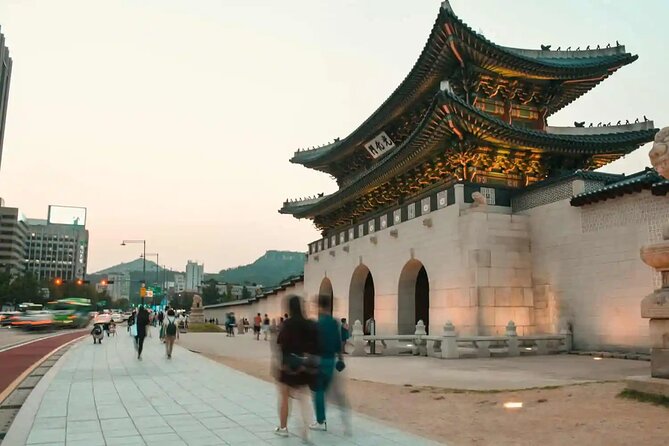
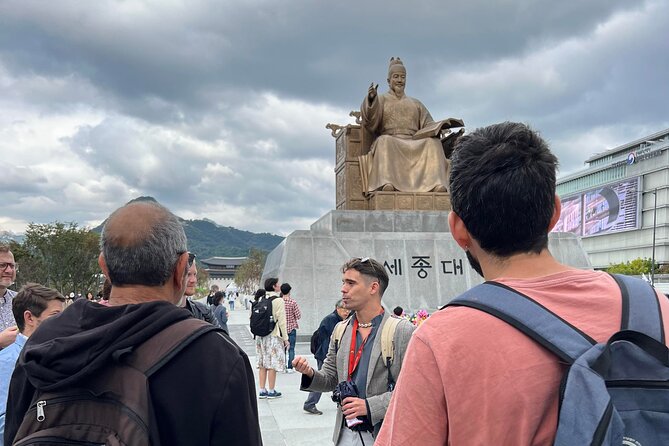
At the plaza, you see the statues of King Sejong the Great and Admiral Yi Sun-sin. Their presence gives the stop a human focus. Instead of hearing only dates and dynasty names, you connect the space with two major figures from Joseon Korea.
The tour also includes about 10 minutes devoted specifically to their stories. That is a short time, but it can make the rest of the route easier to understand. King Sejong is connected with Korean cultural identity, while Admiral Yi Sun-sin is remembered as a major military figure. Your guide can provide the background that turns the statues from decoration into landmarks with meaning.
Gwanghwamun Avenue is open and exposed. On a sunny day, there may be little shade, and on a wet day the broad plaza offers limited shelter. The operator says the experience requires good weather, so poor conditions may lead to a new date or a refund.
Gyeongbokgung Palace in a short introduction
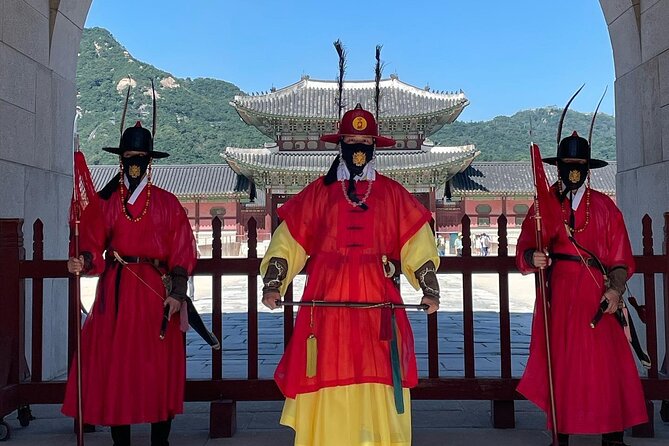
Gyeongbokgung is the central sight on this route. The tour allows around 30 minutes for an introduction to Seoul’s main royal palace and the changing of the guard.
That time is enough to help you understand the palace layout and its role in Joseon Seoul. It is not enough for an unhurried palace visit, detailed interior viewing, or a full exploration of the grounds. You should think of this as a guided first look rather than a replacement for a separate palace visit.
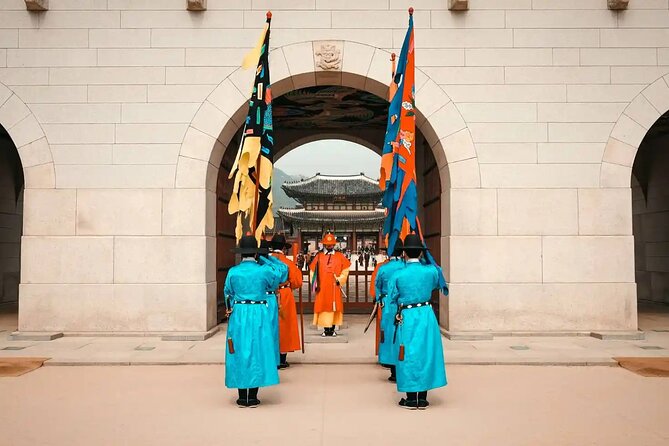
The changing of the guard adds movement and ceremony to the stop. It also gives you a fixed moment to watch, though the exact experience can depend on the day’s conditions and schedule. Ask your guide where to stand and what to watch for, especially if the area is busy.
The palace stop is also where the tour’s balance becomes clear. You receive context and see a major landmark, but you spend only about half an hour there. If Gyeongbokgung is your main reason for visiting Seoul, set aside additional time on another day. If you want a wider introduction to the city, the short visit works well.
A completely different kind of day, same trip:
- Best DMZ Tour Korea from Seoul (Red Suspension Bridge Optional)
★ 5.0 · 41,422 reviews - DMZ Tour: 3rd Tunnel, Option(Suspension Bridge, Boat) from Seoul
★ 5.0 · 21,373 reviews - DMZ tour south Korea from Seoul (NK experience hall, defector)
★ 5.0 · 20,599 reviews - DMZ Insider Tour: 3rd Tunnel, NK Defector Meet & Red Bridge
★ 4.9 · 15,214 reviews
Insadong’s tea houses, crafts, and old lanes
After the palace area, the walk continues to Insadong for about 30 minutes. This neighborhood is one of the older parts of Seoul and is known for traditional tea houses, galleries, craft shops, bars, and lanes lined with hanoks.
This is where the tour becomes less formal. Palaces and statues tell you about official Seoul. Insadong shows how older styles are presented and used in daily commercial life. You get a chance to look beyond grand monuments and notice the smaller details of traditional buildings, handmade goods, signs, and food stops.
A traditional tea house is one of the most appealing possibilities on this route. One particularly positive account highlights the tea-house visit as the best part of the experience. The precise venue is not fixed in the information provided, so treat it as a guide-led stop rather than a guaranteed named attraction.
I also like the food advice here. The guides can point you toward local places and Korean beer with chicken, along with other suggestions for eating and drinking. That help may be more useful than a long restaurant list because you can ask what fits your taste and your remaining time in Seoul.
Insadong can feel commercial, and the tour does not promise a quiet or untouched neighborhood. Its value is in the mix of tradition and present-day use. You are seeing old forms adapted to shops, cafés, galleries, and evening stops.
Bukchon Hanok Village and the final climb
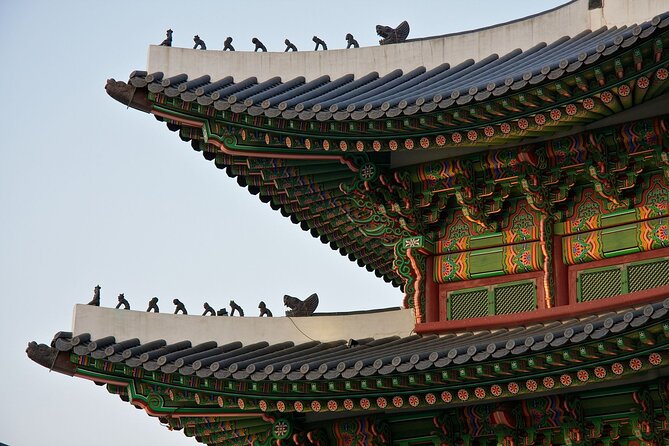
Bukchon Hanok Village sits on a hill between Gyeongbokgung Palace and other royal sites. The final 30-minute stop takes you through traditional alleys and past hanok homes preserved to show a 600-year-old neighborhood pattern.
Bukchon is visually striking, but the hills matter. This is a walking tour with an uphill section, uneven streets, and a final neighborhood route. Most people can take part according to the tour details, but comfortable shoes are still a smart choice.
The best way to approach Bukchon is as a living residential district, not only as a photo stop. Keep your voice low, respect signs, and avoid blocking narrow lanes. The tour’s short visit gives you an orientation to the area, while a longer independent visit would allow more time for the lanes, shops, and viewpoints.
The end near Cafe Onion Anguk is practical because you can continue exploring Anguk and Bukchon on your own. The walk does not return you to Seoul Plaza, so plan your next step before the tour ends.
The guides and the human side of the walk
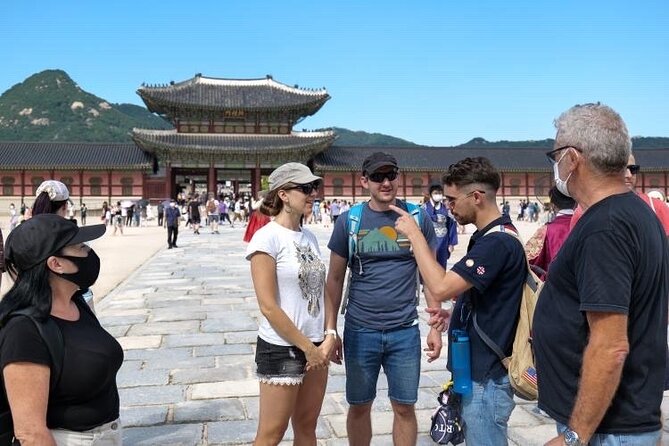
Guide quality matters greatly on a history walk, and the strongest feedback centers on Moises and Gemma. Moises is praised for excellent English, clear explanations of Korean history and culture, and useful suggestions for authentic street food. Gemma is praised for bringing the city’s past to life while connecting it with modern Seoul.
That combination is exactly what this route needs. The landmarks are easy to find. The difficult part is understanding why they matter and how the pieces fit together. A good guide can explain the royal palace, civic avenue, statues, tea culture, and hanok neighborhoods without turning the walk into a lecture.
You should also know that guide availability can vary. The experience information names Moises and Gemma in connection with particularly positive experiences, but it does not promise that either guide will lead every departure.
The tour can be taken in poor weather only if the operator decides conditions are suitable. One account describes the guide keeping the visit interesting in rain, but the official policy says bad weather can result in a different date or a full refund. Bring that policy into your planning rather than assuming the walk always operates.
What $96.75 represents
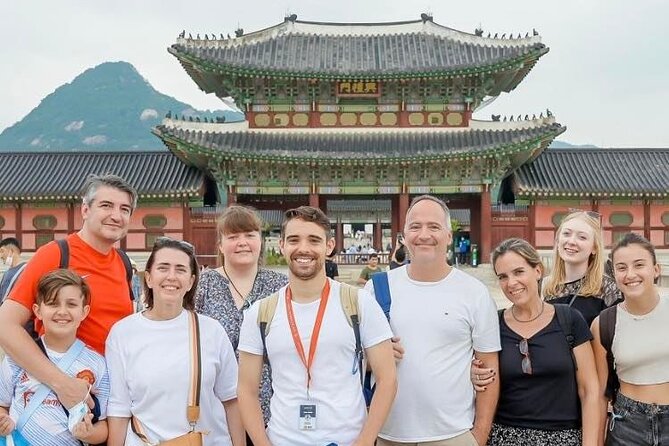
At $96.75 per person, this is not a bargain-priced orientation walk. The price makes the most sense if you place a high value on a personal guide, a small maximum group of 20, and advice that helps shape the rest of your Seoul visit.
Admissions are listed as free at each stop. That means you are paying mainly for the guided route, explanations, organization, and local recommendations rather than for expensive entrance tickets. Since the Gyeongbokgung portion is brief, the price is harder to justify if you only want palace access.
For a first day in Seoul, the value improves. You receive a 3.5-hour introduction to several central districts, learn the basic historical framework, and finish near places where you can continue eating and sightseeing. The food and tea advice may also save you time later, especially if you are unsure how to choose among Seoul’s many options.
For a repeat visitor focused on detailed architecture or palace interiors, the value is weaker. You may prefer to visit Gyeongbokgung independently and spend longer in Bukchon or Insadong. This tour earns its price through context and orientation, not through the number of included tickets.
Group size, pace, and practical comfort
The maximum group size is 20 people. That is large enough that you may not receive constant one-to-one attention, but small enough for a guide to keep the route organized and answer some questions.
The walk lasts about three and a half hours, with listed stops ranging from 10 to 35 minutes. Those timings show the intended pace. You will move often, pause for explanations, then move again. This is not a slow photography outing.
Bring water and wear shoes suited to city walking. The route includes open plazas, palace grounds, old streets, and the hill at Bukchon. Seoul’s weather can also change the feel of the experience, so the operator’s weather rule is worth noting.
The tour uses a mobile ticket, and confirmation arrives when you book. Service animals are allowed, and the experience is near public transportation. Most people can participate, though the route’s walking and uphill sections deserve honest consideration if you have mobility limits.
Free cancellation is available up to 24 hours before the start time for a full refund. Changes or cancellations inside that 24-hour window are not accepted for a refund. The operator may also cancel if the minimum number is not reached, offering another date, another experience, or a full refund.
Who will get the most from this Seoul walk
I would choose this tour for a first visit, a short stay, or a Seoul stop that needs structure. It works particularly well if you want the main central sights explained in one continuous route instead of figuring out the connections yourself.
It also suits people who enjoy food and neighborhood advice as much as formal monuments. The tea-house possibility, craft shops, galleries, bars, and Korean beer and chicken suggestions give you useful leads for after the walk.
Families and mixed-age groups may appreciate the short stops, but you should still prepare for hills and several hours on foot. People with a strong interest in palace interiors, detailed art, or photography may find the schedule too compressed.
The experience is also a good choice for a layover only if you can reliably reach central Seoul and return to the airport with plenty of time. One especially enthusiastic account came from someone using an Incheon layover, but the tour itself does not provide airport transfers or a special layover schedule. You must handle that timing yourself.
Should you book Discover Seoul: Local Life and History?
Book it if you want a guided introduction to central Seoul that combines royal landmarks with the ordinary pleasures of tea shops, crafts, food, and old residential lanes. The route is well chosen, and guides such as Moises and Gemma add the historical and local detail that makes the stops useful.
Skip it if your priority is spending hours inside Gyeongbokgung, moving at your own pace, or paying mainly for included admission. At $96.75, the tour is a guide-led orientation, not a ticket package.
For most first-time visitors, I would schedule it early in your stay. You can use the recommendations for later meals and outings, then return to the palace or Bukchon with more time if one of them catches your interest.
FAQ
Where does the tour start?
It starts at Seoul Plaza, 110 Sejong-daero, Jung District, Seoul, South Korea.
Where does the tour finish?
The listed end point is Cafe Onion Anguk at 5 Gyedong-gil, Jongno District. The route is also described as finishing in Bukchon Hanok Village, so confirm the exact final meeting location if your onward plans are tight.
How long does the experience last?
The tour lasts approximately 3 hours and 30 minutes.
How many people can join the tour?
The maximum group size is 20 people.
Is admission to the stops included?
Each listed stop has free admission. The tour includes introductions to the sites, but the Gyeongbokgung visit is scheduled for about 30 minutes.
Can I cancel for a full refund?
Yes. You can cancel at least 24 hours before the experience start time for a full refund. Cancellations or changes made less than 24 hours in advance are not accepted for a refund.
Just added around Seoul
- Incheon Airport Private Transfer between Seoul City★ 4.0 · 4 reviews
- Seoul’s Stars: Open Mic with Local & International Talent★ 4.8 · 4 reviews
- Samaksan Cable Car and Nami Island Day Escape with Railbike★ 4.0 · 4 reviews
- DMZ 2nd Tunnel and Cheorwon Peace Observatory with Admission★ 5.0 · 4 reviews
- Nami & Maple Road & Theatre des Lumieres Day Tour from Seoul★ 4.8 · 4 reviews
- Hire Photographer, Professional Photo Shoot – Seoul★ 5.0 · 4 reviews
- [KoreaByLocal] Authentic Seoul Night Walk and Chicken & Beer★ 5.0 · 4 reviews
- Play Gayageum in Hanbok Cultural Experience in Bukchon★ 5.0 · 4 reviews
Historical Tours, compared.
Evening Dark History, Folklore & Ghost Story Walking Tour
Read our review →
Hanbok Photoshoot and History Tour at Gyeongbokgung Palace
Read our review →
City Highlights and Historical Experience No Shopping
Read our review →
Street photoshoot and Seoul Hidden gem History Walking Tour
Read our review →
Namhansanseong UNESCO Historical Sites and Korean Folk Village-Private Tour
Read our review →
Suwon Hwaseong & Waujeongsa & Starfield Heritage Tour
Read our review →Browse the lists this tour appears in