
Reviewed · MARKETS
Seoul History Tour: Dark Past & Market Street Flavors
Seoul’s difficult past comes into sharp focus inside Seodaemun Prison, where cramped rooms and stark exhibits tell the story of Koreans who resisted Japanese colonial rule. From there, the route moves through Dilkusha, Deoksugung Palace, Sungnyemun Gate, and Namdaemun Market, connecting political change with ordinary city life.
I like two things here. First, the route gives you more than palace sightseeing by including a prison museum and the home of an American journalist who supported Korean independence. Second, the final hour at Namdaemun Market brings history down to street level, with included tastings and a meal in Kalguksu Alley.
The main drawback is pace. Four hours covers a lot, and one Spanish-speaking participant felt the schedule was rushed. You should expect plenty of walking and keep the afternoon free rather than trying to squeeze in another major attraction.
In This Review
- Key points to know before booking
- Why this Seoul history route works
- Seodaemun Prison: the tour’s most powerful stop
- Dilkusha and Albert Taylor’s international connection
- Deoksugung Palace and Korea’s push toward modernity
- City Hall and Sungnyemun Gate: two views of Seoul
- Namdaemun Market and Kalguksu Alley
- The walking, timing, and group size
- Is $65 a fair price?
- Who should book this experience?
- Should you book the Seoul History Tour?
- FAQ
- How long does the tour last?
- Where does the tour start?
- Where does the tour end?
- Is transportation included?
- Are entrance fees included?
- Is food included?
- What language is the tour conducted in?
- Is the tour suitable for people with limited mobility?
- What happens if the weather is poor?
Key points to know before booking
- Seodaemun Prison sets the tone: This is a serious, emotional stop focused on resistance and life under Japanese colonial rule.
- Dilkusha adds an international angle: Albert W. Taylor’s house shows how foreign allies supported Korea’s independence movement.
- Deoksugung mixes old and new Seoul: Traditional palace buildings sit beside Western-style architecture and the modern city.
- Namdaemun includes food, not just sightseeing: Tastings and time in Kalguksu Alley make the market visit practical and tasty.
- The tour runs from 2:30 to about 6:30 pm: It is a useful afternoon plan, but the schedule leaves little room for lingering.
- The price covers the important extras: At $65, admissions, transportation, an English-speaking guide, and food tastings are included.
Why this Seoul history route works
Many Seoul tours focus on royal palaces, shopping streets, or modern neighborhoods. This one takes a harder route through the city’s past. It begins with imprisonment and political repression, moves to a house tied to international support for Korean independence, then reaches a palace shaped by modernization and a market that has served daily needs for centuries.
That order matters. You are not simply checking off five sights. You see how national history affected institutions, buildings, and food culture. The day moves from the state’s harshest power to the ordinary commerce of Namdaemun.
I also like the route’s balance between indoor and outdoor time. Seodaemun Prison and Deoksugung provide structured historical visits. The walk between sites gives you a view of present-day Seoul, while Namdaemun adds noise, food, and daily routine at the end.
The English-speaking guide is central to the experience. The guide explains the political background, answers questions, and helps connect places that could otherwise feel separate. Kim received especially warm praise for being helpful and attentive, including assisting a participant with personal needs. That kind of support matters on a walking tour with several transitions.
A few more Seoul trips worth weighing up
- Seoul Street Food Market Tour
★ 5.0 · 1,226 reviews - Local Home Korean Cooking Class & Market Adventure in Seoul
★ 5.0 · 1,024 reviews - Seoul: Night Market Food Tour with Local Guide
★ 4.9 · 943 reviews
Seodaemun Prison: the tour’s most powerful stop
The first visit is Seodaemun Prison History Hall, reached from the meeting point at 95-10 Hyeonjeo-dong in Seodaemun-gu. Admission is included, and you have about 50 minutes here.
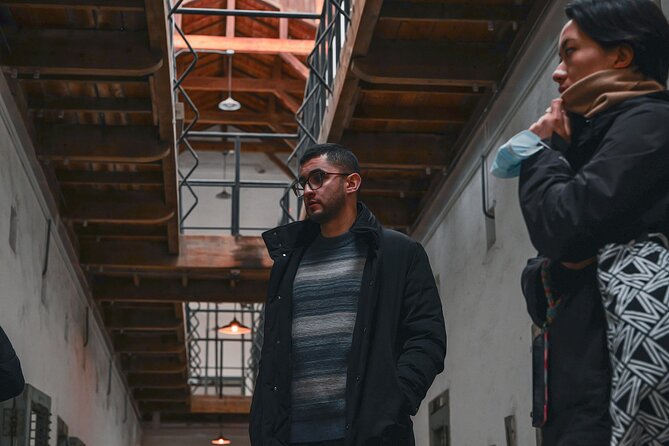
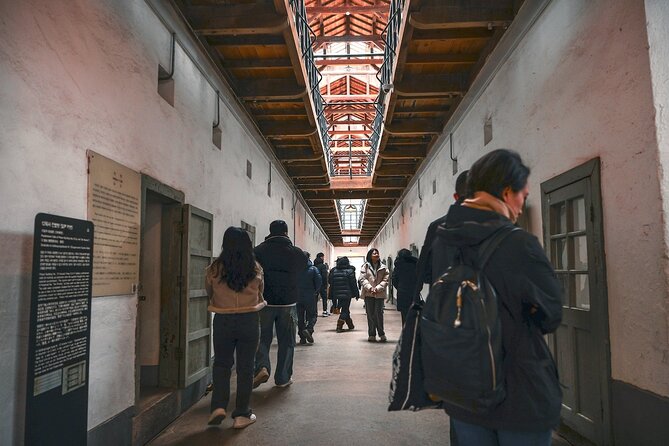
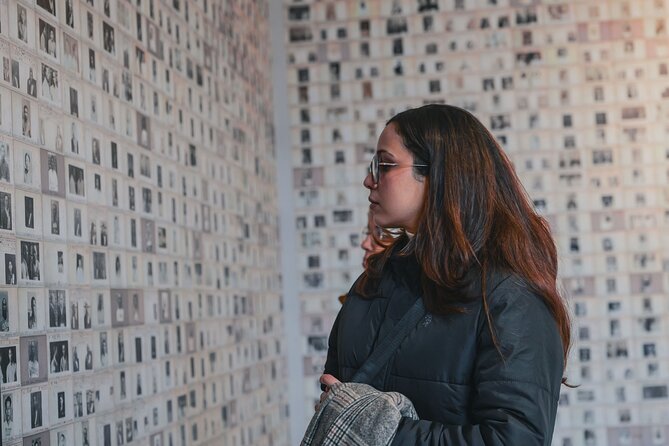
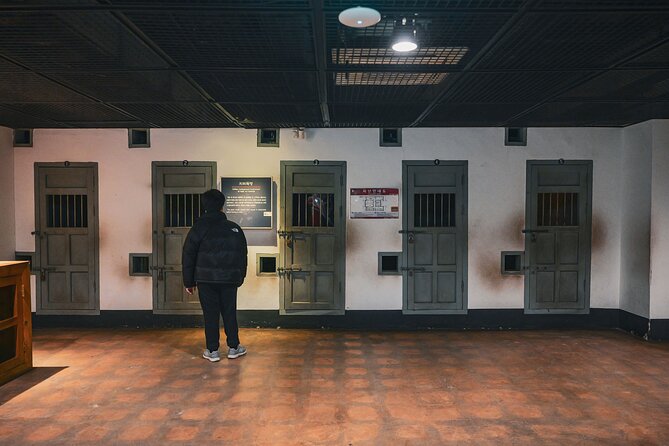
This former Japanese colonial prison is not a light opening act. Its halls and exhibits focus on Korean independence fighters who were arrested, confined, and abused for resisting colonial rule. The setting does much of the work. Prison walls, cells, and institutional spaces make the history physical rather than abstract.
You should allow yourself to slow down mentally here. The tour has a set schedule, but this is the stop where the emotional weight may surprise you. The guide’s explanation helps you understand the independence movement and the hardship faced by those who took part in it.
The museum is particularly useful if you want context for Korea’s modern national identity. Seoul’s glossy towers and efficient transport can make the colonial period feel distant. Seodaemun Prison breaks that distance. It shows that independence was fought for by people who faced very direct personal costs.
Several highly positive comments about this tour focused on the prison and the guide’s historical explanations. I can see why. This is the point where the outing becomes more than a general city walk. You are given a serious account of Korea’s struggle rather than a polished, simplified version of the past.
The limitation is time. Fifty minutes is enough for a guided introduction, but not necessarily enough to examine every display at length. If you are a museum enthusiast who likes to read every panel, you may want to return independently on another day.
Dilkusha and Albert Taylor’s international connection
The next stop, Dilkusha, takes about 30 minutes and has no separate admission charge. The house belonged to Albert W. Taylor, an American journalist who supported Korea’s independence cause.
Dilkusha means Heart’s Delight, but the building’s importance is not simply architectural. It adds an international layer to the story you began at Seodaemun Prison. Korea’s independence movement was not isolated from the outside world. Foreign journalists and supporters helped bring attention to what was happening under Japanese rule.
For you, this short visit works best as a bridge. Seodaemun shows the repression and sacrifice faced inside Korea. Dilkusha helps explain how news, foreign connections, and international solidarity could support the independence effort.
The stop is brief, so do not expect a long house museum visit. Its value comes from the story attached to the place and the guide’s ability to explain why one American resident matters in the broader account of Korean resistance.
This is also one of the less familiar locations on the route. If you have already seen Seoul’s major royal palaces, Dilkusha gives you a different kind of historical address. It is a good reason to choose this tour over a standard palace-only itinerary.
Deoksugung Palace and Korea’s push toward modernity
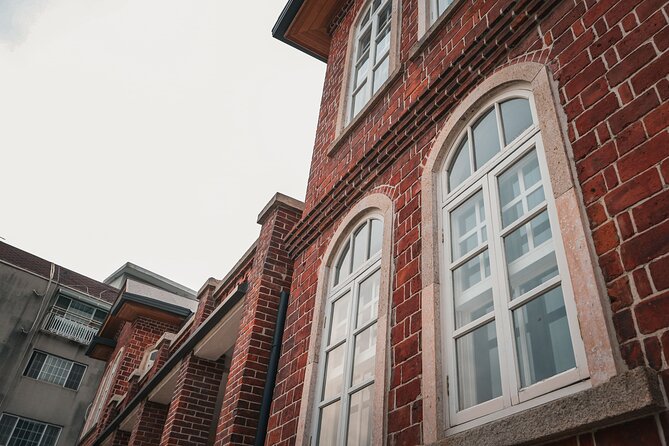
The tour then reaches Deoksugung Palace for about 40 minutes. Admission is included.
Deoksugung is known for its unusual mix of Korean palace design and Western architectural influence. That contrast gives the visit a useful focus. Rather than presenting the royal court as frozen in an earlier age, the tour shows Korea trying to adapt to modernization while facing intense political pressure.
You will see traditional royal spaces alongside signs of a changing era. The setting helps explain how Korea’s leaders responded to foreign influence, new technology, and a shifting balance of power. The palace is beautiful, but the important point is that it was also part of a period of uncertainty.
Several people found Deoksugung especially memorable, including one person who had visited other Seoul palaces but preferred this one. I understand that reaction. Deoksugung feels different from a grand palace visit built only around ceremony and scale. Its mixture of architectural styles gives the guide something specific to discuss.
The 40-minute visit is enough to understand the palace’s role, but it is not a full, leisurely exploration. If you want extensive photography or time to study every building, you may feel pressed. The route favors explanation and overall context over a slow architectural survey.
This is also where the tour’s central idea becomes clearest. Korea’s story is not only about foreign occupation and resistance. It is also about adaptation, political turbulence, and the difficult move from royal rule toward a modern state.
A completely different kind of day, same trip:
- Best DMZ Tour Korea from Seoul (Red Suspension Bridge Optional)
★ 5.0 · 41,422 reviews - DMZ Tour: 3rd Tunnel, Option(Suspension Bridge, Boat) from Seoul
★ 5.0 · 21,373 reviews - DMZ tour south Korea from Seoul (NK experience hall, defector)
★ 5.0 · 20,599 reviews - DMZ Insider Tour: 3rd Tunnel, NK Defector Meet & Red Bridge
★ 4.9 · 15,214 reviews
City Hall and Sungnyemun Gate: two views of Seoul
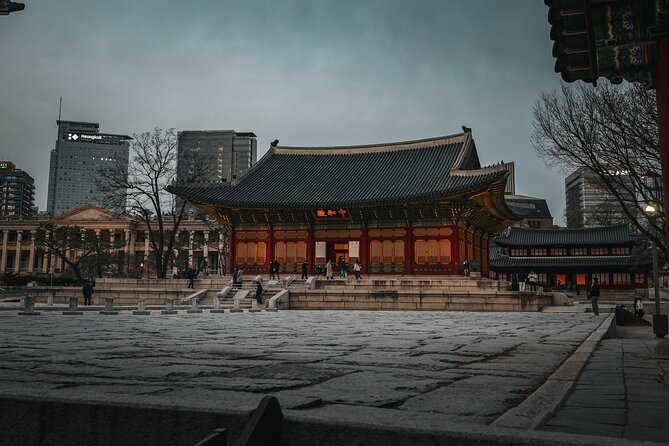
After Deoksugung, the route passes Seoul City Hall and Sungnyemun Gate, also known as Namdaemun. This portion lasts about 20 minutes, and admission is free.
City Hall represents modern Seoul and the country’s transformation from colonial rule to democracy. Sungnyemun points much farther back, as one of the historic gates associated with the old city. Seeing the two in the same part of the walk gives you a quick visual lesson in Seoul’s long change.
This is a shorter stop, so expect an exterior look and an explanation rather than a lengthy site visit. Sungnyemun is an important landmark, but the tour does not present it as a separate major museum experience. Its role is to connect the older city with the modern capital around it.
I like this transition because it prevents the tour from becoming locked in the past. You leave the palace and history museums and encounter the working city. The route keeps asking you to compare what Seoul was with what it has become.
For visitors with limited time in the capital, this is efficient sightseeing. You get a historic gate, a major civic building, and a walk toward one of the city’s best-known markets without paying for another attraction.
Namdaemun Market and Kalguksu Alley
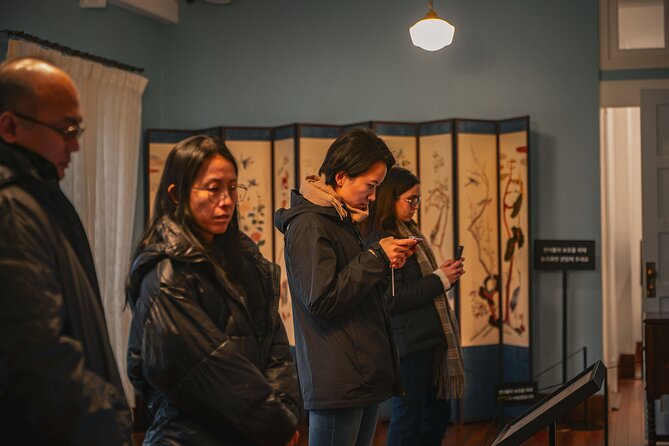
The last stop is Namdaemun Market, with about one hour set aside. The market claims more than 600 years of trading history, and it remains a place where people come for practical purchases and inexpensive food.
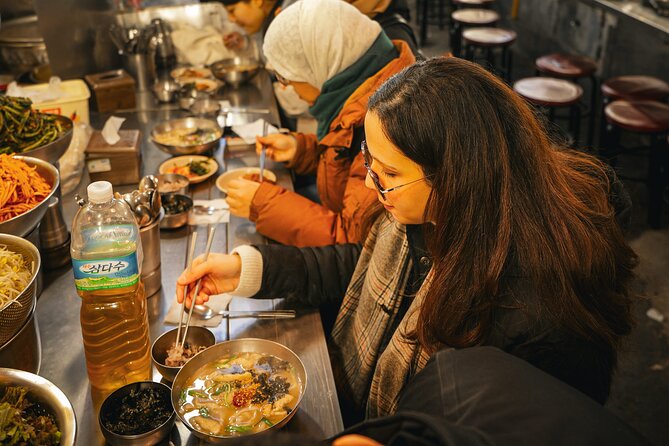
This is not a staged cultural show. You enter a working market with vendors, narrow routes, and many kinds of goods. The tour’s food tastings are included, and the group also visits the famous Kalguksu Alley for a meal.
Kalguksu is handmade knife-cut noodle soup, a simple Korean comfort food. Here, food is not treated as a decorative extra added at the end of a history tour. It gives you a taste of the everyday Seoul that continues after palaces and political movements have passed into textbooks.
The market hour should be a welcome change of pace. After the serious mood of Seodaemun Prison and the formal setting of Deoksugung, you can watch vendors work, sample local food, and see how the city’s older commercial life remains part of modern Seoul.
Do not expect an extended food crawl. One hour is enough for the included tastings and a visit to Kalguksu Alley, but you may want to return on your own if you hope to shop widely or try many dishes. The tour gives you an introduction, not an entire market afternoon.
The walking, timing, and group size
The experience lasts about four hours and begins at 2:30 pm. It ends at Namdaemun Market, at 21 Namdaemunsijang 4-gil in Jung District. That point-to-point design is useful because you finish in a central market rather than returning to the starting neighborhood.
Transportation costs are included, as are entrance fees and food tastings. The exact movement between stops is not described in detail, so you should follow the guide’s instructions on the day. The route is near public transportation, which makes it easier to continue sightseeing or return to your accommodation afterward.
You need moderate physical fitness. There is a lot of walking, and you will spend part of the afternoon moving between historical sites and city streets. Wear comfortable shoes and keep your hands free for food and photographs.
The maximum group size is listed as 99 people. That is a large possible group, although the actual number on your date may be smaller. If you prefer quiet, highly personal guiding, ask about the expected group size before booking. A larger group can make it harder to hear or move quickly through tight market areas.
The schedule also deserves honest attention. One participant felt the tour was rushed and suggested starting an hour earlier. That concern is reasonable. Five main stops, transport, explanations, and food in four hours create a full afternoon. You will get more from the tour if you accept that it is an overview and avoid planning a fixed appointment immediately afterward.
Is $65 a fair price?
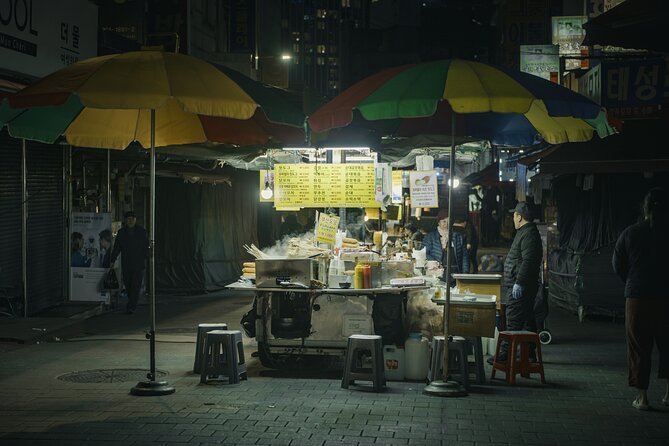
At $65 per person, this is not the cheapest way to walk through Seoul. It is also not just a guided stroll. The price includes an English-speaking professional guide, transportation, all entrance fees, and food tastings at Namdaemun Market.
Those inclusions make the cost easier to assess. Seodaemun Prison and Deoksugung Palace admissions are covered, so you are not paying extra at the entrances. You also avoid working out the route between five stops yourself. The guide provides the historical structure, which is especially valuable at Seodaemun Prison and Dilkusha.
I would consider the price fair if you want an organized introduction to Korea’s colonial past, independence movement, royal transition, and market food in one afternoon. It is less compelling if you are comfortable using public transportation, reading museum information independently, and choosing your own meal.
The strongest value comes from the combination. A palace tour alone would give you less context about occupation and independence. A food tour alone would not explain why these places matter. This experience links both sides of Seoul.
Who should book this experience?
I would recommend it to first-time visitors who want more than the usual royal-palace circuit. It also suits anyone specifically interested in the Japanese colonial period, Korean independence movements, or the connection between Korean history and international support.
The tour works well for people who like guided explanation but still want time in ordinary city spaces. The final market visit keeps the day from feeling like a sequence of solemn monuments.
You should think twice if you dislike walking, need long periods at each museum, or prefer a slow food experience. The prison is emotionally serious, and the schedule is active. Families and older participants should consider their group’s fitness level before booking.
The tour runs in rain or snow as scheduled, although the provider may cancel if weather makes the activity impossible and offer another date or a full refund. You will receive confirmation when booking, and detailed meeting information with the guide’s contact is sent one day before the tour by WhatsApp. If you do not use WhatsApp, the information is sent by email, but communication may be harder.
Free cancellation is available up to 24 hours before the start time. Changes or cancellations inside that window are not accepted for a refund.
Should you book the Seoul History Tour?
Book it if you want one afternoon that connects Korea’s fight for freedom with the food and commerce of present-day Seoul. Seodaemun Prison supplies the emotional center, Dilkusha adds an international connection, Deoksugung explains a changing royal era, and Namdaemun brings the story back to everyday life.
Skip it if you want a relaxed palace visit or a long market meal. The pace is brisk, and the possible group size is high. For most visitors who value context, included admissions, and a guide who can make difficult history understandable, $65 is a sensible price for the range covered.
FAQ
How long does the tour last?
The tour lasts approximately four hours, beginning at 2:30 pm.
Where does the tour start?
It starts at 95-10 Hyeonjeo-dong, Seodaemun-gu, Seoul, South Korea.
Where does the tour end?
The tour ends at Namdaemun Market, 21 Namdaemunsijang 4-gil, Jung District, Seoul.
Is transportation included?
Yes. Transportation costs are included in the tour price.
Are entrance fees included?
Yes. Entrance fees for Seodaemun Prison History Hall and Deoksugung Palace are included.
Is food included?
Yes. Food tastings at Namdaemun Market are included, along with a visit to Kalguksu Alley.
What language is the tour conducted in?
The tour includes an English-speaking professional guide.
Is the tour suitable for people with limited mobility?
The tour requires a moderate level of physical fitness and includes considerable walking. The provided information does not specify wheelchair accessibility.
What happens if the weather is poor?
The tour is scheduled to operate in rain or snow. If the weather makes the activity impossible and the provider cancels, you will be offered a different date or a full refund.
More Historical Tours in Seoul
- Seoul: Evening Dark History, Folklore & Ghost Story Walking Tour
★ 5.0 · 593 reviews - Hanbok Photoshoot and History Tour at Gyeongbokgung Palace
★ 5.0 · 276 reviews - From Seoul: Dae Jang Geum Park Historic K-Drama Set Tour
★ 4.9 · 143 reviews - Seoul: City Highlights and Historical Experience No Shopping
★ 5.0 · 74 reviews
More Shopping Tours in Seoul
- Seoul: Mt.Seorak, Nami Island & Korean Garden, No Shopping
★ 4.8 · 614 reviews - Private DMZ Tour (No Shopping): 3rd Tunnel & Suspension Bridge
★ 5.0 · 607 reviews - Downtown Seoul Guided Food & Market Tour with 8+ Local Tastings
★ 5.0 · 580 reviews - Seoul: Korean Cooking Class at a Local Home and Market Tour
★ 5.0 · 348 reviews
Just added around Seoul
- Incheon Airport Private Transfer between Seoul City★ 4.0 · 4 reviews
- DMZ 2nd Tunnel and Cheorwon Peace Observatory with Admission★ 5.0 · 4 reviews
- Seoul’s Stars: Open Mic with Local & International Talent★ 4.8 · 4 reviews
- Samaksan Cable Car and Nami Island Day Escape with Railbike★ 4.0 · 4 reviews
- Nami & Maple Road & Theatre des Lumieres Day Tour from Seoul★ 4.8 · 4 reviews
- Hire Photographer, Professional Photo Shoot – Seoul★ 5.0 · 4 reviews
- [KoreaByLocal] Authentic Seoul Night Walk and Chicken & Beer★ 5.0 · 4 reviews
- Play Gayageum in Hanbok Cultural Experience in Bukchon★ 5.0 · 4 reviews
Markets, compared.
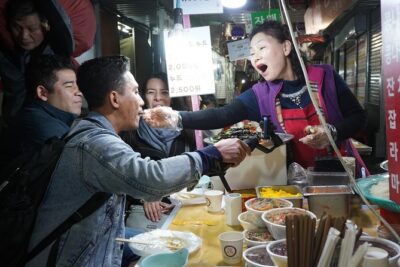
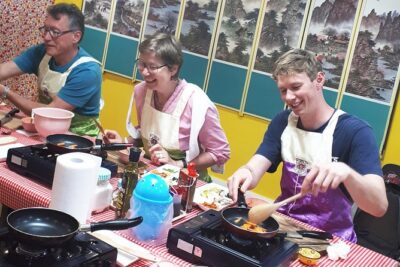
Local Home Korean Cooking Class & Market Adventure in Seoul
Read our review →
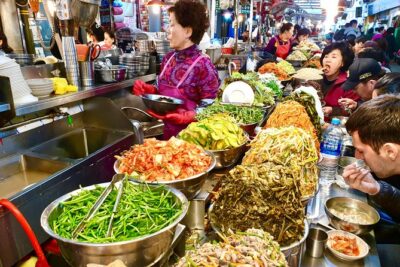
Downtown Seoul Guided Food & Market Tour with 8+ Local Tastings
Read our review →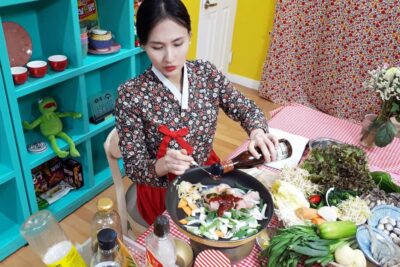
Korean Cooking Class at a Local Home and Market Tour
Read our review →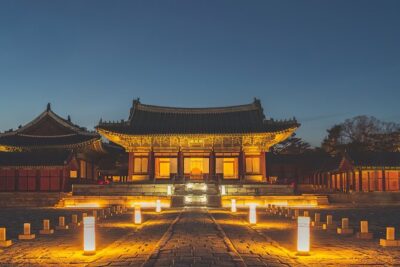
Seoul Night Palace & Market Food Tour with Vehicle
Read our review →
Cook 3 Authentic Korean Dishes with Local Market Tour
Read our review →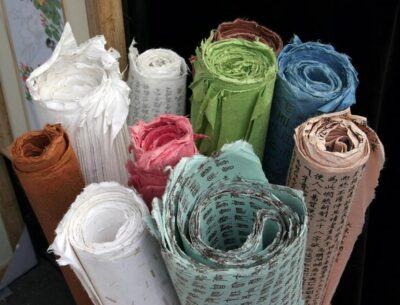
Korean Palace and Market Tour in Seoul Including Insadong and Gyeongbokgung Palace
Read our review →Browse the lists this tour appears in