
Reviewed · WAR MEMORIAL TOURS
Korean War Memorial Private Guided Tour
The most useful thing about this private Korean War tour is its clear point of view: it treats the conflict as both a civil war and an international war, while also asking what the museum displays leave out. In two hours, a guide such as Kichan Lee leads you through War Rooms I, II, and III, connecting the exhibits to the birth of the two Koreas, the armistice, and the DMZ.
I like the one-group format, which lets you ask direct questions instead of following a fixed script. I also like the supplied images and document copies, plus the guides’ background in Korean history, peace studies, and DMZ tours. The main consideration is time: two hours is enough for a focused lesson, but not enough to see every part of this large museum.
In This Review
- Key points to know
- Why the War Memorial makes sense as your first stop
- War Rooms I to III: the heart of the visit
- A civil war and an international war
- The human cost beyond the display cases
- The armistice and the creation of the DMZ
- Why a private group can be worth $100
- The guides make the difference
- Practical details that affect your visit
- Who will get the most from this tour
- Should you book the Korean War Memorial tour?
- FAQ
- Where does the Korean War Memorial tour take place?
- How long does the tour last?
- How much does the tour cost?
- Is museum admission included?
- Is this a private tour?
- Who leads the tour?
- What does the tour cover?
- Are extra materials provided?
- Can I cancel for a full refund?
Key points to know
- Kichan Lee is a frequently praised guide: His English, clear explanations, and ability to discuss politics and history make him a strong choice for a serious museum visit.
- The tour focuses on War Rooms I to III: These galleries provide the main setting for the Korean War story.
- You examine four stages of the war: The guide places military events within the wider story of divided Korea.
- The conflict is explained from a peace perspective: You’ll consider civilian cost, propaganda, and the difference between official accounts and historical evidence.
- It is private for up to five people: Your group receives the full two-hour session without strangers joining.
- Admission is free, but the guide adds the context: The value comes from interpretation, questions, and extra materials rather than from an entrance ticket.
Why the War Memorial makes sense as your first stop
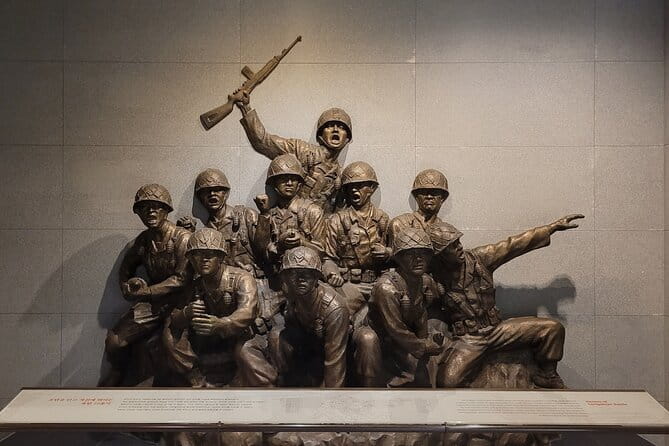
The War Memorial of Korea is a strong place to begin if you want to understand modern South Korea. The Korean War is not treated here as an isolated event. It is tied to the emergence of North and South Korea after liberation, the political forces behind the conflict, the fighting itself, and the armistice that created the DMZ.
That broad frame matters. If you walk through a military museum alone, you can easily focus on equipment, maps, and battles without seeing how ordinary people were affected. This tour aims to connect the military record with the social cost of the war and the continuing division of the Korean Peninsula.
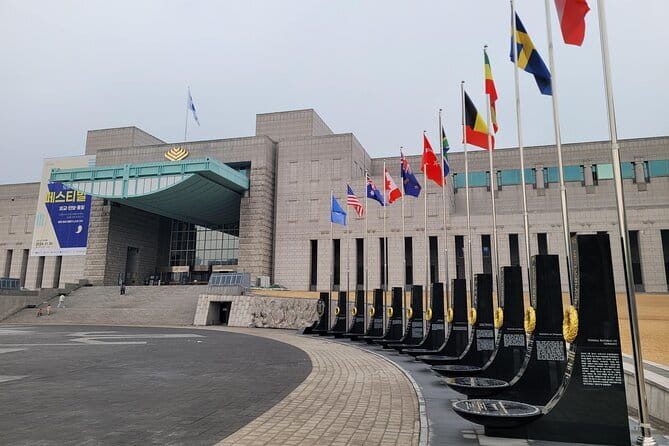
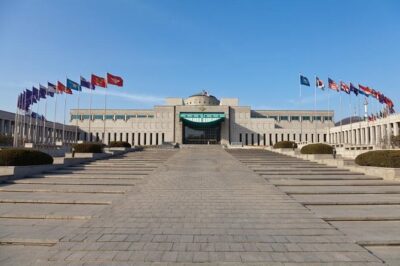
You meet at the War Memorial of Korea in Seoul’s Yongsan District. The stated starting address is 8-66 Yongsan-dong 1(il)-ga, while the end point is the museum lobby at 29 Itaewon-ro. Since the information gives both an address and a lobby meeting point, I would check the exact instructions after booking. One participant arrived very late and was kept updated by the guide, but you should still plan to arrive on time so you do not lose part of a short tour.
More War Memorial visits:
- Seoul: War Memorial of Korea Private Guided Museum Tour
★ 4.9 · 29 reviews - DMZ Tour + The War Memorial of Korea Museum
★ 5.0 · 28 reviews - Seoul Morning Tour: Seoul Tower, Namsan Hanok Village, The War Memorial of Korea
★ 4.5 · 22 reviews
War Rooms I to III: the heart of the visit
The main tour lasts about two hours and concentrates on Korean War Rooms I, II, and III. These are described as the highlights of the museum for this experience, so you should not expect a complete tour of every display in the building.
That focus is a strength. Two hours can pass quickly in a museum this important, and a guide who stays with one subject can build a story rather than race from room to room. You will move through the origins and background of the war, the four stages of the conflict, the armistice, and the creation of the DMZ.
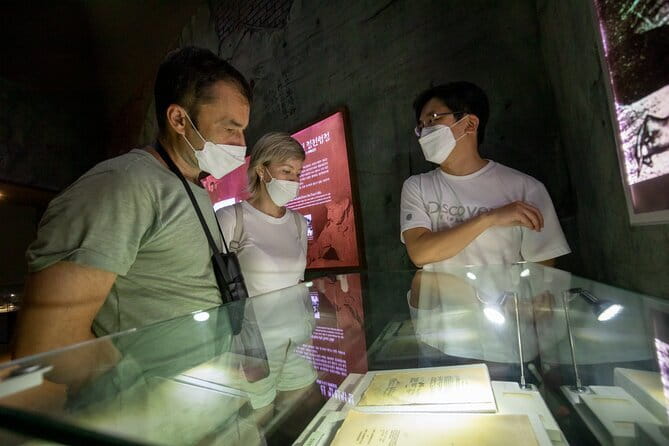
The guide’s job is not simply to translate labels. You receive explanations that connect one section to the next. A photograph, map, or document can become a starting point for a discussion about political goals, competing claims, and the human consequences of war.
You should expect a serious history lesson rather than an entertainment-focused tour. That is good news if you want to ask questions about how the conflict began or how the division developed. It may feel demanding if you have only a passing interest in Korean history or prefer a quick look at military objects.
A civil war and an international war
One of the most useful ideas in this experience is the effort to show the Korean War from two angles. The guide presents it as a civil conflict involving Koreans, while also explaining its international dimension.
That distinction helps you avoid a simple good-side and bad-side story. The tour looks at the birth of South and North Korea after liberation and explains the forces that shaped the divided peninsula. It also places the war within its wider political setting without reducing the subject to slogans.
This approach is especially helpful if you know the war mainly through a few familiar facts. You may have heard of the 38th parallel, the armistice, or the DMZ, yet still lack a clear sense of how these pieces fit together. The tour is designed to supply that missing structure.
The guide also discusses propaganda and the difference between official claims and what can be supported by historical evidence. That does not mean you will receive a simple alternative version of the story. Instead, you get help sorting through competing narratives, which is valuable when examining a conflict still tied to current politics.
The human cost beyond the display cases
Military museums naturally give attention to weapons, uniforms, troop movements, and battlefield events. This tour adds attention to the social cost of the Korean War, a subject that can receive less space in a standard museum visit.
The guides are described as having expertise in peace activism and peace studies. That background shapes the discussion. You are encouraged to think about what war meant for people living through it, not just how commanders and governments made decisions.
This is one of the strongest reasons to book a guide instead of walking through the rooms on your own. The museum can show you objects and images, but the guide can explain why a particular item matters and how it fits the larger story.
The tone is likely to be thoughtful and direct. The supplied information does not promise a theatrical presentation, role-playing, or a dramatic performance. Instead, you should expect careful explanation, questions, and discussion of difficult subjects.
A few more Seoul trips worth weighing up
- Private DMZ Tour (No Shopping): 3rd Tunnel & Suspension Bridge
★ 5.0 · 607 reviews - Seoul City Private Full-Day Tour Including Lunch
★ 5.0 · 469 reviews - Private DMZ the 3rd Tunnel Tour from Seoul (optional Red Bridge)
★ 5.0 · 429 reviews - Seoul Highlights & Hidden Gems Tours by Locals: Private + Custom
★ 5.0 · 359 reviews
The armistice and the creation of the DMZ
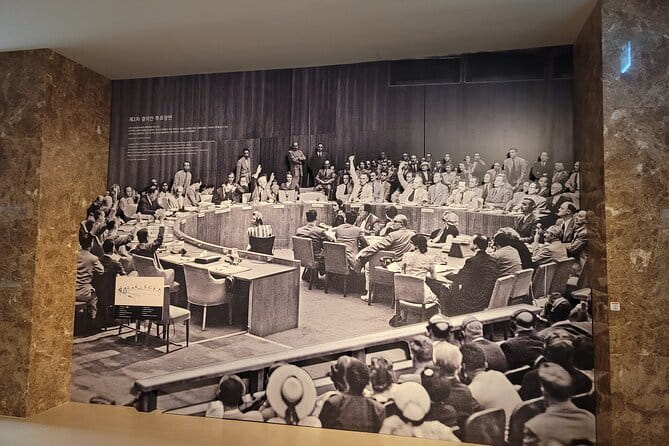
The final part of the story follows the war toward the armistice and the birth of the DMZ. This gives the tour a useful endpoint, because the Korean War did not end with a normal peace treaty. The division remains part of Korea’s present, so the museum visit naturally leads toward questions about the border and peace.
The guide’s DMZ experience adds practical value here. The provider also operates peace tours in Gangwon Province, closer to the North Korean border, and Kichan Lee has guided private DMZ-related visits. If you are considering a separate DMZ tour, this museum session can help you decide what kind of border experience you want and what questions to ask.
The important point is that the DMZ is presented as the result of the war and armistice, not as a disconnected sightseeing stop. You learn how the division developed before encountering the modern border as a tourist destination.
The tour does not include a visit to the DMZ. It stays at the War Memorial in Seoul, so you should book it for historical context, not for border views or field travel.
Why a private group can be worth $100
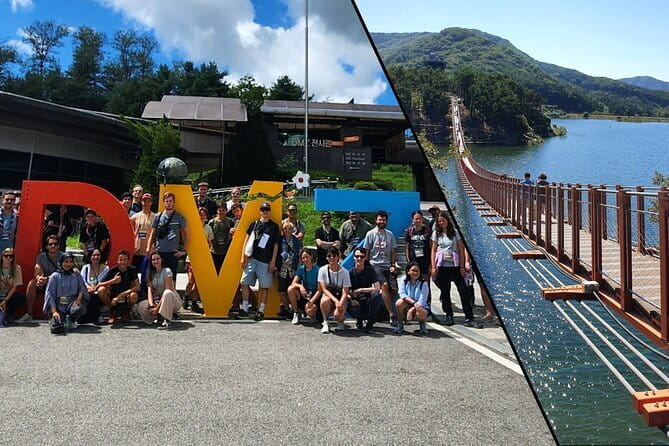
The price is $100 per group, for up to five people. That makes the value quite different from a $100 ticket charged to each person. A full group of five pays about $20 per person, while a solo visitor pays the full amount.
For a couple or small family, the price buys a private two-hour lesson with an English-speaking professional guide. You are not paying for museum admission, since entry is listed as free. You are paying for the guide’s preparation, interpretation, time, and additional material.
I think the price makes the most sense for people who care about history and want to ask questions. It is less compelling if you simply want to stroll through the museum at your own pace or spend only a few minutes in the Korean War galleries.
The extra photographs and document copies are a useful touch. They give you something concrete to review after the visit and can help you remember the guide’s explanation once you move on to other parts of Seoul.
Because this is a private activity, the quality of the experience depends heavily on the guide assigned to your booking. Kichan Lee is the named guide most closely associated with the praise for English ability, clarity, and broad command of Korean history, World War II, and politics. The tour is also described as being led by PhD students with backgrounds in history, peace activism, and DMZ tours.
The guides make the difference
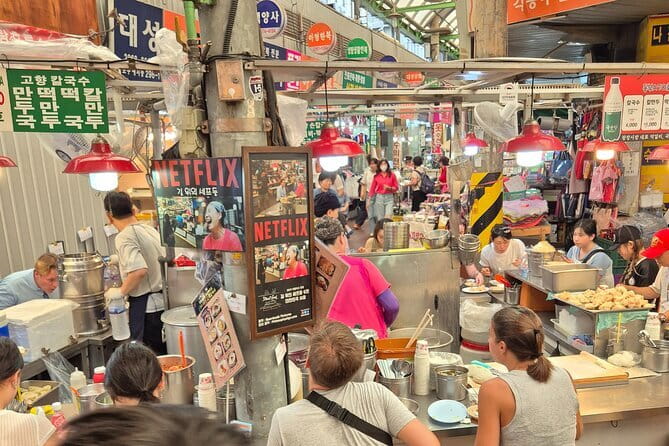
Kichan Lee receives especially strong attention for answering questions clearly and honestly. That matters here because the subject is complicated and politically sensitive. A guide who can explain difficult points without burying you in jargon is worth far more than someone who merely repeats museum text.
The experience also appears suited to conversation. One private visit led to a separate DMZ tour the following day, and the two tours were linked by a shared interest in Korean history and peace. That suggests the guide can adapt to visitors who want to keep exploring the subject.
You should tell the guide what you already know and what you want to understand. If you are confused about the origins of the two Koreas, ask for the basic structure first. If you already know the broad chronology, use the private format to ask about propaganda, civilian suffering, politics, or the armistice.
The guide’s English is described as superb, and the explanations are praised for being easy to understand. That is important in a tour where small distinctions in wording can change the meaning of a political claim.
Practical details that affect your visit
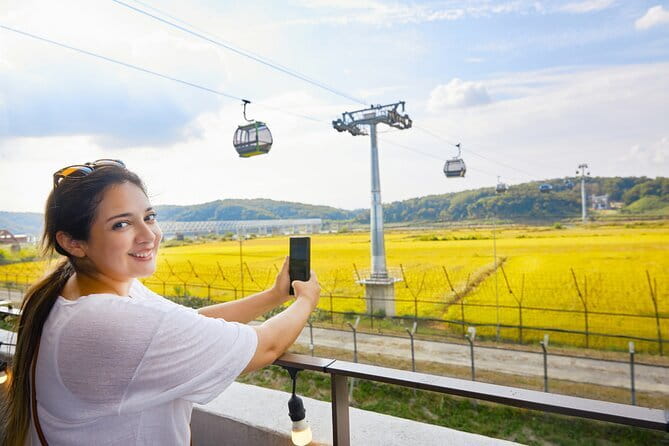
The tour uses a mobile ticket, and booking confirmation is received at the time of booking. Admission to the museum portion is free, but the professional English-speaking guide is included in the group price.
The activity is near public transportation, and service animals are allowed. You should have a moderate level of physical fitness, though the information does not give a specific distance or number of stairs. Since you will be in a museum for around two hours, comfortable shoes remain a sensible choice.
Only your group participates. The maximum group size is five, which is small enough for personal questions without requiring you to speak in front of a large crowd.
The activity is normally booked about 32 days ahead. That pattern suggests you should not leave it until the last minute if your Seoul dates are fixed, especially if you want a particular guide or time. Free cancellation is available up to 24 hours before the start time. Changes or cancellations inside that window are not accepted for a refund, and the provider may offer another date or a full refund if the minimum number of participants is not met.
Who will get the most from this tour
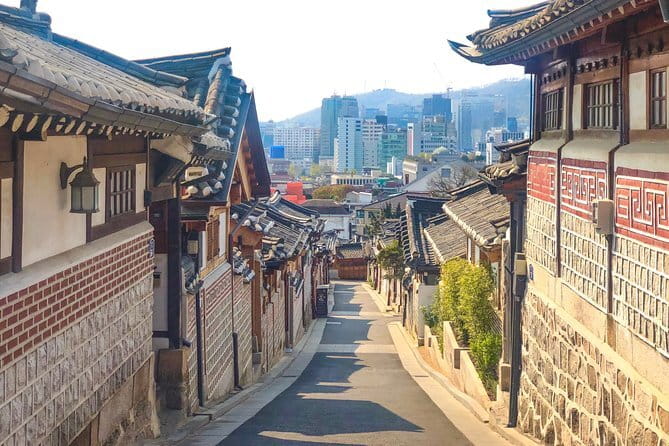
I would choose this experience if you want more than a quick museum visit. It suits first-time visitors who need a clear introduction to the division of Korea, as well as history-minded visitors who want to test their understanding through questions.
It is also a good fit for:
- Couples or families who can share the $100 group price
- Visitors planning a DMZ trip
- Students and educators interested in war, peace, or modern Korean history
- People who want a private English-language explanation
- Anyone who finds museum labels too brief or too political to understand alone
I would think twice if you dislike guided visits, have little interest in modern history, or want to cover the entire War Memorial in one short session. The two-hour focus is a benefit for the Korean War rooms, but it limits the rest of the museum.
Should you book the Korean War Memorial tour?
Book it if the Korean War is an important part of your Seoul plans and you want context rather than a self-guided walk through military displays. The private format, small group limit, extra documents, and guides’ experience in history and peace studies give the visit a clear purpose.
I especially recommend it before a separate DMZ visit. You will arrive at the border with a better grasp of how the armistice and divided peninsula fit into the larger story.
Skip it if you only want to see aircraft, weapons, and uniforms, or if you are unwilling to give two hours to a serious subject. For everyone else, this is a practical way to turn the War Memorial into an understandable account of how two Koreas came to exist.
FAQ
Where does the Korean War Memorial tour take place?
The tour takes place at the War Memorial of Korea in Seoul’s Yongsan District, focusing on Korean War Rooms I, II, and III.
How long does the tour last?
The guided visit lasts approximately two hours.
How much does the tour cost?
The price is $100 per group, with up to five people included.
Is museum admission included?
Admission to the museum is free. The booking includes all fees and taxes and a professional English-speaking guide.
Is this a private tour?
Yes. Only your group participates, with a maximum of five people.
Who leads the tour?
The experience is provided by 강원피스투어. Guides are professional English speakers with expertise in Korean history, peace activism, and DMZ tours. Kichan Lee is the guide specifically named in the available information.
What does the tour cover?
You examine the origins and background of North and South Korea after liberation, four stages of the Korean War, the armistice, the creation of the DMZ, and stories not covered in the museum exhibitions.
Are extra materials provided?
Yes. The guide provides complementary materials, including pictures and copies of documents.
Can I cancel for a full refund?
Yes, if you cancel at least 24 hours before the experience start time. Cancellations or changes made less than 24 hours in advance are not accepted for a refund.
Just added around Seoul
- Incheon Airport Private Transfer between Seoul City★ 4.0 · 4 reviews
- Seoul’s Stars: Open Mic with Local & International Talent★ 4.8 · 4 reviews
- Samaksan Cable Car and Nami Island Day Escape with Railbike★ 4.0 · 4 reviews
- DMZ 2nd Tunnel and Cheorwon Peace Observatory with Admission★ 5.0 · 4 reviews
- Nami & Maple Road & Theatre des Lumieres Day Tour from Seoul★ 4.8 · 4 reviews
- Hire Photographer, Professional Photo Shoot – Seoul★ 5.0 · 4 reviews
- [KoreaByLocal] Authentic Seoul Night Walk and Chicken & Beer★ 5.0 · 4 reviews
- Play Gayageum in Hanbok Cultural Experience in Bukchon★ 5.0 · 4 reviews
War Memorial Tours, compared.
Seoul Morning Tour: Seoul Tower, Namsan Hanok Village, The War Memorial of Korea
Read our review →
Exclusive Private DMZ Tour & War Memorial Hall or Suspension Bridge(No Shopping)
Read our review →
![[DMZ Private Full day Tour] & The War Memorial include Lunch](https://9.lovingseoul.com/wp-content/uploads/dmz-private-full-day-tour-the-war-memorial-include-lunch-400x267.jpg)
[DMZ Private Full day Tour] & The War Memorial include Lunch
Read our review →Browse the lists this tour appears in