
Reviewed · SUWON HWASEONG FORTRESS
Korean Folk Village & Suwon Hwaseong Fortress Private Tour
Suwon gives you two very different windows into Korea in one day: the 5.7-kilometer Hwaseong Fortress and a large living-style recreation of Joseon-era village life. One puts you on old stone walls above the city. The other fills your afternoon with thatched homes, crafts, music, acrobatics, and a staged wedding.
I like the private format because your guide can adjust the pace, and I like the mix of outdoor views and cultural activity. Guides named Michelle, Nate, and Ben have been praised for making the day friendly and informative, with Nate also providing water and small snacks in a clean, comfortable car. The main drawback is the price: at $296.50 per person, this makes the most sense for a small group that values private transport and personal guiding.
In This Review
- Key points at a glance
- Why Suwon makes a strong day outside Seoul
- Walking the walls of Hwaseong Fortress
- Three hours among Joseon-era buildings
- What a private vehicle changes
- Is $296.50 per person a fair price?
- Who will enjoy this day most?
- Guide style and personal connection
- Timing, weather, and booking flexibility
- Should you book the Suwon private tour?
- FAQ
- Where does this tour take place?
- How long does the experience last?
- Is hotel or accommodation pickup available?
- Is this a private tour?
- What is included in the price?
- Is lunch included?
- How much time is spent at Hwaseong Fortress?
- How much time is spent at the Korean Folk Village?
- Can I cancel for a full refund?
Key points at a glance
- King Jeongjo’s unfinished capital plan: Suwon Hwaseong was built from 1794 to 1796 as part of a royal move that never happened.
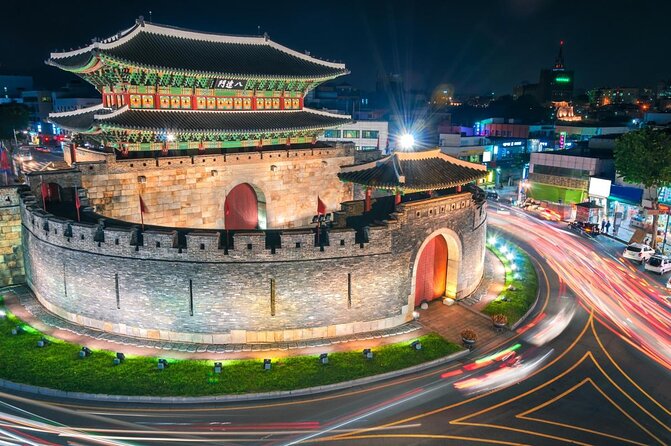
- A 5.7-kilometer fortress circuit: You see gates, command posts, pavilions, observation towers, and fire-beacon platforms.
- A three-hour Joseon village visit: The Korean Folk Village covers 245 acres with relocated homes, working crafts, animals, and stage shows.
- Private guiding from Seoul: Only your group takes part, with pickup offered and travel in an air-conditioned vehicle.
- Good family balance: History, hands-on cultural scenes, music, dance, and acrobatics give teens more variety than a monument-only outing.
- Plan for walking: The fortress rises and falls over Paldal-san, so a moderate level of fitness is needed.
Why Suwon makes a strong day outside Seoul
Suwon lies about 30 kilometers south of Seoul, but the trip feels like a change of scene. It is the largest city in Gyeonggi-do province, and its old center still sits inside a grand Joseon-era fortification.
King Jeongjo ordered Hwaseong Fortress built in 1794. He hoped to move the royal court south from Seoul, and Suwon was meant to become the country’s new capital. The project was completed in 1796, but the king died before the plan took hold. Seoul remained the capital, leaving Suwon with an unusually large and scenic reminder of a royal ambition that never came to pass.
That story gives the day more weight than a simple city outing. You are not just looking at walls. You are seeing the physical remains of a plan to reshape the kingdom.
The private setup is useful here. You travel with your own group rather than joining a large coach, and an air-conditioned vehicle handles the connection between Seoul and the two stops. Pickup is offered, although the supplied details do not specify the exact pickup area or time, so confirm those points when booking.
The full outing takes about six to seven hours. The fortress portion lasts about one hour, while the Korean Folk Village gets roughly three hours. The remaining time covers transport and the rhythm of the day.
More Korean Folk Village visits:
- Seoul: Suwon Hwaseong Fortress & Korean Folk Village Tour
★ 4.7 · 214 reviews - Korean Folk Village and Suwon Hwaseong Fortress Day Tour(EG Tour)
★ 4.5 · 80 reviews - Seoul: Suwon Hwaseong, Folk Village, & Starfield Library
★ 4.8 · 55 reviews
Walking the walls of Hwaseong Fortress
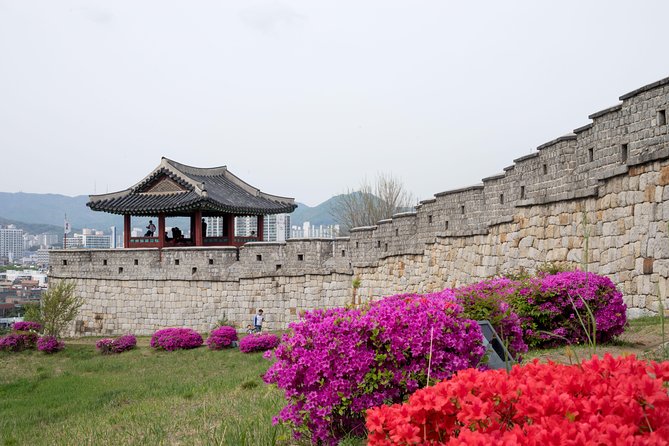
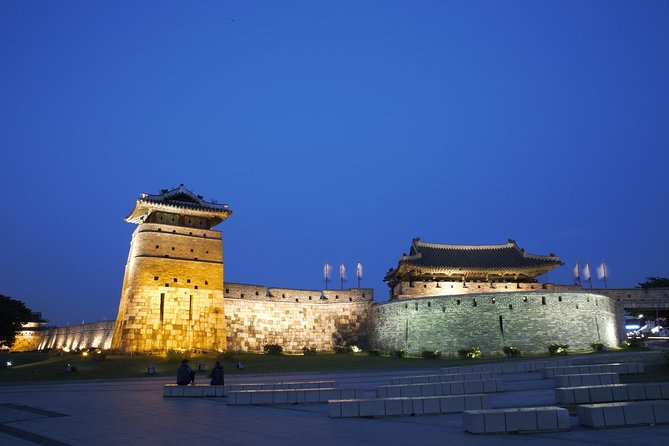
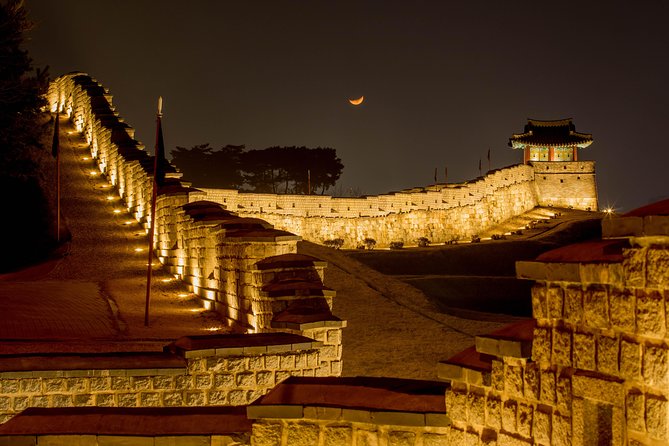
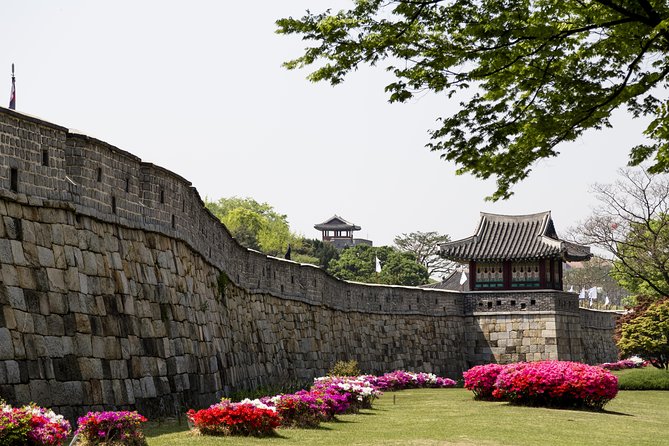
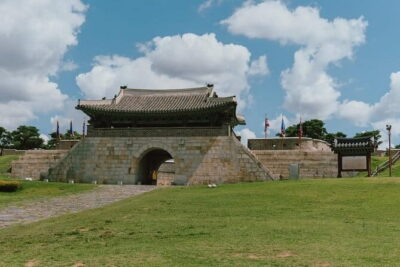
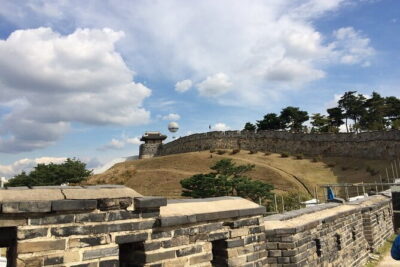
Hwaseong Fortress is the main reason many people come to Suwon. The wall stretches for 5.7 kilometers around the original town, climbing and dropping across Paldal-san, a hill that reaches 143 meters.
You will not cover the entire circuit during the one-hour stop. Instead, expect a focused look at the fortress and its key structures. The wall passes four major gates, command posts, pavilions, observation towers, and platforms once used for fire signals. From higher sections, you get views over Suwon and a clear sense of how the fortification followed the hill.
The construction itself is worth noticing. The wall used earth at its core and large stone blocks and gray bricks on its face. Much of what you see has been restored, so this is not an untouched ruin. Still, the scale and design remain easy to understand, and the restored sections let you read the fortress as a working defensive system.
I like this stop because it gives you movement and views instead of a short look at a gate followed by a quick photo. Even with limited time, walking along the rising path helps you understand how the fortress shaped the old town.
The one-hour limit also creates a tradeoff. You get an introduction rather than a full circuit. If you want to walk all 5.7 kilometers, study each gate, and spend time at every pavilion, this tour will feel too brief. If you want a well-sized historical stop paired with a larger cultural attraction, the timing works better.
Your guide matters most here. Michelle has been praised for explaining Korean history and the local area while keeping the mood light. Nate is described as offering a personal perspective shaped by growing up in the United States and later moving to Korea for college. Ben has also been praised for making the historical side work well for a family with teenagers.
Those names come from individual tour experiences, and guide assignment can change. Still, they give you a useful idea of the service style: expect a guide who can explain the setting rather than simply drive you to the entrance.
Wear shoes that handle uneven paths and inclines. The tour requires moderate physical fitness, and the Paldal-san sections make that note important. You do not need to be an athlete, but this is not a purely vehicle-based sightseeing stop.
Three hours among Joseon-era buildings
The Korean Folk Village covers 245 acres and takes up the larger part of the day. It is designed to show daily life during the Joseon dynasty, using thatched and tiled buildings relocated from different parts of Korea.
The size matters. This is not one preserved street or a small museum courtyard. You have room to walk between homes, work areas, gardens, and animal enclosures. The setting gives you time to see how different building styles and rural activities fit together.
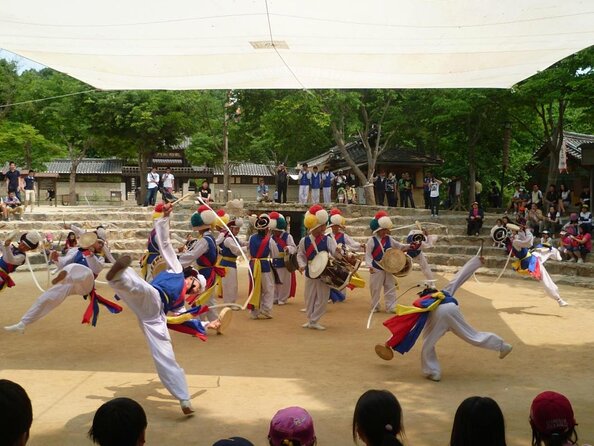
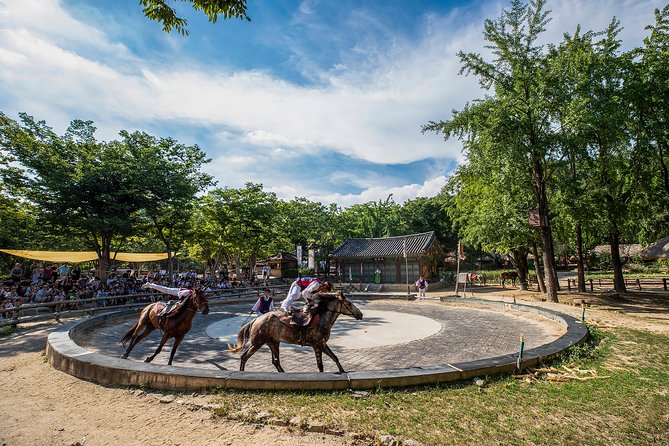
Performers wear hanbok and demonstrate traditional work. You might see pottery making, handmade paper production, vegetable plots, and livestock care. These scenes help turn abstract cultural terms into things you can watch happening in front of you.
The village also schedules traditional music, dance, acrobatics, and tightrope walking during the day. A staged wedding ceremony is another possible highlight. These performances add sound and motion to the visit, which is one reason this stop works well for families and teens.
You should allow the full three hours if you want more than a quick walk through. With multiple buildings, work demonstrations, and performances, the village rewards a slower pace. Your guide can help you decide what to prioritize, especially if show times shape the visit.
There is a possible downside. The Folk Village is a themed cultural experience, not a completely untouched Joseon settlement. Buildings have been moved here, and performances are presented for an audience. If you want original structures in their original locations, you may prefer a more traditional heritage site. If you want context, demonstrations, and a clear introduction to old customs, the format is approachable and easy to follow.
The contrast with Hwaseong makes the pairing work. At the fortress, you focus on royal power, military planning, and urban defense. At the village, you see craft work, homes, food-growing spaces, animals, and public performances. The two stops cover both the court and everyday life.
What a private vehicle changes
A private tour is a practical choice for this combination. Suwon is outside central Seoul, and the two attractions are separate stops. An air-conditioned vehicle means you can use the travel time to rest between walks rather than manage every connection yourself.
The private arrangement also keeps the day flexible within the planned schedule. Your group is the only group taking part, so you are not waiting for a bus full of strangers at every stop. That can be especially helpful for families, couples, or small groups with different walking speeds.
The reviews of the guides point to small comforts that can matter on a long day. Nate provided water and small snacks in a clean, comfortable car. Those extras are not listed as guaranteed tour inclusions, so do not book on the assumption that every guide will provide them. They do suggest an attentive style of hosting.
You should also note what is not included: lunch. The supplied details do not name a restaurant or meal stop, so plan to ask your guide about the day’s lunch arrangement or bring suitable food if needed. The listed inclusions cover the Korean Folk Village entrance fee, vehicle, and all fees and taxes. Hwaseong Fortress has no admission charge for this experience.
More Suwon and Hwaseong Fortress trips:
- Beyond Seoul: Starfield Library, Hwaseong Fortress & Cave Quest
★ 5.0 · 177 reviews - From Seoul: Suwon Hwaseong Fortress Tour
★ 5.0 · 108 reviews - Suwon Hwaseong+Gwangmyeong Cave+Starfield Library from Seoul
★ 5.0 · 104 reviews - Suwon Hwaseong, Gwangmyeong Cave, & Starfield Library Trip
★ 4.4 · 87 reviews
Is $296.50 per person a fair price?
At $296.50 per person, this is not a budget outing. The value depends heavily on group size and what you want from a day trip.
For one person or a couple, the cost is substantial. You are paying for private transport, a dedicated guide, convenience from Seoul, and the Korean Folk Village entrance. The fortress admission is free, so the price is not driven by entrance tickets.
For a small family or group, the calculation can look better, especially if group discounts apply. You share the private vehicle and guide across your party, avoid arranging transport to Suwon yourself, and get one full day built around two major sights.
I would compare this with the cost and effort of arranging separate transport, admissions, and a guide. If you are comfortable handling public transport and exploring without detailed explanations, a self-guided visit will likely cost less. If you have limited time in Seoul, want door-to-door convenience, or value direct help with Korean history and customs, the private format gives the price a clearer purpose.
The strong point is not luxury. It is control. You get a focused combination that would be awkward to organize around a short Seoul stay, especially if you want both the fortress and the village on the same day.
Who will enjoy this day most?
This tour suits you if you want a full cultural day without changing hotels or planning a complicated route. It is especially useful for families, since the day alternates between walking, views, crafts, animals, music, dance, and staged events.
The experience also suits first-time visitors who want a broad introduction to Korea’s Joseon period. The fortress explains the power and planning of a royal age. The village supplies daily-life details that a palace visit alone cannot provide.
Teens may appreciate the balance. A full day of walls and formal buildings can wear down younger attention spans, but tightrope walking, acrobatics, traditional dance, and working crafts give the Folk Village more energy. One family specifically found the mix of history, culture, and fun effective for teenagers.
You should think twice if you dislike restored or staged attractions. The Folk Village presents a carefully arranged picture of Joseon life, and the fortress walls have largely been restored. Also reconsider if you want a long fortress hike, since only about an hour is allocated there.
The walking requirement is moderate. Paldal-san has inclines, and the Folk Village is spread across a large area. Anyone in your group who has difficulty with hills or extended walking should discuss the pace with the provider before booking.
Guide style and personal connection
The guide can shape the day more than any single building. Michelle, Nate, and Ben have each been praised for friendly hosting and clear explanations, with Nate adding a cross-cultural perspective from his life in the United States and Korea.
That kind of personal background can help you place Korean customs in context. You can ask questions as they come up, rather than waiting for a fixed audio guide or trying to decode every demonstration alone.
The private setting also makes the experience more conversational. If your group is curious about the royal move to Suwon, traditional clothing, paper making, or the staged wedding, you can spend more time on those subjects. If your children need a break from formal explanation, your guide can keep the pace moving.
No guide is guaranteed by name, however. Treat Michelle, Nate, and Ben as examples of the people who have led the experience, not as a promise that one specific person will be assigned to you.
Timing, weather, and booking flexibility
The tour is booked, on average, 16 days ahead. That is a useful hint if your Seoul visit falls during a busy travel period. Reserve early if this private day is important to your plans.
Confirmation arrives at booking. You can cancel for a full refund up to 24 hours before the experience start time. Changes or cancellations made inside that 24-hour window are not accepted for a refund.
Good weather is required. If poor weather causes cancellation, you are offered another date or a full refund. Since both main stops involve outdoor walking, this policy is practical rather than surprising.
The listed duration is approximate at six to seven hours. Keep the rest of your day flexible, especially if you have an evening reservation in Seoul. Pickup details, the exact route, and meal timing should be confirmed directly when you book.
Should you book the Suwon private tour?
Book it if you want an easy, private day from Seoul that combines a major Joseon fortification with a lively cultural attraction. The best reasons are the two-part itinerary, the air-conditioned vehicle, the private guide, and the strong fit for families with teens.
Skip it if $296.50 per person feels too high, if you prefer independent travel, or if your main goal is to walk the entire Hwaseong Fortress circuit. The fortress visit is a compact one-hour introduction, not a full-day hike.
For most small groups seeking convenience and variety, I see the value in the pairing. You get royal ambition on the fortress walls, working crafts and performances at the Folk Village, and a guide who can connect the two. That is a useful way to spend one day beyond Seoul.
FAQ
Where does this tour take place?
The tour is based in Seoul and visits Suwon, a city about 30 kilometers south of Seoul. The two main stops are Hwaseong Fortress and the Korean Folk Village.
How long does the experience last?
The tour takes approximately six to seven hours.
Is hotel or accommodation pickup available?
Pickup is offered. The supplied details do not specify the exact pickup locations, so confirm the pickup arrangements when booking.
Is this a private tour?
Yes. Only your group participates in the private activity.
What is included in the price?
The price includes admission to the Korean Folk Village, an air-conditioned vehicle, and all fees and taxes.
Is lunch included?
No. Lunch is not included.
How much time is spent at Hwaseong Fortress?
The scheduled visit to Hwaseong Fortress lasts about one hour.
How much time is spent at the Korean Folk Village?
The scheduled visit to the Korean Folk Village lasts about three hours.
Can I cancel for a full refund?
Yes. You can cancel at least 24 hours before the experience start time for a full refund. Cancellations or changes made less than 24 hours before the start time are not accepted for a refund. If poor weather causes the tour to be canceled, you are offered another date or a full refund.
Just added around Seoul
- Jeonju & Yeosu: 4-Day Foodie & Artist Journey★ 5.0 · 3 reviews
- Seongsu-dong Walking Tour: K-Pop, Culture, Cheer, Friends & Relax★ 4.5 · 3 reviews
- Full Day Private Seoul Tour for foodies★ 5.0 · 3 reviews
- Imjingak DMZ Private Tour for Incheon Airport and Cruise Guests★ 5.0 · 3 reviews
- K-Pop Tour★ 3.5 · 3 reviews
- Seoul: LEGOLAND Admission with Transport (Optional Railbike)★ 5.0 · 3 reviews
- Seoul: Seorak Mountain, East DMZ, and Sokcho Tour★ 5.0 · 3 reviews
- Strawberry Picking, Winter Sled with Eobi Ice Valley from Seoul★ 4.5 · 3 reviews
Suwon Hwaseong Fortress, compared.
Suwon Hwaseong Fortress & Korean Folk Village Tour
Read our review →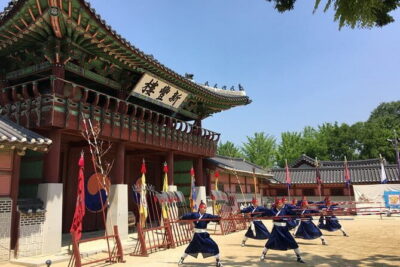
Beyond Seoul: Starfield Library, Hwaseong Fortress & Cave Quest
Read our review →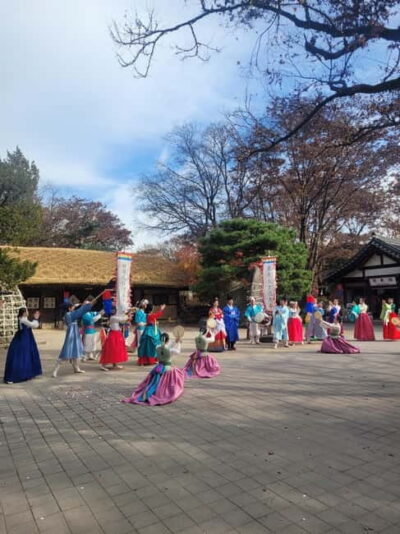
Suwon Hwaseong+Gwangmyeong Cave+Starfield Library from Seoul
Read our review →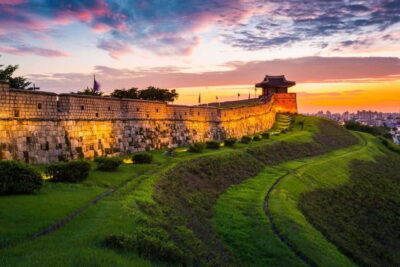
Suwon Hwaseong, Gwangmyeong Cave, & Starfield Library Trip
Read our review →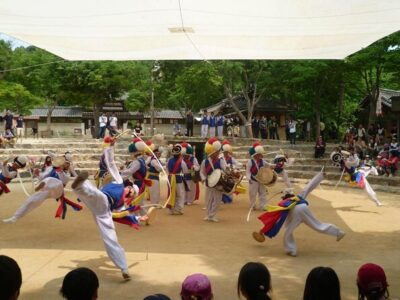
Korean Folk Village and Suwon Hwaseong Fortress Day Tour(EG Tour)
Read our review →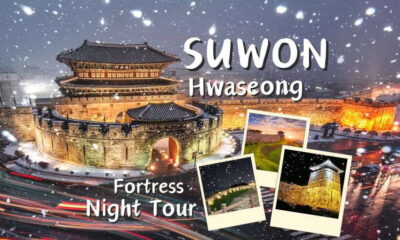
Day Tour of Suwon Hwaseong Fortress Starfield Waujeongsa Temple
Read our review →Browse the lists this tour appears in