
Reviewed · HISTORICAL TOURS
Incheon Port History Tour by 19th Century Electric Car, KTourTOP10
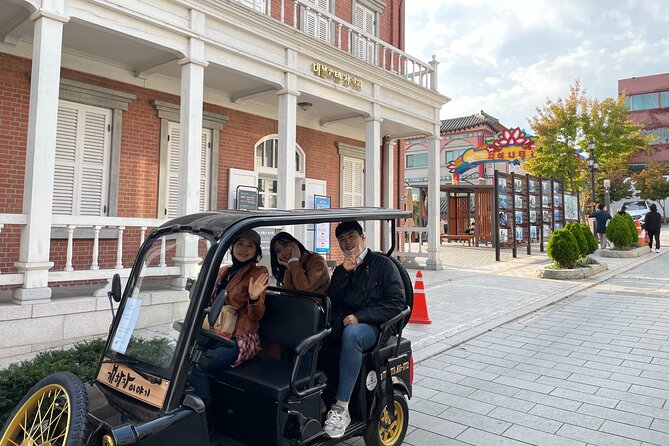
Incheon’s old port comes into focus from the seat of a small, 19th-century-style electric car. In 50 minutes, you pass former foreign settlements, Chinatown, mural-lined streets, and landmarks tied to the port’s opening in 1883. It is an easy way to see several compact sights without spending your short visit on foot.
I like the small-group format, which allows up to three people for $45, and I like the clever mix of sightseeing and transport. The car is fun, quiet, and well suited to Incheon’s historic streets. The main caution is language: one booking had a pleasant driver but no English, with prerecorded commentary instead of live explanations.
In This Review
- Key points
- A quick ride through old Incheon
- Incheon Art Platform and the old port setting
- Foreign settlements at the Cheongiljogyeji Stairway
- Haean Catholic Church and overseas Chinese life
- Chinatown and the Jjajangmyeon Museum
- Euiseon-dang, a place of comfort in Chinatown
- Songwol-dong and the fairy-tale streets
- Chohanji and Three Kingdoms mural streets
- Jemulpo Club and foreign social life
- What the guide and commentary add
- Is $45 a fair price for three people?
- Who should book this Incheon port tour?
- Should you book it?
- FAQ
- How long does the Incheon Port History Tour last?
- What is the price of the tour?
- Where does the tour start?
- Which sights are included?
- Is admission to Jemulpo Club included?
- Is the tour given in English?
- Can I cancel for a full refund?
- What happens if the tour is canceled?
Key points
- A 50-minute electric-car circuit covers Incheon Open Port Street and several historic neighborhoods.
- The $45 price is per group of up to three, making it good value for a couple or small family.
- Chinatown and the Jjajangmyeon Museum connect the city’s port past with one of Korea’s best-known noodle dishes.
- Jemulpo Club adds a look at the social life of foreigners living in old Incheon.
- Guide quality can vary, from the patient, English-speaking Soonie to a driver who relied on recorded commentary.
- The tour returns to 266 Jemullyang-ro, making it easy to fit into a short Incheon visit or airport layover.
A quick ride through old Incheon
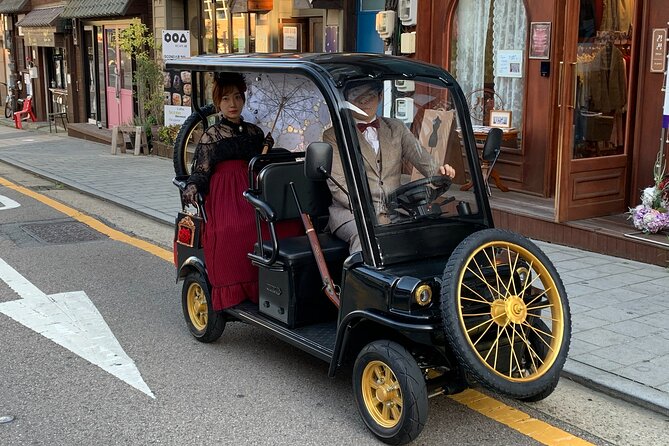
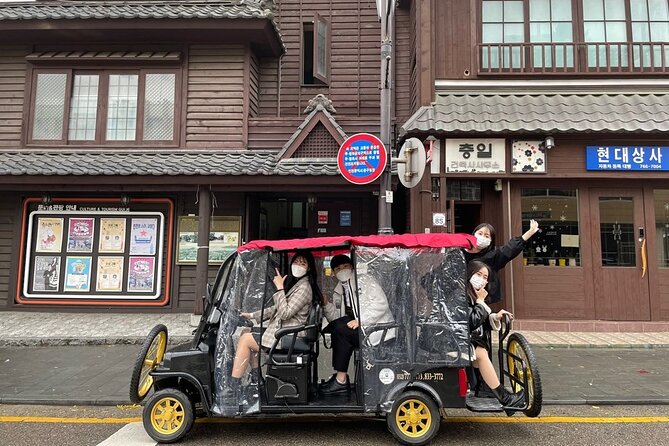
This is not a long walking tour or a museum-heavy history lesson. It is a compact orientation ride through the area around Incheon Port, using an electric vehicle styled after the early cars associated with the port’s foreign presence.
The route takes about 50 minutes, though the promotion sometimes describes the experience as an hour. Plan around the stated 50-minute duration. That matters if you are fitting this between a flight, a meal, or another activity.
The vehicle gives you a simple advantage: you can see several separated corners of old Incheon without dealing with every slope and staircase on foot. You will still need to look closely as you pass. Some sights are viewed from the car rather than explored at length, so this experience works best as an introduction.
The activity starts and finishes at 266 Jemullyang-ro, Jung-gu, Incheon. It is near public transportation, and a mobile ticket is provided. The maximum group size is 20, but the price is charged per group of up to three, so the actual arrangement may depend on the booking.
A few more Incheon trips worth weighing up
- Seoul: Evening Dark History, Folklore & Ghost Story Walking Tour
★ 5.0 · 593 reviews - Hanbok Photoshoot and History Tour at Gyeongbokgung Palace
★ 5.0 · 276 reviews - From Seoul: Dae Jang Geum Park Historic K-Drama Set Tour
★ 4.9 · 143 reviews
Incheon Art Platform and the old port setting
The first major point of interest is the Incheon Art Platform. Its red-brick buildings preserve the feel of the Open Port area while serving as a modern arts center.
Inside and around the complex, you can find exhibitions and performances connected with art, music, literature, and film. That contrast is useful. Incheon’s port district is not presented as a frozen museum quarter. Old buildings now support current cultural activity, giving you a sense of how the area has been reused.
The car makes a short stop or pass through the district rather than offering a long visit inside the art center. If you want to see an exhibition, this tour alone will not provide enough time. Think of the Art Platform as a visual introduction to the district’s architecture and changing purpose.
The red brick is one of the easier details to notice from the vehicle. It also helps explain why the Open Port area feels different from newer parts of Incheon. The ride gives you a broad view first, then points out more specific sites nearby.
Foreign settlements at the Cheongiljogyeji Stairway
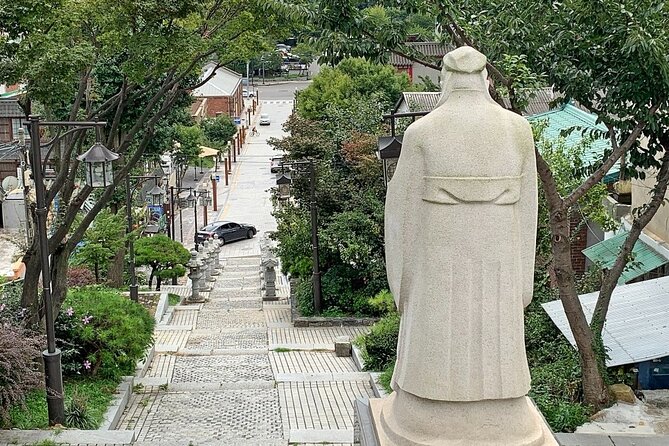
The Cheongiljogyeji Stairway is one of the more unusual stops because the stairs mark the former division between Chinese and Japanese buildings. The word jogye refers to a designated area for foreign residents or trade.
That small detail gives the stop real value. Incheon Port was a gateway where merchants, immigrants, officials, and other foreigners lived and worked. The stairway shows how that presence was organized in the city, rather than treating the port simply as a scenic old street.
The stairs also connect toward Jayu Park, and from the upper area you can see the Incheon Sea. The tour may not give you a long time to climb or photograph the view, so keep your expectations sensible. You are getting a moving overview, not a full walking visit to every viewpoint.
I would pay attention here to the change in building styles on either side of the stairs. The point is less about one grand monument and more about how the street preserves the divisions created around the open port.
Haean Catholic Church and overseas Chinese life
Haean Catholic Church adds another layer to the port district. It was created in the 1960s for devoted Catholics among the overseas Chinese community in Incheon.
This stop helps broaden the story beyond trade and colonial-era architecture. Incheon’s Chinese community was not just part of the city’s tourist image. Families built religious and social institutions, maintained ties with one another, and created a lasting part of the local community.
The church is best understood as a brief roadside landmark during this tour. The information provided does not indicate a scheduled interior visit, so do not book this experience expecting a church tour. Its value is in the connection it makes between immigration, faith, and daily life.
A completely different kind of day, same trip:
- Private Airport Transfer: Incheon Airport to Seoul City (1-5 pax)
★ 5.0 · 92 reviews - Private Layover Tour from Incheon Airport to Seoul
★ 5.0 · 78 reviews - Seoul Layover Private Tour from Incheon Airport
★ 5.0 · 65 reviews - (P/Transfer) Incheon Airport ↔ Seoul (Up to 5 Pax)
★ 5.0 · 61 reviews
Chinatown and the Jjajangmyeon Museum
Chinatown is one of the most recognizable parts of the route. The tour places it alongside the Jjajangmyeon Museum, located where Gonghwachun, the first original jjajangmyeon restaurant, once operated.
Jjajangmyeon is the dark, savory noodle dish associated with Korean Chinese cuisine. The museum displays objects linked with the dish and Gonghwachun, and it explains how a restaurant site became tied to a food with such a strong place in Korean popular culture.
This is a particularly good stop for anyone who prefers history with a practical, everyday angle. Port history can feel distant when it is reduced to dates and foreign buildings. Food makes the story easier to grasp. Immigration, restaurant work, local tastes, and cultural exchange all meet in one bowl of noodles.
The limitation is time. The car route can point out the museum and its setting, but a 50-minute circuit does not allow for a full museum visit and a leisurely meal. If jjajangmyeon is one of your reasons for visiting Chinatown, plan a separate stop before or after the ride.
Euiseon-dang, a place of comfort in Chinatown
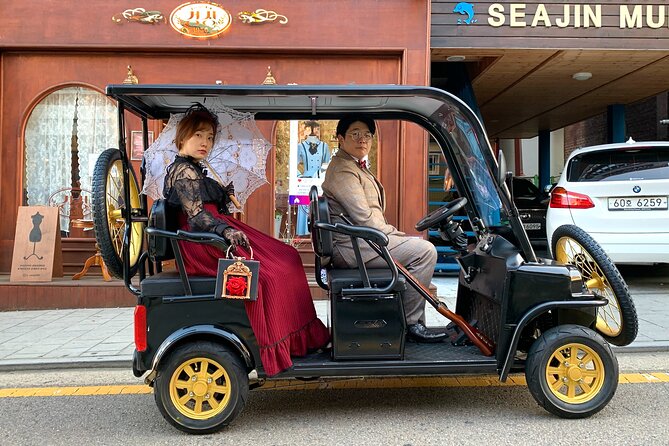
Euiseon-dang is a Chinese-style shrine inside Chinatown. Chinese immigrants built it after leaving their homeland, seeking comfort while facing the loneliness and difficulty of life away from home.
This is one of the stops that gives the route a more human scale. You are not only seeing commercial streets and decorative buildings. You are also seeing how immigrant communities created places for spiritual support and shared identity.
The shrine is likely to appeal most to people who want context for Chinatown rather than only photographs. The tour provides the setting and the story, but there is no indication of an extended religious or architectural visit. Use the passing view to notice its Chinese design and its place within the neighborhood.
Songwol-dong and the fairy-tale streets
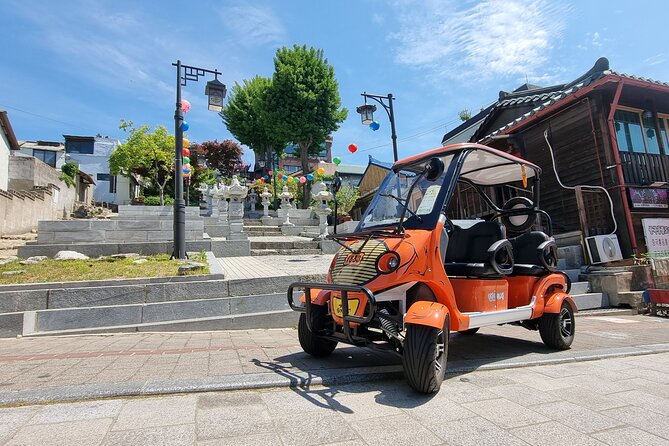
Songwol-dong once contained wealthy foreign residences after the port opened in 1883. Over time, younger residents moved away, leaving an older population behind. The area was later remade as Donghwa Village, known for its fairy-tale streets and colorful designs.
This is the most playful portion of the ride. The murals and storybook decoration can feel cheerful and, at points, deliberately kitschy. That is part of the appeal, especially if you have children or want a lighter break from historical sites.
The same quality can be a drawback if you prefer original architecture and quiet streets. Some of the visual attractions are modern additions rather than preserved port-era scenes. I would treat Donghwa Village as a quick, photogenic neighborhood stop, not as a pure history site.
One rider described the fairy-tale street as a highlight, while another found several of the main sights a little cheesy. Both reactions make sense. You may enjoy the color and energy, but you should not confuse the murals with untouched historical fabric.
Chohanji and Three Kingdoms mural streets
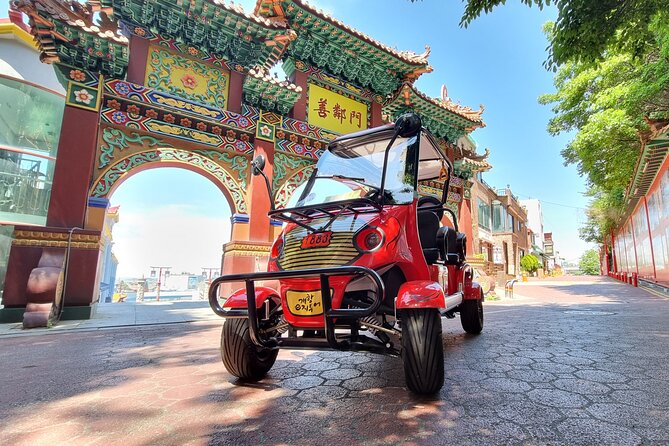
The route also passes Chohanji Mural Street and Three Kingdoms Mural Street. Their walls show scenes and characters from well-known Chinese historical novels, including stories connected with the Three Kingdoms.
These murals extend the Chinese cultural theme beyond food and architecture. They turn literary stories into an outdoor display that is easy to view from a slow-moving vehicle. If you know the stories, the scenes may have extra meaning. If you do not, they still provide a vivid visual link to Chinese culture in the neighborhood.
As with Donghwa Village, the murals are a modern presentation. They are not a replacement for a museum or original historical site. Their strength is accessibility: you can see a lot in a few minutes, and the guide or audio commentary can explain what the images represent.
Jemulpo Club and foreign social life
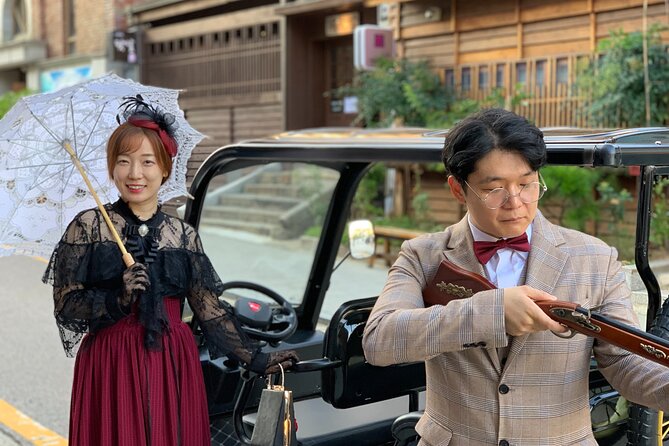
Jemulpo Club is the final named stop and one of the more historically substantial buildings on the route. It operated as a social club for foreigners living in Incheon. Inside were a social room, billiard room, and reading room, with a tennis court outside.
That list of rooms tells you something important. The port was not only a place where ships loaded cargo. It was also a settlement where foreign residents built social routines and institutions. A billiard room and tennis court suggest a world of leisure that sat alongside the work of the port.
The building later changed use during the Japanese colonial period. The supplied information notes both its operation as a foreign social club and later changes connected with the period, so the site represents several stages of Incheon’s modern history.
The tour includes about five minutes at Jemulpo Club, with admission listed as free. Five minutes is enough to see the exterior and get a short explanation, but not enough for a slow study of every room. If the building interests you, ask the guide how much of the visit takes place inside.
What the guide and commentary add
The quality of this experience depends heavily on communication. A good guide can connect the stairway, church, food museum, shrine, and club into one understandable story. Without that thread, the ride becomes a pleasant circuit with landmarks pointed out through the window.
Soonie is specifically praised for patiently explaining the historical parts of old Incheon and for accommodating a request to move a tour to a later time. That suggests the experience can be warm and flexible when an English-speaking guide is assigned.
But you should not assume every departure includes live English guiding. One booking had a pleasant driver who spoke no English, leaving the group with prerecorded commentary and little chance to ask questions. If you need detailed explanations or have specific questions, confirm the language arrangement before arrival.
The car itself still offers value when the commentary is limited. It is a fun way to cover the district, and the short ride can help you decide which places deserve a longer return visit. Just do not pay for this expecting the same depth as a private walking guide with continuous interpretation.
Is $45 a fair price for three people?
At $45 per group of up to three, the price works best for a couple, family, or small private party. Split three ways, it is $15 per person for a 50-minute ride, guide fee, and electric-car transport. That is a reasonable rate for a quick orientation of the port district.
The value drops if you are alone, since the group price is not presented as a per-person fare. You are paying for convenience and a fixed route rather than admission to a series of major attractions. Meals, snacks, and museum purchases are not included.
I would compare this with the cost of arranging separate transport and a guide, not with the price of walking through Chinatown for free. The car saves effort and gives you a planned route, but it does not give you long visits at each stop.
Some people may also feel the ride is short for the price, especially if they expect a full hour or a detailed tour. The duration is clearly about 50 minutes, so book it for a compact introduction. If you want a full afternoon in old Incheon, use this as the first step and continue on foot afterward.
Who should book this Incheon port tour?
I would recommend it to you if you have a short window in Incheon, want to cover several neighborhoods quickly, or prefer not to walk the entire route. It can also suit families, older visitors, and anyone who enjoys unusual transport with a little local history.
It is especially useful during a long layover, provided your airport timing leaves enough margin. One booking used it as a way to spend time before a late flight. Still, allow extra time to reach the meeting point and return to the airport. The tour itself ends at the starting point, not at the airport.
You may want a different experience if you need fluent English throughout, want to enter every attraction, or prefer a serious architectural tour. The most enthusiastic response came when the guide was patient and able to explain the sites. The weakest experience came when the driver could not answer questions.
The activity is listed as suitable for most participants, and service animals are allowed. It requires good weather and a minimum number of participants. If poor weather or low enrollment cancels the tour, you are offered another date or experience, or a full refund.
Should you book it?
Book this tour if you want a short, entertaining introduction to old Incheon and the $45 group price works for your party. The electric car is the main draw, and the route covers a useful mix of port history, Chinese immigration, food culture, murals, and foreign social life.
I would confirm the guiding language before you go, then keep your expectations focused on a quick overview rather than a deep historical visit. If you have more time, return afterward to Chinatown, the Jjajangmyeon Museum, or Jemulpo Club at your own pace. For a first look at Incheon Port, this is a practical and enjoyable choice, with communication being the key variable.
FAQ
How long does the Incheon Port History Tour last?
The electric-car tour lasts approximately 50 minutes. Some descriptions refer to an hour, but you should plan around the stated 50-minute duration.
What is the price of the tour?
The price is $45 per group of up to three people. The tour guide fee and old-style electric-car ride are included.
Where does the tour start?
The meeting point is 266 Jemullyang-ro, Jung-gu, Incheon, South Korea. The tour also ends back at this meeting point.
Which sights are included?
The route includes Incheon Art Platform, Cheongiljogyeji Stairway, Haean Catholic Church, Jjajangmyeon Museum, Euiseon-dang, Songwol-dong and Donghwa Village, Chohanji and Three Kingdoms Mural Street, and Jemulpo Club.
Is admission to Jemulpo Club included?
Admission to Jemulpo Club is listed as free. The tour includes about five minutes at this stop.
Is the tour given in English?
English service is not guaranteed by the supplied information. One guide, Soonie, patiently explained the history in English, while another booking had a driver who did not speak English and used prerecorded commentary.
Can I cancel for a full refund?
Yes. You can cancel at least 24 hours before the local start time for a full refund. Cancellations or changes made less than 24 hours before the start time are not refunded or accepted.
What happens if the tour is canceled?
If poor weather or failure to meet the minimum number of participants causes cancellation, you are offered a different date or experience, or a full refund.
Just added around Incheon
- Layover Tour from Incheon Airport to Seoul with a Tour Specialist★ 5.0 · 5 reviews
- Half or Day Private Tour For Cruise Incheon and Seoul City Tour★ 4.5 · 6 reviews
- Incheon Airport Pickup★ 4.5 · 7 reviews
- Incheon Cruise Shore Excursion private Tour to Seoul★ 5.0 · 8 reviews
- Layover Tour for essential Seoul City & Gourmet tour(Incl. Lunch)★ 5.0 · 8 reviews
- Korea SIM Card with SKT Unlimited Local Data & Voice Calls★ 4.5 · 9 reviews
- Private Transfer Incheon Intl. Airport —>Seoul★ 4.5 · 9 reviews
- Incheon Highlight – Private One Day Tour★ 5.0 · 10 reviews
Historical Tours, compared.
Evening Dark History, Folklore & Ghost Story Walking Tour
Read our review →
Hanbok Photoshoot and History Tour at Gyeongbokgung Palace
Read our review →
City Highlights and Historical Experience No Shopping
Read our review →
Street photoshoot and Seoul Hidden gem History Walking Tour
Read our review →
Namhansanseong UNESCO Historical Sites and Korean Folk Village-Private Tour
Read our review →Browse the lists this tour appears in