
Reviewed · HISTORICAL TOURS
Buam dong Walking Tour Art, History and Parasite in Seoul
Buam-dong gives you a quieter, more thoughtful side of Seoul. This 2.5-hour walk links mountain views, modern Korean history, poetry, traditional buildings, and a Parasite filming location without the crowds of the city center. Guide Jon adds humor and personal stories to the route.
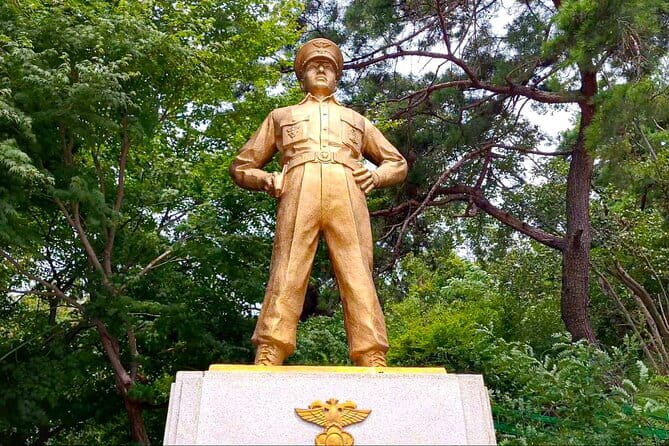
I like the mix of art and history. You are not simply looking at old walls or taking photos of scenery. You learn about the Choi Gyu-sik Memorial Statue, Cold War events, Seoul’s defenses, and the local connection to poet Yoon Dong-ju. I also like the small group size, capped at 15 people, which should make questions and conversation easier.
The main consideration is the terrain. Buam-dong is a hillside neighborhood, and you need moderate physical fitness for a walking tour that includes slopes, steps, and outdoor stops. The tour costs $38.50, so it offers good value if you want context and a local guide, but less so if you prefer to explore quietly on your own.
In This Review
- Key points to know before you book
- Why Buam-dong makes a better detour than another palace
- The 10-minute bus ride into the hills
- Cheongun Literature Library and the art of a quiet stop
- Choi Gyu-sik Memorial Statue and Cold War stories
- Yoon Dong-ju’s hill and three mountain views
- Changuimun Gate and the Seoul City Wall
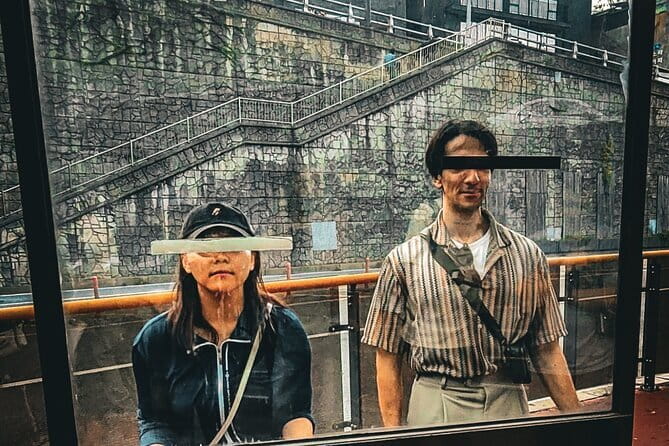
- The Parasite filming location
- Mugyewon and a traditional finish
- What $38.50 buys you
- Who will enjoy this walk most
- Practical details for a smoother afternoon
- Should you book the Buam-dong walking tour?
- FAQ
- Where does the Buam-dong walking tour start?
- What time does the tour start?
- How long does the activity last?
- How much does the tour cost?
- How many people can join the tour?
- Is the tour available with a mobile ticket?
- Does the tour include a bus ride?
- What physical fitness level is needed?
- Are service animals allowed?
- Can I cancel for a full refund?
Key points to know before you book
- Buam-dong beyond the usual Seoul route: See a peaceful hillside district with mountain views and a strong connection to Korean art and culture.
- A useful history lesson: Learn about the Choi Gyu-sik Memorial Statue and Cold War history, subjects often missed on standard sightseeing routes.
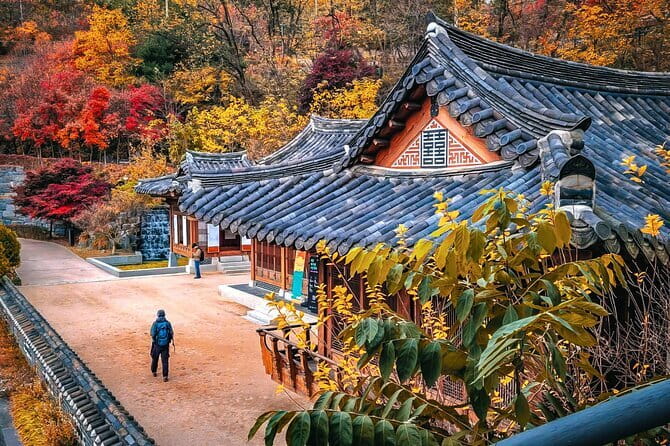
- Cheongun Literature Library: Visit Seoul’s first Hanok library, where traditional architecture creates a calm pause in the walk.
- Three mountain views: Look toward Bugaksan, Inwangsan, and Bukhansan from the Yoon Dong-ju hill area.
- Historic Changuimun Gate: Walk beside the Seoul City Wall and hear how the gate supported Seoul’s defenses.
- Personal guiding in a small group: The group limit is 15, and guide Jon is noted for combining interesting stories with a warm sense of humor.
Why Buam-dong makes a better detour than another palace
Seoul has no shortage of palaces, shopping streets, and famous viewpoints. Buam-dong offers something different: a neighborhood where nature, memory, and creative life sit close together.
The area lies on the city’s northern side, near the mountains. You begin with a short bus ride of about 10 minutes, during which the guide introduces the district and explains why it matters. That short ride is useful. Instead of arriving with no context, you start to understand how Buam-dong fits into Seoul’s wider story.
This is not a tour built around one grand monument. Its appeal comes from the links between smaller places. A memorial leads into Cold War history. A literature library brings you close to Korean cultural life. A city gate and wall show Seoul’s older defenses. Mountain views give you a sense of the setting. The Parasite connection adds a modern film reference without taking over the walk.
I would choose this experience after visiting Seoul’s major royal sites, especially if you want to see how the city changes once you leave its busiest central streets. It also works well for someone making a second visit to Seoul and looking for a less familiar district.
A few more Seoul trips worth weighing up
- Seoul: Evening Dark History, Folklore & Ghost Story Walking Tour
★ 5.0 · 593 reviews - Hanbok Photoshoot and History Tour at Gyeongbokgung Palace
★ 5.0 · 276 reviews - From Seoul: Dae Jang Geum Park Historic K-Drama Set Tour
★ 4.9 · 143 reviews
The 10-minute bus ride into the hills
The tour starts at 시민약국, at 106-3 Jeokseon-dong in Jongno District. The meeting time is 2:00 pm, so plan to arrive with enough time to find the meeting point rather than trying to reach it at the last second.
The opening bus ride takes around 10 minutes. The guide uses that time to explain Buam-dong’s background and the reasons for its special character. That is a small part of the overall activity, but it helps you get your bearings before the walking begins.
The transport also signals a change in pace. You are moving away from the standard central Seoul circuit and toward a district shaped by hills, old buildings, and open views. Since the tour includes a bus ride, confirm the practical details at booking, including how the fare is handled. The supplied tour information does not specify that point.
Cheongun Literature Library and the art of a quiet stop
One of the most appealing stops is the Cheongun Literature Library, described as Seoul’s first Hanok library. You have about 20 minutes here, enough to appreciate the setting without turning the visit into a long reading session.
The value of this stop is its mood and design. A Hanok is a traditional Korean house, and using this kind of building as a library creates a strong contrast with Seoul’s modern streets and towers. You get a glimpse of how old Korean architectural forms can serve present-day cultural life.
The library also gives the walking tour a needed pause. Buam-dong is not presented only as a place of political history or scenic views. Literature and artistic life are part of the district’s identity too. If you enjoy thoughtful places more than packed attractions, this may be one of the most memorable sections.
You should keep your expectations realistic. The visit is brief, and the tour does not promise a long indoor program or extended time to browse. Think of it as a quiet cultural stop within a larger neighborhood walk.
Choi Gyu-sik Memorial Statue and Cold War stories
The route also covers the Choi Gyu-sik Memorial Statue and the Cold War history connected with the area. This gives the tour a serious edge and makes it more than a pleasant walk through an attractive neighborhood.
The details of the local story are best heard from the guide on site. What matters for your planning is that the tour treats Seoul as a city shaped by recent political tension as well as ancient walls and traditional houses. The Cold War is not a distant chapter here. It forms part of the modern background you need to understand the district.
I like this kind of historical stop because it changes how you read the streets around you. A hillside neighborhood can look peaceful while still carrying memories of danger, division, and national security. Guide Jon’s role is especially important here. A good storyteller can make the subject clear without turning the walk into a lecture.
The information provided does not give a fixed amount of time for the memorial and Cold War portion. Expect it to fit into the walking route rather than operate as a separate museum visit.
A completely different kind of day, same trip:
- Best DMZ Tour Korea from Seoul (Red Suspension Bridge Optional)
★ 5.0 · 41,422 reviews - DMZ Tour: 3rd Tunnel, Option(Suspension Bridge, Boat) from Seoul
★ 5.0 · 21,373 reviews - DMZ tour south Korea from Seoul (NK experience hall, defector)
★ 5.0 · 20,599 reviews - DMZ Insider Tour: 3rd Tunnel, NK Defector Meet & Red Bridge
★ 4.9 · 15,214 reviews
Yoon Dong-ju’s hill and three mountain views

The Hill of Poet Yoon Dong-ju adds a literary and scenic part to the experience. From this area, you can take in views toward Bugaksan, Inwangsan, and Bukhansan.
These views help explain why Buam-dong has attracted artists and writers. The mountains are not just a backdrop for photographs. They give you a clear sense of the district’s position at the edge of a large capital city, where wooded slopes and urban streets meet.
The views will depend on weather and visibility. On a clear afternoon, this should be one of the strongest photo stops. On a hazy day, the mountain outlines may be less distinct, but the setting still gives the walk a welcome outdoor break.
Wear shoes that can handle uneven ground and hills. The tour lists a moderate fitness requirement, and this is the part of the route where you will feel that most. The experience is not presented as strenuous hiking, but it is more demanding than a flat stroll along a central shopping street.
Changuimun Gate and the Seoul City Wall

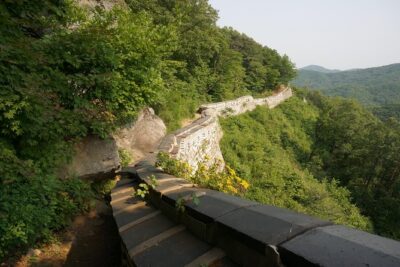
Changuimun Gate, also called Jahamun Gate, is the main historic landmark on the route. You spend around 15 minutes exploring the gate and the Seoul City Wall while learning about their role in Seoul’s defense and heritage.
Changuimun is valuable because it makes the city’s old defenses visible at street level. You can see how the gate and wall formed part of a larger system rather than treating them as isolated ruins. The guide’s explanation should help you connect the physical remains with Seoul’s development as a fortified capital.
The stop is fairly short, so do not expect a long wall walk or an extended architectural study. Instead, you get a focused explanation and time to look closely at the gate. That suits this tour’s wider design, which gives you several connected stops rather than spending the whole afternoon at one site.
This is also a good point for travelers who want history without a formal museum setting. You are outside, moving through the neighborhood, and seeing the relationship between the old wall and the present city.
The Parasite filming location
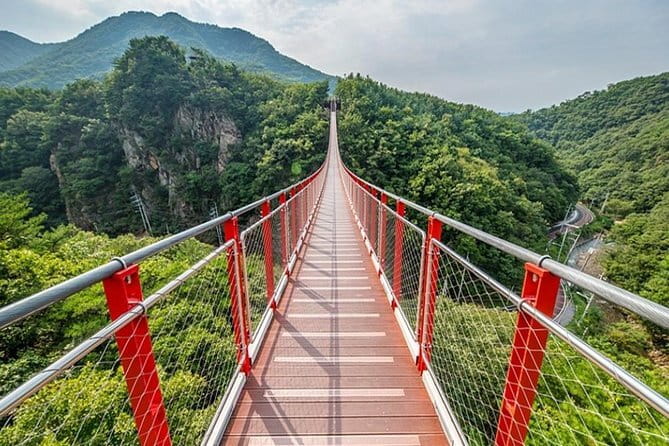
The tour includes a filming location associated with Parasite, the South Korean film that brought international attention to Seoul’s social divisions and visual settings. The film connection gives the walk a modern pop-culture hook.
The supplied details do not identify the exact scene or say how long the group stays there. I would treat it as an added stop rather than the main reason to book. If you are a film fan, it may be a fun way to connect a familiar screen image with the actual city. If you have not seen the film, the wider art and history route still carries the experience.
This part also shows the range of the tour. You move from traditional architecture and poetry to Cold War memory and contemporary cinema. That variety is more interesting than a route focused only on one period of Korean history.
Mugyewon and a traditional finish
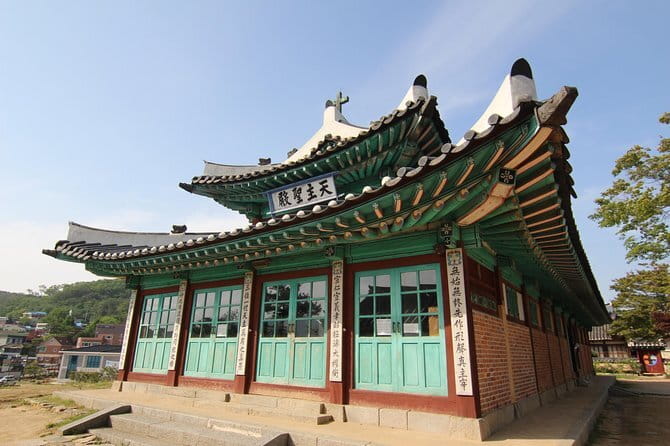
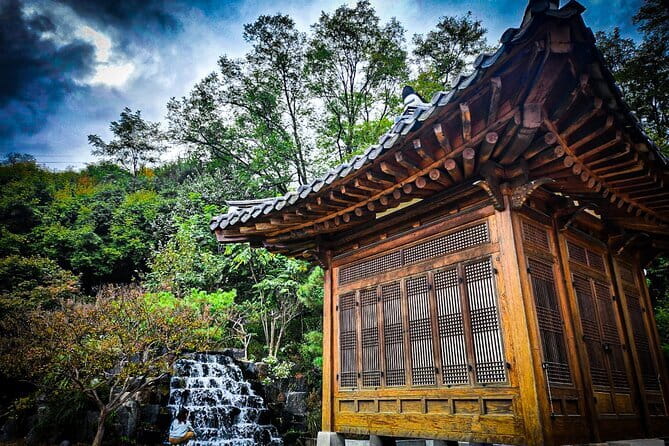
The final named stop is Mugyewon, a Hanok cultural space. It once served as the villa of Grand Prince Anpyeong, giving the building a link to Seoul’s royal past.
You have about 20 minutes here. Mugyewon offers a fitting close because it brings the tour back to traditional Korean architecture after the outdoor views, memorial history, and city wall. The setting is described as an example of old-world elegance surrounded by the modern city.
Do not book this expecting a major palace complex. Mugyewon is a smaller cultural space, and its appeal comes from atmosphere, scale, and the story attached to the building. It works best as the final piece in a neighborhood portrait.
The activity ends back at the original meeting point. The route details identify Mugyewon as the final stop, so your guide should explain how the group returns to the starting area.
What $38.50 buys you
At $38.50 per person, this is not the cheapest way to spend two and a half hours in Seoul. You are paying for a guide, a planned route, historical explanation, and access to a set of places that can be hard to connect on your own.
The admission stops listed for the tour are free. That means the price is mainly for the guiding and the structure of the experience, not entrance tickets. I see value here if you want the stories behind Buam-dong and prefer not to work out the route yourself.
The value is strongest for visitors who care about context. You get art, literature, Cold War history, a city wall, a cultural Hanok, mountain views, and a film location in one compact outing. It would be weaker value for you if your main goal is simply to take a walk and photograph the scenery, since Buam-dong can be explored without a paid tour.
Group discounts are available, and mobile tickets make the booking process easier. The group is limited to 15 people, which is a useful middle ground. You get the social feel of a guided outing without the size of a large coach group.
The tour is booked, on average, 19 days in advance. That does not guarantee every date will sell out, but it suggests you should reserve ahead if the 2:00 pm start is important to your schedule.
Who will enjoy this walk most
I would recommend this tour to you if you enjoy:
- Seoul history that includes modern political events, not only royal dynasties
- Small cultural sites and traditional buildings
- Poetry, literature, and Korean artistic life
- Mountain views within reach of the city
- Film locations that add a contemporary touch
- Guided walks with stories and humor
- A slower neighborhood experience away from central crowds
It suits culture lovers and people who like to combine city sightseeing with outdoor time. It can also work for repeat visitors who have already seen the major palaces and want a different part of Jongno District.
I would think twice if you have trouble with hills or need a fully flat route. The tour requires moderate physical fitness, and Buam-dong’s hillside setting is central to its character. You should also avoid booking it if you want a long, private visit at each stop. The schedule moves through several locations in 2.5 hours.
Guide Jon received special praise for being funny and for telling interesting Korean history stories. Since the group may include up to 15 people, the quality of the experience will depend partly on how much you enjoy a shared walking format. The available rating is 5 out of 5, with 100 percent recommending the activity, but the number of ratings is still small, so I would treat that as encouraging rather than final proof.
Practical details for a smoother afternoon
Arrive at the Jeokseon-dong meeting point before 2:00 pm. The tour begins with transport, so arriving late could mean missing the first explanation or the bus connection.
Use comfortable walking shoes. The moderate fitness requirement is the clearest warning in the tour information, and the hillside route makes it relevant. Bring water and dress for the weather, since several important parts take place outdoors.
The activity permits service animals. It is also near public transportation, which helps with reaching the meeting point and continuing your Seoul plans afterward, although the activity ends back at that starting point.
Free cancellation is available if you cancel at least 24 hours before the local start time. Changes or cancellations made less than 24 hours ahead are not accepted for a refund. Keep that deadline in mind before committing to the 2:00 pm slot.
Should you book the Buam-dong walking tour?
Book it if you want a compact, guided look at Seoul’s quieter cultural side. The strongest reason to go is the combination of Cold War history, literature, mountain scenery, and old architecture. Few short walks bring those subjects together so neatly.
The $38.50 price makes sense when you want interpretation and a well-planned route, especially with a small group and a guide such as Jon. Skip it if you prefer independent wandering, need a flat route, or have already spent a lot on guided sightseeing and only want free outdoor views.
For most visitors who enjoy authentic neighborhoods and stories that reach beyond the usual palace circuit, this is a worthwhile half-day outing. Plan for hills, arrive on time, and choose it for the whole mix rather than for the Parasite stop alone.
FAQ
Where does the Buam-dong walking tour start?
It starts at 시민약국, 106-3 Jeokseon-dong, Jongno District, Seoul, South Korea.
What time does the tour start?
The tour starts at 2:00 pm.
How long does the activity last?
The walking tour lasts approximately 2 hours and 30 minutes.
How much does the tour cost?
The listed price is $38.50 per person.
How many people can join the tour?
The activity has a maximum group size of 15 people.
Is the tour available with a mobile ticket?
Yes, mobile tickets are available.
Does the tour include a bus ride?
Yes. The route begins with a bus ride of about 10 minutes to Buam-dong.
What physical fitness level is needed?
Participants should have a moderate level of physical fitness.
Are service animals allowed?
Yes, service animals are allowed.
Can I cancel for a full refund?
Yes. You can receive a full refund if you cancel at least 24 hours before the experience starts. Changes or cancellations made less than 24 hours before the start time are not accepted for a refund.
Just added around Seoul
- Incheon Airport Private Transfer between Seoul City★ 4.0 · 4 reviews
- Seoul’s Stars: Open Mic with Local & International Talent★ 4.8 · 4 reviews
- Samaksan Cable Car and Nami Island Day Escape with Railbike★ 4.0 · 4 reviews
- DMZ 2nd Tunnel and Cheorwon Peace Observatory with Admission★ 5.0 · 4 reviews
- Nami & Maple Road & Theatre des Lumieres Day Tour from Seoul★ 4.8 · 4 reviews
- Hire Photographer, Professional Photo Shoot – Seoul★ 5.0 · 4 reviews
- [KoreaByLocal] Authentic Seoul Night Walk and Chicken & Beer★ 5.0 · 4 reviews
- Play Gayageum in Hanbok Cultural Experience in Bukchon★ 5.0 · 4 reviews
Historical Tours, compared.
Evening Dark History, Folklore & Ghost Story Walking Tour
Read our review →
Hanbok Photoshoot and History Tour at Gyeongbokgung Palace
Read our review →
City Highlights and Historical Experience No Shopping
Read our review →
Street photoshoot and Seoul Hidden gem History Walking Tour
Read our review →
Namhansanseong UNESCO Historical Sites and Korean Folk Village-Private Tour
Read our review →Browse the lists this tour appears in