
Reviewed · HISTORICAL TOURS
Blood & Tears: Korea Independence & Resistance Dark History Tour
Korea’s modern story is not told only in palaces and royal tombs. This tour takes you to places where people were imprisoned, tortured, watched, and killed for demanding freedom. Seodaemun Prison History Hall and the former KCIA site at Namsan give the experience real weight, while Tapgol Park and the Korea Democracy Foundation show how ordinary citizens pushed back.
I like the choice between two focused routes, and I like that public transportation fees and admission costs are included. Guides Joseph and Jonathan have been praised for clear, personal explanations, with one full day running from about 9:50 a.m. to 3 p.m. The main caution is pace: even the shorter option covers serious ground, and the full program can be tiring.
In This Review
- Key points before you book
- Two routes that connect Korea’s past and present
- Seodaemun Prison History Hall: the hardest stop
- Dongnimmun Gate and Dilkusha: symbols and outside witnesses
- Tapgol Park and the March 1st Movement
- The National Museum of Korean Contemporary History: from liberation to dictatorship
- Tongin Market: lunch with a historical pause
- Namsan and the former KCIA headquarters
- Korea Democracy Foundation: citizens pushing for reform
- Guides, group size, and the pace of the day
- Is $57.14 a fair price?
- Who should book this experience?
- Should you book Blood & Tears?
- FAQ
- How long does the tour take?
- Can I choose only one package?
- What places are included in the independence package?
- What places are included in the democracy package?
- Is lunch included?
- Are admission fees and transportation included?
- How large is the group?
- Can I cancel for a full refund?
Key points before you book
- Two historical routes: Choose the colonial-era independence tour, the postwar democracy tour, or both for a longer day.
- Seodaemun Prison sets the tone: Allow about 1 hour and 35 minutes for the prison buildings, exhibits, and difficult stories of imprisonment and torture.
- Tapgol Park links places to protest: This is where the March 1st Movement began in 1919.
- Tongin Market adds a practical pause: Lunch is not included, but the market gives you time to eat amid a normal Seoul neighborhood setting.
- A small group matters: The maximum is 10 people, useful when discussing emotional subjects or moving between city sites.
- The guides are a major strength: Joseph and Jonathan are repeatedly praised for preparation, warmth, and clear explanations.
Two routes that connect Korea’s past and present
The tour is built around a useful idea: Korea’s fight for freedom did not end with liberation from Japanese rule. One route examines independence under colonial occupation. The other follows the later struggle against military dictatorship and toward democracy.
Package 1, Then: Fight for Independence, takes about four hours when viewed as a half-day experience. It focuses on Seodaemun Prison History Hall, Dongnimmun Gate, Dilkusha, and Tapgol Park.
Package 2, Now: Road to Democracy, also takes roughly four hours. It visits the National Museum of Korean Contemporary History, Tongin Traditional Market, Namsan, and the Korea Democracy Foundation.
You may choose only one package or combine both. The combined format is the better choice if you want the larger story, but expect a long day. One reported schedule lasted from 9:50 a.m. until 3 p.m., and the guide covered a great deal of material. That makes the full option rewarding for history-minded visitors, but demanding if you prefer a relaxed sightseeing day.
Public transportation fees are included, as are admission fees and an English-speaking guide. Meals, insurance, and personal expenses are not covered.
A few more Seoul trips worth weighing up
- Seoul: Evening Dark History, Folklore & Ghost Story Walking Tour
★ 5.0 · 593 reviews - Hanbok Photoshoot and History Tour at Gyeongbokgung Palace
★ 5.0 · 276 reviews - From Seoul: Dae Jang Geum Park Historic K-Drama Set Tour
★ 4.9 · 143 reviews
Seodaemun Prison History Hall: the hardest stop
Seodaemun Prison History Hall is the emotional center of the independence route. The former prison held Korean freedom fighters during Japanese colonial rule, and the site presents imprisonment, torture, and executions in a direct way.
You have about 1 hour and 35 minutes here, which is sensible. A quick visit would reduce the place to a few stark rooms and photographs. The longer stop gives your guide time to explain how the prison functioned and why it became tied so closely to the independence movement.
This is not a light museum visit. Some displays and locations deal with physical abuse and death. If you prefer history presented gently, you may find the material upsetting. For many people, though, the seriousness is exactly why a guide helps. Joseph and Jonathan are praised for explaining difficult subjects in an approachable way, rather than simply leading you from room to room.
The included admission is helpful, but the real value comes from connecting the prison to the next stops. Seodaemun is not treated as an isolated site. It introduces the cost of resistance, which makes the later protest locations easier to understand.
Dongnimmun Gate and Dilkusha: symbols and outside witnesses
Dongnimmun Gate is a short stop of about 10 minutes, with no admission fee. It was built to celebrate Korean independence, yet later witnessed the loss of Korean sovereignty and the years of Japanese control.
You will not spend long here, so think of it as a place for orientation rather than a full museum visit. The gate gives physical form to the complicated idea of independence: a symbol created with hope, later overshadowed by occupation.
The next stop, Dilkusha, offers a different angle. This Western-style house was home to American journalist Albert W. Taylor, who reported Japanese atrocities to the wider world. His role adds an international thread to a story usually told through Korean political and military events.
The visit lasts about 30 minutes and admission is free. You may need to remove your shoes to help protect the historic residence, with slippers provided on site. Wear shoes that are easy to take off and put back on. It is a small detail, but it can make the stop more comfortable.
Dilkusha is especially useful for showing that news, eyewitness accounts, and international attention mattered alongside direct resistance. The house itself is also a change of setting after the prison. Do not expect a large museum or a long self-guided visit. Its strength is the story your guide attaches to the building.
Tapgol Park and the March 1st Movement
Tapgol Park is where the independence route reaches its public, civic heart. In 1919, Korea’s March 1st Movement began here, with declarations of independence and protests spreading across the country.
The stop lasts about 30 minutes and is free. It is an easy place to underestimate because it is an open urban park rather than a fortress or grand memorial. Yet that ordinary setting is part of its importance. The movement was not confined to officials or soldiers. It grew through public action.
I like the way this stop changes the mood of the route. Seodaemun shows the punishment imposed by colonial power. Tapgol Park shows people taking their demand for freedom into public life. Your guide can help connect the two, so the park becomes more than a quick photo stop.
The independence package works best when you pay attention to that sequence: oppression, outside reporting, public protest, and sacrifice. It is a compact route, but not a superficial one.
A completely different kind of day, same trip:
- Best DMZ Tour Korea from Seoul (Red Suspension Bridge Optional)
★ 5.0 · 41,422 reviews - DMZ Tour: 3rd Tunnel, Option(Suspension Bridge, Boat) from Seoul
★ 5.0 · 21,373 reviews - DMZ tour south Korea from Seoul (NK experience hall, defector)
★ 5.0 · 20,599 reviews - DMZ Insider Tour: 3rd Tunnel, NK Defector Meet & Red Bridge
★ 4.9 · 15,214 reviews
The National Museum of Korean Contemporary History: from liberation to dictatorship
The democracy route begins at the National Museum of Korean Contemporary History. You have about an hour here, with free admission.
The museum helps explain what happened after the colonial period: postwar recovery, rapid industrial growth, political upheaval, and the eventual movement toward democracy. This background matters because Korea’s modern political story is not simply a straight line from occupation to freedom.
A visit here gives you the dates and larger events needed to make sense of the later stops. Without that context, Namsan and the Korea Democracy Foundation could feel like separate places connected only by a theme. The museum shows the broad national changes, while the later sites focus on personal risk and political repression.
The one-hour allocation means you will not see every display in great detail. That is a fair trade if your priority is understanding the route as a whole. Ask your guide to point out the material most useful for the day’s story.
Tongin Market: lunch with a historical pause
Tongin Traditional Market provides a practical break after the museum. The stop is about an hour, and lunch is not included, so bring money for your meal and personal purchases.
The market was once a gathering place for everyday people living through extraordinary political times. Here, the tour shifts from institutions and official buildings to food, streets, and ordinary urban life. That change is useful. Democracy is not only a story of governments and protest leaders. It also concerns the daily lives of people affected by political decisions.
You get time to eat, but this is not presented as a formal food tour. The value lies in having a local market built into a history route. After intense material at the museum, an hour to pause can keep the rest of the experience from becoming a blur of serious names and events.
Because meals are excluded, the final cost will be a little higher than the advertised tour price. Still, the included transport and admissions make the arrangement straightforward. You are not left to work out how to reach each site on your own.
Namsan and the former KCIA headquarters
Namsan is now associated with a peaceful hill in central Seoul, but the tour uses the location to reveal a darker chapter. It was once home to the Korean Central Intelligence Agency, known as the KCIA, where dissidents were interrogated and tortured during military rule.
This one-hour stop is important because it shows that political repression continued after the end of Japanese colonial rule. Korea’s independence struggle and democracy movement belong to different periods, but both involved people risking their safety for political freedom.
The contrast between the setting and its former use is striking. A calm public place can conceal a history of surveillance and abuse. Your guide’s role is especially valuable here because the site may not explain its full significance at every turn.
If you choose both packages, Namsan gives the day a strong second half. Seodaemun showed colonial imprisonment. Namsan shows state power being used against citizens decades later. The connection is not that the two periods were identical, but that the demand for freedom remained contested.
Korea Democracy Foundation: citizens pushing for reform
The final stop is the Korea Democracy Foundation, housed in a former police building. The visit lasts about 40 minutes and is free.
Its exhibits cover protests, uprisings, and political reforms, with attention to the citizens who fought for democratic change. This stop brings the route toward its modern conclusion. You see how demonstrations and public pressure contributed to the end of dictatorship and the growth of democratic institutions.
The foundation may be adjusted depending on conditions on site, so keep some flexibility in your plans. That is the one part of the published route with a specific caveat. Even if the visit changes, the surrounding democracy route still gives you a useful framework for understanding Korea’s political development.
The foundation is a fitting final stop because it shifts attention from places of detention to the people who resisted them. The story is difficult, but it is not presented as only a record of suffering. It also concerns organization, courage, and reform.
Guides, group size, and the pace of the day
The tour has a maximum of 10 people. That is a good size for a subject that depends on explanation. You can hear the guide more easily than in a large coach group, and there is a better chance to ask questions at places such as Seodaemun or Namsan.
Joseph and Jonathan are the guide names most often associated with the experience. Their strengths are preparation, friendliness, and a firm grasp of the subject. One guide is described as superb and approachable, while another is praised for explaining many difficult stories during a half-day route.
The exact duration depends on the package and city conditions. The advertised estimate is four to seven hours. Traffic and weather can change the schedule, especially because the tour uses public transportation and several separate sites.
You should wear comfortable shoes and plan for walking between stops and transit connections. The experience is not designed as a passive ride. You move through Seoul, with the city itself providing part of the lesson.
Is $57.14 a fair price?
At $57.14 per person, the tour is not the cheapest way to visit these places. Several stops are free, and you could reach many Seoul sites independently.
The value comes from the structure. You get an English-speaking guide, public transportation fees during the tour, and admission where required. More important, you get the links between buildings that might otherwise seem unrelated. Seodaemun, Tapgol Park, Namsan, and the democracy foundation tell a much stronger story together than as isolated stops.
The price is easier to justify if you choose both packages or if Korean political history is new to you. A solo visit to Seodaemun can show you the prison, but it may not explain how colonial resistance connects with the later democratic movement. The guide supplies that bridge.
If you choose only one package, consider your interests. Pick the independence route for colonial history, the March 1st Movement, and the emotional force of Seodaemun. Pick the democracy route for postwar politics, military rule, public protest, and the road toward reform.
Who should book this experience?
I would recommend it to anyone who wants more than royal palaces and shopping districts in Seoul. It suits history students, politically curious visitors, and people who want to understand how Korea became the country they see today.
It is also a strong choice if you prefer places connected to real events rather than broad sightseeing. The sites are not all grand or visually dramatic. Their importance comes from what happened there, and the guide gives those locations meaning.
Families with older children may find the subject useful, though Seodaemun’s torture and execution history can be difficult. Anyone looking for a relaxed day, a food-focused outing, or a tour built around famous photo spots should choose something else.
Free cancellation is available up to 24 hours before the start time. After that, the amount paid is not refunded, and late changes are not accepted.
Should you book Blood & Tears?
Book this tour if you want a serious, well-connected look at Korea’s struggles for independence and democracy. I especially like the two-package design, the small group limit, and the way the route moves from prison cells and protest sites to markets, museums, and former intelligence facilities.
Choose the full day if you have the energy and want the complete story. Choose the independence package for the strongest emotional impact, or the democracy package for a clearer look at Korea’s postwar political battles.
The main cost is time and concentration. This is a demanding history experience, not a light morning walk. But if you are ready to listen, ask questions, and accept some uncomfortable material, the tour gives you a much clearer understanding of modern Korea than sightseeing alone.
FAQ
How long does the tour take?
The experience lasts approximately four to seven hours, depending on the package or combination you choose. Traffic and weather may affect the schedule.
Can I choose only one package?
Yes. You may choose Package 1, Then: Fight for Independence, Package 2, Now: Road to Democracy, or both.
What places are included in the independence package?
The route visits Seodaemun Prison History Hall, Dongnimmun Gate, Dilkusha, and Tapgol Park.
What places are included in the democracy package?
The route visits the National Museum of Korean Contemporary History, Tongin Traditional Market, Namsan, and the Korea Democracy Foundation.
Is lunch included?
No. Meals are not included. The democracy route includes about one hour at Tongin Market, where you can arrange your own lunch.
Are admission fees and transportation included?
Yes. Public transportation fees during the tour and admission fees are included.
How large is the group?
The maximum group size is 10 people.
Can I cancel for a full refund?
Yes, if you cancel at least 24 hours before the experience start time. Cancellations made less than 24 hours in advance are not refunded, and late changes are not accepted.
Just added around Seoul
- Incheon Airport Private Transfer between Seoul City★ 4.0 · 4 reviews
- Seoul’s Stars: Open Mic with Local & International Talent★ 4.8 · 4 reviews
- Samaksan Cable Car and Nami Island Day Escape with Railbike★ 4.0 · 4 reviews
- DMZ 2nd Tunnel and Cheorwon Peace Observatory with Admission★ 5.0 · 4 reviews
- Nami & Maple Road & Theatre des Lumieres Day Tour from Seoul★ 4.8 · 4 reviews
- Hire Photographer, Professional Photo Shoot – Seoul★ 5.0 · 4 reviews
- [KoreaByLocal] Authentic Seoul Night Walk and Chicken & Beer★ 5.0 · 4 reviews
- Play Gayageum in Hanbok Cultural Experience in Bukchon★ 5.0 · 4 reviews
Historical Tours, compared.
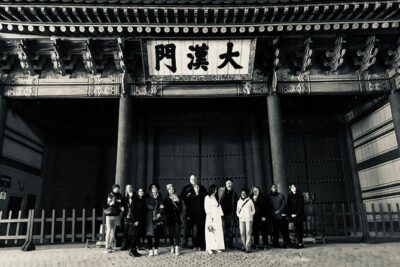
Evening Dark History, Folklore & Ghost Story Walking Tour
Read our review →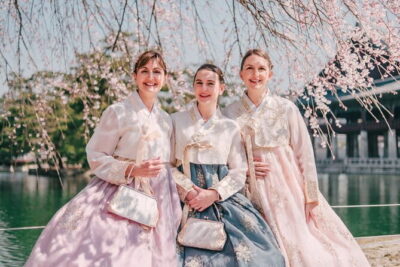
Hanbok Photoshoot and History Tour at Gyeongbokgung Palace
Read our review →
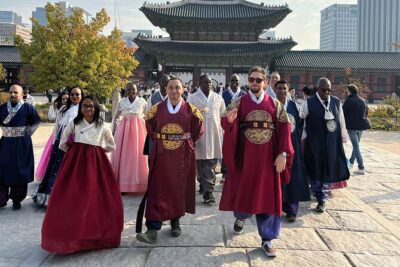
City Highlights and Historical Experience No Shopping
Read our review →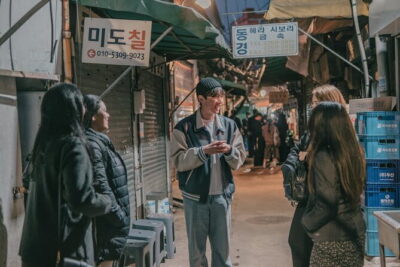
Street photoshoot and Seoul Hidden gem History Walking Tour
Read our review →
Namhansanseong UNESCO Historical Sites and Korean Folk Village-Private Tour
Read our review →Browse the lists this tour appears in