
Reviewed · FOOD & DRINK
Seoul Private Food Tours with a Local Foodie: 100% Personalized
Seoul’s food culture makes more sense when you walk through its markets rather than simply sit down at one restaurant. This private tour links street stalls, market lanes, and Korean barbecue, with your host shaping the route around your interests. The flexible host match is the main attraction. You are not tied to one fixed menu or a large group.
I like the chance to try 6 to 8 local tastings across two or three eateries, and I like the personal attention that comes with a private booking. Hosts such as Jay, Andrew, Oky, Yujin, and Ben have each brought different strengths, from city history and photography to family-friendly pacing and food guidance.
The tradeoff is important: this is a walking food outing, not a polished restaurant crawl. Some stops may involve quick bites from market stalls, and the quality depends heavily on the host you are matched with and how clearly you explain what you want before the tour.
In This Review
- Key points to know before booking
- Why a private Seoul food walk can be worth your time
- Starting near Jongno and setting the route
- Namdaemun Market and Seoul’s everyday food culture
- Gwangjang Market for new flavors
- Sindang-dong’s Tteokbokki Town
- Myeongdong Street Food Alley and food origins
- Sillim-dong’s Sundae Town and other food districts
- The Korean barbecue meal
- The guide matters more than the food list
- Walking, transport, and timing
- What is included and what is not
- Who should book this Seoul experience
- Final decision: book it for flexibility, not a fixed food checklist
- FAQ
- How long does the Seoul private food tour last?
- How many tastings are included?
- Is Korean barbecue included?
- Which Seoul markets and food districts will I visit?
- Is transportation included?
- Can I meet the host at my hotel?
Key points to know before booking
- Private route, flexible food districts: Your host may take you to Namdaemun, Gwangjang, Myeongdong, Sindang-dong, Sillim-dong, Noryangjin, or other local food areas.
- Six to eight tastings included: The package covers local foods from two or three eateries, plus one wine, beer, or soft drink.
- Korean barbecue is part of the plan: The experience includes a traditional meal at a Korean barbecue restaurant, although the exact restaurant and route can vary.
- Three hours on foot: Public transport may be used, but transport costs are not included.
- Best for flexible eaters: You can ask for help with food preferences, allergies, children, or a slower pace before the tour.
- The guide makes the difference: Personal hosts have included Jay, GJ, Andrew, Sujeong, Oky, Yujin, and Ben, so your experience may feel more like a local introduction than a standard group excursion.
Why a private Seoul food walk can be worth your time
At $225.63 per person, this is not a cheap way to grab street food. You are paying for a private host, a planned three-hour route, food tastings, and the chance to ask questions as you go. The value is strongest for couples, families, or small groups who want a tailored first look at Seoul rather than a fixed group itinerary.
A private setting also helps if you have food allergies, children, limited stamina, or strong preferences. One host successfully adjusted the experience for jet-lagged children and food allergies, while another made frequent checks about walking comfort. Tell your host these details early. The more specific you are, the more useful the customization can be.
The price makes less sense if your main goal is to eat as much as possible for the lowest cost. Seoul’s markets offer plenty of inexpensive food, and you could spend three hours exploring on your own. This tour earns its keep through explanation, route planning, translation help, and the social ease of having someone local beside you.
A few more Seoul trips worth weighing up
- Seoul Street Food Market Tour
★ 5.0 · 1,226 reviews - Seoul: Night Market Food Tour with Local Guide
★ 4.9 · 943 reviews - Downtown Seoul Guided Food & Market Tour with 8+ Local Tastings
★ 5.0 · 580 reviews
Starting near Jongno and setting the route
The listed starting point is 109 Jae-dong in Jongno District, though the meeting place is flexible. You can request a hotel or accommodation meet-up if you are staying in a central area, or arrange a convenient nearby location with your host.
That flexibility matters in Seoul. A market food tour can involve confusing exits, crowded streets, unfamiliar ingredients, and menus that offer little help in English. Meeting close to your accommodation can save time, particularly if you are new to the city or arriving after a long flight.
At the beginning, use the short planning window well. Tell your host what you already eat, what you want to avoid, and which matters more to you: street snacks, seafood, traditional dishes, Korean barbecue, market culture, or neighborhood history. You can also mention children, allergies, alcohol preferences, and walking limits.
The route can include food districts such as Noryangjin Fish Market, Gwangjang Market, Sindang-dong’s Tteokbokki Town, Myeongdong Street Food Alley, and Sillim-dong’s Sundae Town. You will not necessarily visit all of them in three hours. That is a good thing. Trying to cover every district would turn the tour into a race.
Namdaemun Market and Seoul’s everyday food culture
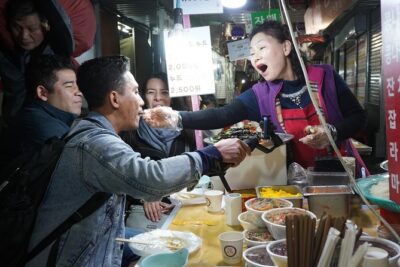
Namdaemun Market is a natural setting for a first taste of Seoul. Rather than presenting Korean food as a list of restaurant dishes, the market shows how food fits into daily life. You can watch people shop, eat standing up, and move through compact lanes filled with prepared foods and ingredients.
The appeal here is variety. Your host can introduce small portions and explain what you are eating, how it is served, and where it fits in Korean food culture. The experience is likely to be more useful if you treat each bite as a lesson rather than expect a full meal at every stall.
There is also a practical drawback. Market tastings may be quick and informal. You may be handed a small serving, eat while standing, and move on. If you expect every stop to be a sit-down restaurant with a carefully explained menu, this tour may not match your idea of a food experience.
Gwangjang Market for new flavors
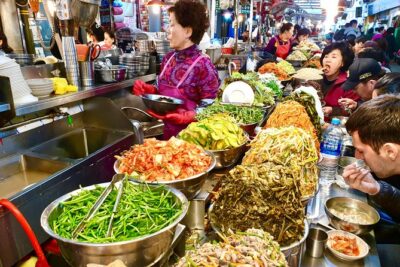
Gwangjang Market is included as one possible stop and is a strong choice for anyone who wants to meet unfamiliar Korean ingredients and flavors. The point is not only to eat famous dishes, but to see how prepared food, market stalls, and local routines work together.
Your host can help you order items you may not recognize and explain the origin or use of the foods you try. That guidance is especially useful when menus are short on translations or when several dishes look similar at first glance.
The market can also test your appetite and patience. Three hours is enough for a good introduction, but not enough to sample everything. If you have a short list of dishes you want, tell your host at the start. Otherwise, you may receive a broad selection of foods that reflect the host’s preferences rather than your own.
A completely different kind of day, same trip:
- Best DMZ Tour Korea from Seoul (Red Suspension Bridge Optional)
★ 5.0 · 41,422 reviews - DMZ Tour: 3rd Tunnel, Option(Suspension Bridge, Boat) from Seoul
★ 5.0 · 21,373 reviews - DMZ tour south Korea from Seoul (NK experience hall, defector)
★ 5.0 · 20,599 reviews - DMZ Insider Tour: 3rd Tunnel, NK Defector Meet & Red Bridge
★ 4.9 · 15,214 reviews
Sindang-dong’s Tteokbokki Town
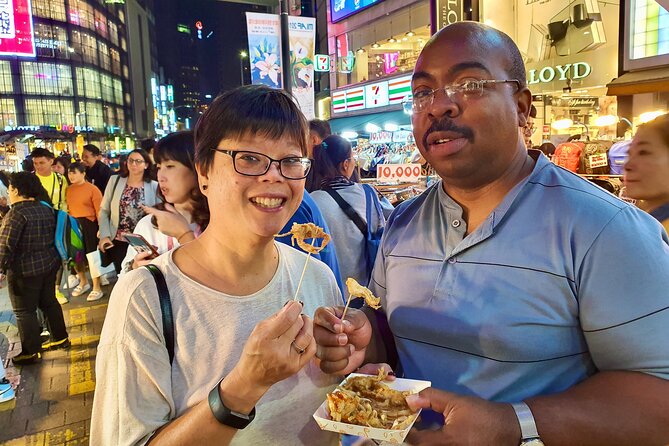
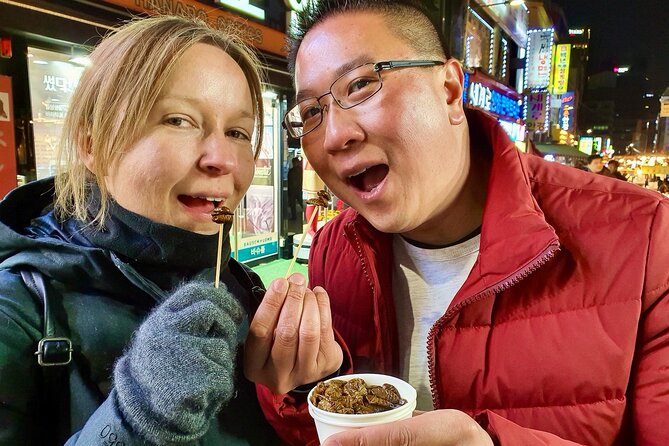
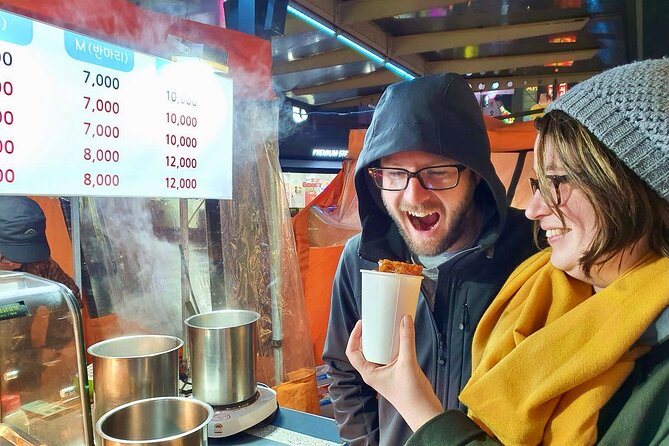
Sindang-dong is associated with tteokbokki, the chewy rice-cake dish served in a spicy sauce. The plan here calls for 6 to 8 street foods in the area, selected by your host. That can make this one of the most food-focused parts of the walk.
This stop suits you if you like trying several small portions instead of ordering one large dish. It also gives you a chance to compare textures and levels of heat as you move from one food to another.
Spice is the key issue. If you are sensitive to heat, say so clearly. The description promises local flavors, not a mild menu. The exact selection may also vary, so do not book this expecting a guaranteed list of specific dishes.
Myeongdong Street Food Alley and food origins
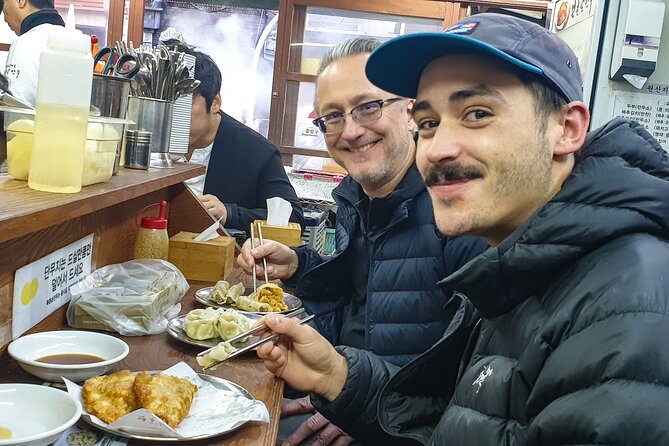
Myeongdong offers a more polished street-food setting, with plenty of snack stalls and a strong connection to Seoul’s popular food culture. Your host can explain the background of dishes that were created or refined in Seoul, giving context beyond the quick pleasure of eating them.
I like this part of the route for first-time visitors because Myeongdong is easy to combine with other central sightseeing. It is also a practical place to learn how Korean street food differs from a restaurant meal. You can sample, ask questions, and keep moving.
The drawback is that Myeongdong may feel more commercial than a neighborhood market. If your priority is an especially local or quiet setting, ask for smaller markets or less visited food areas. The private format gives you a chance to make that request, but it does not guarantee a specific district.
Sillim-dong’s Sundae Town and other food districts
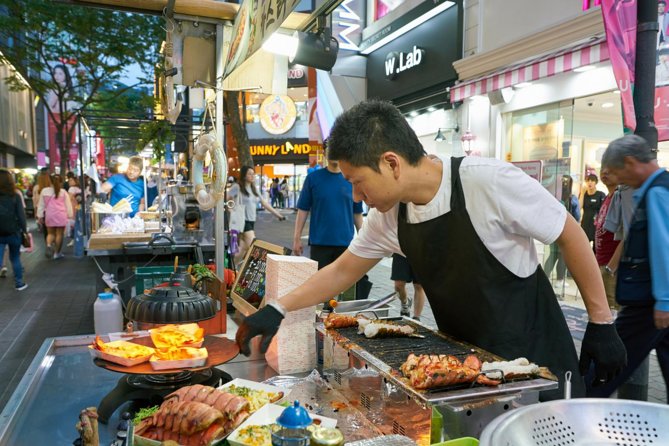
Sillim-dong’s Sundae Town focuses on sundae, a Korean sausage-style dish with its own local identity. You may also explore other food towns and learn the signature dish associated with each area.
This is where a good host can turn an unfamiliar meal into a comfortable one. You can ask what is inside a dish, how it is eaten, and whether the flavor or texture might surprise you. If you are adventurous, this part may provide the most memorable bites of the tour.
If you prefer familiar food, be direct. A private tour does not mean every choice will suit every palate. Some people have found that a host’s food confidence varied, so it is wise to ask during the planning stage how the route will be shaped and what kind of food expertise your host brings.
The Korean barbecue meal
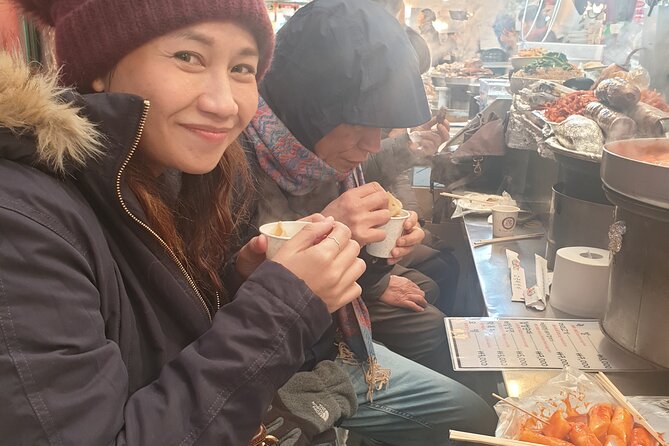
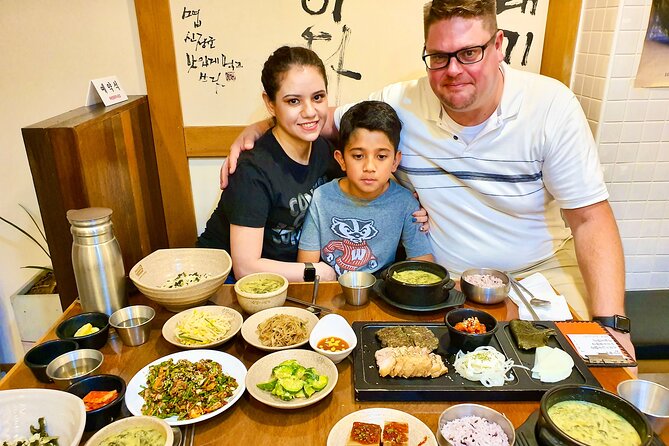
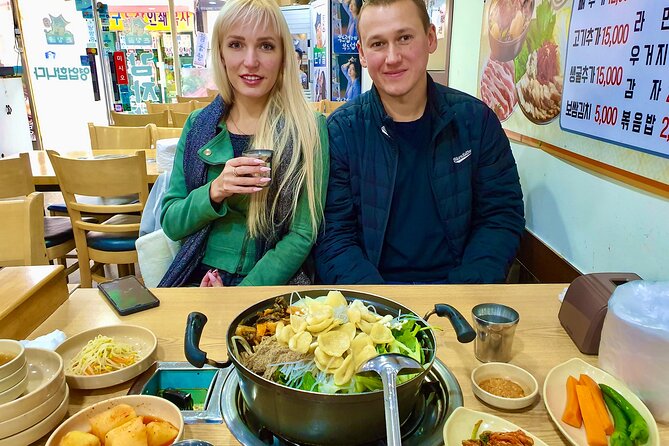
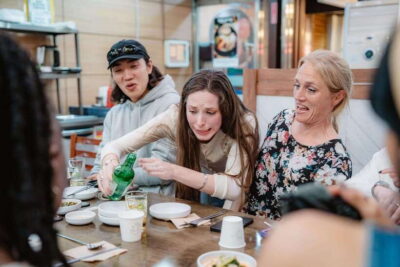
The tour includes a traditional Korean barbecue meal, which gives the tasting sequence a proper sit-down anchor. After sampling smaller foods, you can spend time at a restaurant and experience one of Korea’s best-known social meals.
Barbecue is valuable here because it shows how food works as a shared activity. It is not simply a plate delivered to you. The meal adds a different rhythm to the market snacks and gives your host room to explain ingredients, table customs, and the role of shared dishes.
The included food covers 6 to 8 tastings from two or three eateries and one drink. Additional food and drinks cost extra. The exact barbecue restaurant is not specified, so do not assume a particular meat, menu, or premium dining room. Ask your host what is planned if you have dietary restrictions or do not eat meat.
Several hosts have been praised for choosing good restaurants and helping with food selection. Sujeong, for example, combined the barbecue meal with city sights and photographs, while Oky’s route included local markets, local flavors, and a restaurant meal. These details show how much the guide’s choices shape the final experience.
The guide matters more than the food list
The tour’s strongest feature is the private host. Jay has been associated with careful explanations of food, city history, and Seoul’s construction, along with taking photographs and checking the pace. Andrew has handled children and food allergies well, and Ben has offered guests a choice of possible sights before the walk.
GJ, Sujeong, Oky, and Yujin have also been linked with enjoyable food stops, market visits, restaurant choices, and city orientation. These names do not mean you can select a particular host unless the operator confirms it. They do show the range of the experience: one host may focus on food, another on history, and another on photographs or an easy pace.
That variation is both the strength and weakness of a host-led tour. A warm, attentive guide can make ordinary market food feel meaningful. A poorly matched or underprepared host can make the same route feel like someone simply handing you samples from a stall.
You should treat the pre-tour communication as part of the booking decision. Explain what authentic means to you. Some people want market snacks and local food towns. Others want a sit-down meal, detailed food history, or a carefully selected restaurant list. Those are different experiences.
Walking, transport, and timing
Three hours is enough for a focused introduction, not a full survey of Seoul’s food districts. The tour is primarily on foot, and public transport may be used when the route calls for it. Transportation is not included, so carry a payment method suitable for local transit and allow a little flexibility in the schedule.
The walk may be easier for most people than a full-day sightseeing tour, but markets can mean crowded lanes and time on your feet. Tell your host if you need frequent breaks. One useful feature of a private booking is that the pace can be adjusted more easily than in a large group.
The tour ends back at the meeting point. Plan any later reservation with enough time for the route to finish and for possible transit delays. If you are taking this during a long layover, leave a generous margin before your onward flight.
What is included and what is not
The package includes a private three-hour walking tour, a local host, 6 to 8 tastings from two or three eateries, and one drink. The drink may be wine, beer, or a soft drink. A traditional Korean barbecue meal is also part of the experience.
You pay separately for additional food, extra drinks, transport, attraction tickets, and gratuities. No sightseeing admission is required for the market-focused stops described, but the route may change and attraction tickets are not covered.
The private format means only your group participates. That is useful if you want to ask questions without holding up strangers, or if your group has different comfort levels with unfamiliar food. It also means the per-person price can feel high for solo visitors or a pair who mainly want inexpensive snacks.
Who should book this Seoul experience
I would consider this tour a good fit if you are visiting Seoul for the first time, want help ordering food, or prefer a flexible introduction to several neighborhoods. Families may benefit from the private pacing, especially if children are tired or have limited food choices.
It also suits curious eaters who want to try dishes outside their usual routine. You can ask for markets, seafood, street food, Korean barbecue, or neighborhood history, then let the host build a practical route.
I would be cautious if you want a strict itinerary, a guaranteed restaurant list, or a specialist food scholar. The listed districts are examples rather than promises, and the host’s personality and food experience can shape the day. The 4.4 rating from 14 ratings reflects a generally positive but not flawless experience, which fits the main lesson: host matching matters.
Free cancellation is available when you cancel at least 24 hours before the start time. Changes made inside that window are not accepted, so check your schedule before the cutoff.
Final decision: book it for flexibility, not a fixed food checklist
I would book this tour if I wanted a private introduction to Seoul’s markets and did not want to spend my first day figuring out menus, neighborhoods, and transit alone. The included barbecue meal, 6 to 8 tastings, and personal route planning give you more than a simple snack stop.
I would skip it if I wanted the lowest-cost way to eat or if I needed guaranteed visits to every market named in the description. Before booking, send a clear note about your preferred foods, allergies, walking pace, and interest in history or restaurants. With the right host match, this can be a useful and tasty start to Seoul. With vague expectations, the same tour may feel like an expensive walk between food stalls.
FAQ
How long does the Seoul private food tour last?
The walking experience lasts approximately three hours.
How many tastings are included?
You receive 6 to 8 tastings of local foods from two or three eateries, along with one drink. The drink may be wine, beer, or a soft drink.
Is Korean barbecue included?
Yes. The experience includes a traditional meal at a Korean barbecue restaurant.
Which Seoul markets and food districts will I visit?
Possible areas include Namdaemun Market, Gwangjang Market, Noryangjin Fish Market, Myeongdong Street Food Alley, Sindang-dong’s Tteokbokki Town, and Sillim-dong’s Sundae Town. The route is private and personalized, so the exact stops can differ.
Is transportation included?
No. The experience is mainly on foot, but public transport may be used. Transportation costs are not included.
Can I meet the host at my hotel?
You can request a hotel or accommodation meet-up if you are staying in a central location. Otherwise, you and the host will agree on a convenient meeting place near the start of the experience.
Just added around Seoul
- Incheon Airport Private Transfer between Seoul City★ 4.0 · 4 reviews
- Seoul’s Stars: Open Mic with Local & International Talent★ 4.8 · 4 reviews
- Samaksan Cable Car and Nami Island Day Escape with Railbike★ 4.0 · 4 reviews
- DMZ 2nd Tunnel and Cheorwon Peace Observatory with Admission★ 5.0 · 4 reviews
- Nami & Maple Road & Theatre des Lumieres Day Tour from Seoul★ 4.8 · 4 reviews
- Hire Photographer, Professional Photo Shoot – Seoul★ 5.0 · 4 reviews
- [KoreaByLocal] Authentic Seoul Night Walk and Chicken & Beer★ 5.0 · 4 reviews
- Seoul Film Camera Club★ 5.0 · 4 reviews
Food & Drink, compared.
Downtown Seoul Guided Food & Market Tour with 8+ Local Tastings
Read our review →Small-Group Night Food Tour in Seoul with Korean BBQ
Read our review →
Seoul Night Palace & Market Food Tour with Vehicle
Read our review →
Seoul Fun Food Tour: 12 different food tastings
Read our review →
The Award-Winning PRIVATE Food Tour of Seoul: The 10 Tastings
Read our review →Browse the lists this tour appears in