
Reviewed · SEOUL
Discover Eastern Korea in 4days: All-Inclusive Experience
Busan’s seafood stalls, Gyeongju’s gold crowns, Andong’s old village lanes, and Seoraksan’s rocky valleys make this a fast but rewarding sweep through Eastern Korea. I like the no-shopping format and the way the trip mixes major sights with hands-on culture, especially the traditional dessert class.
I also like that the $1,200 price covers three hotel nights, most meals, entrance fees, a guide, and an air-conditioned vehicle. The main catch is the pace, plus a transport detail you should confirm: some small groups have been given KTX tickets to Busan and asked to make their own way there, even though the formal tour meeting point is in Seoul.
In This Review
- Key points at a glance
- What the four-day route gives you
- Day one: Jagalchi Market and the Songdo coast
- Day two: Busan’s modern coast meets Silla Gyeongju
- Gyeongju’s gold crowns and ancient astronomy
- Day three: Making Korean dessert in Andong
- Day four: Jujeongol Valley in Seoraksan
- Hotels, meals, and what all-inclusive really means
- Guides, vehicles, and group size
- Is $1,200 a fair price?
- Who should book this Eastern Korea tour?
- Final verdict: a strong regional sampler with one detail to confirm
- FAQ
- Where does the tour begin?
- Where does the tour end?
- How long does the experience last?
- Is transportation included?
- Are hotel transfers included?
- What meals are included?
- Are admission fees included?
- Is the tour conducted in English?
- How large can the group be?
- Is the tour physically demanding?
- What happens if bad weather cancels the tour?
Key points at a glance
- Seafood and sea views on day one: Visit Jagalchi Market, then ride the 1.6-kilometer Songdo Sea Cable Car above Busan’s coast.
- A full Silla history day: Bulguksa Temple, Daereungwon Tomb Complex, Gyeongju National Museum, and Cheomseongdae form a strong cultural route.
- A hands-on Korean food lesson: Make a traditional dessert at Momyeongjae and take part rather than simply looking at old objects.
- A living village, not just a museum: Andong Hahoe Folk Village offers more than 600 years of Korean tradition in an active community.
- A mountain finish: Walk in Jujeongol Valley in Seoraksan National Park, with two hours set aside for the visit.
- Small-group potential, but not guaranteed: The maximum group size is 35, and the vehicle changes with group numbers.
What the four-day route gives you

This is a broad regional sampler rather than a slow stay in one city. You begin with Busan’s food and coastline, move into the Silla-era monuments of Gyeongju, spend time with traditional Korean culture in Andong, and finish among the peaks and streams of Seoraksan.
That range is the tour’s biggest strength. In four days, you see urban Korea, ancient Korea, rural Korea, and mountain Korea. You also get several kinds of activity: market wandering, a cable-car ride, temple visits, museum time, craft or food making, village walking, and a national park outing.
The trade-off is clear. You will cover a lot of ground, and the schedule may feel full. If you want long café breaks, independent shopping, or several unplanned hours in each town, this is not the right shape of trip. If you want the practical help of a guide and a ready-made route, it makes good use of limited time.
The tour is priced at $1,200 per person. That is not a budget day trip, but the figure includes three nights in twin or double rooms, four lunches, three breakfasts, two dinners, admissions, an English-speaking guide or driver-guide, and an air-conditioned vehicle. You are paying for the distance covered and the organization as much as the sightseeing.
Insurance, tips, drinks, laundry, telephone use, pay TV, and other personal expenses are extra. Hotel pickup on the first day and drop-off on the last day are also not included, so allow time and money for getting to Seoul Station and from AMID Hotel Seoul.
A few more Seoul trips worth weighing up
- Discover Western Korea in 4days: All-Inclusive Experience
★ 5.0 · 6 reviews
Day one: Jagalchi Market and the Songdo coast
The tour’s stated starting point is Seoul Station at 8:00 a.m., but the first listed sightseeing stop is Jagalchi Market in Busan. This matters. One detailed account describes a small group receiving free KTX tickets and making its own way to Busan, while a larger group continued separately by tour arrangements.
I would confirm the exact first-day transport before paying, especially if you are traveling alone or with children. Ask where you board, who handles the train tickets, and whether the guide meets you in Seoul or Busan. A smooth start depends on getting this detail right.
Once you reach Busan, lunch comes before the market visit. Jagalchi is one of the city’s best-known food markets, with rows of stalls selling fresh seafood. The planned visit lasts about an hour, enough to see the market’s character and get a taste of Busan’s working waterfront without letting the stop consume the day.
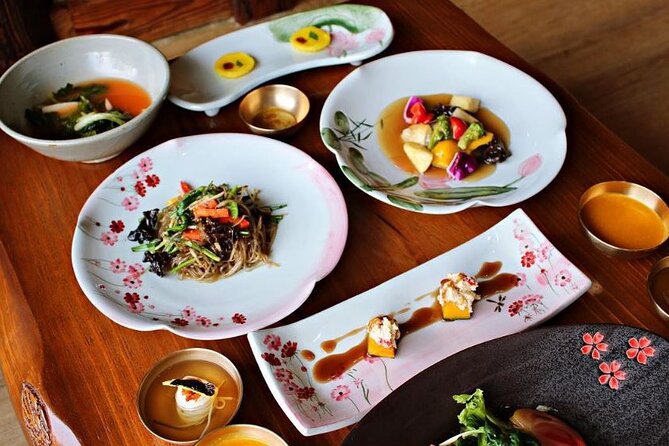
I like this opening because it gives you a local food setting rather than starting with a monument. The tour also promises several kinds of traditional Korean food during the four days, so lunch at Jagalchi helps set the tone early.
Next comes the Songdo Sea Cable Car. The ride runs about 1.6 kilometers between Songdo Beach Station and Songdo Sky Park. Two hours are scheduled here, which should give you time for the ride and the surrounding views rather than a quick up-and-down trip.
You will glide over the coastline with broad views of Songdo and the sea. The cable car is a pleasant change of pace after the market, but it is also weather-sensitive. Poor weather can affect the tour, and the operator may offer a new date or a full refund if the experience is canceled for that reason.
Day two: Busan’s modern coast meets Silla Gyeongju
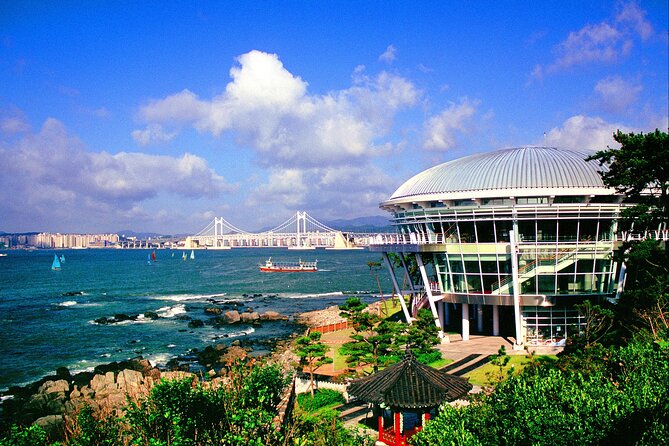
The second morning begins at Dongbaekseom Island and Nurimaru APEC House. The building hosted the 2005 APEC Summit, and its glass-walled meeting spaces offer a look at modern Korean diplomacy and design.
The visit lasts about an hour. It is a compact stop, but it gives the day some balance before you leave Busan for Gyeongju. You are not seeing only temples and tombs. You are also seeing the Korea of international meetings, city planning, and coastal development.
From Busan, the route turns inland to Gyeongju. This was the capital of the Silla kingdom for roughly a thousand years, and the day is built around the remains and objects of that period. The city has a strong sense of place because ancient burial grounds, temples, observatories, and museum collections sit close together.
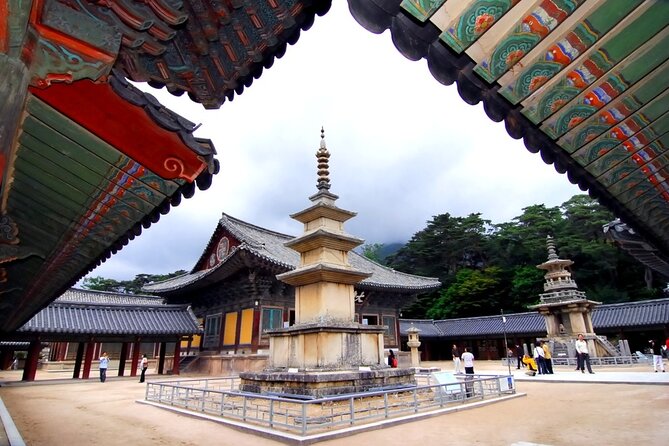
Bulguksa Temple is the first major Gyeongju stop. About 90 minutes are scheduled, with admission included. The temple is a UNESCO World Heritage Site and is one of Korea’s most important Buddhist sites.
You can expect a visit focused on architecture, stonework, courtyards, and religious art. The time is useful but not lavish. If you like to linger over details, take photographs, or sit quietly in temple grounds, you may want to stay close to the group schedule.
Daereungwon Tomb Complex follows, with an hour planned. Large grass-covered burial mounds mark the resting places of Silla royalty and high officials. The scale of the tombs gives you a direct sense of royal power, even before you see the objects found inside them.
This stop works well after Bulguksa because it shifts the story from Buddhist faith to royal life and burial customs. It is also a relatively open-air visit, so comfortable shoes and weather-ready clothing will help.
Gyeongju’s gold crowns and ancient astronomy
At Gyeongju National Museum, you will spend about 90 minutes among Silla artifacts. Golden crowns are the headline pieces, but the museum also helps explain the daily life, craftsmanship, religion, and court culture behind the monuments you have seen outdoors.
This is where the route gains depth. A tomb mound can look like a grassy hill, and a temple can seem like a beautiful collection of buildings. Museum objects give those sites human scale. Gold, stone, ceramics, and other surviving pieces show what the Silla court valued and how skilled its makers were.
There is a gift shop at the museum. Since this is a no-shopping tour in the sense of avoiding forced commercial stops, that is different from building the itinerary around retail visits. You can browse if time allows, but the focus remains on the collection.
The final Gyeongju stop is Cheomseongdae Observatory. Only about 20 minutes are scheduled, so this is a brief look and photo stop rather than a long lecture. The ancient stone structure is a well-known symbol of the city and is linked with Silla astronomy.
I find this a good closing point for the Gyeongju day. After temples, royal tombs, and museum treasures, the observatory turns your attention to the sky and to the scientific interests of the people who built the city.
Day two is the most history-heavy part of the tour. It is excellent for first-time visitors who want a clear introduction to Silla Korea, but the number of stops may tire you. The 1.5-hour museum visit and 1.5-hour temple visit are the places where you will most want to manage your energy.
A completely different kind of day, same trip:
- Best DMZ Tour Korea from Seoul (Red Suspension Bridge Optional)
★ 5.0 · 41,422 reviews - DMZ Tour: 3rd Tunnel, Option(Suspension Bridge, Boat) from Seoul
★ 5.0 · 21,373 reviews - DMZ tour south Korea from Seoul (NK experience hall, defector)
★ 5.0 · 20,599 reviews - DMZ Insider Tour: 3rd Tunnel, NK Defector Meet & Red Bridge
★ 4.9 · 15,214 reviews
Day three: Making Korean dessert in Andong
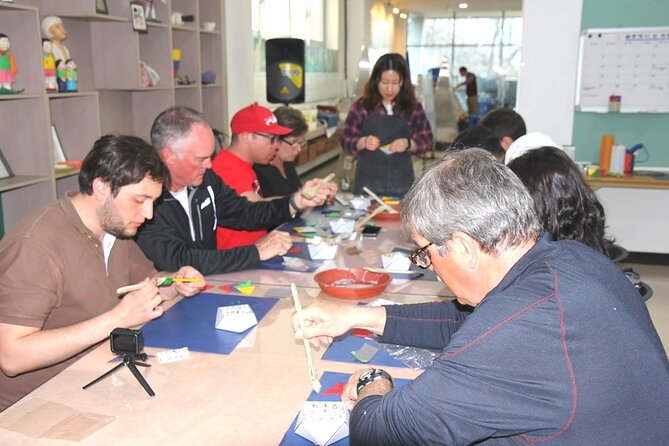
Day three begins with a traditional dessert-making class at Momyeongjae, described as a Korean Traditional Culture Center. About 90 minutes are set aside, and expert instructors guide you through the process.
This is one of the tour’s most useful choices. You are not only looking at Korean traditions from behind a rope. You are learning through food, following instructions, and making something yourself. The class should also help you understand how Korean sweets fit into everyday and ceremonial culture, although the exact dessert may depend on the session.
It is worth noting that a class has a different rhythm from a normal sightseeing stop. You will need to listen, work with your hands, and keep to the instructor’s timing. That makes it a lively break after the long historical day in Gyeongju.
The route then continues to Andong Hahoe Folk Village, a UNESCO World Heritage Site with more than 600 years of history. Two hours are planned here. The village remains a living cultural setting, so you can expect traditional homes, lanes, and older patterns of settlement rather than a purpose-built display.
That distinction matters. A preserved village can feel meaningful because it connects architecture with daily life. At the same time, you should respect that it is not simply a film set or an open-air museum. Follow the guide’s instructions and stay aware of homes and local activity.
Two hours gives you a useful introduction, though you will not see every corner at a relaxed pace. Wear shoes suited to walking and be ready for uneven ground. The tour requires moderate physical fitness, and this village visit is one reason why.
Andong is a strong match for anyone interested in folklore, traditional homes, Korean food, and local customs. It also gives the tour a rural note that the city-based stops cannot provide.
Day four: Jujeongol Valley in Seoraksan
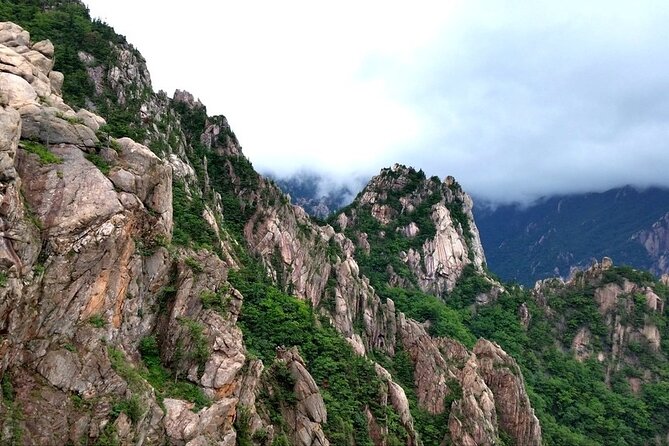
The final day begins in Pyeongchang before the route heads to Jujeongol Valley in Seoraksan National Park. Two hours are scheduled for the visit.
Seoraksan is known for dramatic rock formations, high peaks, and clear streams. Jujeongol gives you a chance to experience Korea outdoors after three days of markets, museums, temples, and village streets. The setting is the tour’s strongest change of mood.
You should treat this as a real walking stop, not a bus-window photo opportunity. The moderate fitness requirement applies here. Bring suitable shoes and be prepared for the weather, since the experience depends on outdoor conditions.
The supplied information does not give a precise trail length, elevation gain, or difficulty grade. I would not assume that two hours means a long hike. Expect a guided visit in the valley, then confirm the walking details if you have knee, heart, or mobility concerns.
The mountain finish is a smart choice. You leave the tour with scenery that feels different from Busan’s coast and Gyeongju’s historic center. It also helps prevent the itinerary from becoming four straight days of indoor exhibits and old buildings.
Hotels, meals, and what all-inclusive really means
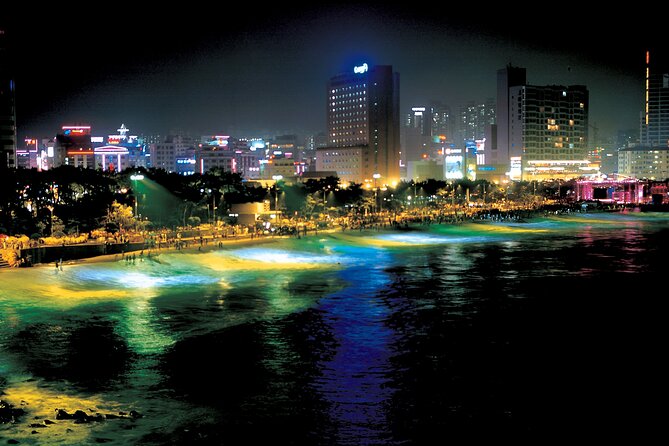
Three nights of accommodation are included in twin or double rooms. The exact hotel names are not provided, but one clear strength from the available feedback is the quality of the hotels. If you need a single room, ask about the supplement before booking, since the included arrangement is based on shared twin or double rooms.
Meals included are four lunches, three breakfasts, and two dinners. That covers much of the food during the trip and supports the tour’s aim of introducing you to different Korean dishes.
The wording all-inclusive needs a little care. It means the major tour costs are bundled, not that every expense disappears. Drinks, tips, insurance, laundry, telephone charges, pay TV, and other personal items remain yours. Hotel transfers at the beginning and end are also outside the package.
I like the no-shopping policy. It keeps the schedule centered on markets, food, history, nature, and local culture rather than sales stops. For many people, that is worth real money and time.
Guides, vehicles, and group size
An English-speaking guide or driver-guide accompanies the group. Guide quality can shape a trip like this, because the route moves through several periods and regions in a short time.
Jay is specifically praised for keeping people informed, helping with needs, managing expectations, and adding humor. Mark is described as professional, and the driving team received especially strong approval. Those names may not be assigned to every departure, so treat them as examples rather than a promise.
The vehicle is air-conditioned and varies with group size. The maximum is 35 people. That is not a tiny private tour, and at full capacity you should expect less flexibility at stops and more time getting everyone on and off the vehicle.
On the other hand, departures may be smaller. A group of three was combined with a larger day group for part of the journey, which shows that the operating plan can change according to numbers. Ask how your departure will be handled, especially for the Seoul to Busan connection.
Is $1,200 a fair price?
The price makes the most sense if you value convenience and coverage. You are getting four days of organized sightseeing across several regions, three hotel nights, nine included meals, admission fees, a guide, and road transport.
Buying each piece separately could involve comparing hotels, arranging intercity trains, booking admissions, finding transport to remote sights, and working out meals. This tour removes much of that planning. It also gives you access to a route that would be awkward to build independently in only four days.
The value is weaker if you already have Korean rail plans, prefer inexpensive guesthouses, or want to choose every restaurant and hotel yourself. You are paying for structure, not maximum independence.
Group discounts may be available, and the tour accepts mobile tickets. Confirmation is sent within 48 hours, subject to availability. The experience is generally suitable for ages 1 to 80 and older, but the moderate fitness requirement and long touring days matter more than the stated age range.
You can cancel for a full refund at least six full days before the start time. A cancellation two to six full days ahead receives 50 percent, while cancellation less than two full days ahead is nonrefundable. Changes follow the same time limits, and cut-off times use local Korean time.
Who should book this Eastern Korea tour?
I would choose this for a first visit to Korea if you want to see beyond Seoul without handling every transfer yourself. It suits people who like a planned day, enjoy local food, and want a good mix of culture and scenery.
It is also a sensible option for families and older couples who prefer a guide, included transport, and known hotel arrangements. The stated age range is broad, but everyone should be comfortable with full sightseeing days and moderate walking.
I would hesitate if you want a leisurely Busan holiday, serious hiking in Seoraksan, or long independent visits at each museum. The route is designed for breadth. You get a taste of many places rather than an exhaustive visit to one.
Final verdict: a strong regional sampler with one detail to confirm
This four-day program does a lot well. It avoids shopping stops, includes substantial meals and admissions, uses respected cultural sites, and adds two memorable personal touches: the dessert class and the Seoraksan valley visit.
The best day is probably Gyeongju, where Bulguksa, the tombs, the museum, and Cheomseongdae build a coherent story. The most distinctive stop is Andong Hahoe Folk Village, while the cable car and mountain valley keep the trip from feeling like a history seminar.
Before booking, confirm the Seoul to Busan transport plan and ask about the guide assigned to your departure. If you accept the quick pace and want a well-organized introduction to Eastern Korea, the package offers solid value. If your priority is freedom, slower mornings, or a detailed hike, build the route yourself instead.
FAQ
Where does the tour begin?
The stated starting point is Seoul Station at 43-203 Dongja-dong, Yongsan District, Seoul, with an 8:00 a.m. start.
Where does the tour end?
The stated end point is AMID Hotel Seoul at 38 Insadong 5-gil, Jongno District, Seoul.
How long does the experience last?
The tour lasts approximately four days and includes three nights of accommodation.
Is transportation included?
An air-conditioned vehicle is included, with the vehicle type depending on group size. The first-day route to Busan should be confirmed, since some small groups have received KTX tickets and made their own way there.
Are hotel transfers included?
Hotel pickup on the first day and drop-off on the last day are not included.
What meals are included?
The package includes four lunches, three breakfasts, and two dinners.
Are admission fees included?
Yes. All entrance fees during the tour are included, including the listed cable car, Bulguksa Temple, Daereungwon Tomb Complex, Gyeongju National Museum, dessert class, and Hahoe Folk Village admissions.
Is the tour conducted in English?
An English-speaking guide or driver-guide is included.
How large can the group be?
The maximum group size is 35 people. The vehicle varies according to the number of people on the departure.
Is the tour physically demanding?
A moderate level of physical fitness is recommended. The itinerary includes walking at historic sites, Andong Hahoe Folk Village, and Jujeongol Valley in Seoraksan National Park.
What happens if bad weather cancels the tour?
If the experience is canceled because of poor weather, you are offered a different date or a full refund.
Just added around Seoul
- Incheon Airport Private Transfer between Seoul City★ 4.0 · 4 reviews
- Seoul’s Stars: Open Mic with Local & International Talent★ 4.8 · 4 reviews
- Samaksan Cable Car and Nami Island Day Escape with Railbike★ 4.0 · 4 reviews
- DMZ 2nd Tunnel and Cheorwon Peace Observatory with Admission★ 5.0 · 4 reviews
- [KoreaByLocal] Authentic Seoul Night Walk and Chicken & Beer★ 5.0 · 4 reviews
- Nami & Maple Road & Theatre des Lumieres Day Tour from Seoul★ 4.8 · 4 reviews
- Hire Photographer, Professional Photo Shoot – Seoul★ 5.0 · 4 reviews
- Play Gayageum in Hanbok Cultural Experience in Bukchon★ 5.0 · 4 reviews